Learning Games Product Guide

14 Best Word Games for Kids in 2026: Picks That Grow With Your Child

Which word games actually hold up to repeated play and grow with your child's reading level, from preschool sight words to family game nights.

14 Best Word Games for Kids in 2026: Picks That Grow With Your Child editorial illustration

Most word games marketed for kids miss the point. They lead with educational credentials, but the gameplay feels like homework and kids lose interest by the second round. The games that actually stick are the ones children reach for on their own - the learning arrives as a side effect of the fun.

Build quality is the quieter half of the equation. Cardboard tiles and thin boards take a beating in real households, and several popular titles wear out within months of steady play - not because kids are rough, but because the materials were never built for daily use. Every pick here favors components that survive repeated games.

The strongest choices scale with your child. A game that works for a five-year-old still learning letter sounds and keeps challenging a ten-year-old is worth far more than two games your kid will outgrow. That flexibility is what separates a shelf staple from a one-time purchase.

#1

Bananagrams Classic

Bananagrams Classic

Families, travel

Customer rating 4.9/5
Check Price

Worth Noting

  • No points or winner tracking
  • Kids under 7 who can't yet form words will sit out, since play assumes solid spelling basics.
Players
2-8
Age Range
7+
Portability
Banana pouch
Build Quality
Plastic tiles
Read the full review

144 plastic tiles assemble into Scrabble-style words with no board, no scoring, and no waiting — players race to build a personal grid until every tile is used. The banana pouch packs the full game into a pocket or carry-on, and the plastic tiles hold up to regular handling in a way cardboard components can't. Rounds run fast enough to squeeze in between school and dinner, which keeps the pace lively for a family table without a rules deep-dive.

The right fit is a family with readers age 7 and up who already know letter sounds and can form simple words; kids who haven't cracked those basics will watch rather than join, since the pace assumes solid spelling. That requirement also keeps it a genuinely all-ages bridge — grandparents, teens, and younger siblings play at the same speed without dumbing anything down. Travelers get a full word game that takes up less bag space than a paperback.

Let younger kids pair up with an adult or older sibling so everyone gets a turn with the tiles.

Bottom line: For families with readers age 7 and up, this is the word game that holds up to daily use — durable, pocketable, and fast enough to stay fun.

#2

Zingo Bingo

Zingo Bingo

Preschoolers

Customer rating 4.8/5
Check Price

Worth Noting

  • Larger box makes it less travel-friendly than pouch-packed word games.
Players
2-6
Age Range
4+
Portability
Box
Build Quality
Cards, dispenser
Read the full review

The Zinger tile dispenser shoots out picture cards that kids match to their boards, turning pre-reading practice into a fast, tactile game adults actually enjoy playing. Two difficulty levels let beginners start with picture matching and build toward word recognition, keeping rounds quick for 2-6 players and simple enough for kids to run on their own.

This is the right fit for families and classrooms with preschool-age kids (4-6) just stepping into early reading. The word pool stays intentionally basic, so confident young readers will outgrow it before age seven — keep it as an on-ramp and graduate to the top pick once they are sounding out words comfortably.

Bottom line: For a preschool family, this is the low-stress way to start early reading — the Zinger does the teaching while adults just keep the rounds moving.

#3

Sight Word Swat

Sight Word Swat

Kinesthetic learning

Customer rating 4.8/5
Check Price

Worth Noting

  • Swatters are light plastic and can bend with forceful swings.
Players
Up to 4
Age Range
5+
Portability
Box
Build Quality
Plastic swatters
Read the full review

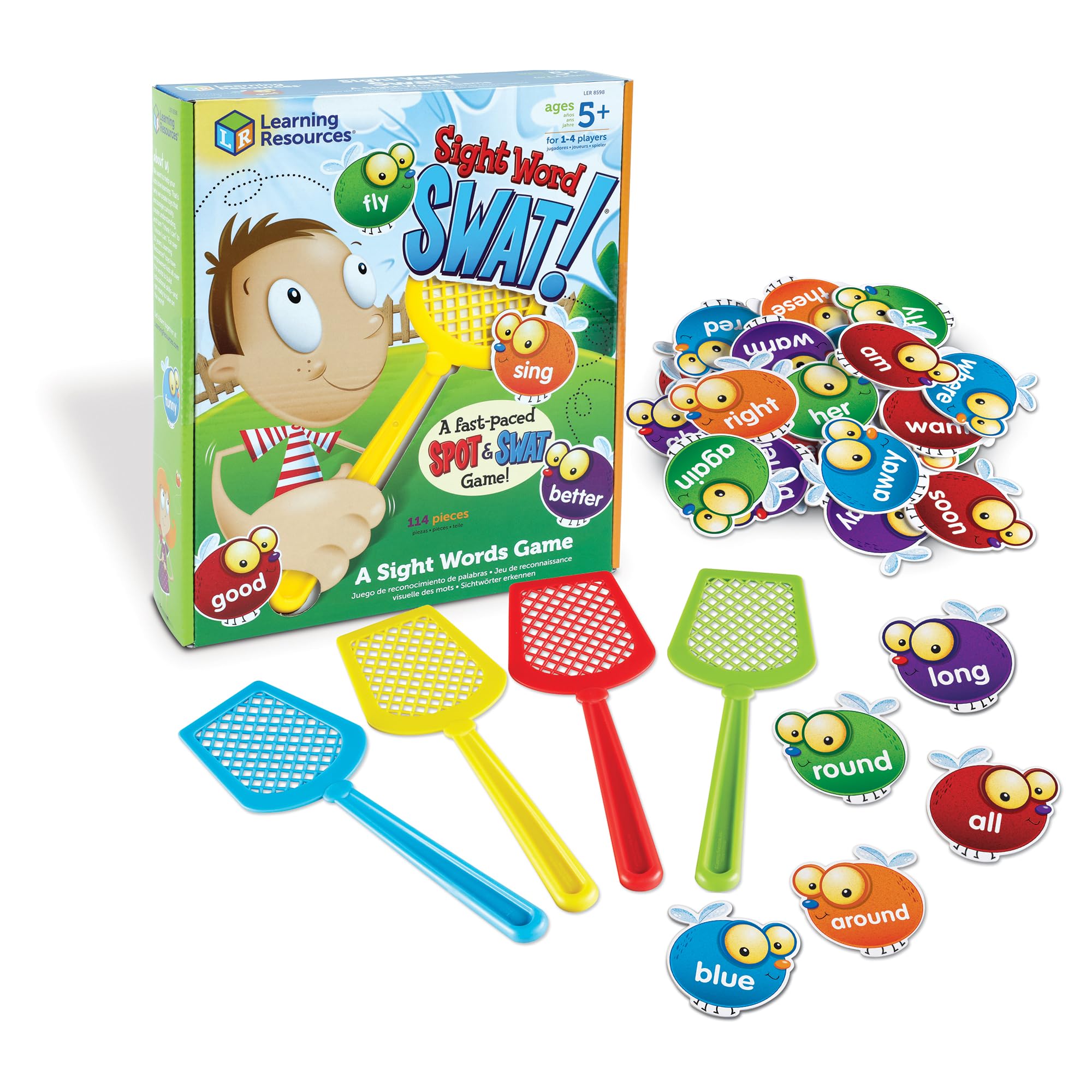
Where the top pick builds words on plastic tiles, Sight Word Swat turns drilling into motion — kids swing swatters at color-coded fly cards spanning the full 220-word Dolch list across four difficulty levels. Up to four players compete at once, keeping energy high during small-group practice, and the active mechanic holds attention longer than sheet-based drills.

Best return goes to kindergarten and first-grade teachers, homeschool parents, and classroom aides reinforcing high-frequency words without phonics fluency. Younger players need an adult nearby to keep swatting controlled, a normal expectation in classrooms; kids past second grade outgrow the word list, so it targets early learners.

Bottom line: The active sight-word drill for K-1 classrooms that need high-frequency repetition without spelling demands.

#4

TAPPLE

TAPPLE

Fast-paced fun

Customer rating 4.7/5
Check Price

Worth Noting

  • Fixed 10-second countdown can feel rushed for younger or slower players.
Players
2-8
Age Range
8+
Portability
Box
Build Quality
Plastic wheel
Read the full review

A built-in electronic timer turns every turn into a sprint — name a word in the shown category starting with your letter before the dial moves on. The 144 prompts across 36 cards keep rounds varied, and because answers are shouted rather than spelled, weaker spellers hold their own.

This suits families with kids 8 and up and party crowds where speed is the fun. The fixed 10-second countdown keeps momentum high but can feel rushed for younger or slower players — a pace tradeoff that fits fast game nights better than relaxed evenings.

Set a house rule of two guesses per letter for younger players so the timer never cuts off a word.

Bottom line: The right call for parties and game nights where speed and laughter outrank spelling mastery — play it with kids 8 and older.

#5

Scrabble Junior

Scrabble Junior

Beginner Scrabble

Customer rating 4.7/5
Check Price

Worth Noting

  • Cardboard tiles can tear and the board may split with repeated rough use
Players
2-4
Age Range
5+
Portability
Box
Build Quality
Cardboard tiles
Read the full review

The double-sided board is the core idea here — one side pairs letter matching for ages 5 and up, the flip side introduces full word building. That progression keeps younger kids engaged without throwing them into conventional Scrabble at full complexity.

It suits families introducing Scrabble to kids aged 5-8, and the two-to-four-player setup works in classrooms. The cardboard tiles and board are the boundary — repeated rough handling can tear tiles or split the board, so gentle play keeps it in shape.

Store tiles in the drawstring bag and keep the board flat between sessions to extend the cardboard's lifespan.

Bottom line: For families easing kids aged 5-8 into Scrabble, the double-sided progression earns its place — just keep play on the gentler side to protect the cardboard.

#6

Quiddler

Quiddler

Word enthusiasts

Customer rating 4.8/5
Check Price

Worth Noting

  • Demands a solid vocabulary - kids under 8 stall without adult help
Players
2-6
Age Range
8+
Portability
Card deck
Build Quality
Cards
Read the full review

Eight rounds with growing hand sizes push players to build longer, higher-scoring words - a more strategic pace than the speed-spelling top pick. Each added card raises the vocabulary demand, so late rounds reward planning over quick recall. Unlike fast-paced category-race games, everyone works their own hand in quiet turns.

Best for kids 8 and up who already read well - younger spellers stall without an adult offering word ideas. Plays 2-6 for family nights, and the compact card format survives rough handling better than cardboard. Escalating difficulty keeps rounds fresh for word-loving households.

Bottom line: Matches word-loving households where confident young readers and adult enthusiasts want a slower, more thoughtful alternative to speed-based spelling games.

#7

Boggle Classic

Boggle Classic

Travel

Customer rating 4.8/5
Check Price

Worth Noting

  • A stiff lid can nudge the dice when removed after a shake
Players
1+
Age Range
8+
Portability
Travel size
Build Quality
Dice, grid
Read the full review

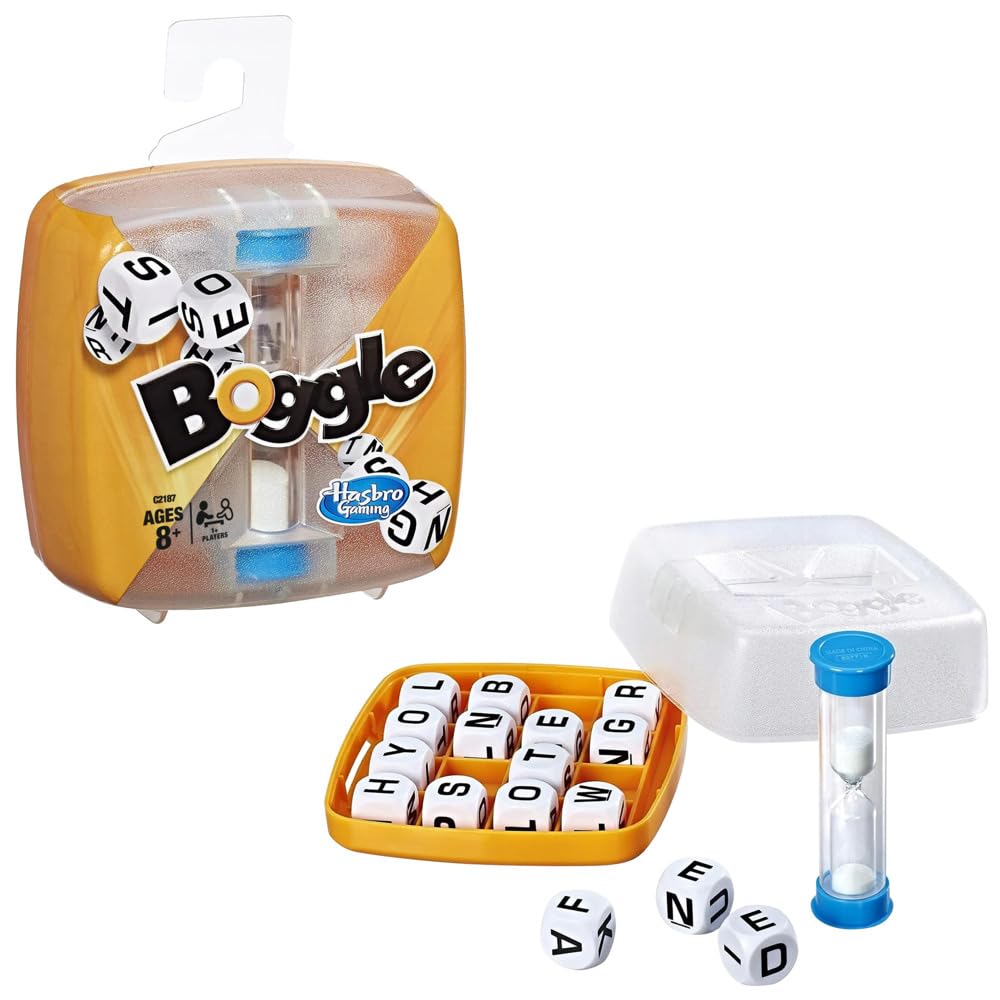
Fast 90-second rounds from 16 dice make Boggle a grab-and-go word hunt for solo players or full tables. The timed pace and 8-plus age rating leave younger readers out, where a gentler board-based option lets kids work at their own speed.

Bottom line: For families with readers 8 and up who want a fast, portable word race for trips or quick game nights, Boggle fits — provided the timed pressure suits every player at the table.

#8

Bananagrams My First

Bananagrams My First

Emergent readers

Customer rating 4.8/5
Check Price

Worth Noting

  • For kids past 7, the gentle word-building offers little challenge; it suits early learners better than older siblings.
Players
1-4
Age Range
4+
Portability
Pouch
Build Quality
Chunky plastic tiles
Read the full review

The color-coded lowercase tiles and combo-letter pieces make first word-building tactile for emergent readers. The single-letter focus covers less ground than Zingo's matching and turn-taking rounds, so families wanting broader pre-reading skills should look there. For ages 4-5 just learning letters, the chunky tiles carry a comfortable, low-pressure pace.

Bottom line: For 4 to 5 year olds' first word-building sessions, this is a durable, tactile way to learn letters without pressure.

#9

Zingo Sight Words

Zingo Sight Words

Sight word drills

Customer rating 4.7/5
Check Price

Worth Noting

  • For a child near mastering common sight words, the 72-tile pool may run out before practice needs are met.
Players
2-6
Age Range
4+
Portability
Box
Build Quality
Cards, dispenser
Read the full review

The Zinger dispenser deals six tiles at a time for 2-6 players, and the matching-to-card format keeps young learners engaged while they practice reading high-frequency words. The word pool is deliberately small — 72 tiles covering a fraction of the Dolch list — so this suits a child who needs extra repetition on basic words rather than a family wanting a broad vocabulary game. For that focused practice, it works well.

Bottom line: Best for a pre-K to 1st grader who needs repeated exposure to basic sight words and enjoys bingo-style play, not for building a broad vocabulary.

#10

Bambino Bingo 1&2

Bambino Bingo 1&2

Classrooms

Customer rating 4.8/5
Check Price

Worth Noting

  • In daily classroom play, the thin cardboard components can wear from repeated handling
Players
2-24
Age Range
4-8
Portability
Box
Build Quality
—
Read the full review

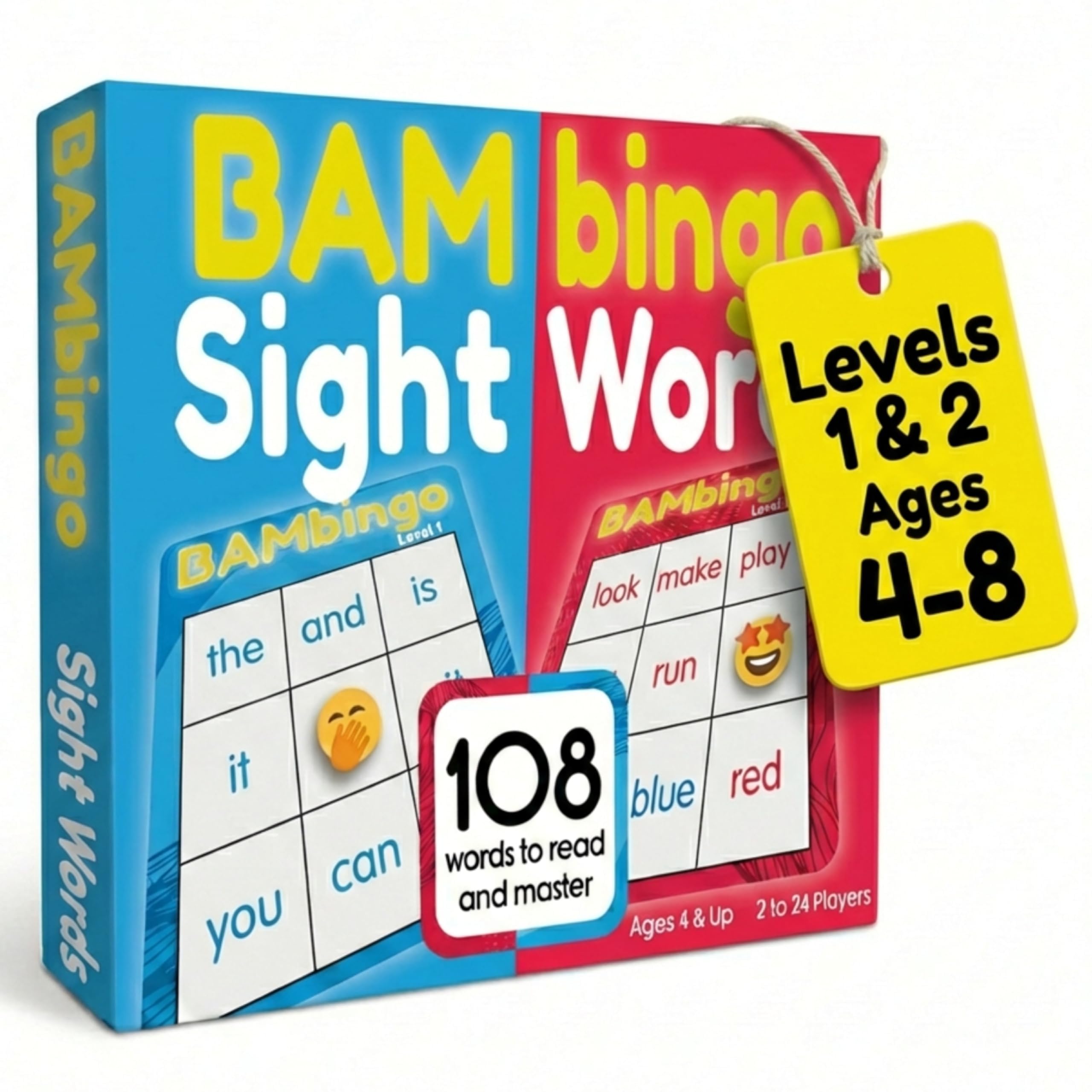
Two difficulty levels pack 108 high-frequency words for kindergarten and 1st grade, with support for entire classes up to 24 players. Kids grasp the rules quickly and ask to play again. The cardboard components wear under frequent handling, so it suits supervised classroom play over repeated home use.

Bottom line: Best for a teacher running structured group practice, where adult oversight extends the life of the cardboard components.

#11

Bambino Bingo 3&4

Bambino Bingo 3&4

Older elementary

Customer rating 4.8/5
Check Price

Worth Noting

  • Plays nearly identically to Level 1&2, so previous owners get little beyond new words.
Players
2-24
Age Range
6-12
Portability
Box
Build Quality
—
Read the full review

108 advanced high-frequency words across two levels keep fluent 1st–3rd graders engaged, and bingo-style play works for classroom groups up to 24. Nearly identical to Level 1&2, the only real difference is word difficulty — families owning the earlier set gain little beyond harder words.

Bottom line: Best for teachers or parents whose 1st–3rd graders have finished Level 1&2 and need harder sight words, as long as the near-identical gameplay is acceptable.

#12

Upwords

Upwords

Stacking twist

Customer rating 4.7/5
Check Price

Worth Noting

  • Thin, lightweight board and tiles feel flimsier than the price implies, best reserved for gentle tabletop play
Players
2-4
Age Range
8+
Portability
Board game
Build Quality
Plastic tiles
Read the full review

Upwords' stackable tiles and rotating board add a spatial-strategy layer to classic word building, and families with kids 8+ enjoy the inventive twist. The lightweight plastic suits a mid-range price point but favors careful tabletop rounds over hard everyday play, better for brainy game nights than for rough handling.

Bottom line: For families with kids 8+ who crave a strategic twist on Scrabble, Upwords delivers its novelty best when play stays on the table rather than the floor.

#13

Sentence Building

Sentence Building

Sentence structure

Customer rating 4.7/5
Check Price

Worth Noting

  • Compact card size challenges little hands; sorting and arranging gets fiddly for younger or motor-challenged kids.
Players
—
Age Range
5-8
Portability
Card set
Build Quality
Cards
Read the full review

Three card types — 55 word cards, 4 punctuation, and 27 photo cards — get sorted by color into complete sentences, making grammar a tactile puzzle rather than a memorization drill. Card size runs small, which can make handling tricky for kids with fine motor challenges. Strong fit for speech therapy, special education, and classroom centers where an adult guides the round.

Bottom line: Fits speech therapy, special education, and classroom centers where an adult guides play — less ideal for independent young players given the small card size.

#14

Snap It Up Phonics

Snap It Up Phonics

Phonics practice

Customer rating 4.7/5
Check Price

Worth Noting

  • Utilitarian cards offer no visual appeal or story, so children who need colorful engagement may lose interest.
Players
Up to 6
Age Range
6+
Portability
Card deck
Build Quality
Cards
Read the full review

Card-snapping play drills word families, CVC words, and blends for ages 6 and up — decoding skills that transfer to any reading material. The fast pace suits early readers who already grasp basic sounds. Sparse instructions can slow the first session, keeping it from being instantly engaging.

Bottom line: Best for early readers aged six to eight who want fast phonics drilling with a small classroom or homeschool group — a budget option that rewards kids already building basic words.

How to Choose

Age Range

Age labels on the box track reading readiness, not just maturity. A child needs letter-sound correspondence before word-building games become playable - push a game too early and kids memorize tile positions instead of learning letter patterns. Most 4+ games assume basic letter recognition; 7+ games assume a child can spell words on their own.

Wide-range games tend to serve one end of their span well. Look for built-in difficulty scaling - double-sided boards or color-coded levels - so the box grows with your child rather than getting shelved.

Player Count

Player count determines whether a game actually gets played. A four-player cap keeps turns moving and everyone engaged; bingo-style games hosting 20-plus players shine in classrooms but create long waits at a family table. Match the count to your typical game-night group, not the box maximum.

Learning Focus

Word games split into distinct skill tracks. Sight-word games drill instant recognition of high-frequency words - useful for emerging readers, but limited, since many cover only a fraction of the Dolch 220. Phonics games teach decoding patterns like word families and CVC words, skills that transfer to any text a child picks up.

Spelling games reward correct letter order, while vocabulary games exercise word knowledge without demanding precise spelling. Pick the skill your child actually needs: a kindergartner guessing words from pictures needs sight-word repetition; a confident reader who misspells needs spelling practice.

Portability

Portability comes down to pieces and packaging. Pouch- and deck-based games travel anywhere and set up on a restaurant table or airplane tray, but their many small tiles are easy to lose. Board games with dispensers or grids are sturdier in play but need a table and bag space.

For travel, look at storage and piece count. Fewer, larger pieces are easier for young kids to handle and track, which cuts down on lost-tile frustration.

Component Durability

Component materials decide how long a game survives steady play. Cardboard tiles and boards warp, tear, and absorb hand moisture - fine for occasional game nights, but they degrade within months of daily use. Plastic tiles and laminated cards handle the rough stuff kids dish out.

Budget games often cut corners on materials. The slight extra cost of durable components beats replacing a worn-out game, since a game with torn pieces stops getting played - defeating the educational purpose.

Frequently Asked Questions