Learning Games Product Guide

11 Best Card Games for Kids in 2026: That Actually Fit Their Age

Card games matched to your child's age and skill level, from preschool matching games to math-building strategy decks that hold up.

11 Best Card Games for Kids in 2026: That Actually Fit Their Age editorial illustration

The 'family-friendly' label on card games covers a lot of ground - from matching games for preschoolers to cutthroat strategy games that can get genuinely mean. Marketing copy rarely tells you which end of that spectrum you are actually getting, and most boxes claim to suit everyone from age 7 up.

Age range is only half the issue. Card quality varies between print runs, so a beloved classic can arrive with thin, sticky cards that frustrate small hands. What works depends on the child's reading level, attention span, and tolerance for losing.

The games here are grouped by who they actually suit - toddlers, elementary-age math learners, party crowds, and competitive teens - so you can pick a deck that matches your kid's stage, not just the box art.

#1

SKYJO

SKYJO

Math learners

Customer rating 4.8/5
Check Price

Worth Noting

  • Minimal theme
  • Constant score-tracking and probability reads keep everyone mentally engaged, which can feel demanding for groups that want pure luck and idle chat.
Players
2-8
Age Range
8+
Play Time
30 min
Educational Value
Two-digit addition, probability
Read the full review

SKYJO's face-down column mechanic puts arithmetic at the center of every move: flip one of your twelve cards and decide whether the visible sums justify risking the unknowns still face-down, with two-digit addition and the odds of a high penalty card steering each call. The lowest-scoring column is discarded each round, so the final face-down cards carry the most risk — the exact moment the probability weigh-in matters. In practice the game reads as addictive rather than homework, holding a table of 2 to 8 for about thirty minutes with no one checking the clock.

The natural audience is a family with kids 8 and up, teachers and homeschoolers who want arithmetic to feel like play, and groups of 2 to 8 on game night. Kids under 8 who haven't mastered two-digit addition will find the core mechanic a struggle, so this suits confident young counters more than absolute beginners — a genuine boundary rather than a flaw for the right household.

Bottom line: SKYJO is the pick for a household that wants real math practice wrapped in friendly competition — one deck keeps 2 to 8 players engaged for a full evening.
#2

UNO

UNO

Large groups

Customer rating 4.8/5
Check Price

Worth Noting

  • In a full adult game, the compact cards can feel tight in larger hands.
Players
2-10
Age Range
7+
Play Time
15-20 min
Educational Value
Matching, strategy, memory
Read the full review

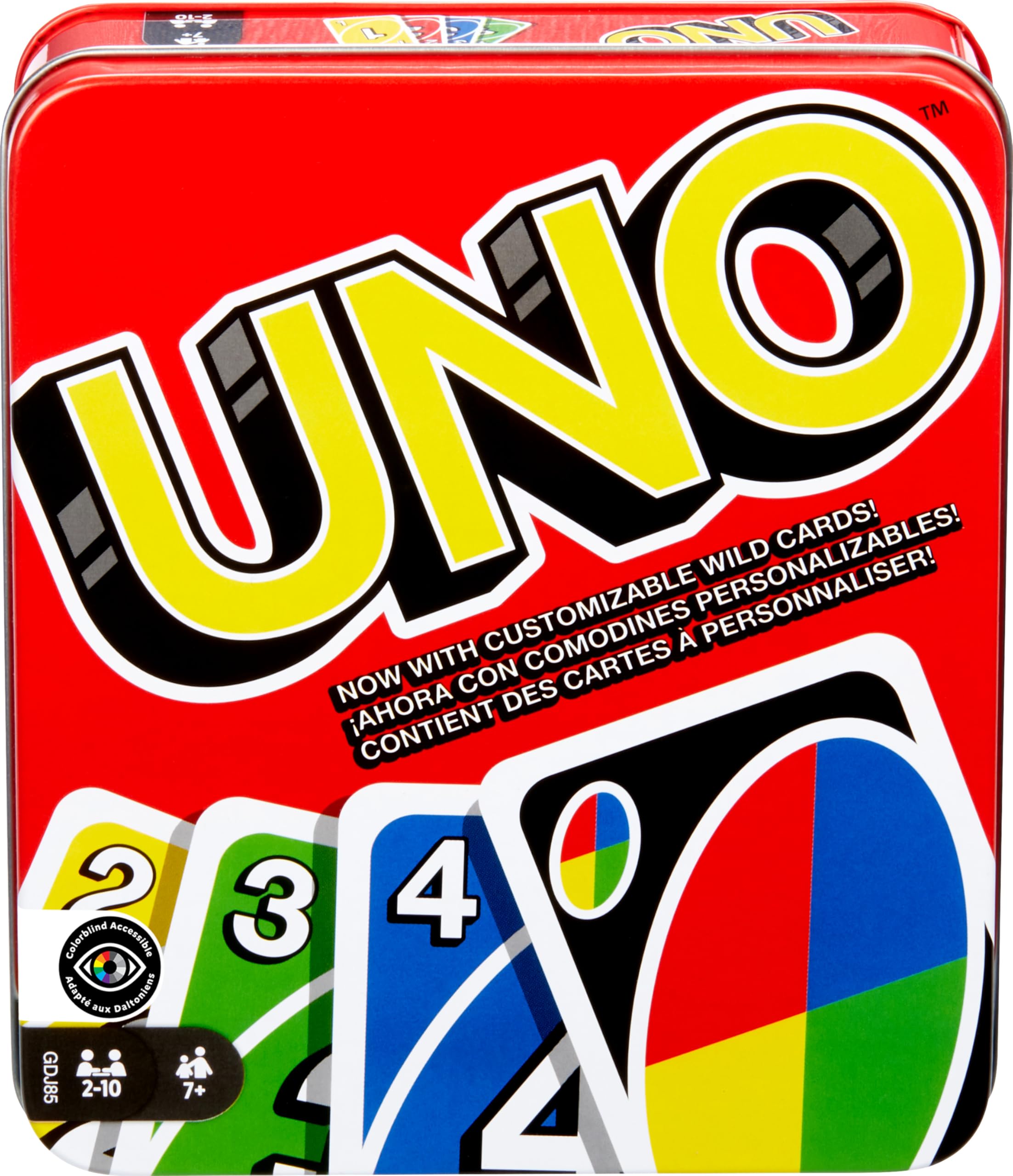
UNO is the rare card game that needs no rules explanation — color-blind symbols and number matching read at a glance, and the metal tin keeps the deck travel-ready. Where the top pick demands arithmetic every turn, this classic plays instantly with zero learning curve, spanning 2 to 10 players without slowing.

Best for mixed-age gatherings where a grandparent, a six-year-old, and a teen share one table — no reading or math prerequisites, and it scales to ten players where junior versions cap at four. The compact card size favors younger hands, with the tradeoff reserved for adult-heavy tables.

The compact cards grip easily in younger hands — adult-heavy tables may prefer a standard-size variant.

Bottom line: For any table where understanding beats teaching time, this classic spans 2 to 10 players — and the tin makes it the easiest travel pick in the set.

#3

UNO Junior

UNO Junior

Preschoolers

Customer rating 4.8/5
Check Price

Worth Noting

  • For kids past six who already know their colors, the matching loop holds little challenge.
Players
2-4
Age Range
3+
Play Time
10 min
Educational Value
Matching, counting
Read the full review

The 3+ age rating is the real differentiator here — no other card game in this set drops below the preschool line. Animal icons stand in for text, so kids match colors and numbers without decoding a single word, and three difficulty levels tune the challenge as skills grow. This pick serves the earliest learners, not mixed-age family nights.

Best for grandparents with young grandchildren or a household centered on one toddler, where a 10-minute round fits attention spans. The 2-4 player cap means holiday gatherings with more than four people will leave someone out — the tradeoff for this younger-skewing pick.

Bottom line: Best for households centered on one toddler or preschooler, where rounds stay short and the learning payoff is immediate.

#4

Taco Cat

Taco Cat

Party game

Customer rating 4.8/5
Check Price

Worth Noting

  • Hard slapping can bend or crease cards during lively rounds
Players
2-8
Age Range
7+
Play Time
15 min
Educational Value
Reflexes, pattern recognition
Read the full review

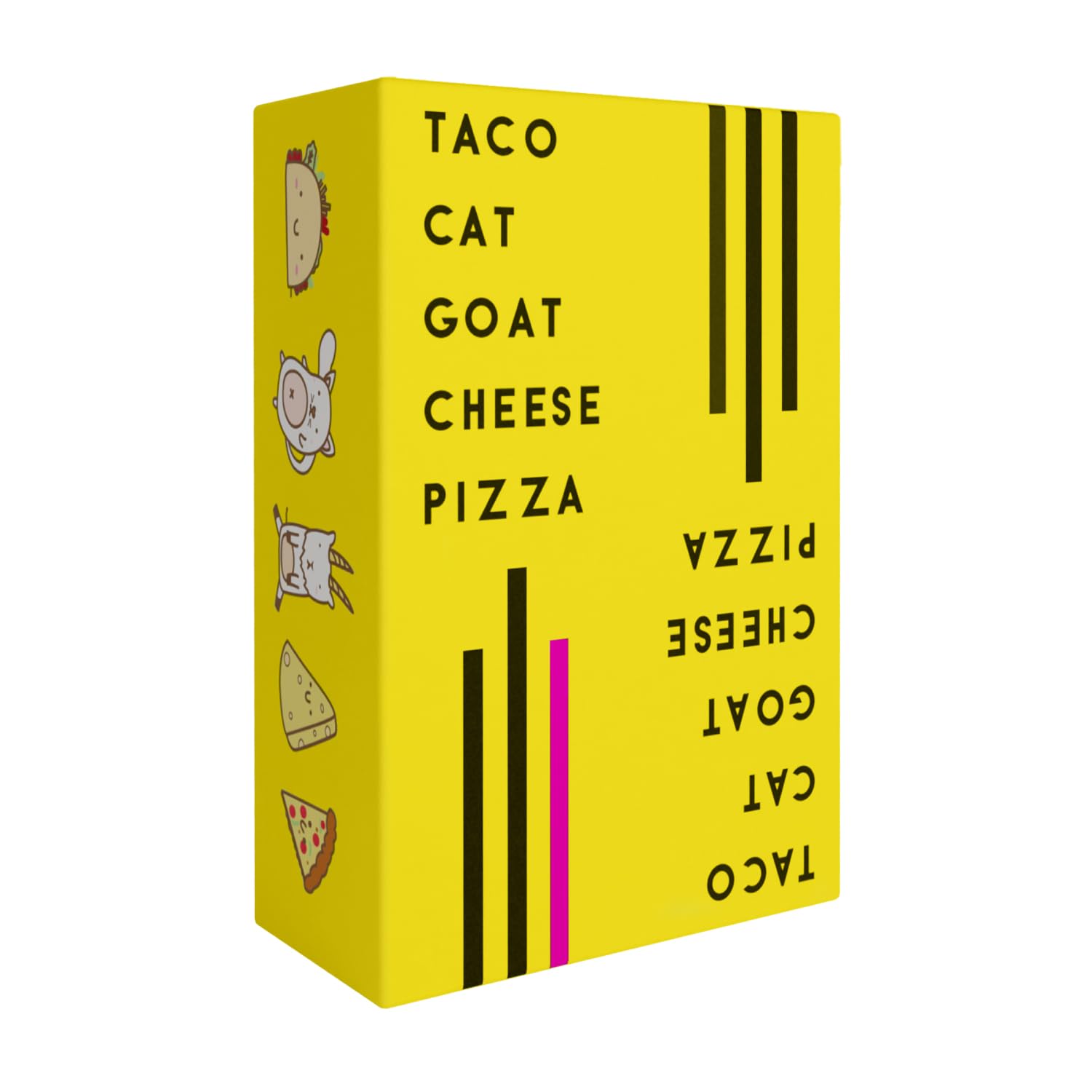
The slap-the-pile mechanic rewards pure speed: spot the matching symbol, smack the stack, and claim the cards. Rounds flow without turns or scoring, just silly words and hands colliding until someone ends up with the deck. The humor lands immediately, and a full game fits comfortably inside 15 minutes.

This suits families who want noise and energy over quiet thought — laughter is the whole point. Kids under 7 may struggle to keep pace, and anyone craving strategic depth should look at the set's math-driven options. Enthusiastic slapping can bend and crease the cards, so expect some wear with heavy play.

A gentle tap beats a hard slap — the deck stays intact with lighter hands.

Bottom line: A pocket-sized shot of adrenaline for families who love fast, loud card games — bring it to parties, road trips, and sleepovers where energy runs high.

#5

Monopoly Deal

Monopoly Deal

Quick duos

Customer rating 4.8/5
Check Price

Worth Noting

  • New players may find the special action cards busy at first
Players
2-5
Age Range
8+
Play Time
15 min
Educational Value
Strategy, basic math
Read the full review

The action-card engine condenses Monopoly's deal-making into quick 15-minute rounds where collecting rent and stealing assets keep everyone involved. Where the top pick leans on arithmetic, Monopoly Deal rewards reading opponents and timing your plays — families who enjoy property trading but not the board game's length will find the same satisfaction here.

Best for families who enjoy Monopoly but want faster play, and for couples or groups up to five. The special action cards take a round or two to master, so younger kids at the edge of the 8+ range will need patience through the first game.

Run a single practice round first — the action cards become clear once everyone has seen them in play once.

Bottom line: The right pick for families who want Monopoly's deal-making without the board-game wait.

#6

Sleeping Queens

Sleeping Queens

Homeschoolers

Customer rating 4.9/5
Check Price

Worth Noting

  • The rulebook's few nuanced rules can slow a first game for the youngest players at the edge of the 8+ range
Players
2-5
Age Range
8+
Play Time
20 min
Educational Value
Addition, subtraction
Read the full review

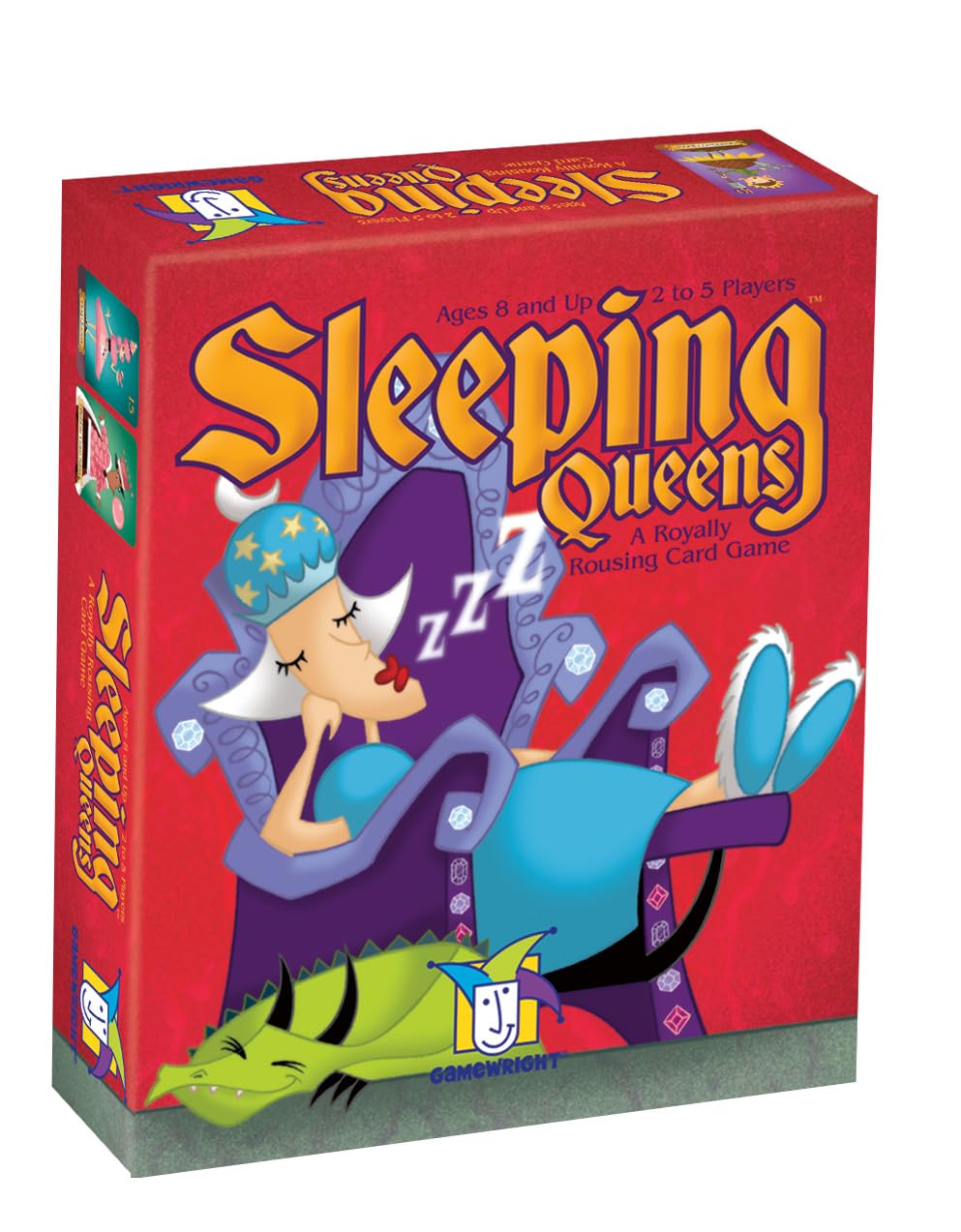
Sleeping Queens embeds addition and subtraction directly into gameplay - every card played is a live arithmetic decision. For homeschoolers, that turns practice into something kids actually request rather than endure. The charming artwork and 20-minute rounds skew younger than the top pick, making it a natural fit for children at the lower end of the 8+ range.

It suits families who want math reinforcement without a workbook feel, and it scales across ages within a household. The few nuanced rules mean the youngest beginners may need a parent walking them through round one before the flow clicks.

Walk through the first round together - the nuanced rules fall into place quickly after that.

Bottom line: For homeschoolers and families with kids 8-12, this delivers genuine arithmetic practice in a package children gladly choose on their own.

#7

Five Crowns

Five Crowns

Rummy fans

Customer rating 4.9/5
Check Price

Worth Noting

  • Card thickness and size can vary between decks, so heavy shuffling may wear some cards sooner.
Players
1-7
Age Range
8+
Play Time
10-15 min
Educational Value
Number recognition, strategy
Read the full review

Five Crowns introduces five suits instead of four, and each round adds a new wild card, so no two deals play alike. The rotating wild-card gimmick drives the replayability, and the game accommodates two to seven players smoothly—making it a dependable choice for mixed-size family gatherings.

Best for families with kids eight and up who already enjoy rummy-style set collection, plus groups that value a flexible player count. Card thickness and size can vary between decks, so heavy shuffling may wear some cards sooner than others.

Sleeving the cards keeps them longer if your deck arrives on the thinner side.

Bottom line: Five Crowns suits families who want a fresh rummy variant without the math homework, provided you accept the occasional thinner deck.

#8

Flip 7

Flip 7

Budget math

Customer rating 4.9/5
Check Price

Worth Noting

  • For families that prefer pure strategy, the chance-driven flips may feel too random.
Players
3+
Age Range
8+
Play Time
20 min
Educational Value
Addition, probability
Read the full review

Flip 7 folds real addition practice into a quick press-your-luck loop: flip a card, then decide whether to risk another and bust. At a budget price it's an easy pick for families who enjoy risk-reward tension and kids 8+. Luck drives every round, so players who dislike chance-driven games get less from it.

Bottom line: Reach for Flip 7 when you want a quick, budget math game for 8+ kids who enjoy risk-reward flips — chance is part of the fun rather than a flaw.

#9

Play Nine

Play Nine

Golf lovers

Customer rating 4.9/5
Check Price

Worth Noting

  • The golf framing is a niche fit, and the price runs above a typical card game.
Players
2-6
Age Range
8+
Play Time
15 min
Educational Value
Strategy, probability
Read the full review

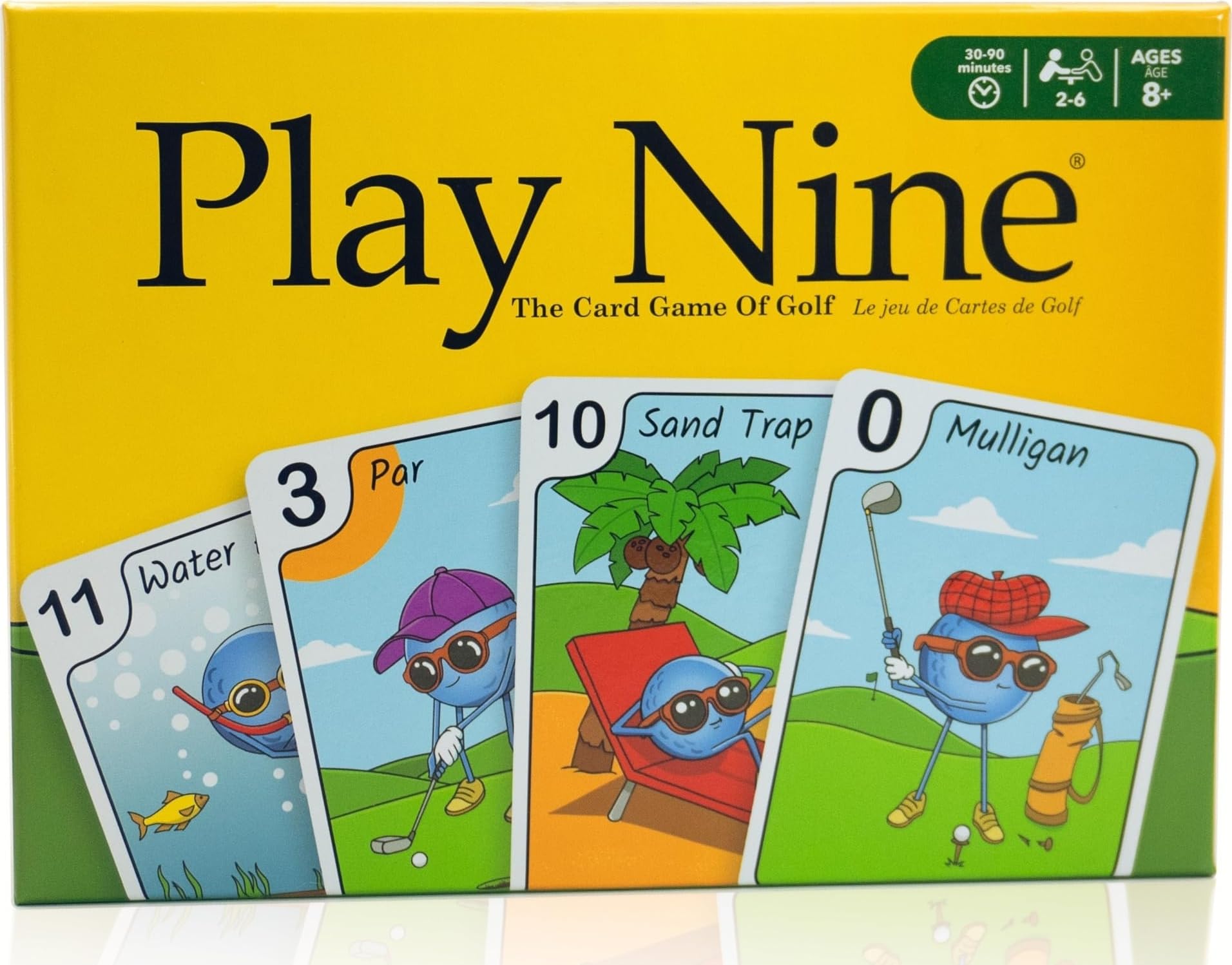
The golf theme is the draw, and it works without any knowledge of the sport - simple rules and 15-minute rounds make it an easy add to family game night, blending luck with light strategy across 2-6 players. The niche framing and a price above a typical card game mean it rewards households that enjoy the theme rather than every family.

Bottom line: A good pick for golf-loving households or families that enjoy a luck-strategy mix and will pay a little more for a themed deck.

#10

Cover Your Assets

Cover Your Assets

Competitive families

Customer rating 4.8/5
Check Price

Worth Noting

  • In cooperative households, the asset-stealing can feel too confrontational for younger players.
Players
2-6
Age Range
7+
Play Time
20-40 min
Educational Value
Strategic thinking
Read the full review

For competitive families, Cover Your Assets builds a satisfying luck-strategy mix around its steal-your-assets mechanic that stays engaging across full game nights. The mid-range price reflects solid replayability, yet households after a learning component will find strategy rather than skill-building payoff, and the cost runs higher than other picks in this set.

Bottom line: For game nights centered on friendly rivalry with kids 10 and up, this competitive pick delivers at a mid-range price.

#11

CAH Family Edition

CAH Family Edition

Older teens

Customer rating 4.8/5
Check Price

Worth Noting

  • Some cards include profanity and bodily humor that contradict the 'family' label
Players
4-20+
Age Range
8+, teen content
Play Time
30-60 min
Educational Value
Social, creative
Read the full review

A huge deck of crude-but-teen-appropriate humor cards sparks loud laughter at gatherings, and the value holds up with hundreds of fill-in-the-blank cards. The 'family-friendly' label overstates things — some cards include profanity and bodily humor that suit teens 13 and up, so households with younger children get more value from other picks in this set.

Bottom line: Best for families with teens 13+ who already share a crude sense of humor — skip it if younger children will be in the room.

How to Choose

Age Appropriateness

The printed minimum age tracks rule complexity and reading level more than literal maturity. A 7+ label usually assumes the child can read card text and hold several scoring conditions in mind at once - skills that arrive at different ages. Buy for the stage your kid is in today, not the birthday on the box.

Games built around icons and picture symbols reach far younger than text-heavy decks, which is why a 3+ matching game works for a preschooler while an 8+ strategy game suits a grade-schooler.

Player Count

Player count shapes pacing more than most buyers expect. A game tuned for two players drags when six crowd the table, while a wide-range design keeps big groups cycling fast but can feel thin with a duo. Decide who actually plays most - a couple on weeknights or a full holiday table - and buy for that group.

Game Duration

Match play time to the window you realistically have. Short rounds under 15 minutes let you stop cleanly and make losing less punishing for young kids. Longer games build deeper strategy, but only if everyone stays engaged to the end - otherwise the box sits unfinished on the shelf.

Card Quality

Card stock and size shift between print runs, and the difference shows quickly. Thin decks bend at the corners, stick together when shuffled, and wear visibly within a few sessions - a real problem for games that demand constant shuffling. Check recent feedback for the specific edition before buying, because the same title can ship very different decks.

Oversized cards solve visibility but break shuffling. A deck larger than a normal hand is awkward for small children to hold and nearly impossible to riffle. For little hands, stiff standard-size stock beats a giant card every time.

Educational Value

Ignore the 'educational' label and look at what the game actually makes players do. The strongest learning games embed the skill in the core loop, so adding two-digit numbers or tracking probability happens on every turn. Generic strategy claims usually teach far less than a silly theme that quietly drills addition.

A math game nobody wants to play teaches nothing. The best picks disguise the practice so completely that kids request them unprompted, which is exactly when the learning compounds.

Frequently Asked Questions