Learning Games Product Guide

10 Best Sudoku Books for Kids in 2026: Which Build Skills Step-By-Step

Find the right sudoku book for your child's age and skill level, with a focus on gradual grid progression and honest age labeling.

10 Best Sudoku Books for Kids in 2026: Which Build Skills Step-By-Step editorial illustration

Parents often pick a sudoku book by its cover age range, only to find the puzzles jump from tiny 4x4 grids straight to full 9x9 squares. That missing 6x6 intermediate step is the most common complaint in kids' sudoku, and it can turn a promising logic hobby into a frustration session.

The books below are chosen for how they handle that progression, how honestly they label their age range, and whether they actually fit the kid they claim to serve. Some titles look great in the listing but fall apart once you open the cover.

#1

Super Sudoku for Smart Kids
Super Sudoku for Smart Kids

All-round family

Customer rating 4.8/5
Check Price

Worth Noting

  • A child who already handles standard 9x9 grids will find the difficulty peaks there, so advanced solvers need a next book.
Number
200+
Age Range
6-10
Large Print
Yes
Grid Variety
4x4, 6x6, 8x8, 9x9
Read the full review

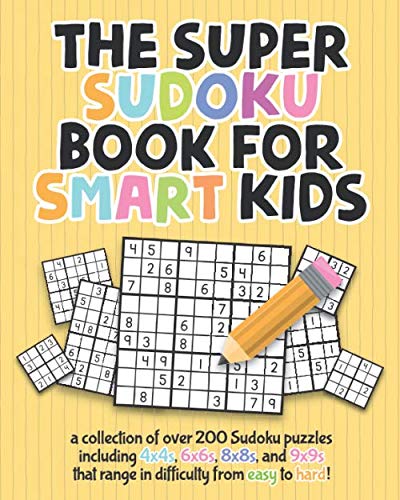
The Super Sudoku Book stands apart from the starter titles by covering all four grid sizes — 4x4, 6x6, 8x8, and 9x9 — across 135 pages, so a 6-year-old can begin at the smallest grid and work up to standard puzzles without switching books later. Step-by-step instructions at the front explain the rules with example grids, removing the guesswork that comes with less structured options. Large print keeps the digits comfortable to read, and full solutions sit at the back for self-checking.

Because the difficulty ladder moves through 6x6 and 8x8 before reaching 9x9, a child who finishes the early grids carries the same ruleset forward rather than facing an abrupt jump straight to the standard format. The short, plain sentences in the instructions let an early reader follow the logic alone once the initial rules are understood. The hard 9x9 section functions as a goal to reach, which keeps the book in rotation longer than a 4x4-only title and gives a clear signal of when a child is ready to move to adult sudoku.

This is the right fit for a family with one child who spans ages 6 to 10, or for parents who want a single purchase to cover a 6-year-old growing into 9x9 over a couple of years. The 200-puzzle total is moderate, so a kid who solves several puzzles each day will work through it within weeks rather than months; occasional solvers get far more mileage. It is not suited to beginners under 6 who need a purely 4x4 introduction.

For a 6-year-old still building reading skills, go through the first instruction page together; the puzzles themselves need far less guidance.

Bottom line: For a family that wants one purchase to carry a child from 4x4 through standard 9x9, this is the book to pick; a daily solver will simply need a harder second volume sooner.
#2

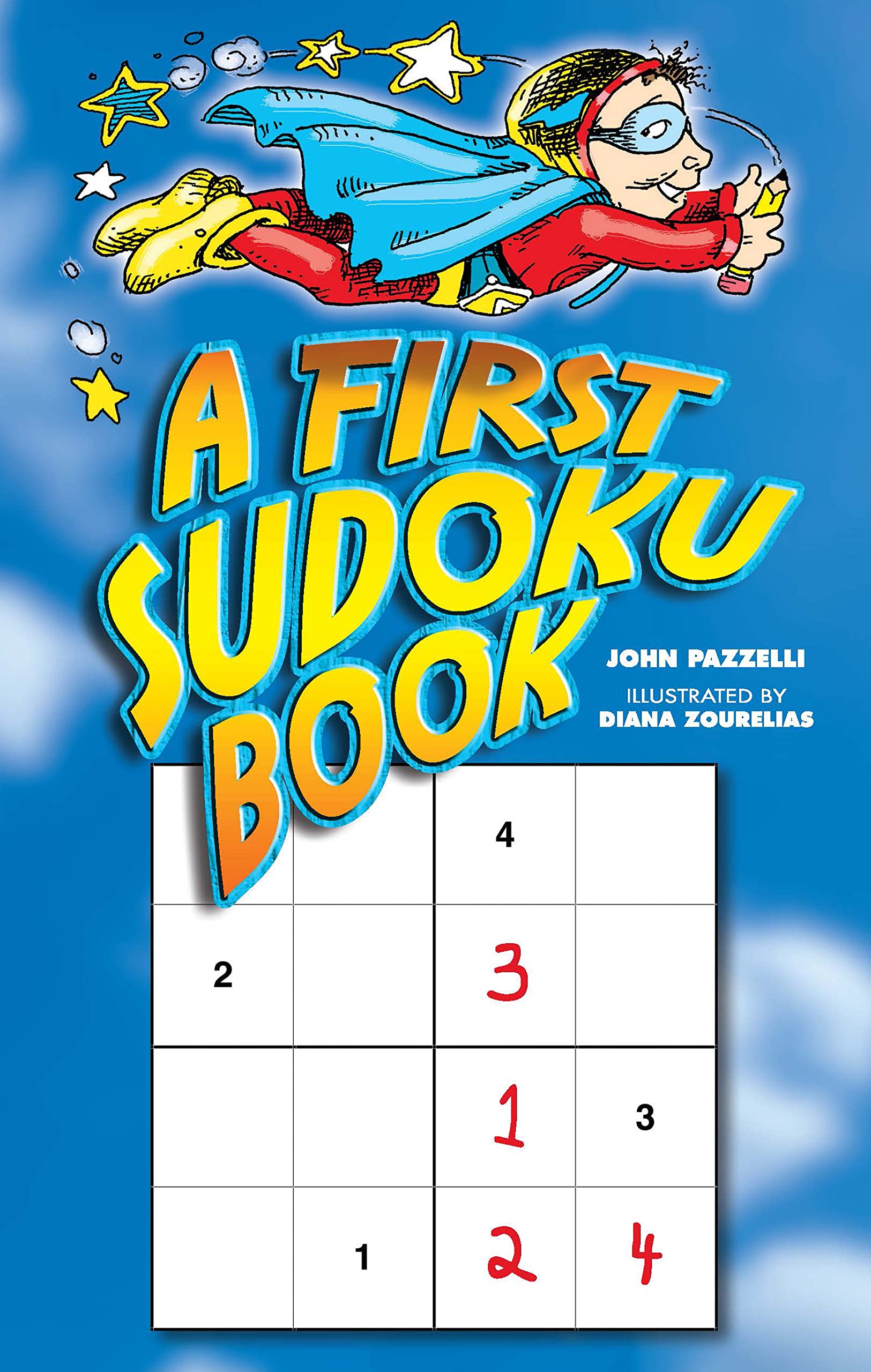
A First Sudoku Book

A First Sudoku Book

Young beginners

Customer rating 4.7/5
Check Price

Worth Noting

  • Only 64 pages, so a quick learner finishes the book in a few sittings rather than a season
  • The step from 4x4 to 9x9 is abrupt, with no 6x6 midpoint to ease the move
Number
64 pages
Age Range
5-7
Large Print
—
Grid Variety
4x4, 9x9
Read the full review

A First Sudoku Book opens where a brand-new solver actually stands — pure 4x4 grids on a clean page that a five-year-old can follow without help. The rules are spelled out at the front in plain words, and the gentle early puzzles reward guesses as much as logic. Where the top pick in this set spans four grid sizes to stretch across several years, this Dover title stays deliberately narrow on the gentlest end of the format.

This is the book for a five- to seven-year-old who has never filled a grid and needs reassurance that puzzles are friendly. It is not a long-term companion: a child who takes to sudoku will outgrow these pages in a few sittings and need a follow-up title, so parents of persistent solvers should plan for that next purchase.

Bottom line: For a five-year-old facing their first grid, this book makes a single completed puzzle feel like a genuine win.

#3

Sudoku for Kids 6-8

Sudoku for Kids 6-8

Ages 6-8

Customer rating 4.8/5
Check Price

Worth Noting

  • Modest 6-8 scope; a quick learner outgrows it by about age nine and needs a follow-up book.
Number
300+
Age Range
5-8
Large Print
Yes
Grid Variety
4x4, 6x6, 9x9
Read the full review

The 300-puzzle count with large print and a smooth difficulty curve fits a young school-age kid well, easing new solvers in at 4x4 and 6x6 before the final 9x9 section. Each grid scale comes with its own instructions and a full answer key, so a child can solve and check their work without a parent hovering. The steady run of early wins keeps a first-time learner motivated, which counts more than raw puzzle volume at this age.

This suits parents of 6-8 year olds who have never touched sudoku and want a large-print start for a road trip or quiet afternoon. The 4x4 and 6x6 grids build a true beginner's confidence quickly, though the closing 9x9 puzzles can test a six-year-old at the bottom of the range, so a parent may want to sit in for those later pages.

Bottom line: Hand this to a first-time 6-8 solver who wants clear instructions and a steady path to standard 9x9 sudoku.

#4

Sudoku for Kids 8-12

Sudoku for Kids 8-12

Ages 8-12

Customer rating 4.8/5
Check Price

Worth Noting

  • The step into 9x9 can feel steeper for a child coming up from a smaller-grid book.
Number
200+
Age Range
8-12
Large Print
Yes
Grid Variety
9x9
Read the full review

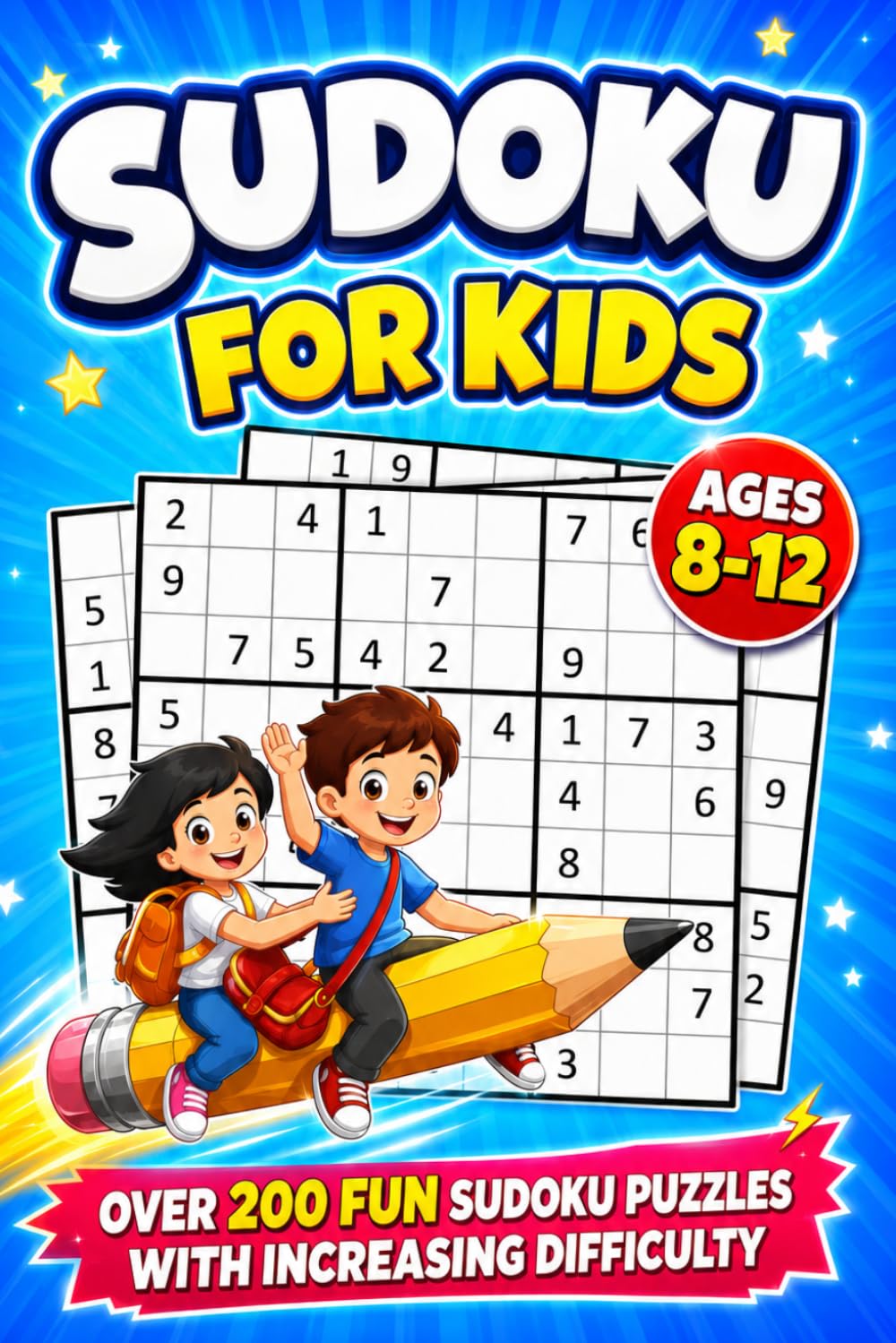
For solvers aged 8-12 who already understand the rules, this book skips beginner grids and goes straight to standard 9x9 puzzles. The single-format layout keeps each page clean and distraction-free. Older kids engage readily, which is why the dedicated grid size works here. At over 200 puzzles with complete answer keys, it offers a solid volume of practice at a budget price.

It suits the 8-12 reader who is already comfortable with the full 9x9 grid — either moving up from a smaller-grid book or starting standard sudoku fresh. It is not a starting point for young beginners, who are better served by a book that eases in with smaller grids first. For a child in the 8-12 range, it works equally well for classroom fill-in practice, travel, or weekend quiet time at home.

Start with the easy section and work up in order — the difficulty ramp works best when followed sequentially.

Bottom line: Best for the 8-12 solver who already knows the rules and wants a straight 9x9 practice book without beginner filler.

#5

Monster Book of Sudoku

Monster Book of Sudoku

Themed fun

Customer rating 4.8/5
Check Price

Worth Noting

  • At 150 puzzles, the book is a short-lived purchase
  • The final pages jump to hard difficulty that can frustrate younger solvers.
Number
150
Age Range
6-9
Large Print
—
Grid Variety
—
Read the full review

The playful monster illustrations turn each grid into a game rather than a worksheet, giving reluctant solvers a reason to keep going. Step-by-step rules open the book, so a child new to sudoku can start on the easiest puzzles without an adult walking them through. Where the top pick in this set wins on grid variety across multiple sizes, this book wins on personality that holds a puzzle-averse kid's attention long enough for the logic to click.

The Monster Book suits a 6-9 year old who finds plain puzzle pages dull and needs the theme as the draw. The final pages jump to hard difficulty that can frustrate younger solvers, and 150 puzzles is a shorter-lived haul than high-volume rivals. Still, the clear instruction plus the monster hook make it a gift-worthy first sudoku — a child unmoved by monsters will not get that hook, so the multi-grid book in this set serves them better.

Keep a younger solver on the easy and medium sections — the hard final puzzles can wait until the basics feel comfortable.

Bottom line: For the puzzle-averse kid who likes monsters, this is the doorway into sudoku — once the hook lands, the multi-grid book in this set becomes the longer-term companion.

#6

Sudoku for Kids 8-12 Large Print

Sudoku for Kids 8-12 Large Print

Large print

Customer rating 4.7/5
Check Price

Worth Noting

  • The plain, unillustrated layout suits practical use but offers little pull for a child who needs visual excitement.
  • For a child who works through several puzzles daily, 200 may run out sooner than higher-volume collections.
Number
200
Age Range
8-12
Large Print
Yes
Grid Variety
9x9
Read the full review

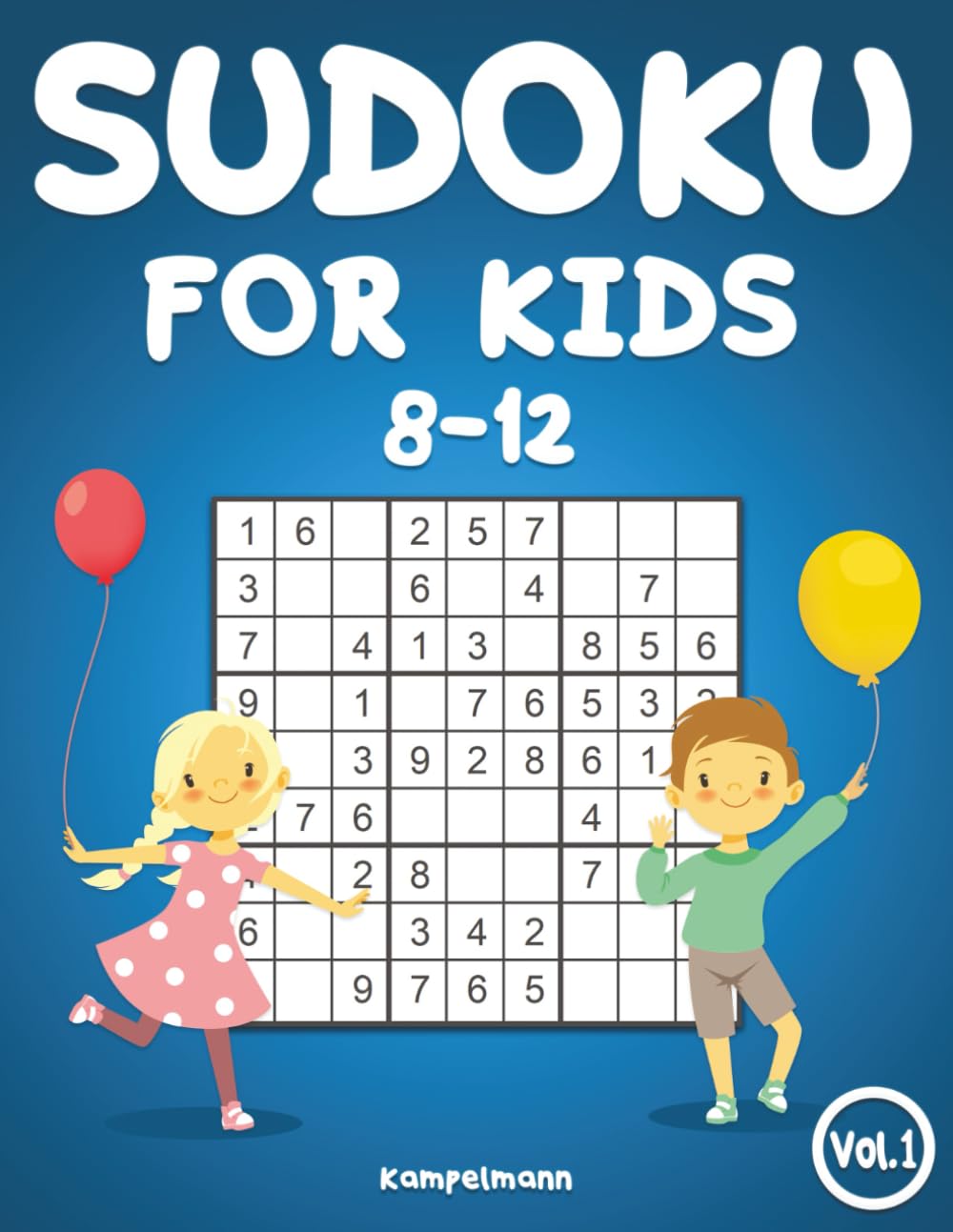
Kampelmann's book puts extra-large print first, keeping digits bold and clear so younger eyes don't have to squint, and giving pencil users generous room to jot candidate numbers. Each 9x9 grid gets plenty of breathing space. Where the easy-to-hard progression option in this set focuses on challenge ramp-up, this title centers on readability, delivering the same clear large-print layout for every puzzle, with solutions at the back.

This is the right book for an 8-12 year old who already handles standard 9x9 sudoku and either reads slowly or writes larger than average. It skips the progressive grid sizes some rivals offer, jumping straight to the full format, so a child coming from a 4x4 or 6x6 starter will face an abrupt step up. Reserve it for a solver comfortable with the standard grid, whether for independent practice at home or a compact activity on school trips.

Bottom line: Good large-print pick for a practiced 8-12 solver who values readable grids and tidy pencil work; it serves that purpose without extra fuss.

#7

Sudoku for Kids (4x4 only)

Sudoku for Kids (4x4 only)

First-time solvers

Customer rating 4.5/5
Check Price

Worth Noting

  • The 4x4-only format limits how far the book carries a child, so a follow-up with larger grids is needed once the small grid is mastered.
Number
240
Age Range
4-10
Large Print
—
Grid Variety
4x4 only
Read the full review

Every puzzle stays on a 4x4 grid, which keeps the numbers small and the layout uncluttered for a 4-6 year old meeting sudoku for the first time. The 240 puzzles offer steady repetition of that single size, ideal for a child who wants to master one format before moving on. The trade-off is lifespan: once the small grid is conquered, a follow-up book with 6x6 and 9x9 grids becomes necessary. Kids past beginner level will find little here.

Bottom line: For a 4-6 year old meeting sudoku for the very first time, this is the gentle entry point — once the small grid is conquered, expect to hand off a larger-grid book.

#8

Sudoku for Kids 6-12

Sudoku for Kids 6-12

Multi-age families

Customer rating 4.6/5
Check Price

Worth Noting

  • The broad 6-12 span means no single age or skill level gets a deep, focused treatment
Number
340
Age Range
6-12
Large Print
—
Grid Variety
4x4, 6x6, 9x9
Read the full review

340 puzzles across 4x4, 6x6, and 9x9 grids cover the full 6-12 span, making one budget purchase serve several children at different levels. The three-step progression gives beginners a gentle path from tiny grids up to standard sudoku. Layout finish trails the top picks, with occasional printed inconsistencies in some copies, and spreading across every age means no single level gets deep treatment. It fits families wanting one book for everyone rather than a specialist title for a single age.

Bottom line: For families with two or more kids at different levels, this single book covers everyone — provided no one in the house is an advanced solver.

#9

Sudoku for Kids 6-8 (500)

Sudoku for Kids 6-8 (500)

Puzzle volume

Customer rating 4.5/5
Check Price

Worth Noting

  • Focused on the 6-8 band, so a fast solver outgrows it and a younger beginner needs another title.
Number
500+
Age Range
6-8
Large Print
Yes
Grid Variety
—
Read the full review

From a brand new to kids' sudoku, this 500-puzzle book pairs deep volume with large print at a budget price — ideal for a 6-8 year old who works through puzzles faster than the family can buy replacements. Its age range and print quality have not been vetted as thoroughly as the category leaders, so treat the advertised difficulty as a starting point rather than a promise, and size expectations for a solver on the younger edge of the band.

Bottom line: The volume play for a 6-8 year old who flies through puzzles and whose parent wants maximum puzzles per dollar over the polish of a more established title.

#10

Easy Sudoku for Kids 7-9

Easy Sudoku for Kids 7-9

Easy entry

Customer rating 4.6/5
Check Price

Worth Noting

  • No themed illustrations to engage a reluctant child
  • Fewer puzzles than some same-price rivals, so a fast solver works through the book quickly.
Number
150+
Age Range
7-9
Large Print
Yes
Grid Variety
—
Read the full review

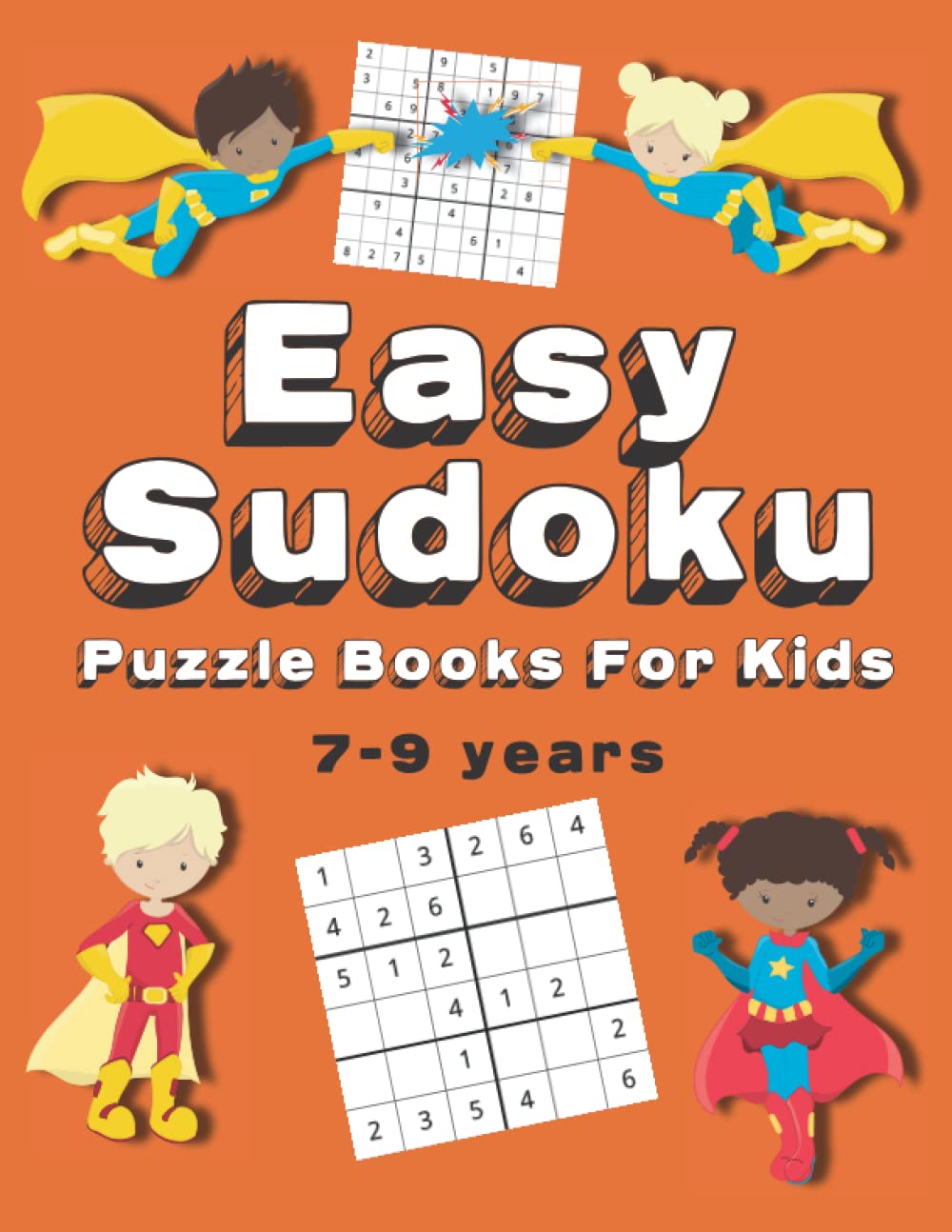
The large-print layout and clean, uncluttered pages give 7-9 year olds an easy entry into sudoku without eye strain during longer sessions. It wins on simplicity rather than extra features, staking no standout claim among similar titles. That focus suits children who already grasp the basics and simply want steady practice — a dependable daily routine for kids ready to solve on their own.

Bottom line: Fits a 7-9 year old who already knows sudoku basics and just needs a steady supply of easy, large-print puzzles without flash.

How to Choose

Grid Variety

Grid size is the backbone of a kids' sudoku book. The standard path runs 4x4 (very easy), 6x6 (intermediate), and 9x9 (standard). Books that skip the 6x6 step force a child to double the size of the puzzle overnight, which is a common cause of lost interest.

Look for a book that includes all three sizes, at least in the early sections. A book with only 9x9 grids is fine for an 8-year-old who already knows the rules, but it will overwhelm a 6-year-old who is still counting 1 through 4.

Age Range Alignment

The age range printed on the cover is a marketing claim, not a guarantee. Some books labeled for ages 6-8 contain puzzles that only make sense for 8-12 year olds, and vice versa. The reading age listed in the specifications is often more reliable than the title.

Check the actual grid sizes inside the sample pages. If a book says 'ages 6-8' but every puzzle is 9x9 with small print, it will frustrate a 6-year-old. A book that matches the child's current grid comfort is a better purchase than one that jumps too far ahead.

Number of Puzzles

Puzzle counts can be misleading. A book claiming 500 puzzles may cram five grids onto a single page with print too small for a child to write in. A well-spaced book with 200 puzzles might be a better value because it is actually usable.

For a first sudoku book, 100-150 puzzles is plenty to establish the habit. For a kid who already loves sudoku, look for 200-300 puzzles with a mix of difficulty levels. The quality of the grid layout and white space matters more than the raw count.

Large Print

Large print matters more in sudoku than in most kids' books because the puzzles are grid-based. A 9x9 grid with small squares is hard to fill with pencil numbers, and erasing mistakes in a tight space can create tears and frustration.

A large-print book typically uses a bigger font and more space between squares, making it easier for kids to write and wipe. For kids under 8 or those who write larger, this is not a luxury—it is a usability requirement.

Instructions and Guidance

A good instruction section teaches the rules in a way a child can follow without a parent explaining every step. Look for books that include examples of completed grids and explain the 'one digit per row, column, and box' rule with visuals.

Some books skip instructions entirely and assume the child already knows sudoku. If this is a first book, that omission is a dealbreaker. Books with step-by-step guidance at the front are the most reliable for new solvers.

Frequently Asked Questions