Learning Games Product Guide

9 Best Sight Word Games of 2026: Which Cover All 220 Dolch Words

Find sight word games that teach, not just entertain — with honest unique-word counts, so you can match the game to your child's reading level.

9 Best Sight Word Games of 2026: Which Cover All 220 Dolch Words editorial illustration

Many sight word games advertise comprehensive Dolch lists, but the number of unique words can vary wildly from a couple dozen to the full 220. Kids quickly outgrow a limited set, and parents end up buying multiple games to keep up with school lists.

Paper cards are another weak point—they tear after a few classroom sessions, leaving you with a half-usable game. The right set balances word coverage with components that survive real use, whether that means bingo cards, pop cards, or swatters.

This guide focuses on what actually matters: unique word counts, gameplay that keeps kids engaged, and durability for the setting you will use it in—so you can match the game to your child's level and learning style.

#1

LR Sight Word Stomp

LR Sight Word Stomp

Active learners

Customer rating 4.8/5
Check Price

Worth Noting

  • Uses four stompers for up to four players at a time, so a full class needs station rotation.
  • Color-leveled tiers can place words beyond their true reading difficulty, so a quick adult pre-sort helps emerging readers.
Players
2-4
Age Range
5+
Game Type
Stomp
Durability
Plastic pieces
Read the full review

Sight Word Stomp packs all 220 Dolch words onto 110 double-sided cards, with four dinosaur stompers turning memorization into a physical, get-out-of-your-seat game. Kids read a word aloud and stomp the matching card, and the full-body response holds attention far longer than flashcard drills while still building real word recognition and early reading comprehension.

Rounds move fast enough to hold a five-year-old's focus, and the energetic format naturally rewards the active learners who tune out seated drills. The budget price brings the complete Dolch list within reach of everyday parents, not just schools, and the plastic stompers hold up against the wear of weekly classroom centers.

Best for active learners and classrooms with room to move — the stomping action needs open floor and carries noise, so compact or quiet spaces fit better with the smaller card games in this lineup. If you want seated, quiet play instead, the pop-and-flashcard options here suit that preference more directly.

Clear a soft play area before starting — stompers send cards scattering across the floor.

Bottom line: For active learners and classrooms with space to move, this is the whole Dolch list in one energetic game.

#2

LR Pop for Sight Words Bundle

LR Pop for Sight Words Bundle

Small groups

Customer rating 4.8/5
Check Price

Worth Noting

  • Seated, quiet rounds do little for kids who need movement while learning
Players
2-4
Age Range
5+
Game Type
Pop
Durability
Paper cards
Read the full review

The bundle pairs two classic pop games for 184 unique words — the fullest card-based set in this lineup and a near-complete Dolch list. Rounds move fast: draw a popcorn card, read it aloud, and keep it; pulling the POP card sends your pile back. Kids age 5 and up sit at a table for a genuinely engaging reading drill that folds into its tins.

This suits parents and reading teachers running two-to-four-player small groups, plus families who want a full set to carry between home and the car. The paper cards will show wear under heavy classroom rotation, so this excels for home and small-group use rather than daily whole-class drilling — the stomper game with its plastic pieces owns that territory.

Bottom line: For tabletop small groups and travel, this bundle covers nearly the whole Dolch list in two fast rounds without demanding the floor space the stomper game needs.

#3

BAMBINO TREE Sight Word Bingo

BAMBINO TREE Sight Word Bingo

Teachers, large groups

Customer rating 4.8/5
Check Price

Worth Noting

  • Under weekly classroom handling the card stock feels thin and may tear
  • Word count stops at 108, so kids advancing past early reading lists outgrow it
Players
2-24
Age Range
4-8
Game Type
Bingo
Durability
Cardboard
Read the full review

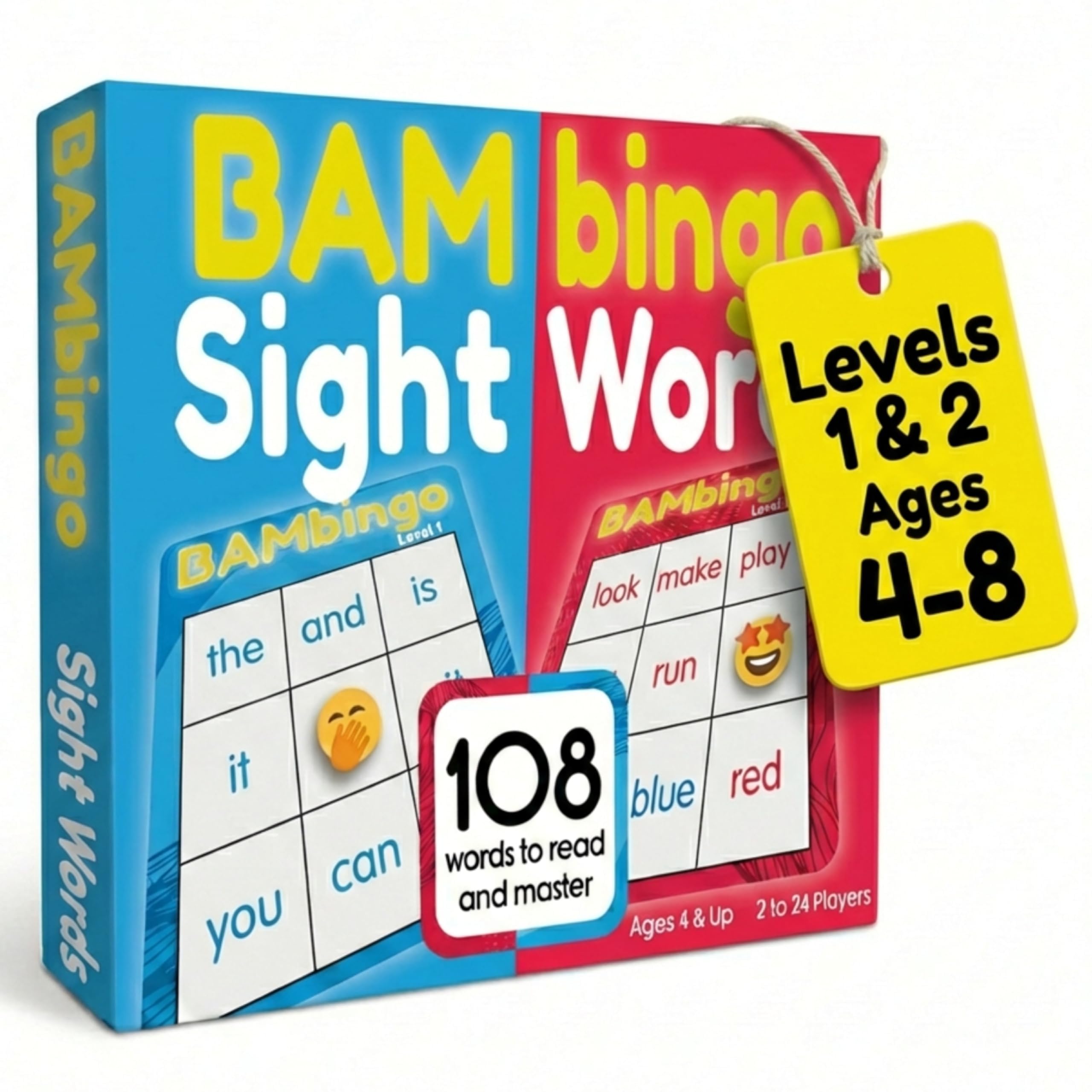
Up to 24 players work through 108 words across two difficulty levels, letting an entire class share one bingo game. That tops the classic 46-word bingo set in this roundup, and the two-level split suits mixed-ability groups from kindergarten through mid-first grade.

This one lands with classroom teachers and homeschool groups that run bingo as a regular group activity. The tradeoff shows up in the card stock, which holds up fine for weekly play but wears under constant daily rotation — schools that rotate games every day should expect a shorter lifespan.

Laminate the playing cards before heavy classroom rotation and they'll hold up across many more games.

Bottom line: A dependable group-bingo option for classrooms wanting 108 words across two reading levels without the active-play energy of the top pick.

#4

Coogam Wooden Fishing Sight Words

Coogam Wooden Fishing Sight Words

Toddlers, Montessori

Customer rating 4.8/5
Check Price

Worth Noting

  • Two-player max keeps it to pairing rounds
Players
2
Age Range
3+
Game Type
Fishing
Durability
Wood
Read the full review

The full 220-word Dolch list arrives in a durable wooden fishing format that survives toddler handling, where the active stomper game needs floor space and big movements. Fishing with a magnetic rod adds fine motor practice to each word match, and the two-player setup suits parent-child or sibling sessions rather than whole-class rounds.

This suits Montessori-style homes and toddler-focused learning, where the calm, hands-on format keeps a 3- to 5-year-old engaged. One boundary: the small magnets on the fish can detach, so the youngest players should be supervised to keep the pieces away from little mouths.

Bottom line: For a toddler-focused home, this delivers the complete Dolch list through hands-on wooden play — a calmer, one-on-one counterpoint to the active stomper game.

#5

Fidget Game Sight Words

Fidget Game Sight Words

Sensory learners

Customer rating 4.7/5
Check Price

Worth Noting

  • Premium price sits well above other picks in this lineup
  • Some word packs sit above the reading level printed on the box, so a grown-up sorts them first
Players
Multiple
Age Range
3+
Game Type
Cards + Fidget
Durability
Paper + silicone
Read the full review

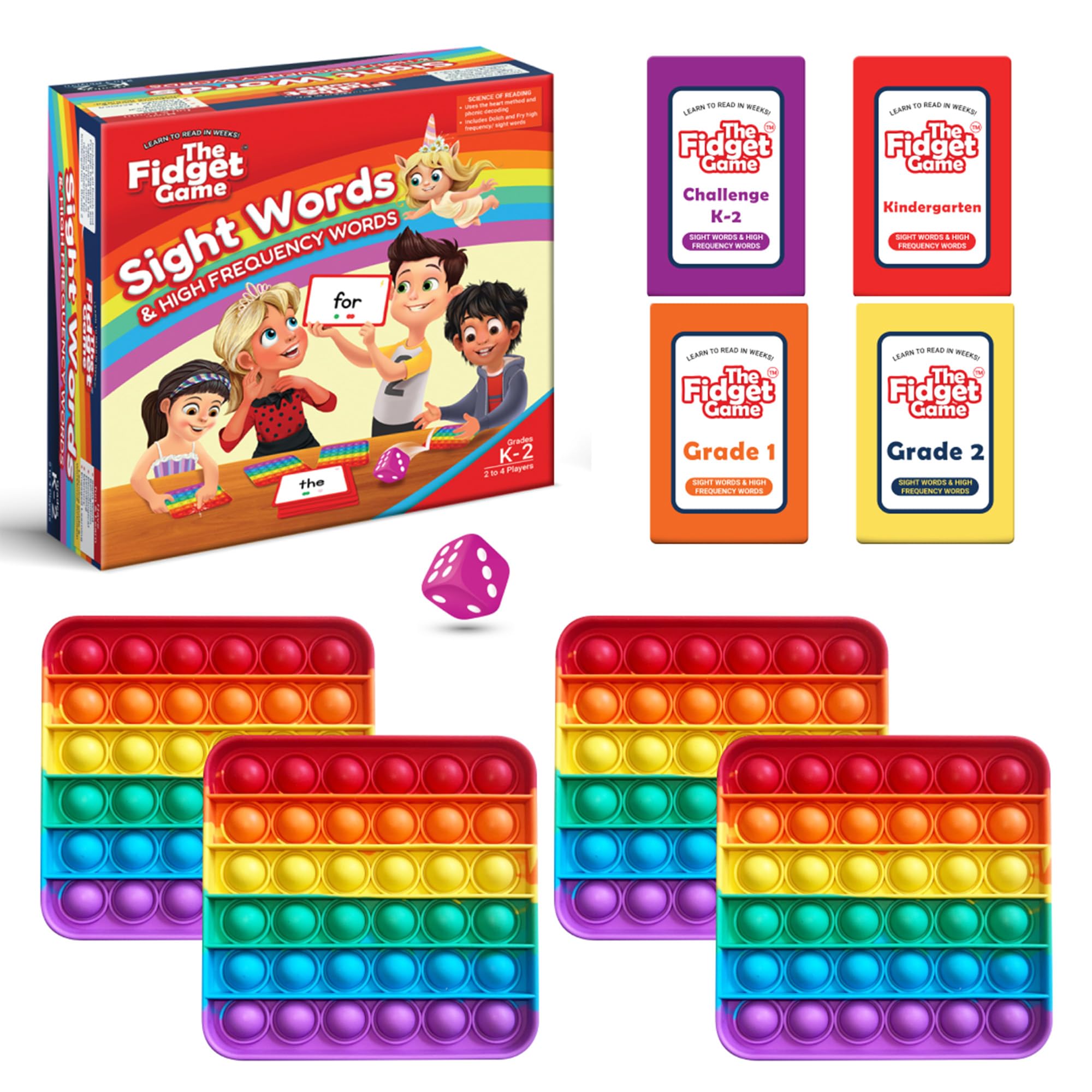
The Fidget Game Sight Words brings the full 220-word Dolch list to five color-coded packs, each paired with pop fidget mats that give restless hands somewhere to go during word practice. Where the top pick gets kids out of their seats, this one keeps them seated and engaged through tactile feedback. Siblings at different reading stages can each play their own pack while sharing one set of mats.

Best for a child who fidgets through flashcard drills or loses focus easily, plus parents wanting multi-level practice in one box. A grown-up should sort packs before play, since some words sit above the reading level printed on the box.

Bottom line: Best for a household with a fidget-prone early reader who benefits from hands-on sensory input during word practice.

#6

TREND Sight Words Bingo

TREND Sight Words Bingo

Classrooms, families

Customer rating 4.8/5
Check Price

Worth Noting

  • A 46-word set limits coverage to one level, outgrown before second grade.
Players
3-36
Age Range
5+
Game Type
Bingo
Durability
Cardboard
Read the full review

Three to 36 players and six ways to play make this the most flexible bingo set in the lineup, a classroom staple for decades. With only 46 words spanning one level, second-graders outgrow it — this suits kindergarten and ESL beginners.

Bottom line: Best for kindergarten teachers and ESL classrooms where a modest word count and a proven format meet young beginners at their own level.

#7

ThinkFun Zingo! Sight Words

ThinkFun Zingo! Sight Words

Young beginners

Customer rating 4.7/5
Check Price

Worth Noting

  • Only 24 unique words
Players
2-6
Age Range
4+
Game Type
Tile Bingo
Durability
Cardboard
Read the full review

The Zinger dispenser shoots tiles out with a satisfying click, keeping 4-6 year olds locked into quick, bingo-like rounds. It works well as an introduction to sight words, but the 24 unique words cap the game early — a fit for the very first stage of reading, not for children advancing toward a full Dolch vocabulary.

Bottom line: Best for families with a 4-6 year old encountering sight words for the first time, where the compact word list matches the earliest stage of learning.

#8

SpringFlower Sight Word Game

SpringFlower Sight Word Game

Budget swatting

Customer rating 4.5/5
Check Price

Worth Noting

  • For a child memorizing letter patterns, an occasional misspelled fly may reinforce the wrong spelling
Players
Up to 4
Age Range
5-6
Game Type
Swat
Durability
—
Read the full review

At an entry-level price, this swat game packs 224 double-sided flies, more words per dollar than pricier options, and kids engage quickly with the bug-swatting action. Word accuracy varies between sets, making this a poor fit when a dependable word list matters, but budget-focused families get strong value from practice that feels like play.

Bottom line: Best for casual at-home practice on a tight budget, provided you check each fly for spelling errors before handing it over.

#9

SpriteGru Sight Word Bingo

SpriteGru Sight Word Bingo

Budget classrooms

Customer rating 4.8/5
Check Price

Worth Noting

  • Stops at 120 of the 220 Dolch words, so second-grade readers and beyond need a supplemental set.
Players
Many
Age Range
4-8
Game Type
Bingo
Durability
—
Read the full review

Twelve double-sided boards and 120 words across two reading levels make this one of the cheapest ways to seat a full classroom for bingo. The catch: card durability and spelling consistency under repeated use are not yet verified, so it rewards buyers who weight board count and price over confirmed long-run performance.

Bottom line: For a budget classroom that needs many boards today and can accept an unverified durability read, this delivers more seats per dollar than the established bingo sets.

How to Choose

Unique Word Count

Total piece count is a marketing number, not a learning number. A 72-tile Zingo box holds just 24 unique words; the rest repeat for gameplay variety. The same pattern appears in other sets that shout '200 pieces' while cycling the same 50 words across multiple cards.

Match the unique word count to your child's current reading list. A 24-word game is fine for a 4-year-old just starting, but a second-grader working through Level 2 and 3 Dolch lists will outgrow it in weeks. Count the distinct words before you buy, and check whether the set covers the specific grade level your child needs.

Game Style

Different mechanics demand different physical and cognitive skills. Swat and stomp games get kids out of their seats, using hand-eye coordination and reaction speed — perfect for energetic learners but they need floor space and can get rowdy. Bingo and pop games keep everyone seated and focused on the cards, making them portable and easy to manage in a classroom center.

Think about the child's temperament and the environment. A fidgety kid who cannot sit through bingo will thrive with a stomp game that channels that energy into reading. Meanwhile, a quiet household game session is better served by a card-based pop game you can play on the couch without clearing the coffee table.

Player Count

Player capacity directly determines classroom usability. Bingo games scale from 2 to 36 players because each person works from their own board, while swat and stomp games cap out at 4 players since everyone shares the same word pile. That makes bingo the only practical choice for whole-class instruction or large family gatherings.

For smaller groups, a 2-4 player game works fine, but check whether the game keeps everyone actively engaged. Some 4-player card games force kids to wait turns while others watch — bingo and stomp games involve all players simultaneously, which is why they dominate classroom settings.

Component Durability

Most sight word games use thin cardboard that bends, peels, and tears after repeated handling, especially when little fingers grab at cards. Paper pop cards survive a few dozen rounds before the edges fray; wooden fishing pieces last for years. The material choice is a direct trade-off between cost and lifespan.

Consider how often the game will actually hit the table. A family playing once a week can live with paper cards. A classroom using the set daily needs lamination or a wooden alternative — a torn bingo card means a child sitting out during practice, which defeats the purpose.

Age Suitability

Age ratings reflect more than reading level — they also signal the motor skills required. Stomp games need steady foot coordination and quick reflexes, which is why they start at age 5. Fishing games suit 3-year-olds because the magnetic wand is forgiving, but a 5-year-old may find them too slow. Zingo's dispenser mechanism works for 4-year-olds who can pull a slider, while traditional bingo requires matching a spoken word to a printed card — a skill that clicks around age 5.

The right age range ensures the game challenges without frustrating. A game set for 3+ uses basic words and simple mechanics for early sight word exposure; one marked 5+ assumes some letter recognition. Pair the age label with your child's actual reading stage, not just their birthday.

Frequently Asked Questions