Learning Games Product Guide

12 Best Spelling Games for Kids in 2026: Full Alphabet Included

Which spelling games actually include every letter and keep growing with your child — and which budget kits quietly omit letters like Q and X.

12 Best Spelling Games for Kids in 2026: Full Alphabet Included editorial illustration

Many spelling games for kids look nearly identical on the shelf — letter tiles, picture cards, a promise of phonics progress. One detail separates the sets that teach from the sets that quietly frustrate: whether every letter you need is actually in the box. Rare letters are the first thing to check and the easiest thing to miss.

Budget kits commonly omit uncommon letters like Q, X, and Y, which can turn word cards into puzzles a child cannot solve no matter how hard they try. Fixed preset boards have the opposite problem: once the same 16 words are mastered, the game stalls — and so does the learning. The practical decision comes down to closed word lists versus open-ended tiles that grow with your child.

The picks here balance the factors that matter most — complete letter sets, word variety that expands, durable materials that survive small hands, and storage that keeps pieces contained. You get a game that keeps teaching instead of one that runs out of words.

#1

Melissa & Doug See & Spell

Melissa & Doug See & Spell

Preschool spelling

Customer rating 4.8/5
Check Price

Worth Noting

  • Rare letters like W, V, and X come as single pieces, so a lost one leaves a board incomplete
  • Vocabulary plateaus at the fixed 16 words once a child masters all the boards
Storage
—
Age Range
4+ years
Word Variety
16 fixed word combos
Letter Completeness
Full alphabet, one each
Read the full review

Most-reviewed spelling toy in the category, and one children return to daily — parents report kids repeatedly choosing the See & Spell over other toys during free play. Letter recognition and early spelling gains follow quickly, with the physical act of placing wooden letters reinforcing phonics in a way flashcards cannot match. The all-wood build and picture boards hold up to years of small hands, which is what makes the mid-range price easy to justify.

The draw is the hands-on matching: children slide letters onto the picture boards, self-correcting as they go, which builds confidence without adult prompting. Parents describe it as a go-to for quiet, screen-free play that holds attention far longer than a worksheet. It suits tactile learners who benefit from physically placing each piece rather than tracing letters on a page, and the wooden feel gives it a heft cheap plastic sets lack.

Best for parents of 3-to-6-year-olds who want battery-free letter practice that feels like a toy. The fixed 16-word set plateaus once a child masters every board, so it targets the early spelling window rather than 7-and-up kids who have outgrown three- and four-letter words.

Bottom line: A wooden letter-matching set that turns daily play into visible spelling progress — the strongest fit for tactile learners in the 3-to-6 early spelling stage.

#2

Hasbro Scrabble Junior

Hasbro Scrabble Junior

Family game night

Customer rating 4.7/5
Check Price

Worth Noting

  • Cardboard tiles can rip and the folding board may split at the crease with repeated play.
Storage
—
Age Range
5+ years
Word Variety
Open-ended, two levels
Letter Completeness
Full alphabet
Read the full review

Scrabble Junior pairs its double-sided board with a real progression: the beginner face shows pre-printed words for letter-matching, while the advanced face drops to a blank grid for free word-building. That two-level structure keeps the game relevant from age 5 through 8, something the top pick's fixed 16-word set can't match.

It suits families who want a recurring game-night ritual and multi-age sibling play rather than a solo activity. The cardboard tiles and folding hinge are the one place the build shows its mid-range price, so heavy-handed younger players need supervision.

Bottom line: For households that treat spelling as a shared family activity rather than a solo drill, the two-level board delivers more replay sessions than any static letter set in this lineup.

#3

Bananagrams My First

Bananagrams My First

Travel play

Customer rating 4.8/5
Check Price

Worth Noting

  • No picture cues on tiles, so children need letter recognition before meaningful word-building can start
Storage
Banana pouch
Age Range
4+ years
Word Variety
Unlimited combinations
Letter Completeness
Full alphabet
Read the full review

Open-ended play that never plateaus — 93 color-coded tiles in a banana pouch form an endless run of words, where the fixed-board sets in this lineup stop teaching once a child masters each card. The pouch slips into a backpack, making it the travel pick for preschoolers and early readers 4-7, and the tactile lowercase shapes fit kids learning with dyslexia support. It rewards families who already know the alphabet basics, since the tiles carry no picture cues — kids still matching first pictures to words will want the top pick's picture boards instead.

Bottom line: A portable spelling game whose open-ended tile combinations keep pace with a growing vocabulary — the pick for families who play on the go.

#4

Gojmzo Wooden CVC Spelling

Gojmzo Wooden CVC Spelling

Value wooden set

Customer rating 4.7/5
Check Price

Worth Noting

  • For a full alphabet review, rare letters q, y, z can be missing from the set
Storage
—
Age Range
3-6 years
Word Variety
50 CVC words
Letter Completeness
Full alphabet, 53 blocks
Read the full review

Gojmzo pairs hefty wooden blocks with thick double-sided flash cards that hold up to repeated handling, at a mid-range price that undercuts brand-name equivalents — the value pick among the wooden CVC sets. Fifty cards walk kids 3–6 through word families, earning strong marks for letter and spelling fundamentals in homeschool and kindergarten settings.

Best for homeschools and kindergarten classrooms that want self-directed CVC practice without the brand markup — the build handles daily use and kids manage the picture-scaffolded cards on their own. Families that need a complete alphabet for full letter review should count the letter tiles on arrival.

Bottom line: A sturdy, self-directed CVC set for homeschools and kindergartens that want quality without the brand markup — the value pick for daily practice.

#5

ThinkFun Zingo Word Builder

ThinkFun Zingo Word Builder

Pre-reader engagement

Customer rating 4.7/5
Check Price

Worth Noting

  • The slider can stick and occasionally spill tiles mid-play.
  • The same short CVC words repeat, capping how long the cards teach once boards are mastered.
Storage
Storage box
Age Range
5+ years
Word Variety
Short CVC words
Letter Completeness
Full alphabet
Read the full review

The interactive zinger dispenses two color-coded tiles per press, and the push-click anticipation turns CVC word-building into games kids actively queue up for. That momentum holds attention longer than static letter boards, and the rules are simple enough for pre-readers to start playing right away.

Best for pre-readers 5-7 in classrooms and groups of 2-6, where the competitive zinger energy keeps every child at the table together. The premium price buys that novelty more than word volume, which makes it a better fit for shared group play than solo practice on a single board.

Bottom line: A polished way to turn early phonics into high-energy shared play, this fits classrooms and small groups of pre-readers who need the draw to stay engaged.

#6

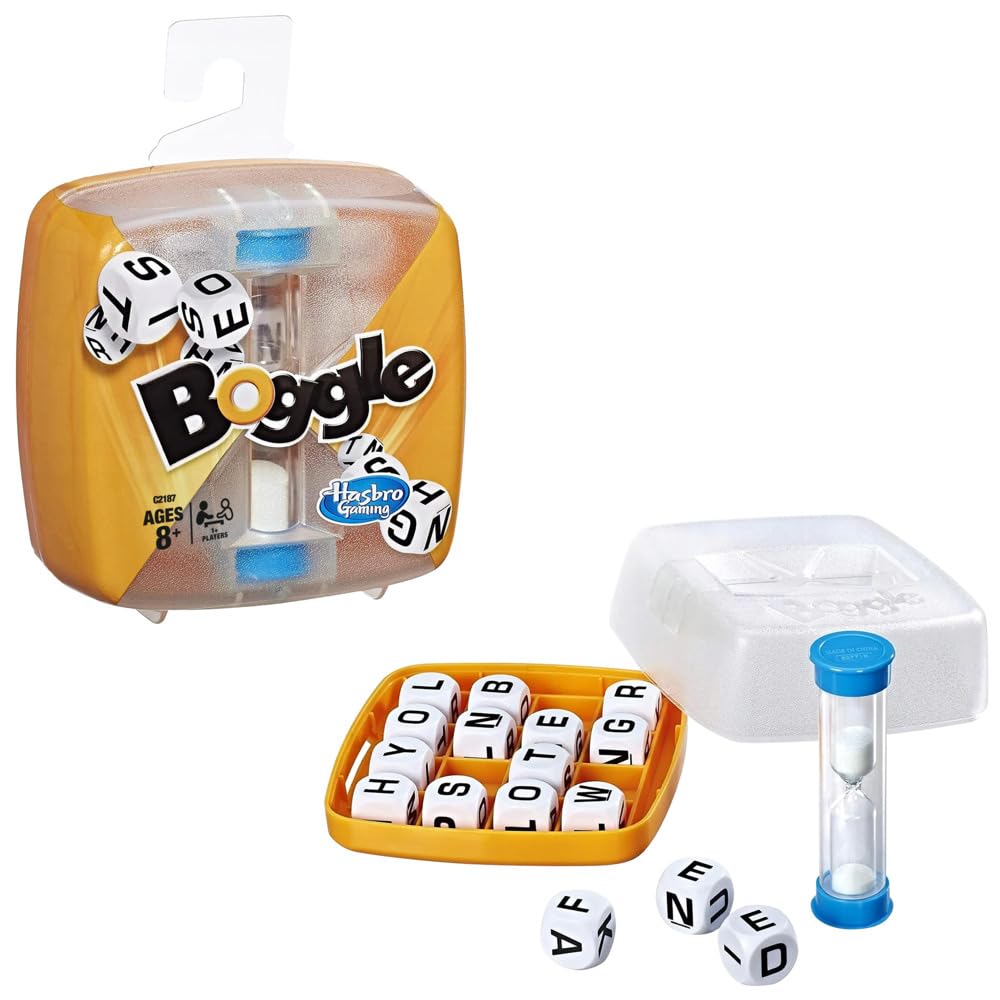
Hasbro Boggle Classic

Hasbro Boggle Classic

Older kids 8+

Customer rating 4.8/5
Check Price

Worth Noting

  • During travel, the locking lid resists opening and can send dice skittering
Storage
Compact, portable
Age Range
8+ years
Word Variety
Open-ended words
Letter Completeness
16 letter cubes
Read the full review

The entire game fits in a small tray with 16 letter cubes and a 90-second sand timer — no board, no cards, no scoring sheets to manage. Players race to find words in the grid, with anyone 8 and up who decodes word parts able to join in minutes. That focus on speed and observation over spelling instruction suits fluent readers, not the letter-naming crowd the wooden beginner sets target.

Families with kids 8 and up who already decode words get the most from it — the compact tray slips into a backpack and each round plays out in 90 seconds. For preschoolers still learning letters, the missing picture scaffolding and spelling guidance make the beginner word-building sets the better fit.

Bottom line: For the family whose kids already read fluently, Boggle delivers a pocket-sized competition that never runs out of fresh puzzles — every shake of the cubes starts a new game.

#7

Coogam Wooden CVC Spelling

Coogam Wooden CVC Spelling

Multi-sensory learning

Customer rating 4.7/5
Check Price

Worth Noting

  • CVC-only word scope caps at early reading, so older spellers will outgrow it
Storage
5 letter trays
Age Range
3-5 years
Word Variety
50 CVC flashcards
Letter Completeness
Full alphabet, 58 blocks
Read the full review

Wooden letter blocks and picture cards turn CVC spelling into play that small hands engage with readily, with kids pulling beginning and ending sounds on their own. The short-vowel scope caps at early reading though, so it suits solo kindergarten practice rather than advanced or competitive play.

Bottom line: Best for a 3- to 5-year-old practicing short-vowel words solo at home, where hands-on block play matters more than multi-player competition.

#8

Snap It Up Phonics

Snap It Up Phonics

Classroom drill

Customer rating 4.7/5
Check Price

Worth Noting

  • Instructions can be unclear or missing, so first-time setup needs adult guidance.
Storage
—
Age Range
6+ years
Word Variety
Word families, blends
Letter Completeness
—
Read the full review

This fast-paced card game turns word-family practice into quick rounds kids want to play, with solid phonics gains for readers 6 and up. Instructions can be unclear or missing, so first play needs an adult to explain the flow — effortless for teachers running phonics stations, but enough friction that grab-and-play families find it slow to start.

Bottom line: Best for classrooms and small groups where an adult introduces the rules once — the unclear instructions only matter for families expecting a grab-and-play box.

#9

LIWIN LET'S GO!

LIWIN LET'S GO!

Wide age range

Customer rating 4.6/5
Check Price

Worth Noting

  • Letter cubes omit Q, V, and X, and occasional sets miss H, so some word cards can't be completed.
Storage
—
Age Range
3-8 years
Word Variety
60 word cards
Letter Completeness
Omits Q, V, X
Read the full review

The 30 picture cards and 12 letter cubes get younger kids matching and spelling within minutes, and parents see clear vocabulary gains. But the set omits Q, V, and X — words like 'queen' or 'box' can't be built — and the dice-sized cubes can feel undersized. For a household focused on common CVC words, it works fine; for broader spelling, the top pick covers every letter.

Bottom line: Pick this for a 3- or 4-year-old just starting with common CVC words; skip it if Q/V/X spelling is part of the plan.

#10

Officygnet See & Spell

Officygnet See & Spell

Budget travel pick

Customer rating 4.7/5
Check Price

Worth Noting

  • The letter set can arrive missing q and n, so families practicing the full alphabet should check contents on delivery.
Storage
Storage bag
Age Range
3-6 years
Word Variety
56 CVC words
Letter Completeness
Omits some letters
Read the full review

The canvas storage bag keeps all 52 wooden blocks contained for car rides and travel, and the 28 double-sided flashcards cover 56 CVC sight words — solid value at a budget price. Sets can arrive missing a letter or two (q and n have been noted), so inspect contents on delivery.

Bottom line: Best for budget-conscious families who want a colorful CVC practice kit to toss in the car — as long as checking the letter count on arrival is acceptable and the full alphabet isn't required.

#11

KMUYSL See & Spell

KMUYSL See & Spell

Classroom budget

Customer rating 4.6/5
Check Price

Worth Noting

  • Alphabet omits some letters, leaving a few word cards unspellable with no workaround
Storage
—
Age Range
3-6 years
Word Variety
56 CVC words
Letter Completeness
Incomplete alphabet
Read the full review

Teachers and parents report real skill gains from the 56 double-sided cards and 52 wooden blocks, and kids engage readily. The budget price suits group use. The alphabet omits some letters and cards feel flimsier than the blocks, so buyers should inspect contents on arrival — a safeguard, not a dealbreaker.

Bottom line: The right fit for budget-minded preschools and homeschools where a parent or teacher sorts the letters on arrival; skip it if you need a guaranteed full alphabet.

#12

Coogam Reading Rods

Coogam Reading Rods

Rotating word-building

Customer rating 4.5/5
Check Price

Worth Noting

  • No picture cues to guide beginners
Storage
Wooden sorting tray
Age Range
—
Word Variety
48 sight words
Letter Completeness
—
Read the full review

The rotating-rod format is the differentiator — kids spin wooden blocks to build three-letter words instead of static tiles, a mechanical twist that keeps attention during play. Without picture cues, it suits children who already know letter sounds rather than absolute beginners. Buyers wanting certainty prefer the flat wooden sets; this one is a more speculative pick.

Bottom line: Fits families who value the mechanical novelty and already have a child familiar with letter sounds — for a verified, picture-guided first speller, the flat wooden sets serve better.

How to Choose

Letter Completeness

A word-builder's entire purpose is letting a child spell its cards, so every required letter has to be in the box. Budget kits often ship a partial alphabet, quietly omitting rare letters like Q, X, and Y while the packaging implies a full set. One missing letter turns an entire card unsolvable, no matter how much the child wants to spell it.

Run through the full alphabet the day the set arrives. If any letter is absent, return it immediately — the defect usually recurs, and a child will hit a dead end on every card that needs the missing tile.

Word Variety and Expandability

Fixed preset boards cap the game's life: once a child masters the handful of words on the boards, the activity plateaus and interest fades. Open-ended letter tiles, by contrast, allow unlimited combinations, so the same set keeps working as the child's vocabulary grows.

For a child just learning letter recognition, a fixed-board set is fine because the limited list matches their stage. For a child already sounding out simple words, loose tiles stretch the game across years rather than weeks.

Age Range and Difficulty Progression

The best games grow with the child instead of being outgrown. A two-level design — picture-matched on one side, blank on the other — keeps a game relevant as reading skills mature, while a single-level game forces a move to a new set entirely. Match difficulty to current skill, not calendar age, because a game that is too easy bores while one that is too hard frustrates.

The sweet spot is a set where the child can succeed at most words and still have room to work toward harder ones. That balance keeps the game in regular rotation rather than abandoned on a shelf.

Material Durability

Wood versus cardboard is the durability fork in this category. Wooden tiles survive drops, chewing, and being thrown across the room, and their weight makes them easier for small hands to place precisely. Cardboard tiles tear at the edges and folding boards split at the crease after months of use.

The cost difference is a few dollars, which is cheap insurance for a toy handled daily by kids. For sets meant to survive multiple children or a classroom, solid wood and thick laminated cards are the ones that last.

Storage and Organization

Spelling games live or die by piece retention — a missing letter breaks a word card, and a missing block is rarely replaced. A storage bag, sorting tray, or banana pouch keeps every tile contained and travels well, while loose-component sets invite loss.

Look for dedicated storage, especially if the game will move between home and school. When every piece has a place, the game stays complete and ready for the next round.

Frequently Asked Questions