Learning Games Product Guide

13 Best Cooperative Board Games of 2026: Matched to Your Kid's Age

Which cooperative board games fit your child's actual age and attention span — because the age on the box rarely matches how kids really play.

13 Best Cooperative Board Games of 2026: Matched to Your Kid's Age editorial illustration

The cooperative label creates the wrong expectation. Some games move everyone across one shared board as a single team, while others give each player a hand of cards to coordinate aloud. That gap explains why a game that delights one family can bore the next — the label hides the real mechanic.

The bigger trap is the age printed on the box. A set marked 3+ can demand adult facilitation for a first session, while a 10+ game gets played happily by six-year-olds with light help. Matching the game to your child's actual attention span and reading level matters more than the number.

Working together instead of competing is a genuine win for siblings and classrooms — but only when the challenge fits. This guide picks games by the mechanic they truly use and the age they really serve, so the teamwork actually happens instead of dissolving into adult moderation.

#1

Outfoxed!

Outfoxed!

Preschool deduction mystery

Customer rating 4.8/5
Check Price

Worth Noting

  • Rulebook requires an adult walkthrough on the first session
Reading
No, icon clues
Playtime
15–20 min
Age Range
4–8 (3+ w/ help)
Cooperative Structure
Team-vs-game clue deduction
Read the full review

Outfoxed! pairs a mechanical clue-decoder with icon-based clues that require no reading at all, so the deduction challenge stays genuine for adults while staying reachable for 4–7 year olds. The team races the fox together and every player's clue narrows the suspect field — cooperation is baked right into the mechanic rather than bolted on as a theme.

Sessions run 15–20 minutes, a length that holds young attention spans without outstaying them, and each clue visibly eliminates suspects so the logic payoff lands immediately. The difficulty stays approachable even at the youngest edge of the 4–7 range, though players hunting for the deep strategic planning of a heavier co-op will find a lighter puzzle here — for this age band the mental challenge never disappears.

Best for families with 4–7 year olds wanting a first mystery game, or classroom settings where ages mix and teachers value a low-stress cooperative habit. The wordy rulebook demands an adult walkthrough on the opening session — the instructions read heavier than the simple core play, so expect to lead one guided round before turning the kids loose.

Run a quick guided practice round before the first real game — the rules read heavier than the gameplay actually is.

Bottom line: For a first mystery game where adults and 4–7 year olds genuinely solve together, this is the strongest on-ramp in the set — lead the opening session yourself and the rulebook friction disappears.
#2

Hoot Owl Hoot

Hoot Owl Hoot

First co-op strategy

Customer rating 4.8/5
Check Price

Worth Noting

  • For families planning a longer game night, the 15-minute session stops well short
Reading
No
Playtime
15 min
Age Range
4–8
Cooperative Structure
Team-vs-game path planning
Read the full review

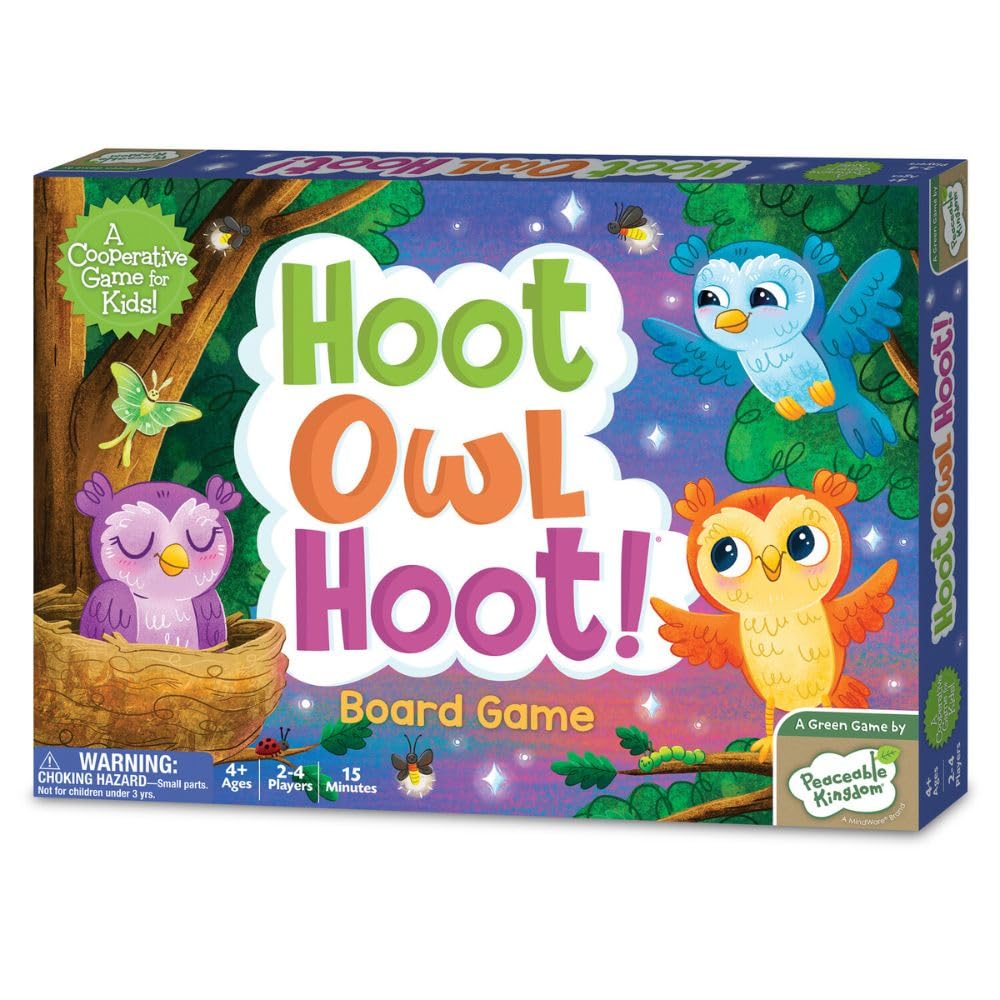
Hoot Owl Hoot puts real planning in front of preschoolers: players choose which owl flies next so every bird reaches the nest before sunrise, and a poor move visibly costs the team. A difficulty dial moves from 3 to 6 owls, letting one box challenge a toddler's first turn and a first-grader's sharper table.

The clearest fit is a first cooperative strategy game for ages 4-6, especially where sibling competition sparks friction — the shared goal redirects rivalry into collaboration. Kids 7 and up who already read path-planning will find the puzzle simple; the engagement passes to coaching younger players through their moves.

Raise the count to all 6 owls when a 5-6 year old wants a sharper challenge, then step it back for younger turns.

Bottom line: The kindest on-ramp to real teamwork for 4-6 year olds — raise the owl count and it travels with them to first grade.

#3

Race to the Treasure

Race to the Treasure

Spatial reasoning

Customer rating 4.8/5
Check Price

Worth Noting

  • Kids who live in fantasy settings find the abstract path-building flat
Reading
No
Playtime
10–20 min
Age Range
5+ (4 w/ help)
Cooperative Structure
Team-vs-game path building
Read the full review

Path-building here means real planning — kids discuss, compare, and agree before laying each tile, and the spatial-reasoning work earns a child-psychotherapist following. Rounds finish in about ten minutes, quick enough for repeats on the same game night. The abstract treasure theme carries no storybook glow; kids who crave a fantasy adventure will find it flat, while those who sit down for it get genuine mental work. This one targets 4–6 year olds building spatial and directional thinking, packing high teachable-moment density into a short round, with an adult on hand to guide the youngest through early sessions.

Plan an adult-guided first round or two — the youngest players grasp the path-building faster with a walkthrough.

Bottom line: Right for families who rank spatial thinking ahead of storybook settings — a fast, replayable first co-op that rewards the young planner in the room.

#4

My First Castle Panic

My First Castle Panic

Fantasy team defense

Customer rating 4.8/5
Check Price

Worth Noting

  • Three-to-four-year-olds can find the layered color and shape matching overwhelming in first sessions.
  • A child who freezes at losing may feel the defeat keenly when the villain reaches the castle.
Reading
No, icon matching
Playtime
20 min
Age Range
4–8 (3 w/ help)
Cooperative Structure
Team defense vs monsters
Read the full review

An actual standing castle under siege gives this co-op a tangible threat — players match colors and shapes as a team to push monsters back from the walls before they break through. It trades the gentle planning of a path-building starter for genuine stakes where coordination really matters.

The monster-defense framing makes it a natural next step past Candy Land-style matching for 4-to-7-year-olds who love action and fantasy and respond to a clear enemy. The genuine win-lose stakes suit families who want a real challenge together, not a guaranteed outcome.

Run a guided first round or two — once a 3-to-4-year-old picks up the match-and-discard rhythm, play proceeds on its own.

Bottom line: For families ready to move past gentle matching games, the monster tension is the draw — fantasy-loving 4-to-7-year-olds get real cooperative stakes instead of a soft co-op.

#5

Zombie Kidz Evolution

Zombie Kidz Evolution

Older kid legacy

Customer rating 4.8/5
Check Price

Worth Noting

  • The undead imagery can unsettle sensitive kids despite the cartoonish monster art.
Reading
—
Playtime
15 min
Age Range
7+
Cooperative Structure
Team defense, legacy unlocks
Read the full review

The #1 ranked kids game on BoardGameGeek, Zombie Kidz Evolution stands apart through a legacy system of sealed envelopes and rule unlocks that permanently grows the challenge as players master each mission. Each 15-minute round tightens team coordination, then the next envelope raises the stakes in a way the top pick's one-session format can't match.

This progression suits families 7+ who play together consistently. The tradeoff is structural: sticker-based unlocks permanently alter the board, so infrequent play dulls the momentum and hand-me-down value is minimal once completed. In return, one box sustains months of weekly game nights.

Bottom line: For a family that commits to a standing game night, this one box delivers months of evolving content at a mid-range price. Sporadic players will get more from the top pick's instant-engagement format.

#6

HABA First Orchard

HABA First Orchard

Toddler first game

Customer rating 4.9/5
Check Price

Worth Noting

  • 5+ kids outgrow the simplicity quickly.
Reading
No
Playtime
10–15 min
Age Range
2–4
Cooperative Structure
Team-vs-game fruit gathering
Read the full review

The premium wooden toddler benchmark — construction quality outlasts the preschool years, making it a keepsake-grade first game. The PEFC-certified fruit pieces handle genuine rough toddler play without chipping, and the cooperative turn-taking teaches colors and sharing without a single letter. It's the only 2-year-old entry point in this set that feels sturdy enough to pass to a second child.

Designed for 2–4 year olds on their first board game night, this wooden set works best in short sessions where its simplicity is a feature. The rulebook-free play lets toddlers grasp turn-taking instantly, but adults should expect the low complexity to repeat quickly — plan for 10-minute rounds.

Bottom line: The clear choice for 2–3 year olds when material quality and keepsake durability matter more than replay depth.

#7

Feed the Woozle

Feed the Woozle

Active preschoolers

Customer rating 4.7/5
Check Price

Worth Noting

  • Physical play is the whole mechanic, so families wanting verbal reasoning or planning get no room to exercise those skills.
Reading
—
Playtime
15 min
Age Range
3+
Cooperative Structure
Team-vs-game dexterity
Read the full review

Feed the Woozle gets wiggly 3–5 year olds moving — balancing a spoon of 'gross' food builds dexterity, body awareness, and counting in a silly frame. That physical focus is the point. It lands below the top picks because Level-1 rounds can feel too easy for a five-year-old, so the real challenge sits in the upper difficulty tiers — a niche for energetic learners more than a universal family.

Bottom line: For an energetic 3–5 year old who can't sit still, this is the set's only route to cooperation-as-movement — a physical format the seated alternatives don't match.

#8

Dinosaur Escape

Dinosaur Escape

Dino-loving kids

Customer rating 4.7/5
Check Price

Worth Noting

  • On a rough memory night, a 4-year-old's recall misses can stall the mood until the match finally clicks.
Reading
No
Playtime
10 min
Age Range
4+
Cooperative Structure
Team-vs-game memory rescue
Read the full review

Every player's turn depends on remembering where hidden dinosaurs are — the set's clearest memory-training tool, kept lively by a rescue theme 4-6 year olds request on repeat. The memory-only mechanic caps strategic depth, so kids craving planning outgrow it, and recall misses can frustrate those with low tolerance. For its niche, that focused skill is the draw.

Bottom line: Dinosaur-obsessed 4-6 year olds get a focused memory workout with real team stakes. Choose it when recall skill-building — not strategy — is the goal.

#9

Snail's Pace Race

Snail's Pace Race

Anxious beginners

Customer rating 4.8/5
Check Price

Worth Noting

  • In a family with older siblings, the luck-only turns give the 6+ kids nothing to plan
Reading
No
Playtime
15 min
Age Range
3+
Cooperative Structure
Non-competitive, everyone wins
Read the full review

Everyone cheers as all six wooden snails cross the finish line, so no child ever loses. Colour dice drive simple turns that fit anxious or highly competitive preschoolers well. Without a loser, kids who freeze at competition ease into their first tabletop game. But no skill element means the engagement ceiling sits around five.

Bottom line: Best as a first-ever game for 2.5–4 year olds who freeze at losing, with the understanding that strategy-minded older kids will outgrow it fast.

#10

Bluey Scavenger Hunt

Bluey Scavenger Hunt

Bluey superfans

Customer rating 4.8/5
Check Price

Worth Noting

  • Kids unfamiliar with the show find the simple search mechanics thin and repetitive.
Reading
No
Playtime
15–20 min
Age Range
3+ (4–6 best)
Cooperative Structure
Team scavenger hunt
Read the full review

Active scavenger-hunt coop gets kids out of their seats hunting for objects together, powered by instant Bluey buy-in that turns show enthusiasm into engaged team play with a shared win or loss. For children who don't know the show, the light search mechanics feel thin — the charm sits in the characters, not the rules.

Bottom line: Best as a budget gift for Bluey-obsessed preschoolers who will ask for repeat rounds; skip it if the child doesn't watch the show.

#11

Pete the Cat Cupcakes

Pete the Cat Cupcakes

Pete fan toddlers

Customer rating 4.7/5
Check Price

Worth Noting

  • Cardboard board can tear under rough toddler handling in active homes.
Reading
No
Playtime
5–15 min
Age Range
3+ (2–4 best)
Cooperative Structure
Team mystery w/ charades
Read the full review

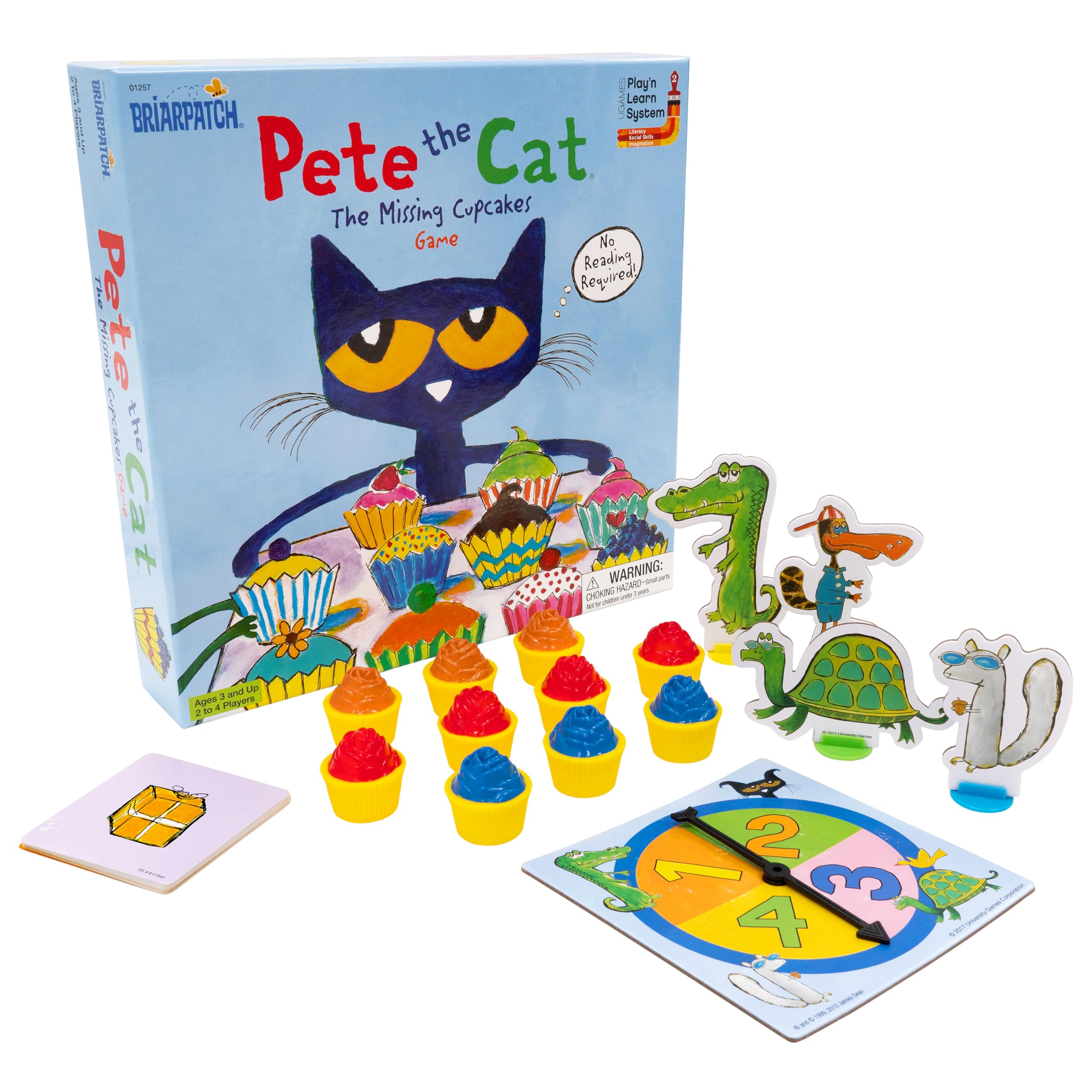
Pete the Cat lands as the gentlest on-ramp for children barely past two, before most options here. Singing, charades, and acting engage kids who ignore pure mechanics, and the IP charm is instant. The cardboard board can tear under rough handling, so pair it with gentle play sessions rather than hard rotation.

Bottom line: For gentle-session Pete the Cat fans age 2–4, this is an endearing first-game bridge — reach for a sturdier option if rough handling is likely.

#12

Mermaid Island

Mermaid Island

Large playdates

Customer rating 4.6/5
Check Price

Worth Noting

  • Spinner luck shapes the outcome more than player choices
Reading
No
Playtime
15–20 min
Age Range
5+ (3 w/ help)
Cooperative Structure
Team race vs Sea Witch
Read the full review

With a 2–6 player count — the set's largest — Mermaid Island suits playdates and big sibling groups, the whole team racing the Sea Witch and sharing a common win. Spinner luck limits strategic agency, so kids seeking tactical control may feel the outcome rests on the spin, but as a low-pressure group race it delivers.

Bottom line: Best for households that regularly host five or six kids and need a low-stakes race where everyone plays together — lively fun, provided nobody expects deep strategy.

#13

Forbidden Island

Forbidden Island

Tween strategy co-op

Customer rating 4.8/5
Check Price

Worth Noting

  • For groups of five or more, one player always sits out
Reading
—
Playtime
30 min
Age Range
10+ (6 w/ help)
Cooperative Structure
Team-vs-game survival
Read the full review

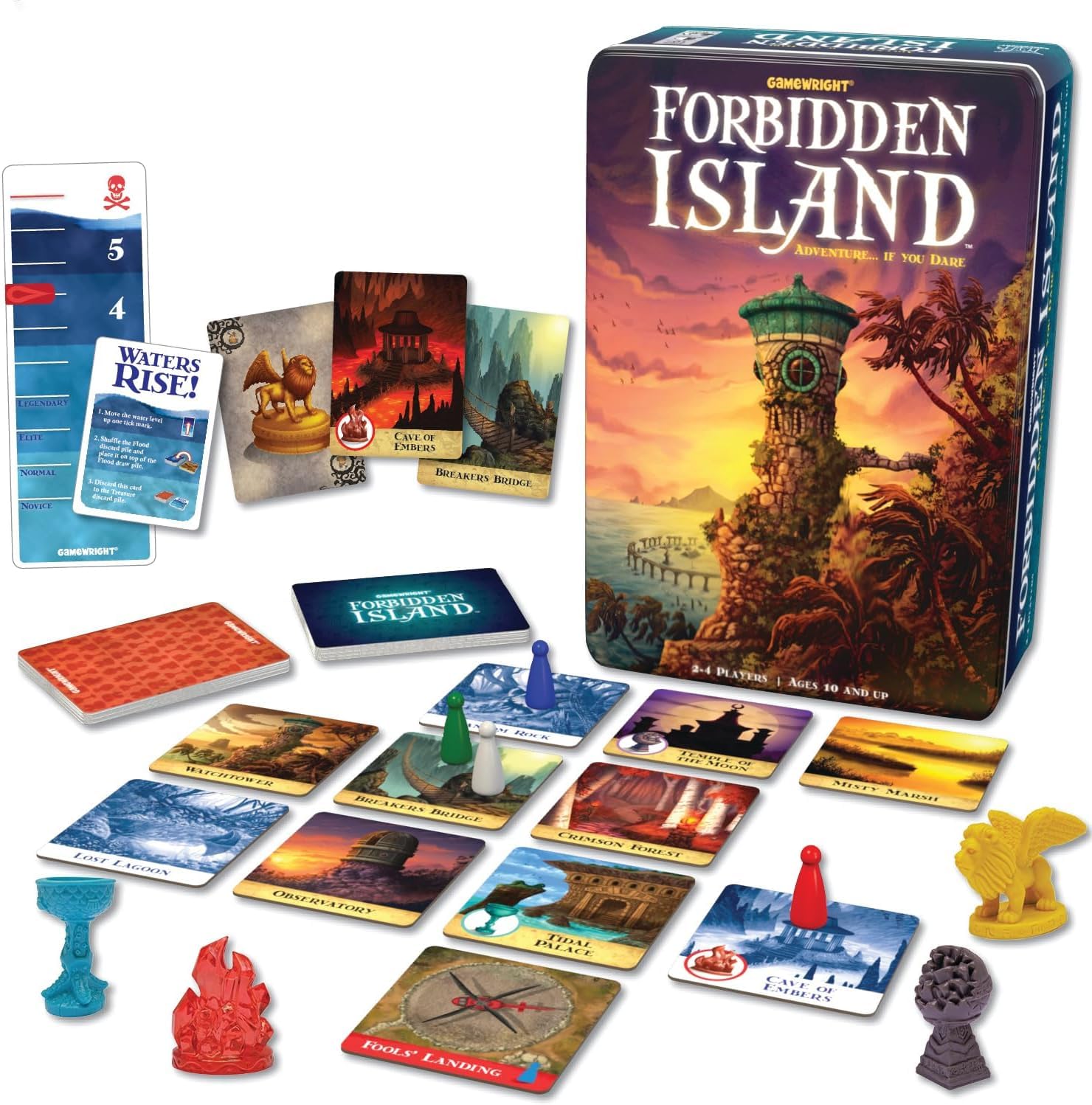
Forbidden Island brings the set's deepest cooperative tension — sinking-tile risk forces real planning and shared rescue decisions, with difficulty that scales to taste. It sits below the top pick because the manual demands an adult-led first session and the 4-player ceiling excludes larger groups — this is a tween-and-adult game, not the preschool on-ramp this category centers on.

Run the first session with an adult reading the manual aloud — the rules click after a single play.

Bottom line: Best for families with co-op enthusiasts 8 and older who share the 30-minute challenge as a team — as long as the group stays at four or fewer.

How to Choose

Age Range Is a Ceiling, Not a Floor

The printed age is a safety claim, not the child's ceiling. A 5+ game with icon clues plays at four, while a 3+ label can still need adult facilitation when turns have several steps.

Test whether your child grasps the win condition and tracks turns without re-explanation. On the upper end, a 10+ game like Forbidden Island entertains six-year-olds when an adult reads event cards aloud — so match the mechanic, not the number.

Playtime Should Fit the Attention Span

Preschool attention holds 10 to 20 minutes before engagement decays — past that, the session becomes adult cajoling. Fifteen-minute rounds dominate the best preschool co-ops because they end while interest is high.

Short rounds also let kids replay, which is where real learning happens. Reserve 30-minute games like Forbidden Island for children who already sit through a full classroom lesson without checking out.

Reading Requirements Decide Who Drives the Game

Every text element on a card becomes a loading task for a pre-reader. When each clue needs an adult's voice, the child becomes a spectator and the cooperation quietly dies.

Check that every card is decodable without a reader, not just the manual. Icon-based games like Outfoxed! keep the child at the wheel — that is the difference between a game the child plays and one narrated at them.

Cooperative Structure Sets the Real Interaction

The label covers several structures. Single-token team-vs-game games are clean but often parallel play. Games with individual hands force real discussion — each child explains their cards before the group acts.

Where each player holds a hand, negotiation and joint problem-solving happen naturally. Single-token simplicity suits toddlers; by 5 or 6, individual hands create the richest teamwork.

Replay Value Hinges on Difficulty or Progression

A static cooperative game gets archived after the third session. Adjustable difficulty (owl counts, level tiers) or a progression system (Zombie Kidz Evolution) keeps the challenge matched to growing skill.

Legacy games reward weekly play but get consumed — the unlock system permanently alters the board, killing resale. A classroom that rotates groups needs a game that resets cleanly.

Frequently Asked Questions