Learning Games Product Guide

7 Best Board Games for Elementary Students 2026: That Still Teach

The best board games for elementary students that still teach counting, strategy, and turn-taking — and actually hold up to daily play.

7 Best Board Games for Elementary Students 2026: That Still Teach editorial illustration

The classics here are the first games parents reach for, and for good reason. But modern reprints are rarely built like the childhood versions, and what holds a kindergartener will lose a 10-year-old. The real task is matching a game to a specific child and setting, not just picking a familiar box.

That match usually comes down to one trade-off: a fast head-to-head game that drills turn-taking, versus a flexible group game that seats a full classroom or family. Both are valuable, but they answer different needs — choosing the wrong one for the crowd is the most common reason a loved game gathers dust.

When a game genuinely teaches — counting, strategy, deduction, or cooperation — families replay it. When it only brings nostalgia, it gathers dust. Prioritize the learning payoff and build quality that survives kids' hands, and you will find a game that earns its place on game night.

#1

Connect 4 Classic Grid

Connect 4 Classic Grid

2-player strategy

Customer rating 4.8/5
Check Price

Worth Noting

  • Two players at a time, so three or more children must rotate turns
  • Thin legs and bottom release bar can feel flimsy; some copies arrive with parts that loosen early
Ages
6+
Players
2
Durability
Thin plastic parts
Reading-Free
Yes
Read the full review

The definitive two-player head-to-head grid game places its strategy lesson squarely at the 6+ entry point. A child grasps the drop-a-disk-into-a-slot rule in seconds, and each quick round practices blocking, planning ahead, and reading the vertical board — genuine spatial-thinking and turn-taking work. No batteries and zero setup beyond the folding grid make it the default when a parent and one child sit down together. The 7x6 board keeps rounds brief, so a losing child resets and tries again immediately, which sustains engagement across repeated sessions. It doubles as a lasting multi-generational classic, familiar enough that grandparents join without instructions.

This is the pick for a parent and one child at a time, or a classroom rotating single opponents to practice strategic thinking. Component quality varies between copies, with the legs and bottom release bar the likeliest weak points — worth a check at unboxing. The frame is budget-friendly rather than heirloom sturdy, and play stays strictly two-player, so households with three or more children will want a group option to rotate through.

Bottom line: A budget classic that delivers honest strategy-learning value at the 6+ entry point — the right call for a parent and one child who want quick, repeatable head-to-head play.
#2

Sequence

Sequence

Group play

Customer rating 4.8/5
Check Price

Worth Noting

  • Board and cards can feel cheaply made in some copies; careless opening may separate the folding board.
Ages
7+
Players
2–12
Durability
Thin cards, board
Reading-Free
No
Read the full review

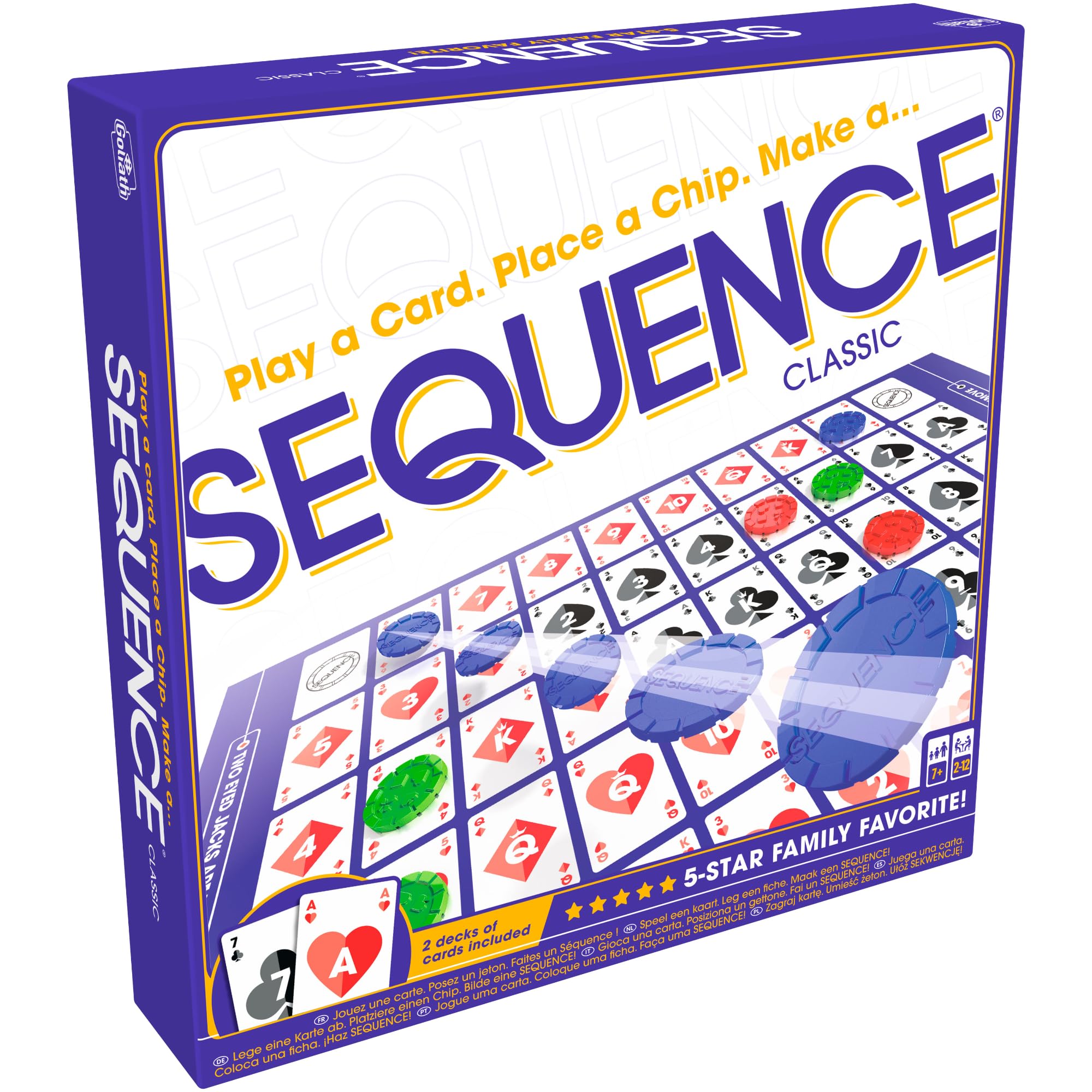
Sequence seats the largest group in this set — two to twelve players with team play — while keeping an eight-year-old and a grandparent engaged at the same table. Rules take about a minute to grasp: match cards to the grid board and line up five chips in a row. That simplicity lets mixed-age teams genuinely play together, with younger kids paired beside an adult who guides each hand.

This suits classrooms and extended family events where everyone wants a seat at the table. It is not the strict two-player duel the top pick delivers — for a parent teaching one child head-to-head, Connect 4 stays the sharper choice. The board and cards can feel cheaply made in some copies, so gentler handling extends their life.

Bottom line: This is the group-game answer for large tables that want everyone in the same round — reach for it when your night seats more than two.

#3

Blokus XL

Blokus XL

Spatial strategy

Customer rating 4.8/5
Check Price

Worth Noting

  • A two-player match can feel flat; the tactical push-pull needs three or four players on the board to surface.
Ages
7+
Players
2–4
Durability
Sturdy XL board
Reading-Free
Yes
Read the full review

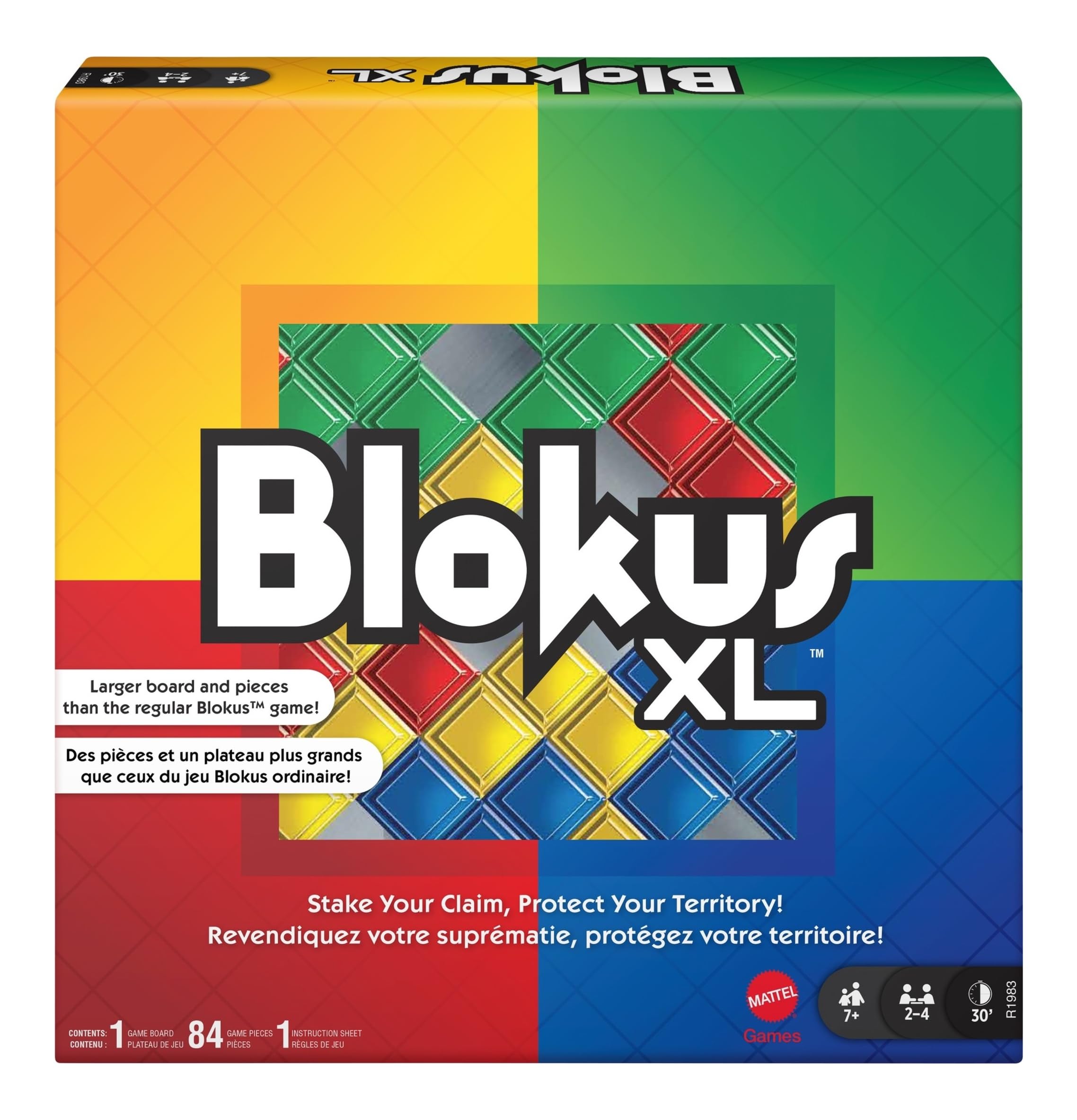
Blokus XL offers a deeper, slower spatial battle than the classic head-to-head pick — players place polyomino pieces to cover the board while blocking one another, with rules that take a minute to learn and rounds that reward planning moves ahead. The oversized 12-inch board and chunky tiles feel substantial, and play builds spatial reasoning and forward thinking as much as it entertains.

Best with three or four players — a head-to-head match can feel flat — Blokus XL suits full-table families rather than two-player households, and kids under 7 find the spatial planning too demanding. It is a whole-table brain game, not a quick two-player round.

Seat four players when you can — the game's tension lives on a crowded board.

Bottom line: For households that seat three or four players, Blokus XL delivers the richest spatial strategy in this set.

#4

Outfoxed!

Outfoxed!

Cooperative play

Customer rating 4.8/5
Check Price

Worth Noting

  • Decoder rules need an adult to guide the first couple of rounds before kids take over.
Ages
4–8
Players
2–4
Durability
—
Reading-Free
No
Read the full review

The only cooperative pick in this set — everyone wins or loses together, which removes the sore-loser meltdowns that competitive games like the simplified trading title can trigger during family game night. Instead of head-to-head play, siblings and classmates pool clues to crack a whodunit before the fox slips away.

Best for siblings and classmates ages 4-8 who need non-competitive, deduction-building play, and for grown-ups comfortable walking young detectives through the rules. The decoder-led setup asks an adult to guide the first couple of rounds before kids run it solo; children nine and up will outgrow the challenge quickly.

Bottom line: When a table of siblings can't manage competition, this turns deduction into teamwork — a cooperation payoff the competitive titles here can't match.

#5

Monopoly Junior

Monopoly Junior

Money skills

Customer rating 4.8/5
Check Price

Worth Noting

  • With lively play over repeated sessions, the thin board can split along the fold.
Ages
5+
Players
4
Durability
Thin board, splits
Reading-Free
No
Read the full review

Monopoly Junior condenses the full property-trading experience into roughly 30-minute rounds that fit a young attention span. Counting, money handling, and simple transactions are woven into kid-friendly properties and tokens, so the arithmetic practice lands naturally without feeling like a lesson. It is the slow-burn money education counterpart to the quick grid strategy of the set's two-player classic.

This fits ages 5–8 getting their first taste of money and property, plus families wanting a shorter, cheerier Monopoly night. Lively play comes naturally, and the casual pace suits younger siblings. The board is the part to watch — best with a lighter touch.

Bottom line: For ages 5–8 taking their first steps with money and counting, this is the friendlier route into the Monopoly name — a session short enough to wrap before dinner.

#6

Mancala

Mancala

Portable play

Customer rating 4.7/5
Check Price

Worth Noting

  • Component quality can vary between copies, so inspect the board and stones before relying on them day to day
Ages
6+
Players
2
Durability
Wood, glass stones
Reading-Free
Yes
Read the full review

The hinged wood board and 48 glass stones fold in half, making this the standout travel-friendly two-player pick in the set — the counting-and-planning loop suits a parent and one child around ages 6+. Component quality varies between copies, so inspect the board and stones before committing to daily use.

Bottom line: This suits a parent-and-one-child duo wanting a portable strategy classic over a tabletop board — inspect it at purchase for the best experience.

#7

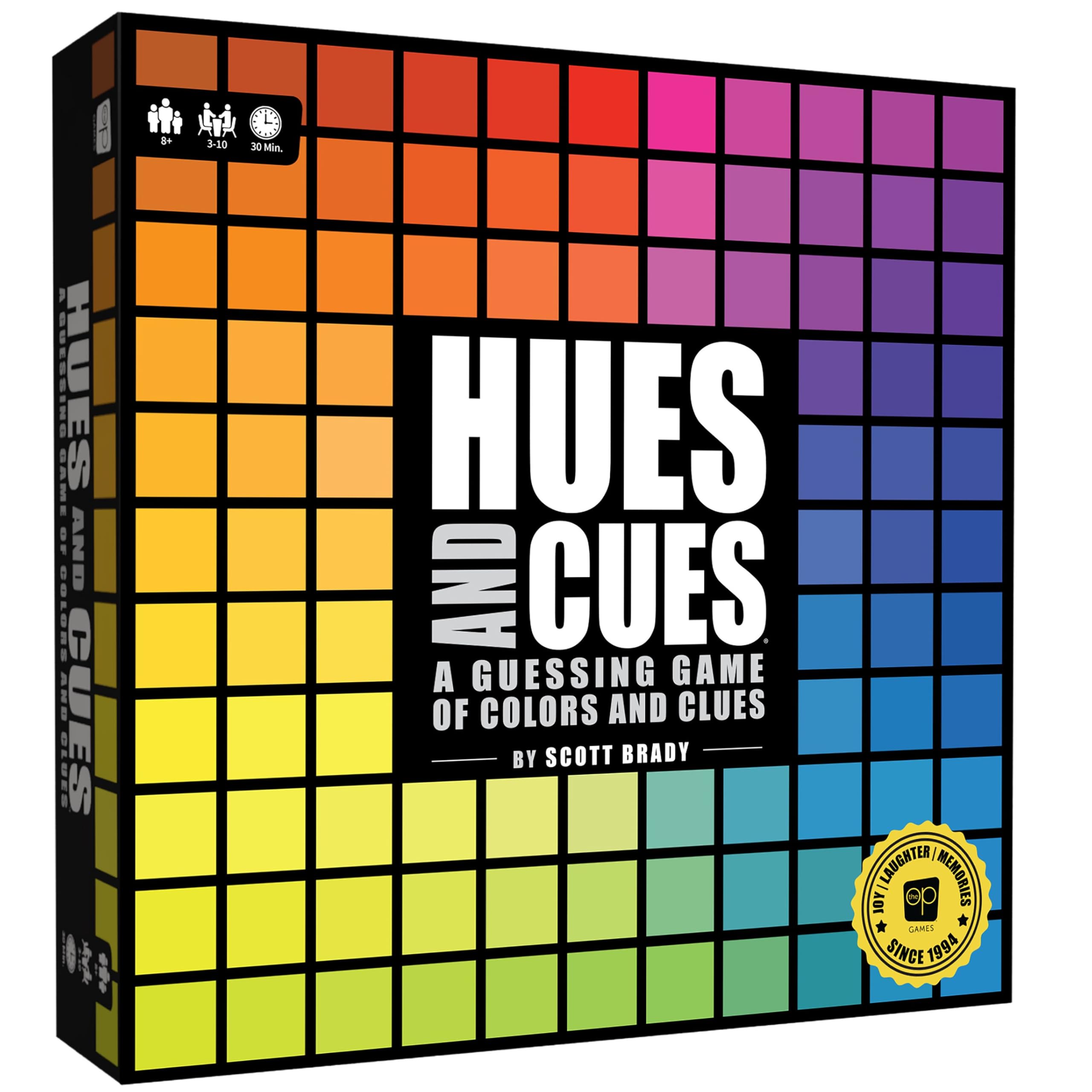
Hues and Cues

Hues and Cues

Creative groups

Customer rating 4.7/5
Check Price

Worth Noting

  • For precision-focused players, printed card colors can mismatch the board in some copies, making exact guessing harder.
Ages
8+
Players
3–10
Durability
—
Reading-Free
Yes
Read the full review

A word-to-color guessing party game with 480 hues that entertains mixed-age groups of 3 to 10. Gameplay and family-friendliness earn the strongest praise, inviting creative communication over exact color matching. Printed card colors can mismatch the board in some copies, making precise guessing harder — casual party play prioritizing creativity absorbs this without issue.

Bottom line: Best for large mixed-age party and classroom groups where creative description beats photo-accurate color matching — not for players who need exact color precision.

How to Choose

Player Count

A strict two-player game gives every move full attention, which makes the strategy obvious and keeps a single parent-child pairing focused. It stalls the moment a third child wants in.

A two-to-twelve-player game trades that one-on-one focus for flexibility, and team variants keep younger kids engaged by pairing them with an adult. Choose based on whether game night is usually two people or a full table.

Age Range

The age label is the most useful spec, but it describes the floor, not the ceiling. A game marked 3+ will bore a 7-year-old by the third round, while a 7+ game can frustrate a kindergartener.

Look for a low floor and a high replay ceiling — a game a 7-year-old can credibly win yet an adult still finds interesting stretches the furthest through the elementary years.

Learning Objective

The marketing claims about what a game practices are usually accurate: counting, turn-taking, deduction, fine motor. What they will not tell you is which of those your child actually needs.

A child who struggles to lose gracefully needs turn-taking and sportsmanship practice more than a proficient reader needs more vocabulary. Pick the game that targets the skill gap you are actually trying to close.

Reading-Free Play

Reading-free games lower the barrier for the youngest players, but they also cap the depth. A game that hides its challenge in the board and pattern — no text anywhere — lets a 5-year-old play independently.

The trade-off is that reading-based cards and property tiles push complexity higher while shutting out early readers unless an adult reads aloud. For mixed-age groups, a reading-free core is the sweet spot.

Component Durability

Modern reprints of classic games are consistently built thinner than the versions adults remember — flimsier boards, cheap card stock, and spinners or release bars that fail first. This matters most for ages 5 to 7, who press harder than steady adult hands.

Oversized and deluxe editions carry sturdier pieces, which is why the premium-priced spatial game in this list survives frequent play. Budget copies are fine for gentle or occasional use.

Frequently Asked Questions