Learning Games Product Guide

13 Best Brain Teaser Toys for Kids 2026: Right Size, Real Challenge

The best brain teaser toys for kids, matched to the child's age, size, and skill so the challenge engages instead of boring or frustrating.

13 Best Brain Teaser Toys for Kids 2026: Right Size, Real Challenge editorial illustration

Walk down the toy aisle and every box claims STEM and brain-building. In practice, some brain teasers are little more than fidget toys, while others bring genuine spatial and logic challenges. The mismatch usually shows up in two places: the physical size, which is often far smaller than the photos suggest, and the difficulty curve.

This guide sorts the options by what matters most for engagement: the right age range, the number of graded challenges, and whether the pieces hold up to regular use. Small, portable cases suit travel and quiet waits; bigger builds suit slow, focused sessions at a table. The fitting pick depends on where and how your child will actually play.

Difficulty progression separates a puzzle a child returns to from one they abandon after an afternoon. Many sets open too easy and jump too sharply, so matching the challenge to the solver matters as much as the toy itself. The right puzzle lets the first challenge feel achievable while the final ones still stretch.

#1

Kanoodle

Kanoodle

Overall logic

Customer rating 4.7/5
Check Price

Worth Noting

  • If a child under seven joins in, the 12 small pieces need close supervision during play.
  • Experienced solvers may find the opening rounds too gentle, with the steeper 3D challenges arriving later.
Age Range
7+
Form Factor
Compact case
Challenge Count
228 puzzles
Cognitive Focus
Spatial logic
Read the full review

Kanoodle folds 228 challenges into a case that doubles as the board, so the full game rides in a coat pocket with every piece contained. Puzzles shift between flat two-dimensional layouts and a stacked three-dimensional pyramid mode that works different parts of spatial reasoning, and the 12 durable pieces hold up to constant packing, unpacking, and play on any surface.

The graduated mix keeps attention during car rides, waiting rooms, and plane tray tables, with easy openers pulling newcomers in while the taller pyramid builds stretch dedicated solvers. A single session can stretch past an hour as solvers climb the difficulty curve, and the shift between flat 2D layouts and the stacked 3D builds keeps the puzzle feeling fresh across repeated rounds.

This suits kids seven and up plus adults who want a portable logic break during commutes and trips, and the budget price keeps it an easy gift for families. It plays solo by design, which suits quiet stretches over group games. Experienced solvers should jump to the mid-level challenges, since the early rounds run gentle and the real depth arrives once the pyramid builds begin — a capable brain workout rather than a casual fidget.

Bottom line: Kanoodle's 228 challenges in a pocket-sized case set the bar for portable spatial-logic play, pairing a budget price with genuine depth across ages.

#2

ThinkFun Gravity Maze

ThinkFun Gravity Maze

STEM builder

Customer rating 4.6/5
Check Price

Worth Noting

  • Later graded cards climb steeply
Age Range
8-12
Form Factor
Building set
Challenge Count
60 cards
Cognitive Focus
Spatial reasoning
Read the full review

Sixty graded challenges merge physical construction with spatial logic — each one asks a young solver to position towers so the falling marble lands on target. The building step is what sets it apart from the slide-and-shift boards in this category; reasoning begins before the marble drops, as kids weigh tower height, path angles, and gravity.

This suits STEM-minded kids 8-12 and families who enjoy solving shoulder-to-shoulder; the 75 pieces reward patient handling, and children under 8 are better matched to a gentler entry point.

Start with the numbered cards in order — early builds teach tower mechanics before later cards demand them.

Bottom line: Choose this when the brain teaser should double as a construction project — physics takes an active role in every solve, and families get a shared build-and-test loop.

#3

ThinkFun Rush Hour

ThinkFun Rush Hour

Travel logic

Customer rating 4.8/5
Check Price

Worth Noting

  • The early challenge cards lean gentle, with a steady climb rather than sharp jumps.
Age Range
8+
Form Factor
Case with bag
Challenge Count
40 challenges
Cognitive Focus
Sequential logic
Read the full review

Rush Hour condenses sequential logic into a slide-and-solve traffic jam — 40 challenges that graduate from gentle openers to genuine gridlock head-scratchers. That arc makes it a family favorite as much as a solo brain workout. The grid snaps into a storage bag, so the whole game tucks away in a backpack for road trips, flights, or waiting-room visits.

Best for kids 8-and-up who enjoy step-by-step deduction over open-ended building, and families who want a game that travels and stays tidy between plays; experienced solvers may want steeper challenges than the deck provides.

Jump ahead in the deck when early challenges feel easy — the later gridlocks hold the real workout.

Bottom line: Where a building set spreads pieces across the floor, Rush Hour concentrates the challenge in a palm-sized grid you can take anywhere.

#4

SmartGames IQ Puzzler

SmartGames IQ Puzzler

Pocket puzzler

Customer rating 4.8/5
Check Price

Worth Noting

  • In smaller hands, the tiles are fiddly to position
Age Range
6+
Form Factor
Pocket case
Challenge Count
120 challenges
Cognitive Focus
Spatial logic
Read the full review

One hundred twenty two-dimensional and three-dimensional challenges fit inside a palm-sized case at a budget price. The flip-top board doubles as the storage tray, so the complete game tucks into a coat pocket with nothing left loose. The three-dimensional layouts add a spatial step the flat rounds don't cover, extending the puzzle beyond the first 60.

The small tiles suit kids six and up and adults; younger hands find them fiddly to position. That makes the set a natural fit for travel, waiting rooms, and lunch breaks rather than a preschool table. A difficulty curve that eases from simple flat layouts into spatial builds keeps attention across age groups.

Store the tiles in the closed case between rounds so the small pieces don't wander at home.

Bottom line: Best for travelers and puzzle fans six and up who want a pocket logic workout — just keep the small tiles away from toddler hands.

#5

Coogam Wooden Blocks

Coogam Wooden Blocks

Preschool skill

Customer rating 4.7/5
Check Price

Worth Noting

  • Some pieces may splinter with rough handling
Age Range
3+
Form Factor
Tabletop blocks
Challenge Count
Open-ended
Cognitive Focus
Shape problem-solving
Read the full review

This 40-piece basswood tangram takes a hands-on Montessori route to shape recognition, built for the youngest solvers in the category — tactile wooden play the plastic logic puzzles skip. The mixed-piece layout introduces shapes, colors, and problem-solving through physical stacking rather than abstract sequential logic.

Best for families and classrooms with kids aged three to six, where the varied pieces keep several children occupied through parallel play. Older solvers will outgrow the challenge quickly. Pieces are basswood, so rough handling can cause occasional splintering — acceptable for supervised play with young kids.

Bottom line: A budget wooden tangram for the youngest stackers — right for preschool play, less so for older kids chasing a real challenge.

#6

Foldology Origami

Foldology Origami

Origami fans

Customer rating 4.6/5
Check Price

Worth Noting

  • The paper construction can feel pricey per challenge at a mid-range price.
  • Fold cards measure smaller than expected, which can feel cramped for larger hands.
Age Range
10+
Form Factor
Puzzle cards
Challenge Count
100 puzzles
Cognitive Focus
Visual-spatial
Read the full review

The fold-to-complete mechanic sets this apart from tile and stacking puzzles: each card bends through a precise sequence to reveal a picture, with 100 challenges over five difficulty levels aimed at ages 10 and up. Compact and screen-free, it earns consistent praise for family engagement and mental stimulation.

That strength targets teens and adults who like origami and travel play rather than young kids. Fold cards run smaller than some expect, which can feel cramped for larger hands, and the mid-range paper price prompts some buyers to question value per challenge.

Set each fold card flat on a table with good light — the small paper rewards steady hands.

Bottom line: For teens and adults who love origami and want a screen-free travel challenge, this is a genuinely novel pick.

#7

Perplexus Go!

Perplexus Go!

3D mazes

Customer rating 4.6/5
Check Price

Worth Noting

  • The spherical design demands precise two-handed control, so younger kids may stall on higher obstacle counts.
Age Range
8+
Form Factor
Handheld sphere
Challenge Count
35 obstacles
Cognitive Focus
Hand-eye coordination
Read the full review

The Go! squeezes 35 obstacles into a palm-sized sphere — tilt carefully to roll the marble through a winding 3D course that rewards slow, steady hands. Validation of this exact version rests on the Perplexus line's established maze mechanics rather than independent testing of this unit, so it's best for travelers who trust the brand's design pedigree.

Bottom line: Best for kids with steady hands who want a pocketable tactile challenge on trips; those after pure logic puzzles should pick a slide-style option instead.

#8

Coogam Hexagon

Coogam Hexagon

Budget tangram

Customer rating 4.6/5
Check Price

Worth Noting

  • Difficulty can climb steeply partway through, tripping up casual solvers mid-set.
Age Range
3+
Form Factor
Tabletop set
Challenge Count
Open-ended
Cognitive Focus
Geometry logic
Read the full review

This compact 14-piece hexagon tangram packs quick geometry challenges into a palm-sized tray, drawing kids and adults alike. The small footprint suits on-the-go play better than desk-centerpiece display, so set expectations around its portable scale.

Bottom line: For a budget tangram on the go this fits — keep it in a bag without expecting a display-worthy board.

#9

GiiKER Super Slide

GiiKER Super Slide

Tech puzzler

Customer rating 4.6/5
Check Price

Worth Noting

  • Magnetic hold can let pieces shift mid-solve on trickier layouts
Age Range
6+
Form Factor
Handheld LED
Challenge Count
500+ challenges
Cognitive Focus
Planning logic
Read the full review

The 500+ challenges on a magnetic LED board deliver real depth, and responsive digital feedback keeps solvers engaged. Pieces can occasionally slide out of place mid-solve, and the premium price fits dedicated puzzle fans better than casual buyers.

Bottom line: Worth the premium for tech-interested families wanting a deep, self-guided challenge library; casual buyers will get more from a budget set.

#10

LESONG 9 Pack

LESONG 9 Pack

Variety pack

Customer rating 4.6/5
Check Price

Worth Noting

  • Reassembly instructions are missing on some pieces, sending solvers to online tutorials.
Age Range
5+
Form Factor
Variety set
Challenge Count
9 puzzles
Cognitive Focus
Disentanglement logic
Read the full review

Nine mixed metal and wooden puzzles offer a low-pressure way for families and beginners to sample different mechanics. Reassembly instructions are missing on some pieces, so solutions may rely on memory or online lookup. Construction quality varies across the set, with occasional misaligned pieces — fine as a gift or casual variety pack, less ideal for serious solvers.

Bottom line: Best as a gift or casual family variety pack where sampling different puzzle styles matters more than depth.

#11

Learning Resources Brainometry

Learning Resources Brainometry

Classroom pattern

Customer rating 4.7/5
Check Price

Worth Noting

  • Only 10 double-sided cards, so the pattern library runs out fast for steady solvers.
Age Range
5+
Form Factor
Tabletop set
Challenge Count
10 cards
Cognitive Focus
Pattern matching
Read the full review

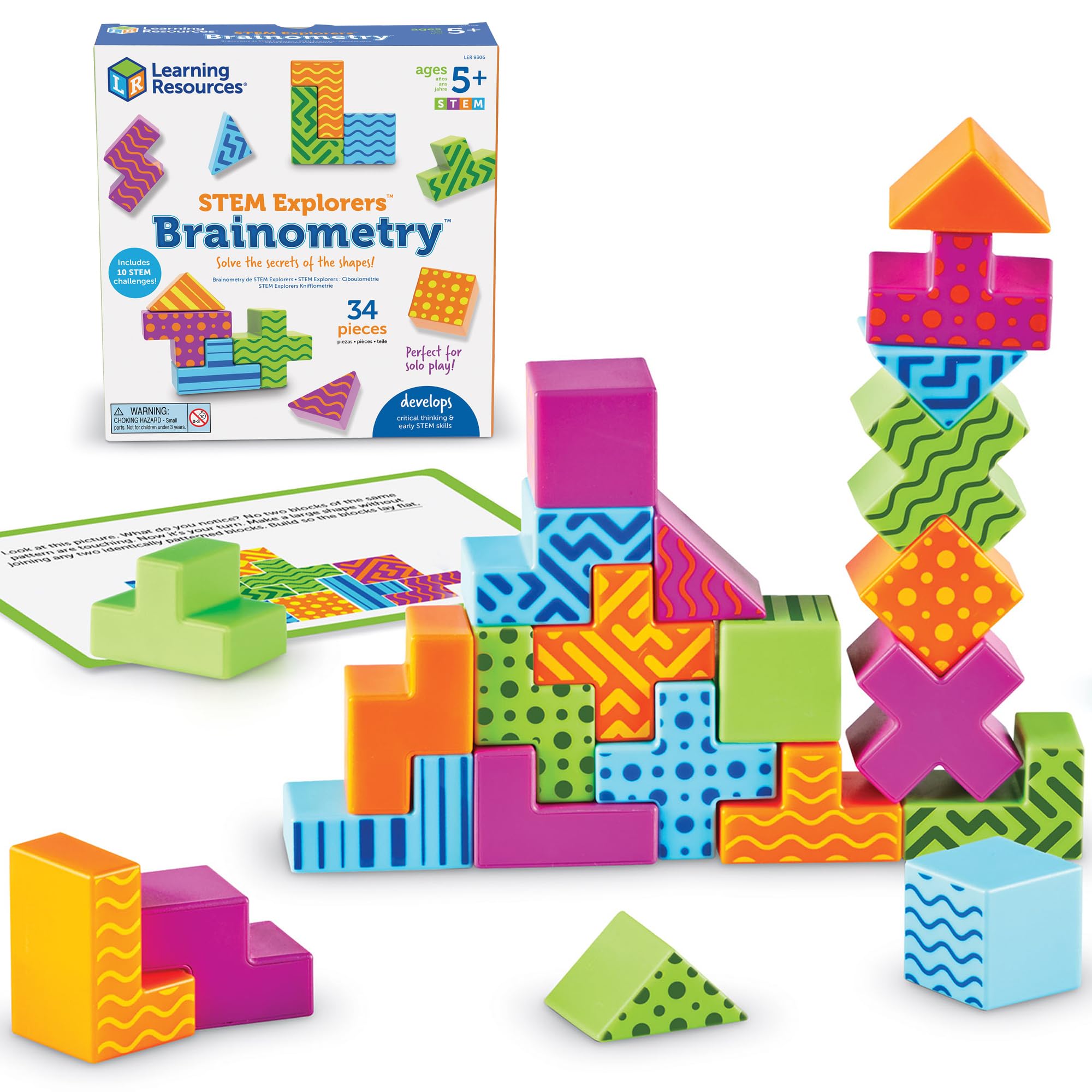
Designed for early elementary classrooms and homeschool groups, this 34-piece set has kids 5-8 matching 3D shapes to pattern cards. The rewards are real — spatial reasoning and silhouette matching land well with the age group. But the 10 double-sided cards run dry quickly, and light-duty builds topple during play, so it suits rotating sessions rather than extended solo puzzling.

Bottom line: Best for teachers and homeschoolers running short pattern-play sessions with kids 5-8; solo puzzle enthusiasts will outgrow the card library quickly.

#12

LovesTown Pattern Blocks

LovesTown Pattern Blocks

Classroom blocks

Customer rating 4.5/5
Check Price

Worth Noting

  • Thin wooden blocks can splinter when handled roughly during group play
Age Range
3+
Form Factor
Tabletop set
Challenge Count
24 cards
Cognitive Focus
Geometry logic
Read the full review

209 pieces stretch across 24 pattern cards, giving classrooms and homeschool groups plenty to build side by side for a budget price, and the colorful shapes hold kid attention well. The catch: pieces run small, so this set belongs with kids 3 and up — keep it away from younger siblings.

Bottom line: Best for classroom or homeschool groups building in parallel, where piece-per-dollar volume outweighs the need for premium wood.

#13

Shashibo OCTA

Shashibo OCTA

Fidget play

Customer rating 4.6/5
Check Price

Worth Noting

  • Decorative panels can peel and magnets may loosen with frequent handling, so heavy use may shorten its life
Age Range
8+
Form Factor
Handheld cube
Challenge Count
30+ shapes
Cognitive Focus
Fine motor patterns
Read the full review

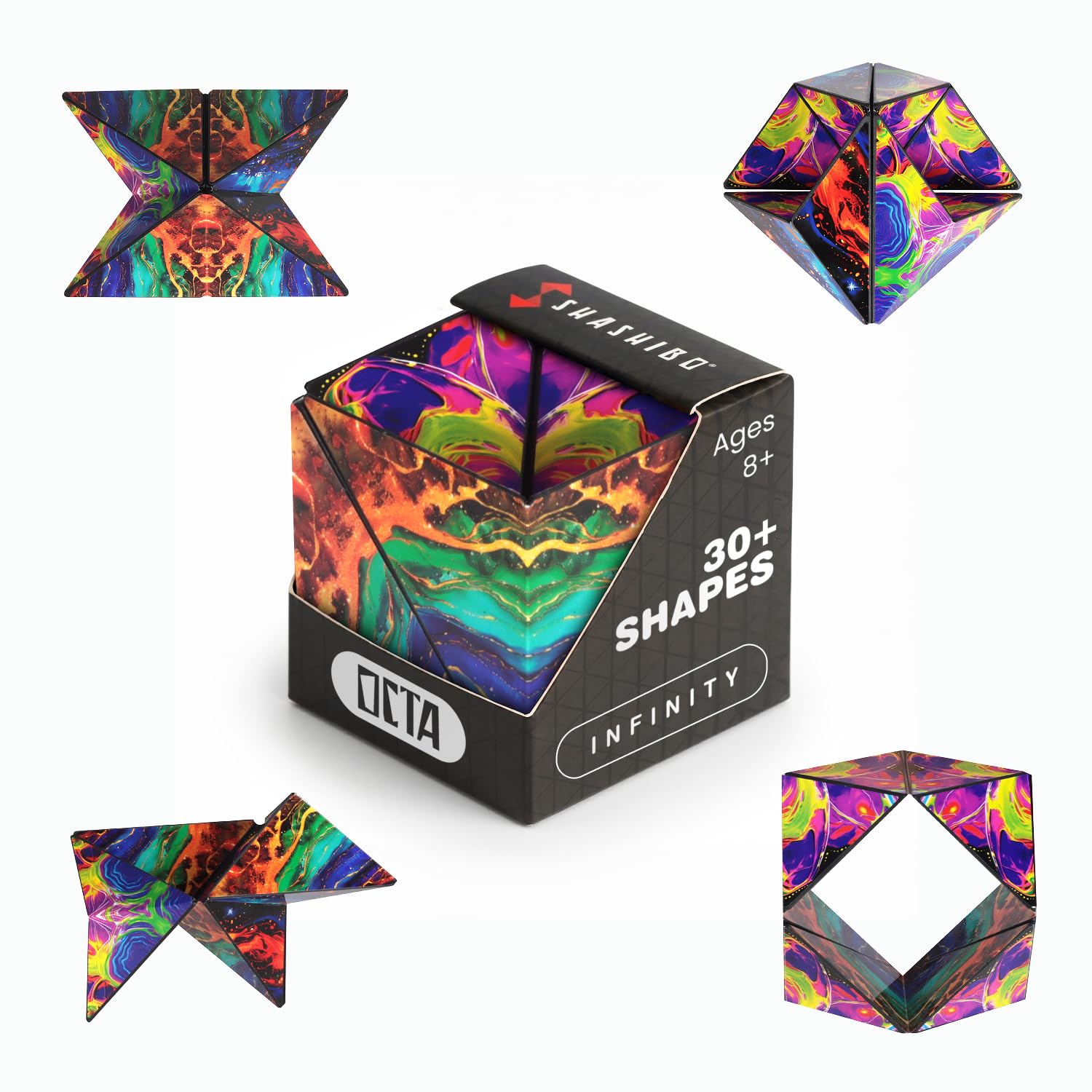
The Shashibo OCTA satisfies a restless hand with its 30+ magnetic shape transforms, and the compact size slips into a pocket or bag. For stress relief or a quick gift it works well, though this is a manipulative toy rather than a thinking puzzle, so kids and adults after deeper logic challenges will look elsewhere. Decorative panels can peel and magnets may loosen with heavy handling, and the mid-range price feels steep for a small plastic cube.

Bottom line: Best as a desk or travel fidget for someone who enjoys toying with magnetic shapes, provided it isn't subjected to rough, constant manipulation.

How to Choose

Age Range

Age labels are a starting point, not a guarantee. A puzzle marked 3+ may assume fine motor control some preschoolers haven't developed, while a 7+ set with tiny pieces can bewilder the exact child it targets. Small components demand a pincer grip; larger builds suit younger solvers. Fit the hands before you challenge the mind.

Challenge Count

Challenge count drives longevity more than difficulty. Forty near-identical puzzles get shelved within a week; 120 graded layouts sustain interest for months. The hidden trade-off is that more challenges often means smaller pieces or a busier board. The strongest sets start achievable and end with layouts that still test an adult.

Portability and Size

Portable puzzles trade footprint for engagement. A pocket-sized case fits a backpack and bridges a long flight, but those same small pieces can be hard to grip at the kitchen table. Product photos routinely undersell dimensions, making size mismatch the top source of buyer regret — so check stated measurements against a familiar object.

Material Durability

Material choice predicts how a puzzle ages. Wooden pieces can splinter with rough handling, magnetic panels peel after repeated folds, and paper puzzles soften as they're handled. Durability tracks play frequency, so favor solid plastic or stainless steel over magnetic film and thin card for kids who are hard on toys.

Cognitive Focus

Different puzzles train different skills, and the STEM label alone won't tell you which. Tangrams and marble mazes build spatial visualization; traffic puzzles train sequential planning; disentanglement sets work on motor planning. Many brain teasers behave more like fidget toys than logic challenges, so confirm the toy demands active problem-solving.

Frequently Asked Questions