STEM Toys Product Guide

6 Best Science Kits for Middle School 2026: Which Teach Real STEM

Which science kits for middle school actually ship with real materials and clear instructions, so your 11-14 year old can run experiments alone.

6 Best Science Kits for Middle School 2026: Which Teach Real STEM editorial illustration

Walk down the science-kit aisle and every box promises '100+ experiments' or '45 activities.' Open them, though, and the count usually shrinks to a dozen or so playable projects plus a booklet of everyday-item ideas. A few materials can even go missing. For a middle schooler, that gap decides whether the kit delivers real learning or a frustrated afternoon.

The other big variable is independence. Some kits assume an adult will translate thin instructions and supply missing pieces; others run fine in a tween's hands alone. Which fits depends on your child's patience — a crystal or volcano kit is a waiting-and-watching project, while a circuit or chemistry kit rewards methodical tinkering.

The picks below are chosen for what happens after the box opens: materials present, instructions a tween can follow, and projects that teach genuine STEM across chemistry, physics, earth science, and engineering. Know the trade-offs up front, and the right kit pays off across many afternoons.

#1

Snap Circuits Jr. SC-100

Snap Circuits Jr. SC-100

Budding engineers

Customer rating 4.8/5
Check Price

Worth Noting

  • The storage box and some snap connections feel flimsy; occasional QC variance can require swapping a part.
  • Electronics only
STEM Topics
Electrical engineering, circuits
Independence
Solo, no adult help
Expandability
Expandable via add-on kits
In-Box Experiments
100+ builds
Read the full review

One box holds 100+ working builds — lights, fans, alarms, and radios — where each snap-in part teaches how current flows and circuits close. Modules click together with no soldering or tools, so a tween can start project one within minutes of opening the box and return across many sessions; repeated builds are the norm, not a one-and-done. Each project delivers instant feedback — a spinning fan, a glowing bulb — which hooks a curious 11-14 year old without adult translation. The full-color manual sequences difficulty, and the 8-to-108 age range shows a kit that scales with the builder.

The right fit is a curious middle-schooler who loves building and wants instant, repeatable results — and a strong pick for homeschool or classroom STEM time, since everything packs back into one box. The honest tradeoff: it covers electronics only, so kids after chemistry, geology, or biology experiments will need a different kit. Accept that the storage tray and a few snap connections are not the sturdiest, and occasional QC variance can mean a part needs replacing — minor frictions on an otherwise low-maintenance build.

Keep modules stored upright in the tray between sessions — parts stay organized and easier to find for the next project.

Bottom line: For a middle-schooler who wants to tinker and build repeatedly, one box delivers self-guided engineering projects that stay engaging long after the first build. No other kit in this set matches that repeatability.

#2

Nat Geo Chemistry Set 45

Nat Geo Chemistry Set 45

Budding chemists

Customer rating 4.7/5
Check Price

Worth Noting

  • Some experiments finish subtly rather than with spectacle
  • A few experiments need common household extras like a soda, so a quick supply check helps before starting
STEM Topics
Chemistry, scientific process
Independence
Mostly solo, adult nearby
Expandability
Consumable, not reusable
In-Box Experiments
45 experiments
Read the full review

The closest thing in this set to a real lab bench — 45 guided chemistry experiments with kid-safe materials and a clear scientific method, and a 12-13 year old can handle nearly all of it with light supervision. Where the earth-science sampler spreads attention across five topics, this one stays on chemistry so a young scientist actually practices technique.

The right fit is the middle-schooler who wants to understand the reaction, not just watch it — not the kid demanding volcano theatrics. Several experiments call for common household extras like a soda, and some finish subtly rather than flashy, so an adult may want to scan the supply list before a homeschool lab session begins.

Scan the experiment list before a session and gather household extras like a soda in advance, so a lab block doesn't stall mid-reaction.

Bottom line: For the 11-14 year old who wants to be a chemist rather than watch a reaction, this is the set — real technique practice with little more than a shopping-list check in the way.

#3

Nat Geo Earth Science Kit

Nat Geo Earth Science Kit

Earth science fans

Customer rating 4.7/5
Check Price

Worth Noting

  • Proper written directions cover only a few of the 15+ activities
STEM Topics
Earth science, geology, chemistry
Independence
Adult help for some
Expandability
One-time use, consumable
In-Box Experiments
15+ activities
Read the full review

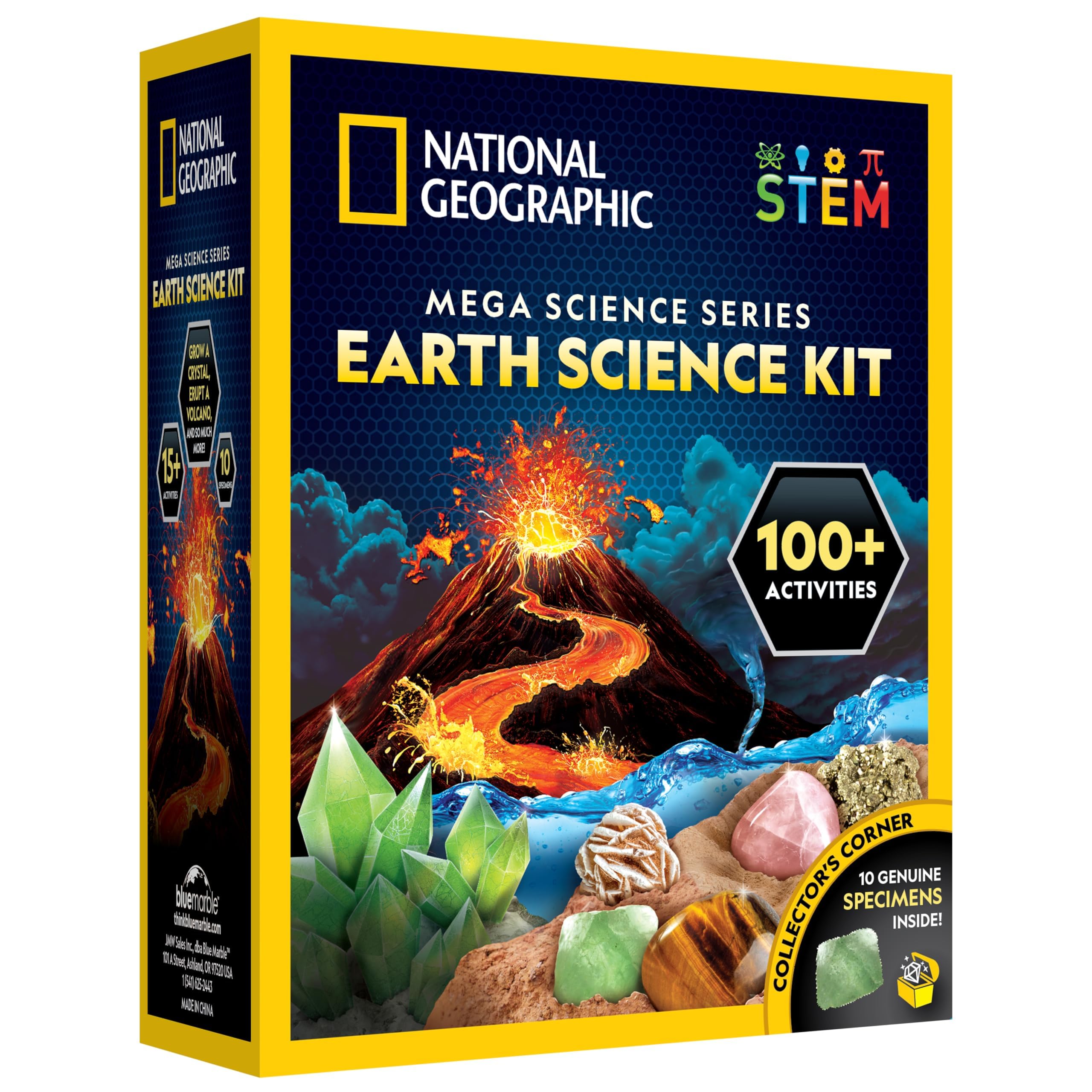
The Earth Science kit bundles volcano, crystal, dual geologic digs, and water-tornado projects into one mid-range box, a multi-topic sampler that hits geology, chemistry basics, and weather — a different kind of engagement than the circuit-building top pick. The full-color Learning Guide walks through the science behind the activities, keeping siblings and small classes rotating through fresh projects.

The right fit is families and homeschool earth-science units where a grown-up guides the hands-on work — sharing the volcano and digs across siblings or a small class stretches the mid-range price tag into plenty of science time.

Tally the pieces against the included parts list before the first dig — a quick inventory check avoids mid-experiment interruptions.

Bottom line: For families and homeschool groups with a grown-up at the ready, this box delivers the widest earth-science spread of the set — volcano, crystals, and digs in a single purchase.

#4

Thames & Kosmos Mega Cyborg Hand

Thames & Kosmos Mega Cyborg Hand

Older tinkerers

Customer rating 4.4/5
Check Price

Worth Noting

  • Directions can get unclear mid-build, and small parts may go missing during assembly.
STEM Topics
Pneumatics, hydraulics, engineering
Independence
Adult help recommended
Expandability
Rebuildable, adjustable fit
In-Box Experiments
One large build
Read the full review

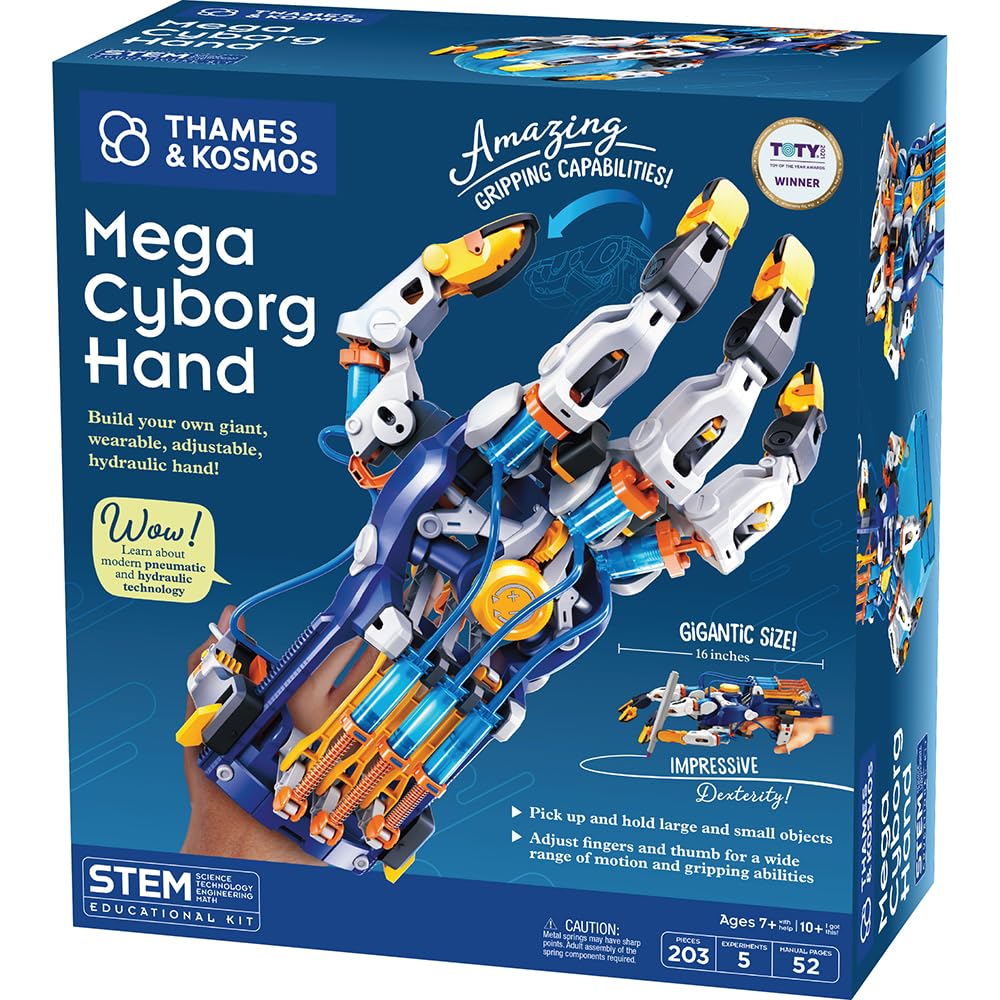
A wearable hydraulic hand that moves on air pressure and water — no motors, no batteries — is the only real assembly project in this lineup and a 2021 STEAM Toy of the Year winner. Where the instant-click top pick delivers quick gratification, this one demands hands-on construction and pays off with a deeper lesson in how machines transmit force.

It suits the patient 11+ builder who loves mechanics and works best as a parent-and-child weekend project rather than solo entertainment — exactly the kind of build an aspiring robotics student will want to take apart and rebuild.

A dedicated afternoon makes the fiddly stages tolerable — rushing the build is where frustration creeps in.

Bottom line: For tinker-driven 11+ kids who want to understand how a machine actually works, this is the deepest engineering experience in the lineup — schedule a full afternoon for it.

#5

UNGLINGA 150 Experiments

UNGLINGA 150 Experiments

Budget families

Customer rating 4.7/5
Check Price

Worth Noting

  • Occasional broken English in the manual leaves some instructions unclear, so an adult may need to bridge the gaps
  • Small-motor builds, such as the drawing robot, can lack the power to run as shown
STEM Topics
Chemistry, physics, earth science
Independence
Solo with troubleshooting
Expandability
Consumable, one-time use
In-Box Experiments
150 experiments
Read the full review

UNGLINGA packs 150 experiments into a single budget-priced box, spanning earth science, chemistry, and physics — broader topic coverage than the dedicated chemistry set at a fraction of the cost. That variety keeps a curious middle-schooler bouncing between volcano builds, crystal growing, and simple circuits for a full weekend of solo play. Without an adult nearby, though, the spread shows its limit: occasional broken English in the manual and a few underpowered small-motor projects mean a parent should stay close to clarify steps and troubleshoot. For budget-focused families and kids who jump between topics, this remains the strongest value in the lineup.

With a parent nearby to clarify a few instructions, each session ends with a working experiment.

Bottom line: Maximum experiment variety at a budget price, if you accept a little troubleshooting — best for families who want a full weekend of projects without a premium investment.

#6

Dan&Darci Light-up Crystal Kit

Dan&Darci Light-up Crystal Kit

Budget crystal fans

Customer rating 4.5/5
Check Price

Worth Noting

  • In some batches, no crystals form, so the week-long grow can come up empty.
STEM Topics
Crystal chemistry
Independence
Solo, patience required
Expandability
Consumable, one-time use
In-Box Experiments
One crystal project
Read the full review

Growing three crystal colors over a satisfying week makes this a rewarding project for kids 8-12 at a budget-friendly price. The LED display base may not light up, so treat the glow as a bonus rather than the point of the kit.

Bottom line: Best as a low-pressure budget gift for a young crystal lover who enjoys the growing process itself.

How to Choose

Real In-Box Projects

Vendors count experiments loosely. A '150 experiments' claim usually means a dozen to fifty in-box projects plus a booklet of everyday-item ideas, each counted separately.

In-box projects are turnkey — open, mix, observe, done. Booklet activities assume you already have baking soda or vinegar at home, and that friction stalls a tween's momentum.

Materials and Refills

Read 'everything included' as a hope, not a promise. Kits occasionally arrive missing pieces, and others assume you'll supply kitchen staples.

Consumables like crystal powder and chemical reagents are spent in one run, so repeat value ends when the packets do. Choose kits with pre-measured materials so a child can continue without a shopping trip.

Instruction Quality

Instruction quality decides whether a kit teaches or frustrates. Thin handbooks and rough translations push the cognitive load onto an adult, and kids don't improvise missing steps — they stop.

Strong kits use illustrated, sequential directions a middle-schooler follows alone, and name the concept behind each experiment. That turns fizzing into a real lesson in chemistry or circuit logic.

Picking the Right STEM Topic

Match topic to child before you weigh ratings. Circuit and engineering kits reward a methodical builder; chemistry kits reward a process-lover who wants to mix and observe.

Crystal, volcano, and dig kits are patience games — results arrive over days or need adult muscle. A well-made kit in the wrong topic gathers dust, so start from demonstrated interests.

Independence and Adult Help

Decide how independent it should be. Snap-connect circuits and guided chemistry sets run fine with a tween working alone, while long mechanical builds and hard-to-crack geodes require a parent's hands.

That changes the kit from independent discovery to a supervised project. If the goal is alone-time learning, favor solo-capable kits; if you'll build together, the supervised ones reward that time.

Reusable vs. One-and-Done

The best kits are platforms, not one-and-done boxes. Electronics kits expand with add-on modules for years of builds, so the upfront cost spreads across dozens of afternoons.

Chemistry and crystal kits are consumable — once reagents and powders are gone, so is the kit. Their value concentrates up front rather than spreading out.

Frequently Asked Questions