Early Learning Product Guide

7 Best Montessori Toys for Toddlers in 2026: Sized for Real Ages

Which Montessori toys for toddlers have pieces sized for their true age — and which ones skip safety pitfalls like choking hazards and weak Velcro.

7 Best Montessori Toys for Toddlers in 2026: Sized for Real Ages editorial illustration

Most Montessori toy listings promise a '1-3' age range, but the pieces inside are often sized for hands far older. A 12-month-old exploring by mouth meets small parts that shouldn't be there, and a parent is left rechecking labels. Age markers on the box are rough guides, not guarantees.

The toys that work are the ones matched to what a toddler can actually do — grasp, stack, sort, and mimic real tasks. That means checking true piece size, favoring materials that hold up to use, and choosing play modes that fit the child's current skills rather than the stated range.

This guide picks Montessori-style toys that respect both the method and the toddler's real stage of development — so the play is safe, self-directed, and worth the shelf space.

#1

M&D 100 Wood Blocks

M&D 100 Wood Blocks

Open-ended building

Customer rating 4.8/5
Check Price

Worth Noting

  • Blocks run smaller than advertised; one-year-olds may struggle to grip and place them.
Pieces
100 blocks, 9 shapes
Storage
Cardboard box
Material
Wood
Age Range
2+ years
Read the full review

One hundred wood blocks spanning nine shapes and four colors deliver the most open-ended play in this list. The smooth finish on natural wood absorbs the daily rhythm of stacking and knocking over, while rectangles, cylinders, and arches support tower building, color sorting, and shape matching from a single storage box. Four distinct colors keep pattern and sorting games intuitive, and play deepens as a toddler moves from gripping blocks to counting pieces aloud and stacking by size. One set spans the whole toddler window into preschool — a strong return at a budget-friendly price — and the included cardboard box keeps the hundred pieces grouped between sessions.

Best for toddlers aged two and up who can grip and place standard-size blocks; at one year old, the pieces run smaller than expected, so younger toddlers may find them frustrating and are better served by a chunky-block alternative. Families who want one lasting set that teaches stacking, sorting, and early math get more learning per shelf than any single-skill option in this roundup, provided a quick pickup routine keeps the one hundred small pieces together.

Bottom line: The one set that covers stacking, sorting, counting, and make-believe from age two onward — the easiest pick for a family that wants a single lasting wooden toy instead of several single-skill ones.
#2

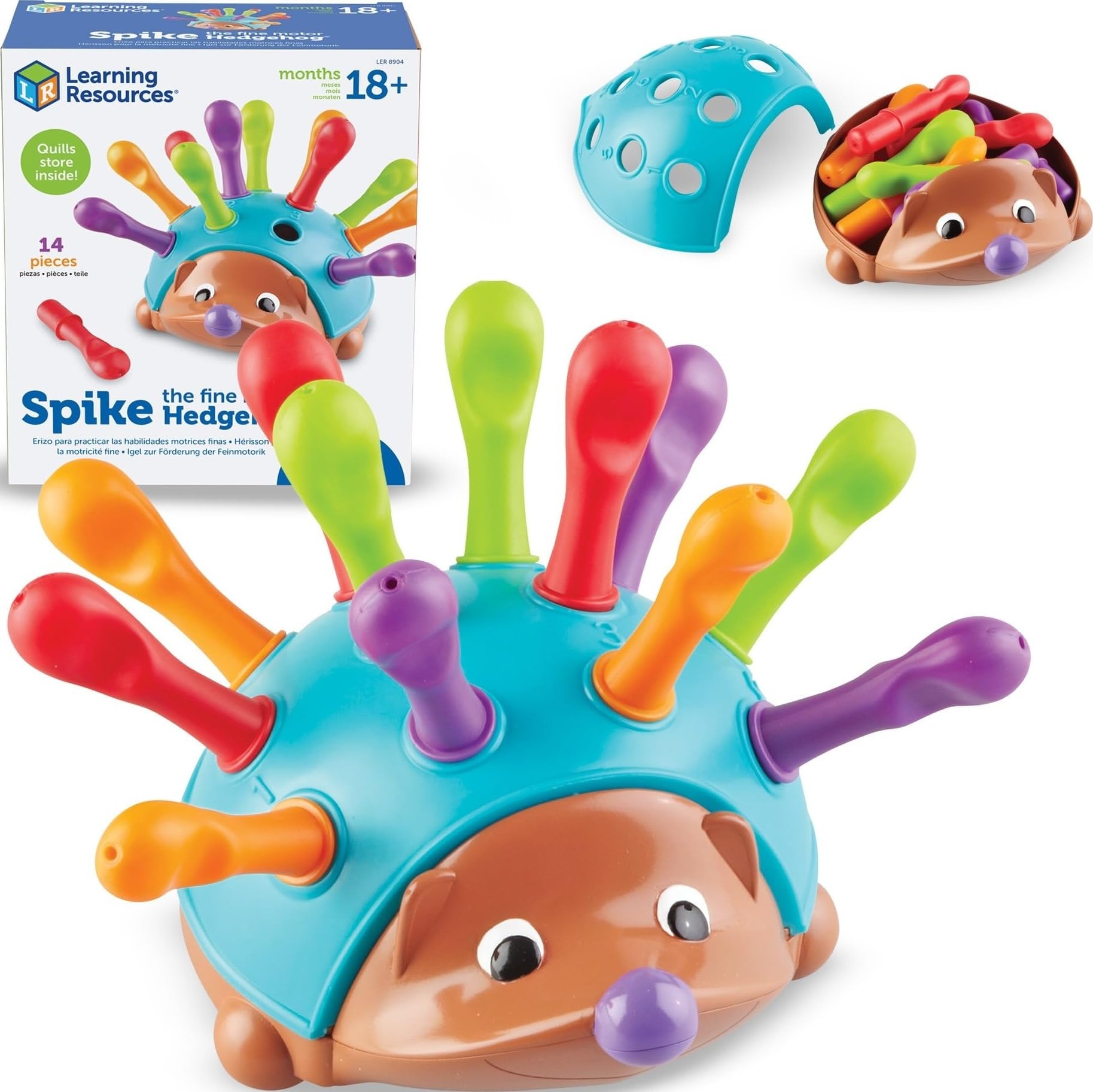
Spike the Hedgehog

Spike the Hedgehog

Fine motor skills

Customer rating 4.7/5
Check Price

Worth Noting

  • Dropped on a hard floor, the plastic shell can crack
Pieces
12 chunky quills
Storage
Self-storing
Material
Plastic
Age Range
18 months+
Read the full review

Spike's 12 chunky quills are purpose-shaped for pincer-gasp and hand-strength work, a precise skill the 100-piece wooden block set leaves to chance. Each quill pulls out and presses back, teaching colors and counting along the way. For a busy household, the quills store inside the hedgehog, keeping the set tidy and ready for a car ride or quiet corner.

This plastic hedgehog suits a toddler 18 months and up building handwriting readiness who needs a portable, self-contained toy. The warmth of wood is traded for a plastic shell that can crack when dropped on a hard surface — best for gentle, supervised play than rough open-ended construction.

Keep Spike on carpeted floors — the plastic shell handles soft play better than repeated drops.

Bottom line: Best for a toddler building pincer strength who needs a contained, self-storing quiet toy on a budget.

#3

M&D Cleaning Set

M&D Cleaning Set

Practical life

Customer rating 4.8/5
Check Price

Worth Noting

  • The duster's top knot may loosen after repeated use.
  • Pushed firmly from the side, the storage stand can tip
Pieces
Broom, mop, duster
Storage
Storage stand
Material
Wood
Age Range
3+ years
Read the full review

Six wooden tools — broom, mop, duster, dustpan, and a storage stand — turn real chores into toddler-led play. Where the block set in this list builds open-ended skills, this one is pure practical life: sweeping and dusting are the activity itself, and toddlers imitate grown-up work with tools sized for their hands.

Rated for ages 3 and up, it suits toddlers who follow simple instructions and genuinely want to help around the house. The age rating rules out the youngest segment of the 1-3 range, and the storage stand can tip if a child charges into it — set against a wall, it stays put.

Rest the stand against a wall and straighten the duster knot weekly — the pieces keep their balance and stay in place.

Bottom line: A gift set that earns its spot once a toddler is already asking to sweep and mop beside you — real tools, real chores, real independence.

#4

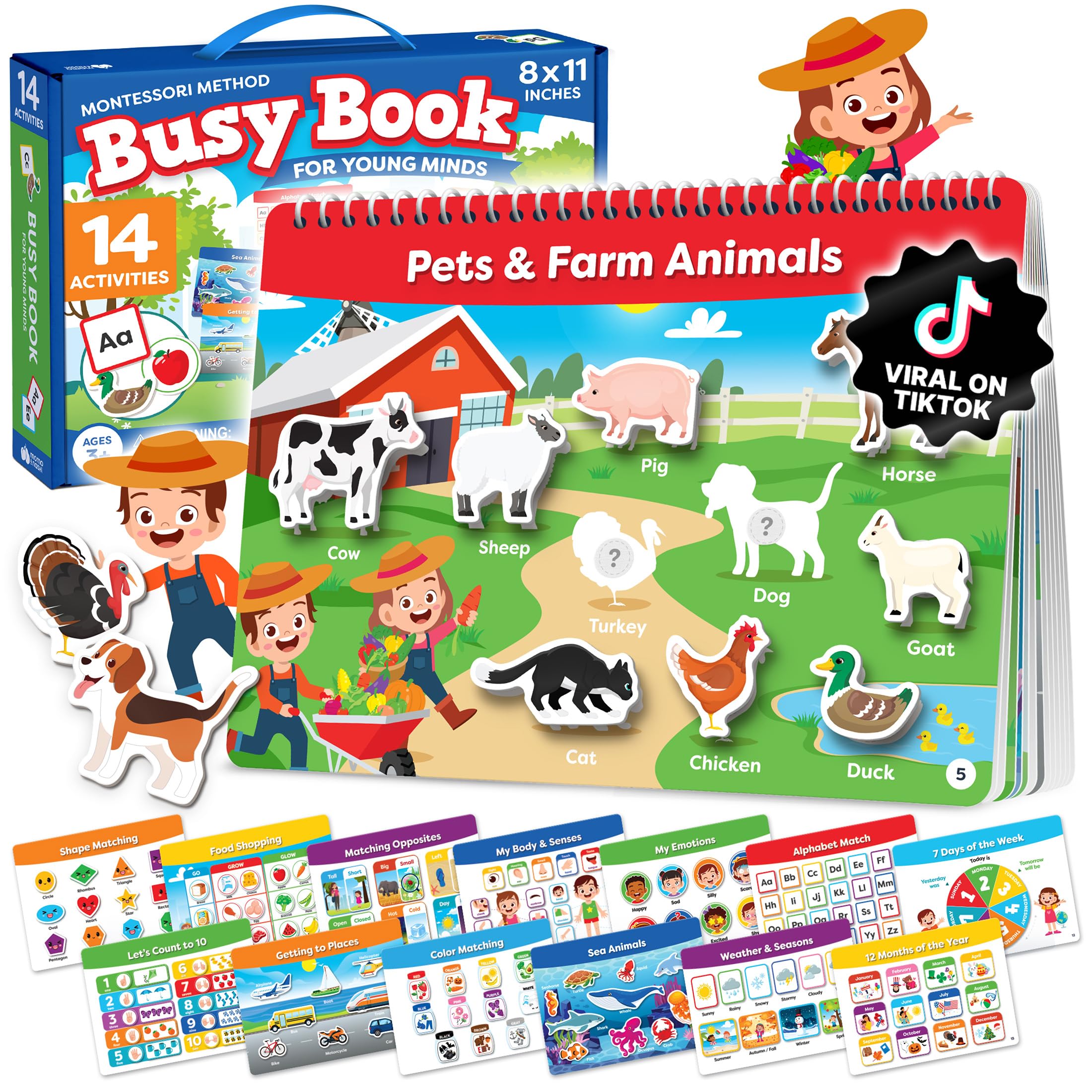
Momo & Nashi Busy Book

Momo & Nashi Busy Book

Quiet travel

Customer rating 4.8/5
Check Price

Worth Noting

  • Some activities may feel too advanced for children under 3
Pieces
14 activities
Storage
Carry box
Material
Cardstock
Age Range
3-5 years
Read the full review

Every activity arrives pre-assembled with thick cardstock pieces that hold up to repeated handling — no sorting, no setup before play, and no loose parts to lose. The carry box keeps all 14 activities contained, which is what separates it from the open-ended blocks that demand a dedicated floor space and parental setup.

This book suits parents who want grab-and-go learning for car rides, restaurants, or waiting rooms. Activities are suited to ages 3-5, so younger toddlers may find some tasks too advanced; the wooden set covers ages 2 and up more comfortably.

Bottom line: For grab-and-go quiet learning on trips, this pre-assembled book is the fit — it travels where the open-ended block set can't.

#5

hahaland Fishing Game

hahaland Fishing Game

Young toddlers

Customer rating 4.7/5
Check Price

Worth Noting

  • Fish and rod are smaller than expected, reading as dainty pieces rather than chunky blocks.
Pieces
15 fish, rod
Storage
Mat, storage bag
Material
Felt, cloth
Age Range
6-36 months
Read the full review

Soft cloth fishing with 15 Velcro fish engages babies at the youngest end of the toddler range, offering the gentlest learning curve in this list while teaching colors and counting. The mat folds into a carry bag, packing flat for car rides, beach days, and weekend trips.

Best for 12-18 month olds whose pincer grip is still forming, this works as a lap or floor game with an adult nearby — standard supervision at that age. It serves a short window in the toddler timeline rather than a lasting staple, so plan for a focused season of play.

Set the fish on a flat tray or lap for children under 3 so the small pieces stay within view and reach.

Bottom line: For the 12-18 month window, this is the most portable and forgiving way to build early motor skills on the go — a worthwhile mid-range pick for travel-focused families.

#6

Huijing Busy Book

Huijing Busy Book

Budget busy book

Customer rating 4.7/5
Check Price

Worth Noting

  • Pieces can arrive missing or duplicated; Velcro may need reinforcing before first play
Pieces
14 pages, 15 themes
Storage
—
Material
Paper
Age Range
3+ years
Read the full review

Fourteen pages span alphabet, numbers, animals, and more — the deepest theme coverage for the price. Content keeps toddlers engaged for long stretches. The catch: every piece needs manual Velcro attachment, and some sets arrive with missing or duplicated pieces, so budget time for fixing before first use. Best suited to parents who enjoy prep and 3+ toddlers with steady dexterity.

Bottom line: Fits families who enjoy prepping materials and want maximum theme variety at the lowest price — as long as you're ready to reinforce Velcro and verify pieces on arrival.

#7

AugToy Shape Puzzles

AugToy Shape Puzzles

Shape sorting

Customer rating 4.8/5
Check Price

Worth Noting

  • Under rough play from an energetic toddler, pieces may chip or crack, and a few shapes run small.
Pieces
6 boards, 30 shapes
Storage
—
Material
Wood
Age Range
3+ years
Read the full review

Six wooden boards with 30 shapes give focused shape and color practice, with smooth edges that suit small hands. Quality trails the premium wooden brands — pieces may chip or crack under rough play — so it suits careful 3+ toddlers and classrooms, not aggressive young ones.

Bottom line: For classrooms or households with careful 3+ toddlers, this delivers solid shape learning at a budget price — just expect gentler handling than premium wooden sets.

How to Choose

Material Quality

Wood is the Montessori default because its density and weight give a toddler real feedback when stacking and gripping. Plastic parts are lighter and survive drops, but the load-bearing details — quills, connectors, hinges — crack under repeated rough play. The trade-off is warm, durable feedback against portability and a lower price.

Age Range and Piece Size

The '1-3 years' label is the least reliable number on the box. A piece that fits a 3-year-old's grip is often small enough for a 1-year-old to mouth, which is why the actual dimensions matter more than the printed range. Test the smallest piece against a toilet-paper roll core before assuming it is safe.

Play Modes and Pieces

More pieces and play modes extend a toy's useful life only when each mode matches the child's current skill. A 100-block set works for stacking at age 1 and shifts to patterns, sorting, and counting by age 4, which is why open-ended sets outlast single-skill toys.

The hidden cost is management: more pieces means more to keep track of and more to lose when storage is weak. A toy with two genuinely useful modes beats one with ten that a toddler cannot reach yet.

Storage and Portability

Storage design decides how often a toy actually gets used. Open trays and loose shapes scatter within a day, and lost pieces shorten the play value. Self-storing toys and carry boxes protect the pieces and make starting and stopping play easy.

Skill Focus

Targeted fine-motor toys build one specific skill, like pincer grasp, while practical-life sets teach independence through real tasks like sweeping and pouring. The right choice depends on which need is more immediate: precision practice or the confidence of doing real chores. Many families add both as the toddler's interests shift.

Frequently Asked Questions