Early Learning Product Guide

3 Best Play Dough Sets for Kids in 2026: Right-Sized for Real Play

Find play dough sets that match your child's age and play style, with storage that keeps dough fresh and tools that survive real use.

3 Best Play Dough Sets for Kids in 2026: Right-Sized for Real Play editorial illustration

The first play dough set is almost always a hit with the child and a quiet frustration for the parent. The dough dries into crumbs, the plastic tools crack within weeks, and the accessories scatter across the floor. The fix is not buying more dough — it is matching the set to how a young child actually plays.

A toddler settling into dough for the first time needs simple tools and a box that keeps everything together. An older child who loves making detailed creations needs more dough and more variety. Sorting out which stage your child is at makes the difference between a set that gets used and one that sits in the cupboard.

The second lesson is storage. A sealed tub or bag keeps dough soft for months, which means more play and less money spent on refills. Skip the sets that rely on a flimsy cardboard box, no matter how good the theme looks.

#1

Play-Doh Fun Tub Set
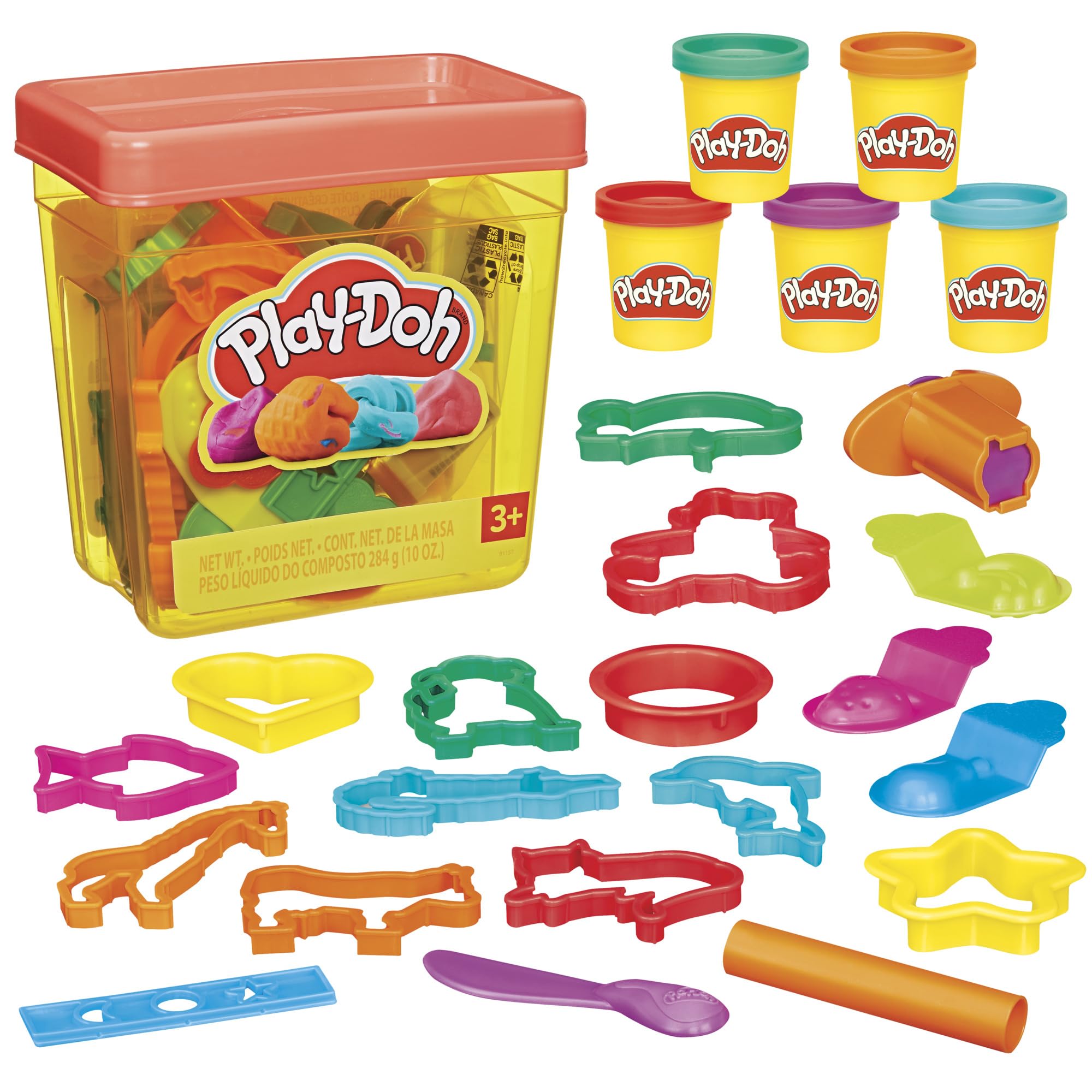
Play-Doh Fun Tub Set

Toddlers 2-3

Customer rating 4.8/5
Check Price

Worth Noting

  • 2oz cans run out quickly for a 5-year-old who uses large amounts
  • Plastic tool quality is adequate but not built for rough handling
Playset Style
Open-ended, basic
Storage Options
Reusable tub
Tool Durability
Standard plastic
Tools & Variety
19 accessories
Read the full review

The reusable storage tub is the reason this set wins for young children. While most Play-Doh kits scatter accessories across a table, this one keeps all 19 tools and five 2oz cans in one lidded container that a toddler can carry and open on their own. Cleanup becomes putting the lid on, and the tub keeps the dough soft between sessions — two practical wins that matter more for a 2- or 3-year-old than an extra dozen tools ever would.

The 2oz cans run out faster than some parents expect, especially once a child discovers the roller and extruder. That suits the target age well: young toddlers use small amounts at a time and lose interest before they empty a can. An older sibling at 5 or 6 will plow through the dough quickly and need refills, so this set is best for a first introduction rather than long group sessions.

The tool set includes cutters, stampers, roller, and an extruder — enough variety to support fine motor practice without overwhelming a young child. The plastic is typical of Play-Doh accessories: adequate for normal toddler play, though rough twisting or biting can leave marks. For the age this targets, that trade-off is acceptable, and the engagement payoff is high.

Buy a pack of larger refill cans if an older sibling will share the set, so the 2oz portions last longer.

Bottom line: The right starter set for a 2- to 3-year-old who is new to play dough, where storage and easy cleanup matter more than quantity.

#2

Play-Doh Fun Factory Deluxe

Play-Doh Fun Factory Deluxe

Creative kids

Customer rating 4.8/5
Check Price

Worth Noting

  • The hand-crank press can crack when operated roughly by eager younger hands.
  • Dough works into intricate press and cutter crevices, making cleanup of each piece tedious.
Playset Style
Open-ended, deluxe
Storage Options
Box only
Tool Durability
Press can crack
Tools & Variety
31 tools
Read the full review

31 tools and 4oz cans offer three times the creative options of a starter set. Where the Fun Tub's appeal is a tidy storage tub and a contained tool set, the Fun Factory Deluxe swaps simplicity for breadth: a hand-crank press, rolling cutters, and stamping wheels that turn out everything from spaghetti strands to patterned tiles. The larger 4oz cans hold roughly double the dough of 2oz starter kits, which sustains longer play for kids aged 3 to 6.

This set suits kids 3-6 who enjoy experimenting with a range of shapes and tools, and it shines in group or classroom settings where variety matters more than tidiness. The tradeoff is cleaning: dough works into the intricate press and cutter crevices, so rinsing each piece takes patience after every session, and the press can crack if a small hand cranks too hard. Those who prefer minimal cleanup and a simple tool set will get more value from a starter tub; the Fun Factory rewards buyers willing to trade cleaning time for creative range.

Soak the press and cutters in warm water briefly before rinsing to loosen stuck dough.

Bottom line: Best for kids 3-6 who want breadth and longer sessions over tidy storage — cleaning the intricate pieces is the price. Families prioritizing minimal cleanup should pick the simpler starter tub instead.

#3

Melissa & Doug Clay Set

Melissa & Doug Clay Set

Eco-conscious families

Customer rating 4.6/5
Check Price

Worth Noting

  • Buyers investing mid-range money may feel the set under-delivers once replacement dough is factored in.
  • During play, the included clay sticks to fingers, clothing, and work surfaces, holding back the creative flow.
Playset Style
Open-ended, natural
Storage Options
Box only
Tool Durability
Durable wood
Tools & Variety
9 wooden tools
Read the full review

The wooden stamping blocks, rolling pins, and patterned wheel here are the most durable tools in this lineup, holding their shape through frequent toddler use where plastic cutters often lose their edges. These are genuine fine-motor development instruments rather than colorful shapes — each stamp and press asks a child to align, push, and lift with control, and the natural material gives a satisfying sensory contrast to typical plastic sets.

Families who care about material quality will appreciate the plastic-free build, but the included clay is sticky and pulls apart, so it is best treated as a trial batch rather than the main supply. This set suits eco-conscious households that cook or buy their own dough and want a lasting stamping station instead of a one-time play kit — pairing these tools with a better compound brings out their real value.

Plan to swap the included clay for your own dough — the tools are the reason to buy this set.

Bottom line: Pair these durable wooden tools with your preferred dough, and you get a lasting stamping station that plastic-heavy sets can't match.

How to Choose

Colors and Can Size

Can size matters more than the number of colors. A standard 2oz can holds roughly a palmful of compound — enough for a focused 20-minute toddler session but gone quickly when an older child rolls out a big slab. That is why a set advertising six colors can still feel thin.

For kids 5 and up, choose sets with 4oz cans or buy refill dough separately. A toddler starting out is perfectly happy with five 2oz cans, since a single can covers most of a play session.

Tools and Variety

Every extra tool is also another thing to clean and another thing to break. Stampers and rollers that work in a single motion hold up well, while multi-step mechanisms like screws and scissors strain small hands and snap at their joints under pressure.

A 3-year-old usually gets more out of ten simple tools than twenty intricate ones. If a big tool count is the selling point, confirm the child can actually operate each piece on their own before you spend more.

Playset Style

Themed sets like dentist offices and ice cream shops do the most for imaginative role-play and are easy to build a story around. But the moving parts that make a theme feel real are also the first to wear out, and a theme can go stale once it stops being novel.

Open-ended sets with cutters and rollers support free creativity and keep working long after a themed gimmick loses its pull. Choose a theme only when the child already gravitates to that role-play; otherwise an unthemed set is the safer bet.

Storage Options

Dough dries out as moisture evaporates into the air, so the packaging essentially decides the usable life of the set. A sealed tub or zipper bag keeps compound soft for months, while an open tray or flimsy cardboard box lets it harden within a few weeks.

If a set has no storage, plan to transfer the dough to an airtight container the day you open it. The storage tub is worth paying extra for — it also keeps the small tools from scattering across the play area.

Tool Durability

The durability gap sits in the mechanical parts, not the dough itself. Simple one-piece tools handle steady play, but drills, buzzers, extruders, and presses carry small internal parts that jam or crack after a few uses, especially with enthusiastic handling.

For heavy or rough play, wooden tools avoid the problem entirely and are the most durable option in the category. If a set relies on an electric or crank mechanism, weigh the novelty against the likelihood of it giving out.

Frequently Asked Questions