Learning Games Product Guide

12 Best Escape Room Games of 2026: Plan One Great Class Event

Which classroom escape room games manage the single-solve event cleanly, fit your students' age and group size, and deliver real teamwork.

12 Best Escape Room Games of 2026: Plan One Great Class Event editorial illustration

Escape room games land in classrooms with a lot of promise — cooperation, critical thinking, a shared win. What most listings don't mention upfront is that nearly every one of them is built to be solved exactly once. Components get torn, folded, and marked along the way, so the box won't survive a second class.

That single-use reality changes how you should choose. If you're planning a dedicated class event built around one solve, these games deliver some of the best teamwork your students will have all term. Most of the category's frustration comes from teachers expecting the reusable and getting the one-shot.

The games that work in a classroom balance difficulty against your students' age, fit the sizes your room actually holds, and skip the clue logic that stalls mixed-ability teams mid-period. Plan around a single solve, pick for your group's real constraints, and you get a team-building session that carries a full class period.

#1

EXIT: Haunted Roller Coaster

EXIT: Haunted Roller Coaster

Classroom intro

Customer rating 4.7/5
Check Price

Worth Noting

  • The 1-4 player cap means a typical class needs several boxes to run whole-class pods.
Age Range
10+
Difficulty
2/5
Player Count
1-4
Replayability
Single-use
Read the full review

At a 2/5 difficulty, this is the most approachable EXIT title, and that gentle curve is precisely what a mixed-ability middle-school group needs — students keep momentum without a teacher narrating every clue. Puzzle variety spans decoding, spatial, and inference challenges, each written to be logically fair, so first-timers stay engaged through the full hour-plus rather than stalling on a single frustrating riddle. The difficulty never spikes to the point where a group feels stuck and checks out.

A pod of three or four typically finishes the story within the advertised hour-plus window, and the fully unplugged format removes any device-management step from the classroom — setup is a table and a box, with nothing to charge or update mid-session. The clues self-facilitate through the deck, so a teacher can circulate and offer light prompts instead of running the game front-of-room. A wrong path costs a few minutes, but the deck's gentle nudges bring the group back without spoiling the reveal, and the hour sustains genuine shared problem-solving as teams pass clue cards around.

This is a starter for teachers running one dedicated solve session rather than a rotating shelf resource: components are torn and marked as you play, so a single box serves exactly one class event, with a fresh copy needed per session. Older teens chasing a steep challenge, or classes expecting a replayable game, will outgrow it quickly — plan the budget around per-event use. Where the series' award-winning flagship runs spikier clue logic, this title keeps difficulty even across the solve, landing it as the safer first-day choice for a school setting.

The hour-plus solve splits cleanly across two class periods — the deck's progress carries between sessions.

Bottom line: For a first-time classroom escape session, this delivers the smoothest on-ramp in the series — the difficulty curve does the facilitating, leaving the teacher free to focus on the students.

#2

ThinkFun: Dr. Gravely's Retreat

ThinkFun: Dr. Gravely's Retreat

Large class pods

Customer rating 4.5/5
Check Price

Worth Noting

  • Components tear, fold, and mark during a solve, so each box delivers exactly one event
  • In a pod without a teacher nearby, some clues can stall the group and push students toward online hints to keep moving
Age Range
13+
Difficulty
—
Player Count
3-8
Replayability
Single-use
Read the full review

ThinkFun seats 3-8 players per box, the widest single-box capacity in this set, so two copies handle a typical 24-plus class in one session instead of cycling pods through a smaller game. The envelope-based format hands each member a piece of the story, pulling a full pod toward a shared objective rather than letting a few strong students solve solo. The per-student cost lands well below a typical split of the flagship title, which matters when buying for a whole room at once.

Best for middle and high school teachers running a single team-building session who want big pods reasoning together rather than watching a few strong students solve. It demands facilitator support — a teacher ready to nudge a stalled group keeps the hour from dragging — which is the honest tradeoff for the widest player count in this set.

Keep the answer key or hint list within reach and set a 60-minute timer — a quick nudge usually gets a stalled pod back on track.

Bottom line: Right for a middle or high school teacher running one team-building session with large pods, as long as a facilitator is on hand to steer groups past the spikier clues.

#3

EXIT Kids: Bee-Scape

EXIT Kids: Bee-Scape

Early elementary

Customer rating 4.6/5
Check Price

Worth Noting

  • Initial rules demand a teacher-led walkthrough before a young group can begin solving
  • Challenge level plateaus around age 7, so students past early elementary will likely find it unchallenging.
Age Range
5+, no reading
Difficulty
Beginner
Player Count
1-4
Replayability
Replayable
Read the full review

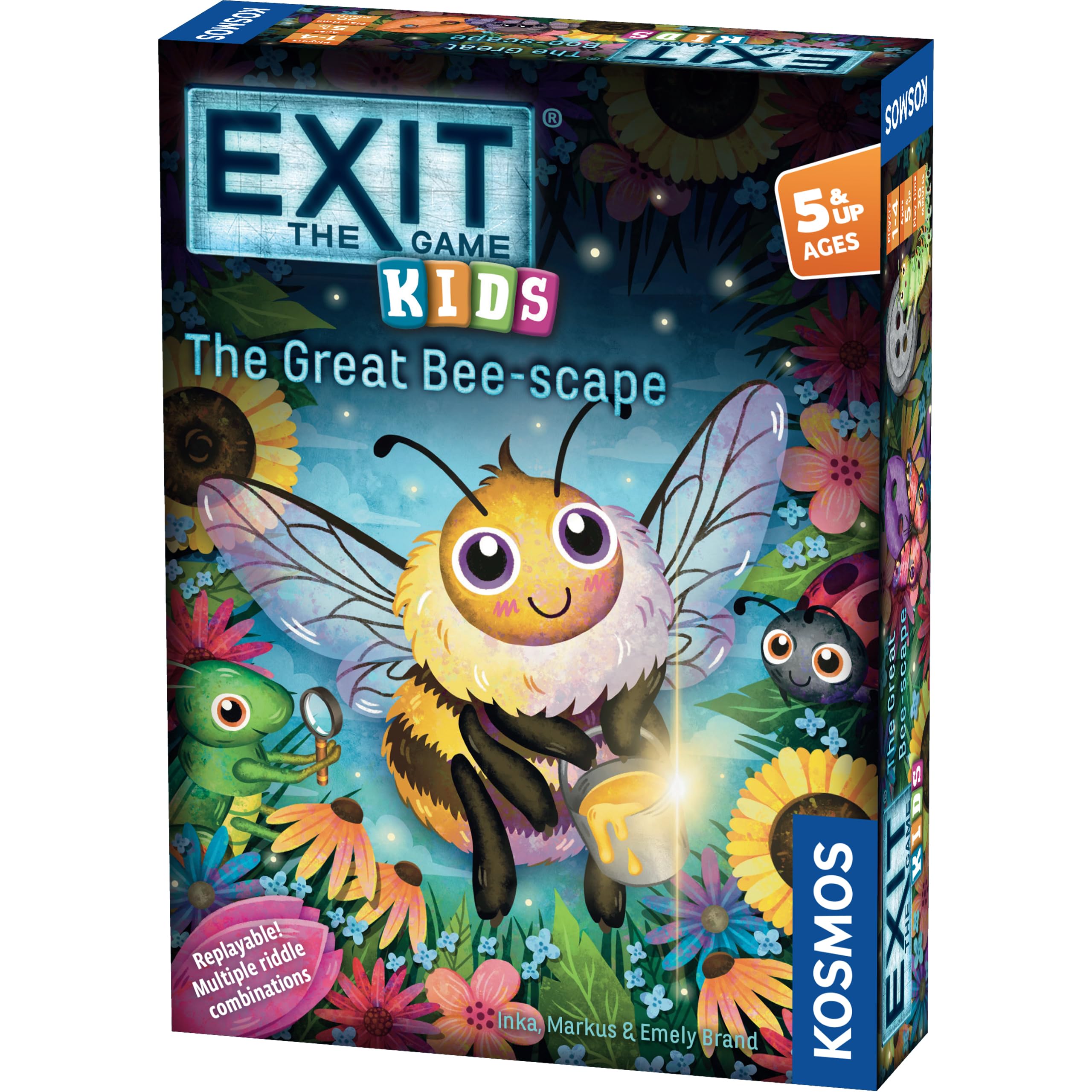
The Great Bee-Scape is the one escape game in this set that non-readers can play on equal footing — picture-based clues and hands-on mini-games carry the solve with no text to decode. Its multi-challenge format replays across separate sessions instead of ending after a single event, a deliberate break from the one-and-done norm of the category. Where the Haunted Roller Coaster steers 10-13 year olds with a gentle difficulty curve, this one is built for the younger end of the classroom, ages 5-7.

Kindergarten and 1st-grade teachers gain a cooperative activity that builds turn-taking and teamwork without requiring reading fluency: sessions run 30-60 minutes, a natural fit for a class period, and every child can contribute regardless of decoding skills. The ceiling is the catch — the challenge suits 5-7 year olds and grows dull once students reach around 2nd grade, so treat this as a K-1 tool rather than a general class activity.

Stagger the mini-games across separate days so each session feels like a fresh puzzle for young groups.

Bottom line: A reading-free, replayable escape box right-sized for K-1 — the easiest way to bring cooperative problem-solving to your youngest students.

#4

Clue Escape: World's Fair

Clue Escape: World's Fair

Unplugged mystery

Customer rating 4.5/5
Check Price

Worth Noting

  • Marking and dismantling pieces during play means the game runs just once
  • Measured per solved session, the asking price can feel steep for a classroom budget
Age Range
10+
Difficulty
—
Player Count
1-6
Replayability
Single-use
Read the full review

Opening the box reveals a hidden secret tool that hooks the room before the first clue moves. No app, no batteries, no setup prep — students are solving within minutes, and the clue logic stays fair enough that mixed-ability groups keep progressing without constant teacher help. Where the top pick eases into its puzzles, this one leads with a narrative hook, leaning on familiar Clue characters to keep everyone anchored. The secret-tool reveal creates a shared moment the group retells for the rest of the class period.

This suits middle school classrooms staging a single-day team event with groups of 1-6, where the session itself is the point. Because components are marked and dismantled as you solve, the purchase maps to exactly one playthrough — a planned special event rather than a standing shelf resource. Older teens wanting deeper puzzle systems should look to heavier boxes.

Four to five players keeps the 90-minute puzzle flowing at a steady clip without anyone waiting.

Bottom line: The right pick for a middle school class that wants one polished, unplugged 90-minute mystery with an energetic, satisfying reveal.

#5

National Parks Escape Room

National Parks Escape Room

Geography lessons

Customer rating 4.3/5
Check Price

Worth Noting

  • Some clue phrasings stay ambiguous even after the answer is revealed, slowing a group that lacks a guiding facilitator.
  • Premium-priced for a story that plays through once, with no replay path for a second class.
Age Range
14+
Difficulty
—
Player Count
1-8+
Replayability
Single-use
Read the full review

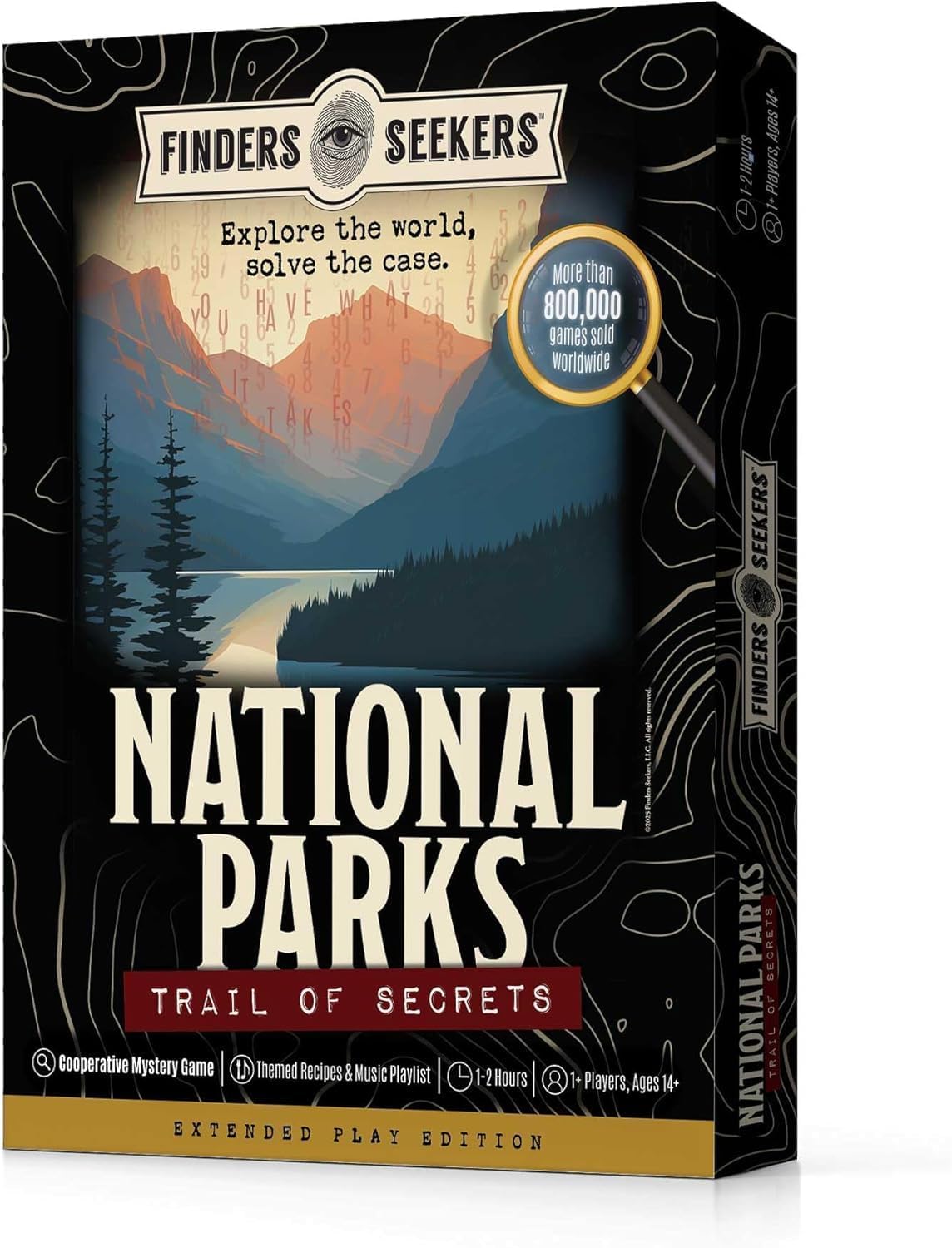
National Parks Escape Room wraps real U.S. geography into an escape-room frame. Clues pull in park locations, landmarks, and historical context that middle and high school students retain, and the 1-8 player range lets two boxes cover a full class pod — the rival large-group pick leans on puzzle intensity, this one carries its weight through theme. The unplugged format keeps setup simple, and the narrative polish holds a large group's attention through the hour-plus solve.

Geography or history teachers running middle or high school pods get the deepest value here, and the 14+ age gate keeps younger groups out of the mix. The premium-priced, one-time story budgets it as a single event, and the ambiguous clue wording means a teacher should run the hint deck to keep groups moving. For a class that treats the solve as a field-trip-style event, the educational payoff clears the upfront cost.

Bottom line: For large geography or history classes running a dedicated solve, the educational payload and 8-player scale warrant a firm recommendation. Book it as a one-event experience with a teacher on hints.

#6

UNLOCK! Timeless Adventures

UNLOCK! Timeless Adventures

Scenario variety

Customer rating 4.7/5
Check Price

Worth Noting

  • A group that has already solved a scenario recalls the answers, so a repeat run loses its challenge.
  • In a technology-free classroom, the app requirement means timekeeping pauses unless a phone or tablet sits within reach.
Age Range
10+
Difficulty
Easy-to-hard
Player Count
1-6
Replayability
Reusable if unmarked
Read the full review

Three 60-minute scenarios ship in one box — the largest content package among the card-based options in this lineup. The companion app handles timekeeping and doles out graduated hints, so mixed-ability groups pace themselves: novices receive nudges while stronger solvers keep moving without waiting on a facilitator.

Best for a classroom with a shared tablet or phone on hand and pods of up to six who want scenario variety over a single polished solve. Difficulty climbs steadily through each scenario — opening gently, tightening toward the end — so the whole pod stays engaged rather than one pair driving. Three scenarios spread the mid-range price across separate sessions, and the reading-heavy narrative keeps the box out of reach for students under ten.

Keep the cards unmarked — a clean deck stays ready for a second group that has not seen the solutions.

Bottom line: UNLOCK! Timeless Adventures suits a classroom that can put one tablet on the table — three distinct sessions from a single mid-range box, with the hint system pacing mixed-ability pods on its own.

#7

EXIT: House of Riddles

EXIT: House of Riddles

Budget entry

Customer rating 4.6/5
Check Price

Worth Noting

  • The box is consumed in a single solve, so one purchase covers exactly one class event.
  • Difficulty runs the full range
Age Range
10+
Difficulty
2/5
Player Count
1-4
Replayability
Single-use
Read the full review

The logical, fair puzzle design wins consistent praise from experienced players, and clear components make it an inexpensive entry for small groups of 10-13 year olds new to the genre. Difficulty is the most variable among the beginner EXIT titles — some groups solve it comfortably while others lean on hints. That spread is why it trails the top pick here: mixed-ability classes need a gentler, more predictable curve, while this one suits a teacher whose group skews toward similar ability.

Bottom line: The House of Riddles fits a teacher who knows their small group of younger students shares a similar tolerance for challenge; a mixed-ability class is better served by the gentler top pick.

#8

EXIT: Sunken Treasure

EXIT: Sunken Treasure

Narrative adventure

Customer rating 4.6/5
Check Price

Worth Noting

  • Single-use components mean one box serves exactly one solve, so budget it as a one-time classroom event.
  • Some puzzles require regular hints to progress, so a facilitator who can dole out clues is needed.
Age Range
10+
Difficulty
2/5
Player Count
1-4
Replayability
Single-use
Read the full review

The Sunken Treasure delivers the strongest story hook of the group — the pirate narrative carries a mixed-age group through a full hour-plus session, and the cooperative progression feels satisfying when the clues click. Its classroom ceiling sits lower than the Haunted Roller Coaster's, whose gentler 2/5 difficulty keeps mixed-ability students moving without constant support — that approachability is what pushes this pick down the list.

Bottom line: For classes that prize a strong narrative and run one dedicated pirate-themed session, the immersive story is worth the mid-range price.

#9

EXIT: Abandoned Cabin

EXIT: Abandoned Cabin

Proven classic

Customer rating 4.5/5
Check Price

Worth Noting

  • Components are torn and marked during the solve, so a single box serves exactly one class period.
Age Range
12+
Difficulty
2/5
Player Count
1-4
Replayability
Single-use
Read the full review

The Abandoned Cabin pairs its Kennerspiel award with genuinely varied puzzles, the kind that keep a facilitated team engaged through the full hour-plus solve. Its clue logic, though, runs less consistent than the Haunted Roller Coaster's — some riddles only click once the included hint cards are opened. That places it as a teacher-moderated flagship, not a self-serve station for unsupervised pods of 10-13 year olds.

Bottom line: Schools that can staff a single guided period get genuine value here; those without that support should start with the gentler EXIT entry instead.

#10

EXIT: Enchanted Forest

EXIT: Enchanted Forest

Puzzle enthusiasts

Customer rating 4.5/5
Check Price

Worth Noting

  • Inconsistent clue logic can send solvers into dead-ends mid-solve.
  • Difficulty climbs steeply and clue logic can read as nonsensical at the harder end.
Age Range
12+
Difficulty
3/5
Player Count
1-4
Replayability
Single-use
Read the full review

This Enchanted Forest entry pairs the set's most inventive puzzle design with a cooperative, hands-on solve that keeps advanced groups fully engaged. Difficulty runs spikier than other EXIT titles, and clue logic can take a frustrating, nonsensical turn when hints aren't close at hand. That trade-off suits puzzle-hungry older students with an instructor ready to guide — not a mixed-ability starter class.

Page-mark the hint deck so a facilitator can nudge stuck solvers past the hardest logic without slowing the group.

Bottom line: Reserve it for a small advanced-ability pod with a facilitator on hint duty — not a mixed-ability group where frustration runs high.

#11

Puzzle Adventures: Scientist

Puzzle Adventures: Scientist

Tactile solvers

Customer rating 4.5/5
Check Price

Worth Noting

  • Early instructions and clue phrasing can confuse first-time solvers before the system clicks.
  • A puzzle piece can arrive missing, stalling the clue it anchors until a replacement arrives.
Age Range
16+
Difficulty
—
Player Count
1-2
Replayability
Reusable parts
Read the full review

This hybrid turns a jigsaw build into the solve itself — reusable pieces and strong component quality earn praise as a standout home escape game. The 16+ rating, fiddly setup, early-clue confusion, and the possibility of a missing piece all narrow its classroom reach; the sweet spot is a high-school jigsaw pair willing to run the room as a multi-hour project.

Bottom line: Fits a high-school maker club of two or three jigsaw fans ready to run the solve across a whole afternoon.

#12

EXIT: Professor's Last Riddle

EXIT: Professor's Last Riddle

Fair mechanics

Customer rating 4.5/5
Check Price

Worth Noting

  • Single-use format
Age Range
12+
Difficulty
3/5
Player Count
1-4
Replayability
Single-use
Read the full review

The Professor's Last Riddle earns enthusiast status for puzzle logic that stays fair throughout — every mechanic builds on the previous one without veering into guesswork. That makes it a strong intermediate option for a small, motivated class pod of 12-plus students. The catch is clue phrasing: some steps will stall a group until help cards come out, so plan a facilitator who can nudge rather than a hands-free solve. That facilitation demand keeps it behind the more approachable top pick for mixed-ability classrooms.

Bottom line: Best for a teacher who will run a small, motivated 12-plus group and is comfortable steering hint use — the fair puzzle logic carries the session when phrasing stalls it.

How to Choose

Player Count and Group Size

Most escape boxes stop at four players, so a class of 24 needs six copies or a rotation where students wait. A smaller game keeps everyone engaged because there's nowhere to hide.

Higher-capacity boxes — ThinkFun's 3-8 range, the National Parks game's 8+ — cut the copies you need, but big teams let some students coast on others' work. Size the pod so every student owns a clue.

Age Range and Reading Load

Age ratings track reading fluency, not just puzzle difficulty. EXIT's 10+ titles demand decoding written clues, while EXIT Kids drops reading entirely with picture cards.

The 16+ Identity games need adult vocabulary. A below-grade reader can stall on a '10+' label faster than a strong reader hits a '12+' game's walls.

Replayability

EXIT-style games destroy their own components — you fold, write on, and tear cards — which guarantees a used copy leaks every answer. That locks you into finishing in one sitting.

To stretch an activity across sessions, look to the exceptions: EXIT Kids' tile set, UNLOCK!'s packable cards, or the jigsaw adventures' reusable pieces.

Difficulty and Hint Systems

Difficulty ratings cluster near 2/5 or 3/5, but the spread behind one number is huge — some 'beginner' games stay trivial while others frustrate a 10-year-old into quitting. The hint deck is the safety valve.

A hint-heavy game can quietly become the teacher reading answers aloud, which kills the teamwork payoff. Pick a title where hints support a stalled group rather than rescue a broken puzzle.

Setup Time and Durability

Unplugged card and board games are ready in minutes, but the jigsaw-style adventures need assembly first — 20-plus minutes that eat a class period. Apps add another layer, since UNLOCK! and the Chrono Decoder demand charged devices.

Durability matters on the way out: a rough class can tear the cards a single-use EXIT game still needs, while Bee-Scape's tiles and Clue Escape's board take more abuse.

Frequently Asked Questions