Learning Games Product Guide

11 Best Educational Toys for Kids of 2026: Match the Learning Stage

Which educational toys genuinely match a child's age and learning stage, and which ones hold up beyond the first week.

11 Best Educational Toys for Kids of 2026: Match the Learning Stage editorial illustration

Educational toys carry age labels for a reason, but those numbers don't always line up with what a child can actually manage. A '3+' magnetic set can be genuinely difficult for a three-year-old to snap together, and the same box can deliver strong magnets on some pieces and weak ones on others. The gap between what the box promises and what small hands can do is wider than most parents expect.

That gap is why two families can buy the same toy and walk away with completely different experiences. This guide sorts the field by learning stage rather than by popularity, separating tools for language, early math, fine motor skills, and open-ended building. It also flags toys that hold up under real, daily play rather than losing their appeal by week two.

#1

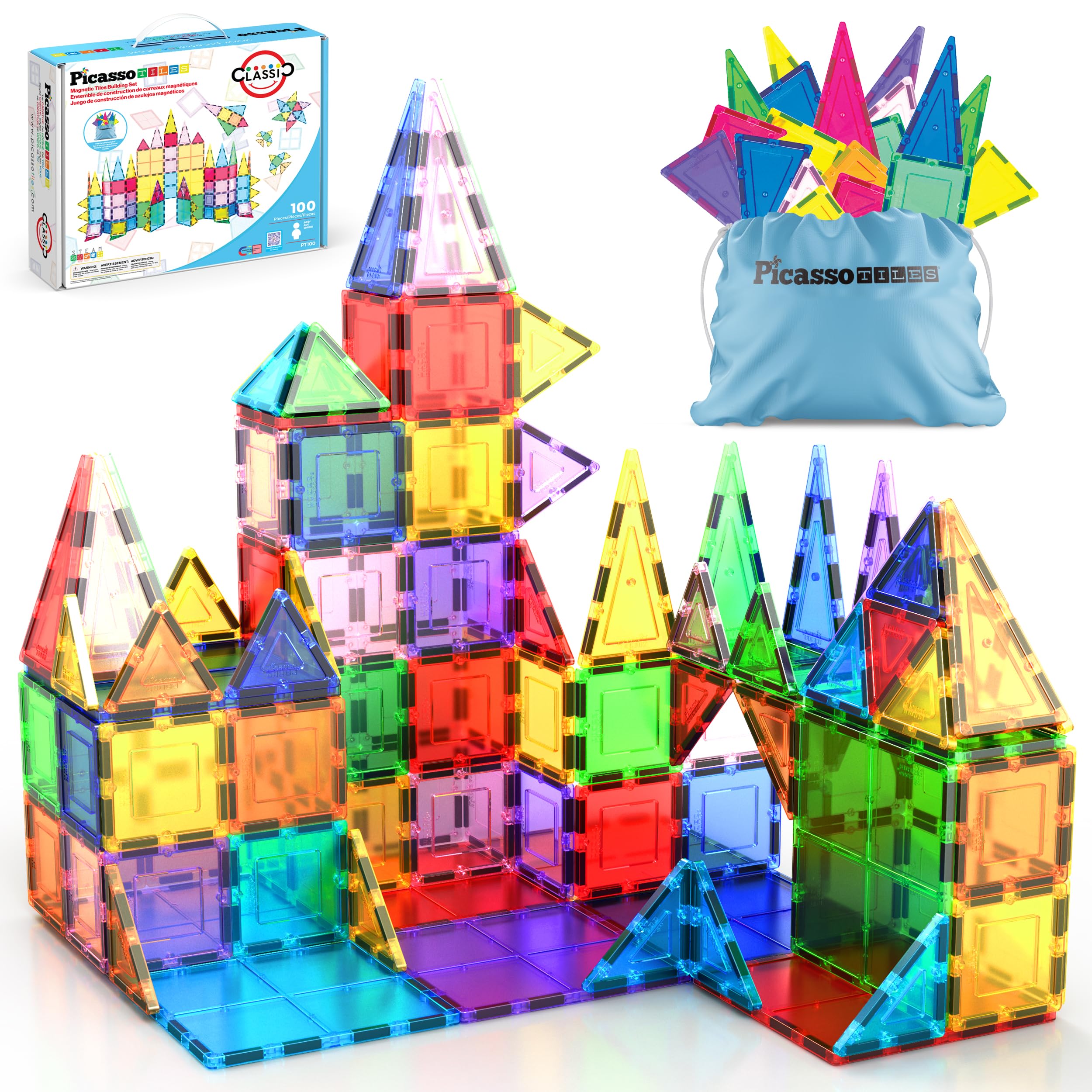
PicassoTiles 100pc Tiles
PicassoTiles 100pc Tiles

Open-ended building

Customer rating 4.8/5
Check Price

Worth Noting

  • In tall builds, a piece with a weaker magnet can let the upper levels sag, so the tallest structures may lean.
  • Some individual tiles can crack when dropped on hard floors, so care helps around unforgiving surfaces.
Age
3+
Durability
Varies by piece
Play Style
Open-ended
Piece Count
100
Read the full review

One hundred clear magnetic tiles at a mid-range price give families triple the piece count of premium starter sets, with strong geometry and creativity outcomes that keep children engaged through years of play. Several kids build together for long stretches without losing interest, which suits open-ended play in multi-child homes. The clear plastic shows off every structure, reinforcing spatial awareness as towers go up and out. Shapes, symmetry, and counting surface naturally during play, so the set doubles as a quiet learning tool during free time. It travels well between home and classroom, so the same set earns use in both places.

This is the fit for families with children 3+ who want one open-ended toy that serves several kids at once, plus classrooms that need a broad building set. Piece count per dollar is the appeal, and the trade-off is piece-to-piece variance in durability and magnet pull across the 100 tiles. As a first magnetic-tile purchase, it's a reasonable entry point to see how the format lands with your kids and adapts as they grow.

Bottom line: For the money, this delivers the broadest open-ended building options in the lineup, and the same set keeps serving as children grow.
#2

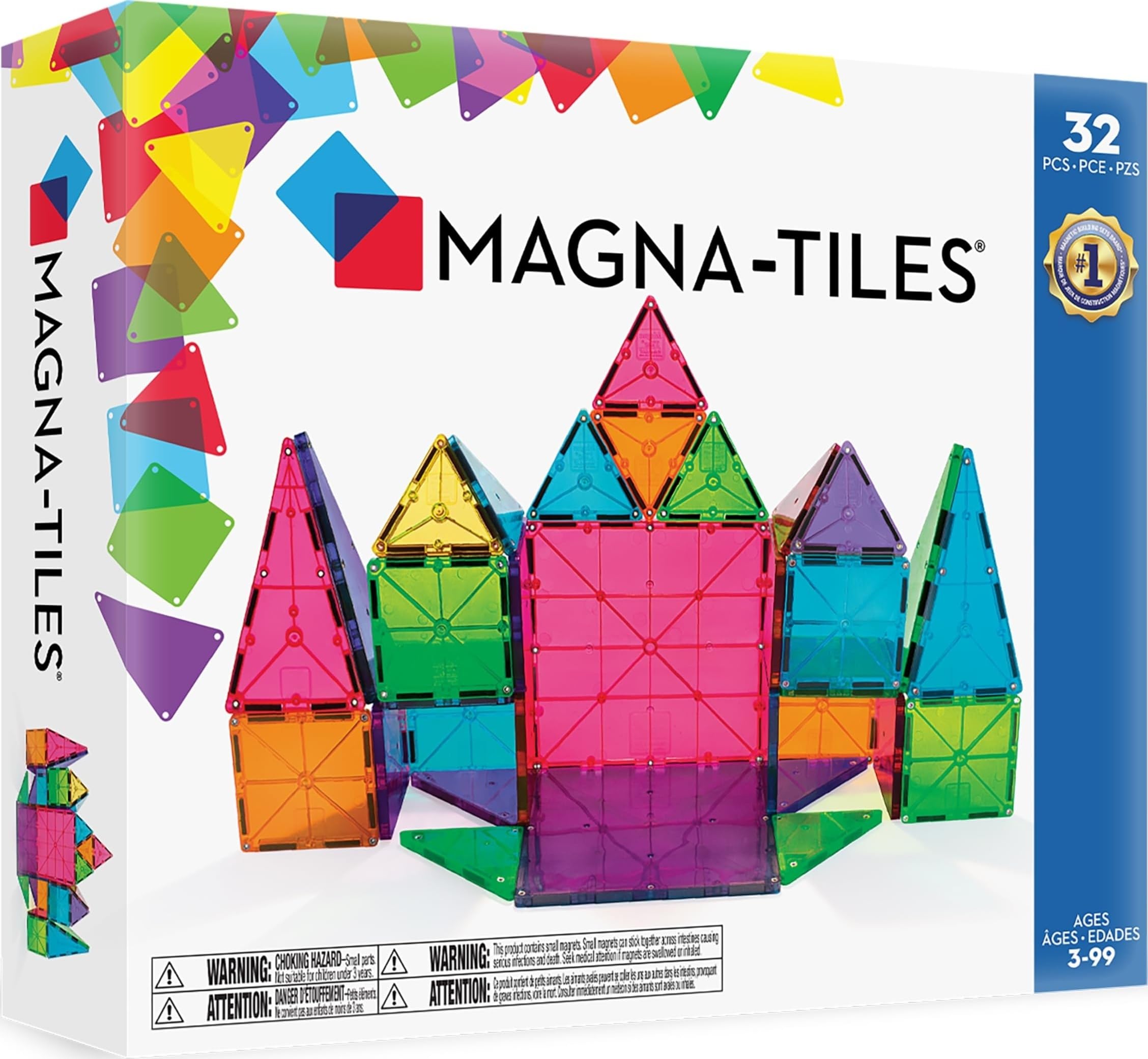
Magna-Tiles Classic 32pc

Magna-Tiles Classic 32pc

Premium durability

Customer rating 4.9/5
Check Price

Worth Noting

  • Per-piece cost runs highest in this tile lineup; value lands in durability rather than volume.
Age
3+
Durability
High, enclosed magnets
Play Style
Open-ended
Piece Count
32
Read the full review

Enclosed riveted magnets and certified ABS plastic give the original magnetic tile brand a durability edge over the value-oriented set that tops our list. Heavy play, hard drops, and years of use are the scenarios these pieces are built for.

This premium-priced set fits families who prioritize longevity over piece count and expect to grow their collection gradually — a 32-piece start stays modest for the price, and expansion carries the same premium. Gift-givers wanting a durable, brand-name toy that lasts are the other natural fit.

Bottom line: Right for families who treat this as a long-term collection rather than a one-box purchase — durability over scale, accepted at a premium.

#3

LeapFrog 100 Words Book

LeapFrog 100 Words Book

Toddler language

Customer rating 4.8/5
Check Price

Worth Noting

  • In a busy living room, the highest volume setting is hard to hear.
Age
18m-4y
Durability
Tabs can tear
Play Style
Structured
Piece Count
100 words
Read the full review

That 100 Spanish and English words span everyday categories with touch-activated sound, letting toddlers explore vocabulary on their own - no adult narration required. The bilingual depth sets this apart from single-language stations, holding attention while building both word banks at once.

This suits 1-to-3-year-olds in Spanish, English, or bilingual households, plus first-birthday gift givers wanting screen-free language exposure. As a boundary, the page tabs can tear under aggressive handling, and even the top volume setting gets drowned out in noisy rooms. For a calm play space it still covers a lot of early vocabulary ground.

Use it in a quiet corner, where the modest volume reads clearly.

Bottom line: Between the two language toys in this set, this is the one that grows two word banks at once rather than drilling single-language letter sounds.

#4

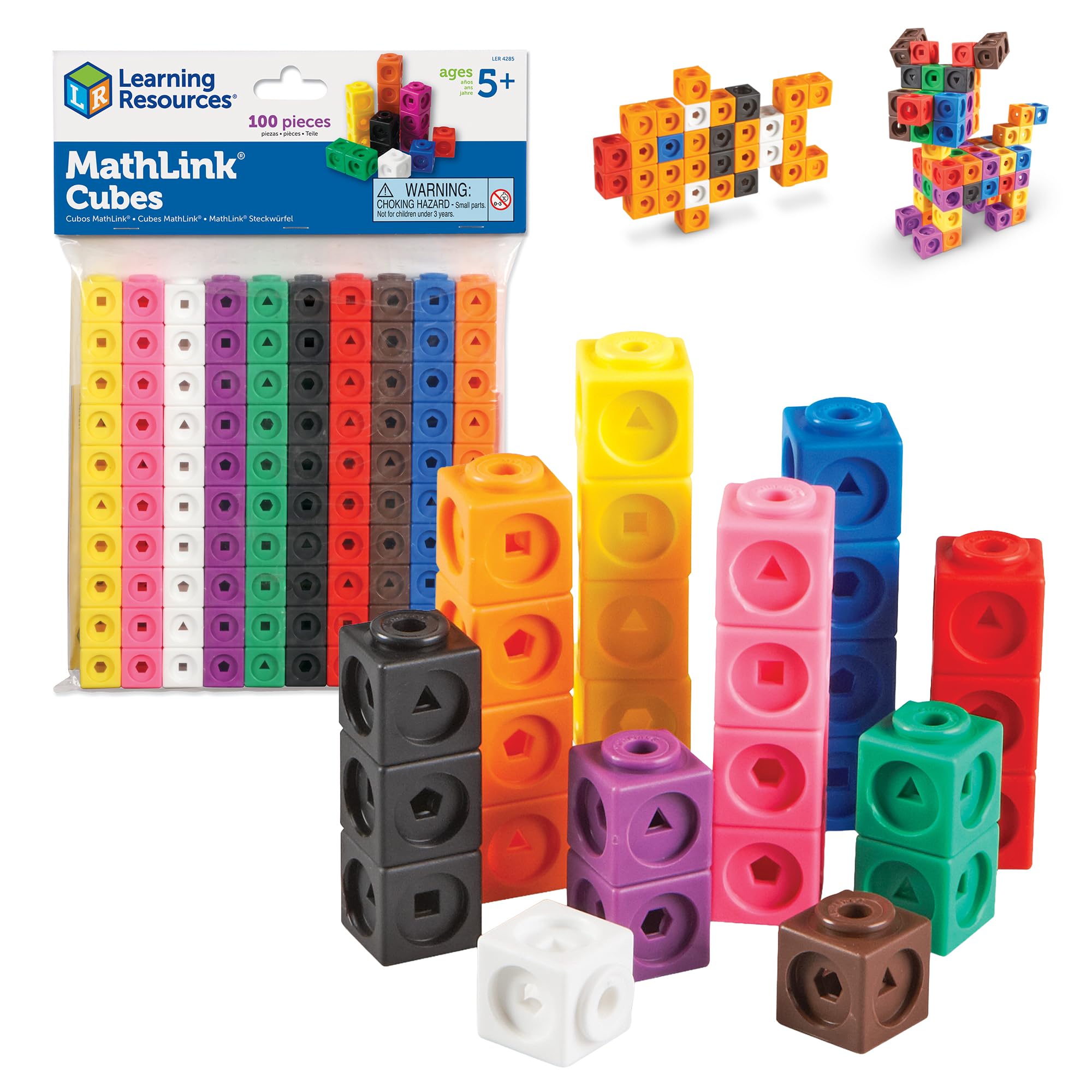
Learning Resources MathLink

Learning Resources MathLink

Early math

Customer rating 4.8/5
Check Price

Worth Noting

  • Sits firmly on the learning-tool side
  • With a child under four, the grip strength to snap cubes together may not be there yet.
Age
5+ (hard <4)
Durability
High, school-grade
Play Style
Structured
Piece Count
100
Read the full review

MathLink Cubes turn K-2 arithmetic into something a five-year-old can hold, snap, and rearrange. Each cube clicks onto another in a line or grid, making counting, addition, and subtraction tangible in a way flashcards never manage. Teacher and homeschool endorsements back the curriculum-aligned method, and at a budget price the hundred cubes undercut typical single-subject workbooks across a school year.

Homeschool families and kindergarten classrooms working through early math are the right fit — this is not the brand's toddler fine-motor piece; it's aimed at the 5+ crowd. Five-year-olds handle the set easily and treat it as a plaything during free time, pulling double duty in schoolwork and casual building.

Pair a child under the 5+ age rating with an adult for the first sessions — the grip for snapping cubes follows within weeks.

Bottom line: For homeschools and classrooms that want arithmetic progress with a physical hook, this budget-priced set delivers — no separate workbook needed.

#5

Snap Circuits Jr. SC-100

Snap Circuits Jr. SC-100

STEM kids 8+

Customer rating 4.8/5
Check Price

Worth Noting

Age
8+
Durability
High (box wears)
Play Style
Structured
Piece Count
30+ parts
Read the full review

Snap Circuits Jr. SC-100 packs 100+ solder-free projects into one mid-range kit, and each one teaches real circuit behavior — a working fan, AM radio, and voice-activated switch snap together from color-coded modules in minutes. No screens, solder, or tools are required, so attention stays on how current actually flows. Because connections sit out in the open, kids trace and debug their own builds instead of watching a preset toy.

For STEM-focused families, homeschoolers, and classrooms, this kit covers a year of project-based learning at a mid-range price. The bundled cardboard box wears down under daily rotation, so a sturdier container is worth planning for.

Bottom line: The kit that turns after-school tinkering into genuine circuit literacy, with a project list long enough to outlast the initial excitement.

#6

Melissa & Doug 100 Blocks

Melissa & Doug 100 Blocks

Classic building

Customer rating 4.8/5
Check Price

Worth Noting

  • Blocks run smaller than traditional unit blocks, which can frustrate younger toddlers
Age
2+ (small)
Durability
High (solid wood)
Play Style
Open-ended
Piece Count
100
Read the full review

Melissa & Doug's 100-piece set trades magnetic-tile structure for the tactile simplicity of solid wood — 100 FSC-certified blocks across 9 shapes and 4 colors, priced well below the top-pick tile set without skimping on finish. The paint stays on the wood through heavy toddler play, and the vibrant shape mix holds attention across repeated sessions.

This suits families who want a screen-free, budget-priced classic and toddlers 2+ honing fine motor skills. The blocks run smaller than traditional unit blocks — an honest tradeoff that can frustrate younger toddlers — and they won't absorb older kids seeking complex structures. For budget-conscious gift givers, the value lands where plastic alternatives can't.

Blocks are smaller than traditional unit sets — they suit toddlers closer to age 3 who can grip them confidently.

Bottom line: For budget-minded families who want classic, screen-free wooden building that survives toddler play, these blocks are the economical pick — just size expectations around the smaller blocks.

#7

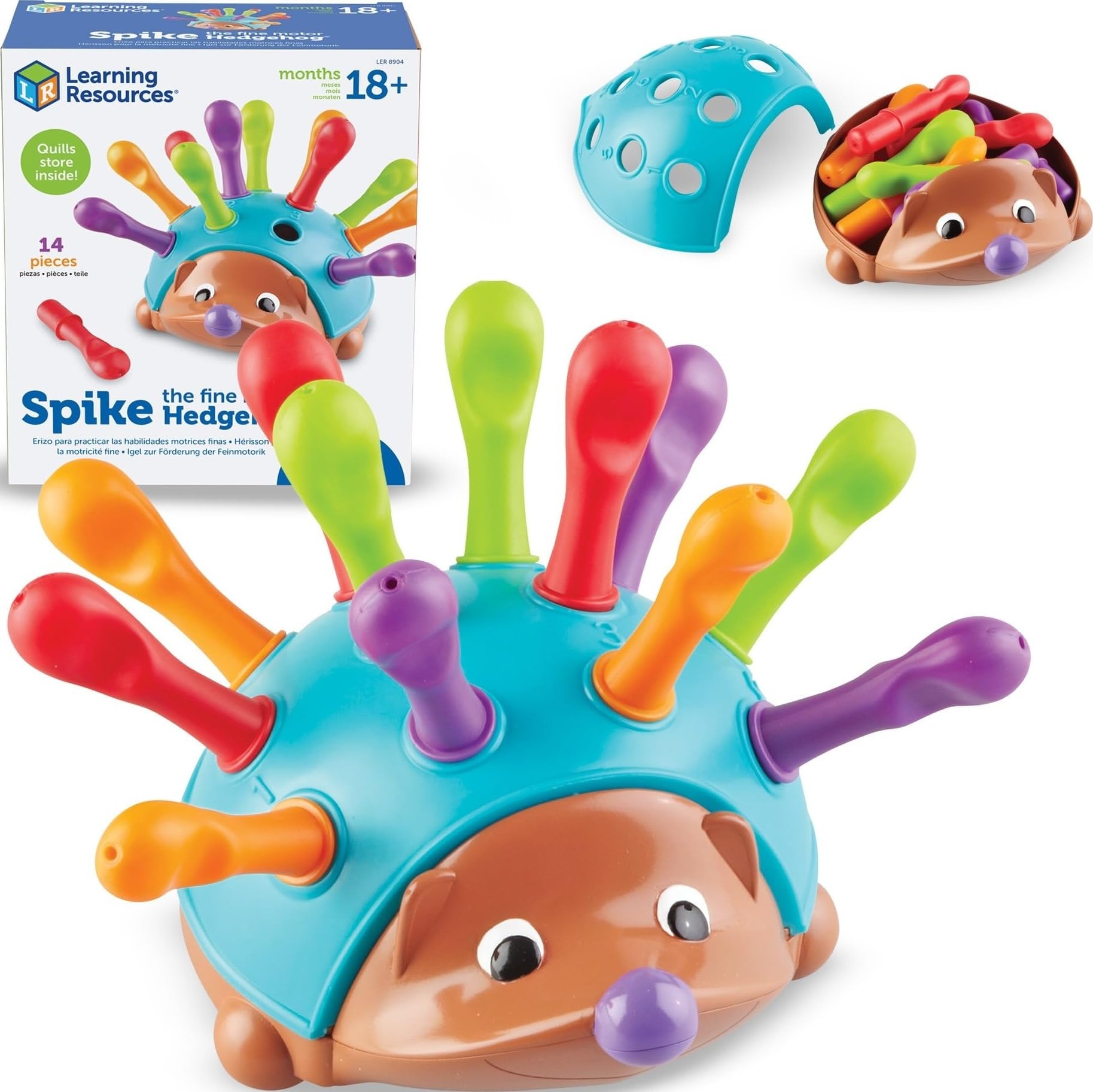
Learning Resources Spike

Learning Resources Spike

Fine motor skills

Customer rating 4.7/5
Check Price

Worth Noting

  • Heavy pressure or a hard fall can crack a quill at the base
Age
18m-3y
Durability
Quills can chip
Play Style
Structured
Piece Count
12 quills
Read the full review

Pulling and reinserting the twelve quills builds the exact pincer-grip and hand strength toddlers need for pre-writing, with color sorting and counting layered in. The narrow 18-month-to-3-year window and simple loop make it a focused supplement rather than a replacement for open-ended building toys — yet nothing in this set targets hand strength more directly.

Bottom line: Best for the toddler whose hand strength needs a focused pre-writing workout — it earns its place as a dedicated bridge to writing readiness once you accept the narrow learning window.

#8

Brain Flakes 500pc Set

Brain Flakes 500pc Set

Creative value

Customer rating 4.8/5
Check Price

Worth Noting

  • Kids under five can lack the grip strength to snap discs, and some six-year-olds still find assembly effortful.
Age
3+ (hard <6)
Durability
High
Play Style
Open-ended
Piece Count
500
Read the full review

The 500-disc jar delivers the highest piece count per dollar of any builder in this set — snapping plastic discs into shapes, creatures, and geometric structures with no batteries or magnets. Creativity outcomes are consistently strong and family-friendly. The trade-off: snapping discs demands grip strength, and kids under five — sometimes six — can struggle with it.

Bottom line: Best for classrooms and makerspaces stocking bulk pieces for kids 5 and up; families with toddlers get more from the solid-wood stacking set.

#9

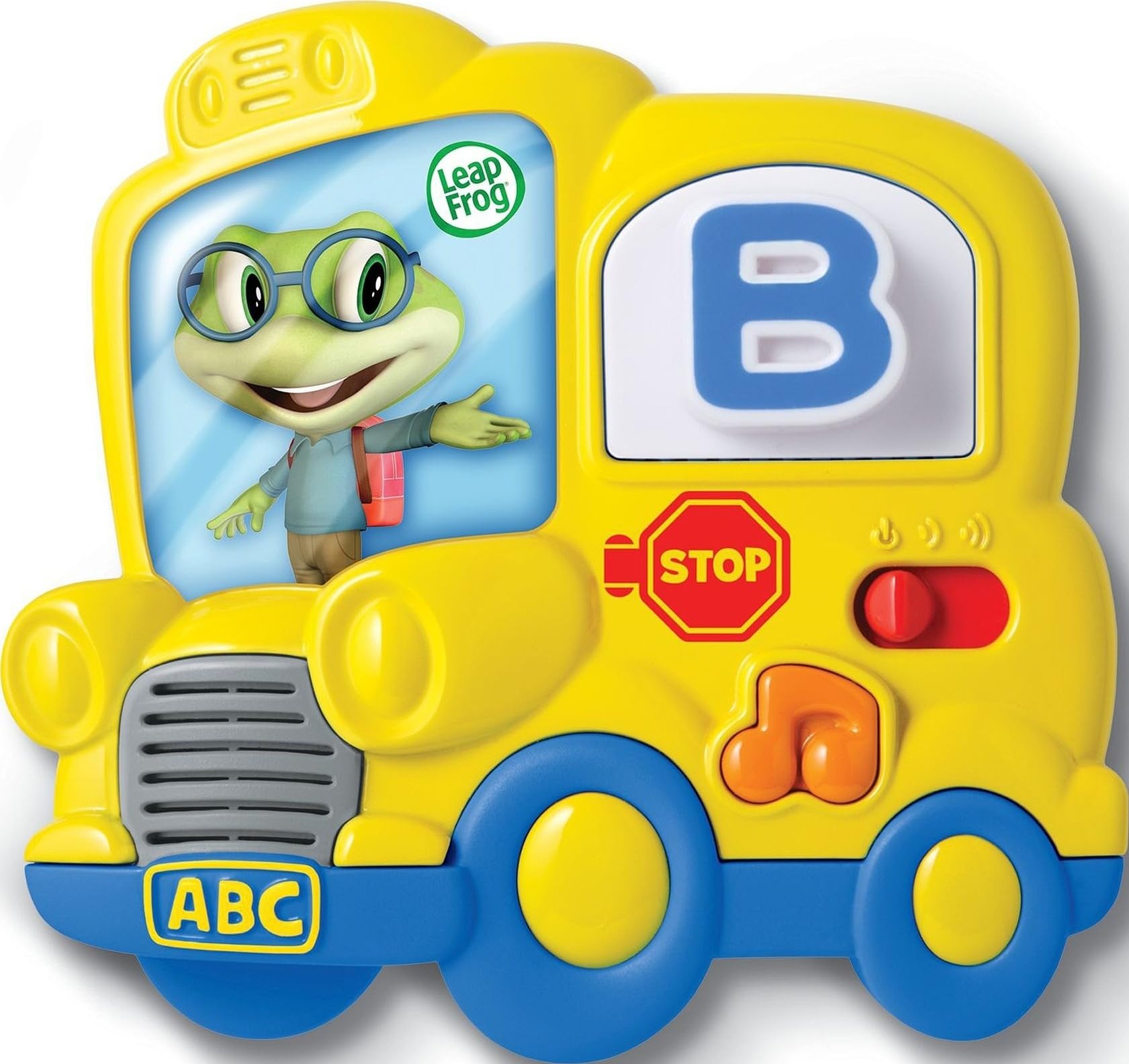
LeapFrog Fridge Phonics

LeapFrog Fridge Phonics

Alphabet learning

Customer rating 4.8/5
Check Price

Worth Noting

  • Letter names can be hard to hear clearly in a room with background noise.
Age
2-5
Durability
High
Play Style
Structured
Piece Count
26 letters
Read the full review

Magnetic letter tiles stick to the fridge and drive letter-name and letter-sound practice through self-directed play, occupying 2-4 year olds within sight during meal prep. Audio can be tough to distinguish in noisy kitchens. Once the alphabet is mastered, the brand's 100 Words Book delivers broader vocabulary value, so this stays a complement rather than the core pick.

Bottom line: The fit is households at the alphabet stage seeking self-directed letter practice near the fridge, provided background noise stays moderate.

#10

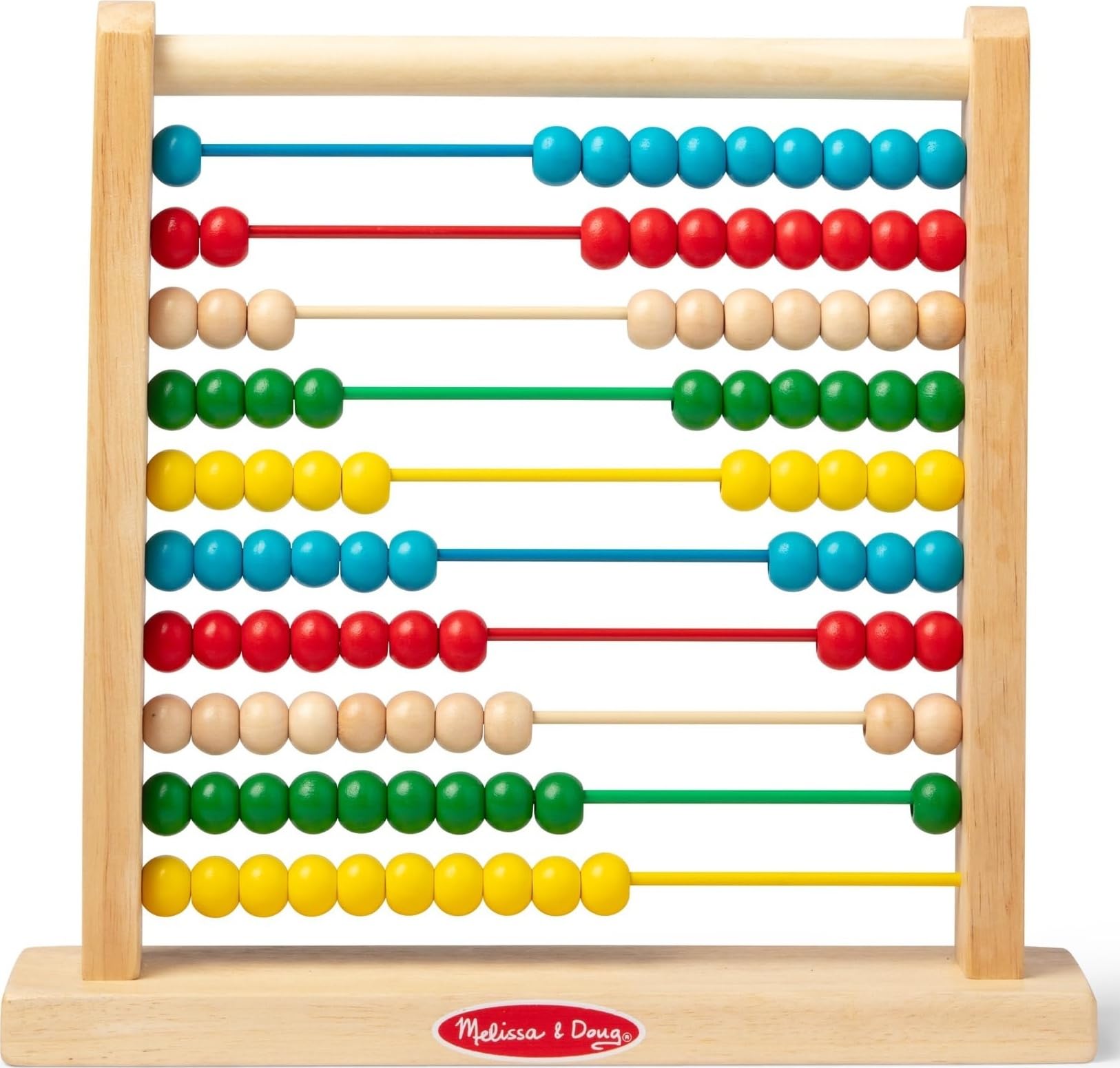
Melissa & Doug Abacus

Melissa & Doug Abacus

Math classics

Customer rating 4.8/5
Check Price

Worth Noting

  • Single-purpose
Age
3+
Durability
High (solid wood)
Play Style
Structured
Piece Count
100 beads
Read the full review

100 beads across 10 rows make counting and place value concrete for tactile learners, with no batteries and nothing to wear out. Homeschool families reinforcing addition and subtraction at home get a durable, budget-priced classic. It is a single-purpose teaching tool rather than an open-ended toy — a strong addition to a math shelf, not a standalone play pick.

Bottom line: For homeschool families and parents reinforcing early math at home, this delivers dependable screen-free practice at a budget price — keep an open-ended toy on hand for general play.

#11

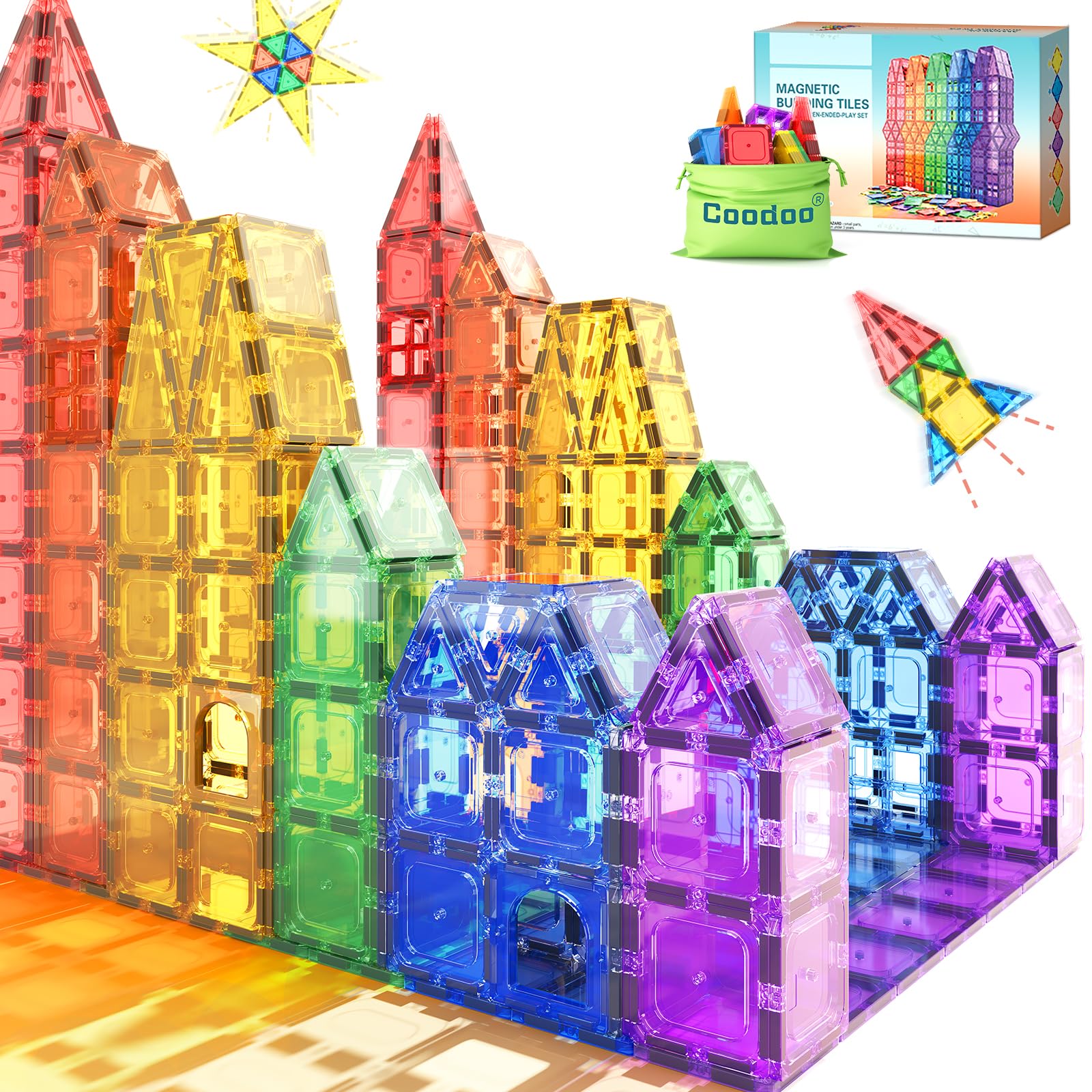
Coodoo Magnetic Tiles 40pc

Coodoo Magnetic Tiles 40pc

Budget tiles

Customer rating 4.8/5
Check Price

Worth Noting

  • Minor cosmetic chips can appear on individual tiles during play
Age
3+
Durability
Minor chips
Play Style
Open-ended
Piece Count
40
Read the full review

Forty standard 3-inch tiles give toddlers a sturdy, engaging magnetic-building start at the lowest price in this set, with a base size that matches leading premium brands for later expansion. The 40-piece count limits large-scale creations — a reasonable boundary for small-space homes testing the category before committing.

Bottom line: For budget-conscious families or small-space homes trialing magnetic tiles before a larger commitment, this delivers premium-brand compatibility at the lowest price in the set.

How to Choose

True Usability by Age

Manufacturers set age floors to satisfy safety standards, not to measure readiness. Learn what the toy actually demands physically: snapping magnetic tiles or interlocking discs needs far more controlled hand force than stacking wooden blocks, which is why '3+' tile and disc sets often frustrate real three-year-olds.

Ask whether your child can already manage that core action — snapping, threading, pressing. If not, the toy sits untouched until that milestone arrives, so match purchases to demonstrated dexterity, not the label.

Piece Count vs. Build Capability

The piece count sets expectations, but magnet and connector strength set the real ceiling. A hundred weakly magnetized tiles collapse past a few layers, while thirty-two strong ones hold a full castle.

Also budget for the physical reality of bulk: five hundred pieces means constant sorting and cleanup that a smaller curated set avoids. Buy the count that matches your storage and mess tolerance, not just the price tag.

Match the Learning Focus

Choose by the skill you want to build. Vocabulary books and phonics toys serve the 18-month-to-4-year language window, while interlocking cubes and abacuses make counting and place value concrete for ages 5 and up.

Electronic toys deliver curriculum on demand, but the learning is mostly passive listening. Manipulatives build the same concepts through hands-on trial, which sticks longer but requires more adult guidance during play.

Durability Under Real Play

Durability comes down to construction, not brand. Magnetic tiles fail at the plastic shell on a hard drop and at the magnet housing — riveted, enclosed magnets outlast designs where magnets sit loose.

Wooden toys absorb impact without cracking, which is why solid-wood sets often outlive several plastic ones. Electronics are the exception: every hinge, screen, and battery contact adds a potential early-failure point.

Open-Ended vs. Structured Play

Open-ended toys — tiles, blocks, discs — have no fixed outcome, so the challenge rises with the child: a toddler stacks, a kindergartener builds a castle, an older kid engineers a ball run. That scaling is what makes them cost-effective over years.

Structured toys like phonics boards and activity sets teach one skill reliably but suit a narrow age window, typically 12 to 18 months. That precision is worth the price, but expect to outgrow the toy rather than watch it grow along.

Frequently Asked Questions