STEM Toys Product Guide

8 Best Circuit Kit for Beginners in 2026: Match the Learner

Find a circuit kit that actually teaches — no-solder snap sets for younger kids, Arduino kits for teens ready to code.

8 Best Circuit Kit for Beginners in 2026: Match the Learner editorial illustration

Most circuit kits advertise project counts in the triple digits, but the number of projects says little about whether a child will actually finish the first one. What separates a good beginner kit is how clearly it walks a newcomer from the first connection to a working build.

That guidance takes two very different forms. Snap-together kits require no soldering or code — children press parts onto a board and follow a full-color manual. Arduino-style kits add a programmable controller, which suits teens and adults ready to learn programming alongside basic circuitry.

Both styles can work, but only when matched to the right learner. This guide separates the kits that genuinely teach from those that just promise projects, and calls out the hidden extras — like a missing controller board — that turn a bargain into a second purchase.

#1

Snap Circuits Jr. SC-100

Snap Circuits Jr. SC-100

Ages 8+ beginners

Customer rating 4.8/5
Check Price

Worth Noting

  • Curious builders who want circuit theory explained will outgrow the manual's how-to-only approach.
Age Range
8+
Controller Board
No
Instruction Guide
Full-color manual
Number Of Projects
100+
Read the full review

The press-and-snap design is what sets this kit apart: parts clip onto a base board and snap together, letting an 8-year-old assemble working circuits without a single tool or any soldering. Each of the 100+ projects is guided step-by-step in the full-color manual, with parts labeled and drawn exactly as they appear. The modules hold up to repeated take-apart and rebuild without loosening, so the kit survives heavy classroom or sibling use across dozens of builds.

Best for kids getting their first taste of circuits — a STEM-minded gift, a classroom activity, or a rainy-day project. The manual walks through how to build each circuit but leaves the deeper explanation of why it works to a parent or extra material. This is an on-ramp, not a finishing line, so it suits absolute beginners rather than teens ready for programming.

Bottom line: For a parent introducing an 8+ child to circuits, this is the on-ramp to start with — the build-it-yourself ease a starter kit needs before moving up to a bigger project set.
#2

Snap Circuits Classic SC-300

Snap Circuits Classic SC-300

Kids wanting more

Customer rating 4.8/5
Check Price

Worth Noting

  • Mid-range price is a step above the starter kit and pays off only after completing the SC-100
Age Range
8+
Controller Board
No
Instruction Guide
Full-color manual
Number Of Projects
300+
Read the full review

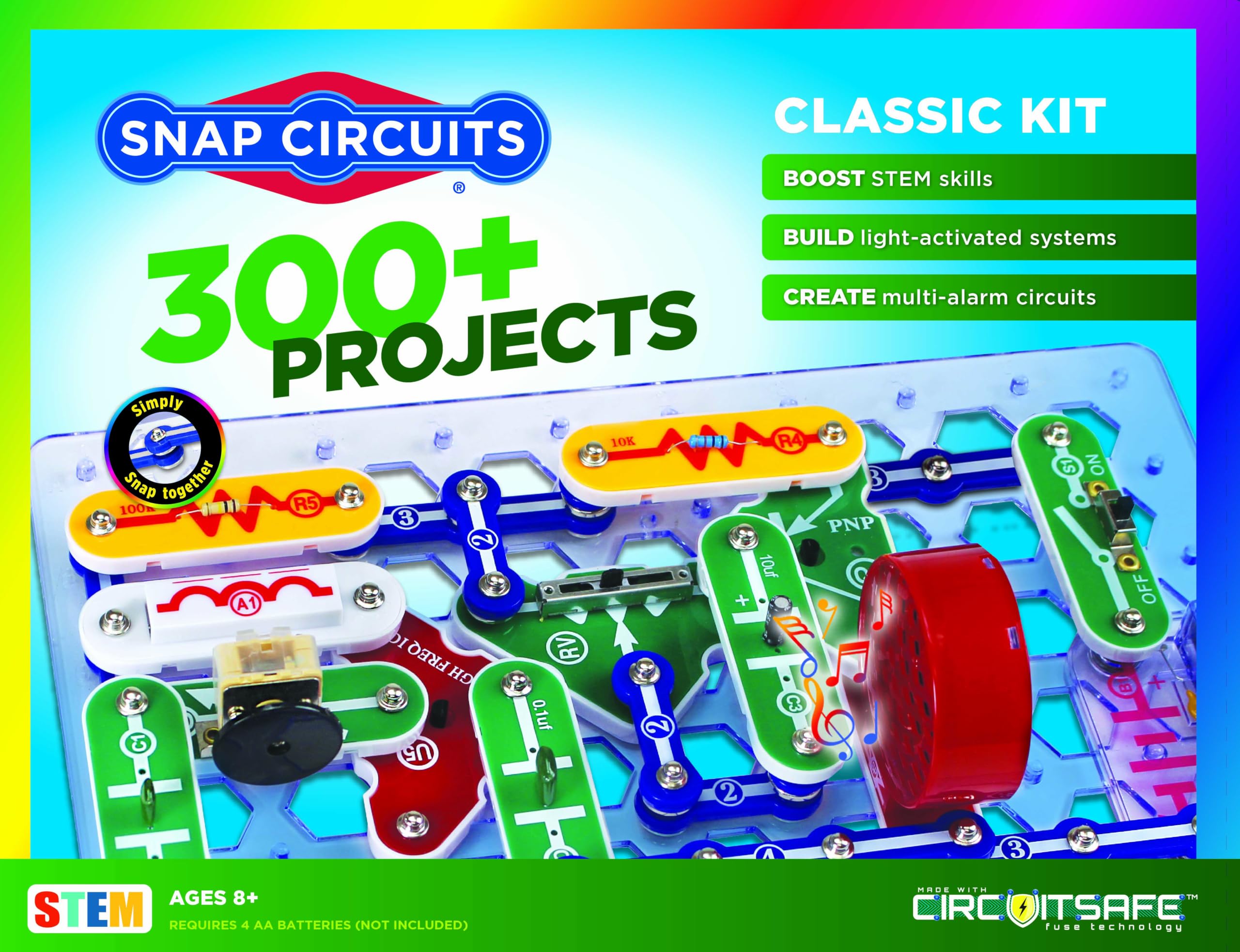
The SC-300 expands the SC-100's project library to 300+ builds while keeping the same no-solder, snap-together modules and full-color manual. The 60+ pieces add photoresistors, alarms, and other component types the junior set can't reach, so kids who finished the starter kit get genuinely new territory to explore. Durability holds up well across repeated assembly.

This fits a child who finished the SC-100 and wants more builds before moving on to coding. For a casual beginner who hasn't completed a starter kit yet, it offers more than needed — the SC-100 is the lighter entry point for that buyer.

Bottom line: For a child who has finished the SC-100 and wants more before coding, this is the right next set — skip it if the starter kit is still untouched.

#3

ELEGOO UNO Super Starter

ELEGOO UNO Super Starter

Teens learning code

Customer rating 4.7/5
Check Price

Worth Noting

  • In a quiet study session, the online tutorial explanations may leave new programmers consulting forums for the 'why' behind each build
Age Range
10+
Controller Board
Yes, UNO R3
Instruction Guide
PDF tutorial, 22 lessons
Number Of Projects
22+ lessons
Read the full review

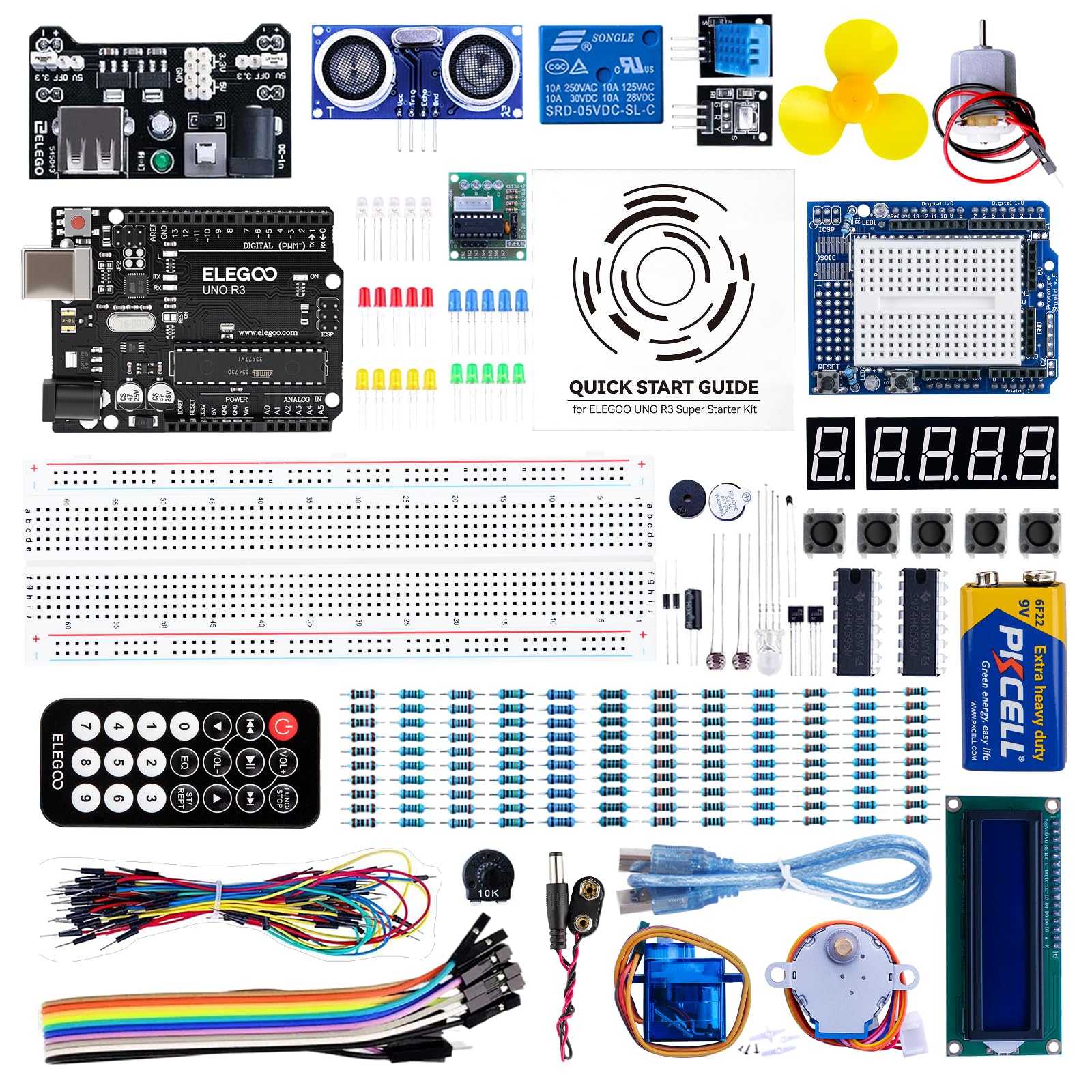
ELEGOO's UNO R3 Super Starter pairs a genuine Arduino board with 63 component types and 22 progressive lessons, making it the natural step up from Snap Circuits style kits for builders ready to write their first code. The included sensors, display modules and servo give hobbyists room to grow beyond the guided projects into personal builds.

This kit suits teens and adults who enjoy tinkering with a keyboard rather than just snapping modules together. It requires a computer, the free Arduino IDE, and some patience with code — the instruction PDF explains builds well but the tutorials can leave absolute novices wanting more depth on the underlying logic. STEM educators will find the lesson structure useful, while younger kids who prefer visual circuit building without programming are better served by the top pick's snap-together approach.

Install the Arduino IDE before unboxing and work through lessons in order, since later projects build on earlier wiring and code patterns.

Bottom line: Best for teen and adult hobbyists ready to step from snap circuits into real code — the lesson structure carries you through 22 builds before you go off-script.

#4

Official Arduino Starter

Official Arduino Starter

Serious learners

Customer rating 4.6/5
Check Price

Worth Noting

  • Premium price buys only 12 projects when cheaper kits offer far more parts
Age Range
—
Controller Board
Yes, Uno
Instruction Guide
170-page book
Number Of Projects
12 projects
Read the full review

This official Arduino UNO comes from Italy with genuine components and a 170-page English project book. Where budget clones cut corners on quality control, this kit delivers authentic parts that behave predictably. The book explains not just how to complete each of the 12 builds, but the reasoning behind each circuit — a layer cheaper kits skip.

That depth makes it a fit for classrooms and gifts for older students who want official support and the reasoning behind each project. The tradeoff is clear: at this premium price you get 12 projects, while cheaper kits like the budget-friendly ELEGOO offer several times more parts. Buyers who just want maximum components for the dollar should look elsewhere.

Bottom line: For classroom use or a gift for an older student who wants official Arduino support and a real understanding of circuits, the premium price buys what budget clones leave out — the reasoning behind each build.

#5

REXQualis Super Starter

REXQualis Super Starter

Budget Arduino learners

Customer rating 4.7/5
Check Price

Worth Noting

Age Range
—
Controller Board
Yes, UNO R3
Instruction Guide
PDF tutorial + DVD
Number Of Projects
—
Read the full review

REXQualis ships a complete UNO R3 board, 120+ components, and a PDF-and-DVD tutorial in one box at a budget-friendly outlay — the full Arduino starter experience without the official kit's premium markup. The included guide walks each project through step-by-step, bringing the learning curve within reach of STEM students and hobbyists new to circuits.

This kit is the right match for budget Arduino learners who want a complete part set and structured lessons without official-brand pricing. The tradeoff is component consistency — quality control varies, so a quick test of each part before building prevents a non-functioning module from stalling a project. Reliability-minded buyers who need every piece working out of the box should weigh the pricier official option.

Bottom line: For budget Arduino learners this is the strongest value in the roundup — complete parts, structured tutorials, and a cost that stays well under the official kit's.

#6

ELEGOO UNO Basic

ELEGOO UNO Basic

Budget-conscious beginners

Customer rating 4.6/5
Check Price

Worth Noting

  • Jumper wires can make loose contact, requiring re-seating mid-build.
Age Range
12+
Controller Board
Yes, UNO R3
Instruction Guide
PDF tutorial
Number Of Projects
—
Read the full review

The ELEGOO UNO R3 Basic holds the price line: a working board and tutorial that run fundamental circuit builds on first power-up. The sparse part count and jumper wires that can lose contact make it a tight-budget pick for a patient student, not a full starter experience for someone wanting a broad sensor library.

Press jumper wires in firmly and test each connection before stacking the next one.

Bottom line: Best for a student needing a working Arduino at the lowest cost — add parts and patience later.

#7

Nat Geo Circuit Kit

Nat Geo Circuit Kit

Brand-loyal families

Customer rating 4.7/5
Check Price

Worth Noting

  • An occasional component may arrive dead out of the box, so checking parts before each build is wise.
Age Range
8+
Controller Board
No
Instruction Guide
Video instructions
Number Of Projects
120+
Read the full review

The kit packages 120+ snap-together projects with video walkthroughs, and the National Geographic name carries educational weight that kids respond to. The catch: an occasional component can arrive dead out of the box, so testing parts before a build matters. It's also mid-range priced, with fewer projects than the Snap Circuits sets that cost less.

Bottom line: Best for families who value the National Geographic name and want hands-on variety, provided they test components before relying on a build.

#8

REXQualis Component Kit

REXQualis Component Kit
Customer rating 4.6/5
Check Price

Worth Noting

  • Without a controller on hand, a separate board purchase is required before the first project runs.
Read the full review

400+ components on an 830-tie-point breadboard give existing builders room to prototype without restocking, and the assortment arrives sorted so parts are quick to find. With no controller board or guided projects, it functions as an expansion pack for circuit builders rather than a standalone starter kit — anyone without a board adds a separate purchase.

Bottom line: The right pick for someone with a working UNO, Pi, or STM32 who wants a spare part bin without overpaying — skip it if you still need a controller and guided builds.

How to Choose

Number of Projects

Project counts inflate fast because the same modules get recombined — swapping a switch for a light sensor counts as a new project without teaching a new skill.

For a first build, 100 projects is plenty; extra variety doesn't speed up learning. Larger sets earn their keep only once the child finishes the first kit and needs genuinely new parts.

Age Range

Age ratings track part size and manual reading level, not intelligence. Kits for ages 5-9 use larger, safer pieces but cap at a dozen projects; 8+ kits assume a child can follow written steps.

Match the box to the actual child — pushing a 6-year-old into a small-part 8+ kit ends in frustration, and a 12-year-old handed a preschool kit gets bored fast.

Controller Board

This is the hidden fork in the road. Snap-together kits build working circuits directly; Arduino kits route everything through a programmable microcontroller, so nothing runs until a computer uploads code.

If a kit doesn't list a controller, it may be a component pack in disguise — a pile of parts that does nothing without a separate purchase. Check the box before you pay.

Instruction Quality

The manual does the teaching. Full-color photo guides let a child build alone; thin PDFs or terse steps push the burden onto the parent and leave novices guessing at connections.

Instruction clarity, not parts count, decides whether a beginner finishes project one.

Durability

Snap kits get yanked, dropped, and re-seated constantly. Press-fit modules survive that punishment; thin plastics crack early, especially in the cheapest sets aimed at young kids.

Choose press-fit pieces with larger molded parts if the kit will face rough hands.

Frequently Asked Questions