Books & Reading Product Guide

15 Best Biographies for Kids 2026: Match the Age, Not the Name

Biographies for kids matched to reading age and interest — from illustrated picture books to chapter books for school reports.

15 Best Biographies for Kids 2026: Match the Age, Not the Name editorial illustration

A biography for a toddler and a biography for a ten-year-old barely resemble each other. Picture books tell a life in a few dozen pages with illustrations carrying the story, while chapter books pack decades of detail into dense text. Most mismatches happen when a famous name outweighs a reading level.

The fix is to choose the format by age first and the subject second. A child who cannot yet decode chapter text loses the plot entirely, and a confident reader outgrows a picture book before the second reading.

This guide sorts the field by who each book actually serves — from toddler story times to middle school book reports — so the name on the cover and the child holding it line up.

#1

The Boy Who Harnessed the Wind

The Boy Who Harnessed the Wind

STEM ages 9-12

Customer rating 4.7/5
Check Price

Worth Noting

  • The continuous narrative lacks the quick-reference layout of series biographies, so fast school-report skimming takes more work.
  • The extended narrative can stall a hesitant reader before the windmill story hooks them.
Format
Chapter Book
Page Count
304
Reading Age
9-12
Subject Matter
Wind energy
Read the full review

The true story of a Malawian teenager who builds electricity from a junkyard windmill reads like fiction, and that narrative pull keeps kids turning pages. The prose stays clear across reading levels while the real engineering details — salvaged gears, PVC pipe, a bicycle frame — give curious readers something to revisit. The story holds even hesitant readers, which is the book's real advantage over dry fact-listing biographies. It works as a bedtime read-aloud and a springboard for classroom talks about energy and creative problem-solving. For STEM-focused families, the payoff is a biography that gets read cover to cover. It belongs where fiction and nonfiction meet.

This suits 9-12-year-olds curious about how things work, along with classrooms where the windmill story anchors STEM lessons or read-aloud sessions. It reads as a gripping personal narrative, which is why it holds attention where list-style titles get set aside. Kamkwamba works as a role model for kids who already love building and tinkering; teachers pair it easily with hands-on engineering units. For kids under 9, picture-book biographies serve young attention spans better — the real-world engineering angle makes this a natural for older elementary readers.

Spacing it over nightly chapters keeps momentum — the story reads best like a novel.

Bottom line: The rare biography kids finish on their own — a real-life engineering story told with momentum.

#2

Shark Lady

Shark Lady

Ages 3-7

Customer rating 4.8/5
Check Price

Worth Noting

  • For kids 8+ wanting a fuller biography, the 40 pages only sketch her career.
Format
Picture Book
Page Count
40
Reading Age
3-7
Subject Matter
Marine biology
Read the full review

Eugenie Clark's true shark-studying story lands squarely with preschoolers — the marine illustrations carry the narrative, so pre-readers follow along without any reading stamina. The 40-page picture-book format keeps the science approachable and the tone celebratory, a friendly counterpoint to the heavier space-math biography in this set.

Best for ocean-obsessed kids ages 3-7 and early STEM exposure; the condensed length means older readers after a fuller career arc will find this a taste of the story rather than the whole picture.

Read it aloud — the art does the storytelling, so a steady cadence keeps pre-readers hooked.

Bottom line: The pick for preschool shark lovers who need the art to do the storytelling; save the fuller career arcs until they outgrow this one.

#3

Who Was Neil Armstrong?

Who Was Neil Armstrong?

Space book reports

Customer rating 4.8/5
Check Price

Worth Noting

  • Readers who rely on pictures may lose engagement without illustration to anchor the text
Format
Chapter Book
Page Count
112
Reading Age
7-10
Subject Matter
Moon landing
Read the full review

The fact-forward moon-landing narrative moves at the steady clip parents and teachers expect from the Who Was? line — a dependable contrast to the top pick's memoir storytelling. Facts stay front and center with no narrative flourishes to trip up comprehension, which makes this a natural fit for space-themed book reports and classroom libraries.

Ages 7-10 get a child-friendly account of Armstrong's life that supports schoolwork without adult scaffolding. For readers who have moved past illustrated picture books, the plain black-and-white layout trades visuals for more facts per page.

Bottom line: For a space-themed grade-school report, this delivers the even-keeled, fact-forward account the assignment needs.

#4

Women Who Dared

Women Who Dared

Girls ages 6-11

Customer rating 4.8/5
Check Price

Worth Noting

  • Each one-page profile stays a snapshot rather than a deep life portrait
Format
Story Collection
Page Count
128
Reading Age
6-11
Subject Matter
Women's achievements
Read the full review

One-page profiles of 52 women bring more diverse role models to a single cover than any other title in this set. Stories of daredevils, adventurers, and rebels are built for staggered reading — a fresh woman each session keeps interest alive across a whole school term.

The collection suits classroom libraries and read-aloud rotations where listeners sample one story at a time. For girls aged 6-11 it delivers the widest variety of inspiring figures, though each profile stays a brief snapshot rather than a full portrait — readers wanting deep single-person biographies should turn to the dedicated titles.

Bottom line: For a classroom shelf or a young reader seeking fresh role models all year, this collection offers more variety per dollar than any single life story.

#5

The Story of Simone Biles

The Story of Simone Biles

Gymnasts ages 6-9

Customer rating 4.8/5
Check Price

Worth Noting

  • Kids wanting a complete career arc will find the 64-page scope slimmer than fuller sports biographies.
Format
Chapter Book
Page Count
64
Reading Age
6-9
Subject Matter
Gymnastics
Read the full review

At 64 pages with interactive quizzes after each chapter, this biography turns finishing a real book into a small win for early readers. The Story of Simone Biles moves through her rise from a young gymnast to Olympic champion without the dense pages that intimidate kids ages 6-9.

Best for young gymnastics fans and reluctant readers who want their first complete biography, the format condenses the narrative so it stays encouraging rather than exhaustive — thinner detail than a full-career sports title, which suits a read-aloud or first-solo-reading goal.

Bottom line: For a first self-read biography, this pairs genuine inspiration with a length a 6-year-old can realistically finish.

#6

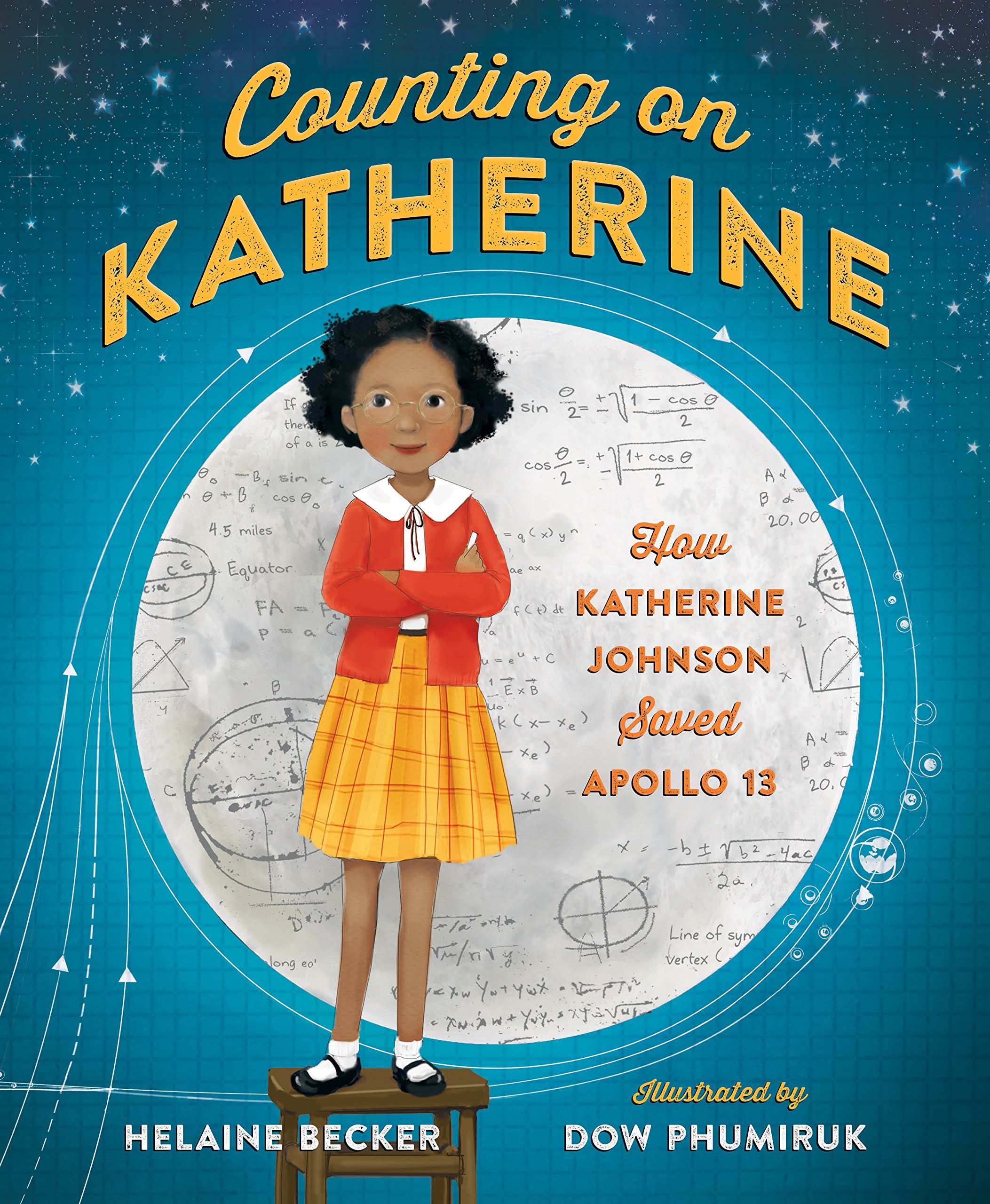
Counting on Katherine

Counting on Katherine

STEM ages 5-8

Customer rating 4.9/5
Check Price

Worth Noting

  • The picture-book format condenses a full career
Format
Picture Book
Page Count
40
Reading Age
5-8
Subject Matter
Space & math
Read the full review

Counting on Katherine squeezes the Apollo 13 rescue into 40 illustrated pages a kindergartner can sit through, where the top pick's longer narrative demands stronger reading stamina. The story makes trajectory math the engine of the plot — Katherine recalculates numbers that bring the crew home — so a STEM concept reads like an adventure instead of a lesson.

Best for ages 5-8, this is the biography to pair with Hidden Figures curiosity in a K-3 classroom or family read-aloud. The picture-book length condenses a substantial life story, so children ready for career-spanning detail will outgrow it quickly.

Bottom line: For a K-3 classroom or a young Hidden Figures fan, this lands in one sitting and turns geometry into an adventure worth re-reading.

#7

Dolly Parton (Golden Book)

Dolly Parton (Golden Book)

Toddlers ages 2-4

Customer rating 4.9/5
Check Price

Worth Noting

  • Beyond preschool, the brief summary won't satisfy kids wanting a fuller career story
Format
Picture Book
Page Count
24
Reading Age
2-4
Subject Matter
Country music
Read the full review

The 24-page Golden Book format caps out at a preschool-friendly summary — the depth that older kids expect from longer biographies isn't here. For toddlers and Dolly Parton fans, the warm story and engaging illustrations carry each page turn, and it lands as a lovely baby-shower gift.

Bottom line: Suits the toddler and baby-shower crowd, where its short, sweet length is the point rather than the shortcoming.

#8

Who Is Michael Jordan?

Who Is Michael Jordan?

Basketball fans

Customer rating 4.8/5
Check Price

Worth Noting

  • Text-heavy chapters suit ages 8 and up, leaving picture-book readers and younger fans out of reach
Format
Chapter Book
Page Count
112
Reading Age
8-10
Subject Matter
Basketball
Read the full review

This Who Was? entry tracks Jordan's entire basketball career in the series' fact-forward style, giving kids 8-10 a report-ready biography that reads smoothly to the end. The tradeoff sits in the reading level: the text-heavy chapters pass over the picture-book crowd, so younger sports fans and pre-readers are better served by shorter, illustrated titles.

Bottom line: Fits when a school report on Jordan's career needs a complete, age-appropriate account — for readers at least 8 years old.

#9

I am Walt Disney

I am Walt Disney

Disney fans

Customer rating 4.9/5
Check Price

Worth Noting

  • Mid-range price runs higher than most picture-book biographies in this set.
Format
Picture Book
Page Count
40
Reading Age
5-9
Subject Matter
Disney animation
Read the full review

The comic-panel art and playfully staged speech bubbles carry Disney's story for ages 5-9, with short scenes that hold attention while still covering the major career milestones. That mid-range price — higher than most picture-book biographies here — is what keeps it from a higher spot, a premium that only makes sense if you're collecting the Ordinary People series.

Bottom line: Best for collectors building out the Ordinary People series; casual buyers get a comparable story for less with other picture books.

#10

Who Was Abraham Lincoln?

Who Was Abraham Lincoln?

History lessons

Customer rating 4.8/5
Check Price

Worth Noting

  • For visual learners or pre-readers, the text-only format skips the illustrations of picture-book biographies
Format
Chapter Book
Page Count
112
Reading Age
7-10
Subject Matter
Civil War era
Read the full review

This chapter biography gives upper-elementary readers a clear account of Lincoln's life and the Civil War, built for history reports and classroom lessons. The text-only layout leaves younger kids who lean on pictures without the visual support of picture-book biographies, and as a series entry it doesn't claim the single-title uniqueness other picks here own.

Bottom line: Best for a grades 3-7 Civil War history report or classroom lesson, as long as the reader already handles chapter books comfortably.

#11

Who Was Alexander Hamilton?

Who Was Alexander Hamilton?

Hamilton fans

Customer rating 4.8/5
Check Price

Worth Noting

  • Appeal narrows to kids already curious about the founding era, unlike broader series subjects
Format
Chapter Book
Page Count
112
Reading Age
7-11
Subject Matter
Founding Father
Read the full review

This Who Was? entry traces Hamilton from Caribbean orphan to Treasury architect across 112 pages that reward quick readers and school reports, with clear prose winning consistent praise. Its reach narrows where other series titles cover broad eras: children who lack interest in the founding era find less pull than with flashier subjects.

Bottom line: Choose this when the child already recognizes Hamilton from the musical or needs a compact founding-era biography for a school report.

#12

Who Was Walt Disney?

Who Was Walt Disney?

Disney history

Customer rating 4.7/5
Check Price

Worth Noting

  • Compared with picture-book biographies, the plain chapter layout offers no visual support for younger or listening readers.
Format
Chapter Book
Page Count
112
Reading Age
7-10
Subject Matter
Disney animation
Read the full review

A chapter-book biography that carries Disney's story from early animation through the building of Disneyland, written to hold readers aged 7-10 for school reports or personal interest. The text-forward format suits fluent readers who have outgrown picture books, though younger kids and listeners will miss the visual support of illustrated alternatives.

Bottom line: Best for school book reports and Disney-curious readers aged 7-10 who want more story than a picture book delivers, less suited to younger listeners still building reading stamina.

#13

Who Was MLK, Jr.?

Who Was MLK, Jr.?

Civil rights lessons

Customer rating 4.8/5
Check Price

Worth Noting

  • Offers no distinguishing feature to lift it above other Who Was? entries in this set.
Format
Chapter Book
Page Count
112
Reading Age
7-10
Subject Matter
Civil rights
Read the full review

This chapter biography delivers a clear, age-appropriate look at Martin Luther King Jr. and the civil rights movement, with easy-to-read prose that fits grades 3-7 school reports. The series-standard format mirrors sibling entries like the Harriet Tubman Who Was? title with no fresh angle of its own, and the civil rights context may benefit from adult discussion for younger readers.

Bottom line: Choose this when a school report or classroom lesson needs a clear, age-appropriate civil-rights overview - the familiar series format is a fair trade for assignment fit.

#14

Who Was Harriet Tubman?

Who Was Harriet Tubman?

Ages 7-9

Customer rating 4.8/5
Check Price

Worth Noting

  • Text-only chapters carry no visual support, so younger or less fluent readers may lose engagement without picture-book illustration.
Format
Chapter Book
Page Count
112
Reading Age
7-9
Subject Matter
Underground Railroad
Read the full review

This courage-focused Tubman narrative delivers a clear, readable account of the Underground Railroad in the familiar Who Was? format. Its 112 pages stay engaging for ages 7-9 working on history book reports. But with plain text-only chapters, younger or less fluent readers used to picture-book illustration miss that visual support.

Bottom line: For a fluent young reader preparing a first history book report on the Underground Railroad, this delivers the clear account they need. Skip it if the reader still needs picture support.

#15

Balloons Over Broadway

Balloons Over Broadway

Thanksgiving reading

Customer rating 4.8/5
Check Price

Worth Noting

  • Digital editions may lose detail in the intricate collage; print preserves the full effect
Format
Picture Book
Page Count
40
Reading Age
5-8
Subject Matter
Parade artistry
Read the full review

Collage illustrations carry the true story of the Macy's parade balloons — art praised throughout. The 40-page picture-book format condenses the history, and the intricate collage loses clarity on e-readers; print is the intended experience. Best for families wanting an art-and-history Thanksgiving read for ages 5-8, not older kids seeking depth.

Bottom line: Worth the physical copy for families pairing Thanksgiving reading with art and history lessons for ages 5-8 — choose print over the e-reader to keep the collage intact.

How to Choose

Reading Age

The printed reading age is your first filter, but it is a decoding match, not a suggestion. A biography labeled 8-10 relies on multi-clause sentences and a vocabulary a child still sounding out words cannot manage, so the story turns into a chore.

Age bands overlap at the edges, so watch the child, not the range. A strong 6-year-old who already reads early chapter books can handle a short biography, while a reluctant 9-year-old may still need illustrated pages to stay invested.

Page Count

Page count tracks how much of a life a book can tell. A 24-page picture book compresses a person into a single idea or achievement, while a 112-page chapter book has room for a full career arc, setbacks, and context.

Length is also a stamina test. A shorter biography succeeds with reluctant readers because finishing the whole book feels like a win; a 300-page narrative only works for a child who already reads for pleasure.

Format

Format decides who can actually read the book. Picture books lean on illustrations to carry context, so a pre-reader follows the story without decoding. Chapter books assume fluency and drop visual support almost entirely.

A hidden catch: intricate illustrations can lose detail on a screen. A collage-heavy picture book that sparkles in print can turn muddy on an e-reader, so buy illustrated titles as physical books.

Subject Matter

Subject matter determines whether the book gets opened twice or a hundred times. A child already obsessed with sharks, gymnastics, or the moon forgives a merely fine telling; an unfamiliar subject has to win them with the story alone.

Expect a trade-off between breadth and depth. A collection of 52 mini-profiles introduces many role models but goes shallow on each, while a single-subject biography dwells in one life. Match the depth to both the reading stage and the level of interest.

Series vs Standalone

A trusted series like Who Was? offers a predictable format and steady reading level across dozens of subjects, which is why teachers reach for it first for reports. The consistency removes guesswork about difficulty.

The catch is uniformity: series books trade unique illustration and narrative voice for that reliability. A standalone picture book can match a specific passion better, but each one demands its own age-and-depth check.

Frequently Asked Questions