Test Prep Product Guide

9 Best Summer Bridge Workbooks of 2026: Which Kids Actually Finish

Find a summer bridge workbook your child will actually use — balancing skill retention, engagement, and the parent time each book quietly requires.

9 Best Summer Bridge Workbooks of 2026: Which Kids Actually Finish editorial illustration

Summer workbooks promise to stop the 'summer slide,' but the trade-off most families actually hit is between rigor and motivation. The most comprehensive books cover every subject with dense worksheets, while the most engaging ones gamify progress with stickers and quests — and often run lighter on challenge. Picking the right trade-off matters more than the brand name.

One quieter catch applies across the whole category: lessons rarely explain how to solve anything. These books assume prior mastery, so a parent or tutor is effectively part of the purchase. Budget for your own teaching time, not just the cover price.

This guide sorts the options by what they really demand of you and your child — daily length, subject breadth, and the mechanics that get a kid to self-start. Match the format to your child's temperament and your schedule and the book actually gets finished; ignore the fit and even the strongest content collects dust by mid-July.

#1

Summer Bridge 2nd–3rd
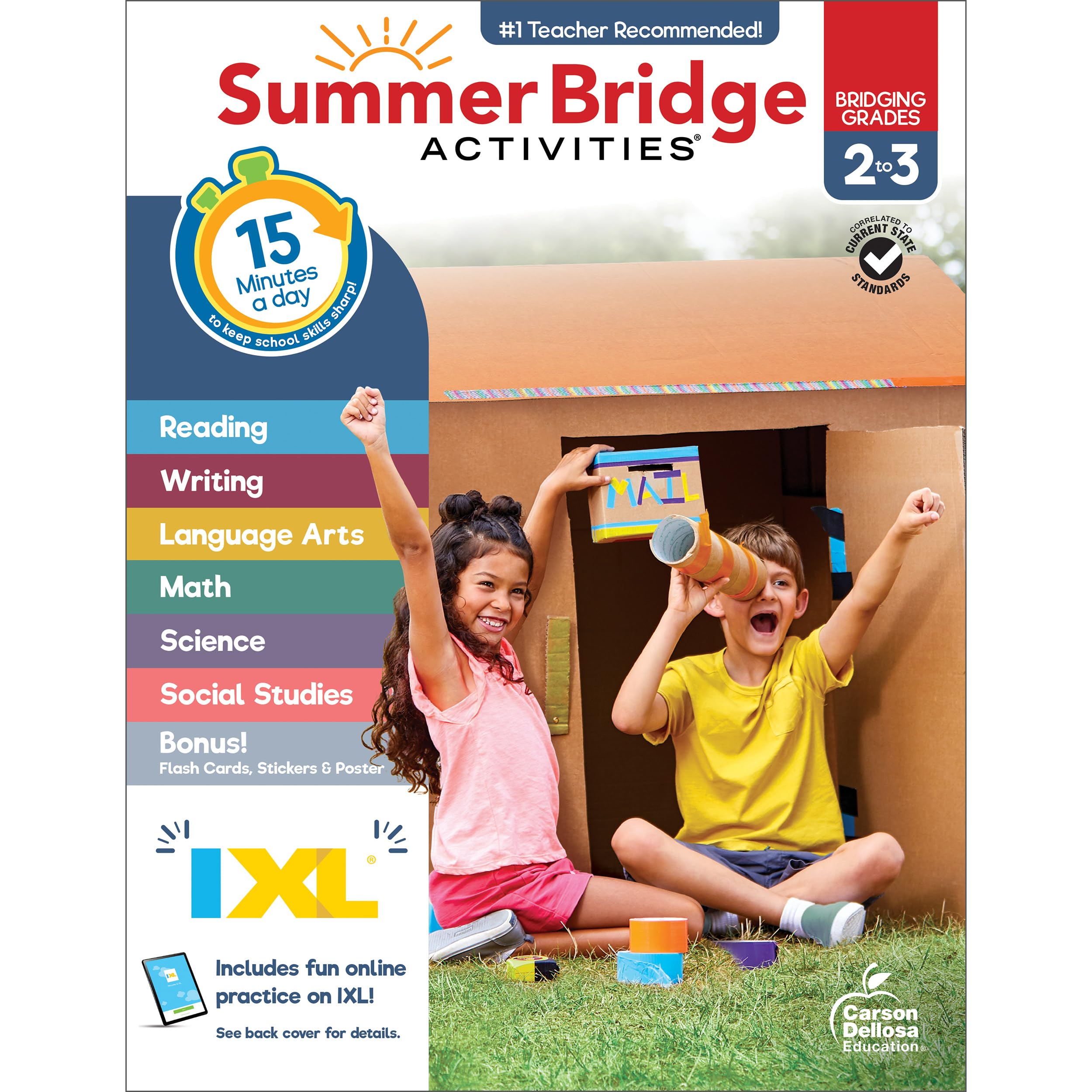
Summer Bridge 2nd–3rd

All-subject value

Customer rating 4.7/5
Check Price

Worth Noting

  • On-page explanations are thin, so parents help clarify some concepts
  • In later sections, the pace can run ahead of some school curricula, requiring gap-filling by parents
Grade Level
2nd–3rd
Subject Breadth
All core + fitness
Engagement Extras
Flash cards, stickers
Pages / Daily Format
160 pages, 15-min daily
Read the full review

The 2nd–3rd edition covers math, reading, writing, science, social studies, and fitness across 160 pages, making it the broadest single volume in this set. It also carries the lowest price of any full-length workbook here, which is what pushes it to flagship status. The sheer number of verified purchases behind it gives families confidence that the format works.

The 15-minute daily lesson structure keeps the workload light enough that most kids can finish a page without friction. Families report that the mix of subjects holds attention and that skills stick from one grade to the next. The included flash cards and stickers add a small reward layer without turning the book into a game.

This best fits budget-conscious families new to summer workbooks who want a proven, low-friction routine for a rising 3rd grader. Be prepared to clarify some concepts — the lessons assume prior mastery and offer limited on-page instruction. Later sections can also pace ahead of certain school curricula, so a parent or tutor is part of the purchase.

Bottom line: For families who want a budget-friendly, complete summer review with proven results, this is the workbook to start with.

#2

Summer Brain Quest 2–3

Summer Brain Quest 2–3

Reluctant learners

Customer rating 4.8/5
Check Price

Worth Noting

  • Subject depth per dollar trails the category flagship, which crams denser instruction into each page
  • For a child working at or above grade level, the quests can run on the easy side with little stretch
Grade Level
2nd–3rd
Subject Breadth
All core + outdoor quests
Engagement Extras
Sticker quest map
Pages / Daily Format
160 pages, quest-based
Read the full review

The sticker-quest format is the most effective motivator in this category: each completed spread earns a sticker that advances a fold-out map across the book, and the sense of visible progress carries many children through all 160 pages without a parent nagging them to sit down. The set adds a matching card deck, answer key, and outdoor quests that pull reading and math off the page and into the yard, so the work never feels like a worksheet drill.

This edition targets the rising 3rd grader who groans at traditional summer packets. Subjects span math, ELA, reading, science, social studies, and writing, but the real draw is the play-like rhythm — kids often pick it up unprompted and ask for the next quest when the book ends. Parents who want visible proof of effort will appreciate the map and sticker trail doubling as a progress record.

The challenge ceiling sits lower than the category flagship's: content stays gentle enough that children working at or above grade level may breeze through without much stretch. Families after the deepest subject coverage per dollar will find the Summer Bridge 2–3 edition packs more dense instruction, while this quest version pays off where engagement is the bottleneck.

Pair the quest with a grade-up workbook if your child works above level; the sticker map alone may not stretch them.

Bottom line: Right for the reluctant rising 3rd grader who needs a reason to open the book — the quest format delivers that reason. Above-grade students will need a separate, harder supplement to stay challenged.

#3

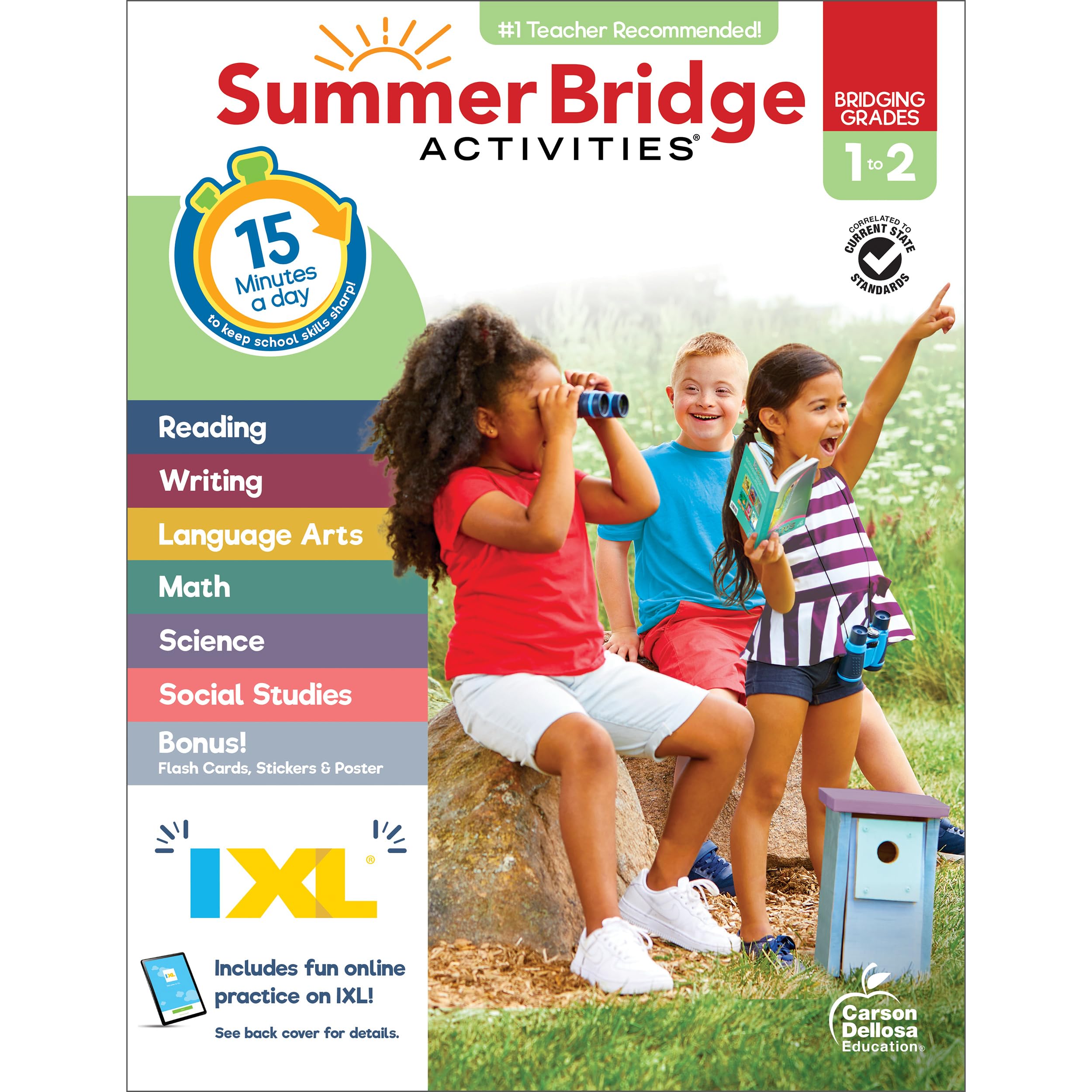
Summer Bridge 1st–2nd

Summer Bridge 1st–2nd

Early elementary

Customer rating 4.8/5
Check Price

Worth Noting

  • In a busy household, a young child may need a parent nearby to steer them through each day's pages rather than working fully alone.
Grade Level
1st–2nd
Subject Breadth
All core + fitness
Engagement Extras
Flash cards, stickers
Pages / Daily Format
160 pages, 4 lessons/day
Read the full review

The 1st–2nd edition is the gentlest ramp among the early-elementary workbooks in this set — the highest-rated option here, with the strongest learning and content scores. Where the category's flagship broadens to a 2nd–3rd scope, this edition aims directly at the single 1st-to-2nd transition, keeping each day's load light enough that a young reader is far less likely to set the book aside.

The 160-page program runs four short lessons a day across a weeks-and-days calendar, with flash cards and stickers marking steady progress along the way. That predictable groove keeps momentum up without overwhelming a 7-year-old, and the all-subject slate — math, reading, science, social studies, writing, even fitness — means one book carries the whole summer.

This best suits families who want consistent, gentle reinforcement rather than a push into new material — a rising 2nd grader with the basic mechanics of reading and math already in place. Expect to sit alongside part of the time, since a young child may need a nudge to get oriented in each day's pages, and a child already working above grade level may find the pace on the easy side.

Sit alongside for the first week until the daily rhythm clicks — younger readers need only a light hand to get oriented, then settle in.

Bottom line: For a gentle summer ramp that bolsters a rising 2nd grader's skills, this is the buy — solid maintenance without pushing into new concepts.

#4

Summer Bridge 4th–5th

Summer Bridge 4th–5th

Upper elementary

Customer rating 4.7/5
Check Price

Worth Noting

  • New concepts arrive with little on-page explanation, so a parent guiding each day's sheet bridges the gap
Grade Level
4th–5th
Subject Breadth
All core + fitness
Engagement Extras
Reading list, answer key
Pages / Daily Format
160 pages, sheet/day
Read the full review

Teacher-recommended reinforcement anchors this 4th–5th edition, and the included reading list is the feature the popular rising-4th-grade book in the set doesn't offer. Each day runs on a single two-page sheet, rotating through math, ELA, reading, science, and social studies, with writing and fitness woven into the week. At 160 pages the scope stays broad without turning summer into an overwhelming stack of assignments.

The one-sheet cadence keeps the routine predictable, and the answer key lets a parent check each page in minutes. Content assumes the child already handles the 4th-grade basics, so pages that introduce a fresh concept can rely on a parent or tutor to fill in what the text leaves unstated.

Best for rising 5th graders who want steady, teacher-aligned review plus a curated reading list for the break, and for families who plan to sit at the desk. A child who prefers a self-starting quest format will find that energy in a different book in this set; here the reward is consistent daily practice with a parent close by.

Bottom line: For rising 5th graders whose families will sit beside them during the daily sheet, the teacher backing and reading list make this the steady middle path in this set.

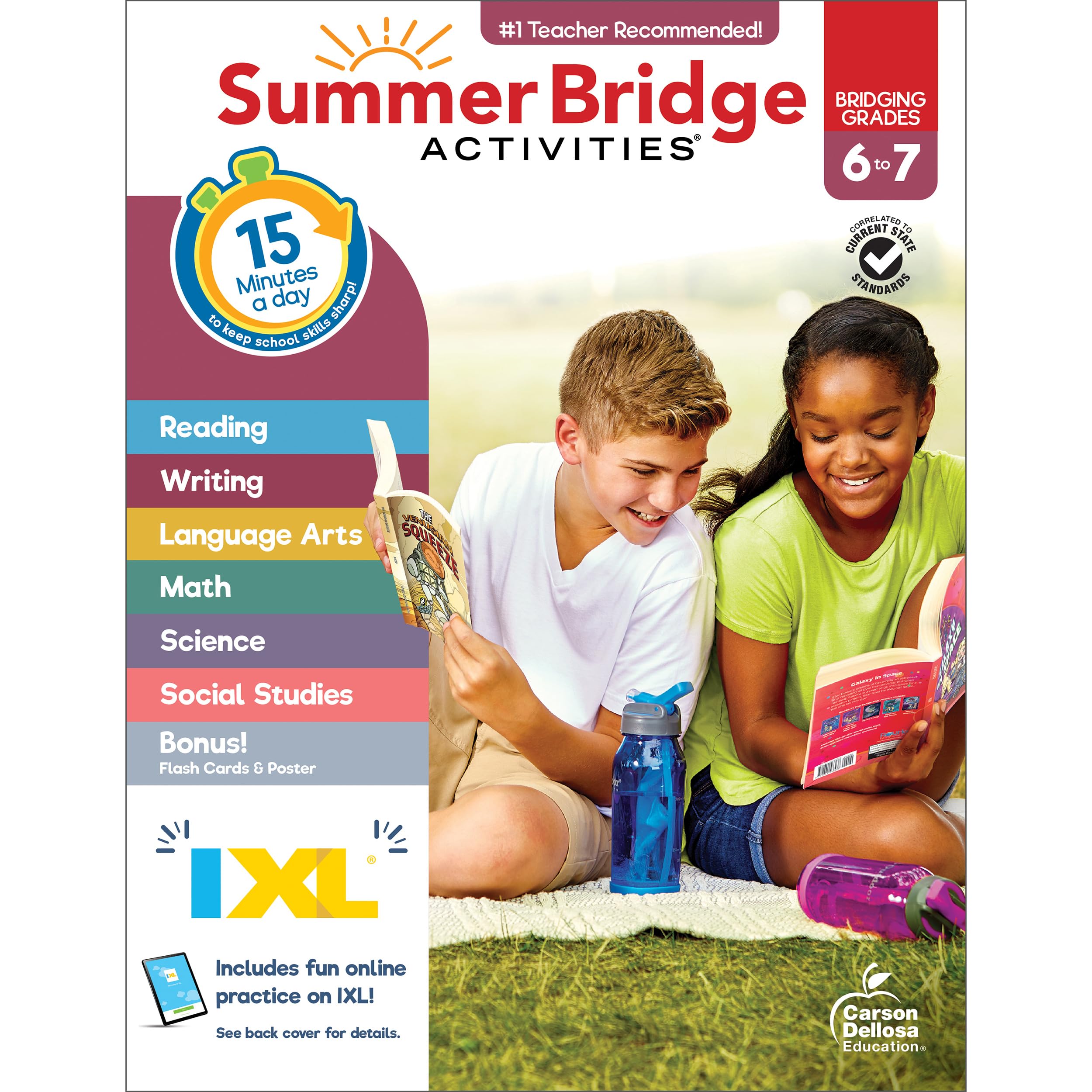
#5

Summer Bridge 6th–7th

Summer Bridge 6th–7th

Middle school

Customer rating 4.6/5
Check Price

Worth Noting

  • Page instructions occasionally read as unclear, so a parent may need to unpack a task before a child starts.
  • Assumes 6th-grade mastery, so brand-new 7th-grade concepts arrive without in-book explanation.
Grade Level
6th–7th
Subject Breadth
All core + fitness
Engagement Extras
IXL refs, eBooks, reading list
Pages / Daily Format
160 pages, daily lessons
Read the full review

The first middle-school bridge in the set, this workbook turns the daily-review format toward the 6th–7th transition. Math, ELA, reading, science, social studies, and fitness each get a rotating slot, and the extras — IXL skill references, a summer reading list, flash cards, and free eBooks — add substance beyond the page count.

Each day pairs a short set of varied tasks with an answer key for self-checking, which suits a middle-schooler working increasingly on their own. The 160 pages are sized to spread across the break rather than a single sitting, so the workbook holds up as summer pacing rather than a cram session.

This fits a rising 7th grader who needs to hold skills steady through the summer — the rotating assignments and self-check answer key suit a child who likes changing tasks over repetitive drills. For one already at or above grade level, the pages read as review rather than stretch, so treat it as maintenance support, not a source of harder material.

Bottom line: This is the middle-school bridge for families who want skills held steady through the break, with the reading list and IXL references giving it more weight than plain drill pages.

#6

Summer Bridge K–1st

Summer Bridge K–1st

Kindergarten readiness

Customer rating 4.8/5
Check Price

Worth Noting

  • For a child working above grade level, the short daily lessons run easy with little stretch.
  • The back-of-book sections introduce 1st-grade concepts and presume teaching beyond a typical kindergarten year.
Grade Level
K–1st
Subject Breadth
All core + fitness
Engagement Extras
Flash cards, stickers
Pages / Daily Format
160 pages, daily chunks
Read the full review

The kindergarten edition is where the daily-workbook habit starts: 160 pages of short lessons across math, phonics, science, social studies, and writing, spread over two-page sessions that fit a young child's attention span. It is the gentler ramp in the line, lighter than the early-elementary edition that follows it, with common-core alignment that tracks classroom teaching. The quiet strength here is how comfortably a rising 1st grader settles into a daily page without friction.

This edition fits a child finishing kindergarten at grade level who needs a steady daily rhythm heading into 1st grade. The lessons presume a completed kindergarten year — letters, counting, and sight words are expected — so the payoff comes for a family whose child has those basics and builds on them each day.

The routine holds up across the summer: stickers and flash cards keep early sessions light, and the short daily chunk means a reluctant reader finishes the page without complaint. The subject rotation is what holds attention — math and phonics alternate with science and social-studies prompts that feel fresh each day, and children end up reaching for their page on their own.

At full list price this sits in the fair middle of the line's range — there is no discount edge over the cheaper elementary editions, though the value here lies in starting the habit well rather than in saving per page.

Plan to sit alongside for the first couple of weeks until the daily page becomes a habit — independence grows from there.

Bottom line: If your child has finished kindergarten at grade level, this is the calm structure that keeps pencil skills and routines alive through the summer — the routine is the product, and it holds.

#7

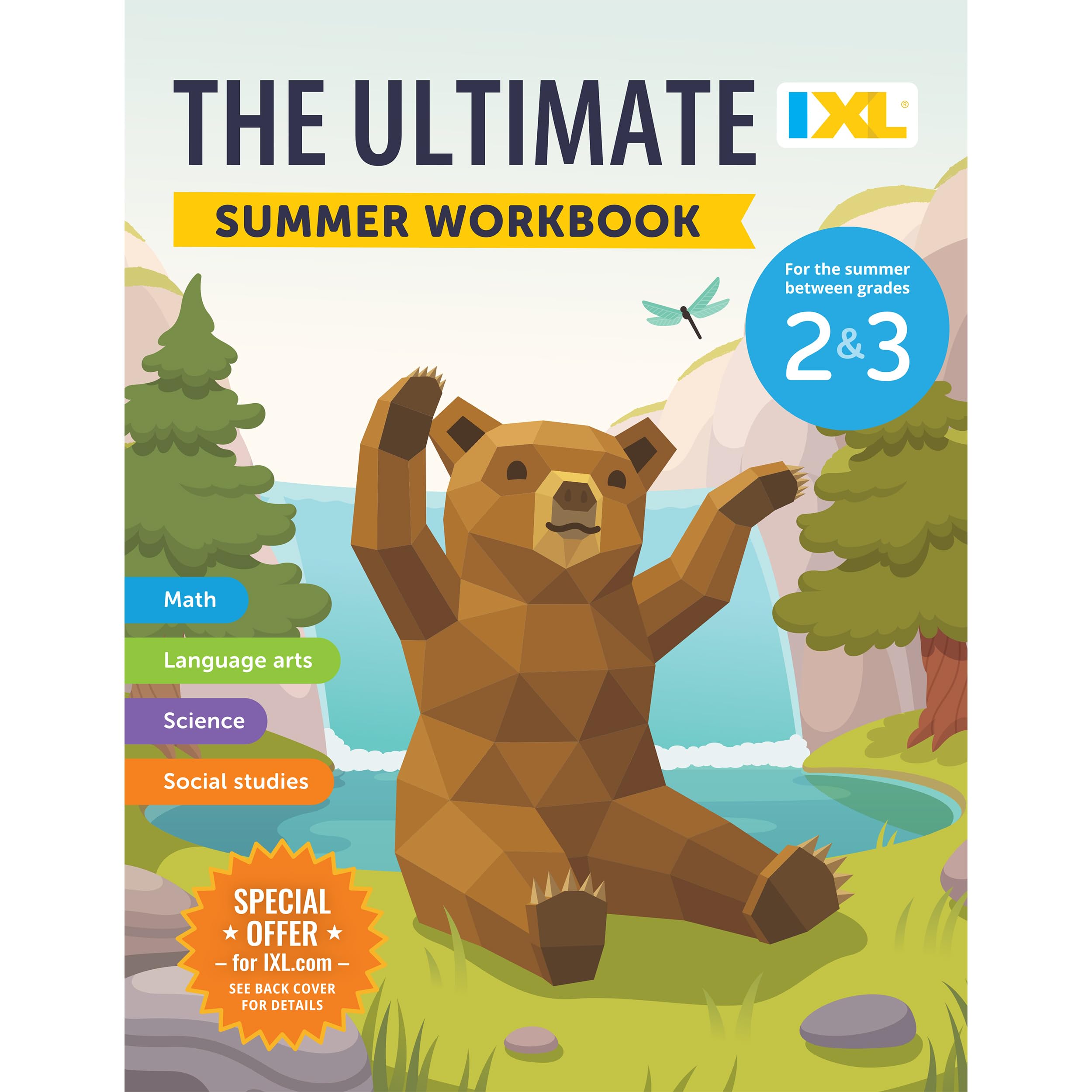
IXL Ultimate Summer 2–3

IXL Ultimate Summer 2–3

Budget new pick

Customer rating 4.8/5
Check Price

Worth Noting

  • At 144 pages it is the shortest full-length option in this set
Grade Level
2nd–3rd
Subject Breadth
All core + geography
Engagement Extras
Weekly enrichment
Pages / Daily Format
144 pages, weekly
Read the full review

This budget-priced 2nd–3rd workbook spans math, reading, language arts, geography, science, and writing in a fun, interactive format that keeps skills sharp through summer. Its weekly structure closes each cycle with a fifth-day enrichment session, giving families a predictable rhythm instead of open-ended daily pages. The tradeoff is volume: this is oriented toward a focused, structured routine rather than the very longest daily stretch in the category, which belongs to the flagship. For a budget option with clear organization, the coverage here is strong value.

Bottom line: Best for families wanting a budget-priced 2nd–3rd workbook with a clear weekly rhythm — especially when the program runs a focused, structured session rather than a full-length marathon.

#8

Summer Brain Quest 5–6

Summer Brain Quest 5–6

5th–6th engagement

Customer rating 4.7/5
Check Price

Worth Noting

  • The sticker-map progress tracker can feel juvenile against the 6th-grade audience.
  • Math review holds less rigor than families eyeing pre-middle-school drill expect.
Grade Level
5th–6th
Subject Breadth
All core + outdoor quests
Engagement Extras
Sticker quest map
Pages / Daily Format
160 pages, quest-based
Read the full review

The quest format scales cleanly to upper elementary: short daily lessons, a full subject sweep, and outdoor quests that break the desk-bound routine. Rising 6th graders who clicked with earlier Brain Quest books find the same pull here, self-starting across the summer.

The tradeoff sits in the scaffolding: the sticker-map tracker can feel juvenile for a 6th grader, and the math review runs lighter than a rigorous pre-middle-school drill. For a kid who needs summer momentum more than challenge, the short lessons keep the book moving — the engagement is the point.

If the sticker map feels babyish to your 6th grader, the outdoor quests and short lessons carry the book on their own.

Bottom line: This fits the rising 6th grader who loved earlier Brain Quest books and wants non-screen summer momentum more than drill rigor. Families tracking progress by math-drill difficulty will find the daily-workbook option in this set a closer match.

#9

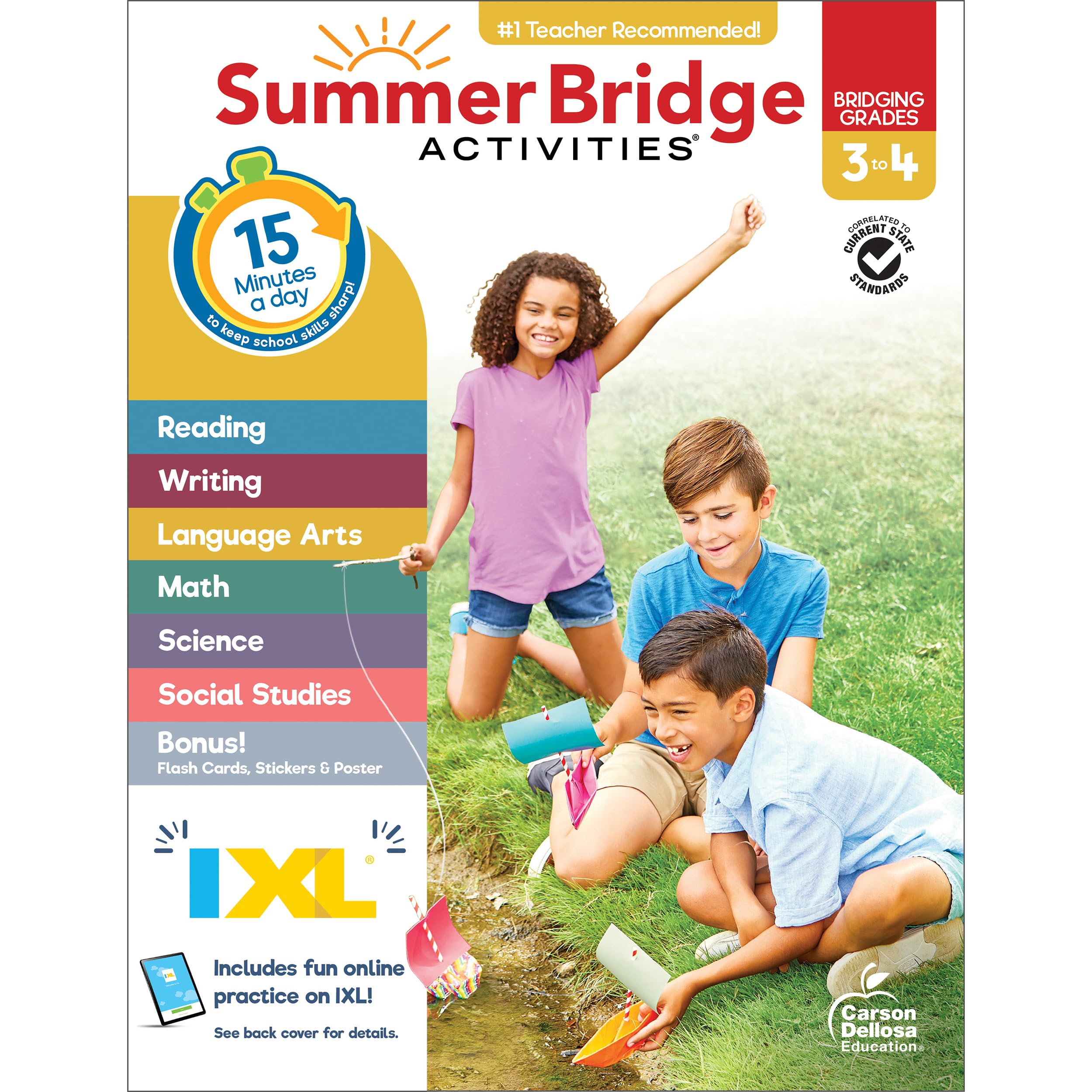
Summer Bridge 3rd–4th

Summer Bridge 3rd–4th

Rising 4th graders

Customer rating 4.7/5
Check Price

Worth Noting

  • Pages can work loose from the binding after a summer of daily flipping.
  • New concepts arrive with little on-page explanation, so a parent re-teaches before the child can proceed.
Grade Level
3rd–4th
Subject Breadth
All core + fitness
Engagement Extras
Flash cards, stickers
Pages / Daily Format
160 pages, 4 activities/day
Read the full review

Teacher-recommended and backed by one of the larger verified review bases in the category, this 160-page edition breaks the 3rd-to-4th summer into roughly fifteen minutes of daily work across math, reading, science, and social studies. The short-activity format holds attention, and laminated pages survive repeated erasing.

The tradeoff sits on pages that introduce a new skill cold: instructions stay thin, so a parent has to re-teach the concept before the child can work alone. For that reason it trails the top pick for independent use and costs a bit more, though a hands-on adult gets the same daily-review benefits.

Bottom line: Best for a parent who enjoys teaching alongside the book and keeps a steady daily rhythm through the summer — the format rewards active involvement over solo work.

How to Choose

Match the Grade Transition

Each Summer Bridge book is built for one specific pair: the grade just finished and the grade ahead. Choosing the wrong pair, even one level off, makes content either too easy or too hard, which kills the daily habit before July.

Daily Format and Length

The 160-page standard is paced for 15-minute daily chunks, about four short activities covering different subjects. The 80-page 'Quick' versions compress the same subjects into half the pages for a shorter summer or younger child, but fewer days of repetition means weaker retention.

Subject Coverage

The full standard spans math, reading, writing, science, social studies, and fitness. Books trimmed to math and reading let the non-tested subjects regress, and writing is the hardest to rebuild once a child returns to a full curriculum.

Engagement Mechanics

Progress mechanics decide whether a book gets finished: sticker maps, quests, and reward pages turn a daily chore into a visible goal kids push toward on their own. Gamified formats skew easier, though, because the reward system works best when kids succeed quickly.

Parent Teaching Time

These workbooks review skills; they rarely teach them. Lessons state a problem without a worked example, so a child who never fully mastered a concept needs an adult to fill it in. Budget for that time before you buy.

Binding Durability

Glued spines on the budget-priced books shed pages under daily rough handling. Reinforcing the spine or slipping pages into a page protector keeps a book intact through all ten weeks.

Frequently Asked Questions