Test Prep Product Guide

5 Best GMAT Prep Books of 2026: Which Actually Have Real Depth

Which GMAT prep books cover every section with real depth — and which shiny star ratings hide thin, 200-page content.

5 Best GMAT Prep Books of 2026: Which Actually Have Real Depth editorial illustration

Nearly every GMAT prep book on the shelf calls itself 'complete,' and a surprising number carry near-perfect star ratings. But several of the most acclaimed guides run just 166 to 212 pages — a length that raises a practical question about whether any single volume that thin can genuinely teach all four exam sections with real depth.

Guides that actually deliver comprehensive coverage tend to come from established publishers at a higher price, and they earn that cost with practice banks and digital tools rather than promises. That price gap is the central trade-off: spend more for verified depth, or save money and accept that a thin 'complete' guide is an overview, not a full curriculum.

When a 1,200-page volume earns its rating with specifics reviewers can point to, the score means something. When a 200-page guide shows a perfect five-star score and nothing else, page count and publisher history are better signals than the stars alone.

#1

Manhattan Prep All the GMAT

Manhattan Prep All the GMAT

Comprehensive self-study

Customer rating 4.5/5
Check Price

Worth Noting

  • Premium price may not feel proportional for buyers who skip the bundled digital suite.
  • For a learner reviewing a tough problem solo, a thinner solution passage may leave a gap in understanding.
Publisher
Manhattan Prep
Coverage Depth
1,200 pages, all four
Practice Tools
Digital pack, quiz creator
Edition Currency
8th Edition, 2024
Read the full review

The 1,200-page scope is the defining feature of this guide - no other single volume in this comparison covers all four GMAT sections at this depth. The bundled digital resource pack and custom practice quiz creator extend well beyond the printed problems, letting you assemble extra practice sets aimed at specific question types whenever your study plan calls for them. The 8th edition aligns with the revised GMAT format, so the content traces the current test structure rather than an outdated blueprint from earlier years. For a self-study route that wants one book handling strategy, drill, and reference across the board, this is the most complete package available without stacking multiple section guides side by side.

The digital complement functions as a practical extension rather than a theoretical add-on. The quiz creator draws from the question bank to generate custom practice sets, which slots in well between timed full-length sessions when you want to isolate a single skill area and drill it hard. The full-section organization in the printed half keeps reference checks fast when you come across a half-remembered concept, and you never need a second volume to cover a topic you last touched months ago. For a structured study plan that cycles between reading strategy chapters and drilling problems, the combined print-plus-digital setup holds together smoothly without forcing you to bounce between sources.

This guide is built for the serious self-studier who wants one exhaustive reference and is willing to pay premium for that depth rather than juggling multiple specialized guides. The price draws mixed value-for-money reactions - some buyers find the 1,200-page scale worth the ask, while others wish they'd spent less on a slimmer volume. Solution depth also varies between practice questions, so a learner who requires uniformly detailed step-by-step solutions on every problem may find occasional thin explanations slowing their review. For a confident test-taker who can work through those gaps on their own, the tradeoff is manageable and the coverage remains the strongest in this set.

Where the official GMAC-published guide authenticates phrasing straight from the exam's creator, this volume trades that first-party authority for markedly more teaching space. The tradeoff lands well for deep self-study: you get 1,200 pages of strategy, drill, and reference rather than a smaller set of official questions, at the cost of not having every problem carry the test maker's exact fingerprint. Both approaches earn their place in a study arsenal, but the edge here is the scale at which the material builds familiarity with the test's structure and pacing.

Bottom line: For the self-studier committed to one exhaustive volume and willing to pay for depth, this is the guide to own - the official GMAC text offers authentic phrasing, but not this scale of practice and strategy.

#2

GMAT Official Guide Bundle

GMAT Official Guide Bundle

Official practice

Customer rating 4.2/5
Check Price

Worth Noting

  • Buyer reception is divided, with sharper criticism aimed at the guide's depth rather than the questions themselves.
  • A question bank first, it leaves concept teaching thin, so newcomers who want lessons need a second book.
Publisher
GMAC / Wiley
Coverage Depth
All four sections
Practice Tools
Online question bank
Edition Currency
2025-2026 Edition
Read the full review

Authored by the Graduate Management Admission Council — the organization that writes the GMAT — this bundle is the only guide here whose questions come from the exam's creators. The print volume covers all four sections, and the bundled online question bank extends practice well beyond what any printed book can hold. For test-takers who value authenticity of phrasing over page count, this is the closest preview of test day available.

The guide's reception tracks closely with how it is used. Bought as a teaching text, it reads thin; bought as a source of authentic questions, it delivers. Early buyer sentiment divides along exactly that line — the sharper criticism concentrates on expectations about depth rather than on the quality of the problems themselves. Test-takers who already understand the exam structure will extract the most value from it.

This bundle suits test-takers who know the GMAT's format and want volume of near-exam practice, ideally keeping a strategy guide alongside. First-time test-takers who need concepts explained step by step will wish these pages taught more. At a mid-range price, the official questions are the reason to buy — the instruction is not.

Pair this bundle with a separate strategy guide for concept review — the questions carry the real value.

Bottom line: For test-takers who want the most authentic official questions alongside a connected question bank, this bundle delivers — just bring your own strategy guide for the teaching.

#3

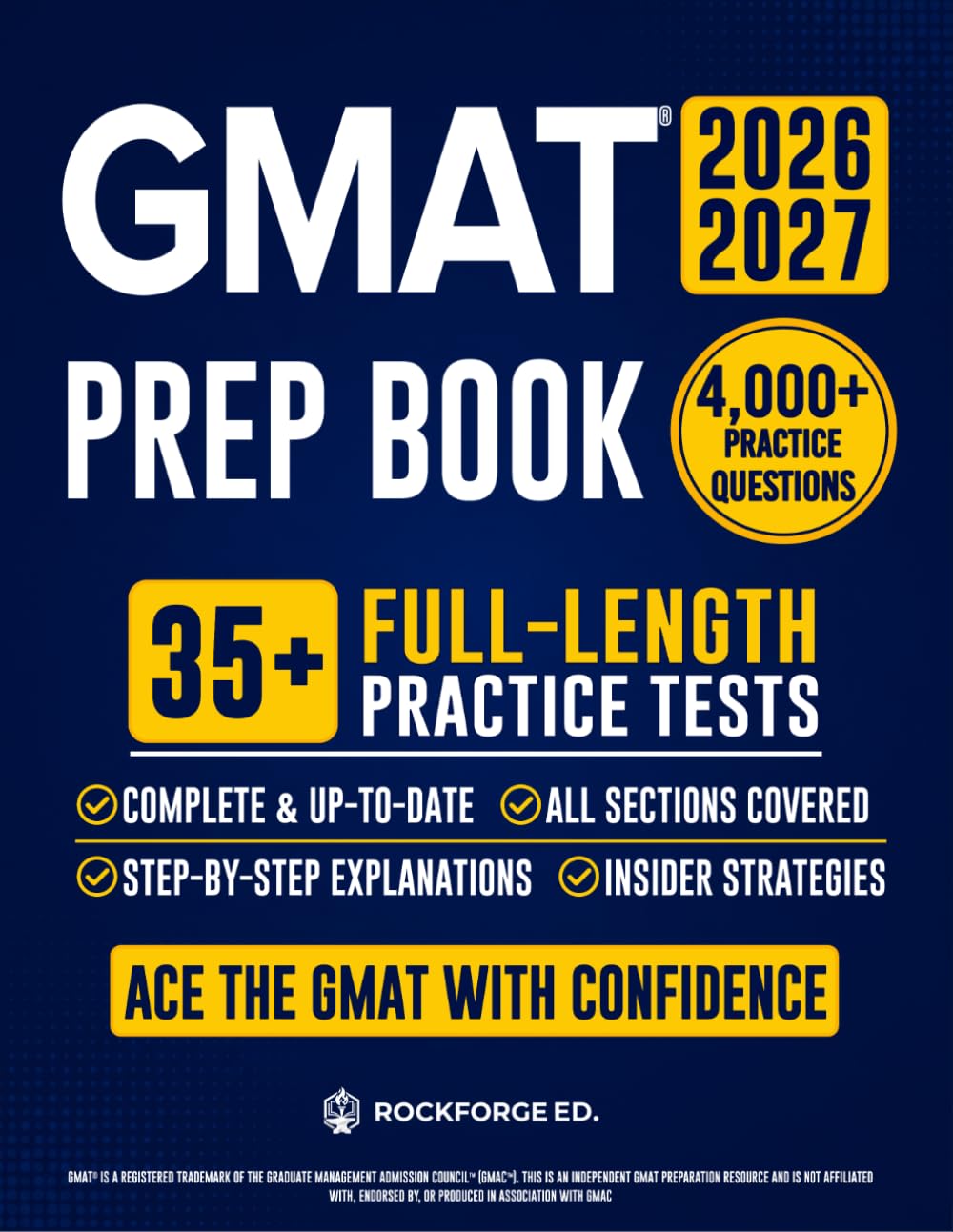
Rockforge GMAT Prep Book

Rockforge GMAT Prep Book

Budget all-in-one

Customer rating 5.0/5
Check Price

Worth Noting

  • The large 8.5x11 workbook needs a desk to lay flat
  • Practice volume is capped by the 166-page format
Publisher
Self-published
Coverage Depth
166 pages, all four
Practice Tools
—
Edition Currency
May 2026 Edition
Read the full review

Rockforge's GMAT Prep Book is the lowest-priced current 2026 edition in this set, pairing fresh exam content with a slim format that covers all four sections in a quick pass. Where the top pick's 1,200 pages build a full multi-week course, this reads as a condensed orientation — every section touched, none drilled exhaustively. It runs shorter than the beginner-focused guide in this set, and for a newcomer who finds a towering volume intimidating, that brevity lowers the barrier to starting.

This guide fits first-time test-takers on a budget who want the latest edition without signing up for a full prep course. The honest limit is reach: at 166 pages it is the thinnest book here, and its 'complete' positioning rests on the publisher's own description — no independent reader commentary confirms the lessons land as written. Anyone who needs that confirmation before paying should look to the deeper option in this set.

The entry-level price makes this a low-risk first step toward a larger prep commitment — work through it, and whether to invest further becomes obvious on its own. The brief read-through also demystifies the exam for someone who has never opened a GMAT book.

Treat the guide as a survey pass, then follow with a timed official practice set to find where drilling should start.

Bottom line: For first-time test-takers wanting the latest edition at the lowest price with a light commitment, this guide is the natural entry point — finish it, then decide how much deeper to go.

#4

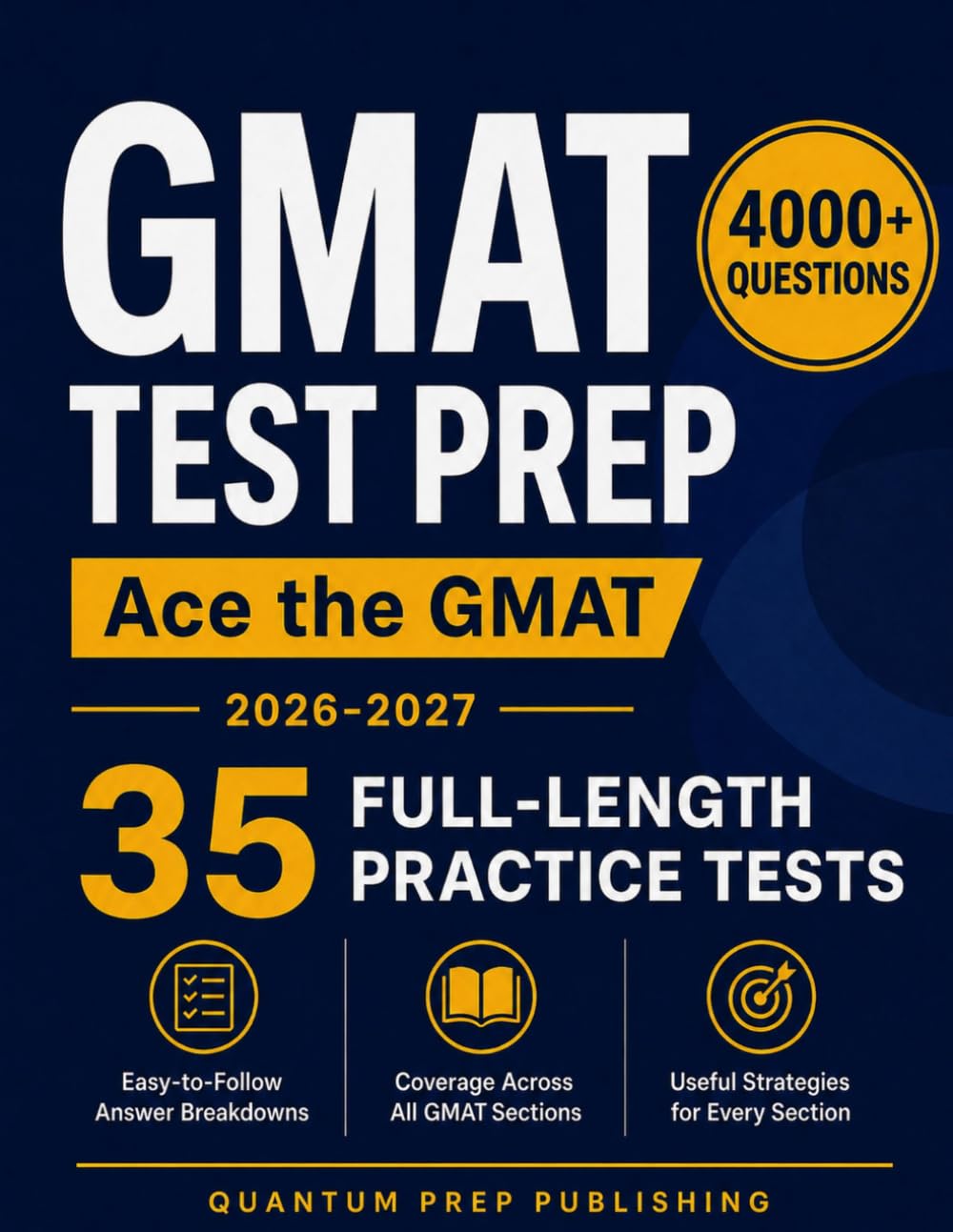
Quantum GMAT Test Prep

Quantum GMAT Test Prep

First-time takers

Customer rating 4.6/5
Check Price

Worth Noting

  • Strategy chapters stay introductory in the 212-page layout
  • The compact 212-page scope leaves limited room for sustained practice, capping endurance-building for test day.
Publisher
Self-published
Coverage Depth
212 pages, all four
Practice Tools
—
Edition Currency
Nov 2025 Edition
Read the full review

The 212-page format makes this the approachable entry point of the set, with plain-language explanations that walk a GMAT newcomer through each of the four sections without dense theory. That fills the gap the comprehensive top pick leaves open — where the 1,200-page volume is about depth, Quantum is about orientation. The lighter read keeps every section digestible, so a first-time test-taker builds a working map of the exam before committing to a full course.

Held at a budget price, the guide also carries a few more pages than the slimmest budget-tier rivals, giving newcomers slightly fuller coverage per section. The priority is accessibility over exhaustiveness, which sustains momentum for someone meeting the GMAT cold rather than front-loading advanced technique.

This suits first-time test-takers and cost-conscious buyers who want a readable orientation before committing to a full prep program. The honest caveat sits with verification — the easy-to-follow promise has no readable buyer feedback behind it, so the clarity claim is taken on faith. Newcomers who value plain language and a low entry cost get a practical starting point here.

Bottom line: For a first-time test-taker who wants a low-cost orientation before serious prep, this guide makes the entrance easier — plan to move on to deeper drilling once the basics settle.

#5

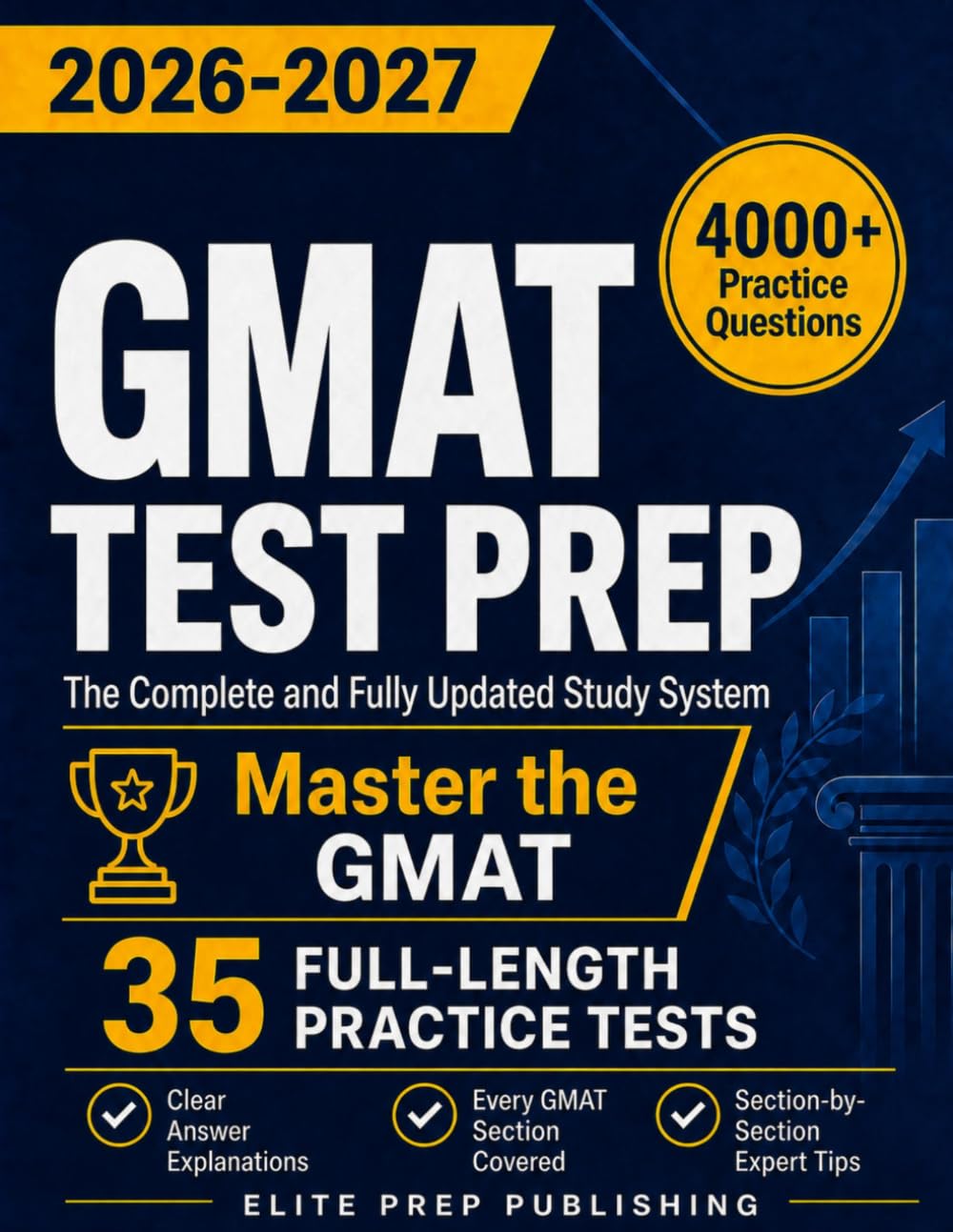
Elite GMAT Study System

Elite GMAT Study System

Compact overview

Customer rating 4.9/5
Check Price

Worth Noting

  • Across four sections, 209 pages can't match the drill volume of deeper prep guides.
  • Concise solution walk-throughs may leave self-studiers wanting fuller worked examples on tougher questions.
Publisher
Self-published
Coverage Depth
209 pages, all four
Practice Tools
Exam-day tips
Edition Currency
Jun 2026 Edition
Read the full review

The newest edition in this set, Elite's GMAT Study System pairs a current June 2026 print with a compact 209-page overview of all four exam sections, plus short exam-day pointers bundled at the end. The budget price and focused scope make it an approachable entry point rather than a heavy study commitment.

What keeps it out of the top slots is scope, not execution: 209 pages spread across four sections can't substantiate the 'complete study system' promise, since the drill volume and worked-solution depth serious self-studiers expect aren't there. The result reads as a capable orientation tool rather than a standalone course.

Bottom line: Fits someone who wants the newest possible edition as a budget-friendly first overview with quick exam-day pointers — enough to get oriented before committing to a heavier drill routine.

How to Choose

Coverage Depth

A 'complete' self-published guide of 166 to 212 pages leaves roughly 40 to 50 pages per section after splitting the four sections. That can introduce question types, but not drill the range of problem archetypes or build the pattern recognition you need under time pressure.

A 1,200-page volume can show the fastest approach for each scenario — a trap question, a probability twist, a sentence-correction exception. For a first-time test-taker studying from one book, that breadth is the difference between recognizing a problem type and learning it for the first time under time pressure.

Edition Currency

The GMAT now runs on the Focus edition, which dropped the old essay and integrated reasoning structure and added a Data Insights section. A book written for the previous format trains you on question types that no longer appear and skips the section that now drives the score.

Because the test has changed so recently, edition currency outweighs a decade of positive reviews. An older proven guide still puts you behind if it teaches a retired format.

Practice Tools

Printed questions are finite, and a re-read drill set stops testing your speed. An online question bank refreshes with fresh, adaptive questions, which presses your recall and timing in the final weeks.

The trade-off is structural: official banks hold hundreds of questions but expect you to bring strategy from elsewhere, while bundled digital packs add tools that may not mirror the real exam as closely.

Solution Consistency

A solution's job is not to confirm the right answer but to show the fastest path to it — the approach you reuse under time pressure. When explanation depth varies between questions, you cannot tell whether an error was a concept gap or a one-off stumble.

In self-study, consistent solution quality matters because no tutor is there to close the gap; a book that explains every question at the same depth turns every mistake into a lesson.

Publisher Track Record

GMAC writes the GMAT, so its questions reproduce the real exam's phrasing, pacing, and traps more faithfully than independently authored questions can. Independent publishers write similar content that can drift from the test's actual difficulty curve.

That authenticity carries a cost: official material works as a practice bank, not a teaching text, so it pairs with a strategy guide. A self-published all-in-one is cheaper but unverified — its five-star rating rests on reviews with no readable detail.

Frequently Asked Questions