STEM Toys Product Guide

12 Best Solar System Model for Kids in 2026: Pick One Kids Actually Learn From

Find a solar system model for kids that teaches planet order without the glow gimmicks and motor failures.

12 Best Solar System Model for Kids in 2026: Pick One Kids Actually Learn From editorial illustration

Most solar system models marketed to kids lean hard on glow-in-the-dark paint, motorized orbits, and 3D ceiling displays. The problem? Those features are exactly where many kits disappoint — weak glow, small parts, and motors that stop working. The result is a shelf ornament instead of a learning tool.

What actually sticks with a child is a model they can touch, move, and revisit. That is why the most reliable, highest-rated sets in this category are simple and reusable — the kind that let a kid physically arrange planets in order on a whiteboard or fridge. A 3D hanging structure looks appealing, but it does not automatically mean better education.

This guide cuts past the marketing to find the models that reliably teach planet order and size, called out by age, use case, and honesty about tradeoffs like glow fade and scale. Whether you need a classroom tool, a bedroom display, or a school science project kit, the right pick depends on how the child will actually use it.

#1

LR Giant Magnetic Solar System
LR Giant Magnetic Solar System

Classroom teaching

Customer rating 4.8/5
Check Price

Worth Noting

  • Planets arrive unlabeled, so an adult writes names on the back to make it a full teaching tool.
  • Needs a whiteboard or metal fridge
Scale
Sun 10 in
Pieces
12 pieces
Assembly
None
Durability
Strong magnets
Read the full review

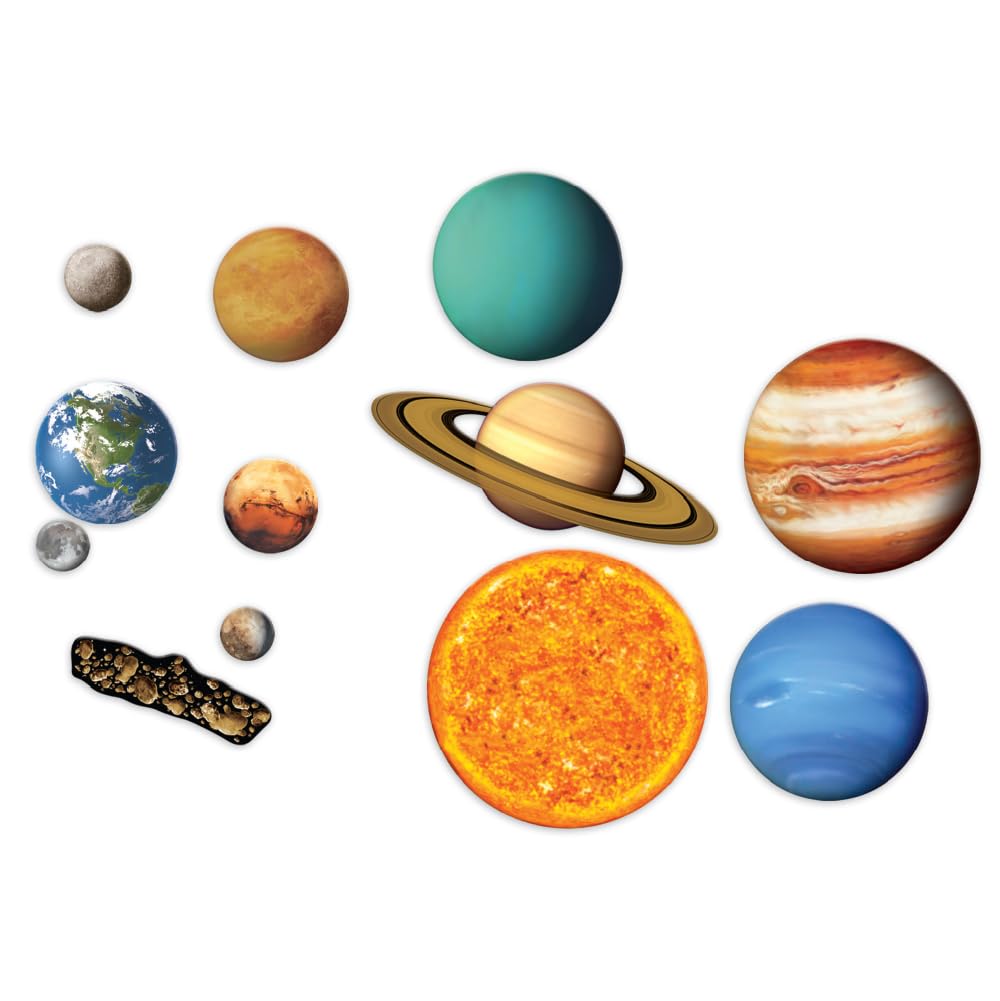
The Learning Resources magnetic set is the most dependable model in this category — realistic NASA planet art printed on 12 sturdy pieces whose magnets grip whiteboards and fridges firmly. Kids pick up planet order and relative size through hands-on placement, and the 10-inch sun anchors the scale so differences are immediately visible. Pieces hold their spot mid-lesson, so kids can rearrange without frustration. Free of motors and electronics, the set keeps teaching year after year without maintenance, and for ages 4-10 hands-on ordering teaches more than any spinning gadget.

This belongs in classrooms and homeschool setups where a reusable, no-mess order-and-size lesson matters more than a big visual display. Teachers and parents who mount it on a whiteboard or metal fridge get years of repeat use, fitting ages 4-10, and it earns its place back on the board for each new group of students. The single honest compromise is labeling: planets arrive unlabeled, so adults write names on the back to make it a true teaching tool. For a 3D glowing bedroom ceiling, the inflatable set fills that role better.

Bottom line: For classroom and homeschool lessons on planet order and size, this magnetic set stays useful year after year — durable, reusable, and priced within reach.
#2

Great Explorations 3D Glow Kit

Great Explorations 3D Glow Kit

Bedroom decor

Customer rating 4.5/5
Check Price

Worth Noting

  • No sun or moon included despite the nine-planet set implying a complete display.
  • Planets are cheap plastic that can pop apart when handled roughly during play.
Scale
Compact
Pieces
9 planets + stars
Assembly
15-20 min
Durability
Thin plastic
Read the full review

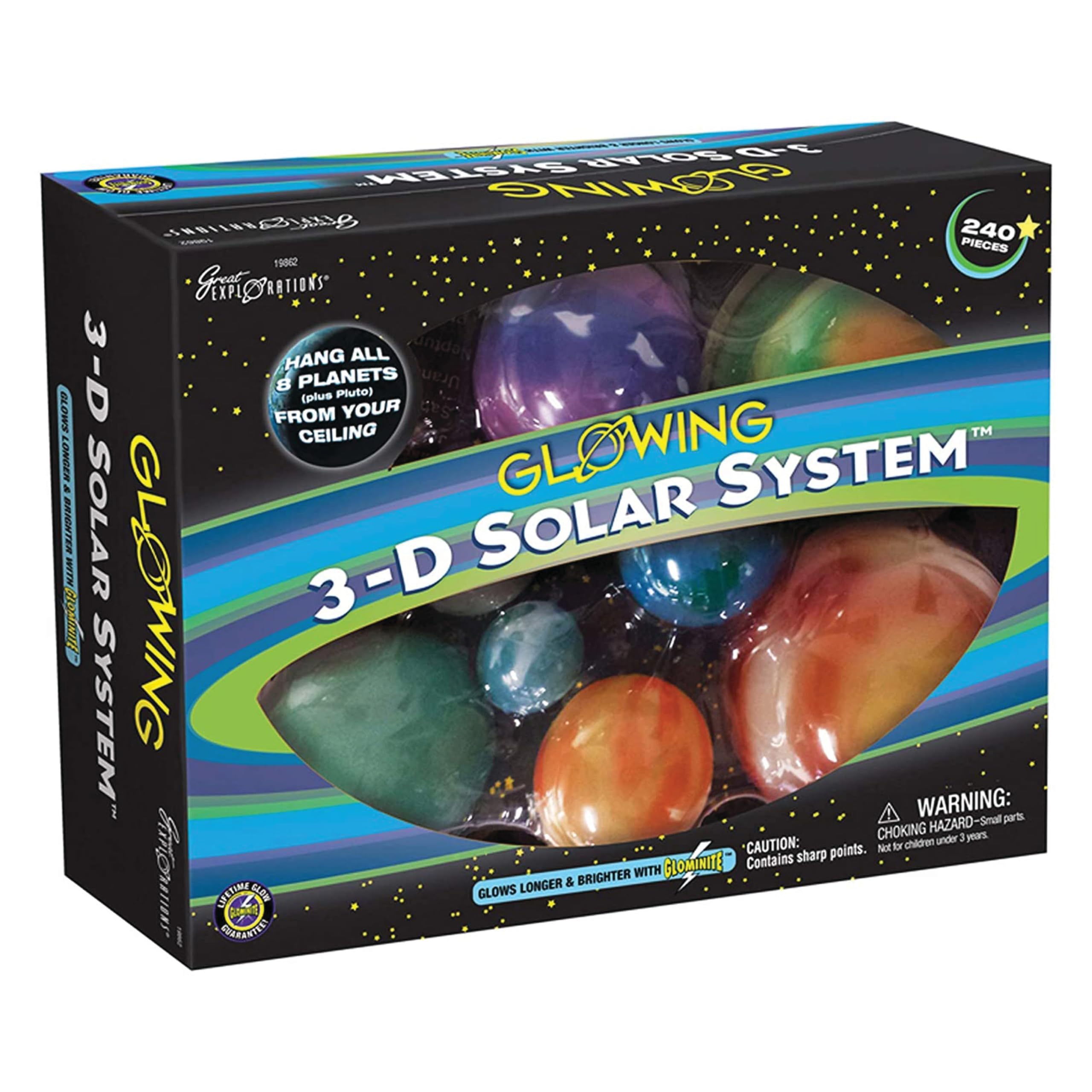
The 3D glow ceiling kit is the best-selling bedroom-decor choice in this set, with kids calling the display their favorite part of the room. Where the magnetic teaching pick focuses on planet order, this one builds atmosphere — 200+ adhesive stars and nine glowing planets hung with putty and string, no batteries needed.

Best for parents creating a space-themed bedroom for a young astronomy fan who wants a glow-in-the-dark showpiece over the bed — a room accent whose brightness depends on how strongly the planets are charged, not an accurate teaching aid.

Bottom line: Best when the goal is a glowing space canopy above the bed; choose the magnetic teaching set when accurate planet order matters more than the show.

#3

NatGeo Glow Model Kit

NatGeo Glow Model Kit

Paint-and-build

Customer rating 4.6/5
Check Price

Worth Noting

  • Glow-in-the-dark paint can come out weak depending on the unit
  • The finished model is compact, with planets noticeably smaller than the photos suggest.
Scale
Compact
Pieces
8 planets + sun
Assembly
Paint required
Durability
Movable arms
Read the full review

The National Geographic kit turns solar-system study into a guided paint-and-assemble project, pairing a well-known brand with movable arms and clear instructions that walk kids through each step. Where a basic budget planetarium asks for rough assembly, this one delivers a structured flow and enough paint to customize every planet.

It suits kids 8-12 and homeschool or family projects that blend art with astronomy, especially when the hands-on time matters more than the finished size. The snap-together planets yield a compact model that lands noticeably below the photo scale — fine for a shelf or a craft showcase, less ideal as a centerpiece display.

Charge the glow paint under a bright lamp for a few minutes before turning out the lights.

Bottom line: Right for families who prioritize the shared build-and-paint session over display size, this kit is a sensible budget choice for craft-minded kids 8-12.

#4

LR Giant Inflatable Set

LR Giant Inflatable Set

Room-scale display

Customer rating 4.4/5
Check Price

Worth Noting

  • Hung for a weeks-long display, the inflatables settle and need foot-pump reinflation to stay full.
  • After months of hanging, seams can develop slow leaks that the included patches won't fully seal.
Scale
Oversized
Pieces
8 planets + aids
Assembly
Inflate required
Durability
May leak
Read the full review

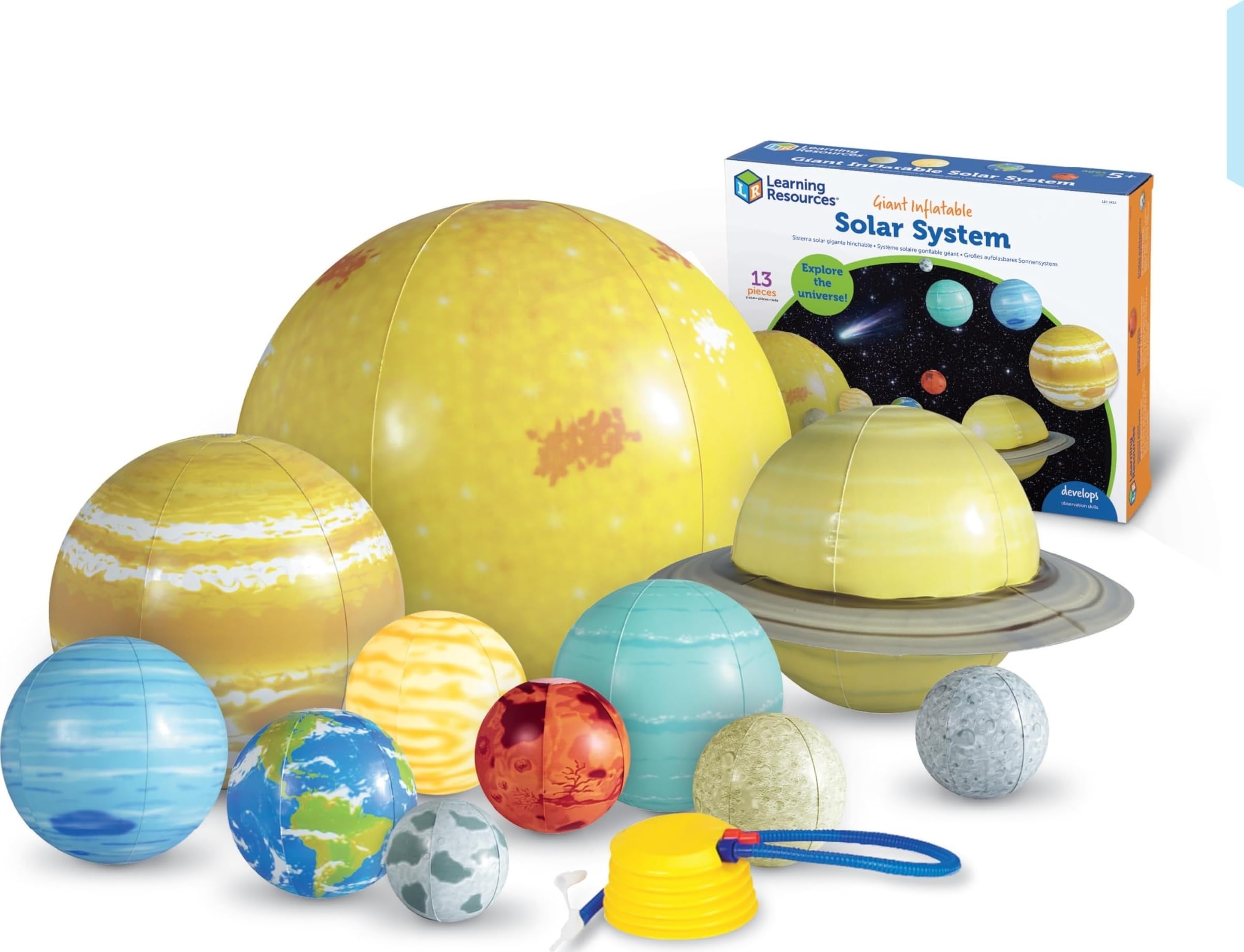
The Giant Inflatable Solar System delivers room-scale impact — oversized planets that read across a classroom, not tabletop miniatures. Hung from ceiling loops, the set fills a playroom or science room with an immersive space scene that pulls kids in. Where the flat magnetic teaching set prioritizes accuracy, this is a visual spectacle built to wow from across the room.

It suits teachers and families with generous ceiling space who want a big, memorable display rather than a daily-manipulated model. Kept hanging as decor, the inflated planets need periodic foot-pump reinflation, and seams can develop slow leaks over months — maintenance a display-oriented buyer accepts without issue.

Bottom line: A display piece for rooms with ceiling space where biggest-is-best visuals outrank hands-on play — skip it if you want a daily teaching model.

#5

COOLDUCK Space Balls

COOLDUCK Space Balls

Toddler play

Customer rating 4.7/5
Check Price

Worth Noting

  • A set can arrive with a duplicate or missing planet, so the pieces are worth counting.
Scale
Hand-size
Pieces
10 balls + figures
Assembly
None
Durability
Soft foam
Read the full review

The COOLDUCK Space Balls stand apart from the magnetic teaching set as the softer, safer choice: non-toxic foam planets sized for toddler hands, built to survive being tossed around a room. Ten planet balls pair with two astronaut figures and flashcards that map colors to world names, turning basic astronomy into hands-on play little kids return to.

Best for preschoolers and early elementary kids meeting planets by touch, not for older kids chasing accurate scale or a buildable model. A duplicate or missing planet is possible, so counting the pieces on opening settles any doubt.

Bottom line: Toddlers get a throwable foam planet set that teaches names during play — the durable pick for parents of preschoolers.

#6

4M Solar System Planetarium

4M Solar System Planetarium

School projects

Customer rating 4.4/5
Check Price

Worth Noting

  • Included brush lays the glow paint on unevenly, making the finish a slow step
  • Planets come out palm-sized, so the finished display looks small across a room
Scale
Tiny
Pieces
8 planets + sun
Assembly
Paint required
Durability
Basic plastic
Read the full review

The 4M planetarium is the budget default for school science projects, built around the pleasure of assembling, painting, and learning rather than display scale. Kids genuinely enjoy the hands-on build, and parents appreciate the low price for a project that fills an afternoon.

This suits budget-conscious parents of 8-plus kids who want a guided craft where the painting is the activity. Expect palm-sized planets — compact enough to feel dinky across a bedroom — and a fiddly glow-paint step with the included brush. The wall chart and quiz add a learning layer schools welcome.

Apply the glow paint in thin layers and let each dry for the smoothest finish on the small planets.

Bottom line: Choose it when a budget school-project build is the goal and the painting activity outweighs display scale. For a lasting room display, a larger or magnetic set serves better.

#7

SpriteGru Magnetic Solar System

SpriteGru Magnetic Solar System

Budget magnetic set

Customer rating 4.7/5
Check Price

Worth Noting

  • Under heavy play from young children, the printed laminate can peel off the magnet.
Scale
Sun 10 in
Pieces
24 pieces
Assembly
None
Durability
Laminate may peel
Read the full review

This budget set pairs every planet with a matching description magnet and a ten-inch sun, priced below the top pick. The print is bright and the magnets hold firmly, delighting kids who take pieces on and off. The laminate can peel under very heavy handling, so it fits casual classroom or home use rather than constant rough play.

Bottom line: Fits casual home or classroom use where an adult can re-stick a peeled magnet — for rough daily play, the more durable top pick justifies its higher price.

#8

wookidel Project Kit

wookidel Project Kit

Science fairs

Customer rating 4.7/5
Check Price

Worth Noting

  • On a shelf meant for a permanent display, the assembled model feels noticeably small.
Scale
Compact
Pieces
64 pieces
Assembly
Paint required
Durability
Foam, basic
Read the full review

Everything a school science-fair project needs arrives in one budget box: 12 paints, two brushes, foam balls, and display sticks. Assembly moves quickly, which suits parents racing a deadline. The tradeoff is scale — the assembled model is compact, far below display-grade, so it reads as a finished project, not a permanent bedroom centerpiece.

Bottom line: For a parent finishing a science-fair assignment this week, the wookidel kit delivers every supply at a budget price — the compact scale only matters if a large display piece was the goal.

#9

4M Glow Mobile Kit

4M Glow Mobile Kit

Mobile craft

Customer rating 4.5/5
Check Price

Worth Noting

  • In near-darkness the painted planets glow only faintly after charging
Scale
Compact
Pieces
Snap-together planets
Assembly
Painting + hanging
Durability
Basic plastic
Read the full review

The finished mobile — painted planets strung across a bedroom corner — looks genuinely charming, and the snap-together build with a facts poster makes an engaging screen-free project for craft-loving kids. The hanging structure demands patient hands though, which is why this sits behind the top craft pick for kid appeal.

Bottom line: Best for craft-loving kids 8+ who want a hands-on mobile to assemble, paint, and hang — the satisfaction is in the making itself.

#10

EH.DT Solar System Balls

EH.DT Solar System Balls

Toddler tactile

Customer rating 4.6/5
Check Price

Worth Noting

  • Printed planet names and details can rub off with heavy play
Scale
Hand-size
Pieces
11 balls + extras
Assembly
None
Durability
Soft foam
Read the full review

Soft, washable foam planets plus a sun and moon give toddlers a hands-on way to play with space facts, supported by 12 simple flashcards parents can read aloud. Printed names and planet details can rub off with heavy play, so this set suits gentle sensory and bath-time use rather than daily rough handling.

Bottom line: For parents wanting a soft, throw-and-catch space set for a toddler's hands, this fits — as long as play stays gentle enough to keep the printed names legible.

#11

Playz Solar System Kit

Playz Solar System Kit

STEM activity

Customer rating 4.4/5
Check Price

Worth Noting

  • Motor and power function can vary between units, with occasional orbit stoppage
Scale
Medium
Pieces
75+ parts
Assembly
Some assembly required
Durability
Motor reliability
Read the full review

Students genuinely enjoy this hands-on STEM build, and the clear instructions assemble the 75-plus parts without frustration. The 4-speed orbit motor and a projector that doubles as a nightlight make it a true multi-feature model for older kids. Motor function and projection clarity can vary between units, so this suits families ready to troubleshoot rather than expect set-and-forget performance.

Plan for adult help during setup — the motor hookup goes smoother with a second pair of hands.

Bottom line: Best for older kids who want moving parts and accept occasional troubleshooting — the motorized orbit and projector nightlight keep the build fun. Reliability-focused buyers should pick the magnetic teaching set instead.

#12

Smartivity Gear Model

Smartivity Gear Model

Eco-friendly builder

Customer rating 4.5/5
Check Price

Worth Noting

  • Assembly is a project, not an instant display
Scale
Compact
Pieces
Gear-driven planets
Assembly
Snap-together
Durability
Wood, solid
Read the full review

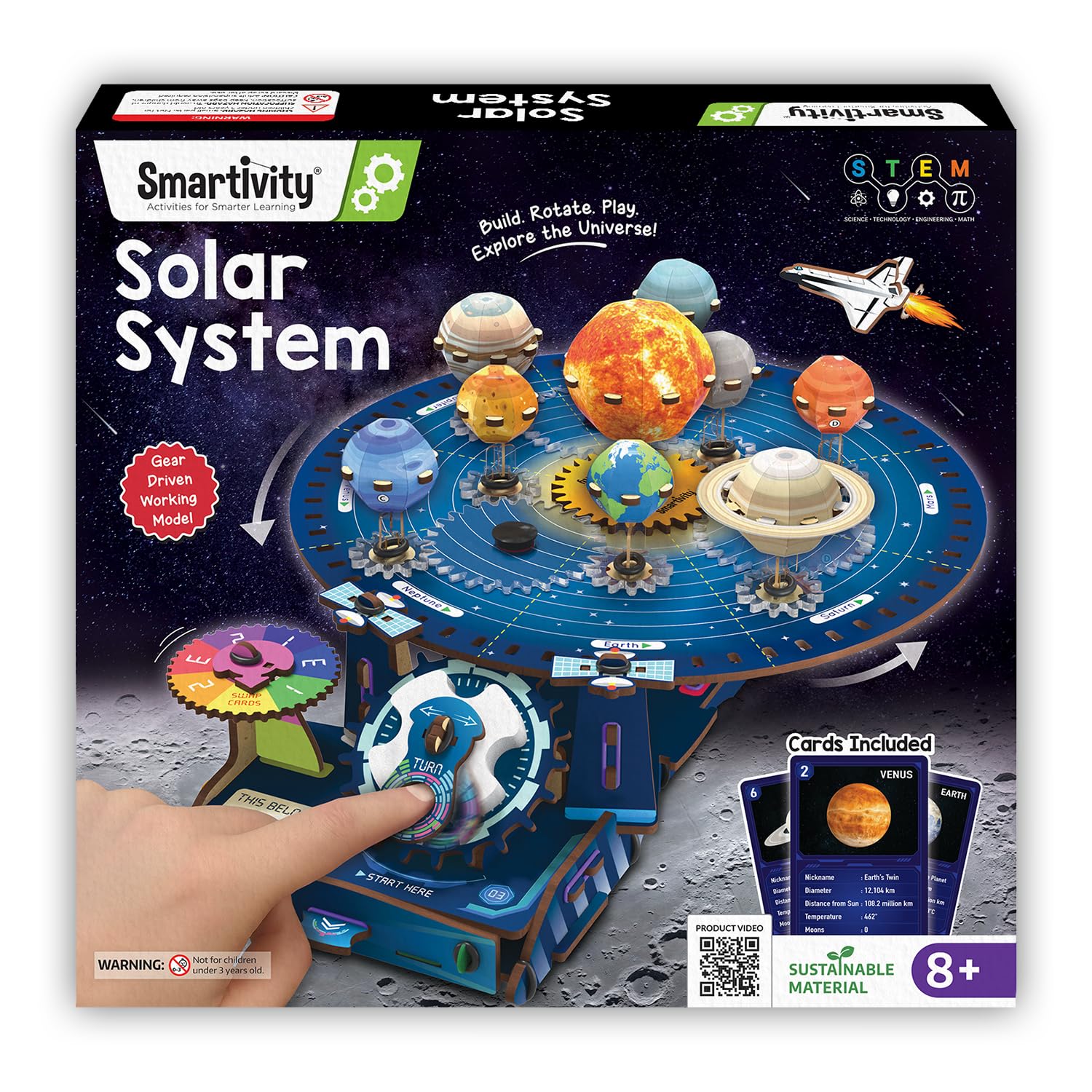
Smartivity's gear-driven model pairs wood's eco-friendly feel with moving planets that teach how orbits work together — a satisfying mechanical lesson for builder-minded kids 8 to 14. Snap-together assembly needs no tools, yet it is a project, not instant decor; families wanting dependable, ready-to-teach value will prefer the magnetic top pick, while this suits eco-conscious homes with patient builders.

Bottom line: Best for eco-conscious families with builder-oriented kids who want a moving, mechanical model rather than instant setup or a ready-to-teach display.

How to Choose

Educational Accuracy and Labeling

Planet order and relative size are the core lessons, so a set that lets a child physically arrange the planets reinforces the concept far better than a static display. Magnetic sets allow this re-arranging; fixed mobiles and painted kits do not.

Some kits arrive unlabeled, which means an adult must write names on the pieces. That extra step matters if the model is meant for independent classroom use. Check whether names are printed before buying.

Assembly and Supervision

DIY paint-and-build kits require adult involvement for most kids under eight because the parts are small and the paint is fiddly. For a child who wants to play immediately, a no-assembly magnetic or foam set avoids frustration.

Motorized models also demand adult setup and are the most likely to break. If the goal is a child-operated learning tool, a static model is the safer investment.

Glow-in-the-Dark Performance

Glow effects are the most oversold feature in this category. Most kits need a strong light charge and fade much faster than buyers expect, so glowing is best treated as a bonus rather than the reason to buy.

If a glow display is the priority, look for a ceiling kit with adhesive stars and enough surface area to make an impact. Expect dimmer results from small painted planets on a shelf.

Component Size

Product photos routinely make planets look larger than reality. Many popular kits, especially at lower prices, have planets that are only an inch or two across. Check stated dimensions before assuming a display-scale model.

For young kids, hand-sized foam balls are actually a benefit — they are safe to throw and hold. For a visual centerpiece, oversized inflatables deliver impact at the cost of storage space.

Durability Under Repeated Handling

Foam balls survive being dropped, thrown, and squeezed. Magnetic sets hold up well on a whiteboard. Thin plastic on ceiling kits can pop apart with rough play, and inflatables need periodic reinflation.

Match durability to how the child plays. A toddler needs forgiving materials; a careful 10-year-old can handle a craft project that stays on display.

Frequently Asked Questions