Early Learning Product Guide

12 Best Preschool Workbooks of 2026: Match the Book to Your Child

The best preschool workbooks match your 3-5 year old's skill level, format, and page count — here's what actually makes one worth buying.

12 Best Preschool Workbooks of 2026: Match the Book to Your Child editorial illustration

Marketing claims of 'complete' and 'big' rarely tell you what's inside. A 320-page workbook might repeat the same tracing page ten times, while a slim 48-page book can nail the one skill your child needs most — pencil control. The real difference is whether the content matches your child's current stage.

This guide sorts out the practical trade-offs. You'll decide between raw page count and focused skill-building, between throwaway paper and reusable wipe-clean formats, and between ready-to-use activity books and DIY kits that demand assembly. Each choice suits a different kid at a different moment.

The goal is simple: find the workbook that holds your child's attention, builds real skills, and lasts long enough to justify the money. That means knowing when repetition helps and when it bores.

#1

School Zone Big Preschool

School Zone Big Preschool

All-in-one curriculum

Customer rating 4.8/5
Check Price

Worth Noting

  • Repeated practice within each skill area may bore children who finish pages quickly.
Format
Spiral-bound
Age Range
3-5 years
Pages & Subjects
320 pages, alphabet to math
Reuse & Durability
Single-use
Read the full review

The School Zone Big Preschool Workbook packs 320 pages of alphabet, numbers, shapes, phonics, early math, and pre-writing into a spiral binding that lays flat on a table and holds up to daily page-turning across a full preschool year. Activities advance from simple line tracing to letter formation and counting, which is why teachers and homeschooling families keep it as a go-to resource. Reported behavior matches that intent: children stay occupied for extended stretches, and the mix of coloring, matching, and tracing pages gives parents natural stopping points. The spiral spine keeps pages in place and the cover holds its shape through frequent flipping.

This suits families who want one book to carry a child from early recognition through letter and number basics without juggling a stack of thinner titles. For advanced 4-year-olds who already know the material, later sections read more like reinforcement than new ground — a boundary to check before purchase, not a universal flaw. The spiral construction and mid-range pricing suit a title meant to span a full preschool year. It also works well as a gift for a child about to start preschool, since the single-book format means no loose parts to track.

Children who speed through a section can skip ahead to the next skill area — the spiral layout makes jumping around easy.

Bottom line: One 320-page book carries a child through the full preschool year in a format built for it. Only children who already know the material will want a lighter option.

#2

My First Learn-to-Write

My First Learn-to-Write

Pen control practice

Customer rating 4.8/5
Check Price

Worth Noting

  • Covers writing only
Format
Paperback
Age Range
3-4 years
Pages & Subjects
84 pages, pen control
Reuse & Durability
Single-use
Read the full review

The step-by-step path from simple line tracing to full letter formation makes this the gentlest writing start for first-time writers. The compact 84-page format centers entirely on pen control and handwriting, building confidence through incremental tracing exercises before moving on to letters.

Families with 3-4 year olds who find all-in-one preschool workbooks overwhelming, and teachers wanting a supplementary handwriting resource, get the most value here. The tradeoff is narrow scope — no math, shapes, or phonics — so pair this with a broader book for complete coverage.

Bottom line: A focused, budget-friendly entry into handwriting — right for families that already own a broader workbook and only need a gentler writing foundation.

#3

Scholastic Pre-K Wipe-Clean

Scholastic Pre-K Wipe-Clean

Unlimited practice

Customer rating 4.8/5
Check Price

Worth Noting

  • The bundled marker can arrive dry or run low, so a backup dry-erase pen is a practical addition
Format
Wipe-clean
Age Range
2-4 years
Pages & Subjects
56 pages, letters & numbers
Reuse & Durability
Reusable, wipe-clean
Read the full review

Wipe-clean pages let children erase and retry the same letter until the stroke feels right, with no paper lost along the way. That structure rewards repetition — siblings can share a single book, and a child who needs extra practice can trace the same letter again and again in one sitting. It's a different rhythm from the gentle line-tracing start in this set, which nudges beginners toward pencil grip.

The right fit is parents who want a reusable, mess-free drill rather than a full curriculum, and who don't mind supplying their own dry-erase marker — the bundled pen can be finicky. For broader multi-subject coverage, the all-in-one workbook in this lineup covers more ground.

Keep a spare dry-erase marker on hand so repeat practice sessions aren't interrupted.

Bottom line: For families who want unlimited letter practice without the paper trail, the wipe-clean format delivers — just keep a spare marker within reach.

#4

Momo & Nashi Busy Book

Momo & Nashi Busy Book

Travel & quiet time

Customer rating 4.8/5
Check Price

Worth Noting

  • A confident 4-year-old who already knows shapes and letters will find the tasks elementary
Format
Activity binder
Age Range
3-5 years
Pages & Subjects
14 activities, multi-subject
Reuse & Durability
Reusable, Velcro pieces
Read the full review

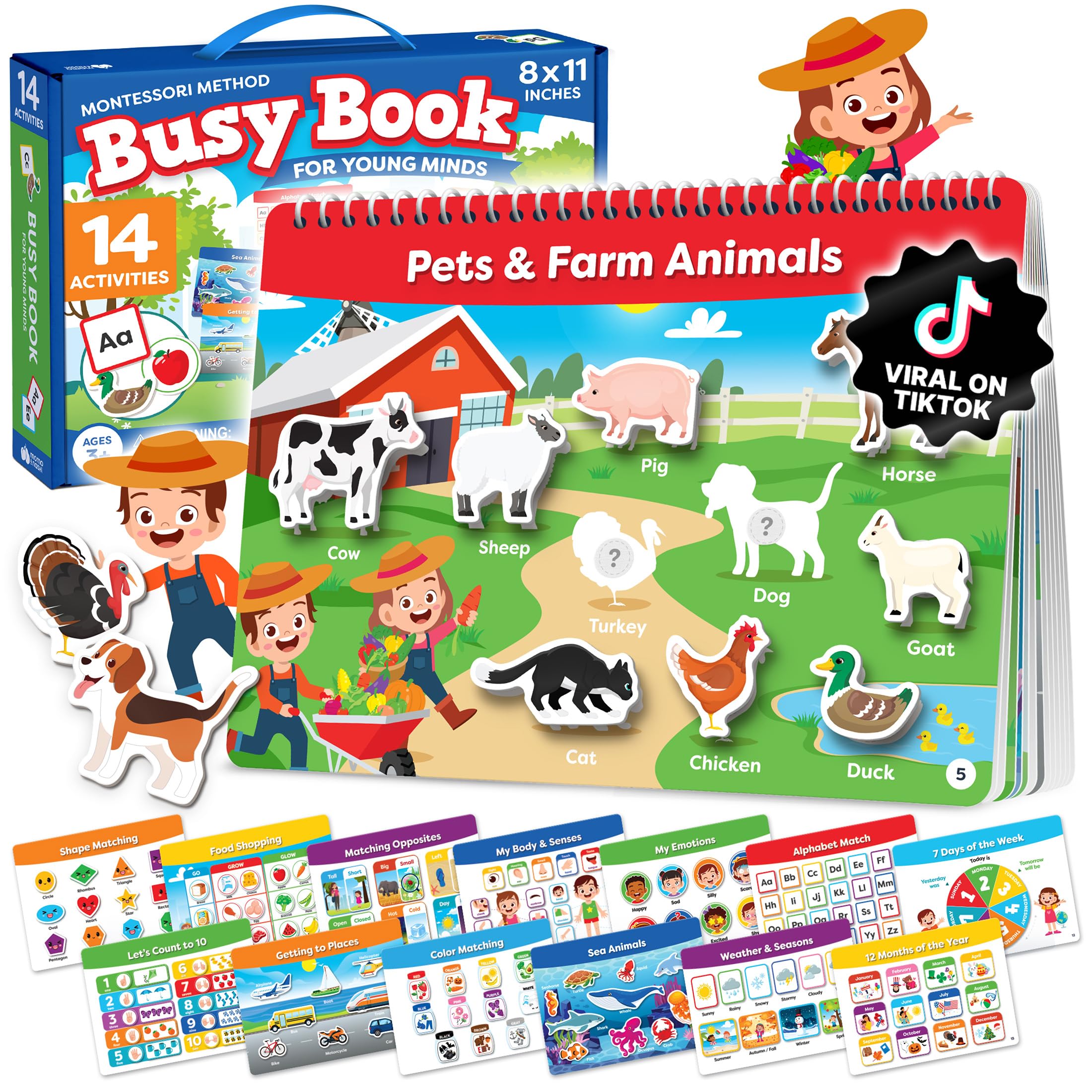
The book arrives fully assembled with 14 Velcro activities and a carry box — a toddler can start matching shapes and animals the moment it opens. A marker-based tracing set calls for wiping between sessions, while this needs no supplies, and the compact 8.9-inch format slips into a diaper bag for plane or restaurant waits, keeping a child engaged on the go.

This fits households with a 3-year-old who wants hands-on, mess-free practice away from screens — children still building their first shape and letter connections stay absorbed. A confident 4-year-old who already knows those concepts will find little challenge here.

For a child who finishes activities quickly, move to letter-writing practice rather than buying a second matching book.

Bottom line: For a 3-year-old, this is the hands-on, mess-free activity that survives travel and holds attention — just sized for true beginners rather than preschoolers nearing kindergarten entry.

#5

School Zone Cut & Paste

School Zone Cut & Paste

Scissor practice

Customer rating 4.8/5
Check Price

Worth Noting

  • For an advanced 4-year-old, the cutting challenges can feel too easy
Format
Paperback, stickers
Age Range
3-5 years
Pages & Subjects
32 pages, cutting & pasting
Reuse & Durability
Single-use
Read the full review

Cutting, pasting, and sticker activities here target the fine-motor control that handwriting depends on — a focus the 320-page all-subject workbook passes over. Progressively trickier lines keep confidence building, and the hands-on format suits kids who resist pen-and-paper tasks.

This fits a 3-year-old building scissor confidence or a reluctant writer who enjoys cutting more than a pencil. At 32 pages it wraps up in a few sittings, so treat it as a skill-building supplement alongside a broader workbook for literacy and math.

Bottom line: For a 3-year-old developing fine-motor confidence, this budget workbook over-delivers for its length — treat it as a skill builder, not a full curriculum.

#6

Brain Quest Pre-K

Brain Quest Pre-K

Classroom & homeschool

Customer rating 4.8/5
Check Price

Worth Noting

  • Lessons move too slow for kids who already know basic concepts and too fast for absolute beginners.
Format
Paperback
Age Range
3-4 years
Pages & Subjects
320 pages, curriculum-aligned
Reuse & Durability
Single-use
Read the full review

Brain Quest's Pre-K workbook divides alphabet, numbers, shapes, and phonics into sequenced sections that track typical Pre-K standards, giving classroom teachers and homeschoolers a ready-made lesson plan. Instructions stay clear enough for a child to move between pages with minimal help, and the tracing, matching, and puzzle activities hold attention for stretches without constant adult direction.

Best for a child starting formal Pre-K skills who responds to guided progression and steady feedback; since difficulty varies with a child's readiness, matching the book to your current learner's level is the key consideration before you commit.

Flip through a few sections first to match the opening activity to your child's current comfort.

Bottom line: The right pick when you want standards-based structure over bulk pages, provided your child sits at a mid-Pre-K level where the difficulty aligns.

#7

Trace Letters Workbook

Trace Letters Workbook

Focused alphabet practice

Customer rating 4.8/5
Check Price

Worth Noting

  • Children who favor larger strokes may find these letters cramped while tracing
Format
Paperback
Age Range
3-5 years
Pages & Subjects
108 pages, letter tracing
Reuse & Durability
Single-use
Read the full review

Trace Letters dedicates all 108 pages to handwriting, pairing alphabet tracing with sight words, and the clear guides help preschoolers build confidence fast. There's no numbers, shapes, or phonics coverage, so it works best alongside a broader curriculum. For kids who welcome repetition, the steady format keeps them on track.

Bottom line: Best for parents focused solely on handwriting practice who accept the single-subject scope; pair it with a broader workbook for full preschool coverage.

#8

Highlights Big Fun Workbook

Highlights Big Fun Workbook

Playful puzzle learning

Customer rating 4.8/5
Check Price

Worth Noting

  • Can come unglued under repeated use, so the 256 pages suit gentle handling rather than daily rough play
Format
Paperback
Age Range
3-4 years
Pages & Subjects
256 pages, puzzles & games
Reuse & Durability
Single-use
Read the full review

Bright, game-first activities across math, writing, and shapes keep young preschoolers genuinely engaged. Difficulty skews easy — a 4-year-old already comfortable with these concepts will breeze through the puzzles. This suits younger 3-4 year olds who learn through play over structured lessons.

Bottom line: Best for a 3-year-old who learns through play and wants gentle, low-pressure practice across several early skills.

#9

My First Patterns Pencil Control

My First Patterns Pencil Control

Fine motor practice

Customer rating 4.8/5
Check Price

Worth Noting

  • The 48-page format finishes quickly, so families will want a second book for ongoing practice
Format
Paperback
Age Range
3-5 years
Pages & Subjects
48 pages, pattern tracing
Reuse & Durability
Single-use
Read the full review

This 48-page budget workbook builds pencil control through line, curve, and shape patterns that young children enjoy tracing. A strong starter for families seeking extra fine motor practice before formal writing, though thin pages can crease under heavy use — best treated as a light pre-writing sampler.

Bottom line: Best for parents focused on pre-writing skills who want an affordable quick win before kindergarten handwriting.

#10

ALIANFLY Educational Workbook

ALIANFLY Educational Workbook

Value dry-erase

Customer rating 4.8/5
Check Price

Worth Noting

  • Included markers can arrive dry, so a separate purchase may be needed.
Format
Dry-erase spiral
Age Range
3-6 years
Pages & Subjects
51 pages, tracing & coloring
Reuse & Durability
Reusable, dry-erase
Read the full review

This dry-erase workbook packs letters, numbers, shapes, and coloring into 51 reusable pages at a mid-range price. The spiral binding stays flat and pages erase cleanly for repeat sessions. The included markers are the main caveat — some arrive dry, so budget for a replacement, and the finish reads more basic than pricier tracing sets.

Bottom line: Pick this for a budget-friendly reusable tracing book when you don't mind adding a replacement marker.

#11

Momo & Nashi Tracing Books

Momo & Nashi Tracing Books

Reusable tracing set

Customer rating 4.8/5
Check Price

Worth Noting

  • Dry-erase format skips true pencil-grip practice for kids who prefer traditional paper workbooks.
Format
Dry-erase
Age Range
3-5 years
Pages & Subjects
Letter & number tracing
Reuse & Durability
Reusable, dry-erase
Read the full review

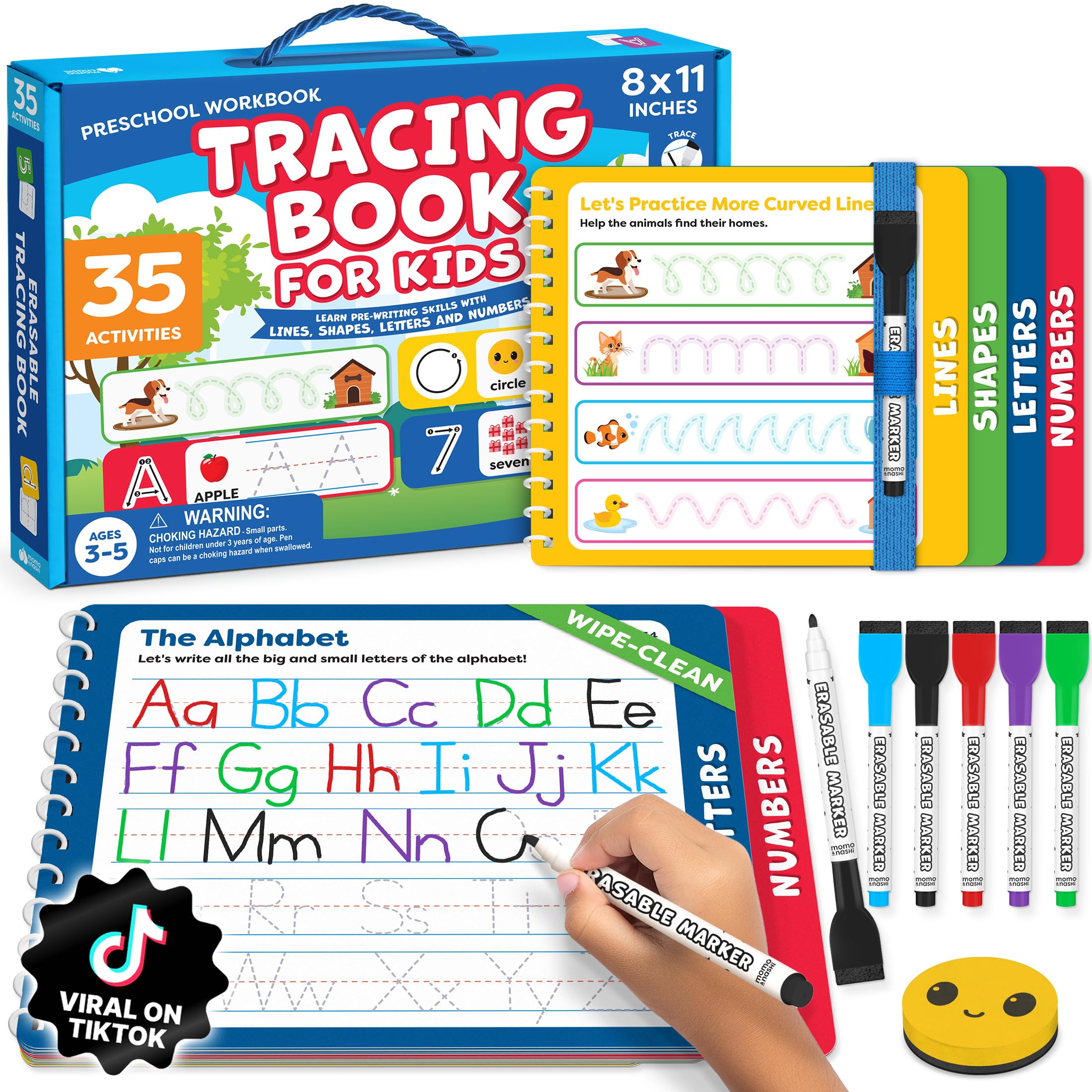
Step-by-step tracing carries kids from simple strokes to full letter formation, and the dry-erase surface wipes clean for repeat practice — a smart fit for handwriting rehearsal. Marks left unwiped can set and stain the pages, so close supervision is needed. Families wanting math or phonics coverage will find the tracing-only scope too narrow.

Bottom line: A good pick for preschoolers who need repeated letter practice under a supervising adult who wipes pages right after writing — less ideal for families wanting full curriculum coverage.

#12

Preschool Math Workbook

Preschool Math Workbook

Early math focus

Customer rating 4.8/5
Check Price

Worth Noting

  • A 4-year-old who already counts may find the tracing pages familiar rather than challenging.
Format
Paperback
Age Range
2-4 years
Pages & Subjects
Number tracing, matching
Reuse & Durability
Single-use
Read the full review

Each spread pairs a traced numeral with a counting activity, so a toddler sees the number and immediately uses it. Progression moves from simple tracing to early addition — good for a child just learning quantities. Math is the only subject here, no letters, shapes, or phonics, so treat it as a supplement, not the main workbook.

Bottom line: For a 2-3 year old just learning what numbers look like, this budget book is a fine first math workbook — switch to a broader curriculum once counting feels easy.

How to Choose

Match the Age to the Skills

The age printed on the cover is only a rough guide. A '3-5' workbook assumes a wide range of ability, so a 4-year-old who already recognizes her letters may race through the early pages, while a younger sibling who hasn't held a pencil may stall at the first tracing line. The real signal is what your child can already do, not their birthday.

That mismatch is the most common source of buyer regret in this category. Many parents report buying a 'big' workbook their child finished in a weekend or abandoned because it felt like busywork. Before you buy, watch your child attempt one page of a library copy or a free sample to gauge whether the difficulty sits in the sweet spot.

Page Count vs. Subject Breadth

More pages doesn't automatically mean more learning. Workbooks push past 300 pages largely by repeating similar tasks — the same tracing line, the same 'find the letter' game — and that repetition is exactly what bores a quick learner. A focused 48-page book can teach pencil control more effectively than a 320-page survey if that skill is the gap.

The trade-off is the opposite for breadth. If you want one book that covers alphabet, numbers, shapes, phonics, and early math, you need the page count to fit them all, which means accepting some repetition. Decide first whether you want depth in one subject or coverage across many.

Format: Paper, Wipe-Clean, or Busy Book

Paper workbooks give clear feedback because a pencil leaves a permanent mark, which is why they're best for first-time writers. Wipe-clean books let kids repeat the same letter until it sticks, but the glossy surface changes pencil feel and they depend on a working dry-erase marker. Busy books swap writing for Velcro-piece matching, which builds fine motor skills but does little for letter formation.

Choose based on the goal. If the aim is handwriting mechanics, a paper workbook is the most direct tool. If the child needs to practice a concept multiple times without waste, wipe-clean wins. If you want a screen-free activity for travel or waiting rooms, a busy book is the clear choice — just confirm it arrives assembled.

Reusability and Page Durability

Wipe-clean and dry-erase pages trade the forgiving feel of paper for a slick surface that can be hard for small hands to control. The payoff is unlimited practice, but the real durability test is the page itself — thin cardstock smudges and rips when erased repeatedly, and the included markers are often the weak link.

Paper workbooks are the opposite: the pages survive erasing, but a torn or folded page is permanent, and there's no way to redo a mistake. If your child is heavy-handed or prone to frustration, a spiral-bound paper book lays flat and survives better than a glued paperback whose spine splits after a few uses.

Portability and Ease of Use

There's a direct relationship between how much a workbook covers and how portable it is. A 320-page spiral book is a desk tool — it needs a flat surface and usually stays home. Compact busy books with a carrying case are built for car rides, waiting rooms, and restaurants, which changes how often they actually get used.

Think about where the learning will happen. A workbook that only works at a table will be used less than one that travels. But portability usually comes at the cost of pages and breadth, so families who need both can pair a small travel book with a larger home curriculum.

Frequently Asked Questions