Early Learning Product Guide

12 Best Learning Toys for 4 Year Olds in 2026: Match Their Interests

Discover which learning toys for 4 year olds actually hold attention and teach, matching your child's interests to ensure real play value.

12 Best Learning Toys for 4 Year Olds in 2026: Match Their Interests editorial illustration

Every parent knows the shelf of 'educational' toys that get ignored after a week. The problem isn't the toys themselves—it's a mismatch between what a 4-year-old wants to play with and what the box promises. At this age, kids are driven by specific interests: dinosaurs, pretend cooking, letters, or building blocks. When a toy aligns with that drive, it gets used daily. When it doesn't, it collects dust.

Many so-called educational toys also fall short in the real world: flimsy parts, missing pieces, or content that's exhausted after a week. Others demand an adult or sibling to play along, which isn't always practical.

The toys that make this list are built to survive real use, engage a 4-year-old's mind, and match how they play—solo or with others. A toy that aligns with your child's current obsession will outperform a generic 'smart' toy every time.

#1

ThinkFun Zingo

ThinkFun Zingo

Family game

Customer rating 4.8/5
Check Price

Worth Noting

  • Built on word-image recognition
  • The tile set is fixed
Age Range
4+
Play Mode
Group
Value Tier
Mid-Range
Skill Focus
Literacy, Social
Read the full review

Zingo pairs picture tiles with rapid-fire matching — the Zinger dispenser spits out tiles mid-game, and the first player to fill their card calls the word. Turn-taking and waiting for the right tile build patience while the vocabulary load stays age-appropriate for four-year-olds. Six double-sided boards and a generous tile set keep rounds quick enough that attention rarely wanders, and the teaching happens inside the fun rather than around it.

Nothing needs batteries, so the game works on any flat surface — kitchen tables, waiting rooms, grandparents' floors. The chunky tiles are easy for small hands to grab, and the fast reveal-and-match rhythm holds even energetic four-year-olds through several rounds. Familiarity from replay is what keeps kids asking for more rounds at home.

Zingo suits families who enjoy board games and early readers who learn through social play. That social core demands company — an adult or an older sibling must sit in, so it is not an independent quiet-time option. Children who prefer solo activities, or who need fine-motor practice more than academic building, will get more from other picks in this lineup.

Bottom line: For families who play together, Zingo delivers real literacy gains inside a game kids ask for by name — the strongest pick in this lineup.

#2

M&D See & Spell

M&D See & Spell

Spelling practice

Customer rating 4.8/5
Check Price

Worth Noting

  • Only 16 words are included, so the set loses replay value once a child has mastered them.
  • Letter coverage for a given word can run thin, so confirming all pieces on arrival pays off.
Age Range
4+
Play Mode
Solo
Value Tier
Mid-Range
Skill Focus
Literacy
Read the full review

Double-sided boards and 64 wooden letters turn early spelling into a tactile matching game a child can play entirely on their own — no screen, no batteries, and no second player required. Where the social word game topping this list depends on a grown-up or sibling to play, this set fits solo windows: waiting rooms, road trips, and quiet wind-down time.

This suits a 4-year-old just beginning to sound out short words, whose confidence grows as letters click into place on each board. The 16 included words cover that first stage well; once a child masters them, adding fresh word material extends the fun.

Bottom line: For the child just beginning to sound out words, this is the independent, screen-free spelling practice that runs itself — a calm complement to the family game that tops this list.

#3

hand2mind MathLink

hand2mind MathLink

Number learning

Customer rating 4.8/5
Check Price

Worth Noting

  • Snapping cubes together can be slow going for small hands without adult assistance.
  • Faceplate stickers may peel over time, and pieces can separate during play.
Age Range
3-5
Play Mode
Guided
Value Tier
Mid-Range
Skill Focus
Math
Read the full review

The 100 MathLink cubes and 30 activity cards build number sense by turning counting and addition into a visual, character-driven activity — a hands-on alternative to the social wordplay of the top-pick game. Each cube links to others at the corners or edges, so a four-year-old can assemble the Numberblocks characters straight from familiar episodes, building one-to-one correspondence and simple sums along the way.

This fits Numberblocks fans and structured homeschool math blocks where kids learn numbers 1-10 through guided play rather than free-form building. Snapping cubes together can strain small hands at first, and faceplate stickers may peel with repeated use, so adult help during setup keeps things smooth.

Snap full characters together ahead of play so little fingers focus on counting, not assembly.

Bottom line: For Numberblocks-obsessed four-year-olds, this routes screen enthusiasm into real counting practice — a good fit for guided homeschool math time.

#4

Coodoo Magnetic Tiles

Coodoo Magnetic Tiles

STEM building

Customer rating 4.8/5
Check Price

Worth Noting

  • A few tiles may arrive with chips or minor surface defects.
Age Range
3+
Play Mode
Both
Value Tier
Mid-Range
Skill Focus
STEM
Read the full review

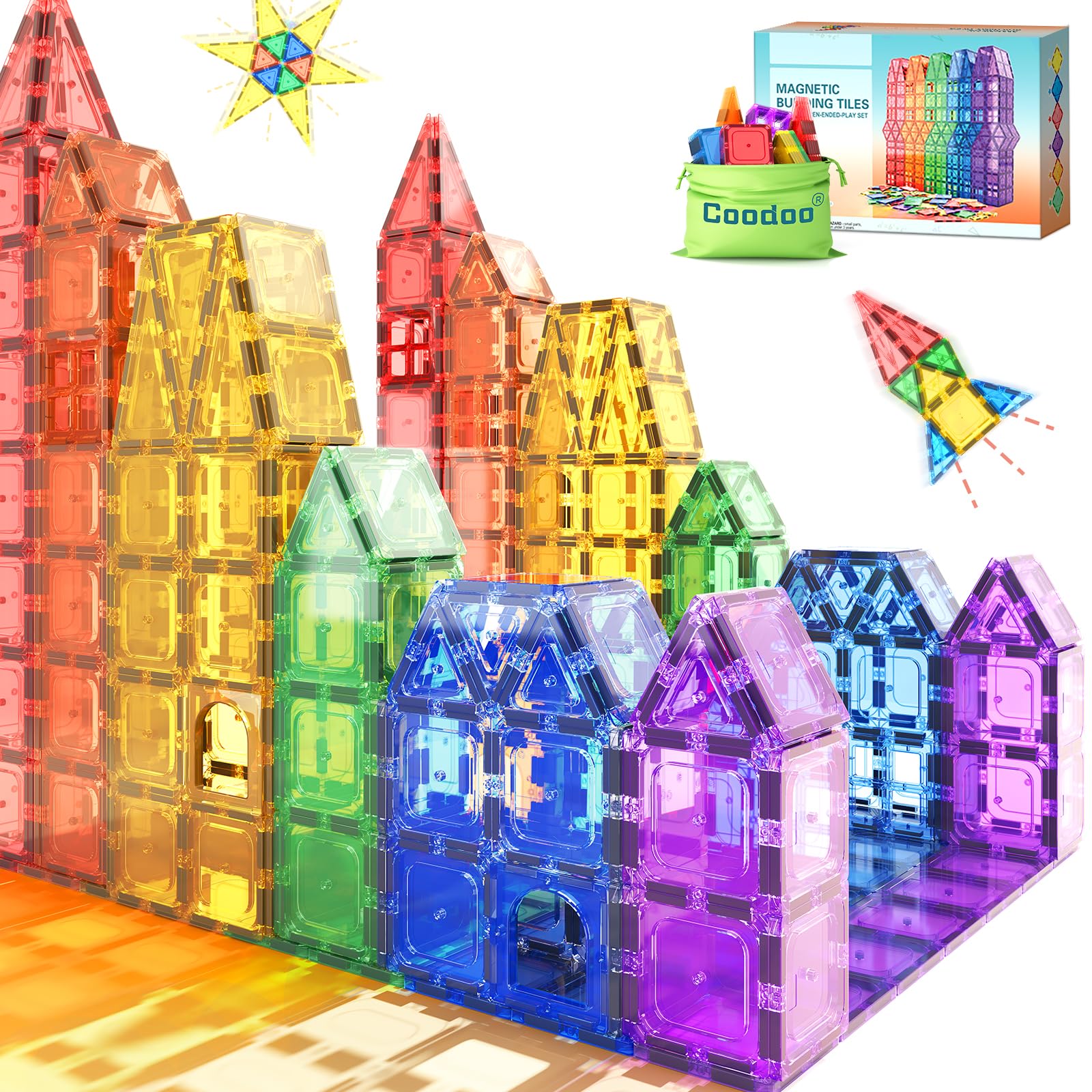
These 40 magnetic tiles clip together into free-form towers, houses, and vehicles without instructions or game rules, strengthening the spatial reasoning that a picture-word matching game never touches. The magnets hold firmly enough for multi-story builds, and compatibility with leading tile brands makes this a smart starting point before expanding a collection.

This suits kids who treat toys as raw material for their own designs — classrooms, preschools, and households with dedicated building sessions. A few pieces may arrive with chips or minor defects, a small tradeoff against strong-magnet durability overall, and the set favors pure construction over guided prompt cards.

Bottom line: Best for builders who want raw, open-ended construction — strong magnets and brand compatibility make this a sturdy entry into magnetic tile collections.

#5

M&D Lacing Beads

M&D Lacing Beads

Fine motor

Customer rating 4.8/5
Check Price

Worth Noting

  • Strings may fray or snap under heavy daily use, and an occasional bead can arrive chipped.
Age Range
3+
Play Mode
Solo
Value Tier
Budget
Skill Focus
Fine motor
Read the full review

Thirty chunky wooden beads and two laces build grip strength and pattern recognition through hands-on lacing, with no batteries or screens in sight. This is a different kind of play than the top pick's social word game — it rewards quiet, independent focus instead of turn-taking with a partner.

A good fit for preschoolers honing fine motor skills in classroom or therapy settings, pairing lacing practice with color and shape recognition. Strings may fray or snap under heavy daily use, so expect to replace laces over time — the wooden beads themselves hold up well.

Bottom line: For preschoolers building fine motor skills at home, in class, or in therapy, this delivers real practice at a budget price. Just plan on replacing the laces eventually.

#6

GeoSafari Kidnoculars

GeoSafari Kidnoculars

Outdoor science

Customer rating 4.6/5
Check Price

Worth Noting

  • 2x magnification keeps distant birds soft-focus and can appear blurry
  • Lenses can pop out and the strap may give under heavy tugging
Age Range
3+
Play Mode
Solo
Value Tier
Budget
Skill Focus
Science
Read the full review

The GeoSafari Kidnoculars give a preschooler their first true window into nature — focus-free optics mean no dial-fiddling, just point-and-look at beetles, leaves, and backyard birds. The breakaway strap and featherweight frame keep up with a wandering 3-year-old's attention span, and kids genuinely enjoy carrying them on walks.

These fit the child whose curiosity runs outdoors — the one who pauses at every critter for a closer look. The 2x magnification is deliberately modest, so distant birds appear soft and blurry; this is near-field observation (a bush, a flower bed, a squirrel), not serious birding. Durability is a boundary too — lenses can pop out and the strap may give under heavy tugging, so gentle supervised outings suit them best.

Keep targets within a few feet for the sharpest view — 2x magnification reads detail best at near range.

Bottom line: For preschool explorers whose science starts at the garden fence, these deliver hands-on discovery — just keep far-off birds out of the picture.

#7

LeapFrog Ice Cream Cart

LeapFrog Ice Cream Cart

Pretend play

Customer rating 4.8/5
Check Price

Worth Noting

  • Cart can tip over when loaded during lively play sessions.
Age Range
2-5
Play Mode
Group
Value Tier
Premium
Skill Focus
Pretend play, math
Read the full review

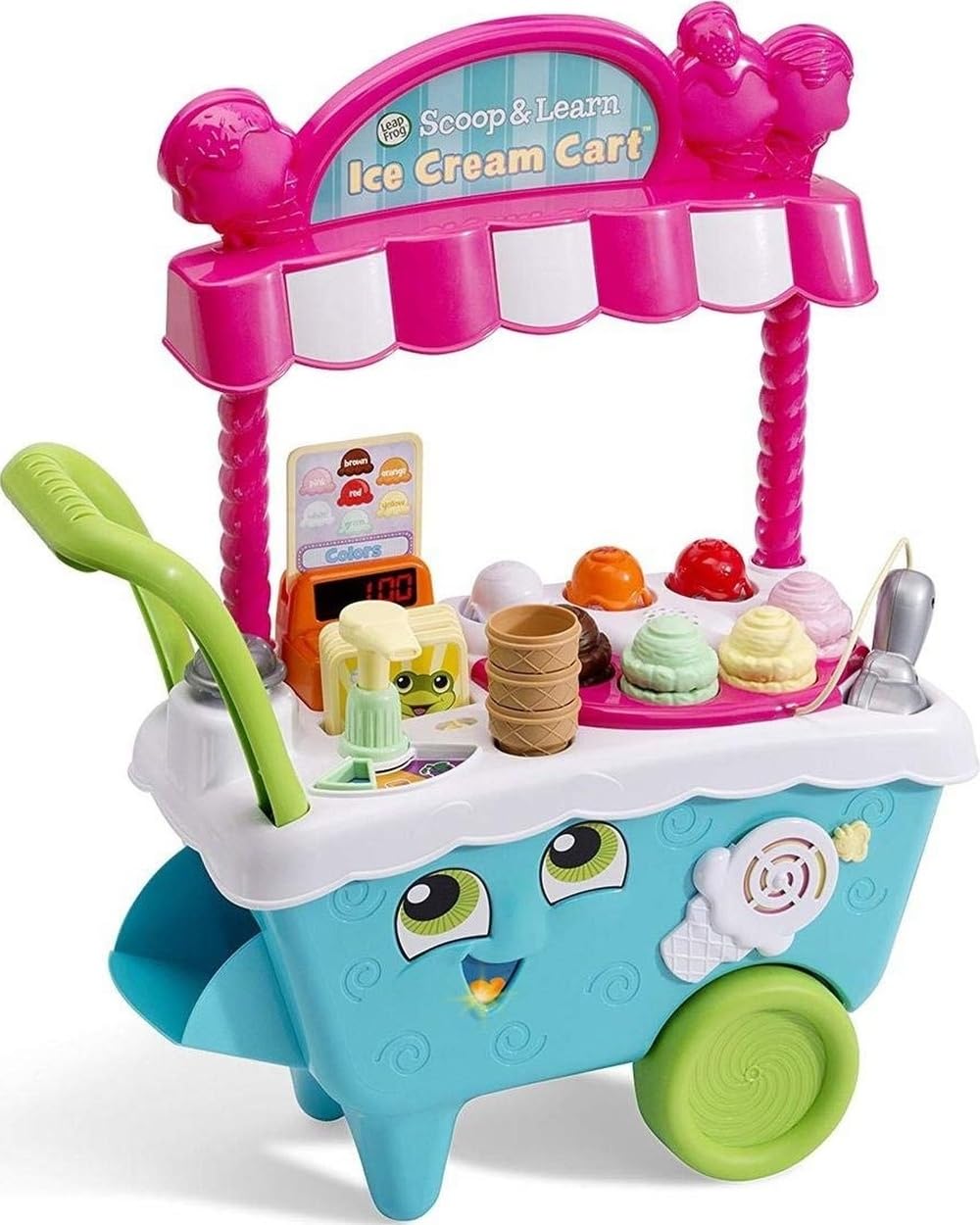
The ice cream cart turns pretend play into a counting and color lesson. Kids take orders, scoop the pops, and match toppings while the electronic sounds respond to each choice. What sells it is the progression: orders build in complexity, so memory and sequencing ramp up naturally — numeracy that feels like a game rather than a lesson.

Best for pretend-play enthusiasts who love running a shop with a partner or a parent who can take orders; the premium price will stretch a tight budget more than the tablet-style option in this lineup.

Bottom line: For a young shopkeeper who loves role-play, this makes counting and colors feel like running a real store — social, hands-on, and worth replaying.

#8

LeapFrog LeapTop

LeapFrog LeapTop

Tech learning

Customer rating 4.7/5
Check Price

Worth Noting

  • In laptop mode the flip screen can drop, making tabletop play less steady.
Age Range
2-5
Play Mode
Solo
Value Tier
Mid-Range
Skill Focus
Literacy, numbers
Read the full review

The 2-in-1 LeapTop Touch lets preschoolers explore ABCs, numbers, and music through five learning modes they can run entirely on their own. Durability can vary between units, so this fits households wanting a supervised tech toy rather than a rugged daily carry.

Bottom line: Suits households that want a low-cost educational laptop for supervised play rather than a rough-and-tumble daily companion.

#9

LiKee Alphabet Cards

LiKee Alphabet Cards

ABC practice

Customer rating 4.8/5
Check Price

Worth Noting

  • Piece counts can vary between sets; a letter or number may be missing at arrival
Age Range
3+
Play Mode
Solo
Value Tier
Mid-Range
Skill Focus
Literacy
Read the full review

37 wooden letters and numbers with 36 double-sided cards suit a preschooler still learning the ABCs, and the high-quality wooden pieces hold up well to little hands. Alphabet recognition is the focus, with little room for open-ended building, and piece counts can vary, so a quick check at arrival is worthwhile.

Bottom line: This fits when a portable, screen-free alphabet drill for a preschooler just starting letter recognition is the goal, as long as you confirm the pieces at arrival.

#10

LiKee Shape Puzzle

LiKee Shape Puzzle

Shape sorting

Customer rating 4.7/5
Check Price

Worth Noting

  • Kids drawn to magnetic tiles or electronic toys may find this quiet wooden puzzle less absorbing
Age Range
3+
Play Mode
Solo
Value Tier
Budget
Skill Focus
Spatial
Read the full review

Sixty pattern cards and 36 chunky wood blocks develop problem-solving and imaginative play, and the pieces hold up well through repeat use. The spatial reasoning it teaches is genuine, yet it draws less universal appeal than magnetic tiles — kids who prefer electronics or fast-paced visuals may wander off, so this suits a puzzle-loving preschooler over a broad audience.

Bottom line: Best for a four-year-old who already enjoys puzzles and hands-on Montessori-style learning, where the tactile build delivers more staying power than flashier toys.

#11

PicassoTiles Hedgehog

PicassoTiles Hedgehog

Construction

Customer rating 4.7/5
Check Price

Worth Noting

  • Bristles can snap off during harder pulling.
Age Range
3+
Play Mode
Both
Value Tier
Mid-Range
Skill Focus
STEM, fine motor
Read the full review

These 120 bristle blocks snap together with minimal effort, and kids build for hours — the tactile connections and hedgehog design invite open-ended storytelling. Bristles may snap under harder pulling, and small parts aren't for toddlers under 3, so this suits caregiver-supervised building rather than rough play.

Bottom line: For families where an adult guides play and keeps younger siblings at a distance, this remains a lively sensory builder — just not one built to withstand rough handling.

#12

Lite Brite Classic

Lite Brite Classic

Art play

Customer rating 4.6/5
Check Price

Worth Noting

  • Analog pegboard play can feel plain next to flashy modern toys, so kids used to screens may lose interest.
Age Range
4+
Play Mode
Solo
Value Tier
Budget
Skill Focus
Art, fine motor
Read the full review

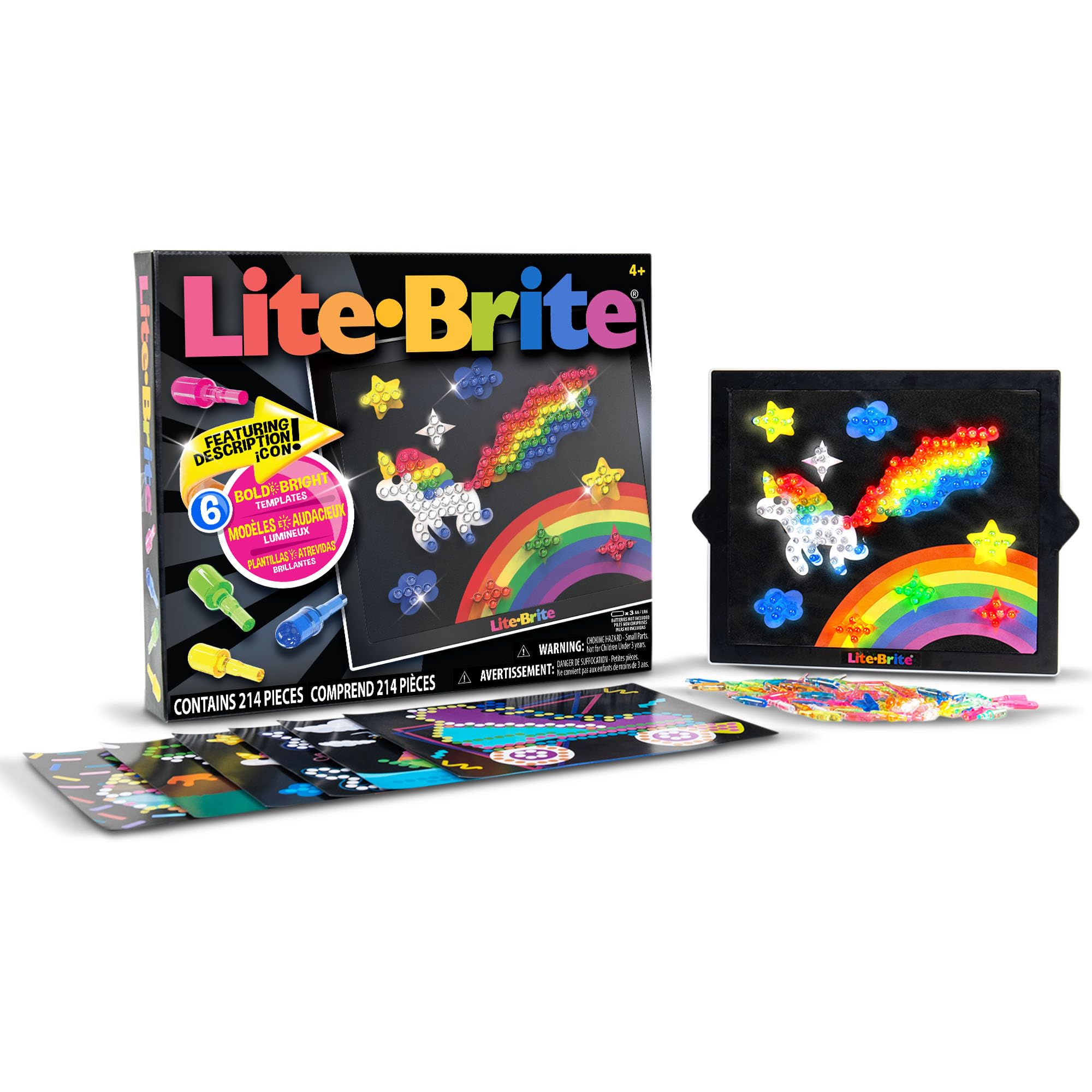
206 glowing pegs in six colors and four light modes turn art projects into glowing displays that hold the attention of kids drawn to art and crafts. Its educational scope stays inside creativity — not letter or number work — so it sits below the See & Spell boards for families practicing reading.

Bottom line: Best as a rainy-day gift for a child who already loves drawing — a creativity outlet, not an academic purchase.

How to Choose

Age Appropriateness

Age ranges on boxes are broad guides, not rules. A 4-year-old's attention span and fine motor skills vary widely, so a toy labeled 3+ might feel too babyish, while a 5+ toy could be frustrating. Focus on your child's actual abilities rather than the sticker.

Hidden trade-off: toys that are too advanced may cause frustration and abandonment, while too-simple ones fail to challenge. Watch for signs of boredom or struggle within the first few play sessions.

Skill Area Targeted

Today's learning toys often juggle multiple skills, but depth matters more than breadth. A toy that claims to teach letters, numbers, colors, and social skills may do none well. Pick a toy that targets your child's current developmental gap—whether that's early reading, number sense, or fine motor control.

Hidden trade-off: a specialized toy like a spelling puzzle may become boring once the skill is mastered, while a multi-skill toy may keep engagement longer. Balance these based on your child's interests.

Durability and Build Quality

Four-year-olds are rough on toys. Wooden construction generally survives drops, but check for splinters and loose parts. Plastic can crack under impact, and electronic components may fail with regular use. Inspect the set for missing pieces right out of the box; QC issues are common across brands.

Hidden trade-off: sturdier materials often add weight or cost. A cheap plastic toy might fail quickly, but a premium wooden one might be too heavy for little hands. Look for a balance of material and construction that matches your child's play style.

Engagement and Replay Value

The best indicator of replay value is open-ended play. Building blocks, magnetic tiles, and lacing beads let kids create endless variations, while fixed-content toys like a single puzzle or a set of flash cards can be exhausted in days. Observe how your child naturally plays—do they prefer constructing, making up stories, or solving puzzles?

Hidden trade-off: highly engaging electronic toys might diminish imaginative play over time. Screen-free options often encourage deeper creative thinking, but they may lack the instant gratification of lights and sounds. Find a balance that keeps your child both entertained and challenged.

Price Relative to Features

The sweet spot for most families is between $15 and $25, where you get durable materials and meaningful educational value. Budget toys can be excellent if they focus on a single skill and are well-made, but be wary of rock-bottom prices that signal flimsy parts. Premium options like the ice cream cart offer rich play but may not be necessary for every child.

Hidden trade-off: paying more doesn't guarantee better learning. Sometimes you're paying for a brand name or extra accessories your child won't use. Evaluate the learning value against the price tag, not just the box.

Frequently Asked Questions