MaaIbok Academic Planner

What We Like
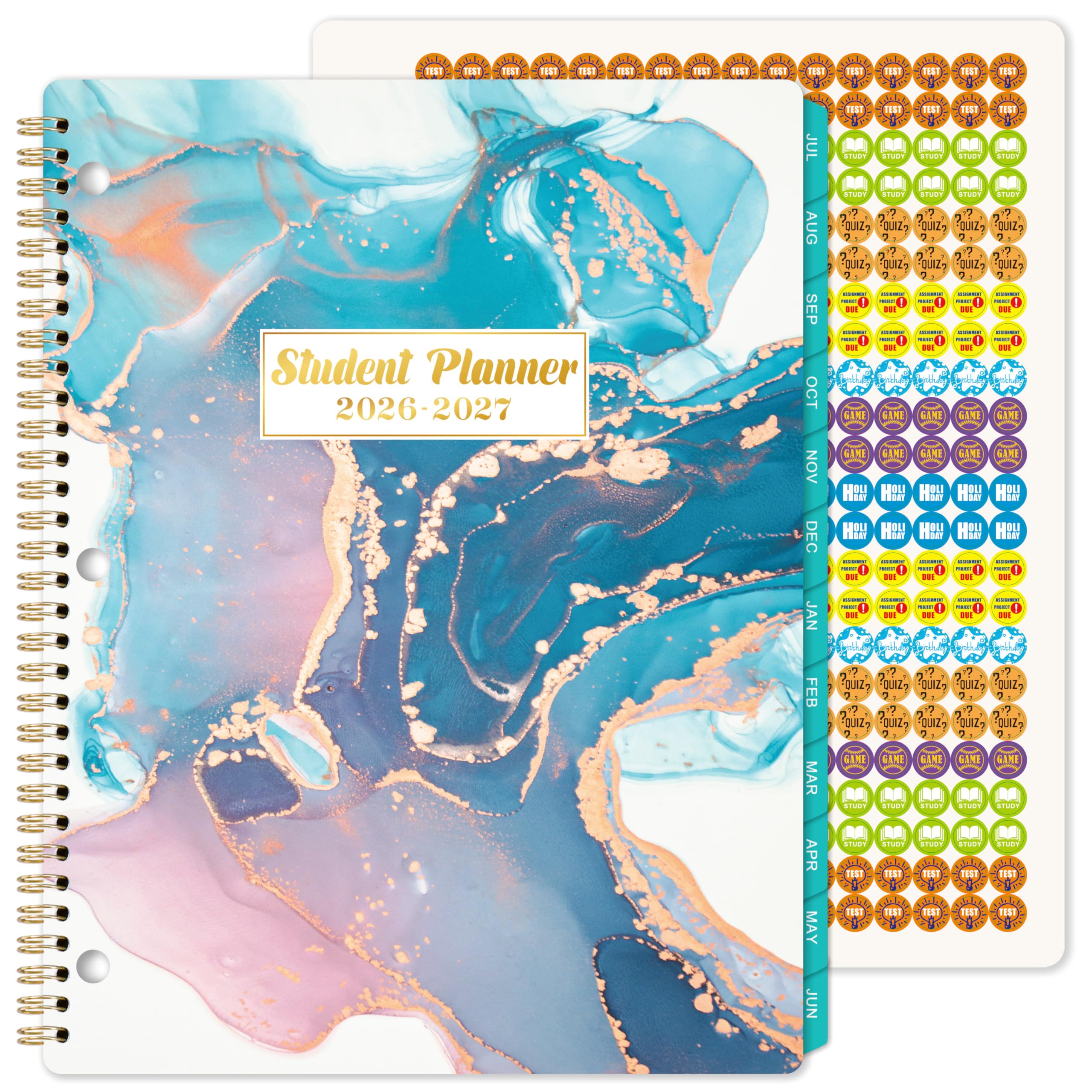
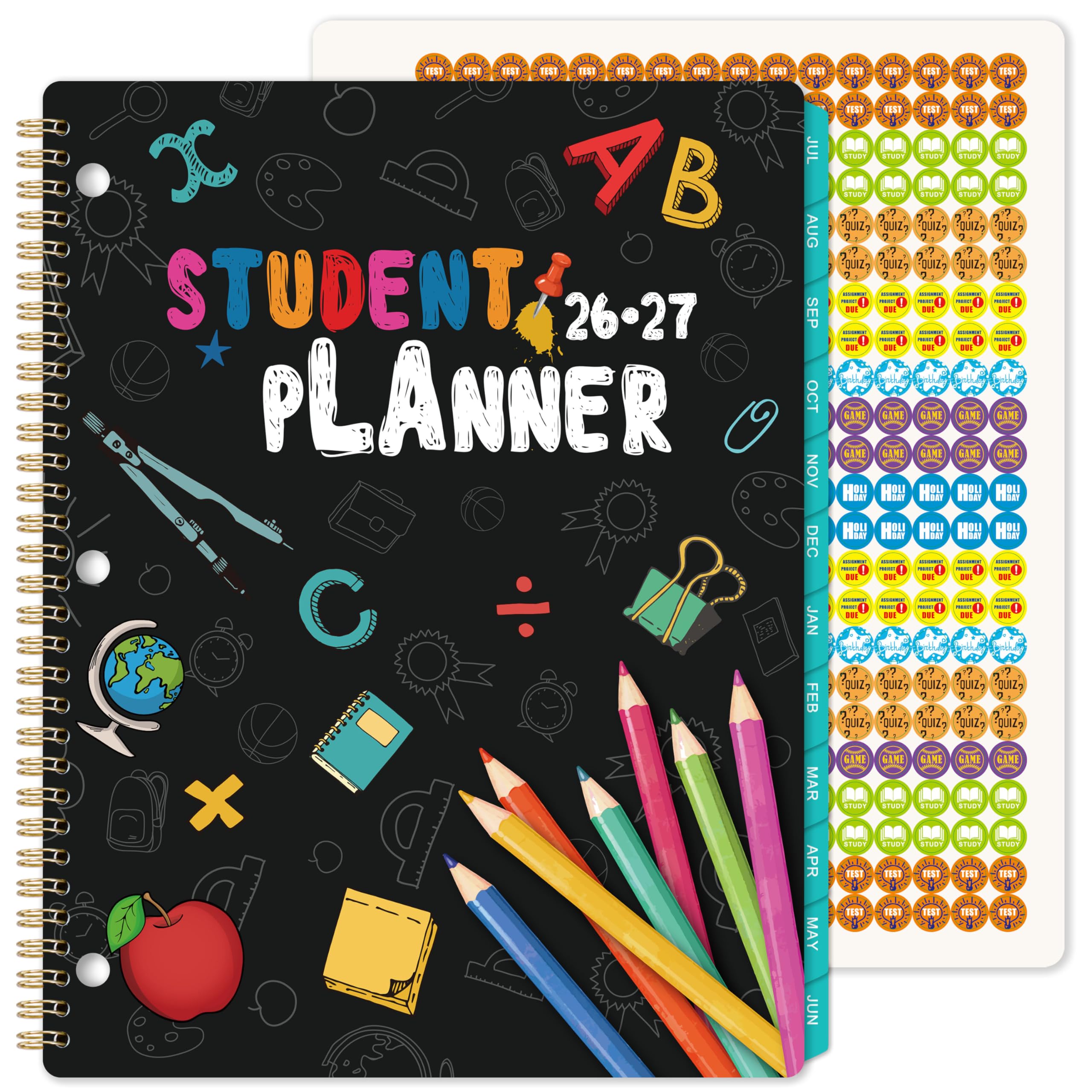
- Subject reference pages and stickers turn a calendar into a study tool middle schoolers want to open.
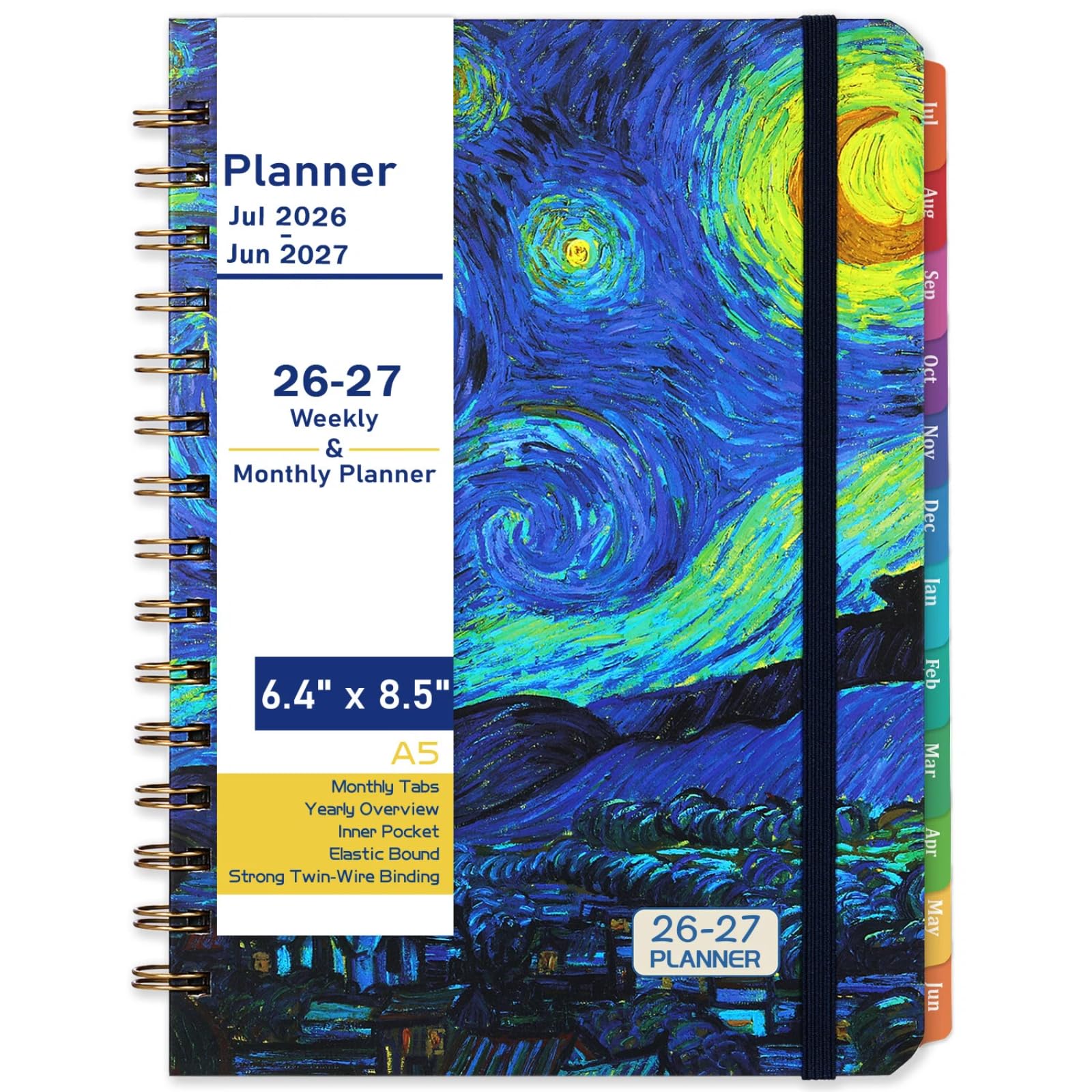
- Twin-wire binding and elastic closure keep the planner flat and intact through a full school year of daily use.
- Large 11x9 daily blocks leave room for complete homework entries without cramped writing.
Worth Noting
- Homes tracking heavy weekend commitments will find little space in the Monday–Friday spreads for Saturday and Sunday tasks.
- Extras
- Reference pages, stickers, pocket
- Layout Style
- Mon–Fri weekly
- Paper Quality
- —
- Coverage Window
- Aug 2026–Jun 2027
Read the full review
Subject reference pages turn each weekly spread into a working study tool — a dedicated section per class for assignments, test dates, and project deadlines, plus decorative stickers that give middle-schoolers a reason to open it daily. The large 11x9 daily blocks provide room for detailed entries without cramping a seventh-grader's handwriting, and monthly overviews sit alongside for long-range planning. The August 2026 through June 2027 window lines up with the academic calendar, so the monthly grids track real grading periods and midterm schedules.
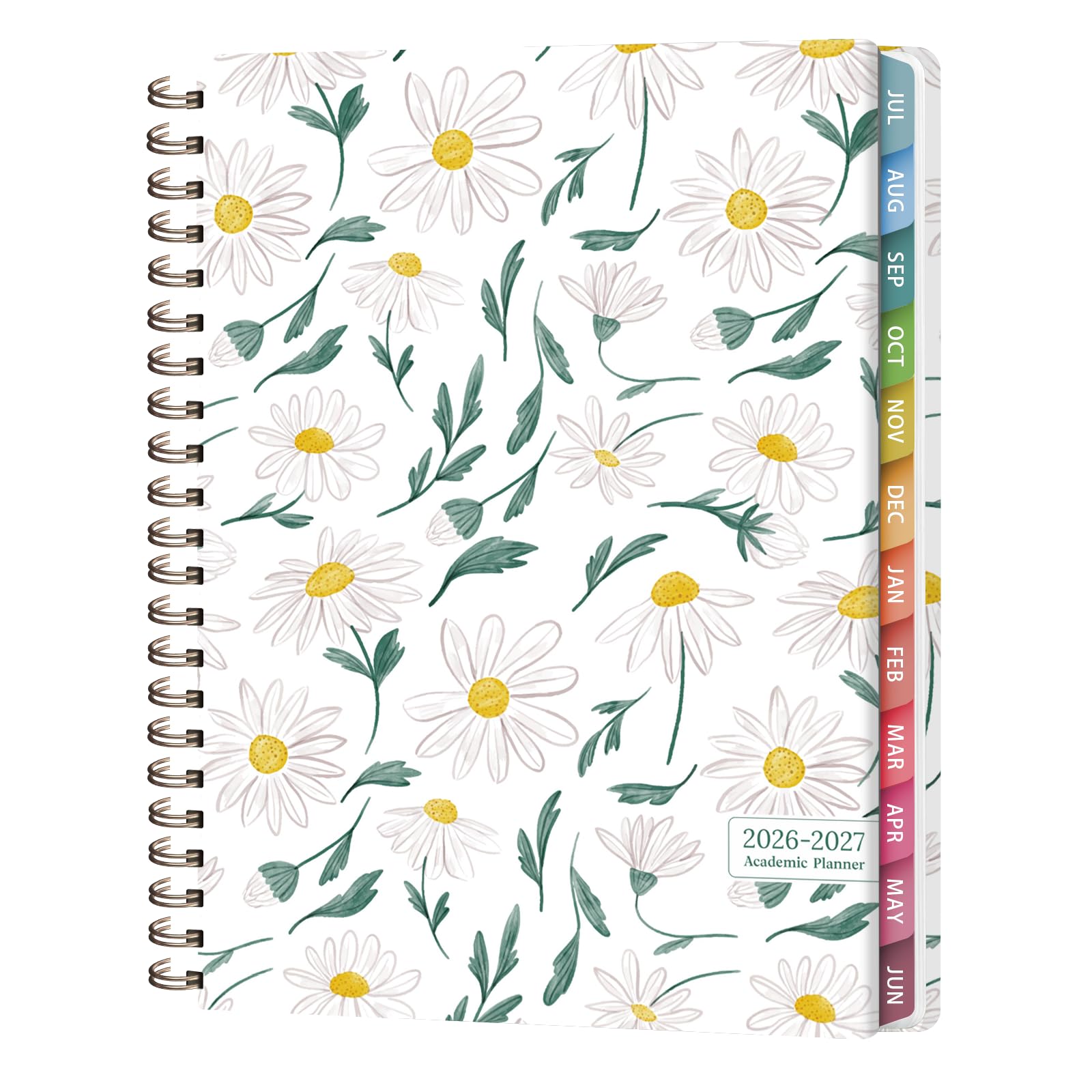
The twin-wire binding survives a full school year of daily opening, with the elastic closure keeping pages flat against the cover instead of curling in a backpack. The back pocket swallows permission slips and loose handouts, and the lay-flat spiral design makes writing across both weekly pages comfortable. Where the budget workhorse in this set leans minimal and compact options trade space for portability, this one pairs its durability with the student extras — a combination no other planner here matches.
This fits middle-schoolers who need visual engagement and built-in study structure, plus homeschool families juggling multiple subjects in one planner. The Monday–Friday weekly spreads leave only small Saturday–Sunday blocks, so weekend homework and activities may feel cramped — a tradeoff worth weighing before a purchase. The August start aligns with the traditional US academic year rather than a July–June calendar, and the reference-page checklists reward consistent daily use more than a plain grid does.
Track weekend commitments on the monthly overview page, which has no Sunday cutoff.
Bottom line: For middle-schoolers who need daily structure and visual engagement, this is the student-first pick in the set — the weekend-space floor only matters for families whose weekends carry the heaviest workload.