Music Learning Product Guide

13 Best Metronome for Students of 2026: Full Sessions, Steady Tempo

The best metronome for students: one that keeps steady tempo through practice sessions on piano, guitar, or violin — without battery or sound surprises.

13 Best Metronome for Students of 2026: Full Sessions, Steady Tempo editorial illustration

Metronome listings love to tout feature counts — vocal counting, tap tempo, color displays. What students actually notice after a few weeks of practice is whether the battery holds, the tempo stays steady, and the click doesn't grate. Those are the qualities that decide if a metronome survives the school year.

The reliable options split into two practical camps: digital models with tuners built in, and traditional mechanical units you wind by hand. Each fits a different practice habit. Digital units handle long, unattended sessions; mechanical ones demand a rewind every fifteen minutes or so but never run out of battery mid-scale.

String players also have to weigh tuner accuracy, since many budget combos struggle to track low strings. Matching the tool to your instrument and practice length matters more than raw feature lists.

#1

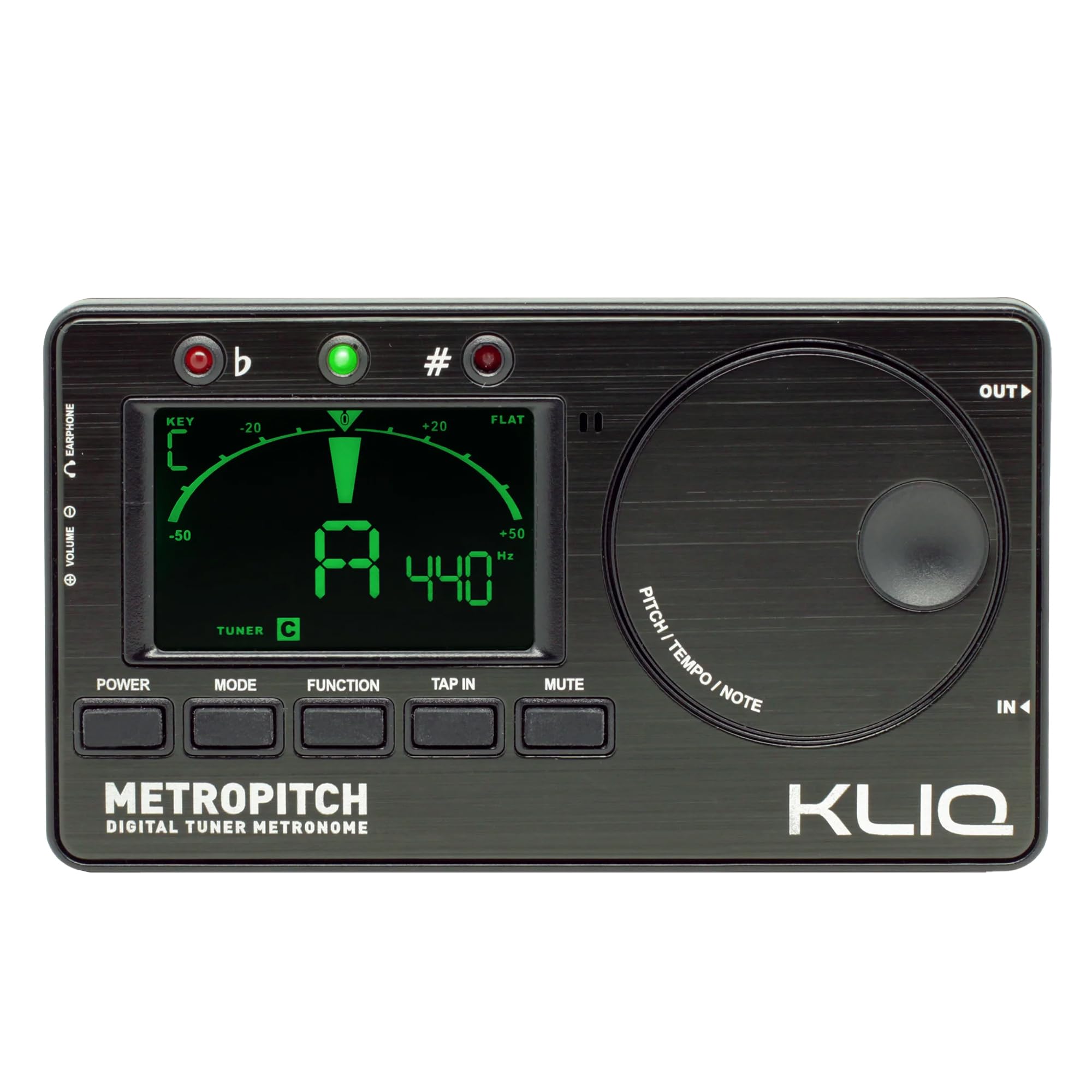
KLIQ MetroPitch

KLIQ MetroPitch

All-around combo

Customer rating 4.4/5
Check Price

Worth Noting

  • Rear-facing speaker gets muffled on soft surfaces or in loud rooms, cutting audible output
Durability
3-year warranty
Tempo Range
30–250 BPM
Tuner Accuracy
A0–C8 range
Rechargeable Battery
No (2 AAA)
Read the full review

The KLIQ MetroPitch pairs a jog dial with a full 30–250 BPM tempo range and an A0–C8 tuner, so changing speed or pitch is a single turn rather than menu-diving. Tuning accuracy holds across piano, guitar, and bass and matches or beats phone-based tuner apps, making it a steady practice companion. The 3.17 oz body with two included AAAs keeps a full feature set in a unit small enough to carry between lessons.

The jog dial makes daily tempo changes quick and painless, and the solid build and clear display hold up across long practice sessions. That combination keeps focus on playing rather than fiddling with settings, which matters for a student's everyday routine.

For a student practicing at home or in a quiet room who wants tuner and metronome in one device, this covers both without extra features that add cost. The rear-facing speaker reduces audible output when the unit rests on a soft surface or competes with a loud ensemble, so drummers and high-volume players are better served by a louder unit.

Place the unit on a hard, level surface facing you to keep the click audible during practice.

Bottom line: For a student who wants one accurate tuner-metronome for home practice across multiple instruments, this is the lowest-risk option in the guide.

#2

Donner DMT-01

Donner DMT-01

Budget beginners

Customer rating 4.5/5
Check Price

Worth Noting

  • On lower guitar strings, tuning can register inconsistently, leaving pitch to the ear
Durability
Good budget build
Tempo Range
30–260 BPM
Tuner Accuracy
±0.5 cent
Rechargeable Battery
No (1 AAA)
Read the full review

A full 30–260 BPM tempo range and a ±0.5 cent tuner glide in at the lowest price in this guide, making the DMT-01 the entry-level value pick for beginners who want both functions without spending much.

The jog-dial and LCD keep controls immediate, and the 4.6 oz body clips easily to a music stand. On lower guitar strings the tuner can register inconsistently — a boundary that matters far less to a novice working through open chords than to a player chasing exact intonation.

Keep a spare AAA battery close — the included cell occasionally arrives drained.

Bottom line: For a first-year student who wants a tuner and metronome without spending much, the DMT-01 covers the essentials at the lowest price in this guide.

#3

Sondery ProBeat

Sondery ProBeat

Vocal counting

Customer rating 4.5/5
Check Price

Worth Noting

  • May not produce enough volume for loud rooms; quieter home practice suits it best
Durability
Well-built body
Tempo Range
40–208 BPM
Tuner Accuracy
—
Rechargeable Battery
Yes (Li-Po)
Read the full review

The Sondery ProBeat pairs vocal counting with tap-tempo timing in a rechargeable body, so guitar and drum students can follow a spoken beat and set tempos without a phone. The 40–208 BPM range and fine-adjustment dial handle daily practice, while the Li-Po cell removes constant battery-buying.

The ProBeat suits students who want vocal counting and tap tempo in one rechargeable unit. Battery charge can vary — some units may not hold a charge over time — so keeping the USB cable within reach is wise. For dedicated practice at home, it delivers the fuller feature set its price promises.

Bottom line: The right call for guitar and drum students who want vocal counting, tap tempo, and a rechargeable body in one unit.

#4

Wittner Taktell 836

Wittner Taktell 836

Analog feel

Customer rating 4.7/5
Check Price

Worth Noting

  • The wind-up lasts about fifteen minutes, so long practice runs pause for rewinding.
Durability
Plastic casing
Tempo Range
40–208 BPM
Tuner Accuracy
—
Rechargeable Battery
No (wind-up)
Read the full review

A gentle mechanical tick from a respected German metronome maker, the Wittner delivers the tactile wind-up experience no digital unit can match. Its 6.4 oz body is compact for a lesson bag, and the 40–208 BPM range covers standard practice tempos.

It suits students and teachers who enjoy the analog ritual and prefer shorter practice blocks — the movement winds down after about fifteen minutes, so long continuous drills pause for rewinding. At a premium price, this is for the learner who values the tactile feel and gentle sound over convenience.

Wind it before each practice block; the fifteen-minute run suits shorter sessions best.

Bottom line: Reach for the Wittner when the tactile wind-up ritual and a quiet, classic tick matter more than hands-free convenience.

#5

Korg KDM3

Korg KDM3

Realistic sound

Customer rating 4.6/5
Check Price

Worth Noting

  • Premium price places it well above entry-level options in this guide
Durability
Premium construction
Tempo Range
—
Tuner Accuracy
—
Rechargeable Battery
No (1 CR2)
Read the full review

A mechanical-style click that actually sounds woody, not electronic, separates the KDM3 from the quartz beep of the all-round top pick. Its 8-tone library, loud speaker, and 19 beat patterns make extended sessions more comfortable to hear, and the compact white housing is the most design-conscious build in this guide.

Piano and flute students who prioritize tone over utility are the natural fit. The premium price and the absence of any tuner make it a deliberate choice for players who already own tuning gear — not a first metronome for someone covering all bases.

Bottom line: Choose the KDM3 when sound quality is the deciding factor and tuning is already covered — the premium build and realistic tone reward players who spend hours at the instrument.

#6

Korg TM-70T

Korg TM-70T

Precision tuning

Customer rating 4.5/5
Check Price

Worth Noting

  • Moderate speaker output can get lost in louder practice rooms.
  • Small controls are fiddly to press, especially mid-play.
Durability
Solid build
Tempo Range
30–252 BPM
Tuner Accuracy
±0.1 cent
Rechargeable Battery
—
Read the full review

Korg's TM-70T pairs a ±0.1 cent tuning accuracy with F, Bb, and Eb transpose, so wind and string players can set their exact reference pitch rather than relying on a general-purpose tuner. Where the top pick spans every instrument evenly, this unit is built around pitch precision first.

This suits advanced students honing intonation at close range, where the moderate volume and small control buttons stay workable. Beginners expecting a one-button metronome will find the controls fiddly — this is a targeted tool rather than a set-and-forget option.

Use the flat of your thumb to press the small buttons — fingertips can slip between them.

Bottom line: Choose this when exact intonation and transpose matter more than one-button simplicity; it's a precision instrument for close-up practice, not a grab-and-go metronome.

#7

Seiko SQ50-V

Seiko SQ50-V

Clear visual beat

Customer rating 4.5/5
Check Price

Worth Noting

  • Some units may develop issues after limited use, so durability can vary between individual examples.
Durability
—
Tempo Range
40–208 BPM
Tuner Accuracy
A/Bb reference
Rechargeable Battery
No (9V)
Read the full review

The Seiko SQ50-V keeps practice simple — a rotary dial for quick tempo changes, adjustable volume, and a red LED beat that's easy to follow. Dial markings may be hard to read in low light, and it omits the tuner and subdivision features found on pricier models, but for basic tempo keeping it stays dependable.

Bottom line: Best for piano and violin students who want simple dedicated tempo keeping and no extra features — provided the practice space stays well lit.

#8

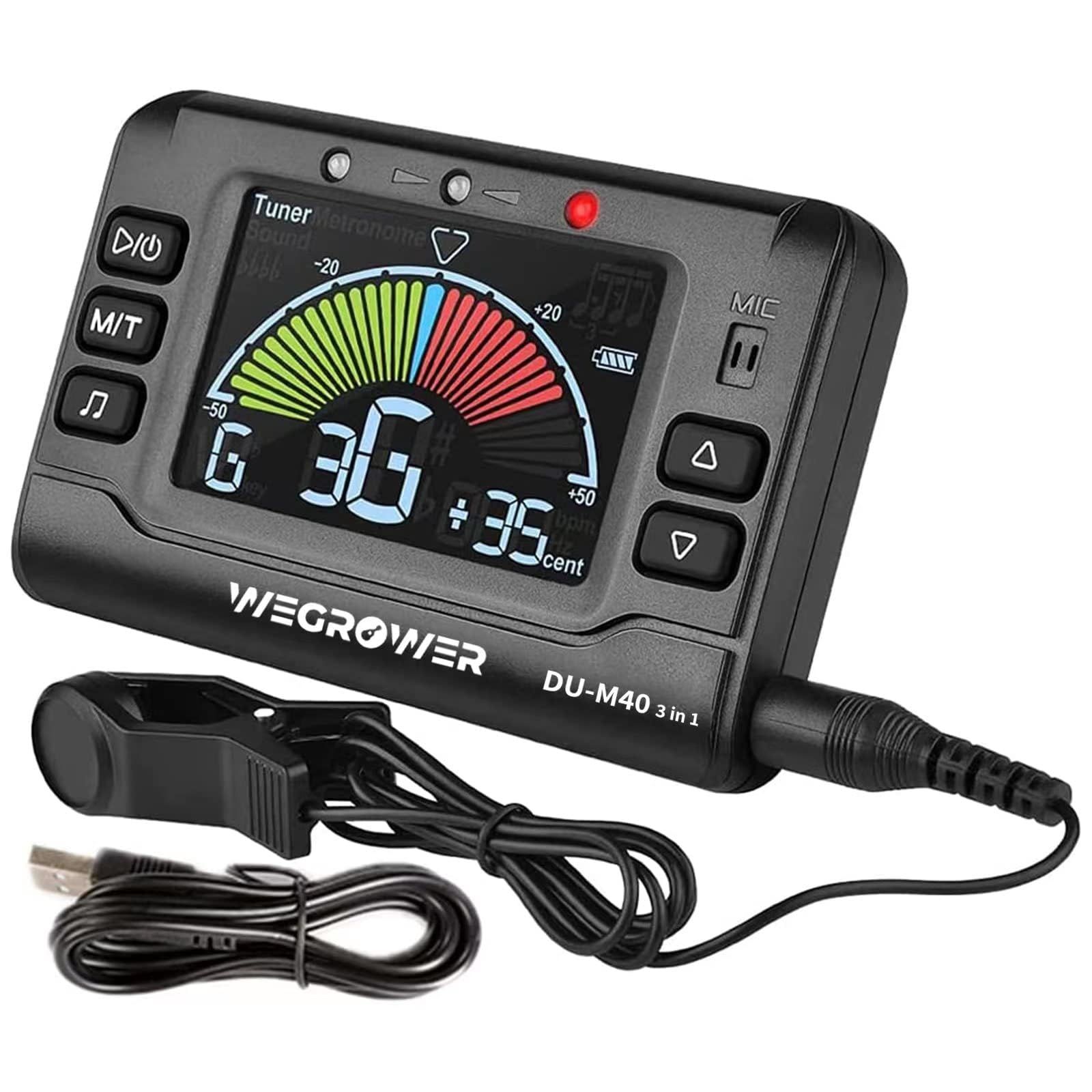
Wegrower 3-in-1

Wegrower 3-in-1

Compact all-in-one

Customer rating 4.5/5
Check Price

Worth Noting

  • Tuning can be inconsistent on certain strings, particularly lower ones
Durability
Solid build
Tempo Range
30–250 BPM
Tuner Accuracy
A0–C8 range
Rechargeable Battery
Yes (Li-Po)
Read the full review

The Wegrower's color LCD stays bright and readable during practice, and the build holds up to regular handling. Its tuner and metronome cover the range guitar and violin learners practice at, from slow first-position work to faster passages. Battery life lasts about four hours, which caps extended practice sessions.

Bottom line: The Wegrower fits guitar and violin learners practicing at home who want a compact, budget-friendly combo for their daily routine.

#9

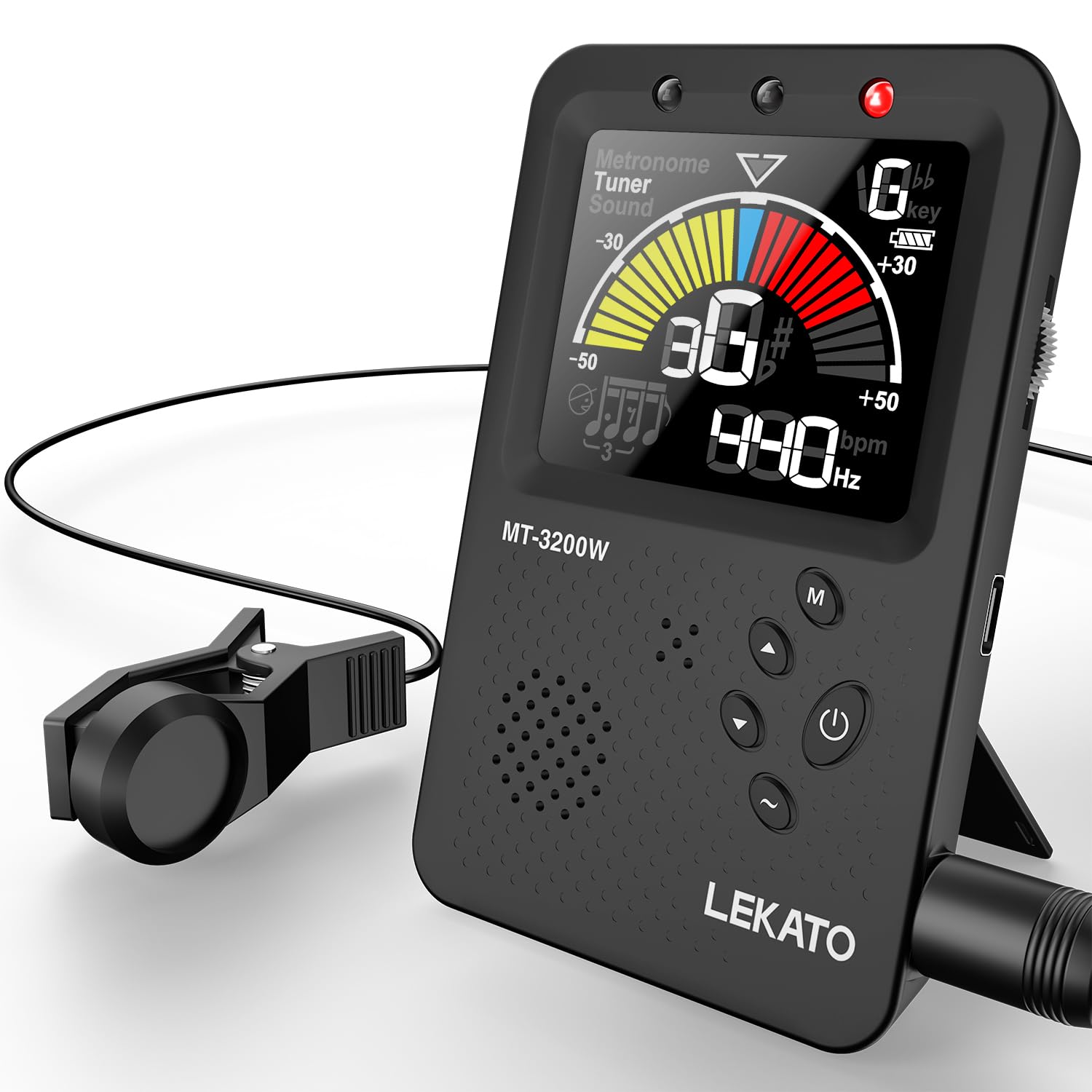
LEKATO 3-in-1

LEKATO 3-in-1

Rechargeable combo

Customer rating 4.5/5
Check Price

Worth Noting

  • On some strings the tuner can call a note slightly off, which matters most for players working on exact intonation.
Durability
Solid build
Tempo Range
30–250 BPM
Tuner Accuracy
A0–C8 range
Rechargeable Battery
Yes (Li-Po)
Read the full review

USB charging plus a pickup clip and cable in the box let practice start immediately, and the color LCD keeps the interface clear. For steady rhythm work this fits well. But the tuner can drift from accurate pitch on some strings, so players needing precise intonation should look to a dedicated tuner.

Bottom line: Best for students who want a rechargeable tuner/metronome with the essentials included and don't demand concert-level tuning accuracy.

#10

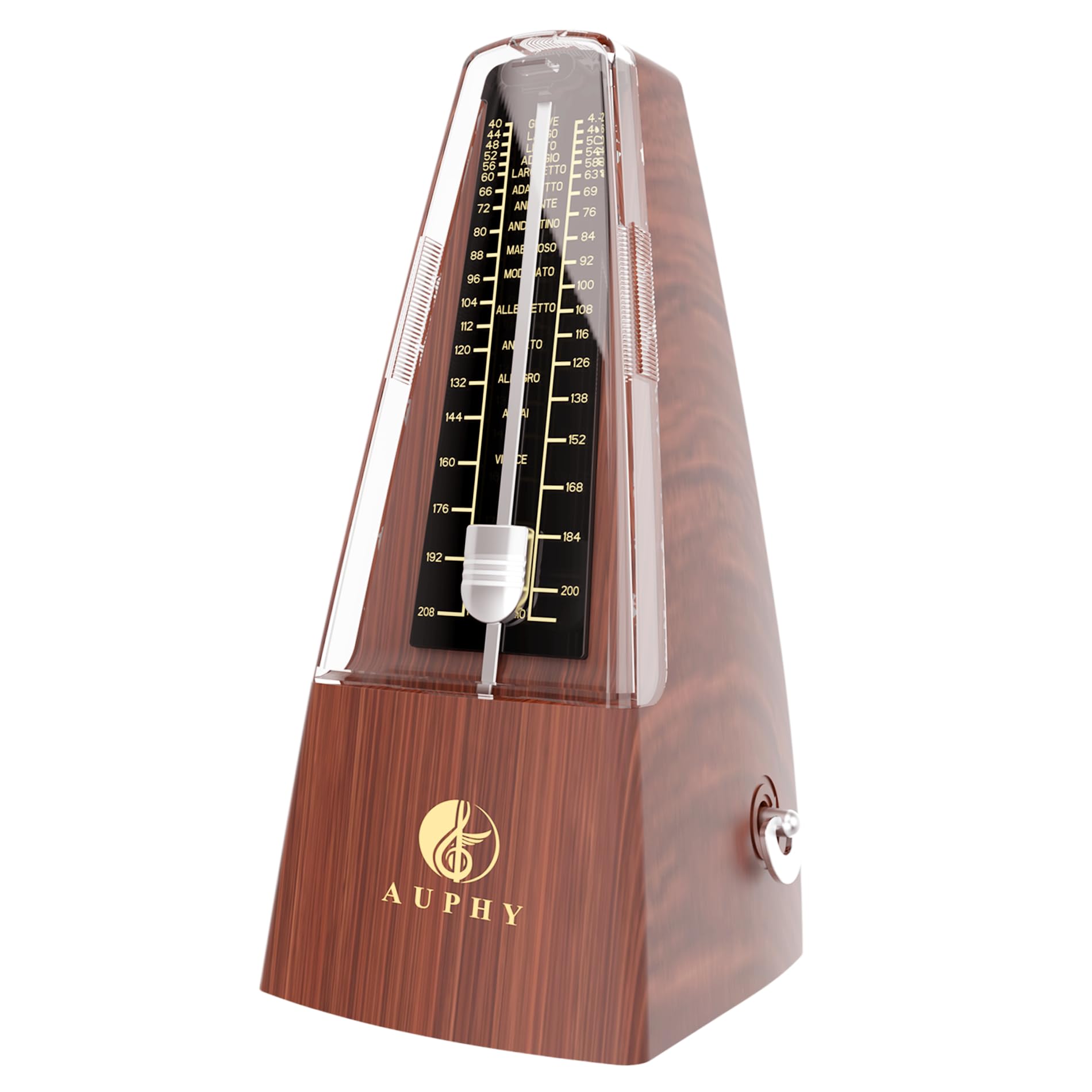
AUPHY M350

AUPHY M350

Accent bell

Customer rating 4.4/5
Check Price

Worth Noting

  • Manual winding is required
Durability
—
Tempo Range
40–208 BPM
Tuner Accuracy
—
Rechargeable Battery
No (wind-up)
Read the full review

Accent bell modes for 0, 2, 3, 4, and 6 beats suit rhythm practice, backed by a metal movement and a 40–208 BPM span. Confirmation of consistent timekeeping and long-term build across units is still pending — a reasonable bet for tactile-mechanical fans, a gamble when certainty matters.

Bottom line: Best for students drawn to the tactile wind-up who accept that long-term timekeeping isn't yet confirmed — quartz or a reviewed mechanical alternative carries less guesswork.

#11

BOSS DB-30

BOSS DB-30
Customer rating 4.4/5
Check Price

Worth Noting

  • A premium price for a metronome alone
Read the full review

The DB-30 is a dedicated digital metronome from BOSS, a name familiar from countless pedalboards, with play-along patterns and odd time signatures that suit drummers and progressive players. It earns a place here on brand reputation and feature set, not on verified owner feedback — no review content exists to confirm real-world durability or timing accuracy.

Bottom line: Best for drummers and progressive players who already own a tuner and want play-along patterns from a familiar stage-gear brand.

#12

Ueteto Mechanical

Ueteto Mechanical

Budget mechanical

Customer rating 4.4/5
Check Price

Worth Noting

  • In a quiet practice room the mechanical click is sharp and loud
Durability
Plastic housing
Tempo Range
40–208 BPM
Tuner Accuracy
—
Rechargeable Battery
No (wind-up)
Read the full review

The Ueteto gives students an authentic wind-up metronome with metal and brass parts and a dial simple enough to set in seconds — a gratifying feel for daily home practice. The plastic housing and occasional timing drift on some units make it a budget pick for beginners who accept that trade; students needing long-term durability in a classroom should step up to the pricier mechanical.

Bottom line: A sound first metronome for beginners who want the tactile wind-up ritual on a tight budget and don't mind plastic; students expecting years of daily use should spend more on the sturdier mechanical pick.

#13

Ulumac Aroma

Ulumac Aroma

Basic combo

Customer rating 4.4/5
Check Price

Worth Noting

  • On low strings like the guitar's E, the tuner can miss the note
Durability
Solid build
Tempo Range
30–260 BPM
Tuner Accuracy
A0–C8 range
Rechargeable Battery
No (2 AAA)
Read the full review

Pairing a backlit LCD, 30–260 BPM range, and an A0–C8 tuner at the lowest price in this guide, the Ulumac Aroma covers the essentials for a student building steady timing. Its light 3.84 oz body suits home practice, with tuner pickup the weak link keeping it below the costlier models. Budget-minded beginners get a working trio without stretching funds.

Bottom line: Best for a budget-conscious student practicing a single instrument at home; choose the tier above if the setup doubles as a performance tool.

How to Choose

Tempo Range

Students spend most practice time between 40 and 200 BPM, so any unit spanning that range covers standard needs. Where models differ is fine adjustment: a dial that moves in single-beat steps supports gradual tempo increases during drills, while coarse jumps make slow ramps awkward.

Rechargeable Battery

Rechargeable models offer obvious convenience — no battery swaps mid-practice. The trade-off is that their lithium cells age faster, and reviews commonly report units that stop holding a charge after a few months.

A replaceable AA or AAA battery is less convenient but never fails this way, which is why several budget picks stick with disposable cells. If you practice for long stretches daily, favor battery reliability over the appeal of USB charging.

Tuner Accuracy

Combination tuner-metronomes save space, but tuning accuracy varies by note. The weakest point is almost always the low strings, where budget units and even some mid-range models struggle to register a steady pitch.

Instruments with wide pitch ranges, like guitars and basses, benefit most from a unit rated at ±0.1 cent accuracy. A cheaper ±0.5 cent spec is fine for casual tuning, but the precision gap becomes audible when tuning against other players.

Sound Volume and Quality

Sound quality is subjective but sharply divides student satisfaction. A shrill, high-pitched beep becomes grating over a thirty-minute session, while a softer tick or mechanical click fades into the background.

Volume matters less than comfort — a loud unit you avoid using is worth less than a moderate one you'll actually practice with. Compact units with rear-facing speakers also lose output when placed on soft surfaces, so pick a spot on a hard, flat stand.

Durability

Durability shows up as housing material and warranty length, not sticker claims. Budget units with thin plastic cases are the ones that break after a few months, while models backed by a multi-year warranty tend to hold up.

Mechanical metronomes carry their own risk. The winding movement can last for decades, but a brittle outer case cracks if knocked off a music stand, so treat casing material as a durability signal rather than a style detail.

Frequently Asked Questions