Math Learning Product Guide

4 Best Math Games for 2Nd Grade in 2026: Match Their Skill Level

Find math games that match a 2nd grader's actual skill level—not the 'ages 4+' label on the box, but the addition fluency and money skills they need.

4 Best Math Games for 2Nd Grade in 2026: Match Their Skill Level editorial illustration

Most 'math games for kids' stop at counting to 10 or simple one-digit addition. A 2nd grader working on place value, money, and two-digit problems quickly outgrows the cute bingo set that was a hit in kindergarten. The result is a shelf of games that looked educational but fail to challenge an emerging math mind.

The gap between marketing labels and actual skill coverage is real. A game that says 'ages 4+' might be perfect for number recognition, but it won't help your 7-year-old practice making change or comparing two-digit numbers. Picking the right game means reading past the age range and looking at the specific operations encoded in the gameplay.

This guide sorts through the options to find games that match a 2nd grader's actual classroom skills—addition and subtraction fluency, coin counting, and working with numbers up to 100—while still being fun enough that kids ask to play again.

#1

Sum Swamp

Sum Swamp

Addition/subtraction practice

Customer rating 4.8/5
Check Price

Worth Noting

  • A child already quick with facts up to 18 won't find new arithmetic
  • Needs another player, so a single child can't drill facts alone whenever the urge strikes.
Players
2-4
Age Range
5+
Game Type
Board game
Play Time
10 min
Read the full review

Sum Swamp turns simple fact practice into a race across a swamp board, where dice rolls decide whether you add, subtract, or hop an even or odd shortcut. Each roll pushes kids through another calculation, and rounds wrap in about 10 minutes — short enough to replay several times, which is where the repetition pays off. The even/odd dice add a genuine choice on top of the arithmetic, so confident counters can feel clever while newer players simply practice the basics.

This fits families with a couple of children or a classroom math center where addition and subtraction fluency is the goal. Because it covers only those facts plus even/odd logic, it won't build money, place value, or time skills on its own — pair it with another game in this set when the full second-grade range matters. Simple rules mean a first-timer is ready in under a minute, and quick rounds with generous replay let siblings of slightly different ages play together comfortably.

Bottom line: This is the game to keep on the shelf for any family or classroom that wants fact practice kids actually enjoy playing.

#2

Money Bags

Money Bags

Money skills

Customer rating 4.7/5
Check Price

Worth Noting

  • The coin exchange loop can feel repetitive after several plays for quick learners.
Players
2-4
Age Range
7+
Game Type
Board game
Play Time
15 min
Read the full review

Money Bags is the only game in this set that teaches counting coins and making change — players collect and exchange coins and bills as they move around a path to the finish. Rounds wrap up in about 15 minutes, which fits a second grader's attention span and makes repeat play easy. It suits homeschooling families and teachers covering financial literacy; kids engage with the exchange mechanic and pick up coin values quickly. Unlike the addition-focused top pick, this one stays centered on money, so families wanting place value or time practice will need a second game.

Bottom line: Choose Money Bags when coin values and making change are the goal; pair it with the addition-focused top pick for full 2nd-grade coverage.

#3

Math War Cards

Math War Cards

Fact practice on go

Customer rating 4.7/5
Check Price

Worth Noting

  • Cards run larger and less symmetric than a standard deck, making shuffling awkward during quick rounds.
Players
2+
Age Range
5-7
Game Type
Card game
Play Time
5 min
Read the full review

Math War turns addition and subtraction fact practice into a rapid war-style card duel — players flip cards, compare sums, and the higher total takes the pair, wrapping rounds in about five minutes. It keeps the same fact-reinforcement goal as the top-pick board game but removes the board and pieces entirely, so sessions stay snappy, portable, and easy to repeat.

Best for families who want a budget-friendly drill to slip into a travel bag or run as a classroom warm-up alongside a fuller board game. Kids who need extra fluency work will benefit most; those expecting rich game mechanisms will find the oversized cards feel closer to flashcards than a full game.

Spread the cards face-down on a flat surface to compare sums during quick rounds — keeps hands free and the pace fast.

Bottom line: The cheapest way to fold daily fact practice into a family routine — best used alongside a fuller board game rather than on its own.

#4

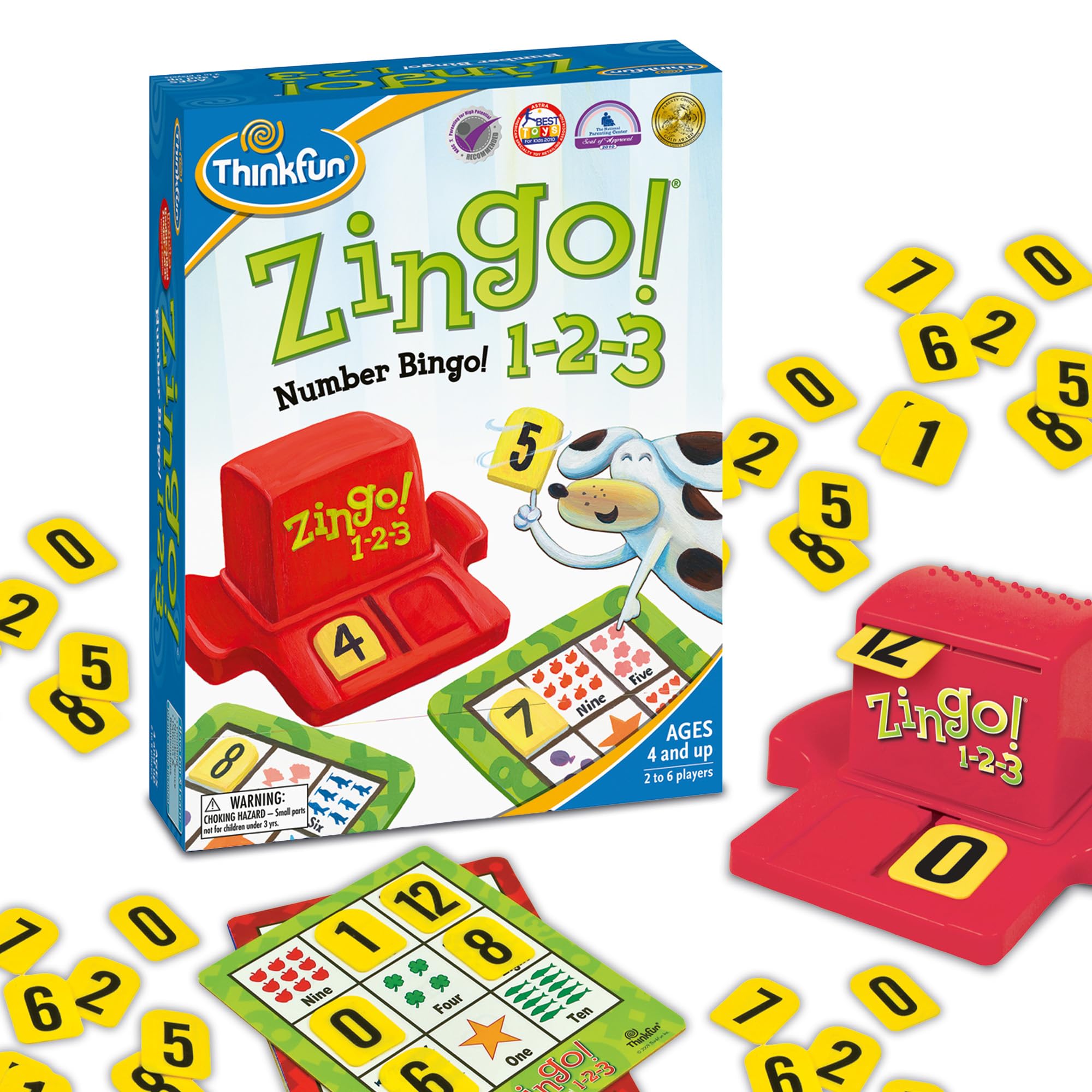
Zingo 1-2-3

Zingo 1-2-3

Pre-2nd graders

Customer rating 4.8/5
Check Price

Worth Noting

  • For second graders seeking independent addition fluency, picture-based tiles don't stretch the skill much.
Players
2-6
Age Range
4+
Game Type
Bingo game
Play Time
10 min
Read the full review

Fast-paced tiles keep rounds under five minutes, engaging mixed-age groups as younger players count dots while older ones read numerals. But the addition side leans on picture-based prompts that feel basic for seven-year-olds, so it suits a younger sibling or a child catching up, not as the main addition practice for a second grader.

Bottom line: For a mixed-age bingo night where a younger sibling builds counting while an older child gets light review, this fits — just don't expect it to carry second-grade fluency.

How to Choose

Skills Covered

The single most important factor is whether the game's operations match what your child is learning in school. 2nd grade math typically covers addition and subtraction up to 100, place value, time, money, and simple word problems. Many games stop at facts up to 10, which is a kindergarten and 1st grade target. If a game only practices sums to 10, a 2nd grader will breeze through it and lose interest fast.

Look for games that integrate multiple skills or offer depth. Sum Swamp includes even/odd dice rolls, which adds a layer beyond simple computation. Money Bags is unique because it teaches coin values and making change—a skill that's hard to practice without real or play money. If you want comprehensive coverage, you may need two games: one for operations and one for money.

Age Range

Age labels are a starting point, not a strict guide. A game labeled 4+ (like Zingo 1-2-3) focuses on number recognition and counting, which a 2nd grader has already mastered. Conversely, a game labeled 5+ (like Sum Swamp) may still be challenging because it requires addition and subtraction skills that grow with practice.

The real test is whether your child can play without constant failure. A game that's too easy offers no practice; one that's too hard frustrates and gets abandoned. Aim for games rated for your child's age or younger, but check the skills column to ensure they target the operations you're working on.

Number of Players

Consider who will be playing. Games with a 2-4 player range (like Sum Swamp and Money Bags) work well for siblings and classroom centers. A 2-player minimum is fine for parent-child games, but it can exclude siblings or friends. Conversely, games with a 6-player limit (like Zingo) are great for family game nights or small groups.

The player count also affects replayability. Two-player card games like Math War are quick and easy for a one-on-one session before dinner. Board games with more players often generate more social interaction, which keeps kids engaged longer, but they also demand more sitting and attention.

Game Type

Board games offer structure and a clear endpoint, which helps kids feel a sense of progress. They're ideal for family game nights and classroom time blocks. Card games are more portable and faster to set up, making them better for travel, waiting rooms, or quick practice sessions. Active games (like Mathswatters, which involves swatting answers) suit high-energy kids who struggle to sit still.

The tradeoff is depth. Board games often incorporate more math concepts because they have boards, dice, and spaces to build on. Card games are more stripped down—they drill one skill. A card game is a fantastic tool for fluency; a board game is better for sustained practice and social play.

Play Time

A 10-15 minute play time is the sweet spot for 2nd graders. It's long enough to get meaningful practice but short enough to hold attention and fit into a busy evening. Games that run longer than 20 minutes risk losing a child's focus, especially if they're not deeply invested in the theme.

Shorter games have a hidden benefit: they get played more often. A 10-minute game can be played three times in one sitting, multiplying repetition and practice. Longer games, by contrast, might get played once and then sit on the shelf because of the time commitment.

Frequently Asked Questions