Homeschool Product Guide

10 Best Homeschool Science Experiment Kits of 2026: Real Experiments

Homeschool science experiment kits that back their '100+' claims with real in-box work — matched to your child's age and science goals.

10 Best Homeschool Science Experiment Kits of 2026: Real Experiments editorial illustration

The '100+ experiments' line on nearly every box hides a simpler truth: most kits ship 15 to 20 real activities, then pad the count with a bonus booklet that assumes you have baking soda and vinegar in the pantry. Learn to read that split and choosing becomes far easier.

The bigger decision is scope. A kit that spans geology, weather, and basic chemistry gives you breadth for a whole school year, while a chemistry-focused box delivers real lab tools and deeper lessons for a dedicated semester. Neither is better — they serve different months of your homeschool.

Age fit matters just as much. A 4-year-old and a 12-year-old need completely different kits, and the right match keeps frustration low and curiosity high. Match the kit to your child's age and your teaching goals, and the box earns its place on the shelf.

#1

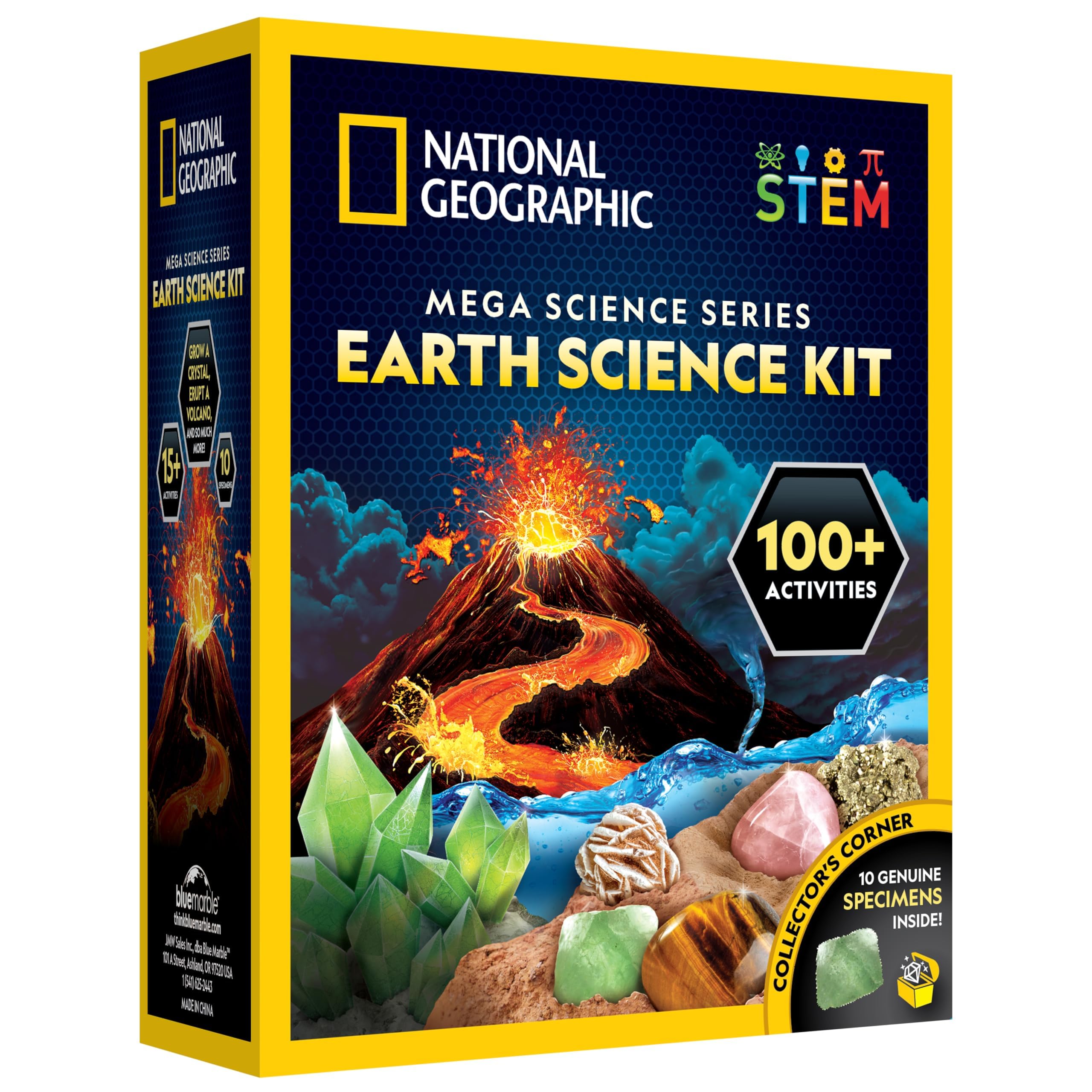
Nat Geo Earth Science Kit
Nat Geo Earth Science Kit

Earth science breadth

Customer rating 4.7/5
Check Price

Worth Noting

  • Around 15 core experiments ship in-box; the '100+ activities' title counts a booklet that assumes a stocked kitchen.
  • Samples geology, weather, and chemistry without going deep into any one subject
Science Topics
Geology, weather, chemistry
Age & Supervision
8-12, parent prep
Supplies Included
Full kit included
In-Box Experiments
About 15 in-box
Read the full review

One box spans geology, weather, and chemistry — a vinegar-and-bicarb volcano, crystal-growing jars, two dig sites, and tornado tubes — and the components arrive complete, free of the missing-component flags other kits in this set carry.

The volcano holds attention for the better part of an afternoon, while homeschool families thread the kit through weeks of lessons as a year-round earth-science spine. The full-color learning guide ties each activity to a concept kids can name later, giving hands-on time an anchor beyond the reaction itself.

This lands best with grades 1-6 homeschoolers covering earth science, and it gifts cleanly to kids drawn to geology and digging. Full directions cover only a handful of experiments, so a parent who enjoys a few minutes of prep carries the first sessions before kids work independently — a fair split that fades as familiar activities repeat.

Bottom line: The broadest earth-science sweep in this set, with components that arrive complete — best for a parent who enjoys a few minutes of prep before handing the tray to a curious 8-12 year old.

#2

Nat Geo Amazing Chem Set

Nat Geo Amazing Chem Set

Chemistry semester

Customer rating 4.7/5
Check Price

Worth Noting

Science Topics
Chemistry
Age & Supervision
8+, light help
Supplies Included
Mostly complete
In-Box Experiments
15 in-box, 85 bonus
Read the full review

Genuine lab tools set this apart: real test tubes, beakers, and pipettes make it the only candidate here that treats chemistry as a hands-on practice rather than a one-and-done craft. Where the earth-science kit spreads across geology, weather, and one volcano, this set narrows to a single strand and goes further — 15 in-box experiments plus 85 bonus activities.

For a homeschool family mapping out a chemistry-focused semester with kids 8-12, this box carries the workload well. It skips earth science and physics entirely, so the earth kit serves broader coverage better. Since a minority of boxes miss an item, a contents check on arrival keeps the first session on schedule.

Bottom line: For a chemistry-focused homeschool semester with kids 8-12, this pairs with the earth kit as the deeper option — real tools and a genuine 100+ slate, kept running by a quick contents check on arrival.

#3

Doctor Jupiter My First Kit

Doctor Jupiter My First Kit

Preschool first kit

Customer rating 4.6/5
Check Price

Worth Noting

  • A kit can arrive short on a supply, pausing that first experiment until a replacement ships.
Science Topics
Intro chemistry
Age & Supervision
4+, close help
Supplies Included
Occasionally short
In-Box Experiments
100+ total
Read the full review

The illustrated step-by-step manual is the gentlest entry point in this lineup, guiding 4-6 year olds through household-ingredient experiments that young kids adore. Where the top pick spans geology and weather for older elementary kids, this kit stays on one lane: the first science experience, with beakers, a conical flask, safety goggles, and food colors sized for small hands.

Right for parents of 4-6 year olds who want a low-stress first kit, and for homeschool co-ops running a preschool group — household ingredients handle most of the setup. Buyers comfortable with plastic labware that feels light for the price get the clearest introduction to science; an 8+ child wanting deeper chemistry should reach for the larger budget kit in this set instead.

Bottom line: The right starter kit for a 4-6 year old's first science gift, though the light plastic labware keeps expectations at introductory rather than lab-grade.

#4

Learning Resources Primary Lab

Learning Resources Primary Lab

Preschool observation lab

Customer rating 4.7/5
Check Price

Worth Noting

  • Several experiment cards need common kitchen ingredients you must supply yourself
Science Topics
Observation STEM
Age & Supervision
3-6, close help
Supplies Included
Needs kitchen staples
In-Box Experiments
20+ activities
Read the full review

Twenty-two chunky, durable tools — flasks, test tubes, droppers, tweezers, and a magnifier — fit preschool hands and last through years of indoor use. Unlike the gentle first kit, whose experiments lean on household supplies, this set's real plastic labware drives observation, prediction, and fine-motor practice through 20+ activity cards.

Cards run basic and several need common kitchen ingredients you'll supply, so this plays as sensory exploration over dramatic reactions — the right choice for parents who value safety and skill-building, not wow-factor, for 3-6 year olds.

Keep baking soda, vinegar, and oil in the pantry so the full card set runs without extra trips.

Bottom line: For 3-6 year olds at home, this is the lab centerpiece that keeps a shelf spot long after the activity cards are done.

#5

Thames & Kosmos Ooze Labs

Thames & Kosmos Ooze Labs

Reusable lab station

Customer rating 4.6/5
Check Price

Worth Noting

  • Some test tubes crack on first handling
  • Several of the 20 experiments need extra ingredients you buy separately
Science Topics
Chemistry, slime
Age & Supervision
6+, light help
Supplies Included
Some extras needed
In-Box Experiments
20 in-box
Read the full review

The Ooze Labs kit is the one permanent centerpiece in this set — a 57-piece lab station with clip-on experiment cards that stays assembled between sessions. Kids who love slime and potion-making come back to it daily, and the equipment carries across projects, so parents aren't rebuying supplies each quarter.

Built for homeschoolers 6 and up who value equipment reuse over raw experiment count, it suits families wanting a lasting 'wow-factor' station more than a disposable project box. The honest boundaries: only 20 experiments ship, several need extra ingredients you supply, and a few test tubes can crack on first use — a foundation for repeat sessions, not a standalone curriculum.

Bottom line: Right for families who want a lasting science centerpiece their kids return to daily — not for buyers measuring value by experiment count.

#6

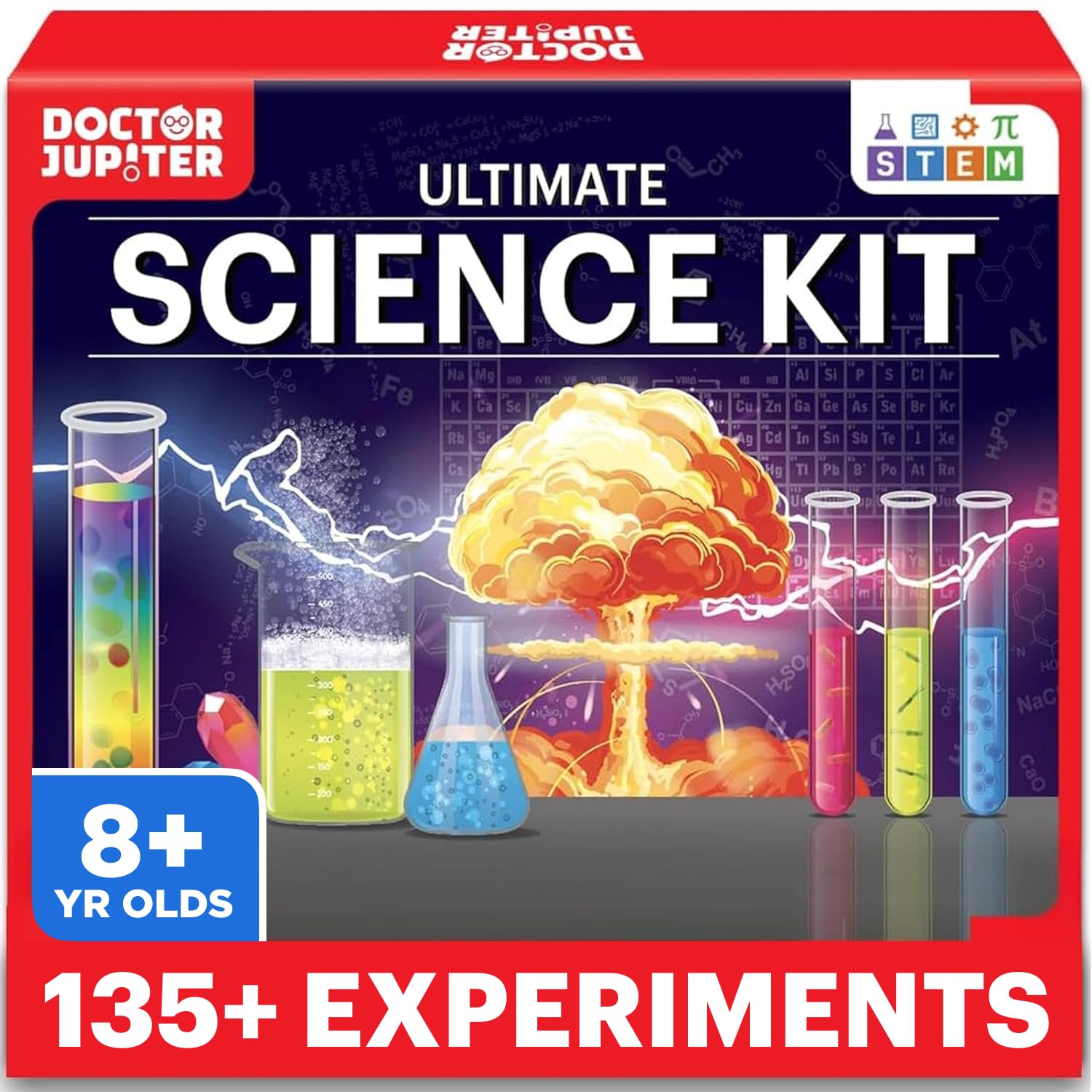
Doctor Jupiter Ultimate Kit

Doctor Jupiter Ultimate Kit

Budget experiment volume

Customer rating 4.7/5
Check Price

Worth Noting

  • Some buyers find the mid-range price hard to justify against lower-cost kits with longer activity lists.
Science Topics
Chemistry, physics
Age & Supervision
8+, modest help
Supplies Included
Complete in-box
In-Box Experiments
135+ total
Read the full review

The Doctor Jupiter Ultimate Kit offers the strongest value per experiment in this set — 135+ activities at a mid-range price, with complete in-box contents so the first session starts immediately. Clear illustrated steps let an 8-year-old run color-change, glowing-water, and crystal projects with light help, a step up from the gentle My First kit aimed at 4-6 year olds.

It suits homeschoolers 8+ who want the most projects per dollar and can supervise; reactions can get messy, so plan for adult cleanup between experiments.

Bottom line: Matches an 8+ homeschooler who values the most experiments per dollar and a full in-box start.

#7

UNGLINGA 70-Experiment Kit

UNGLINGA 70-Experiment Kit

Budget variety

Customer rating 4.6/5
Check Price

Worth Noting

  • Fizzy-tablet reactions may not come off as shown, and the manual's wording can be unclear.
Science Topics
Chemistry, physics, earth
Age & Supervision
8+, light help
Supplies Included
Complete in-box
In-Box Experiments
70 total
Read the full review

Priced gently for a starter chemistry experience, this 70-project kit gives curious 8-and-ups a broad first taste of reactions, from volcanoes to homemade crystals. That breadth allows margin for error: fizzy-tablet experiments may not perform as written, and the manual's wording can muddy steps — a fine match for patient families, less so for kids who bail at a fizzle.

Bottom line: Suits a patient first-time chemist who enjoys trial-and-error breadth over guaranteed drama — steer a flat fizzer into a teaching moment.

#8

UNGLINGA 150-Experiment Kit

UNGLINGA 150-Experiment Kit

Max experiment count

Customer rating 4.7/5
Check Price

Worth Noting

  • The manual's wording can confuse kids on some experiments, so adult help may be needed.
Science Topics
Earth, chemistry, physics
Age & Supervision
8+, light help
Supplies Included
Occasionally short
In-Box Experiments
150 total
Read the full review

This kit delivers the strongest experiment-per-dollar value here, with 150 fast activities across chemistry, physics, and surface tension that keep 8+ kids busy across multiple sittings. The tradeoff is polish: the manual is loosely translated, so a parent may need to interpret some steps, and the occasional activity falls flat.

Bottom line: Budget-minded homeschoolers get the highest experiment count per dollar here, provided an adult is on hand to interpret the loosely translated steps.

#9

Kuovei 80-Lab Experiment Kit

Kuovei 80-Lab Experiment Kit

Young role-play

Customer rating 4.6/5
Check Price

Worth Noting

  • Some guidance cards don't match the listed parts, and a few fizzing reactions may not perform.
Science Topics
Chemistry, role-play
Age & Supervision
3+, close help
Supplies Included
Complete, plus extra
In-Box Experiments
80 total
Read the full review

Real-looking lab gear — goggles, test tubes, petri dishes — plus a name badge turn 3-6 year olds into pretend chemists, and every described piece arrives in the box. The tradeoff: some guidance cards don't match the listed parts and a few fizzing reactions may not perform, so it suits dress-up-first role-play over rigorous experiment detail.

Bottom line: Fits gift-givers of preschool-age science fans who want a visual, dress-up-first lab experience rather than strict experiment accuracy.

#10

EZ BioResearch Bacteria Kit

EZ BioResearch Bacteria Kit

Science-fair biology

Customer rating 4.4/5
Check Price

Worth Noting

  • Bacterial growth can be inconsistent
Science Topics
Microbiology
Age & Supervision
13+, independent
Supplies Included
Complete, ready-to-use
In-Box Experiments
10 agar plates
Read the full review

An authentic germ-growing project the other picks can't replicate — ten pre-poured agar plates and sterile swabs arrive ready to use. Some packs ship contaminated plates, so sterility varies, and a warm incubator (not included) is required for growth to appear. This suits a focused 13+ science-fair project rather than a family's general experiment box.

Bottom line: Suits a 13+ teen's focused science-fair biology project, where the authenticity of real microbiology outweighs the variability.

How to Choose

In-Box Experiments vs. Bonus Booklet

Most kits advertised as '100+ experiments' ship 15 to 20 finished activities; the rest live in a bonus booklet that assumes you have baking soda and vinegar on hand. Count the in-box activities first, then check how many bonus ideas you can actually run.

A 20-experiment kit with complete supplies often delivers more finished lessons than a 100+ box that depends on a stocked kitchen. For a busy homeschool week, ready-to-run activities beat a long list you cannot start until a grocery run.

Supplies and Extra Ingredients

Missing-component reports recur across nearly every popular kit, so a five-minute contents check on arrival prevents a derailed first lesson. Several kits also omit common ingredients or safety items like gloves you will need to buy.

Some kits lean on household ingredients to keep the box light, which is fine when known up front. The real risk is a kit that lists an experiment you cannot run on launch day because a key item was never included.

Age Range and Supervision

Kits for ages 3 to 6 lean toward observation and role-play, needing an adult to run most activities. From age 8 up, kids follow illustrated steps with intermittent help, but chemical reactions still warrant an adult nearby.

A box marked ages 4+ may still ship thin plastic labware that an energetic 5-year-old can crack.

Instruction Clarity

Illustrated step-by-step guides let kids work with minimal adult reading help, while thin or poorly translated manuals turn every experiment into a parent puzzle. If your child works independently, prioritize clear, visual instructions.

Translation quality varies widely; a manual written in broken English can derail an otherwise well-supplied box. Skim the instruction sample before buying when independence is the goal.

Science Topics Covered

A breadth-first kit covering geology, weather, and basic chemistry supports a general science year, while a single-topic kit suits a dedicated semester or science-fair project.

The same volcano appears across earth and chemistry kits, so read the full topic list rather than the cover. A single-focus kit like a microbiology set needs follow-up supplies and a warm incubator absent from the box.

Frequently Asked Questions