Homeschool Product Guide

9 Best Homeschool Planner 2026: Built for More Than One Child

Which homeschool planners keep multiple grade levels organized without cramped daily boxes, and which skip grade and attendance tracking entirely.

9 Best Homeschool Planner 2026: Built for More Than One Child editorial illustration

Many homeschool planners are teacher planners with fresh covers. The layout feels familiar up front, but the pages reveal the gap fast: daily boxes sized for one classroom teacher, not a parent juggling three grade levels. A large page count rarely tells you how much room a single day actually gets.

Two features settle most decisions. Whether the planner is dated to a traditional school year or left undated matters when your calendar begins mid-year or runs through summer breaks. And per-day writing space decides whether one book can hold assignments for several students or just one.

Record-keeping pages - grades, attendance, curriculum tracking - round out the picture when you want the full year in one volume. The planner that fits best depends on family size and schedule, not cover design, and getting the fit right is what keeps you from replacing the book mid-year.

#1

schoolnest Minimalist Planner

schoolnest Minimalist Planner

Multi-child planning

Customer rating 4.6/5
Check Price

Worth Noting

  • No pre-printed grade-book or seating-chart pages, so recording letter grades calls for a separate record.
  • Planners who expect ready-made dated grids must hand-write dates and week numbers in the undated layout.
Writing Space
Customizable weekly layout
Record Keeping
Curriculum, attendance, book lists
Binding & Paper
—
Dated Or Undated
Undated, 12-month
Read the full review

The only purpose-built homeschool planner in this set, schoolnest folds a 12-month undated layout into one system that holds multiple children, curriculum threads, attendance, and book lists in a single 292-page book. Monthly planning pages keep subject progress visible, so a household teaching several elementary students tracks every lesson together instead of keeping separate planners. The undated grid adapts to shifting family routines, and the 8.5-by-11-inch pages leave daily and weekly space that fits a full week of assignments without feeling crowded. Monthly review pages close each block, letting a family note what worked before laying out the next.

This fits committed homeschool parents who want a clean, uncrowded system they control themselves, especially families planning for more than one child. The minimalist undated layout involves writing in dates and week numbers by hand at setup, and no pre-printed grade-book or seating-chart pages appear — homeschoolers who prefer pre-dated grids or ready-made grading will find the open design too loose for their routine.

Block out time to fill in dates and week numbers for the month ahead — the undated layout rewards an upfront session.

Bottom line: This is the planner for homeschool families juggling several children — a single undated book that replaces the pile of separate trackers.
#2

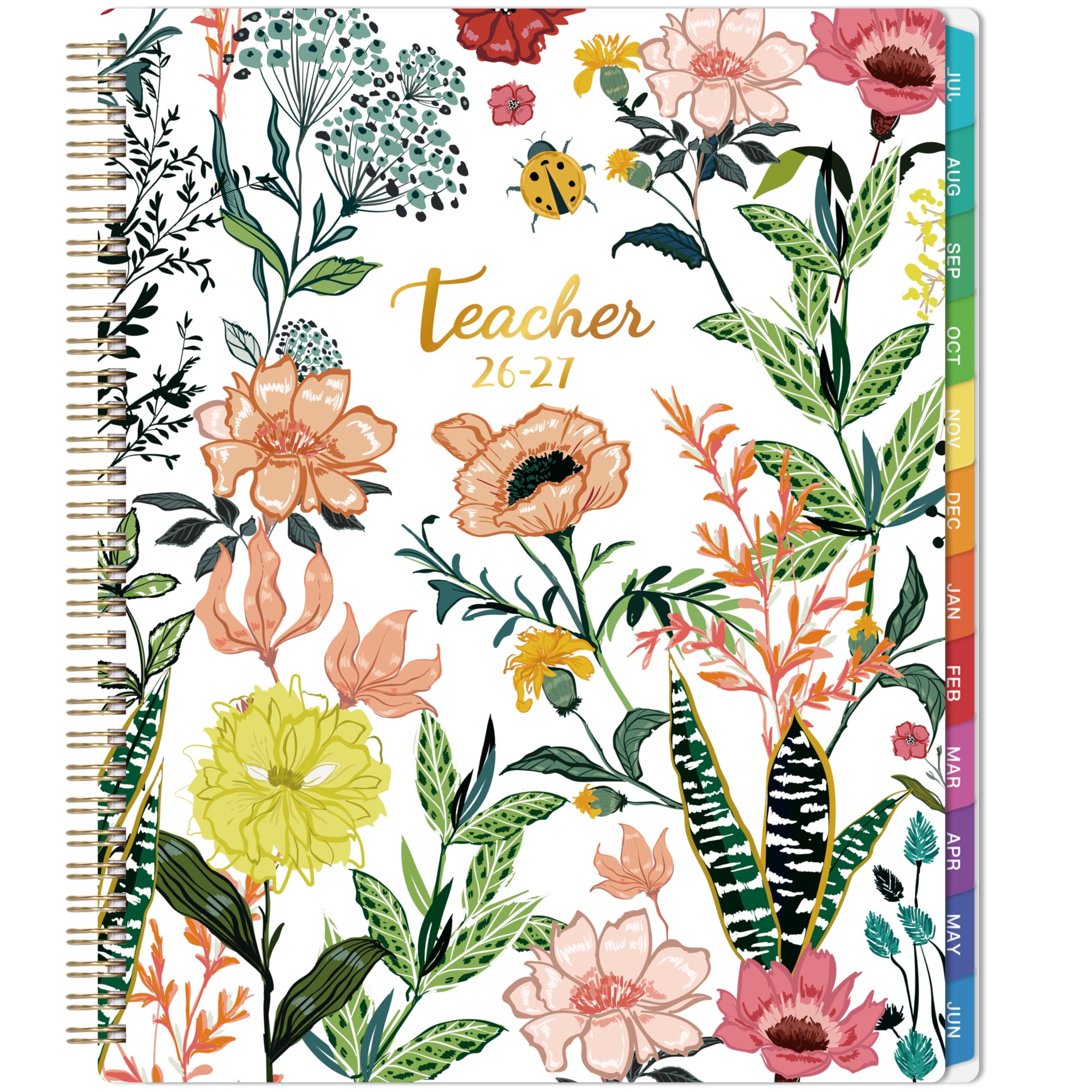
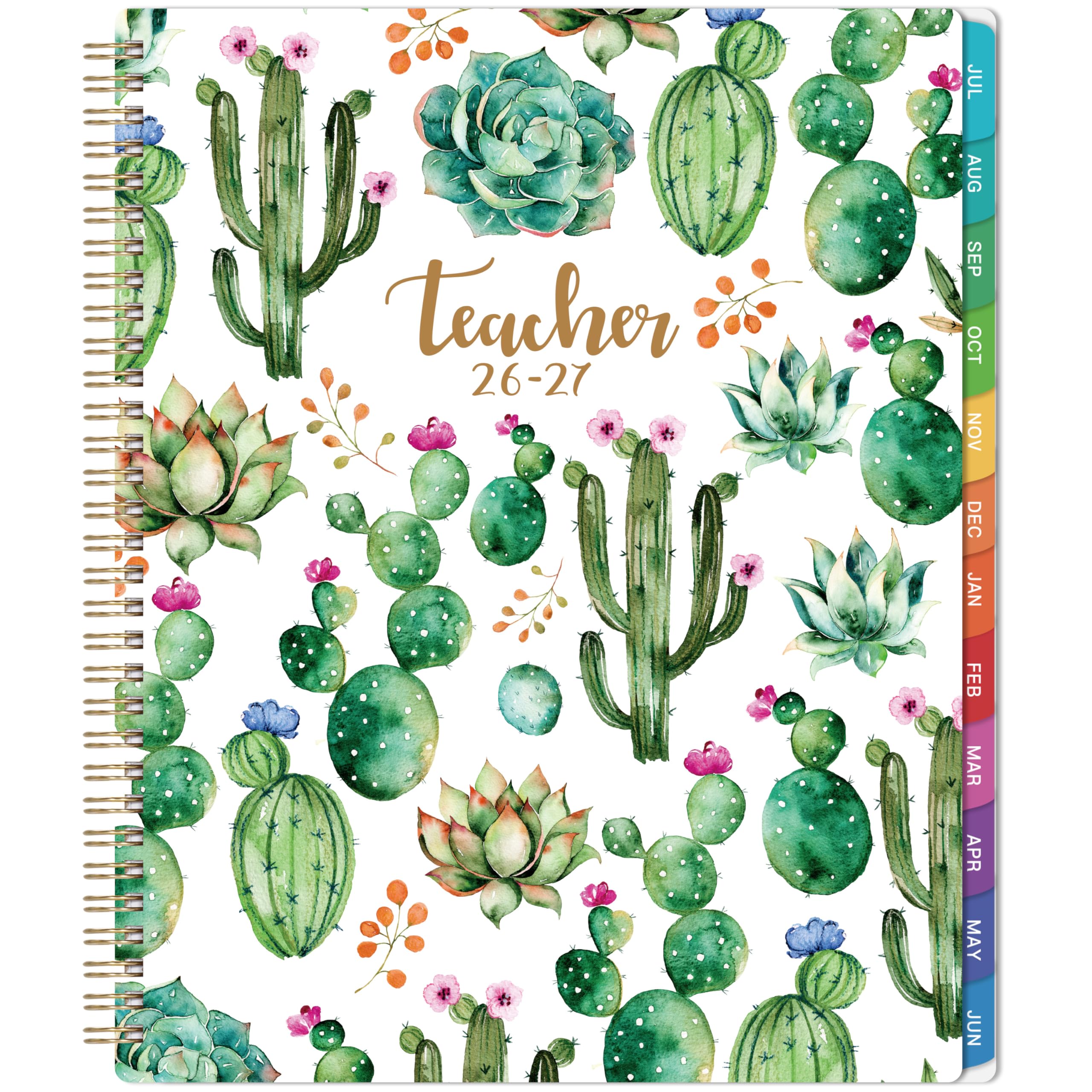
MaaIbok Teacher Planner 2026-27

MaaIbok Teacher Planner 2026-27

Budget all-rounder

Customer rating 4.7/5
Check Price

Worth Noting

  • Fixed weekly day boxes can feel tight when planning many subjects across several children
Writing Space
Room for two grades
Record Keeping
—
Binding & Paper
—
Dated Or Undated
Dated, Jul–Jun
Read the full review

Bankable build quality and clean monthly/weekly pages set this dated planner apart, with enough writing room to lay out two grade levels at once. The sturdy binding holds up across a full school year of daily use, and the familiar teacher-planner format reads instantly as a classroom book — a leaner, lower-cost alternative to the top pick's undated multi-child system.

Best for budget-conscious homeschool parents who want classroom-planner structure without the premium price, and teachers who share one book across home and school. Families planning for one or two students will find the weekly layout comfortable.

Write subject names in shorthand to fit more assignments in each weekly day box.

Bottom line: For homeschool families who want a clean, dated monthly/weekly layout at budget pricing, this covers two grade levels comfortably and earns repeat buyers.

#3

Pepito Homeschool Planner

Pepito Homeschool Planner

Whole-life family

Customer rating 4.6/5
Check Price

Worth Noting

  • Some copies arrive with bent tabs or misprinted pages
  • Daily assignment space fits roughly one child, so multi-child families find it cramped
Writing Space
Fits one child
Record Keeping
Attendance, reading log
Binding & Paper
Gold spiral, 192 pp
Dated Or Undated
Undated, monthly tabs
Read the full review

Where the top pick manages multiple students' academics, this book blends school, meals, goals, and family vision into one undated planner. Monthly tabs open into yearly, monthly, and weekly sections holding meal plans, family vision pages, a reading log, and a field trip planner alongside assignments.

This suits single-child homeschool families who prefer school and home life in one premium undated book. Daily assignment space fits roughly one child, so larger families will find the boxes cramped. Some copies arrive with bent tabs or misprinted pages, and a strict academic-only view may find the family sections surplus.

Plan each daily box for one child's assignments; larger families may want extra pages for siblings.

Bottom line: Best for single-child homeschool families who want school and home life in one premium book; households with several students should choose the schoolnest instead.

#4

Peter Pauper Teacher's Planner

Peter Pauper Teacher's Planner

Record keeping

Customer rating 4.6/5
Check Price

Worth Noting

  • Daily writing boxes can feel tight for very detailed multi-class lesson plans
Writing Space
Modest daily boxes
Record Keeping
Grades, attendance, seating
Binding & Paper
Spiral, 168 pages
Dated Or Undated
Dated, 45-week
Read the full review

The only planner here that bundles a structured 45-week lesson section with seating charts, grade book, and attendance pages into one 168-page spiral book. Where the top pick favors undated flexibility for multiple children, this one keeps a dated rhythm that welcomes structured record keepers.

Parents running co-ops or tracking several classes get grades and attendance beside their lesson plans, and first-year teachers find it easy to customize. Daily writing blocks are modest, so elaborate multi-class entries can feel tight — this book rewards families who keep weekly plans concise.

Keep weekly entries to key points — the daily boxes reward concise plans over lengthy narratives.

Bottom line: The structured pick for homeschoolers who want dated planning with grade and attendance tracking in one book — best when plans stay concise.

#5

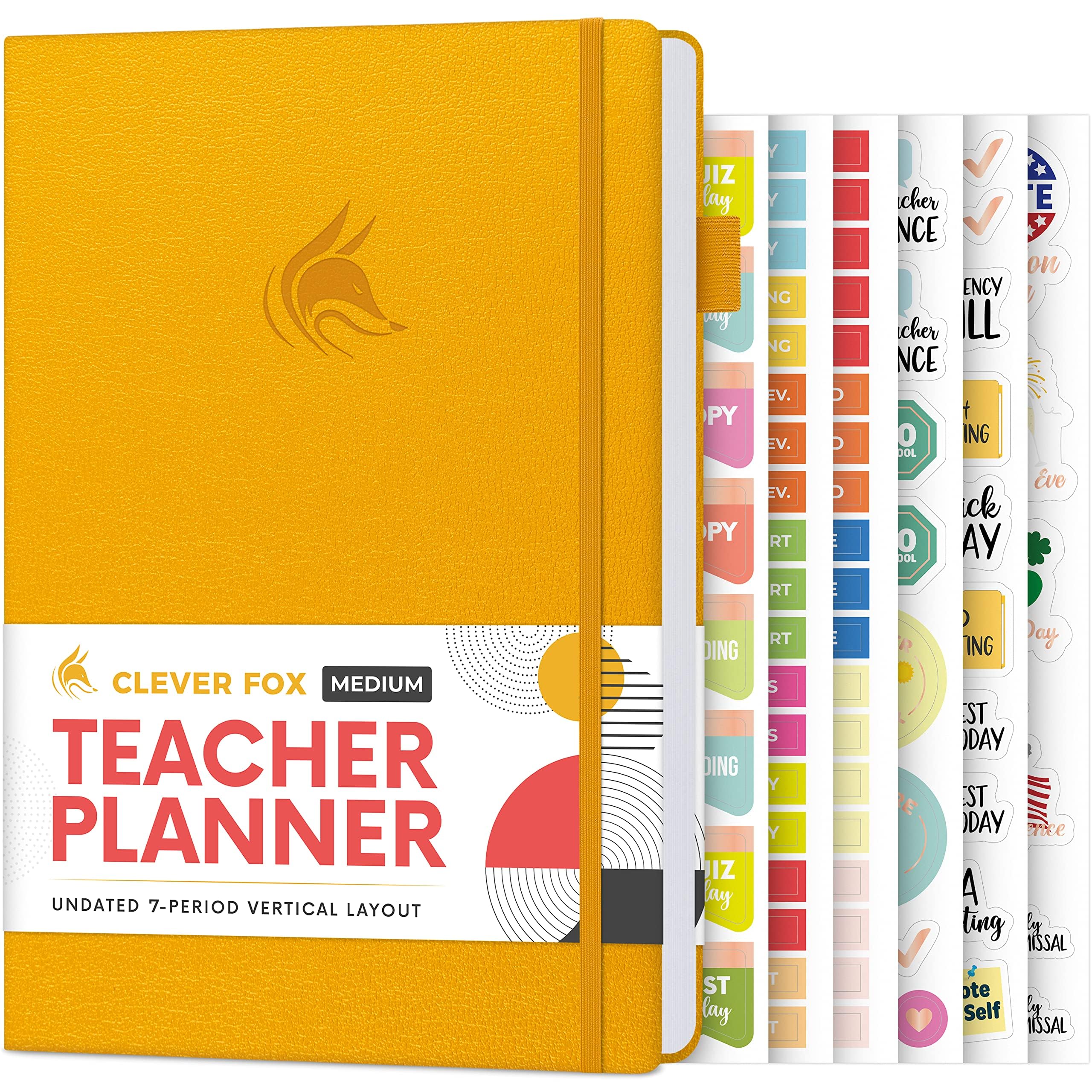
Clever Fox Teacher Planner A5

Clever Fox Teacher Planner A5

Premium materials

Customer rating 4.6/5
Check Price

Worth Noting

  • In planning spaces sized for letter sheets, the compact A5 footprint means less room per page.
Writing Space
Daily plans per period
Record Keeping
Student checklists, logs
Binding & Paper
120gsm, hardcover
Dated Or Undated
Undated, A5
Read the full review

Clever Fox builds its case on materials: 120gsm no-bleed paper and an eco-leather hardcover hold up to daily flipping in a bag. For planners who care more about how a book feels than about pre-printed structure, this A5 stands apart from the dated record-keeping options in this set.

It suits sticker-loving homeschoolers who want undated flexibility and a durable book. The A5 footprint runs noticeably smaller than letter-size planners, and every date is written by hand — a tradeoff that rewards planners who enjoy setup rather than those who want structure on arrival.

Bottom line: Planners who value a book's feel and build quality over pre-printed structure get the most premium offering in this set.

#6

Youthamazing Planner 2026-27

Youthamazing Planner 2026-27

Ultra-budget pick

Customer rating 4.7/5
Check Price

Worth Noting

  • Occasional layout or month-sequence errors can appear on some copies, making an arrival check worthwhile.
Writing Space
Large writing boxes
Record Keeping
—
Binding & Paper
Metal spiral, thick paper
Dated Or Undated
Dated, Jul–Jun
Read the full review

The lowest-priced book here still pairs sturdy spiral binding with thick paper and large writing boxes — a practical start for a first homeschool year. Monthly overviews and weekly spreads run July 2026 to June 2027, keeping lesson plans and schedules tidy without the multi-child focus of the top pick or the higher-volume teacher planner in this set.

First-time homeschoolers testing their needs without a premium commitment will find a well-made dated layout with room for events, to-dos, and notes. Families who want grade or attendance pages built in won't find them here — that belongs to the top pick.

Bottom line: For budget-first families mapping a first homeschool year, this is the practical entry point. Families needing built-in grade tracking or multi-child capacity should invest in the top pick instead.

#7

Carson Dellosa Happy Place

Carson Dellosa Happy Place

Flexible undated

Customer rating 4.5/5
Check Price

Worth Noting

  • Heavy daily lesson planning across multiple kids may wear the binding before the year ends.
Writing Space
—
Record Keeping
Grades, attendance, homework
Binding & Paper
Spiral, 128 pages
Dated Or Undated
Undated
Read the full review

This bright spiral-bound planner bundles week-at-a-glance pages with lesson-plan space, contact lists, and 116 stickers, and the undated format adapts to any school year. Durability under heavy daily use is a genuine doubt, and sticker sheets can arrive with minor damage in transit — comfortable territory for moderate schedules rather than intense year-round planning.

Bottom line: Best for color-loving homeschoolers who want undated flexibility and lighter week-to-week planning, where the build won't be stressed daily.

#8

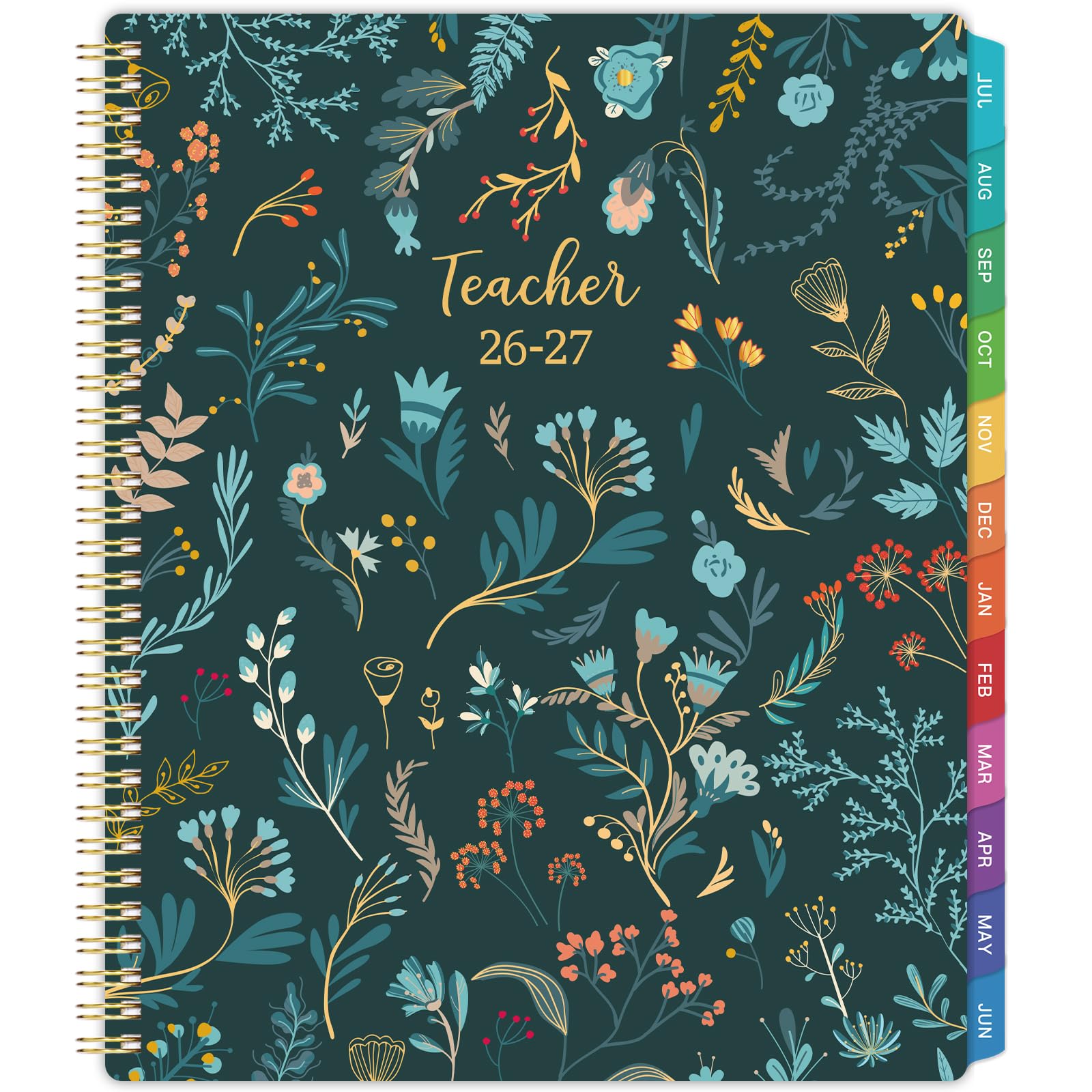
Artfan Teacher Planner 2026-27

Artfan Teacher Planner 2026-27

Time-block layout

Customer rating 4.6/5
Check Price

Worth Noting

  • Print variances can leave occasional copies missing pages.
Writing Space
9 sections per day
Record Keeping
—
Binding & Paper
Metal lay-flat binding
Dated Or Undated
Dated, Jul–Jun
Read the full review

The subject-labeled time blocks suit organized teachers and homeschool parents who plan one class or one child at a time, with metal twin-wire binding that lays flat and a built-in pocket. Day sections run compact, so very detailed multi-class lesson plans may need extra room — the structured grid fits focused daily planning over expansive note-taking.

Bottom line: Best for a teacher or homeschool parent who plans one class or child at a time and wants a clean structured weekly grid on a lay-flat page.

#9

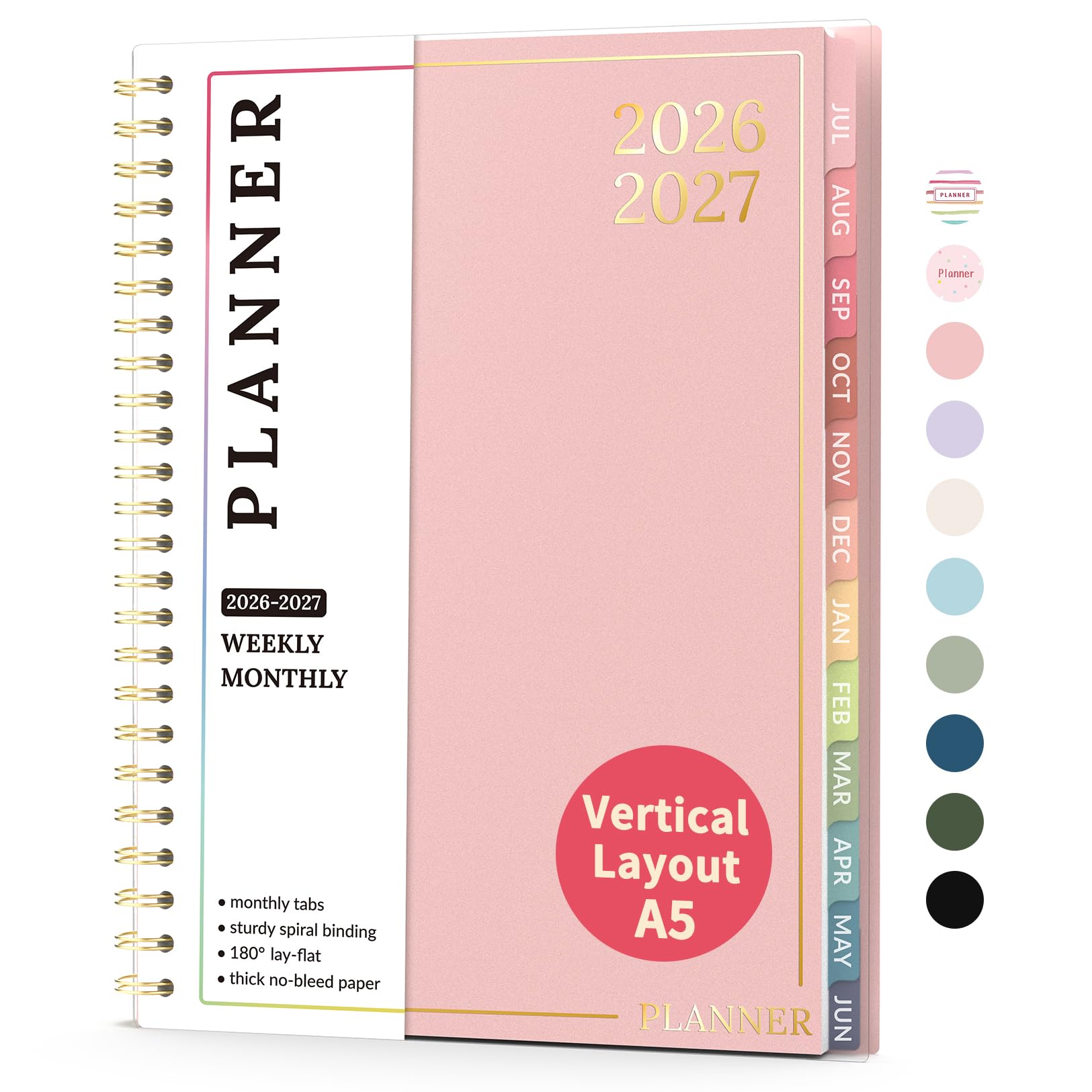
Forvencer Planner A5 2026-27

Forvencer Planner A5 2026-27

Compact A5

Customer rating 4.7/5
Check Price

Worth Noting

  • Compact A5 boxes leave less per-subject room than letter-size planners
Writing Space
Vertical, 7 subjects
Record Keeping
—
Binding & Paper
100gsm, metal spine
Dated Or Undated
Dated, Jul–Jun
Read the full review

The A5 footprint stays portable while the vertical weekly spread plans seven subjects across five days on 100gsm no-bleed paper, at a mid-range price for the Jul 2026-Jun 2027 term. It suits buyers who decide on the spec sheet alone — those wanting independent verification of real-world durability find little to draw on.

Bottom line: Best for a single-child homeschooler who wants a portable seven-subject weekly spread and trusts the spec sheet over external reviews.

How to Choose

Dated or Undated Layout

Dated planners lock you into a school calendar, usually July to June. If your family starts mid-year, takes seasonal breaks, or pauses for travel, those dated weeks turn into unusable blanks. Undated pages let you write dates as you go, so a February start or a week off costs you nothing.

The trade-off lands at setup. Undated planners require writing in every date by hand before the year feels usable, which some parents find tedious. If you run a strict 180-day calendar, dated wins; if your schedule flexes, undated fits better.

Per-Day Writing Space

Page count tells you little about daily room. A 292-page planner can still hand each weekday only a few lines for notes. Match the day-box size to what you actually write - assignments for multiple kids, reminders, checklists - because cramped boxes get abandoned by week six.

Multi-Child Capacity

Most planners assume one student per planner. A single-class teacher's day box holds one child's assignments, but a family planning three children needs either wider boxes or an open layout that subdivides cleanly. This spec rarely shows in listings, so look at filled-in weekly photos or read for mentions of planning more than one grade level.

Record Keeping Pages

Built-in grade books, attendance grids, and curriculum trackers change what a planner can handle. A co-op teacher tracking several students needs these pages; a parent recording grades in a spreadsheet may not. Those dedicated sections consume space that would otherwise hold lesson notes, so weigh whether you will actually fill them before giving up planning room.

Binding and Paper Quality

Spiral or lay-flat bindings hold the book open while you write; glued spines pull shut and stress the spine through a full year. Paper thickness matters just as much - markers and gel pens bleed through thin sheets. Heavier stock, around 100 to 120gsm, adds cost but keeps both sides of every page usable.

Frequently Asked Questions