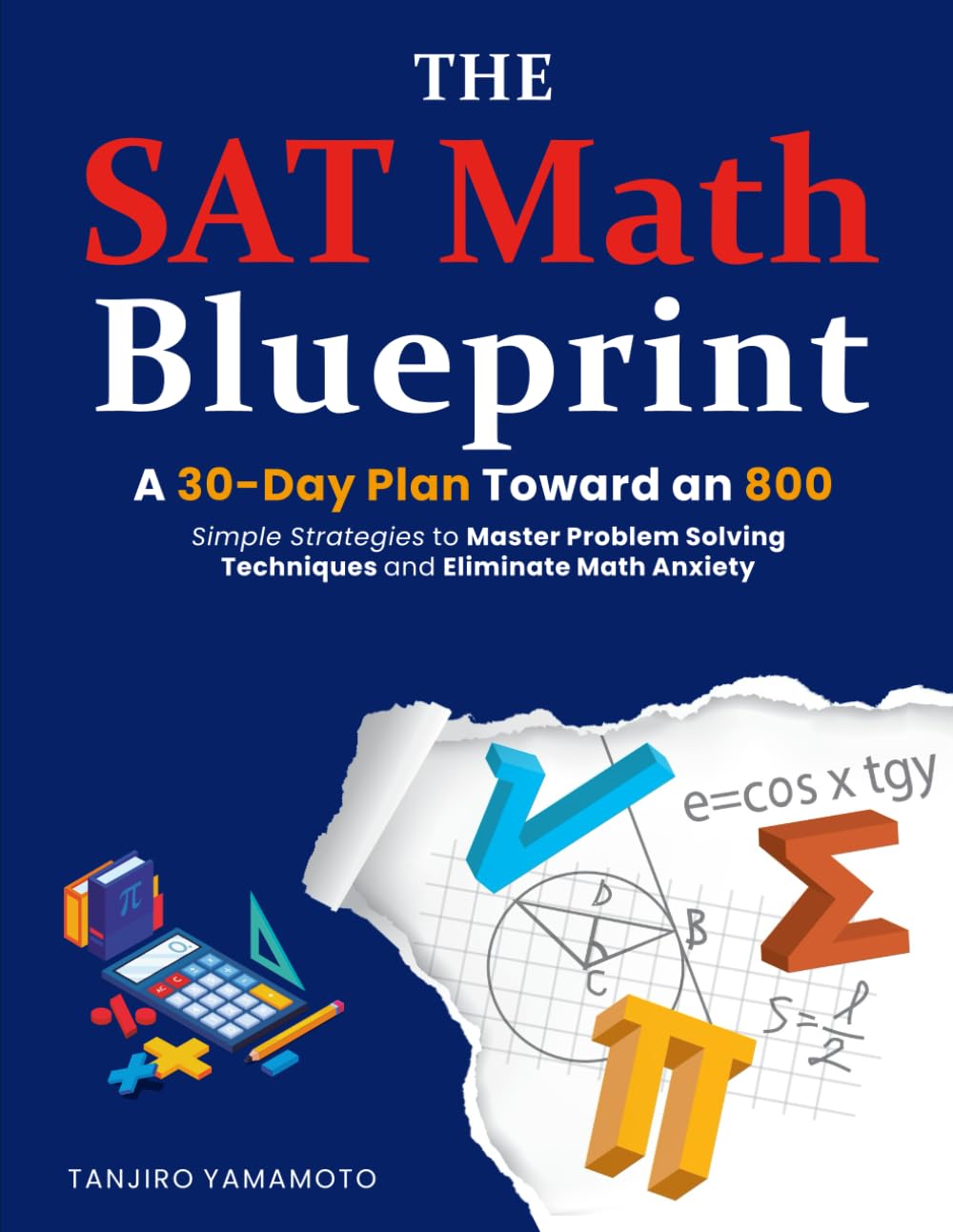
College Panda SAT Math

What We Like
- Clear, thorough explanations that make complex concepts like advanced trig approachable.
- Covers every math topic on the current exam in a compact 414 pages.
- Practical, score-raising strategies woven into each chapter.
- Chapter organization reads like sequential lessons
- One book replaces a review guide plus a drill workbook at a mid-range price.
Worth Noting
- Practice problems run hard, which can discourage students whose scores sit below the mid-600s.
- SAT Format
- Digital SAT, 2024
- Practice Volume
- 414 pages, hard sets
- Explanation Depth
- Clear, comprehensive
- Full-Length Tests
- No
Read the full review
The College Panda's SAT Math walks through every topic on the exam with explanations that move from definition to worked example before any practice begins. Each chapter groups logically related concepts, so the book reads as a sequence of lessons rather than a stack of isolated problems. Coverage spans the full math curriculum in a compact 414 pages, and the prose stays dense enough to keep advanced algebra and trigonometry approachable for a self-directed reader. The teaching style favors clarity over length — no filler paragraphs padding out the page count, and each concept earns its space before the next one appears.
Practice sets run deliberately demanding, stepping past the difficulty of the actual exam so students build a margin of error on test day. Each answer explanation shows the fastest solving path rather than just the correct result, and the strategy sections teach when to reach for a calculator versus working a problem by hand. The approach sticks to a standard calculator rather than leaning on the Desmos graphing tool, which suits students who will take the digital exam on their own devices. Later chapters reach into the territory of the hardest questions the SAT publishes, sharpening timing for students already scoring competitively.
This guide fits students targeting 650 and above who want one book to cover review, strategy, and hard practice without jumping between sources. Tutors and parents running structured topic-by-topic sessions will appreciate the logical chapter order, and self-studiers who prefer concise, organized material get exactly that. It is not the right starting point for learners who need to rebuild foundations first — the problem sets run hard and can discourage a student scoring below the mid-600s. Those buyers will want a gentler primer before attempting the advanced chapters.
The 414 pages replace what would otherwise take two books — a review guide plus a drill workbook — at a mid-range price that undercuts buying them separately. The topic organization doubles as a diagnostic map: any chapter that stalls signals a concept to revisit before test day. Students who work through the book cover to cover finish with both content knowledge and test technique, which is what the current exam format rewards. It reads like a complete prep course rather than a stack of drills.
Work the answer explanations as carefully as the problems themselves — the solved examples teach the fastest scoring path on the current exam.
Bottom line: Students serious about pushing past the 600s get a complete prep course in one organized volume — review, strategy, and practice in a single purchase.