STEM Toys Product Guide

12 Best Engineering Toys for Kids of 2026: Real Age Fit

The best engineering toys for kids that fit your child's actual age and hand strength, so kits get built and replayed rather than abandoned.

12 Best Engineering Toys for Kids of 2026: Real Age Fit editorial illustration

Engineering toy listings are crowded with project counts and STEM checkmarks, but those numbers rarely predict what a child actually experiences. A kit's value shows up in the second session, once the novelty fades and pieces either still snap together or start to frustrate. The toys that get replayed are the ones whose builds match the builder's real ability rather than the number on the box.

Age labels in this category run optimistic. A kit marked 'independent' often still wants a parent nearby, and a suggested age of 5 can demand hand strength closer to 8. Snapping, tightening, and pushing connectors into place is where most young engineers stall, not in understanding the concept.

The picks here are grouped by how easily pieces fit, how clearly projects teach, and how well each toy holds up to repeat builds. Match your child's grip, patience, and interests to the right tier, and the kit will carry its own momentum.

#1

Snap Circuits Jr. SC-100

Snap Circuits Jr. SC-100

First electronics kit

Customer rating 4.8/5
Check Price

Worth Noting

  • Manual teaches step-by-step builds rather than schematics or theory, so curious kids may learn the 'what' without the 'why'.
Material
Plastic
Age Range
8+
Power Type
2 AA batteries
Reusability
Reusable
Read the full review

The SC-100 packs 30-plus snap modules into 100+ real circuit projects — no tools, no soldering, just color-coded pieces that click onto a plastic grid and light bulbs, spin fans, or sound alarms. Durability is the standout: these snap components survive repeated assembly and disassembly across years of classroom use, which is why this kit outlasts most beginner electronics options. Each project finishes on its own, delivering the satisfaction of a completed circuit every time.

Two AA batteries power every build, and the projects escalate in a logical sequence so a child who works through the set learns switches, resistors, and motor control without adult wiring. The clear step-by-step manual keeps kids moving independently, which makes the kit a dependable classroom addition or birthday gift for the right age band.

Best for ages 8 and up tackling a guided first electronics build with a visible payoff. Kids who need a simpler entry should start with the color-coded beginner kit in this line, and because the manual walks through builds rather than schematics, curious builders may need a hand connecting each project to the underlying circuit principles.

Bottom line: The right first electronics kit for ages 8 and up — durable parts, clear instructions, and a genuine circuit-building payoff that holds its mid-range price.

#2

ThinkFun Gravity Maze

ThinkFun Gravity Maze

Logic puzzles

Customer rating 4.6/5
Check Price

Worth Noting

  • Color-coded tower pieces are hard for colorblind users to distinguish, with no alternate cue.
Material
Plastic
Age Range
8+
Power Type
Manual
Reusability
Reusable
Read the full review

ThinkFun Gravity Maze turns engineering logic into a tabletop puzzle: 60 progressive marble-and-tower challenges that reward planning and spatial reasoning, with no batteries and no parts to snap. The payoff is mental rather than physical, which sets it apart from the building kits in this lineup and makes it a natural fit for logic and puzzle lovers aged 8-12 who want compact, repeatable play for travel or family game night. A single box covers everything, and the challenge deck scales from beginner to expert to keep replay alive without add-ons.

Start younger players on the beginner challenge cards to build confidence before the expert layouts.

Bottom line: The right pick when a family wants a thinking challenge that packs flat for travel and holds both kids and adults. Not the match for hands-on builders expecting to assemble something.

#3

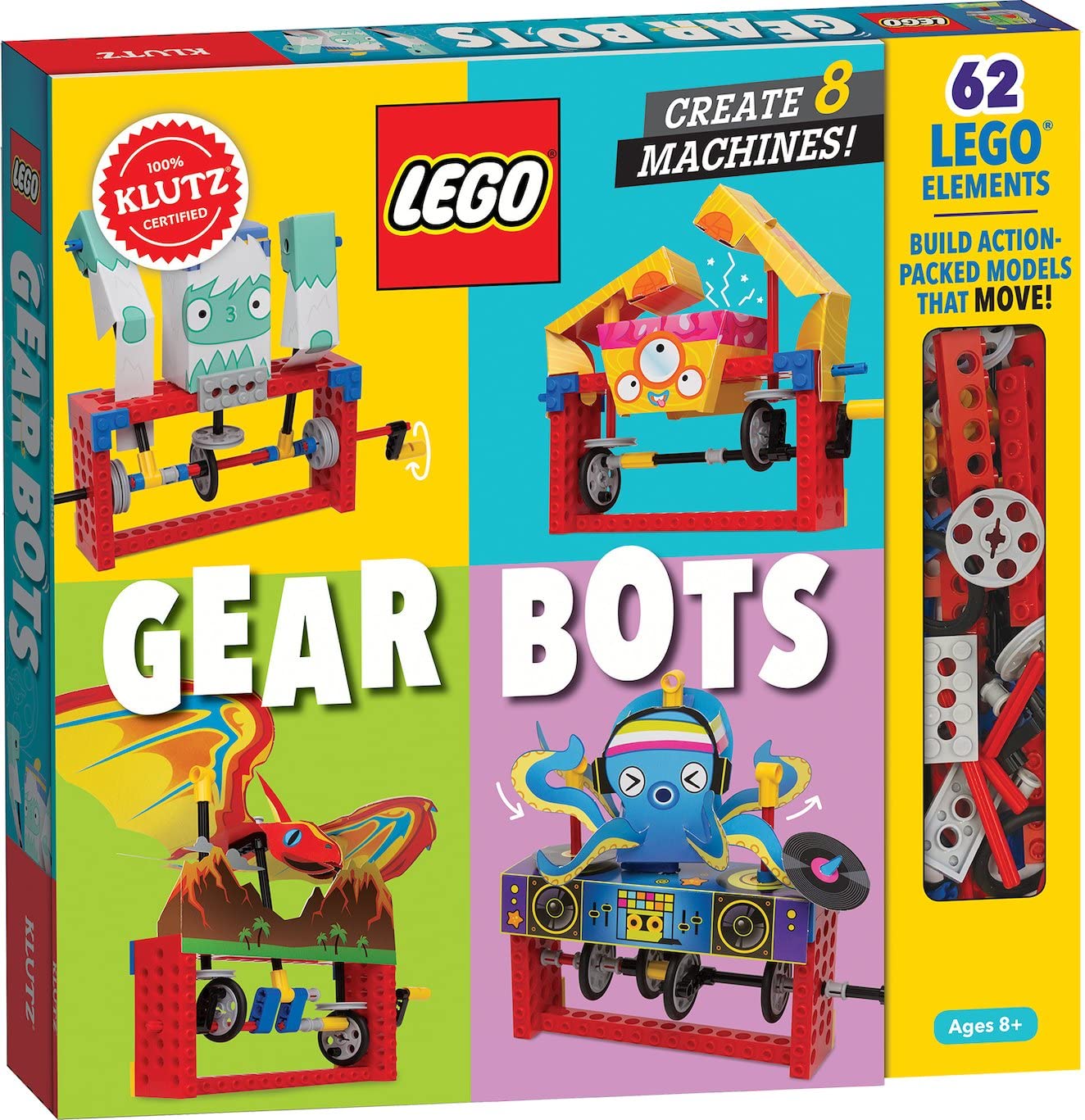
Klutz LEGO Gear Bots

Klutz LEGO Gear Bots

LEGO lovers

Customer rating 4.6/5
Check Price

Worth Noting

  • Only one model can be built at a time, so kids must disassemble to try another, limiting replay value
Material
Plastic + paper
Age Range
8-12
Power Type
Manual
Reusability
Single model
Read the full review

Eight kinetic creatures come together from 62 LEGO elements and papercraft, guided by a 64-page manual that explains axles, cams, and cranks as you build. This is the guided mechanics counterpoint to the electronics-based top pick, best for LEGO-loving kids aged 8-12 who follow illustrated steps toward moving models. Only one creation stands at a time, so kids take a model apart to try the next — a boundary that fits children who enjoy completing builds more than preserving them.

Keep one model assembled to admire before moving to the next build.

Bottom line: A dependable papercraft-and-LEGO introduction to mechanical motion for kids who enjoy structured builds.

#4

Snap Circuits Beginner

Snap Circuits Beginner

Ages 5-7

Customer rating 4.7/5
Check Price

Worth Noting

  • In a heavily-shared classroom, the fan, beeper, or bulbs can wear out after limited play in some units.
Material
Plastic
Age Range
5-9
Power Type
2 AA batteries
Reusability
Reusable
Read the full review

For young builders not ready for grown-up wiring, this kit strips electronics down to color-coded snap modules and 20 simple circuits that run on just two AA batteries, with a color-changing fan or beeper rewarding each completed build. Step-by-step instructions keep momentum, so early STEM confidence grows without an adult decoding the manual.

This suits ages 5-7 getting a first electronics taste, or budget-minded classrooms; kids chasing deeper project counts should step up to the fuller set in this line, and families that demand hard-wearing components will want a sturdier option.

Bottom line: The friendliest first circuits a five-year-old can build solo, and a sensible low-cost classroom staple once you accept occasional component variance. Kids ready for a longer arc should size up the fuller kit in this line.

#5

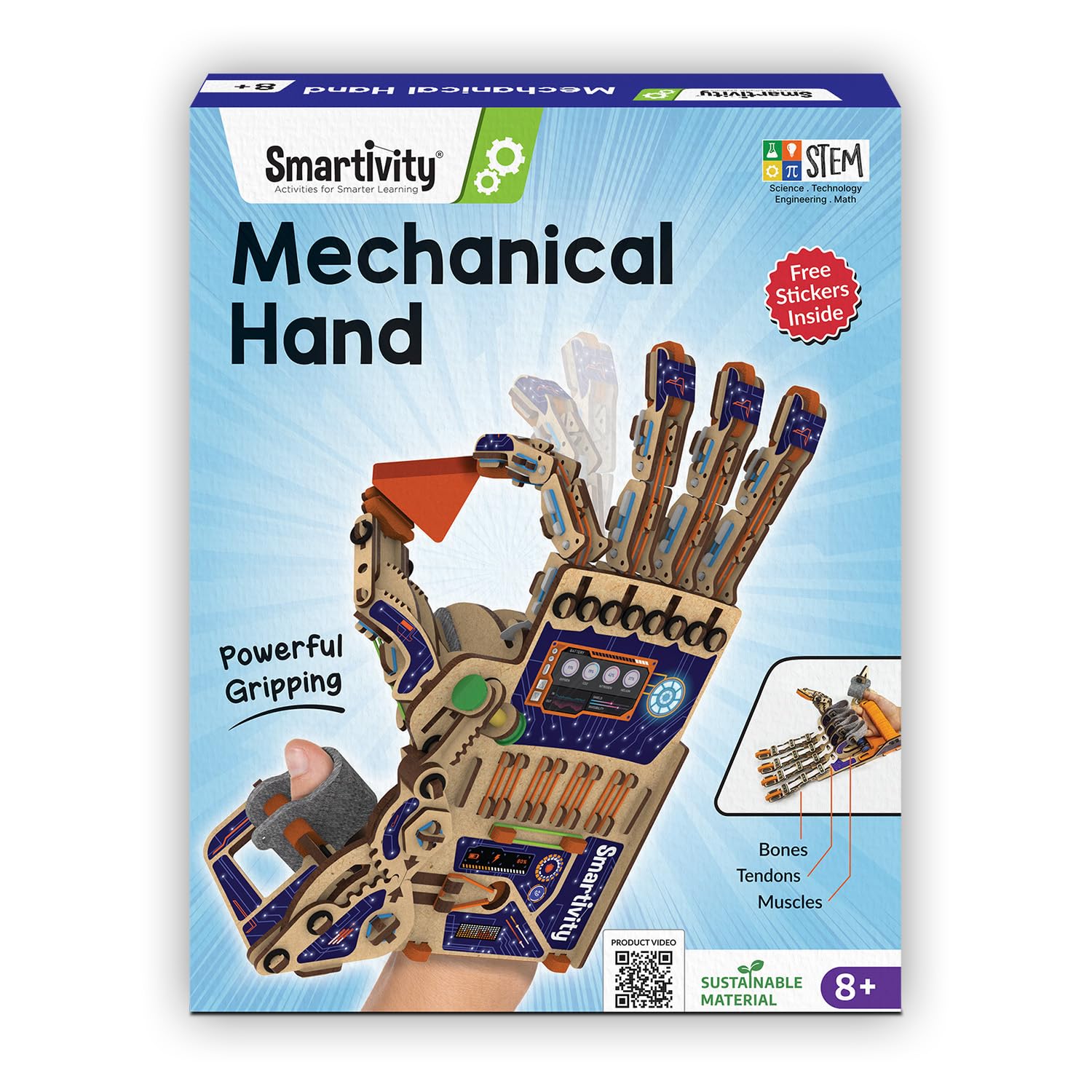
Smartivity Robotic Hand

Smartivity Robotic Hand

Robotics and anatomy

Customer rating 4.6/5
Check Price

Worth Noting

  • In a dedicated session, assembly can stretch well past the advertised hour
  • Engineered wood and string can chip or fray with rough play, so gentle handling keeps the mechanism intact.
Material
Engineered wood
Age Range
8-14
Power Type
Manual
Reusability
Reusable
Read the full review

Cord-and-pulley mechanics produce a working mechanical hand whose tendons move and flex — a genuine anatomy-and-robotics lesson the hydraulic launcher in this lineup skips. No batteries, just engineered wood, string, and careful assembly, so the payoff comes from building, not power.

Best for patient 9-14 year-olds who enjoy a multi-hour challenge with a tangible payoff, and a natural fit for science-fair projects. Adult help is realistic through the trickier steps, and the finished hand makes the effort clear.

Split assembly into two sittings and keep an adult handy for the trickiest steps — the working hand rewards the patience.

Bottom line: For a patient older kid who wants a real build with a working mechanical payoff, this is the hand — budget the time and keep handling gentle.

#6

Learning Resources Gears

Learning Resources Gears

Preschool building

Customer rating 4.7/5
Check Price

Worth Noting

  • Older kids craving complex builds will hit the set's mechanical ceiling quickly
  • No guided step-by-step projects, so structured learning needs a kit-based set
Material
Plastic
Age Range
3+
Power Type
Manual
Reusability
Reusable
Read the full review

100 pieces including 46 interlocking gears snap together battery-free into endless moving configurations — a young builder discovers cause and effect through trial and error, with no guided lessons, batteries, or electronics required.

This is the right fit for preschool and kindergarten classrooms, and for toddlers still building hand-eye coordination. One boundary to plan around: the tightest connections can require adult strength, so younger children will want a grown-up to snap and unsnap the snugger pieces. Older kids chasing complex mechanical challenges or step-by-step project guides will outgrow this set.

Bottom line: For preschool and kindergarten classrooms, this durable, battery-free cause-and-effect builder needs no adult supervision during play; those wanting guided electronics projects will find more structure in the top pick's circuit kits.

#7

Nat Geo Glow Marble Run

Nat Geo Glow Marble Run

Visual physics play

Customer rating 4.7/5
Check Price

Worth Noting

  • In a dim room the glow marbles appear faint and fade fast unless freshly charged under bright light
Material
Plastic
Age Range
8-12
Power Type
Manual
Reusability
Reusable
Read the full review

Tight-fitting pieces click together into marble runs that hold their structure through active play, and the included guide connects marble motion to real aerodynamics concepts. It's the motion-focused counterpoint to the top pick's circuit building — construction whose payoff is watching marbles cascade.

Best for kids 8-12 who love marble runs and classrooms teaching physics of motion. The glow marbles are the working tradeoff: they look faint and fade fast in dim rooms unless freshly charged under bright light, so the run is the draw and the glow a bonus. Kids who prefer logic puzzles or want an ongoing rebuild system will find this narrower in scope.

Bottom line: This is the motion-physics pick for visual learners and classrooms — the build and cascade carry the experience, while the glow stays a treat that needs a bright-light charge.

#8

Smartivity Hydraulic Launcher

Smartivity Hydraulic Launcher

Hydraulic launchers

Customer rating 4.6/5
Check Price

Worth Noting

  • Engineered wood can chip during assembly or lively play
Material
Engineered wood
Age Range
6-14
Power Type
Manual
Reusability
Reusable
Read the full review

Kids 7 and up assemble a hydraulic, battery-free launcher from engineered wood, then send paper planes arcing across the yard — an engaging screen-free build with clear instructions. Engineered wood can chip during assembly, and flight distance varies, so an adult hand helps younger or rougher builders.

Bottom line: Best for kids 7 and up who enjoy constructing then launching outdoors; expect a lively action toy rather than consistent flight distance, and keep an adult nearby for the tightest assembly steps.

#9

LEGO Technic Bush Plane

LEGO Technic Bush Plane

Budget Technic

Customer rating 4.8/5
Check Price

Worth Noting

  • Single one-model build with 333 pieces, so play value ends once the plane is finished
Material
Plastic
Age Range
8+
Power Type
Manual
Reusability
Reusable
Read the full review

This 333-piece LEGO Technic plane delivers genuine mechanical motion — spinning propeller, moving pistons, adjustable ailerons — at a friendly price, a confident first mechanics build for LEGO fans 8+. Premium quality makes assembly satisfying, but as a single one-model set the play window ends once the plane is built — kids who love rebuilding get more longevity from the guided multi-model Gear Bots kits.

Bottom line: Best for a plane-loving LEGO fan taking a first step into Technic mechanics, where a focused single build with real moving parts beats rebuild variety.

#10

Ed Insights Drill Robot

Ed Insights Drill Robot

Toddler tool play

Customer rating 4.5/5
Check Price

Worth Noting

  • The toy screwdriver can come apart during play, and individual screws may not stay seated through repeat assembly
Material
Plastic
Age Range
3-7
Power Type
Manual
Reusability
Reusable
Read the full review

Snap-and-screw assembly gives toddlers a satisfying first take-apart build — no batteries, no adult setup — and the cute robot design keeps 3-5s engaged. Play depth thins quickly: the same single configuration loses appeal after a few sessions, which suits parents wanting a fast, budget motor-skills gift more than families after lasting replay value.

Bottom line: Best as a budget fine-motor gift for 3-5s who want a quick take-apart project rather than sustained building.

#11

Parhlen 244-Pc Build Set

Parhlen 244-Pc Build Set

Drill building

Customer rating 4.7/5
Check Price

Worth Noting

  • Free-form builds skip the structured step-by-step engineering lessons of guided STEM kits.
Material
Plastic
Age Range
4-10
Power Type
Electric drill (AA)
Reusability
Reusable
Read the full review

244 pieces plus an electric screwdriver, wheels, and nuts-and-bolts hardware store neatly in a case, and the durable pieces keep young builders occupied for long stretches. Builds are free-form rather than guided STEM projects, so it trades structured lessons for open-ended tool play — a strong fit for kids who love tools over step-by-step kits.

Bottom line: For families who want plenty of pieces and open-ended tool play rather than guided projects, this delivers strong value for early elementary builders.

#12

Tsomtto 10-in-1 STEM

Tsomtto 10-in-1 STEM

Multi-model sets

Customer rating 4.7/5
Check Price

Worth Noting

  • Loose connector fit can require adult help for kids near the label's lower age range.
Material
Plastic
Age Range
4-8
Power Type
Manual
Reusability
Reusable
Read the full review

Ten vehicle builds from one 167-piece box deliver strong model variety for the price, and battery-free construction keeps patient kids engaged across multiple configurations. Assembly, though, runs harder than the 4-8 label suggests — loose connector fit can call for adult help, which suits family build sessions more than solo play.

Bottom line: Fits patient 7-9 year olds building alongside a parent or sibling, where the ten-vehicle variety carries the value.

How to Choose

Age Range and Hand Strength

Most engineering kits list an age for safety and reading level, not for the physical force the build demands. Snapping tight-fit gears, threading cord through pulleys, and holding a manual screwdriver steady all need more finger strength than a typical 5-year-old has, which is why kits marked 'independent' often still want a parent nearby.

Judge by the hardest physical action the toy requires before you judge by the label. If your child can push LEGO bricks together firmly, a snap-fit circuit kit is within reach; if tight clicks frustrate them, start with larger, looser pieces and plan to handle final assembly yourself.

Guided Projects vs. Open-Ended Play

Project counts sell kits, but satisfaction tracks with how many builds a child actually finishes and replays. A 300-project set with a dense manual can stall a kid who needs short, clear steps, while a tidy 20-project kit builds more confidence by finishing cleanly.

The hidden trade-off is instruction depth. Manuals that explain why a circuit works keep engaged kids learning beyond the last project, while build-only guides teach the 'what' without the 'why' — fine for beginners, limiting for kids who ask deeper questions.

Reusable vs. Single-Build

Reusability decides how long a kit stays interesting. A set that only allows one model at a time forces a child to tear down their creation before starting the next, which can stall momentum for kids attached to what they built.

Open-ended and reconfigurable kits hold up better because nothing is destroyed in the rebuild. If replay value matters, favor models that rearrange freely over builds that require full disassembly between projects.

Battery vs. Manual Mechanics

Battery-powered kits add instant feedback, but the motor, lamps, and switches are the most common failure points — a dead component turns an electronics lesson into a frustration exercise.

Manual mechanical kits — gears, pulleys, hydraulics, gravity — have fewer parts to break and teach cause-and-effect just as clearly. Choose powered for the flash that keeps young kids engaged, manual when you want durability and quiet play.

Material Durability

Material predicts how a kit survives rough use. Thick plastic snap parts tolerate years of enthusiastic building, while engineered wood feels premium but chips and frays at precision joints, and papercraft parts are the first to tear.

Match the material to the child's handling style. A careful builder can manage wood; an impatient piler does better with plastic that clicks together without cracking.

Frequently Asked Questions