Music Learning Product Guide

7 Best Boomwhackers for Music Class in 2026: Which Teach Full Songs

For music teachers choosing Boomwhackers: which sets teach full songs and survive daily classroom use, and which pentatonic sets limit the repertoire.

7 Best Boomwhackers for Music Class in 2026: Which Teach Full Songs editorial illustration

Boomwhackers look like simple plastic tubes, but the scale you choose decides what your students can actually play. Pentatonic sets are forgiving and easy for young beginners, yet they cover only five notes, leaving most seven-note melodies out of reach. A diatonic set unlocks the full octave and the standard classroom songbook.

Class size matters just as much as scale. Eight tubes give a small group plenty to do, but a class of twenty needs a pack that puts a tube in every hand. Durability and color coding matter too, since these tubes take a beating from daily use.

Sound quality is the one thing buyers often get wrong. Some sets ring bright and clear; others sound flat, and the difference shows up fast in a room full of kids. Knowing which sets hold their tone makes the difference between an instrument that earns its shelf space and one that gathers dust.

#1

Boomwhackers Diatonic

Boomwhackers Diatonic

Standard classroom teaching

Customer rating 4.6/5
Check Price

Worth Noting

  • Songs calling for a low bass voice sit outside its range; the separate bass add-on extends down an octave.
Durability
Polyurethane
Scale Type
C major diatonic
Price Per Tube
Moderate
Number Of Tubes
8
Read the full review

The full C-major diatonic octave covers the standard classroom songbook, so students play complete melodies rather than five-note exercises. Polyurethane tubes hold their shape and pitch through the drops and foot traffic of a school day, which is why this set anchors music rooms after a decade of use. Tube lengths run 11 to 24 inches, matching handholds to student reach while keeping a consistent octave. The voice is bright and percussive, suited to beat and rhythm work rather than pure concert tone — a tradeoff worth knowing before the first lesson.

This suits music teachers who want one dependable set for teaching rhythm, beat, and C-major melodies, durable enough for repeated handling by young students. At a mid-range price, it undercuts music-store tube sets while holding tune across daily use. Sound quality divides opinion: some find the tone thin, so set expectations that this is a plastic tube instrument rather than a concert-grade one — for rhythm instruction that tradeoff rarely surfaces. The engaging format keeps special-needs classrooms and family music time lively, which is where this set earns its classroom reputation.

Bottom line: For educators who need one set that teaches rhythm, beat, and full C-major melodies, this is the default classroom choice — sized and priced for school budgets.

#2

Boomwhackers 27-Tube Pack

Boomwhackers 27-Tube Pack

Whole-class participation

Customer rating 4.5/5
Check Price

Worth Noting

  • Durability and tuning under heavy classroom use are unverified.
  • The pentatonic scale limits which songs can be played; full melodies need the diatonic set.
Durability
Plastic
Scale Type
C major pentatonic
Price Per Tube
Low
Number Of Tubes
27
Read the full review

With 27 tubes, this pack gives a full class an instrument each at the best price per tube in the set. The C-major pentatonic scale keeps novices of any skill level sounding pleasant together, so a whole group can play at once without clashing.

This pack suits music teachers running large classes who need maximum coverage in one order. Durability and tuning under heavy use remain unverified, so buyers trade certainty for reach — a fair call when tubes end up in many hands at once rather than one performer's.

Bottom line: Fits teachers who need many tubes at once and value whole-class participation over note-perfect repertoire.

#3

Constructive Playthings 8-Tube

Constructive Playthings 8-Tube

Preschool small groups

Customer rating 4.8/5
Check Price

Worth Noting

  • Eight tubes cover about four students, so a full classroom needs multiple sets.
Durability
Durable plastic
Scale Type
C major diatonic
Price Per Tube
Moderate
Number Of Tubes
8
Read the full review

The plastic tubes bounce back after being stepped on and hold their shape through rough handling from young children, matching the classic diatonic set's durability at a lower price. The full C-major octave covers the standard songbook, so a small class gets the same teaching range as the name-brand option without the premium.

Well suited to music teachers running small group lessons and to parents introducing a first instrument at home. It hasn't established the same presence in formal school settings as the original diatonic set, though classroom performance tracks closely.

Bottom line: For a small class or a first instrument, this delivers the full C-major teaching range at a lower price than the name-brand set.

#4

Music Treasures 8-Note

Music Treasures 8-Note

Budget-conscious classrooms

Customer rating 4.6/5
Check Price

Worth Noting

  • Price isn't disclosed in the listing, so budgeting against the name-brand set takes extra legwork.
Durability
Plastic
Scale Type
Likely diatonic
Price Per Tube
—
Number Of Tubes
8
Read the full review

An 8-note C-major octave at a budget-friendly price keeps classroom coverage when funds won't reach the name-brand standard. Tube lengths from 12 to 50 inches fit young hands, and the plastic build absorbs everyday percussion use.

This set suits a teacher who wants affordable 8-tube coverage for basic songs and can accept a thinner quality record. Buyers who depend on documented durability will find more assurance in the established 8-note option. The savings carry the pitch; the verification stays light.

Bottom line: Buy this when a tight budget outweighs the need for documented durability — the octave is real and the savings are the point.

#5

Boomwhackers Pentatonic

Boomwhackers Pentatonic

Young beginner introduction

Customer rating 4.6/5
Check Price

Worth Noting

  • In a classroom teaching full songs, the pentatonic scale runs out of notes
Durability
Plastic
Scale Type
C major pentatonic
Price Per Tube
Low
Number Of Tubes
6
Read the full review

Sitting at entry-level pricing, this is the cheapest route into Boomwhackers, and its color-coded C-major pentatonic scale keeps every note a toddler taps sounding in tune — a natural fit for free play and very first music making. Classrooms moving toward full songbooks will find a diatonic set more capable.

Bottom line: Best for budget-conscious parents and toddler groups exploring sound; the moment song-based teaching starts, a diatonic set covers more.

#6

Boomwhackers Bass Set

Boomwhackers Bass Set

Bass set extension

Customer rating 4.5/5
Check Price

Worth Noting

  • Requires a diatonic base set already on hand
Durability
Plastic
Scale Type
Bass diatonic
Price Per Tube
Moderate
Number Of Tubes
7
Read the full review

The bass tubes add a full lower octave that gives group arrangements real depth, and they hold particular appeal for ADHD and special-needs learners. But this is strictly an add-on — without a diatonic set underneath, the seven low tubes can't carry a tune on their own.

Bottom line: For classrooms that already run a diatonic set, these seven tubes add the low end that makes group arrangements click. It earns its place only as that add-on — not as any teacher's first boomwhacker purchase.

#7

Boomwhackers Bass Chromatic

Boomwhackers Bass Chromatic

Chromatic add-on

Customer rating 4.5/5
Check Price

Worth Noting

  • Tone can come across thin to some listeners
Durability
Plastic
Scale Type
Chromatic additions
Price Per Tube
High
Number Of Tubes
5
Read the full review

Five bass chromatic tubes unlock new keys and chords on top of an existing diatonic set, widening the repertoire a class can perform. It only earns its place as a supplement — never a first purchase — since it needs a diatonic base to function. That single requirement keeps it an add-on, not a starter kit.

Bottom line: Best for music teachers who already run a diatonic set and want to reach chromatic pieces — treat it as a tonal expansion, not a classroom starter.

How to Choose

Match Tube Count to Class Size

Eight tubes cover four or five students comfortably, enough for chords and passing melodies, but in a class of twenty most children wait for a turn. Larger packs put a tube in nearly every hand and shift the lesson from watching to doing.

The trade-off is real: more tubes mean more storage bins and a bigger upfront cost, so match the count to whether you run whole-class sessions or rotating stations.

Diatonic vs. Pentatonic vs. Chromatic

A diatonic set carries the seven notes of a major scale, so students can play complete melodies that line up with standard songbooks. A pentatonic set drops two notes, removing every jarring interval — pleasant for free play but unable to play most written songs.

Chromatic sets add sharps and flats for new keys and chords, but they only work as an extension to a diatonic base. For a general music class, diatonic is the scale that matches the curriculum.

Durability and Plastic Grade

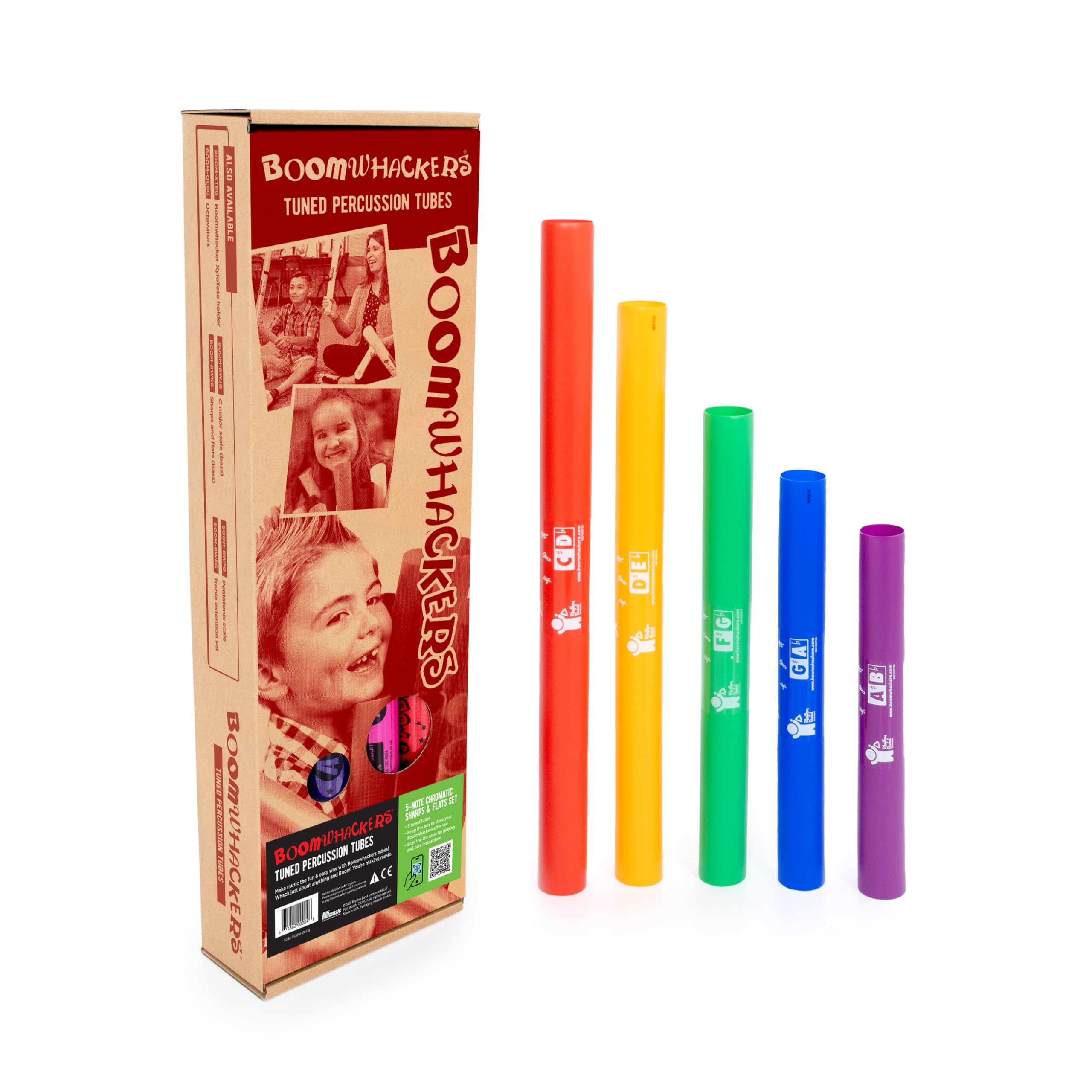
Tube length sets the pitch, so a crease that doesn't snap back changes the note and throws the set out of tune. Softer plastics deform under foot traffic; higher-grade tubes like polyurethane bounce back and hold pitch.

Over a school year this decides whether you own a ten-year instrument or a single-season prop. Tubes that bend and stay bent teach the wrong notes, and that's a harder problem to spot than a scratch.

Color Coding and Teaching Compatibility

Boomwhackers are color-coded to pitch, and a large library of lesson plans and play-alongs assumes the standard color mapping, letting young students follow scores by color before they read notes.

The catch is compatibility. Sets that use the standard palette work with published Boomwhacker arrangements; ones with their own colors force you to build every lesson from scratch.

Price per Tube and Real Cost

Cost per tube is the honest way to compare classroom packs. A 27-tube set spreads its price across more instruments and often beats an 8-tube set per tube even with a higher sticker price.

The trade-off is verification. The cheapest per-tube deals come from sets with the thinnest review history, so the savings trade away your certainty about durability and tuning.

Frequently Asked Questions