Early Learning Product Guide

12 Best Alphabet Learning Toys of 2026: Phonics That Sticks

Find which alphabet toys actually teach letter names, sounds, and spelling by age and stage — and which ones just entertain.

12 Best Alphabet Learning Toys of 2026: Phonics That Sticks editorial illustration

The alphabet toy market is crowded, and shopping by star rating alone leads to disappointment. Sets arrive missing letters, magnets barely cling to the fridge, and wooden pieces wear down faster than the packaging suggests. The distinction that matters is not brand polish but how each toy actually teaches.

Toys differ sharply in method. Some drill letter names and sounds through interactive songs, some pair wooden letters with pictures to build words, and a few simply expose infants to the shapes through lights and motion. No single approach beats the rest, because a six-month-old and a five-year-old need entirely different things.

That makes the purchase decision a choice between audio-based phonics and hands-on word building — and both paths work when matched to your child's stage and attention span.

#1

LeapFrog Fridge Phonics
LeapFrog Fridge Phonics

Phonics home learning

Customer rating 4.8/5
Check Price

Worth Noting

  • Volume runs at one fixed level with no adjustment for quieter rooms.
  • Letter sounds can come across muffled in some units, slowing recognition in noisy kitchens.
Pieces
26 tiles + reader
Age Range
2–5 years
Materials
Plastic, drop-resistant
Interactivity
Electronic, audio
Read the full review

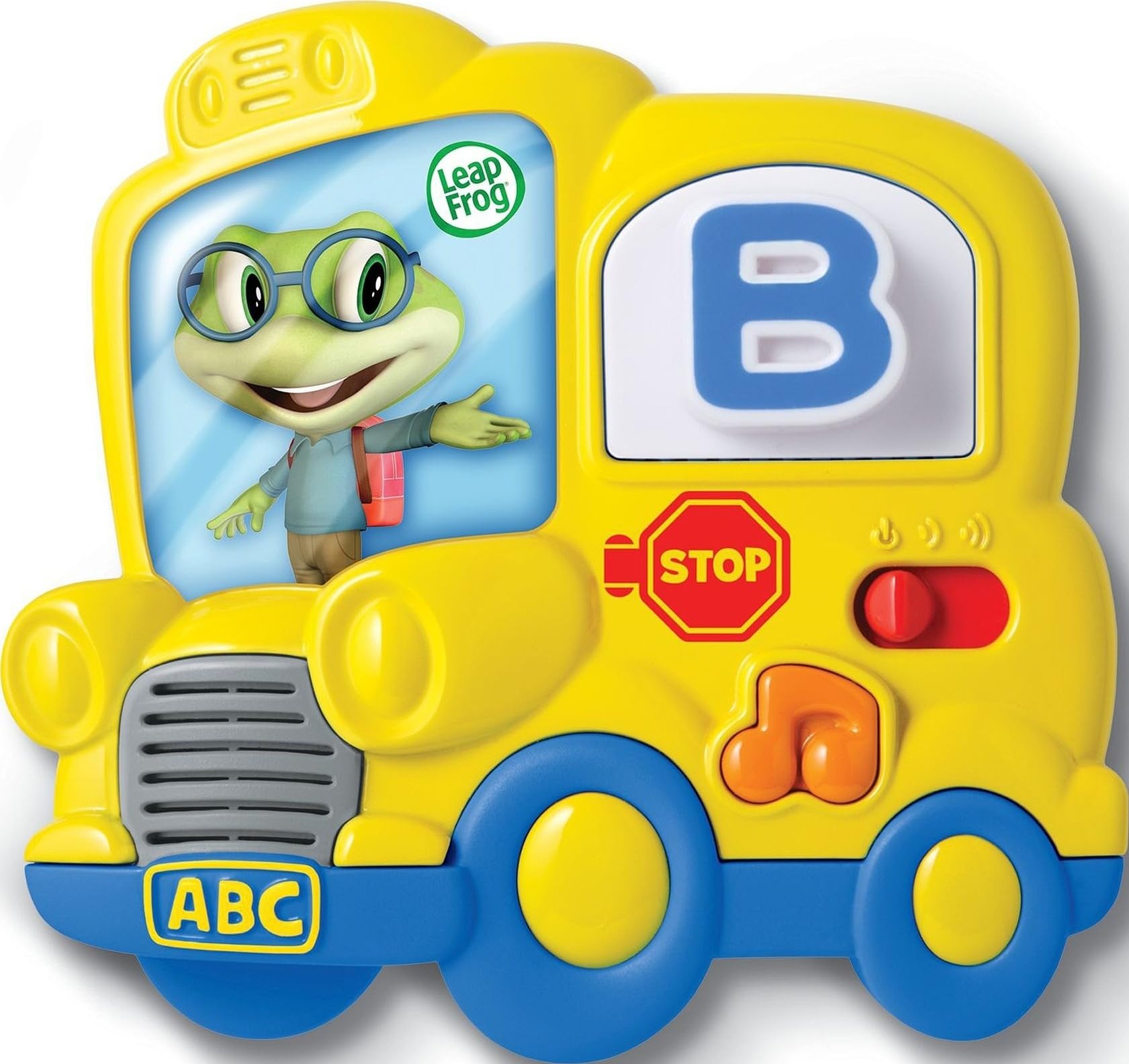
Each of the 26 magnetic tiles pairs a letter name with its phonic sound, and the reader strings them into short songs that make letter-sound connections stick through repetition. The reader holds up to the drops and throws a toddler dishes out, so durability is a genuine strength here rather than a marketing bullet. Mount the tiles on the fridge at kid height and the learning stays visible during mealtime prep, turning a passive kitchen wall into a phonetic activity your child can start on their own.

Volume sits at a single fixed level with no adjustment, so in a busy, noisy kitchen the letter sounds may not cut through — and in some units the audio can come across slightly muffled. That compromise matters less for a toddler pressing tiles close to their face at the fridge, which is exactly where this set earns its keep.

This fits screen-free families with toddlers and preschoolers from about 2 to 5 who respond to songs and repetition and want phonics woven into the daily routine rather than saved for a scheduled lesson. The muffled-audio quirk only becomes a real drawback in very active households where background noise runs high; most children pressing the tiles at the fridge won't notice it.

Bottom line: For a 2–5 year old who feeds on songs and repetition, this is the phonics anchor to build a kitchen routine around — the steady volume and occasional muffled note only matter in very loud households.

#2

Melissa & Doug See & Spell

Melissa & Doug See & Spell

Structured spelling practice

Customer rating 4.8/5
Check Price

Worth Noting

  • Letters are shared across the 64-piece set, so free-form spelling can run out of pieces
  • Advanced spellers will hit the 16 pre-set word ceiling with no way to build their own
Pieces
8 boards, 64 letters
Age Range
4–7 years
Materials
Wood, sturdy build
Interactivity
Manual, wooden
Read the full review

Eight double-sided boards pair picture prompts with letter cutouts, guiding kids from recognizing letters into building three- and four-letter words. The self-correcting fit — each letter only matches its own slot — turns practice into quiet, screen-free work that builds fine-motor control alongside letter recognition.

Best for preschoolers aged 4 to 7 ready to move past single-letter recognition into word building, this suits classroom centers and homeschool tables. The tradeoff: with 16 pre-set words and 64 shared letters, there's no room to create original words — kids who want to spell their own sentences will outgrow it, while those still mastering the set can replay it.

Bottom line: A structured spelling tool that delivers consistent practice until a child outgrows the fixed word set — ideal for beginners, not free-form spellers.

#3

LeapFrog Spin & Sing Zoo

LeapFrog Spin & Sing Zoo

Infant first letters

Customer rating 4.8/5
Check Price

Worth Noting

  • A slight lag between spinning and sound can confuse some toddlers
Pieces
1 spin unit
Age Range
6–36 months
Materials
Plastic, durable
Interactivity
Electronic, sensory
Read the full review

Three play modes pair letters with animals and music to hold a six-month-old's attention — the spinning wheel lights up as it turns, and each stop plays a letter name or animal sound. Where the top pick builds structured phonics, this zoo targets the earliest stage: babies still learning that letters exist, not how to sound them out. The sensory mix keeps short attention spans engaged without reading required.

This suits infants and toddlers from six to eighteen months just beginning alphabet exposure — a first-birthday gift with real playroom value. The tradeoff: a slight lag between spinning and sound can confuse some toddlers, so adult-guided spinning works best. For letter-sound instruction rather than gentle exposure, the phonics-focused top pick covers that ground.

Spin the wheel with a quick, firm turn so the letter sound keeps pace with the action.

Bottom line: Ideal for a first-birthday gift that turns playtime into letter exposure — at this age the short audio delay rarely matters.

#4

Peaceable Kingdom ABC Bingo

Peaceable Kingdom ABC Bingo

Family game night

Customer rating 4.8/5
Check Price

Worth Noting

  • The multiplayer format does nothing for a lone child
  • Letter prompts assume 4+ recognition, so it reviews known skills rather than teaching them fresh.
Pieces
6 double-sided boards
Age Range
4+ years
Materials
Cardstock, sturdy
Interactivity
Manual, group
Read the full review

Six double-sided boards and adjustable rules let two to six kids play together, including cooperative modes where the whole group works toward one shared win. Alternate game variations shift between letter-name and letter-sound prompts, so recognition practice changes each round rather than going stale.

Best for families with two or more children aged four and up who want letter practice to feel like game night, and equally at home in a playgroup or classroom. An adult can step in to prompt the youngest player whenever the board reads ahead of them.

Store the tiles and boards back in the box as soon as the round ends — the cardstock pieces scatter fast.

Bottom line: The rare alphabet toy that scales to a whole playgroup — six kids can share one set and call it game night, not homework.

#5

Gamenote Magnetic Letters Kit

Gamenote Magnetic Letters Kit

Large group sets

Customer rating 4.8/5
Check Price

Worth Noting

  • Not built for the road
  • Small pieces mean adult supervision is required around toddlers under 3.
Pieces
238 pieces
Age Range
4+ years
Materials
Foam, magnetic
Interactivity
Manual, magnetic foam
Read the full review

Multiple complete sets of every letter arrive with a double-sided magnetic writing board and dry-erase markers, giving classrooms and multi-child homes the volume for group spelling practice the top pick's single tile reader can't match. Kids build words side by side while a parent or teacher guides corrections, and the second side of the board adds handwriting practice between sessions.

A large-scale set that covers the full alphabet, this suits teachers, homeschoolers, and families whose kids share one tool — the 234-piece count expects a storage system, and some magnets may not hold firmly on the board.

Bottom line: Classrooms and multi-child homes get real spelling practice at a mid-range price — the volume and board carry this set where the top pick's phonics focus doesn't.

#6

VTech Alphabet Train

VTech Alphabet Train

Active toddler learning

Customer rating 4.8/5
Check Price

Worth Noting

  • Footprint dominates floor space in compact apartments and small playrooms
  • Speaker sound can malfunction in some cases, surfacing early in ownership
Pieces
13 blocks + caboose
Age Range
1–3 years
Materials
Plastic, ride-on
Interactivity
Electronic, motion
Read the full review

A 3-in-1 floor toy that transforms into a walker and ride-on, this train counts blocks and plays letter songs as it rolls across the room. Alphabet practice becomes full-body movement, so letter names, numbers, and motor skills develop together through active play.

Best for active toddlers from 12 months to three years — and a strong first-birthday gift — the train holds attention where tabletop phonics sets lose it. The tradeoff is footprint: it needs open floor space, so it suits larger playrooms over compact apartments.

Bottom line: For families with floor space to spare, this is the alphabet toy that gets a one-year-old moving while building letter and number recognition.

#7

Munchkin Bath Letters & Numbers

Munchkin Bath Letters & Numbers

Budget bath learning

Customer rating 4.8/5
Check Price

Worth Noting

  • Some sets may arrive missing a letter
Pieces
36 pieces
Age Range
3+ years
Materials
Non-toxic foam
Interactivity
Manual, water play
Read the full review

36 foam letters and numbers stick to wet tub walls when saturated, making bath time a low-stakes way for toddlers to recognize letter shapes. This is pure visual exposure — no phonics or spelling layer — so it fits water-loving preschoolers on a budget whose parents want casual ABC spotting rather than structured instruction.

Bottom line: This set fits bath-heavy households that want cheap, screen-free ABC exposure for a water-loving toddler — not families chasing phonics groundwork.

#8

LiKee ABC Flash Cards

LiKee ABC Flash Cards

Hands-on matching

Customer rating 4.8/5
Check Price

Worth Noting

  • Some sets can arrive missing a letter, leaving its picture card unmatchable
Pieces
37 wood, 36 cards
Age Range
3+ years
Materials
Wood, cardstock
Interactivity
Manual, card game
Read the full review

Wooden uppercase and lowercase letters match to 36 picture cards for hands-on recognition, and the storage box keeps pieces tidy — quality is solid for the price. The game is capped at beginner-level recognition, so kids ready for phonics will outgrow it, and an occasional set can arrive missing a letter.

Bottom line: Best for families wanting a quiet, screen-free start to letter recognition in an organized set — count the pieces on arrival to confirm nothing is missing.

#9

GAMENOTE Tracing Board

GAMENOTE Tracing Board

Fine motor tracing

Customer rating 4.6/5
Check Price

Worth Noting

  • Strong magnets pull surrounding beads and the stylus resists gliding, making smooth tracing hard for young children.
Pieces
1 board + stylus
Age Range
3+ years
Materials
Plastic, magnetic beads
Interactivity
Manual, magnetic beads
Read the full review

The double-sided bead board gives older kids a satisfying, mess-free way to practice uppercase and lowercase stroke order. The magnets pull surrounding beads and the stylus resists gliding, so young children who haven't built fine-motor control will find tracing frustrating. This suits school-age kids (5+) and therapists working on motor coordination more than beginning writers.

Bottom line: Best for a school-age child (5+) or a therapist who already has fine-motor control and wants mess-free stroke practice; skip it for toddlers just starting to write.

#10

VTech Write & Learn Center

VTech Write & Learn Center

Guided writing practice

Customer rating 4.7/5
Check Price

Worth Noting

  • Screen contrast fades and the writing surface becomes harder to read over time
Pieces
1 unit
Age Range
3–6 years
Materials
Plastic, electronic
Interactivity
Electronic, guided
Read the full review

Animated stroke demonstrations teach letter and number formation step by step, with stencils and name customization that keep 3–5 year olds engaged. The compact screen suits travel and tabletop practice. But the writing surface fades and becomes hard to read over time, and button durability varies, which prevents a higher ranking.

Bottom line: A reasonable first writing tablet for travel if you accept the screen will fade — budget-conscious parents get guided stroke practice at a mid-range price.

#11

Just Smarty Alphabet Chart

Just Smarty Alphabet Chart

Wall chart learning

Customer rating 4.5/5
Check Price

Worth Noting

  • Buttons need a firmer press than younger toddlers can manage.
Pieces
1 poster
Age Range
1–5 years
Materials
Poster, plastic
Interactivity
Electronic, poster
Read the full review

A wall-mounted poster teaches letters, numbers, songs, and spelling quizzes without claiming floor space, and kids genuinely engage with the interactive mode. The thin poster tears under rough play, so it fits a calm playroom wall rather than a rough-and-tumble play area.

Bottom line: Makes a thoughtful gift for a family with a spare playroom wall where the poster stays mounted.

#12

Melissa & Doug Magnetic Letters

Melissa & Doug Magnetic Letters

Classic wooden magnets

Customer rating 4.6/5
Check Price

Worth Noting

  • Weak magnet pull lets letters slip off fridge doors, calling for periodic repositioning during play.
Pieces
89 pieces
Age Range
3+ years
Materials
Wood veneer
Interactivity
Manual, wooden magnets
Read the full review

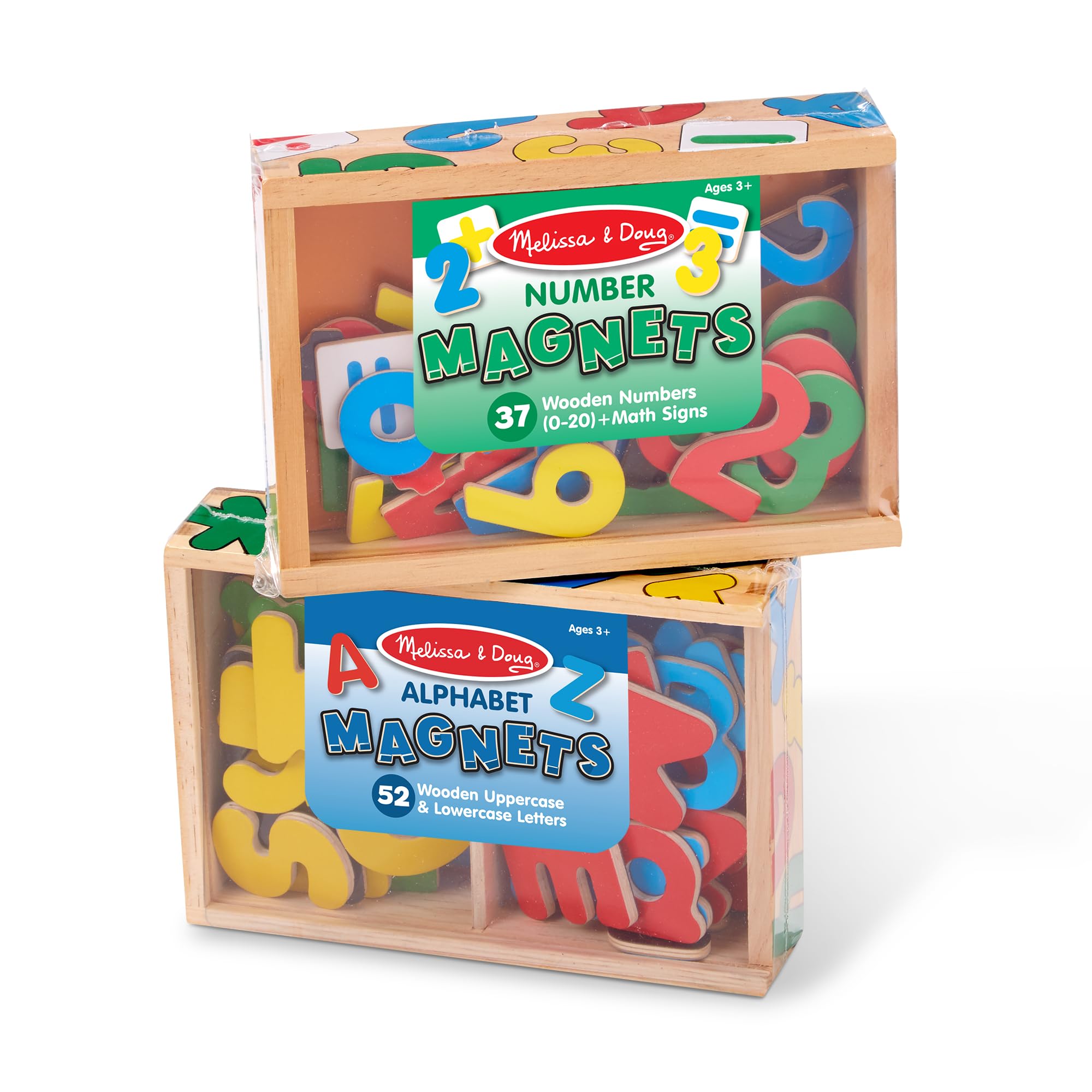
For parents who prefer wooden toys, the 89 pieces open up free-form word building that children genuinely enjoy. The magnet pull is the limitation — letters slip off standard fridge doors, so this suits gentle, supervised play or a reachable fridge spot rather than daily spelling sessions. The wood veneer finish can also chip under rough handling.

Bottom line: Best for families who value a classic wooden feel and don't mind repositioning letters — less suited to frequent spelling activity on a busy fridge.

How to Choose

Age Range

A toy labeled 3+ may assume fine motor skills a three-year-old hasn't developed. Magnetic tracing boards and rigid puzzle pieces demand a steadier hand than most preschoolers have.

Electronic toys rated for 6–36 months target exposure and cause-and-effect, which older kids outgrow quickly. Match the range to your child's dexterity and attention span, not calendar age.

Learning Focus

The biggest difference is how a toy teaches. Audio sets reinforce letter sounds through repetition, building phonemic awareness. Picture-matching games build recognition and vocabulary but skip the sound connection.

A recognition-only toy won't prepare a child to sound out words, while a phonics-heavy toy overwhelms a toddler still learning letters have names. Decide whether your child needs recognition, sounds, or spelling, and buy the tool that delivers that layer.

Number of Pieces

Piece count reflects intended use more than value. A 26-tile set supports letter-by-letter phonics; a 200-plus set carries free-form word building across several kids. The trade-off is management: larger sets scatter and arrive incomplete more often.

Structured sets with a fixed word list hold attention only as long as the list stays novel. Once a preschooler memorizes the sixteen words a board supports, learning value flatlines unless pieces allow open-ended spelling.

Interactivity

Electronic toys trade battery life for hands-free engagement. Audio delay — the lag between button press and sound — confuses toddlers learning cause and effect. More moving parts also means more failure points over a year.

Manual toys ask more of the child, which builds fine motor control. But they demand more adult facilitation, so weigh how much hands-on time you can provide before choosing an interactive model.

Materials

Materials determine lifespan. Solid plastic shrugs off drops; wood veneer with paper stickers peels after weeks of damp hands. Foam letters resist water but trap mold in humid bathrooms unless dried fully.

Thin cardstock warps, posters tear at fold lines, and weak magnets lose grip on textured fridges. The practical test: will the pieces survive daily use by your child's specific handling style?

Frequently Asked Questions