Future Skills for Students: Test Durability Before Chasing Trends
A durability test for judging which student skills deserve sustained practice—and which may expire with the next tool update.
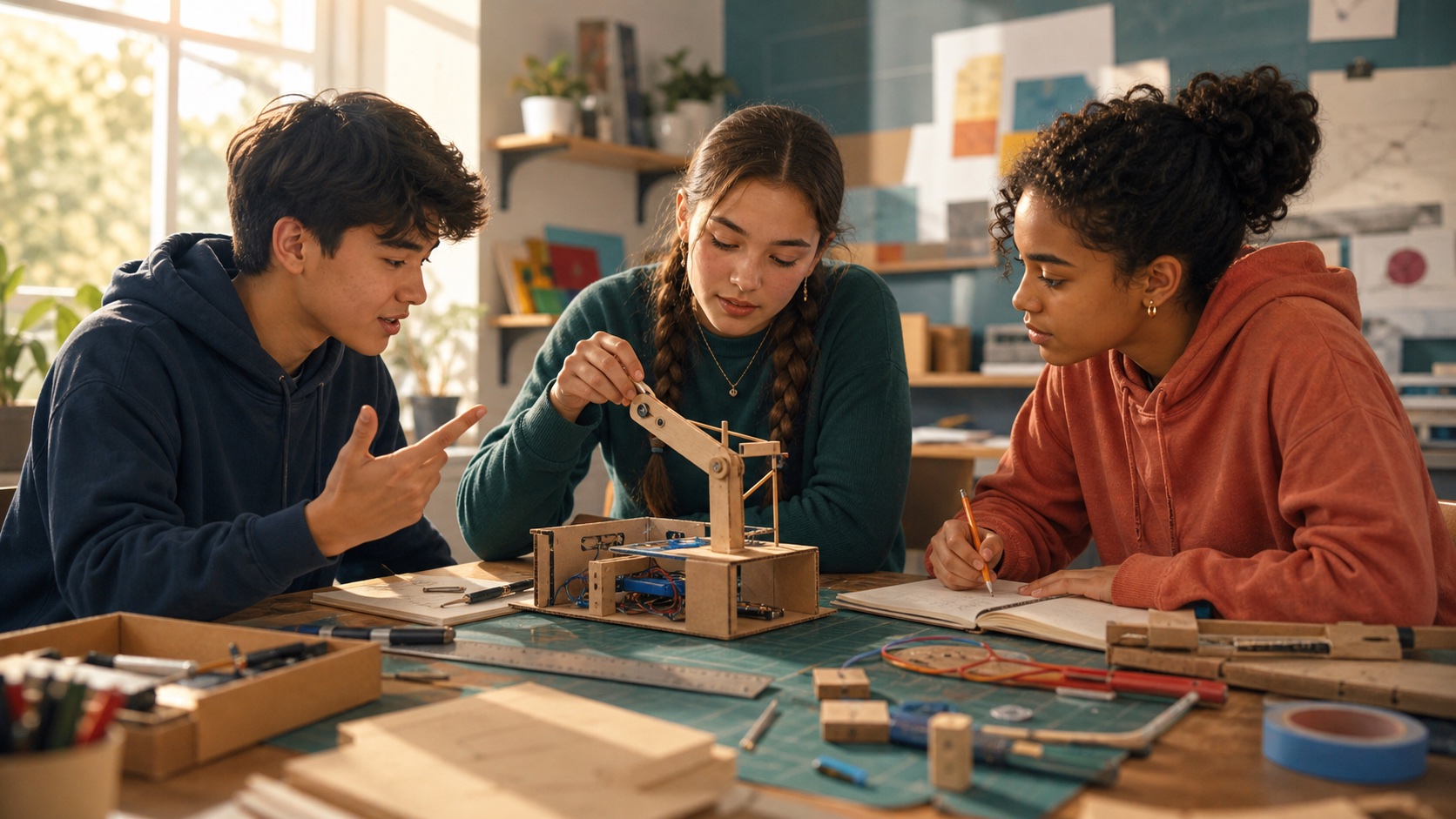
Lists of future skills usually repeat creativity, communication, adaptability and critical thinking. The words are agreeable; the investment decision is missing. A skill deserves curriculum time when it transfers to several valuable contexts, rests on learnable knowledge, improves through real practice and remains useful when tools change.
Use the Skill Durability Test below to compare a course, club, app or proposed “AI-ready” program before adding it to a child's schedule.
A Label Is Not a Teachable Skill
“Creativity” can mean generating many ideas, making an original scientific model or composing for an ensemble. Each requires different knowledge and feedback. “Communication” may mean listening to a distressed person, writing a technical brief or persuading a skeptical audience.
Convert every broad label into a performance: student does what, with what knowledge, for whom, under which constraints, and how is quality judged? If a provider cannot answer, it is selling an aspiration rather than a learning design.
Run the Five-Part Skill Durability Test
Transfer range
Does the capability help across several tasks or only one product interface?
Knowledge base
Does instruction build the concepts and examples required for sound judgment?
Practice density
How often does the learner make decisions, receive feedback and try again?
Visible evidence
Can the student demonstrate the capability in a changed, partly unaided task?
Tool dependence
Would most of the value survive a vendor, interface or model change?
Rate each item low, medium or high and record the evidence. Do not average away a fatal weakness: a course with no student practice cannot be rescued by a fashionable topic.
Tier One: Foundations That Accelerate Future Learning
Reading comprehension, clear writing, quantitative reasoning, scientific knowledge and the ability to learn independently have wide reach. They help students enter new domains and detect when an answer conflicts with reality.
The Institute of Education Sciences recommends spaced review, active retrieval, multiple representations and deep explanatory questions in its student learning practice guide. These are not glamorous future skills; they are methods for making knowledge available when future problems arrive.
Tier Two: Judgment Inside a Domain
Problem solving is not a detachable mental muscle. A student evaluates a medical claim differently from a historical source or a business forecast. The National Academies found that transferable competence combines expertise in a subject with knowing how, why and when to apply it; see its synthesis on deeper learning and transfer.
Prioritize courses where students investigate ambiguous cases, compare models, justify criteria and revise after feedback—not courses that merely rename worksheets “critical thinking.”
Tier Three: Self-Regulation and Collaboration
Planning, monitoring, help-seeking, listening, conflict repair and coordinated execution remain useful across changing tools. But they develop through responsibility, not lectures about mindset.
Look for a repeated cycle: the student makes a plan, encounters friction, communicates with another person, receives consequences or feedback, and revises. A group project in which one adult or one student controls everything provides little collaboration practice.
Our responsibility-transfer guide shows how to make these learning jobs observable.
Tier Four: AI Literacy Without Tool Worship
Students should understand what AI systems do, examine outputs and impacts, protect data, decide what to delegate, verify important claims and disclose meaningful assistance. The OECD–European Commission's 2026 AI Literacy Framework describes 19 competences across knowledge, skills and attitudes; UNESCO's framework adds a human-centered, ethical orientation.
Prompt fluency belongs inside this broader literacy. A shortcut for one interface has a short half-life; the ability to define a goal, test evidence and retain responsibility travels farther.
Give Human and Physical Capabilities Real Weight
Some capabilities are hard to evaluate in conventional tests yet costly to neglect: observing a room, building trust, handling tools safely, performing under shared timing, caring for another person and noticing changes in materials or bodies.
Do not call them “soft skills.” Specify the performance and the standard. A student leading a community event can be assessed on stakeholder communication, contingency planning, resource use and post-event review.
Compare Programs With Evidence, Not Vocabulary
Ask the provider
- What do students know and do by the end?
- How many times does each student practice the target performance?
- Who or what supplies feedback?
- What changed task tests transfer?
- What must students do without AI?
- Can we see anonymized work before and after instruction?
- Which claims are supported by evidence, and which are design hypotheses?
A simple debate team, repair project or demanding subject course may build more durable capability than a costly “future skills” camp.
Build a Balanced Practice Week
Know
Retrieve and connect important content in mathematics, language, science, history or another domain.
Judge
Analyze one uncertain claim, case, model or AI output using explicit criteria.
Make and coordinate
Create something constrained by materials, an audience or teammates.
Reflect and adapt
Review evidence, name an error and choose the next practice move.
This is not a required timetable. It is a check against weeks filled entirely with passive consumption or narrow test completion.
The Best Future Skill Is an Evidence-Producing Habit
Because the labor market will change, students need a way to update beliefs. Teach them to make a small forecast, act, compare the result with the forecast and revise. Keep examples in a learning portfolio: drafts, explanations, projects, feedback and decisions.
The purpose is not to predict perfectly. It is to prevent confidence, fear or AI-generated plausibility from becoming the only evidence guiding the next choice.
Frequently Asked Questions
-
Protect reading, writing, mathematics and organized domain knowledge first, then add self-regulation, collaboration, disciplinary judgment and responsible AI literacy through real practice.
-
Yes, but not as content-free slogans. Students need knowledge, examples, constraints, repeated decisions and feedback within a domain, followed by opportunities to transfer learning to changed tasks.
-
Some interaction techniques may remain useful, but interface-specific tricks can expire quickly. The durable layer is defining intent, supplying appropriate context, evaluating evidence, protecting data and taking responsibility for the result.
-
Ask for a clear target performance, practice frequency, feedback source and a changed task that students complete with limited support. Marketing language and polished final products are weak evidence alone.
-
Not necessarily. AI literacy requires some direct use, but human interaction, reading, making, movement and real-world responsibility develop complementary capabilities that a screen cannot supply by itself.