STEM Toys Product Guide

8 Best Telescope for Elementary Students 2026: Show the Real Moon

Best telescopes for elementary students that actually resolve the moon — aperture and tripod stability matter more than the magnification on the box.

8 Best Telescope for Elementary Students 2026: Show the Real Moon editorial illustration

Every box promises the same thing: 150x magnification and a postcard shot of the moon. The first look through most of these scopes is a wobbly blur or an empty field. The gap between packaging and what a child actually sees comes down to aperture and mount stability — not the magnification number.

More magnification on a shaky tripod only magnifies the shake. A 70mm objective with a steady mount shows lunar craters and, on a clear night, the rings of Saturn; an 80mm gathers more light but adds weight small hands must manage. The scopes here fall in the 50-80mm range a young astronomer can aim and focus alone.

One thing separates a telescope that inspires from one that gathers dust: the first fifteen minutes. A misaligned finder scope or a rough focus knob makes any of these look broken. That is a fix, not a flaw — and it decides whether a child asks to go outside after dinner.

#1

Gskyer 70mm AZ Telescope

Gskyer 70mm AZ Telescope

First real scope

Customer rating 4.3/5
Check Price

Worth Noting

  • At the 120x Barlow setting the image trembles with any tripod bump
Tripod
Adjustable aluminum
Aperture
70mm
Assembly
Tool-free
Eyepiece Kit
Two eyepieces, 3x Barlow
Read the full review

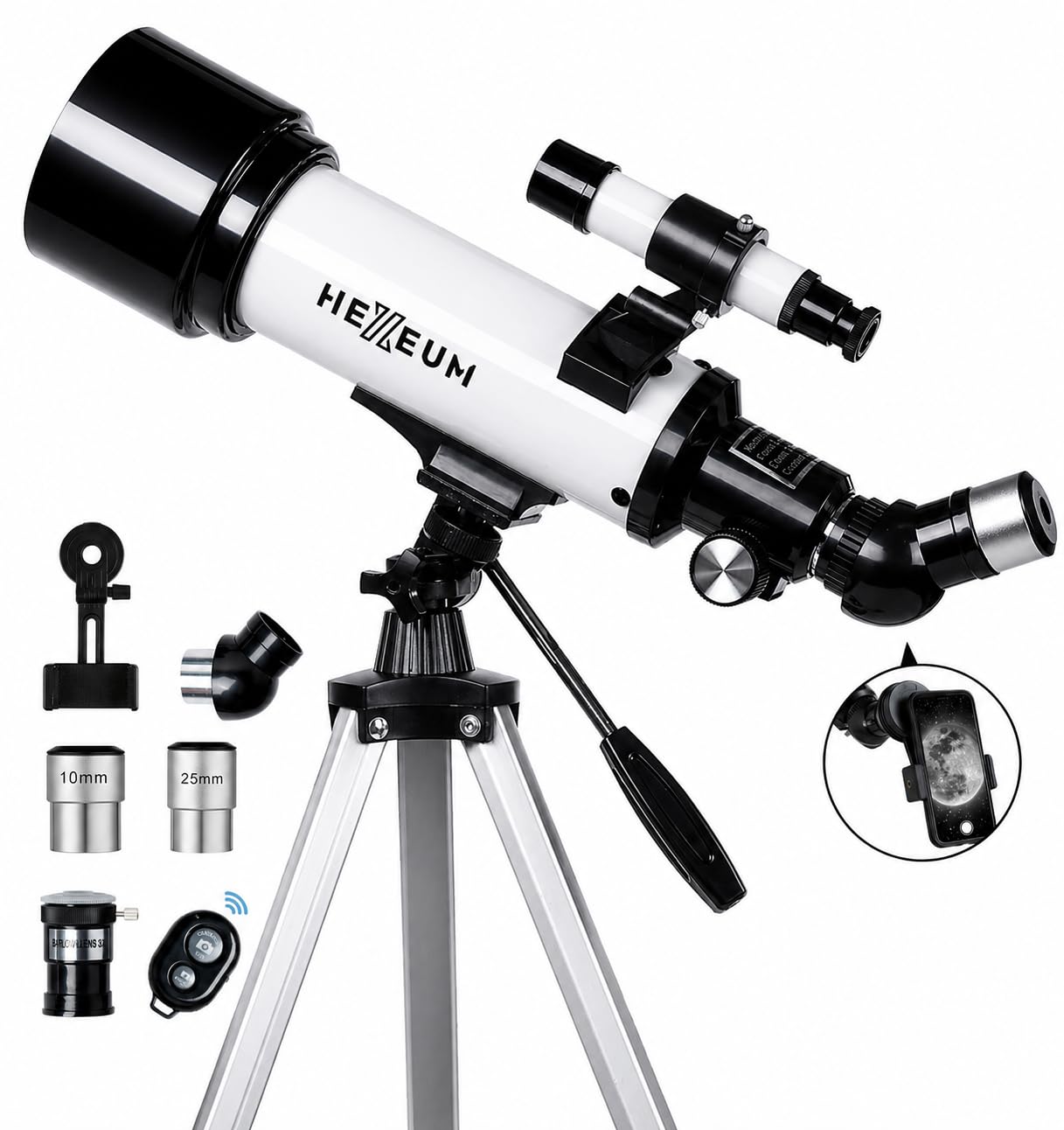
A 70mm objective sits in the forgiving sweet spot for a first telescope — bright enough that a first night rewards, forgiving enough that small errors still end with a view. The aluminum tripod and altazimuth mount assemble by hand with no tools, which is the difference between a gift that gets used and one that stays boxed; a 6-year-old can manage the build alongside an adult. Two eyepieces and a 3x Barlow take the 400mm f/5.7 tube up to a usable 120x, with the low-power eyepiece doing the most work for young users.

Clear lunar craters and Saturn's rings sit within reach at this aperture, and the phone adapter pulls more from the view than bundled adapters usually manage — the wireless remote fires the shutter hands-free, turning first looks into a family show-and-tell. Kids come back to the eyepiece on their own, and evening use becomes a recurring fixture rather than a one-night novelty; at the 20x eyepiece alone the moon already frames fully with enough room to keep exploring.

This scope fits elementary students ages 8-12 meeting their first real instrument, and families who want a shared hobby rather than a solo gadget — both an adult and a child can drive the altazimuth mount, which is why it keeps finding its way outside. Toddlers under 5 who need a toy-grade tabletop scope are better served elsewhere, and a seriously hooked young astronomer will outgrow the 70mm within a year; for that child the 80mm light-gathering sibling in this set is the natural upgrade.

The one genuine catch is the finder scope, which ships misaligned. Budget roughly 15 minutes of adult time on the first evening to align it with the main tube — skipping that step is the usual reason a first night finds an empty patch of sky instead of a planet. Done once, it is a small price for a view that keeps the child at the eyepiece.

The wireless remote fires the phone's camera without touching the tube — seat the phone in the adapter, center the target at low power, then trigger the shutter for a steady frame.

Bottom line: The right first scope for a kid who is curious but not yet obsessed — genuine optics, tool-free assembly, and a phone adapter that makes the moon shareable, with an honest upgrade path when the hobby takes hold.

#2

Koolpte 80mm AZ Telescope

Koolpte 80mm AZ Telescope

Planetary detail

Customer rating 4.3/5
Check Price

Worth Noting

  • In light-polluted city skies, high-magnification focusing turns finicky
  • First-night target framing takes practice; a child expecting instant results may need help lining objects up in the viewfinder
Tripod
Adjustable aluminum
Aperture
80mm
Assembly
Tool-free
Eyepiece Kit
25mm, 10mm, 3x Barlow
Read the full review

The Koolpte 80mm out-gathers the kit-focused 70mm in this set, and that extra aperture is what older kids register — lunar craters sharpen while the 3x Barlow reaches 180x for closer looks at the planets. That reach is the measurable difference from the 70mm options here, the line between a soft smudge and a recognizable disc at the eyepiece. The bundled phone adapter and wireless remote let a child snap steady moon shots without nudging the tube, so framing holds while the shutter fires.

This suits a 9-12 year old ready to outgrow a starter 70mm — the light-gathering payoff shows as interest shifts from 'see the moon' to spotting planet detail. The honest tradeoff lands on the first evening: getting objects lined up in the viewfinder takes practice, and an impatient child benefits from an adult guiding the finder alignment before the image sharpens.

The Koolpte stretches a family budget further than most scopes its size — the phone adapter and remote ship at a mid-range price, and the aluminum tripod stands up to several sessions of handling. For a household that wants one scope to carry a child from curiosity through the early-middle years, the extra aperture becomes an investment in continued interest rather than a toy outgrown in a season.

Bottom line: The Koolpte gives a curious 9-12 year old the most reach per dollar in this group — matched to families ready to sit through the first evening's learning curve.

#3

CELTICBIRD 80mm Backpack Scope

CELTICBIRD 80mm Backpack Scope

Travel and camping

Customer rating 4.4/5
Check Price

Worth Noting

  • Plastic-heavy body feels lighter than the premium price signals.
  • Centering an object takes practice
Tripod
Adjustable aluminum
Aperture
80mm
Assembly
Tool-free
Eyepiece Kit
20mm, 9mm, no Barlow
Read the full review

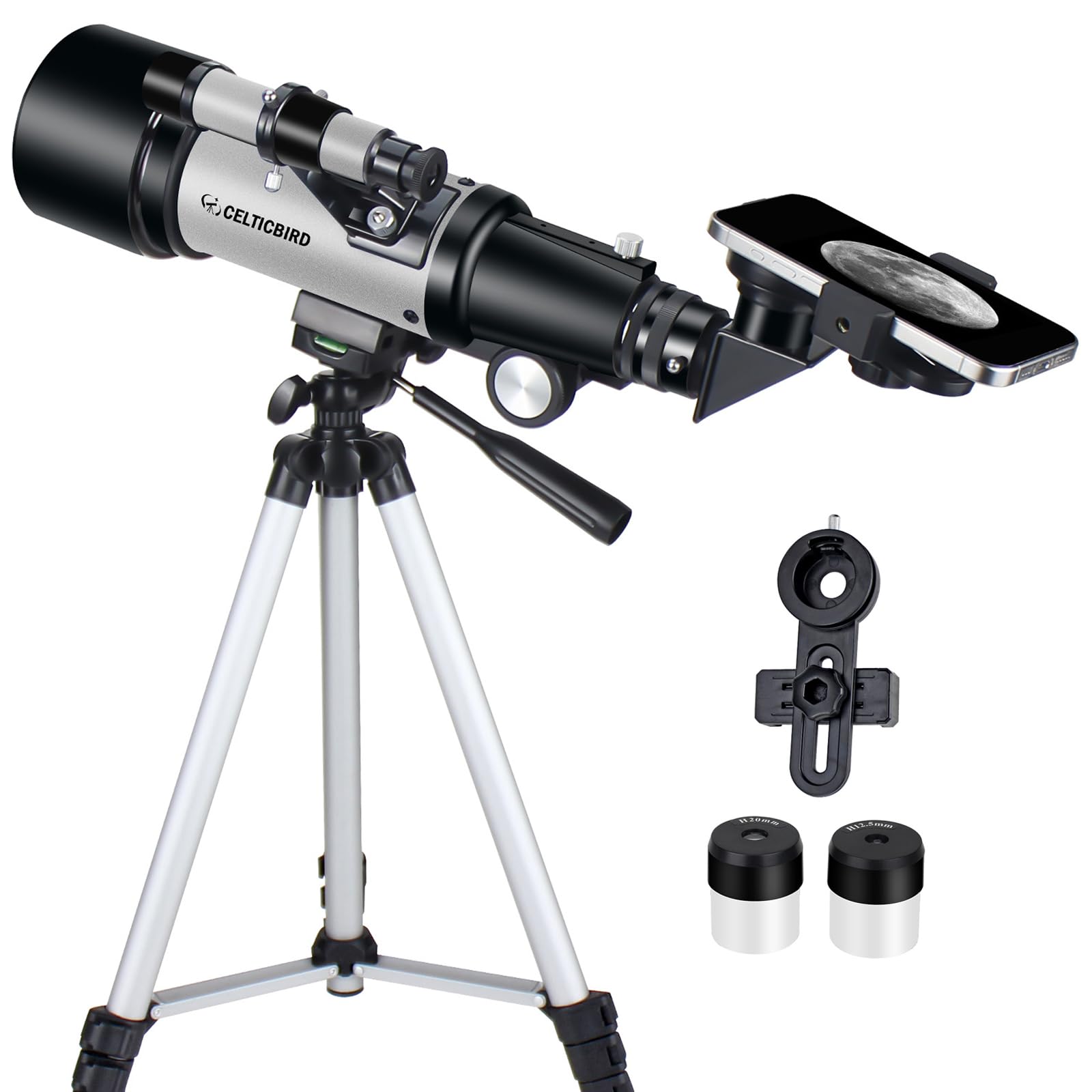
The CELTICBIRD pairs an 80mm objective with a 600mm focal length inside a purpose-built backpack — a combination the lighter scopes in this set skip entirely, and the moon filter tucks into a pocket. Where the compact 70mm sibling caps at 32x with no carrying case, this tube holds 66x of reach that folds down for a hike or a camping trip.

Optically it reaches past its price: moon craters hold their shape, Jupiter's moons resolve as pinpricks of light, and on a steady night the rings of Saturn come into view — a depth of detail usually reserved for costlier scopes. Setup stays tool-free, with tube, tripod, and eyepieces clicking together in minutes, which matters when assembling at a dark campsite after sunset.

The buyer this suits is a family that camps or travels and wants one scope serving both a 9-to-12-year-old and the adults. The plastic-heavy body reads lighter than the premium price suggests, and centering an object takes practice before the finder clicks — both worth weighing before purchase. Very young kids (ages 5–7) will strain with the larger tube, and budget shoppers will find the core experience in the cheaper 70mm options, which narrows this to families ready to invest in one true scope.

Bottom line: This one rewards camping families — planet-level reach packed for the trail, with tool-free setup that keeps a young astronomer engaged.

#4

Koolpte 70mm AZ Telescope

Koolpte 70mm AZ Telescope

Full kit value

Customer rating 4.3/5
Check Price

Worth Noting

  • Planetary shots at 150x can soften as the aluminum tripod wobbles under the Barlow.
Tripod
Adjustable aluminum
Aperture
70mm
Assembly
Tool-free
Eyepiece Kit
25mm, 10mm, 3x Barlow
Read the full review

The bundled 3x Barlow stretches the 70mm objective to 150x, out-reaching the top pick in this lineup, and the included phone adapter, wireless remote, and carry case make it a complete first kit rather than a bare tube. Load the 10mm eyepiece with the Barlow and the moon fills the field; planetary views reach further than the Gskyer at the same aperture. Raw light-gathering still trails the 80mm sibling that tops this category on planetary detail, but that sibling costs more.

Elementary users operate the scope themselves — the altazimuth mount stays smooth under small hands, and the wireless remote lets them trigger phone photos without touching the tube. Moon viewing wins over skeptical parents: a clear night shows craters at 20x, and the bundled eyepieces frame wide star fields before a child's attention wanders.

This suits families who want one box covering optics and accessories. The tradeoff is a first-evening setup curve: the finder arrives misaligned and needs a 15-minute adult alignment before a child can aim at anything, and reaching focus takes a little reading. After that first night, kids typically run it alone. It is not for parents unwilling to spend that one session, nor for toddlers who need a tabletop toy.

Bottom line: Families set on one box covering scope and accessories get strong capability-per-dollar here, and the kit keeps them from buying extras later.

#5

GeoSafari Starview Scope

GeoSafari Starview Scope

Classroom learning

Customer rating 4.1/5
Check Price

Worth Noting

  • Limits lunar views to the moon's general surface, missing crater close-ups that spark curiosity
  • Needs a stable, flat surface for the tabletop tripod
Tripod
Tabletop only
Aperture
—
Assembly
Tool-free
Eyepiece Kit
10x, 50x only
Read the full review

Built around two child-friendly eyepieces and an activity journal, this scope turns stargazing into a guided lesson rather than an aimless look. The 10x and 50x eyepieces swap easily, and the journal walks kids through observing projects step by step.

Classroom teachers and homeschool parents get a curriculum tool, not just a scope. The 50x cap and tabletop mount mean no lunar close-ups or standing-height viewing, so it fits structured lessons over serious stargazing. Young kids aged 5-8 who need a low-frustration first scope will enjoy it most.

Parents report that young kids engage with it immediately, thanks to the simple focus and low-power eyepieces that make targets easy to find. The journal keeps children on task and turns a casual sky look into a repeatable activity.

Place the tabletop on a level surface and align the finder in daylight for the easiest first view.

Bottom line: Best for teachers and parents who want a guided first telescope experience, not lunar close-ups.

#6

CELTICBIRD 70mm Travel Scope

CELTICBIRD 70mm Travel Scope

Small hands

Customer rating 4.3/5
Check Price

Worth Noting

  • Finder scope aiming needs an adult's steady hand before young kids can point it
  • 20x-32x eyepiece kit with no Barlow leaves Saturn and Jupiter detail out of reach
Tripod
Adjustable aluminum
Aperture
70mm
Assembly
Tool-free
Eyepiece Kit
20mm, 12.5mm, no Barlow
Read the full review

This CELTICBIRD is the lightest and least expensive 70mm in the set, and that pairing suits very young kids — 7-year-olds carry it outside, set it up, and aim it at the moon happily. The lens stays clear for lunar and nearby-star views, and the aluminum tripod holds up through rough elementary handling. Boundary conditions come into play at the eyepiece kit: two pieces cap magnification at 32x with no Barlow, so Saturn and Jupiter stay fuzzy dots rather than resolved disks, and the finder needs a steady adult hand for first-night alignment. For a 6-8 year old after a first taste of the sky, the 70mm objective delivers satisfying moon views at a budget price — an older child will quickly want more reach.

Bottom line: For a 6-8 year old's first telescope on a budget, this 70mm delivers moon and nearby-star views with little fuss — skip it if planetary detail is the goal.

#7

Luzsco 50mm Beginner Scope

Luzsco 50mm Beginner Scope

Budget first taste

Customer rating 4.2/5
Check Price

Worth Noting

  • On uneven ground, the tripod legs can flex on some units and shake the view during focus
  • Image sharpness varies between units
Tripod
Fixed tripod
Aperture
50mm
Assembly
Tool-free
Eyepiece Kit
6mm, 20mm, Barlow
Read the full review

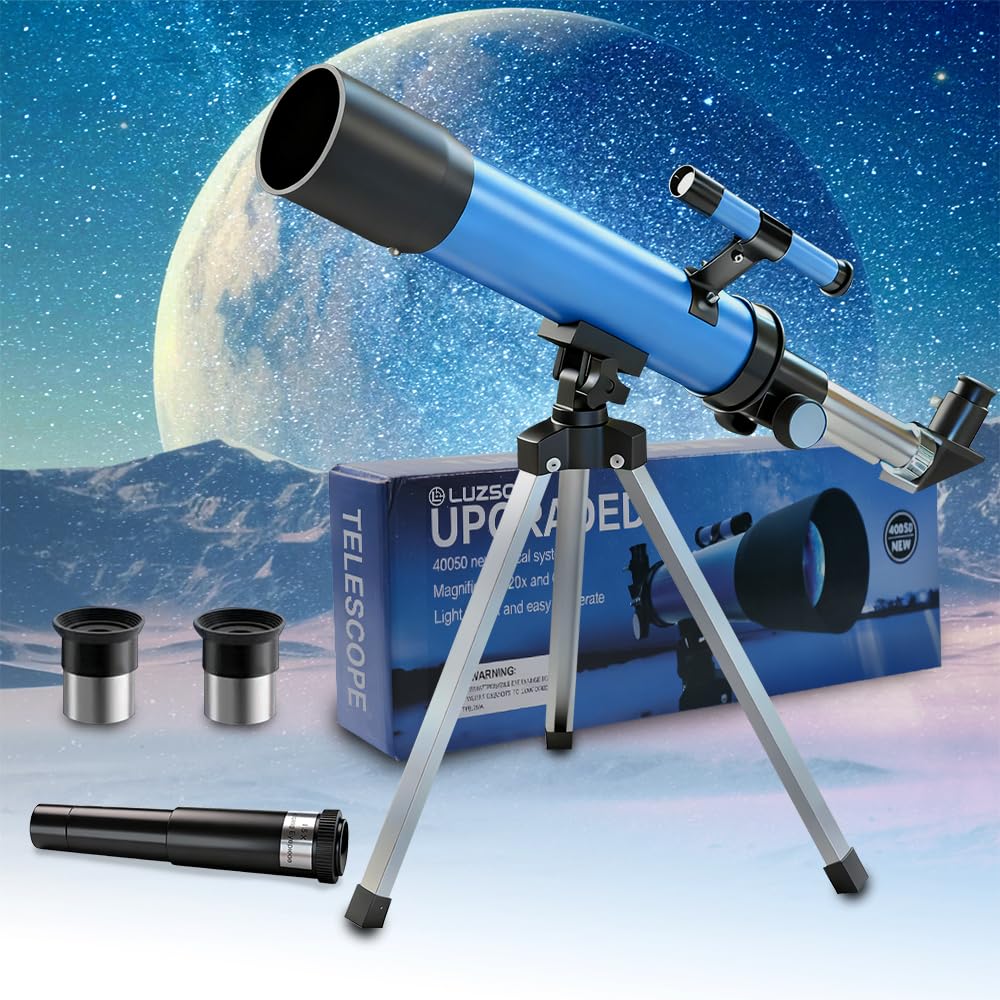
The Luzsco 50mm assembles in minutes and is light enough for a six-year-old to handle on their own — a real 50mm objective that can put the moon in view on a clear night for around budget money. Parents shopping for a low-risk first taste get genuine value for the price.

Where this scope falls short is consistency. Image quality varies between units — some owners see the moon's surface crisply, others report only a blur — and the tripod can feel flimsy on certain units. Treat it as a single-evening trial for a young child rather than a dependable astronomy tool; expectations staying low keeps the experience a pleasant one.

Set up on flat, level ground with the leg locks tightened by an adult — the tripod holds steady best on a hard surface.

Bottom line: Buy it only as a very first, low-cost taste for a child aged six to eight. For dependable moon or planet viewing night after night, spend more on a steadier scope.

#8

HUGERSTAR 80mm Telescope

HUGERSTAR 80mm Telescope

Budget 80mm travel

Customer rating 4.2/5
Check Price

Worth Noting

  • Tripod legs can feel unstable on uneven ground, varying between units
  • Image sharpness can vary between units, with a given example delivering only blur
Tripod
Adjustable aluminum
Aperture
80mm
Assembly
Tool-free
Eyepiece Kit
25mm, 10mm, 3x Barlow
Read the full review

The HUGERSTAR 80mm packs genuine light-gathering into a travel-friendly shell — the 500mm focal length with the 3x Barlow reaches 150x, where Jupiter's four moons come into view, and the whole rig folds into a backpack that fits a check-in bag. Setup is tool-free, and the bundle of two eyepieces, phone adapter, and stickers makes it a low-friction family introduction. The catch is consistency: image sharpness and tripod sturdiness can vary between units, and a given example may deliver blur even after following setup steps, or a leg that won't hold on uneven ground. As a budget 80mm, it undercuts the Koolpte on price but trails it on uniformity, so treat it as a value play rather than a guaranteed performer.

Bottom line: This fits a budget-minded family willing to test and return a unit if the optics underdeliver — for casual backyard viewing at a discount price, the 80mm value is genuinely there.

How to Choose

Aperture Sets What You Can See

Aperture, the diameter of the main objective lens, decides how much light the scope gathers. A 70mm objective resolves lunar craters where a 50mm shows only a bright smudge; on a clear night it decides whether Saturn's rings appear. Bigger means more detail — but an 80mm tube weighs more and feels bulkier, suiting a 9-to-12-year-old, while 70mm fits an 8-year-old's independent use better.

The Finder Scope Is the Real First Step

The finder scope is a low-power sight beside the main tube used to aim the telescope. It ships misaligned more often than not, so the finder centers on the moon while the main tube stares at empty sky and a child sees nothing. Aligning it takes about ten minutes in daylight using a distant pole or antenna — skip it, and the scope looks broken no matter how good the optics.

A Steady Tripod Outweighs High Magnification

A tripod's only job is to hold the tube still while focus is set, and magnification multiplies every wobble; at 150x a tap on a leg sends the view bouncing and fine focus becomes impossible. That is why advertised 150x-275x claims mislead — usable power on a 70mm scope tops out near 120-140x, and only on a steady mount. An adjustable aluminum tripod with firm leg locks is the minimum for anything beyond casual moon watching.

Eyepieces and the Barlow Reality

Eyepieces swap in to change magnification, and a 3x Barlow lens doubles each one's power. The practical ceiling is set by aperture — roughly 2x the aperture in millimeters — so a 70mm scope realistically resolves 20x to 140x regardless of the box. Past that limit the image only blurs, and the Barlow buys lunar close-ups at the cost of a dimmer, finickier image needing a steady hand.

Tool-Free Assembly Keeps Kids in the Game

Every minute an adult spends assembling a scope is a minute of a child's patience draining, and any tool-required step is one an 8-year-old can't manage alone. Tool-free scopes on a simple altazimuth mount get young eyes on the sky fastest — but they often trim the tripod and focus mechanism to save cost, so weight mount stability and focus quality above assembly time.

Frequently Asked Questions