Music Learning Product Guide

13 Best Student Flutes of 2026: That Survive the School Year

Which student flutes actually survive daily school band use — and where to spend for a multi-year instrument versus a single-season starter.

13 Best Student Flutes of 2026: That Survive the School Year editorial illustration

Nearly every budget student flute bills itself as a professional-grade instrument, yet the reality of daily school-band use tells a different story. A flute that sounds beautiful on day one can develop stuck keys or a leaking pad within a semester, and the repair bill often exceeds what the instrument cost.

The real decision isn't brand loyalty — it's matching your spend to how long your child will actually play. An $80 flute makes sense for a first-year student testing commitment, while a properly set-up mid-range or premium model carries a serious player through middle and high school with far fewer mid-season surprises.

This guide sorts student flutes by the trade-offs that actually matter: key-work durability, out-of-the-box playability, materials, and warranty support. You'll know exactly what each price tier buys before you commit a single dollar.

#1

Yamaha YFL-222

Yamaha YFL-222

Multi-year commitment

Customer rating 4.7/5
Check Price

Worth Noting

  • A small share of units can arrive with a factory flaw; the 2-year warranty backs a replacement.
  • Premium price sits at roughly double the budget flutes in this set.
Material
Nickel silver, silver-plated keys
Hole Type
Closed, offset G
Read the full review

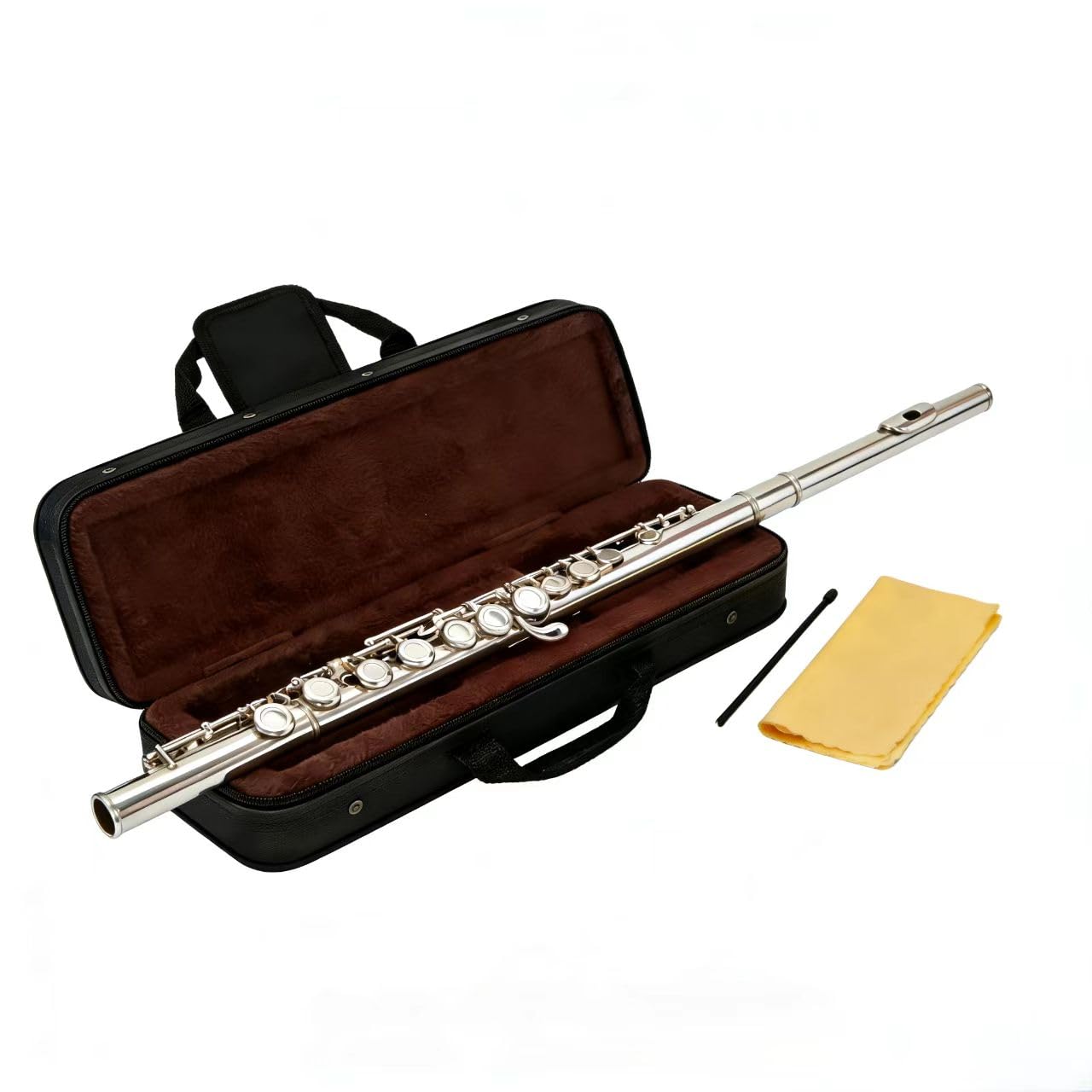
The YFL-222 is a verified genuine Yamaha — the school-band standard name — backed by a 2-year warranty and a nickel-silver body with silver-plated keys. It plays comfortably out of the box, with an easy low register that new players reach without fighting the instrument. Sound consistently earns praise across the range, and the closed-hole, offset-G layout matches what classroom teachers expect.

Tone holds steady from the lowest register upward as a beginner builds breath control, and the build carries through season after season — the separation point from budget flutes that need attention mid-year.

Serious students who will play across several school years, and parents who want a set-and-forget instrument through middle and high school, are the best fit. The premium price, roughly double the budget flutes in this set, is the main hurdle and steers tight-budget families toward a cheaper option. A small share of units can arrive with a factory flaw, and the 2-year warranty covers a replacement.

Bottom line: This is the flute that carries a serious student from first band class through high school — the premium price buys that longevity and the lowest chance of mid-season interruptions.

#2

Jean Paul FL-220

Jean Paul FL-220

Middle-school band

Customer rating 4.5/5
Check Price

Worth Noting

  • Some units open with a sticky key or slightly airy tone until pads seat with regular play.
  • Mechanism wear has been noted on a few units after a couple of months of daily band use.
Material
Silver-plated body
Hole Type
Closed, offset G, split E
Read the full review

NAPBIRT-certified play-tested setup means the silver-plated FL-220 arrives in tune and easy to blow, and its tone earns comparisons to instruments near $1,000. At roughly half the Yamaha's price, it carries the strongest value in this group.

This suits parents who want more than a budget kit without the premium tag, intermediates moving past a first-year rental, and students through middle school. Accept a 1-year warranty — not the multi-year coverage of the top pick — and that occasional sticky-key or airy-tone variance appears on some fresh units. Serious concert aspirants and sub-$110 budgets should look to the budget tier.

Bottom line: For families wanting the top pick's out-of-the-box consistency without the premium tag, this holds up through middle and early high school. Choose the Yamaha instead if multi-year warranty coverage takes priority.

#3

Eastar EFL-1

Eastar EFL-1

Budget first-timers

Customer rating 4.3/5
Check Price

Worth Noting

  • Upper-register tuning can sit uneven on some units, flattening higher notes.
  • A few units arrive with misaligned pads or an F-key that sits off and sounds airy.
Material
Cupronickel, leather pads
Hole Type
Closed, offset G, split E
Read the full review

Eastar's EFL-1 is the budget standard here — the complete kit of flute, hard case, stand, and cleaning gear arrives with a 12-month warranty at a price that suits a strict first-year band budget. The bright, clear tone plays above its cost, and the closed-hole layout keeps a young beginner's first rehearsals comfortable.

This fits a first-year band student on a tight budget, or a family probing a semester of lessons before committing to rental fees. The honest boundary: under daily school-band wear, the key mechanism can give out within a few months, so plan for a possible one-season lifespan rather than multi-year use.

Hold onto the 12-month warranty registration for the first year of ownership.

Bottom line: A fitting first flute for a budget-first trial semester — the complete kit in one box at a price that's easy to justify.

#4

Cecilio Closed Hole C Flute

Cecilio Closed Hole C Flute

School band starters

Customer rating 4.5/5
Check Price

Worth Noting

  • New players may find lower-register notes slow to respond, needing patient practice
  • Thin alloy body can dent with rough handling
Material
Nickel/silver plated
Hole Type
Closed, offset G, split E
Read the full review

Every piece needed for a first band experience arrives in the box: a metal stand, cleaning kit, and pocketbook technique guide. Buyers report solid mid-range tone with easy assembly across the nickel-plated body — a setup that introduces proper band technique without the fiddly extras that stall new players. The included stand and guide spare families the extra purchases other budget kits require.

This kit targets elementary and middle-school band starters, plus gift-givers who want a proper instrument without renting. The delicate body dents with rough handling, so it suits players who treat their gear with care; families expecting a high-school-worthy instrument should budget for something sturdier.

Keep the flute in its case when it's not in hand — gentle storage keeps the delicate body playing its best through the season.

Bottom line: The right call for a first-season band starter who wants everything in one box — plan on upgrading before high school instead of expecting multi-year wear.

#5

Gemeinhardt 1SP

Gemeinhardt 1SP

Recognizable band brand

Customer rating 4.4/5
Check Price

Worth Noting

  • Case zipper can snag and headjoint durability varies between units, a factor for daily backpack transport
Material
Nickel silver headjoint
Hole Type
Closed, offset G
Read the full review

Gemeinhardt is a band-brand name parents recognize at a glance, and the 1SP carries it on a nickel-silver headjoint with a silver-plated body. The tone comes out clear and the finish reads as a genuine band instrument straight from the box, holding up well to steady use from young students. For a family that wants a recognizable traditional name on a flute that will carry a student through several seasons of school band, this fits. Case zipper and headjoint durability has varied between units, so the build is less certain than the benchmark option's.

Test the zipper and headjoint joint on arrival — a quick pre-check before band season avoids a mid-year repair trip.

Bottom line: The Gemeinhardt suits families who value a recognized band name on a mid-range flute, carrying a student through several seasons before an upgrade.

#6

Mendini Closed Hole C Flute

Mendini Closed Hole C Flute

Elementary beginners

Customer rating 4.4/5
Check Price

Worth Noting

  • A unit can arrive with a stuck key or a note that stays silent.
Material
Copper-nickel alloy
Hole Type
Closed, offset G, split E
Read the full review

The Mendini is the warm entry in this set — a pocketbook technique guide and a forgiving key action geared to small hands during the first months of learning. The included stand, joint grease, and protective case mean a family starts playing without chasing accessories, and the guide walks a first-timer through their early lessons.

This kit suits 5th graders and elementary music classes where the flute is a try-out rather than a long-term instrument. Budget buyers should treat it as a seasonal purchase — keys can separate from the body within a few months of daily play.

Run the swab through after each session — a dry pad bed keeps the keys responsive through the season.

Bottom line: The Mendini is the right call when gauging a young child's interest — a low-cost, complete setup that suits a one-season commitment.

#7

Rhythm Engraved Flute

Rhythm Engraved Flute

Engraved gifting

Customer rating 4.5/5
Check Price

Worth Noting

  • Joint paint can chip after a few months of handling
Material
Cupronickel, engraved
Hole Type
Closed hole
Read the full review

The engraved floral body stands out visually, and the warm low-register tone exceeds expectations at this price. A stand, hard case, and cleaning kit arrive in the box. Joint paint may chip after a few months — a cosmetic quirk rather than anything affecting play. That keeps it a secondary option behind the top budget picks for daily band routine.

Bottom line: Fits a beginner who wants a pretty, distinctive instrument for home practice — less suited to the demands of daily school-band use.

#8

Glory Closed Hole C Flute

Glory Closed Hole C Flute

First-year starters

Customer rating 4.4/5
Check Price

Worth Noting

  • Some units arrive with notes that don't sound from pad alignment
Material
Cupronickel, nickel silver
Hole Type
Closed hole
Read the full review

The highest-volume budget flute here draws a huge buyer base at a rock-bottom price, with a tone that pleases self-teaching beginners. Durability is where it trails the budget standard at the same price — keys can wear out within a school year of band use, so plan on a single-season instrument.

Bottom line: Grab this for a low-stakes test of band interest — replace it with a sturdier model if the student stays past a year.

#9

POGOLAB Closed Hole Flute

POGOLAB Closed Hole Flute

Tightest budget

Customer rating 4.3/5
Check Price

Worth Noting

  • When a pad needs adjusting or a key shifts, the low-melting alloy can't be soldered
Material
Nickel-plated
Hole Type
Closed hole
Read the full review

Nickel-plated body with stainless-steel springs keeps weight low for small hands, making it a gentle first instrument for a young beginner. As a semester-only school option, the price is right. The trade-off: the alloy can't be soldered without melting, so a repair shop may refuse it — treat this as replaceable rather than repairable.

Bottom line: For a family that just needs a semester of working school band at minimum spend, the POGOLAB fits — as long as you accept it gets replaced, not repaired, when something goes wrong.

#10

EASTROCK Pink Flute

EASTROCK Pink Flute

Color appeal

Customer rating 4.4/5
Check Price

Worth Noting

  • On daily school-band use, plating corrosion and joint chipping can appear within months
Material
Cupronickel, plated
Hole Type
Closed, offset G, split E
Read the full review

The Eastrock's pink finish and full kit — case, stand, cleaning supplies — win over a young band student drawn to color. It plays fine for the price on that first-year mission. Plating corrosion and joint chipping can show within months, so it suits a gentle handler who may outgrow it anyway.

Bottom line: The right pick for a young kid who wants a pink first flute for a trial semester and handles it gently; budget-tier durability is the tradeoff you accept.

#11

YANASON Closed Hole Flute

YANASON Closed Hole Flute

Complete budget kit

Customer rating 4.4/5
Check Price

Worth Noting

  • At first rehearsal, an unresponsive key can surface
Material
Copper-nickel alloy
Hole Type
Closed, offset G, split E
Read the full review

The YANASON ships as a full starter kit — case, metal stand, cleaning kit, gloves — giving a first band year its gear in one box, and committed students find the tone workable. Its 3-month warranty and slim purchase record mark it a trial-semester instrument rather than a multi-year bet, which is the real boundary for budget buyers.

Bottom line: For a family on a strict budget wanting its stand and accessories in the box, and willing to treat this as a trial-semester risk, it delivers.

#12

Deloitte Closed Hole Flute

Deloitte Closed Hole Flute

Lowest cost entry

Customer rating 4.3/5
Check Price

Worth Noting

  • Intonation can run off-pitch in some cases
Material
Cupronickel, plated
Hole Type
Closed hole
Read the full review

The cheapest playable flute in this set, priced to test a child's interest in band for less than a couple of rental months. Individual instruments can arrive with mechanical issues, sometimes unusable, so a quick check on delivery is worth it. That variability is why it trails alternatives a tier up, though its low cost makes a trial season low-risk.

Bottom line: This suits a family certain they are testing the waters — a semester of band at a price near several rental payments. If the child sticks with it past the season, step up to a sturdier instrument.

#13

Eastar EFL-2 Open Hole

Eastar EFL-2 Open Hole

Advancing beginners

Customer rating 4.3/5
Check Price

Worth Noting

  • Under daily band rehearsal, key wear can surface within a semester
Material
Cupronickel, leather pads
Hole Type
Open hole (convertible)
Read the full review

The EFL-2 keeps Eastar's budget value and bright, easy-to-blow tone in a convertible open-hole build, letting a committed beginner work proper technique from the start. Open holes need fingertips that seal fully — suited to students advancing past first-year material, not small-handed newcomers. Daily band practice can surface key wear within a semester, a boundary of the budget tier.

Bottom line: Fits a student who will move to intermediate repertoire within a year and can seal the open holes — not a first-year closed-hole buyer.

How to Choose

Closed vs. Open Hole

Beginners should start on a closed-hole, or plateau, flute, where solid keys cover all six primary tone holes. Open-hole models leave those holes exposed, requiring fingertips to seal them exactly; most young or small hands can't do that reliably, so notes come out airy or don't speak at all.

A closed-hole flute removes that variable so a new player can focus on embouchure, breath support, and hand position. Plan to move to an open-hole instrument only when the student has the hand size and technique to cover the holes cleanly — usually after a year or more of regular play.

Key Mechanism Durability

The real cost of every cheap flute sits in its key mechanism. Budget models use thinner alloy key arms and lower-grade pads that gradually lose their seal under daily assembly, cork grease, and transport — the exact conditions of school-band use.

The first symptom is usually a single note that stops sounding — frequently the F key or low C and D — because a pad no longer seats tightly. On a sub-$110 flute the repair often costs more than the instrument, so the practical answer is to budget for replacement rather than repair.

Out-of-the-Box Playability

How a flute sounds on day one depends almost entirely on setup: pad seating, key alignment, and screw adjustment. A properly adjusted flute plays a clean low register immediately, while a poorly set one sounds airy and fights the player.

Budget flutes vary unit to unit, so two identical models can feel completely different. A play-tested brand — Jean Paul runs every instrument through NAPBIRT-certified checks — removes that lottery, which is why mid-range buyers report fewer frustrating first months.

Materials

Most student flutes are built from cupronickel, often marketed as nickel silver, with either a raw or plated finish. Silver plating adds brightness and resists tarnish, but the plating can wear or chip at contact points over time.

The bigger material risk is at the extremes: the cheapest alloys may use a low-melting-point metal that repair shops can't solder without melting the instrument. Before buying, check that the flute can actually be serviced — no student instrument should be effectively disposable.

Warranty and Support

Warranties are the most honest signal of expected lifespan. A 12- or 24-month warranty says the maker stands behind the key-work; a 3-month warranty says the opposite.

Also weigh how a repair would even happen. A recognizable brand has a service network and replacement parts, while an obscure import with a short warranty leaves you with no repair path when a key fails mid-semester. Paying a little more for a warrantied, serviceable instrument usually beats saving $30 on one you can't fix.

Frequently Asked Questions