Early Learning Product Guide

13 Best Stacking Toys for Babies in 2026: Size and Material Fit

Which stacking toys match your baby's age and grip, from water-ready plastic cups to soft silicone teethers.

13 Best Stacking Toys for Babies in 2026: Size and Material Fit editorial illustration

Every stacking toy promises the same thing: hours of gripping, nesting, and stacking practice. The real difference is in the details. One set's rings run noticeably smaller than the classic version you remember, while a soft silicone set that soothes teething turns frustratingly wobbly once motor control improves.

Material and dimensions matter far more than brand. Plastic cups are the most versatile, stacking cleanly for small hands and doubling as bath toys. Silicone soothes teething but trades stackability, and wood suits only older toddlers whose younger siblings cannot reach the small pieces. Matching the set to your baby's current stage is the difference between a daily favorite and a shelf ornament.

That is why this guide sorts the category by age range, piece count, and material, so the toy you choose fits the baby you actually have, not the one on the box.

#1

First Years Stack & Count Cups

First Years Stack & Count Cups

Starting stackers

Customer rating 4.8/5
Check Price

Worth Noting

  • Parents who want a natural-wood look may find the plastic body out of step with a nursery's warmer tones.
  • During the teething stage, the smooth cups can leave gums with little to chew
Pieces
8 cups
Material
Plastic
Age Range
6–24 months
Stackability
Nests flat, stacks tall
Read the full review

Eight BPA-free cups mold as one seamless piece, so there are no edges to catch or split under chewing, at a price that sits firmly in budget territory. Each base carries a printed number for early counting, and drain holes let water pass straight through, turning the set into bath and water-table toys. The cups stack into a stable tower and collapse into a single compact unit that survives drops and repeated chewing.

In the tub, the cups scoop, pour, and spin as water jets out of the drain holes — the same motion that keeps a baby engaged at a water table. The numbers printed on each base stretch the toy into the next stage, letting a 2-year-old name digits while stacking. Cups nest back into a single small unit, making cleanup a ten-second job after bath or play.

This is the right first stacker for a budget-conscious parent starting a 6-month-old and wanting one set that keeps working through bath time and into number recognition around age two. The cups cover stacking, nesting, and water play in one small bundle that stows away in minutes.

Rinse cups after bath sessions to keep drain holes clear for the next round of water play.

Bottom line: One budget set that covers stacking, nesting, water play, and counting — the single purchase a 6-month-old can start with and keep through toddlerhood.

#2

Sassy Stacks of Circles

Sassy Stacks of Circles

Sensory play

Customer rating 4.8/5
Check Price

Worth Noting

  • Rings run smaller than classic stacking-ring sets, noticeable to anyone expecting the traditional full silhouette
Pieces
9 rings
Material
Plastic
Age Range
6–24 months
Stackability
Rings on tapered base
Read the full review

Nine textured rings plus a rattle bead deliver tactile and auditory variety no cup set can match, and the BPA-free one-piece plastic holds up well through sustained mouthing. Best for sensory exploration across the 6-to-18-month window, this set rewards babies who chew, shake, and explore textures; it pairs naturally with teething routines. Parents expecting a full-size classic ring silhouette will find the rings run noticeably smaller than traditional sets — a dimension worth checking before purchase.

Give the rings at six months for mouthing and texture play, when the smaller sizing fits a baby's grasp well.

Bottom line: Best for families wanting teething and sensory value in a budget ring stacker, not a classic full-size silhouette.

#3

Fisher-Price Baby's First Blocks

Fisher-Price Baby's First Blocks

Shape sorting

Customer rating 4.8/5
Check Price

Worth Noting

  • Covers sorting and block stacking, so ring play and tall-tower building call for a separate toy.
Pieces
10 blocks + bucket
Material
Plastic
Age Range
6+ months
Stackability
Blocks fit in bucket
Read the full review

Ten chunky blocks under a shape-sorter lid make this the first sorting toy in the lineup, adding problem-solving that pure cup stacking can't reach. The bucket and lid build shape recognition and fine-motor skills from six months on.

It suits parents of 6-month-olds who want a durable, budget-friendly first sorting toy. Blocks fit comfortably in small hands, and the lid doubles as tidy-up storage as skills advance. The 10-piece set packs into a small bucket that travels easily or tucks into a playroom corner.

Bottom line: A budget-priced starting point for shape sorting that holds a 6-month-old's interest and keeps teaching through the toddler years.

#4

mushie Stacking Cups

mushie Stacking Cups

Nursery aesthetics

Customer rating 4.9/5
Check Price

Worth Noting

  • Mid-range pricing lands well above the budget cup set, so cost-conscious shoppers get more per dollar from the benchmark.
  • For families prioritizing strong visual contrast in the early months, the muted tones fall short of bright primary sets.
Pieces
8 cups
Material
Plastic
Age Range
0–4 years
Stackability
Nests flat, stacks tall
Read the full review

Mushie's eight cups bring a muted Scandinavian palette and cutout shapes to stacking play, a deliberate contrast to the bright primaries of the budget top pick. The plastic is dishwasher-safe and the finish holds through years of daily stacking, so the design-forward look comes with real staying power. Pieces sit comfortably in a 6-month-old's grip, while the cutouts give older toddlers a new visual to explore as they stack.

Parents who value neutral, beautiful toys will find the mid-range price a fair trade for the aesthetic payoff, and the set doubles as a polished baby-shower gift. Families chasing maximum visual stimulation in the early months, though, may find the muted tones lower-contrast than bright primary sets — a boundary worth weighing. The 6-month-and-up range covers the full stacking window.

Bottom line: For parents who want a stacking toy that elevates the nursery and still stands up to daily play, this is the set worth the premium.

#5

Battat Stack Up Cups

Battat Stack Up Cups

Outdoor toddlers

Customer rating 4.9/5
Check Price

Worth Noting

  • Pure stacking and nesting
Pieces
10 cups + bucket
Material
Plastic
Age Range
18+ months
Stackability
Tall tower, nests
Read the full review

Ten chunky cups nest inside a handled bucket built to survive sandbox, pool, and bathtub sessions without cracking — the durability, at a budget price, keeps the set in rotation long after a first stacker is shelved.

This suits 18-month-plus toddlers who play hard and spend real time outdoors, and the bright colors double as an early color-naming tool during bath time. The 18-month age recommendation makes it a poor first stacker for younger babies who are just starting to mouth and grasp toys.

Bottom line: The durability-first pick for toddlers who take their play outdoors — if sorting matters more than water play, the sibling set with a shape-sorter lid is the better fit.

#6

Moonkie Silicone Stacking Cups

Moonkie Silicone Stacking Cups

Teething babies

Customer rating 4.8/5
Check Price

Worth Noting

  • Muted palette offers less high-contrast visual punch than bright primary sets, suiting a calm playroom
Pieces
7 cups
Material
Silicone
Age Range
6+ months
Stackability
Soft, flexible fold
Read the full review

Food-grade silicone is the draw — seven soft cups double as a gum soother rigid plastic can't match, while still stacking for early motor practice. The target is the teething baby in the mouthing stage, not the toddler chasing towers; stacks turn wobbly as motor skills advance, at which point this brand's ring stacker takes over.

Bottom line: Right for families who want a soft, chew-safe teether with bath-and-sensory value before graduating to rigid cup sets.

#7

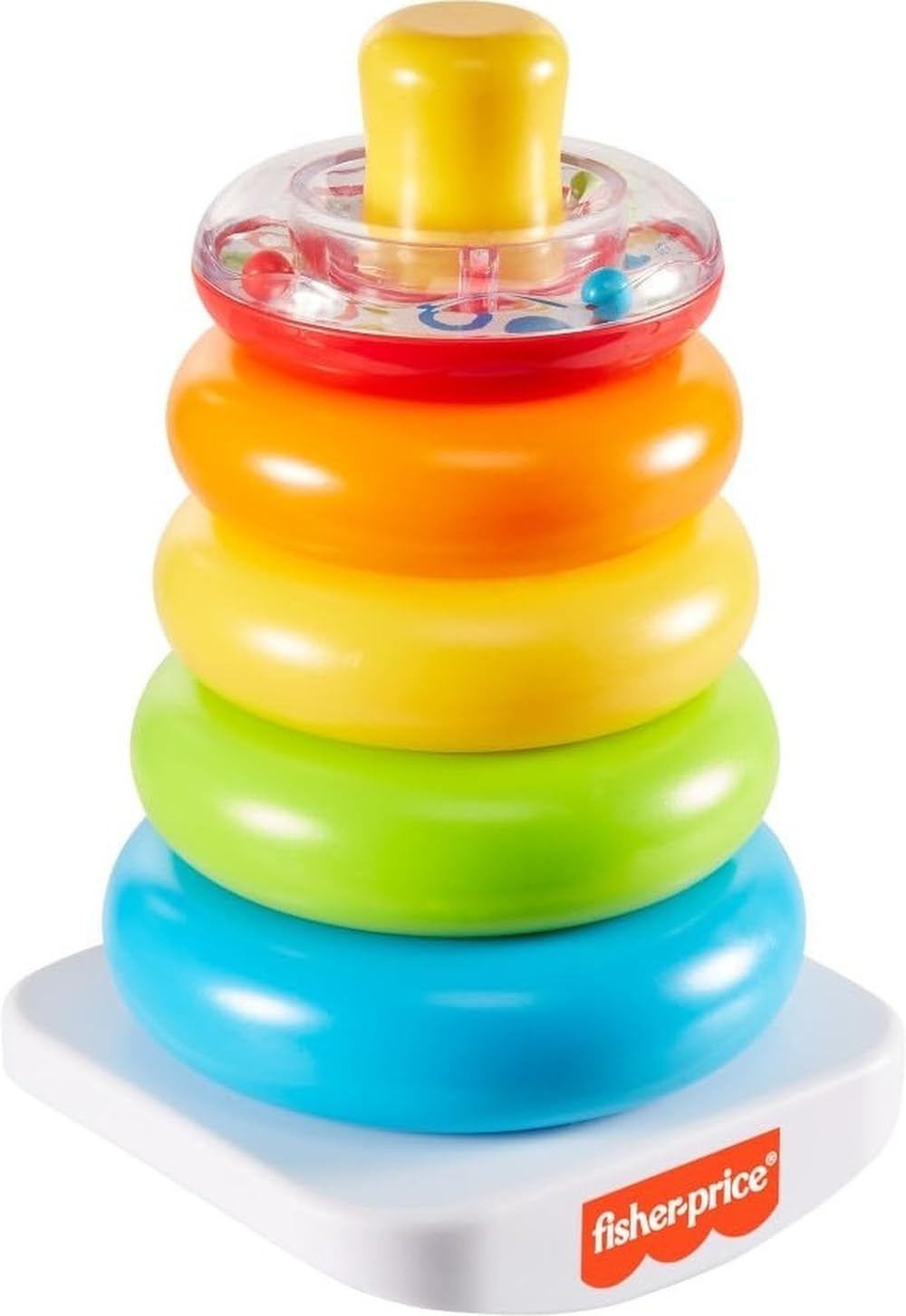
Fisher-Price Rock-a-Stack

Fisher-Price Rock-a-Stack

Classic rings

Customer rating 4.8/5
Check Price

Worth Noting

  • No water-play function and a compact footprint
Pieces
5 rings + base
Material
Plastic, rubber
Age Range
6+ months
Stackability
Rings on rocker base
Read the full review

The Rock-a-Stack's five bright rings fit little hands, resist chewing, and stack onto a base that wobbles and rattles — motion that keeps 6-plus-month babies engaged. Its five rings and compact footprint, with no water-play function, can't match ten-piece cup sets for bath or beach versatility. It remains a focused, single-purpose first stacker.

Bottom line: It fits when the goal is a single, celebrated first stacker whose motion your baby loves — choose it if bath and beach play already have another set.

#8

Moonkie Silicone Stacking Rings

Moonkie Silicone Stacking Rings

Ring teething

Customer rating 4.8/5
Check Price

Worth Noting

  • The soft rings rest unevenly on the center peg, so toddlers just starting to stack may struggle to line them up.
Pieces
7 rings
Material
Silicone
Age Range
6+ months
Stackability
Soft, flexible rings
Read the full review

The food-grade silicone rings soothe teething gums, and the muted palette fits a modern nursery. But that same softness lets the rings sit unevenly on the center peg, so clean stacking takes a steady hand and patience. This set shines at mouthing and sensory play; tower building is the compromise.

Bottom line: This stacker best serves the mouthing stage — for babies who chew everything and enjoy a pale, textured palette, it fits alongside classic rings rather than replacing them.

#9

Battat Sort & Stack

Battat Sort & Stack

Sorting play

Customer rating 4.6/5
Check Price

Worth Noting

  • Decorative stickers peel within days, affecting long-term looks
Pieces
10 cups + shapes
Material
Plastic
Age Range
18+ months
Stackability
Cups stack with lid
Read the full review

The Sort & Stack combines ten nesting cups with a shape-sorter lid and eight chunky shapes, turning pure stacking into a color- and shape-recognition exercise. The bucket-style lid keeps pieces contained, making it a tidy option for on-the-go play or quick cleanups. The printed stickers on the cups can peel within days of regular handling, which is purely cosmetic — the cups and shapes themselves hold up to toddler use. Parents who weigh long-term appearance over day-to-day function will find the wear noticeable.

Bottom line: Best for parents who want an affordable shape-sorter and stacker for practical, everyday play and can accept cosmetic sticker wear over time.

#10

KIDSTHRILL Rainbow Cups

KIDSTHRILL Rainbow Cups

Bath towers

Customer rating 4.8/5
Check Price

Worth Noting

  • Mid-range price for stacking cups whose core function matches budget alternatives.
Pieces
10 cups
Material
Plastic
Age Range
12+ months
Stackability
Tall tower stack
Read the full review

Ten bright cups stack into a tower taller than many basic sets, and the drain holes carry play from room to bathtub or water table. The 12-plus-month range suits toddlers who stack deliberately. It lands as a value addition in a crowded category rather than a new step forward.

Bottom line: Best when a taller stacking silhouette and built-in bath play are the priority.

#11

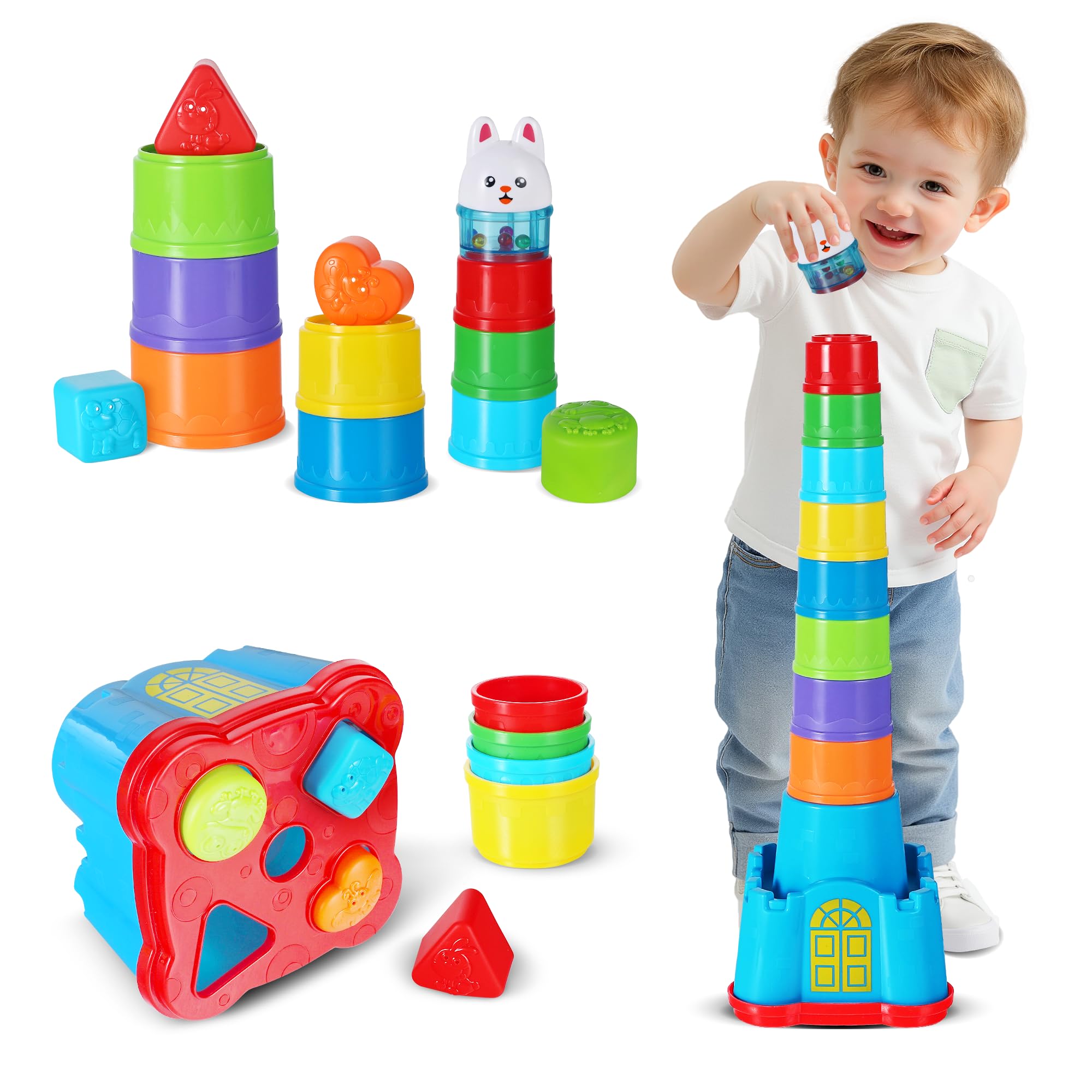
iPlay iLearn Stacking Castle

iPlay iLearn Stacking Castle

Multi-feature play

Customer rating 4.8/5
Check Price

Worth Noting

  • Premium price goes beyond what budget-focused families need from a stacking set.
Pieces
18 pieces
Material
ABS plastic
Age Range
12+ months
Stackability
23-inch tower
Read the full review

Eighteen pieces build a 23-inch tower with a shape sorter that holds toddlers' attention through long play sessions. The 12-month-plus age start makes it less of a first-stacker option for younger babies, but the multiple play modes shine for older toddlers wanting stacking and sorting in one set.

Bottom line: Best as a gift for a toddler 12 months and up who wants stacking and sorting — less the pick when budget is the priority.

#12

JUXUE Spinning Stacker

JUXUE Spinning Stacker

Spinning play

Customer rating 4.7/5
Check Price

Worth Noting

  • During free-floor play the unpinned base can topple and detach
Pieces
7 rings
Material
ABS plastic
Age Range
12+ months
Stackability
Spinning stack
Read the full review

The spinning base is the draw — a twisting motion that keeps toddlers returning to stack during seated play. The unpinned base can topple and detach when stacks run tall or get knocked, so free-floor roughhousing will frustrate — best as a supervised, seated sensory toy for toddlers 12 months and up.

Bottom line: Best where a parent sits alongside for supervised, seated stacking — the spinning motion holds attention, but the unpinned base needs a watchful eye during active play.

#13

Melissa & Doug Rainbow Stacker

Melissa & Doug Rainbow Stacker

Wooden stackers

Customer rating 4.6/5
Check Price

Worth Noting

  • Rings run smaller than expected, so stacking suits older toddler hands more than early stages.
Pieces
7 rings + topper
Material
Wood
Age Range
18–36 months
Stackability
Rings on base
Read the full review

Seven wooden rings and a rocking base give 18-month-plus toddlers a natural-material stacker whose paint stays vibrant through heavy use. With an 18-plus-month target and a top piece that's a choking risk for under-threes, this suits an older toddler's shelf, not a baby's first toy.

Bottom line: Best for homes with a single toddler past the mouthing stage who want natural wood that keeps its color.

How to Choose

Material: Plastic, Silicone, or Wood

Plastic cups are the most versatile: they rinse clean after a trip in the bath, survive being chewed, and stack reliably for small hands. Their limit shows up on the lips — a hard cup does nothing for a teething baby, which is why silicone versions exist.

Silicone is soft enough to soothe sore gums and grippy enough to hold, but that softness makes stacks wobble and misalign once your child gains more control. Wood is the most attractive and durable material, yet it is heavy, hard on gums, and its smallest rings can be a choking risk for younger siblings — which pushes it firmly to the 18-month-plus stage.

Age Range and Grip Size

A 6-month-old is still learning grasp and release, so they need one or two oversized pieces that are easy to grab rather than a tall tower. Some sets labeled 6+ are actually sized for older hands, so measure against the child, not the label.

By 12 to 18 months, deliberate stacking begins, and a stable wide base becomes the feature that matters most. A set that tips over with every placement will be abandoned fast.

Number of Pieces

More pieces mean longer play, more color and shape exposure, and more ways to build — but they also mean more to store and more cups that roll under furniture. A five-to-eight-piece set is enough for a first toy; a ten-plus-piece set suits a toddler who nests and towers.

Stackability and Nesting

The core mechanic is how cleanly pieces align. Cups with a wide base and firm lip stack predictably, while soft silicone rings fold and misalign under light pressure, testing a young child's patience. Nesting designs that fold into one piece double as built-in storage.

Extra Play Features

Shape-sorter lids, rattle beads, drain holes, and teether textures each add independent developmental value: sorting builds problem-solving, drain holes unlock water-table and bath play, and a rattle rewards shaking. They justify a higher price only if the stacking itself works — a toy that does not stack well serves no purpose regardless of extras.

Frequently Asked Questions