Sensory & Accessibility Product Guide

12 Best Sensory Toys for Classroom Calm Corner in 2026: Tough Picks

Discerning which sensory toys survive real classroom use — heavy handling, noise, and small parts — so your calm corner actually works.

12 Best Sensory Toys for Classroom Calm Corner in 2026: Tough Picks editorial illustration

A calm-down corner only works when the tools in it hold up. Many sensory toys marketed for classrooms fail the first durability test: flimsy plastic that cracks, seals that leak, or pieces that break under the weight of a frustrated five-year-old. Teachers don't need more fragile gadgets — they need tools that survive daily rotation.

The other often-missed factor is noise. A fidget that clatters or crinkles loudly can disrupt the very calm it's meant to restore. The most effective calm-corner tools are quiet by design, letting a child self-regulate without drawing attention from the rest of the room.

This guide focuses on sensory toys that balance three non-negotiables: durability against drops and pulls, minimal noise, and age-appropriate sizing. You'll find options for visual learners, tactile stimmers, and kids who need help naming their emotions — vetted for the specific pressures of a classroom setting.

#1

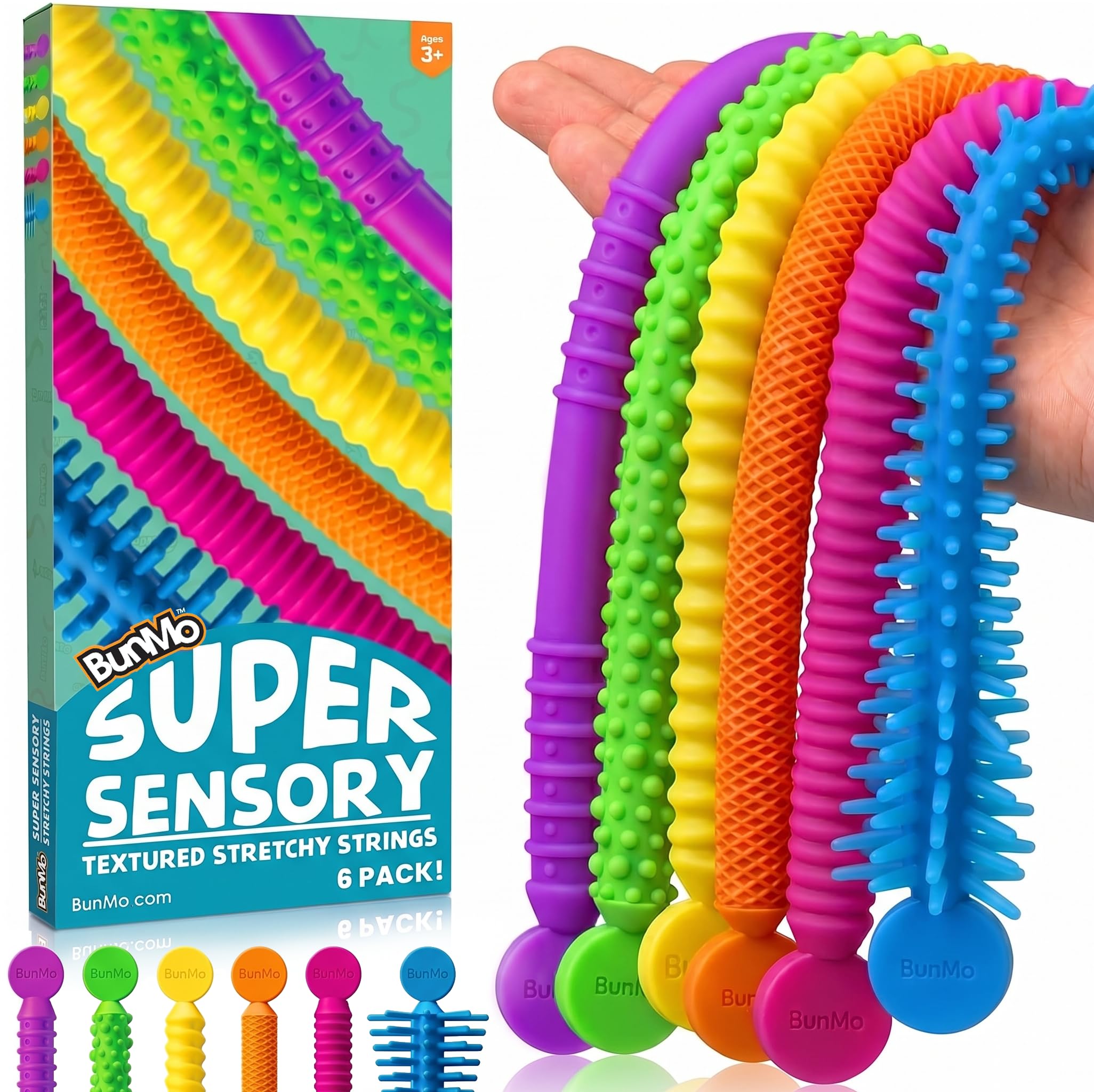
BUNMO Stretchy Strings 6-Pack
BUNMO Stretchy Strings 6-Pack

Stretchy fidget

Customer rating 4.6/5
Check Price

Worth Noting

  • Glow-in-the-dark coating is faint and barely visible in dim light
Age Range
3+ years
Quietness
Silent
Durability
High, stretchy TPR
Sensory Type
Stretchy, tactile
Read the full review

BUNMO Stretchy Strings keeps its form through the daily rough play a calm-down corner delivers, bending and pulling again and again without cracking the way a liquid-filled tube can. The six latex-free TPR strings snap back to shape after the hardest stretch a child manages, so the toy stays whole week after week in a spot that sees constant hands. A sealed design with no liquid compartments removes the leak issue that plagues tube-style sensory toys, making this the lowest-risk choice among the fidgets on this shelf. That simplicity is the draw — no batteries, no seals, nothing to reassemble after a hard stretch.

Each string stretches several times its resting length and returns slowly, giving restless hands a quiet, repeatable task during moments of stress. Children who crush or bend rigid fidgets seem to like the gentle tug-and-release, and the absence of noise keeps the calm corner calm — no clicking, snapping, or rattling carrying across the room. Because the six strings arrive together, a small group can regulate at once instead of jostling over a single toy, which keeps a whole classroom break running smoothly.

This pack suits a teacher equipping a calm-down corner on a tight budget — six toys for less than the price of two premium tubes, with nothing to reset between uses and no fragile parts to supervise. The glow-in-the-dark coating is faint, so treat the light as a bonus and lean on the stretch instead; it shouldn't be the reason to buy. Students who need a guided emotion lesson won't find a curriculum here — just tactile regulation — so pair these with a structured SEL tool for that need. Leave them out of rooms with children under three, given the small pieces present a choking risk.

Bottom line: The pick for a classroom that needs one fidget to serve every student — durable enough for daily rough play and cheap enough to replace without a second thought.

#2

hand2mind Sensory Fidget Tubes

hand2mind Sensory Fidget Tubes

Visual calm

Customer rating 4.6/5
Check Price

Worth Noting

  • Carries a higher price than a basic fidget, with the cost per tube questioned by some
Age Range
3+ years
Quietness
Quiet
Durability
Durable, sealed
Sensory Type
Visual, calming
Read the full review

Four sealed tubes of drifting glitter, beads, and colored liquid give this set a structured visual rhythm that a plain stretchy fidget can't offer — a repeatable calm-down activity rather than a grab-and-squeeze toy. The plastic shells hold up through regular classroom handling, including drops and throws, and the set has seen steady use in special education settings where emotional regulation is the daily goal.

This fits a calm-down corner, special ed classroom, or counselor's office where a child needs a focused visual task to settle. It costs more than a basic fidget, and a few buyers question the value per tube, so extremely budget-conscious classrooms or families with toddlers under three will want to skip it. For students who respond to watching motion settle, the structure delivers.

Rotate the four tubes across the calm-down station so the whole class shares the value; the set pays off with repeated, supervised use.

Bottom line: Best for a teacher or counselor who wants a guided, visual settle activity more structured than a plain fidget — the higher per-tube cost is the one tradeoff to accept.

#3

Pushpeel Sensory Board

Pushpeel Sensory Board

Quiet focus

Customer rating 4.7/5
Check Price

Worth Noting

  • The board reads smaller than classroom photos suggest, so the visual impact may underwhelm at first glance.
  • The mid-range price takes more justification than basic fidgets, landing value only with consistent personal use.
Age Range
3+ years
Quietness
Silent
Durability
Silicone, robust
Sensory Type
Tactile, push-pull
Read the full review

Quiet, washable, and compact enough for a desk drawer, this silicone board compresses the tactile calm of a fidget into a format that makes no sound and leaves nothing behind. Eleven textured strings give a student something to pull and pinch during floor time or a study break, without the crinkling or snapping that would pull the whole class's attention. An included travel bag lets it move from desk to waiting room to home with no stray pieces.

This suits the teacher or therapist who wants one discreet calm-down companion for a single student, plus adults managing anxiety during commutes and meetings. The honest boundary is scale: it saves its best work for one dedicated user, so buyers eyeing a large class mat or a budget filler should look at the other picks in this set.

Wipe the silicone surface between uses — the washable material resets quickly for daily calm-down breaks.

Bottom line: For the student who reaches for it daily, the quiet feel and compact build earn the mid-range price — buy it as that one dedicated companion, not a set for the room.

#4

LR Sensory Trio Tubes

LR Sensory Trio Tubes

Young visual seekers

Customer rating 4.7/5
Check Price

Worth Noting

  • Tubes run smaller than the photos suggest, which limits the visual display size
Age Range
3+ years
Quietness
Quiet
Durability
Durable, toddler-safe
Sensory Type
Visual, tactile
Read the full review

Three tubes — one filled with glitter, one with sand, one with beads — turn the calm-down corner into a visual exploration station rather than a purely tactile fidget. The sturdy plastic holds up to rough toddler handling where comparable tubes risk leaking. That visual variety gives younger children something to watch and track, a different kind of calming than the stretch of a string fidget.

This set suits toddlers and preschool classrooms where portability matters — the compact tubes slip into a bag or sensory bin for calm-down moments on the move. The honest tradeoff is size: some buyers expect a larger display from the photos, so the tubes read smaller in hand. Older kids seeking complex features will find the visual play limited, making this a first sensory toy rather than an all-ages staple.

Bottom line: A sturdy, portable introduction to visual sensory play for toddler classrooms, best when space is tight and durability outranks display size.

#5

hand2mind Feelings Bottles

hand2mind Feelings Bottles

Emotion lessons

Customer rating 4.7/5
Check Price

Worth Noting

  • A bottle may leak during use, so a spill is possible when children handle the set without supervision.
Age Range
3+ years
Quietness
Quiet
Durability
Sturdy plastic
Sensory Type
Visual, SEL
Read the full review

The Express Your Feelings Sensory Bottles give children a concrete way to name emotions — each of the four color-coded bottles (Happy, Angry, Scared, Sad) pairs a feeling with a distinct floating motion, so a child can hold up what they feel and watch the contents settle as their body calms. Where stretchy strings offer open-ended fidget relief with no learning component, these bottles make the calm-down corner a repeatable naming exercise that builds emotional vocabulary across weeks of use.

These bottles earn their place with school counselors, speech therapists, and calm-corner teachers who run guided emotion lessons rather than set-and-forget fidget stations. Because a bottle may leak during use and the floating contents need gentle handling, the set fits supervised sessions best — an adult leading a naming activity gets far more from it than a child left alone on a free-play shelf.

Set the bottles upright on a tray during guided sessions so any drip stays contained.

Bottom line: For a counselor or therapist who wants break time to double as emotional-language building, this four-bottle set delivers an activity no plain fidget can match — keep it in guided sessions where an adult can supervise.

#6

hand2mind Seasons Tubes

hand2mind Seasons Tubes

Science + mindfulness

Customer rating 4.8/5
Check Price

Worth Noting

  • Mid-range pricing runs above a single fidget, with value tied to the teaching angle.
  • A viewing tool more than a hands-on toy
Age Range
3+ years
Quietness
Quiet
Durability
Leak-free, sturdy
Sensory Type
Visual, educational
Read the full review

The hand2mind Changing Seasons Sensory Tubes bring a calm-corner staple that doubles as a science lesson — four sealed tubes show weather, trees, and animals shifting through the seasons, with each shake resettling the contents. Classroom feedback consistently highlights the set's appearance and leak-free build, so it survives handling and passing around without the seal problems that sideline similar liquid toys. That durability separates it from the stretchy-strings top pick: a child watches and thinks instead of pulling and releasing.

This set suits teachers who want calm-corner time to also support a seasons or nature unit. The honest limit is that it is a viewing tool, not an interactive toy; a student craving squeeze-and-stretch motion may set it aside quickly. In a room already stocked with tactile fidgets, these tubes add an observation layer the elastic strings do not reach.

Show students how to gently roll or tip a tube to reset the scene — the slow settling is what steadies a busy mind.

Bottom line: Best for classrooms that want calm-corner time to double as a seasons lesson; choose a tactile fidget instead if kids need hands-on motion to regulate.

#7

LESONG Stretchy 8-Pack

LESONG Stretchy 8-Pack

Whole class use

Customer rating 4.8/5
Check Price

Worth Noting

  • Offers no structured emotion-teaching component
  • Not for children who mouth toys
Age Range
3+ years
Quietness
Silent
Durability
Resists tearing
Sensory Type
Stretchy, textured
Read the full review

Eight textured strings in a budget pack outfit an entire class at once, and the tearing-resistant plastic stands up to repeated stretching across rough classroom handling. Texture and color variety keeps children reaching for them, but this is a straightforward tactile fidget with no structured emotion-teaching component — better in treasure chests and sensory bins than calm-down lessons about naming feelings. Children who mouth objects should pass, since the plastic isn't mouthable, and the glow feature is too faint to matter.

Bottom line: For treasure chests and whole-group sensory breaks where outfitting every student matters most, this pack delivers full value; teachers wanting emotion lessons should look to the structured SEL tools.

#8

KLT Worry Stones 6-Pack

KLT Worry Stones 6-Pack

Quiet personal use

Customer rating 4.6/5
Check Price

Worth Noting

  • For those expecting a palm-filling stone to grip, the compact size comes up short
  • Sensory appeal is limited to tactile rubbing, so kids who prefer visual movement or interactive play will likely pass.
Age Range
3+ years
Quietness
Silent
Durability
Rubber, sturdy
Sensory Type
Tactile rubbing
Read the full review

KLT's Worry Stones are the quietest option in this set — six textured rubber stones that slip into a pocket or desk drawer without a sound, making them a natural fit for students who need a discreet fidget during focused work. The varied textures keep hands busy and the budget-friendly six-pack price suits a classroom stash. Their appeal stops at tactile rubbing: kids drawn to visual movement or interactive play will likely pass, and the compact size favors portability over a palm-filling feel.

Bottom line: For students who need a silent, pocket-sized fidget for anxious moments during individual work, these stones deliver strong value — provided a visual or interactive element isn't part of the plan.

#9

hand2mind Mindful Maze

hand2mind Mindful Maze

Breathing exercises

Customer rating 4.7/5
Check Price

Worth Noting

  • A child expecting passive fidget play may skip the breathing routine
  • Covers breathing exercises only, so children seeking varied tactile input will find the range narrow.
Age Range
3+ years
Quietness
Silent
Durability
Sturdy plastic
Sensory Type
Tactile, breathing
Read the full review

Well-made boards that guide kids through six breathing exercises, with sturdy plastic that holds up to repeat use. Each board pairs a visual path with a tactile trace, so a child fingers the route while breathing in and out. That structure is its whole value: it works best when a teacher or counselor introduces it as a short, focused activity. Kids who want a passive fidget to squeeze or stretch may pass it over — the payoff comes from engaging with the routine, not from idle handling.

Bottom line: Best for a counselor, therapist, or teacher who can sit with a student and walk through a breathing exercise — a focused SEL tool, not a hands-off fidget.

#10

LR Cool Down Cubes

LR Cool Down Cubes

Calm down baskets

Customer rating 4.6/5
Check Price

Worth Noting

  • Some children may use the cubes briefly and lose interest during longer calm-down breaks.
Age Range
3+ years
Quietness
Quiet
Durability
Plastic, sturdy
Sensory Type
Tactile, calming
Read the full review

The explicit 'Cool Down' purpose makes it a welcoming first stop in a calm-down corner, and the cubes are sized for little hands, earning praise for calming and self-regulation during quiet moments. Engagement can vary, though — some children may use the cubes briefly and then lose interest, since there is no interactive element or visual flow to sustain attention. For short, gentle self-soothing sessions it does its job well, which is the honest scope for this set against richer sensory tools.

Bottom line: A dependable fit for young kids who need a quick self-soothe cue in a calm-down corner, provided the session stays short and simple.

#11

Super Z Liquid Bubbler

Super Z Liquid Bubbler

Desk visual fidget

Customer rating 4.4/5
Check Price

Worth Noting

  • Smaller than the photos suggest, so the visual impact is modest rather than commanding.
  • The plastic shell can crack or leak under rough handling, suiting gentle individual use only.
Age Range
3+ years
Quietness
Silent
Durability
Inconsistent
Sensory Type
Visual, liquid
Read the full review

The slow-drifting bubbles catch attention quickly and often settle a restless mind — a budget-friendly way to test whether a child responds to visual motion before investing more. That appeal comes with limits: the bubbler measures only about five and three-quarter inches, so the visual show reads as modest rather than dramatic. The plastic shell can also crack or leak when handled roughly, which steers it toward individual, gentle desk use instead of a shared classroom bin where hands vary.

Keep it on a desk rather than in a shared bin; gentle handling extends its life considerably.

Bottom line: Use it as an inexpensive trial fidget for one child who handles it gently — choose the sturdier tube sets here if it will share space with younger or rougher hands.

#12

Edu Insights Feelings Bean Bags

Edu Insights Feelings Bean Bags

SEL activities

Customer rating 4.6/5
Check Price

Worth Noting

  • Runs smaller than a standard bean bag, and finish quality can vary between sets
Age Range
3+ years
Quietness
Quiet
Durability
Fabric, sturdy
Sensory Type
Tactile, SEL
Read the full review

For preschool SEL lessons, these bean bags pair each color with a printed emotion, giving teachers a tactile way to cover feelings, colors, and counting in one activity. The soft fabric is easy for small hands to grip and pass. The bags run noticeably smaller than expected, and build quality can vary between sets — at a mid-range price, that pairing disappoints anyone wanting standard-size bags. The value lands in structured, guided emotion lessons rather than general sensory play.

Bottom line: Best fit is a preschool teacher leading guided emotion lessons who values the non-verbal teaching angle over bean-bag size; choose a larger option if standard dimensions matter more.

How to Choose

Prioritize Durability

Classroom sensory toys face constant bending, tossing, and squeezing from many different children. Materials matter far more than the marketing photos suggest. Stretchy fidgets made of TPR (thermoplastic rubber) resist tearing where cheaper vinyl or plastic seams fail. Sealed liquid tubes should be checked for thick plastic walls and tight caps, as thin plastic can crack and leak within weeks.

A toy that breaks mid-use isn't just a loss of money — it becomes a safety hazard and a disruption. For a calm corner, durability directly affects whether the child can rely on the tool when they need it most. Look for products with a track record of withstanding drops and pulls, not just claims of being 'sturdy.'

Quietness Is Non-Negotiable

The purpose of a calm corner is to provide a quiet space for a child to regulate. A fidget that clicks, crinkles, or rattles can disrupt the entire room, drawing attention to the student and defeating the purpose. Stretchy strings, silicone boards, and worry stones are naturally silent, making them strong choices. Liquid bubblers and tubes are quiet too, as long as they don't contain loose parts that rattle.

Consider the noise level from the perspective of the whole classroom. Even a 'quiet' toy can become louder when a child uses it anxiously. Test the sound before committing to a class set.

Age and Size Matter

Most sensory toys are labeled for ages 3 and up, but that range covers a wide developmental span. A toddler's strength and grip differ greatly from a second grader's, and the toy's durability needs to match. Smaller items like worry stones and mini tubes are perfect for little hands but may present a choking hazard for very young children or those who mouth objects.

Size also affects how a tool fits into a calm corner. A large board or set of tubes requires more shelf space, while a pocket-sized fidget is more portable but can be easily lost. Match the size to the intended use: desk fidgets should be compact, while class baskets can hold larger items.

Variety and Quantity

A single sensory toy rarely meets the needs of every child in a classroom. Some students are visual seekers who benefit from liquid tubes, while others need tactile input from stretchy strings or texture boards. A calm corner with multiple types of tools allows children to choose what works best for them in the moment.

Multi-packs provide practical value for classroom use. Sets of 4 to 8 pieces let multiple students use the corner simultaneously or allow teachers to distribute fidgets throughout the day. For a whole-class activity, matching sets ensure no one feels left out.

Match the Sensory Type

Different children regulate through different senses. Visual sensory tools like liquid bubblers or fidget tubes engage the eyes and help refocus attention. Tactile tools like stretchy strings, worry stones, or silicone boards provide deep pressure input that can be grounding. Breathing-focused tools like mindful maze boards teach self-regulation skills that children can eventually use without any object.

Identify the dominant sensory need of the children in your setting. A calm corner that offers at least one option from each category — visual, tactile, and breathing — can serve a wider range of students. Avoid filling the corner with only one type of toy, as that limits its effectiveness.

Frequently Asked Questions