Organization & Storage Product Guide

6 Best Presentation Binders of 2026: Display Without Ring Issues

Presentation binders that display cleanly: pocket portfolio books for polished pitches and ring binders whose rings actually stay shut.

6 Best Presentation Binders of 2026: Display Without Ring Issues editorial illustration

Every presentation binder listing leans on the words 'durable' and 'heavy-duty.' But the mechanism that actually decides how long a binder holds up — the rings — gives out first. Rings arrive bent, refuse to stay shut, or misalign within a few weeks, even on four-and-a-half-star products.

That pattern separates three-ring binders from a second format most buyers overlook: fixed-sleeve pocket presentation books. They cost about the same as a single view binder but display finished pages in bound sleeves, with no rings to close and nothing to malfunction. The trade-off is flexibility — pages can't be added, removed, or reordered.

This guide sorts the two formats by what you actually need to present, then flags which ring binders close reliably and which pocket books display the cleanest. The deciding question is simple: how often do you change the contents?

#1

Dunwell 24-Pocket Binder
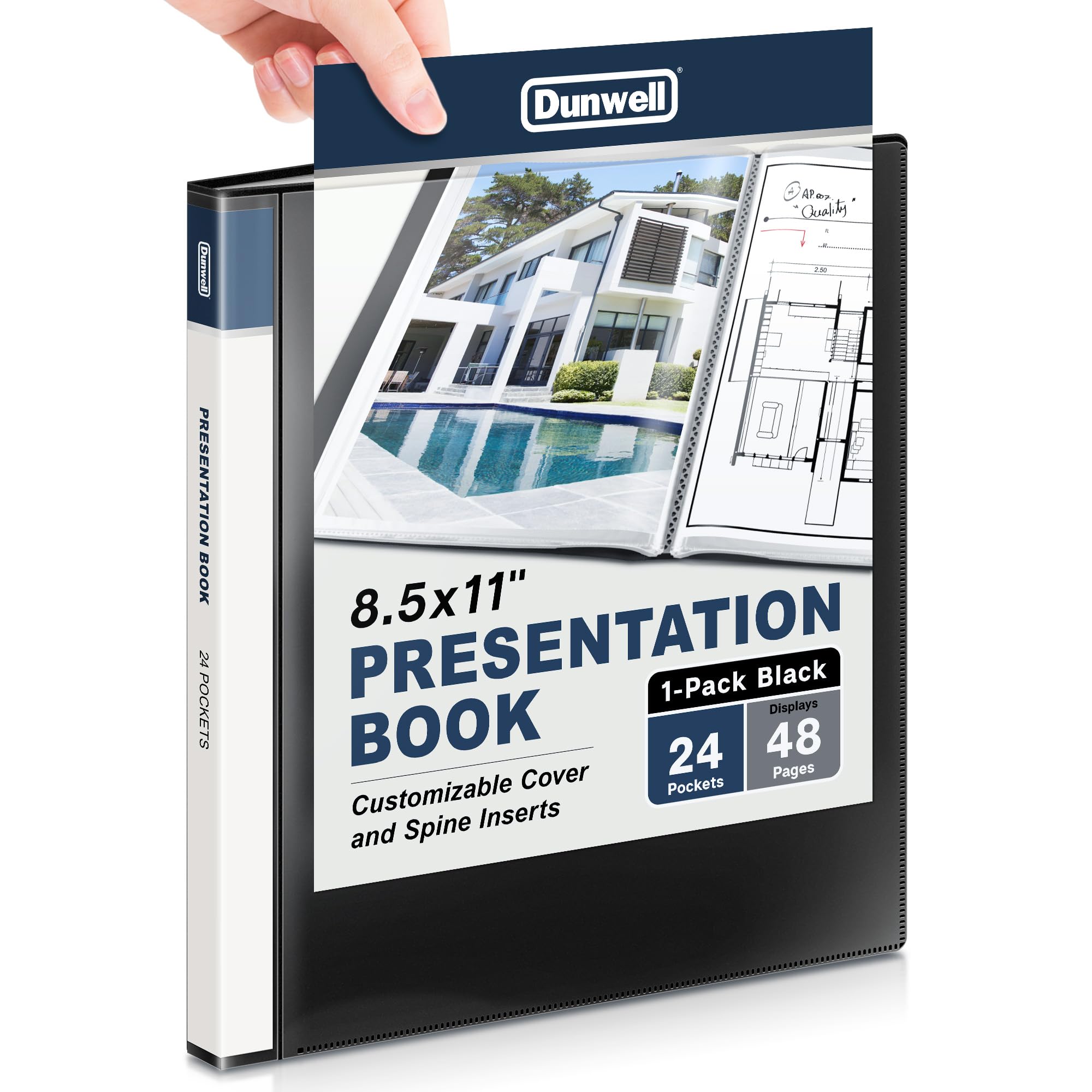
Dunwell 24-Pocket Binder

Polished display

Customer rating 4.7/5
Check Price

Worth Noting

  • Opened wide on a desk, occasional units don't lie perfectly flat - pages may show a slight lift during tabletop review.
  • Fixed sleeves cap at 48 pages with no reordering - frequent content changes call for a ring binder instead.
Material
Acid-free, PVC-free poly
Ring Type
—
View Covers
Clear front, back, spine
Sheet Capacity
24 pockets, 48 pages
Read the full review

The bound 24-sleeve format presents finished proposals and portfolios exactly as interviewers and clients expect to see them - documents sit clean and aligned behind non-glare, acid-free covers that keep pages organized and professional-looking from the very first opening. There is no setup and no page-flipping; once loaded, a prepared pitch deck stays sharp every time it is pulled from a bag, which is what makes this a purpose-built display binder rather than shelf storage.

It costs no more than a basic three-ring binder while delivering a far more polished result for presentation work. Because there are no rings or sliding parts to manage, pages stay put and the front face stays clean during use - none of the closure quirks that appear in ring binders apply here. Value this strong at a budget price makes it an easy choice for anyone who presents finished work regularly.

Best for professionals presenting pitch decks, job seekers building interview portfolios, and teachers displaying student work - content that is final and set rather than in constant revision. For those buyers the fixed 24-sleeve format reads as a strength, because the presentation holds its shape and never invites mid-meeting rearranging.

Open the binder on a flat surface and give it a moment to settle - supports clean two-page spreads during review.

Bottom line: For presenting finished work, this purpose-built display binder delivers a polished result at a budget price with none of the ring-closure risk to manage. Choose a ring binder only if you expect to keep swapping content.

#2

Sooez 30-Pocket Binder

Sooez 30-Pocket Binder

Art portfolios

Customer rating 4.7/5
Check Price

Worth Noting

  • The front-cover sticker is hard to peel and leaves sticky residue behind.
Material
Archival poly, non-glare
Ring Type
—
View Covers
Clear front, back, spine
Sheet Capacity
30 pockets, 60 pages
Read the full review

The Sooez holds 30 bound sleeves (60 pages) at the same budget price as the Dunwell's 24, giving art students the most display room per dollar in the pocket format. Sleeves are archival polypropylene with a non-glare, waterproof finish, and thickened covers let the binder lie flat for portfolio reviews.

Made for students and teachers moving finished work between classes and presentations — certificates, artwork, and flat documents up to 60 pages stay organized and presentable. The fixed sleeve format can't expand or reorder like a ring binder, and seams can begin to separate under heavier daily handling, so it suits stable portfolios over long-term archival storage.

Bottom line: The most page-volume-per-dollar for portfolio display, right for anyone moving up to 60 pages of finished work between classes and presentations.

#3

Avery Durable View 2"

Avery Durable View 2"

Heavy proposals

Customer rating 4.6/5
Check Price

Worth Noting

  • Rings may not close tightly on some units, which can snag pages during flipping
Material
Textured film finish
Ring Type
Slant D-ring
View Covers
Clear front, back, spine
Sheet Capacity
530 sheets, 2-inch
Read the full review

The Avery holds 530 sheets on 2-inch slant-D rings with a DuraHinge spine — capacity the pocket display books can't match. Deep texture film and split-resistant edges keep the cover protective through constant flipping. This is the choice for professionals assembling thick proposals or office managers who need a durable, permanent reference archive. Two clear non-stick interior pockets tuck loose sheets within easy reach, and back-mounted rings lay pages flat for quick reading.

It targets heavy, frequent document use with 500-plus pages, not slim or light-duty preferences — sturdy construction, though ring closure can vary between units.

Verify the rings snap shut on an empty binder before filling it, since a loose closure is easier to spot early.

Bottom line: For hefty 500-page proposals, the capacity and build make the mid-range price worthwhile — a volume option the pocket books simply lack.

#4

Avery One-Touch Binder 1"

Avery One-Touch Binder 1"

Frequent daily use

Customer rating 4.6/5
Check Price

Worth Noting

  • Priced above standard binders, so some buyers question the cost for the feature set.
  • Rings can pop open during page turns on some units, so a quick closure check on arrival is wise.
Material
40% recycled content
Ring Type
One-touch slant-D
View Covers
Clear front, back, spine
Sheet Capacity
275 sheets, 1-inch
Read the full review

One-touch EZD rings open and close with a single press, built for the constant page flipping and filing that defines daily office and classroom work. Four clear non-stick pockets add on-the-fly storage without the bulk of a dedicated folder pocket. It sets aside the 530-sheet capacity of the heavyweight sibling to stay nimble at 275 sheets.

This suits teachers and office staff who open and close binders dozens of times a day, plus students wanting single-handed page access. The tradeoff: one-touch rings can pop open during page turns on some units, so a quick closure check on arrival keeps the feature dependable. For sheer display volume, the top pick's fixed 24 sleeves win — this is for active use, not presentation.

Press each ring until it clicks fully shut the first time you use it — a firm push keeps pages from popping loose mid-turn.

Bottom line: For teachers and office staff who flip and file all day, the one-touch action and four pockets make this the working binder to reach for — just confirm each ring seats fully on arrival.

#5

Cardinal ClearVue 2" 4-Pack

Cardinal ClearVue 2" 4-Pack

Classroom organization

Customer rating 4.7/5
Check Price

Worth Noting

  • Some units run wider than the advertised 2-inch spine
  • Ring alignment can drift with use, letting rings hang open
Material
PVC-free, non-stick PU
Ring Type
Round rings
View Covers
Clear front, back, spine
Sheet Capacity
475 sheets, 2-inch
Read the full review

Four assorted-color binders give every subject a color you can find at a glance. Each 2-inch round-ring unit holds 475 sheets — a full semester of handouts — and ClearVue covers on all three sides read clearly from spine and front. The PVC-free surface shrugs off scuffs on a desk.

This set fits teachers and home organizers who split materials by project. The honest tradeoff sits in the hardware: ring alignment can drift with use, and some units measured closer to 3 inches than the 2-inch label. For periodic filing and referencing, the color system outweighs those boundaries.

Bottom line: For semester-length subject organization, this 4-pack pairs color-coded indexing with full-sheet capacity the display-focused top pick simply doesn't offer.

#6

Cardinal Economy 12-Pack

Cardinal Economy 12-Pack

Bulk classrooms

Customer rating 4.7/5
Check Price

Worth Noting

  • Rings can arrive bent or stop closing fully, letting pages slip from an open binder.
Material
Non-stick PVC-free poly
Ring Type
Round rings
View Covers
Clear front, back, spine
Sheet Capacity
225 sheets, 1-inch
Read the full review

A budget-priced carton of 12 is the most economical way to outfit an entire classroom or office with standard presentation binders. Each 1-inch round-ring binder holds 225 sheets behind ClearVue front, back and spine covers — enough for handouts and proposals filed once and referenced occasionally. What keeps this below a higher tier: capacity stops at 225 sheets, black-only covers block color-coding for subject sorting, and ring closure is where the budget shows, varying between units in a way sturdier models don't. For bulk distribution where inserts stay put and flipping stays light, the per-unit value is the story.

Bottom line: Fits a teacher or administrator buying a full carton of identical black binders for batch distribution, where each holds inserted-once content for light reference rather than constant flipping.

How to Choose

Sheet Capacity

Spine size is only a rough guide to capacity. A 1-inch ring holds roughly 225 sheets, and a 2-inch ring holds 400–530. Back-mounted slant-D rings store more than round rings at the same spine size because the D-shape lets pages settle lower.

For pocket books, capacity is absolute: 24 sleeves means 48 pages, with no room to add after purchase. Count the largest version of the presentation you'll actually keep, not the current draft.

Ring Closure

Ring geometry drives the reliability differences. Round O-rings let pages turn past the spine but arrive bent or loosen with use; back-mounted slant-D rings keep pages flatter for presentation but can misalign. One-touch rings open with a single action, ideal for constant page-flipping, but add mechanism complexity.

Whatever the style, test every ring the day it arrives — open and close each fully, and return any unit whose rings don't seat flush. A loose ring only gets worse with use.

View Covers

A view cover turns a plain binder into a labelled, branded document without printing a full cover. Slip a title page into the front, an agenda into the back, and a matching spine label, so the binder reads correctly on a shelf or in a pile.

PVC-free, non-stick film resists yellowing and lifts cleanly off inserts, which matters when a binder sits for a semester between presentations.

Interior Pockets

Interior pockets hold unpunched handouts, permission slips, and reference notes without forcing a three-hole punch. A single clear front pocket covers most needs; two to four pockets keep categories separated.

The trade-off is bulk — more pockets stiffen the cover and add carry weight, which matters for a binder you tote daily.

Material Quality

Material choice shows up months later, not on day one. PVC-free, acid-free poly resists yellowing and won't degrade documents over years in storage, while recycled-content binders trade some stiffness for a lower footprint.

The catch: a strong cover doesn't guarantee strong rings. A binder can have reinforced edges and a textured finish yet still ship with rings that won't seat. Treat cover materials and ring mechanism as two separate checks.

Frequently Asked Questions