Student Tech Product Guide

8 Best Power Banks for Students in 2026: Carry Less, Charge More

Which power banks actually fit a backpack and charge your phone all day without extra bulk? Find the right capacity and features for your campus routine.

8 Best Power Banks for Students in 2026: Carry Less, Charge More editorial illustration

It's tempting to grab the biggest capacity power bank on sale, but a 20000mAh brick that weighs a pound can drag your backpack and your day. Many students also discover that built-in cables, while handy, snap if the housing isn't reinforced. The real challenge is matching capacity to your actual routine.

The sweet spot for most campus days is around 10000mAh—enough to top up a phone twice—without the bulk that makes you leave it at home. Fast charging and multiple ports matter more than raw capacity, especially if you're jumping between classes with a tablet or earbuds. And a unit that takes forever to recharge itself creates an annoying new deadline.

This guide focuses on the trade-offs that actually affect daily use: weight, charging speed, cable durability, and long-term reliability. You'll find picks that keep your bag light, your devices powered, and your budget intact.

#1

FancyBean 2-Pack 10000mAh

FancyBean 2-Pack 10000mAh

Value 2-pack

Customer rating 4.4/5
Check Price

Worth Noting

  • Two identical units can be mixed up in a shared bag; misplacing one costs half the backup capacity.
  • Built-in cable housings are lighter than premium-reinforced options, so heavy pulling may wear them sooner.
Capacity
10000mAh each
Reliability
None reported
Size Weight
540g total
Output Power
12W (2.4A)
Read the full review

The FancyBean 2-pack leads this set on value — two 10000mAh units with built-in iOS and USB-C cables at a price that undercuts most single packs of similar capacity. Each unit charges through its built-in cable or one of two USB-A ports at 12W (2.4A), enough to top a modern phone to full without carrying any extra cords. For a student budget, the arithmetic is simple: two dependable chargers for the price of one premium battery.

Customer feedback describes steady, consistent charging across months of daily use, with few hiccups reported. The 10000mAh cells refill a phone with charge left for earbuds or a smartwatch, and the built-in cables fold flush into the housing, so nothing dangles loose in a pocket or bag. Day-to-day consistency like this is what makes the pack dependable rather than merely inexpensive — a distinction that matters more than the rated wattage on paper.

The two-unit format is its real edge. One charger rides in a daily bag while the other stays at a desk, so a flat phone never stalls an afternoon of classes — and the second unit is always there to lend a classmate or stash at a study spot. Combined weight sits at 540g, light enough to split across two bags or divide between partners for a shared carry.

This pack suits students who want a spare battery without budgeting for a second purchase, or who like keeping a charger on hand to share. Charging tops out at 12W rather than fast-charging speed, and the two units can charge at slightly different rates — so a phone may fill a touch faster on one than the other. For overnight fills and casual daytime topping that variance never registers; students chasing a last-minute boost before a lecture get more from a higher-wattage option in this set, while anyone plugging in at a library or desk is well covered here.

Measured against the featherweight single-unit chargers in this set, the FancyBean trades a little bulk for the security of a second charger on hand — a fair swap for anyone who has watched a phone die with a dead power bank sitting nearby. The redundancy is the quiet selling point, and it holds up under everyday student schedules.

Bottom line: For students who would rather carry two working chargers than one premium brick, this 2-pack delivers — the value pick of the set.
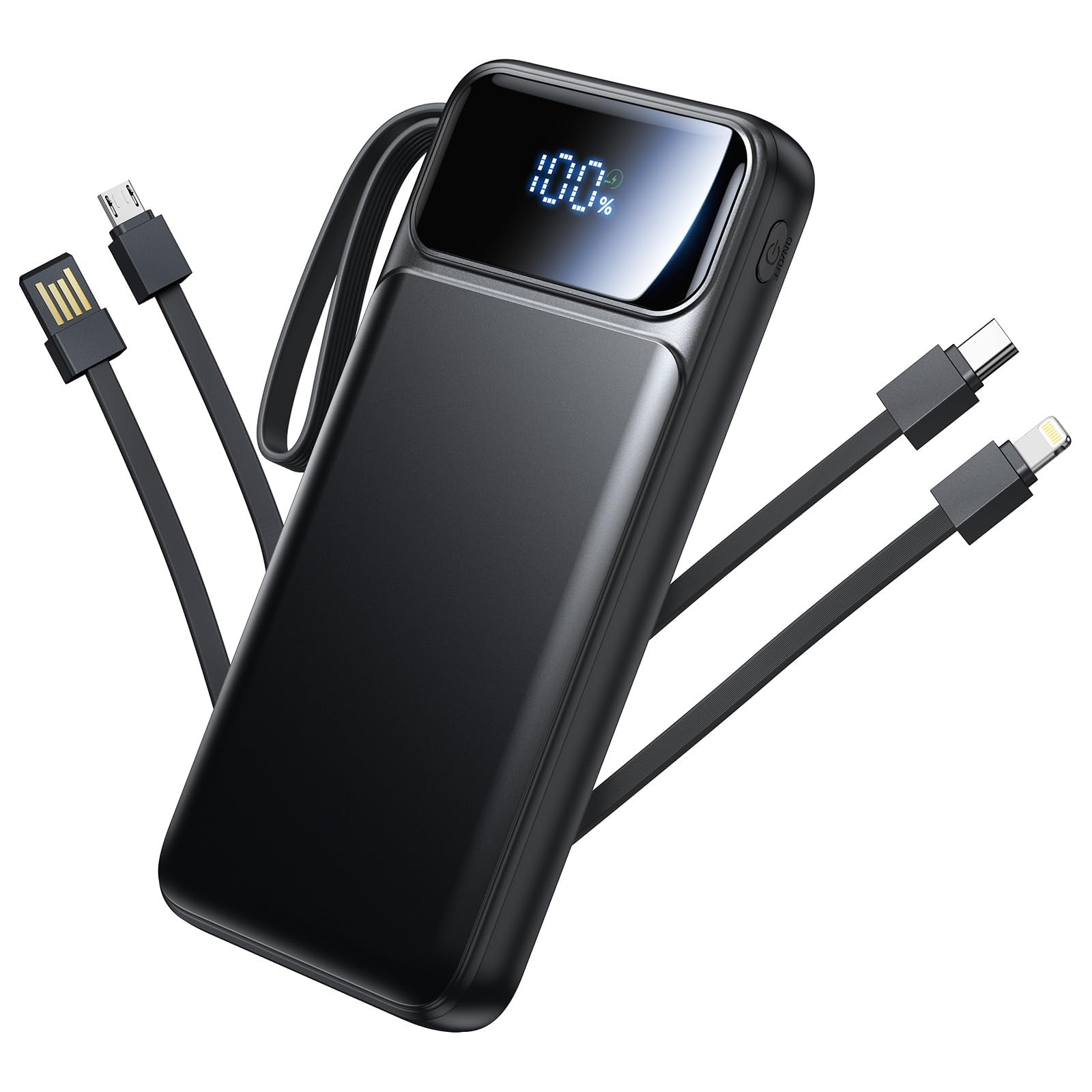
#2

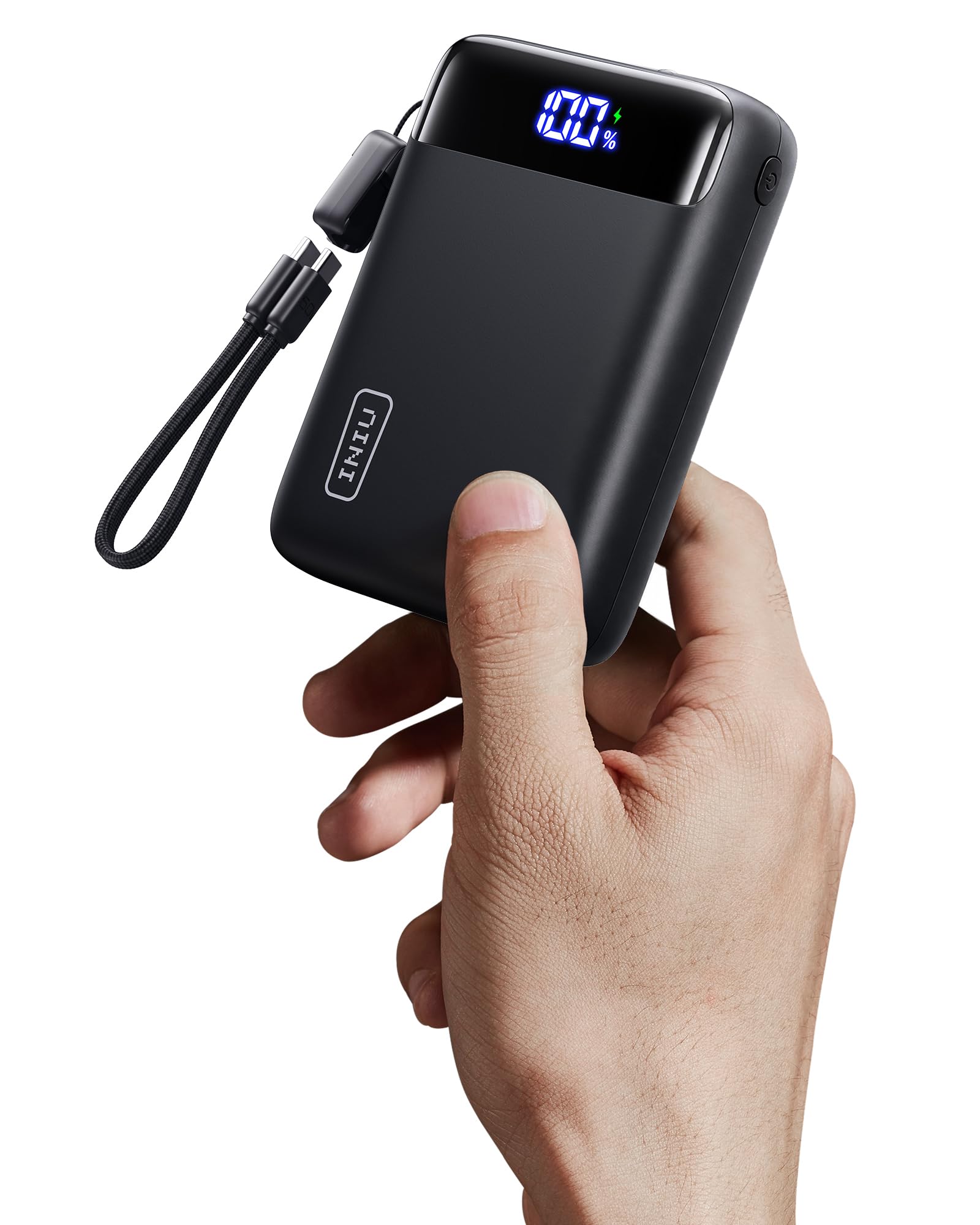
INIU 20000mAh 22.5W

INIU 20000mAh 22.5W

High capacity

Customer rating 4.6/5
Check Price

Worth Noting

  • Refilling the 20000mAh cell can take several hours from a wall adapter, with output varying between units.
  • At nearly a pound, the unit is felt in a daypack after a long campus walk.
Capacity
20000mAh
Reliability
None reported
Size Weight
320g
Output Power
22.5W
Read the full review

The INIU's 20000mAh cell matches the top pick's two units put together, holding enough to top up a phone twice and still cover a tablet through an afternoon of classes — all from a single block. The 22.5W output runs two USB-C ports and a single USB-A, so a phone and earbuds can refill side by side without juggling cables. That capacity-to-output pairing is what separates it from single-use 10000mAh sticks.

This fits students who pack for full days — lectures, library, evening shift — and would rather rely on one capable block than juggle two smaller ones; a day on campus plus the commute home still leaves reserve. The tradeoff is heft: at nearly a pound, the INIU is felt in a backpack, and refilling the full 20000mAh cell from a wall adapter takes patience in some cases. Anyone who only needs a single phone top-up or wants the lightest possible carry should look at a 10000mAh unit instead.

The detachable nylon USB-C lanyard keeps the charging cable attached to the unit, so it's always on hand without dangling loose in a bag. That built-in cable, along with day-to-day output that holds steady across months of heavier use, lands the INIU at a mid-range price that undercuts premium rivals with comparable capacity.

Bottom line: Students running a phone and tablet through long days get the most usable capacity per dollar here — the main ask is accepting the extra weight in a backpack.

#3

Aioneus 10000mAh Built-in

Aioneus 10000mAh Built-in

Multi-device

Customer rating 4.4/5
Check Price

Worth Noting

  • Built-in cable housings add volume, so a slim bag compartment fills quickly
  • 260g reads heavier than the ultra-compact units in this set when carried all day
Capacity
10000mAh
Reliability
None reported
Size Weight
260g
Output Power
22.5W (PD3.0/QC3.0)
Read the full review

Six outputs — built-in Lightning, USB-C, Micro, and USB-A cables plus two USB-A ports — let a student charge a phone, earbuds, and tablet from one pack without digging out a separate cable. The featherweight option in this set trims ports to shave grams; the Aioneus keeps every cable type a campus day tends to need.

The 22.5W PD 3.0 output refills a drained phone in under two hours, and one charge carried a phone, earbuds, and tablet through a full day out with capacity left over. Output stays steady across the built-in cables rather than favoring a single connector, so the Lightning cable charges as readily as the USB-C one.

Students who charge several devices at once and would rather skip loose cable clutter get the most from the all-in-one layout. At 260g the pack runs heavier than the lightest units in this set, so it settles into a backpack more naturally than a front pocket.

Cable management is the practical trade — the four bundled housings add volume that can crowd a full bag. For a student already carrying a backpack, the bulk is the price of never fumbling for the right cable.

Bottom line: For a student who charges several devices from one pack and wants to skip loose cables, the six-port layout delivers at a budget price — the weight only becomes a factor if you plan to pocket it all day.

#4

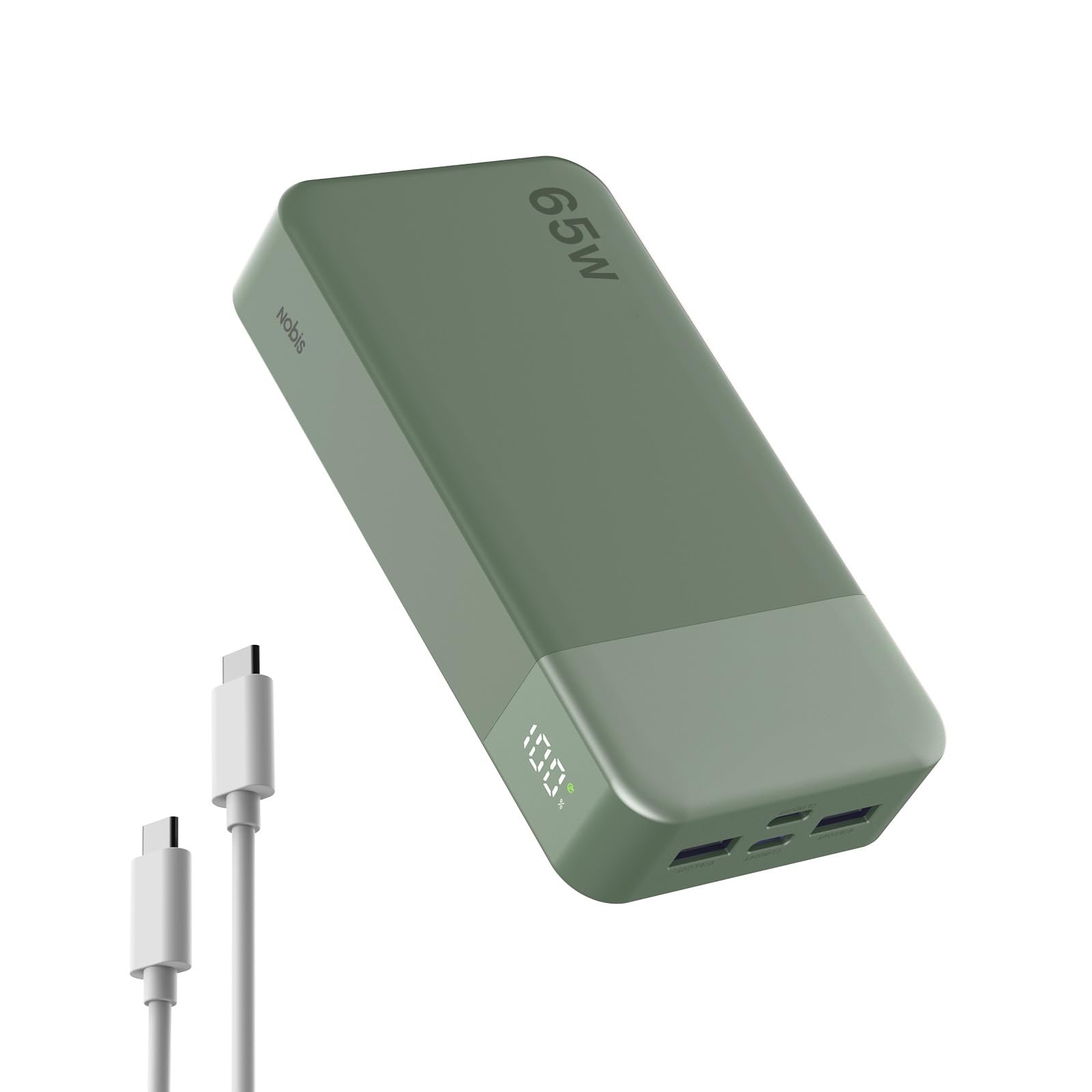
NOBIS 20000mAh 65W

NOBIS 20000mAh 65W

Laptop charging

Customer rating 4.5/5
Check Price

Worth Noting

  • At 400g, noticeably heavier than the lightweight 10000mAh units in this set
Capacity
20000mAh
Reliability
None reported
Size Weight
400g
Output Power
65W
Read the full review

The NOBIS delivers 65W PD output through two USB-C and two USB-A ports — laptop-speed charging at a fraction of what the premium 165W flagship in this lineup demands. The 20000mAh cell covers a full day across both a laptop and a phone, and charging speed stays consistent across repeated sessions. For anyone who has bounced off an 18W charger that barely holds a laptop's level, the jump to 65W is immediate and measurable.

The four ports let a phone and a laptop draw power simultaneously, which suits lecture-to-library days with multiple devices draining at once. The flagship refreshes faster and handles heavier loads, but the NOBIS clears the practical bar for coursework — drafting, streaming lectures, evening top-ups — without the premium outlay. It lacks the polish of an established premium brand, yet for the price it reliably performs the job it was bought for.

This fits the student with a USB-C laptop who wants genuine charging speed on the go without spending a hundred dollars. It's a value play rather than a lifetime purchase: long-term reliability is less established among premium market leaders, so it rewards a pragmatic buyer comfortable with that trade more than one expecting a decade of service. Phone-only students are better served by the lighter, smaller units in this set.

Carry your existing USB-C cable — the NOBIS has no built-in leads, which most laptop owners already keep handy.

Bottom line: For the student whose USB-C laptop drains by mid-afternoon, the NOBIS is the budget route to fast charging — it undercuts premium rivals while keeping the speed that actually matters.

#5

Zmmyuluo 10000mAh 4 Cables

Zmmyuluo 10000mAh 4 Cables

Ultra-compact

Customer rating 4.4/5
Check Price

Worth Noting

  • Built for phone-sized devices
  • Plugging two devices in at once divides the total output, so parallel charging is noticeably slower.
Capacity
10000mAh
Reliability
None reported
Size Weight
186g
Output Power
18W (3A)
Read the full review

At 186g with four built-in cables, this is the lightest full-featured 10000mAh we've seen. The whole unit fits in a closed fist, and the attached iOS, USB-C, Micro USB, and USB-A cords mean there's no separate cable to lose between classes. Where the two-unit pack in this set buys redundancy for similar money, this one trades that backup for a weight advantage you feel every time you pick it up.

The 10000mAh cell carries a phone through a full day of lectures, and the 186g body disappears into a front pocket without adding meaningful heft. The right connector is always attached, so topping up whatever you're carrying beats tracking down a loose charging cable.

This is the pick for students who refuse to carry bulk and want every cable they own matched in one slim unit. The honest tradeoff comes in the specs: charging runs at 18W, slower than the 22.5W rivals in this set, and the built-in cable housings are lightweight rather than armored, so a phone top-up takes longer and the cords reward a gentle hand. None of that blocks a daily phone charge — it marks this as a portability-first choice, not a heavy-duty charger.

Bottom line: For the weight-averse student who wants one device covering every cable and vanishing into a pocket, this is the daily carry.

#6

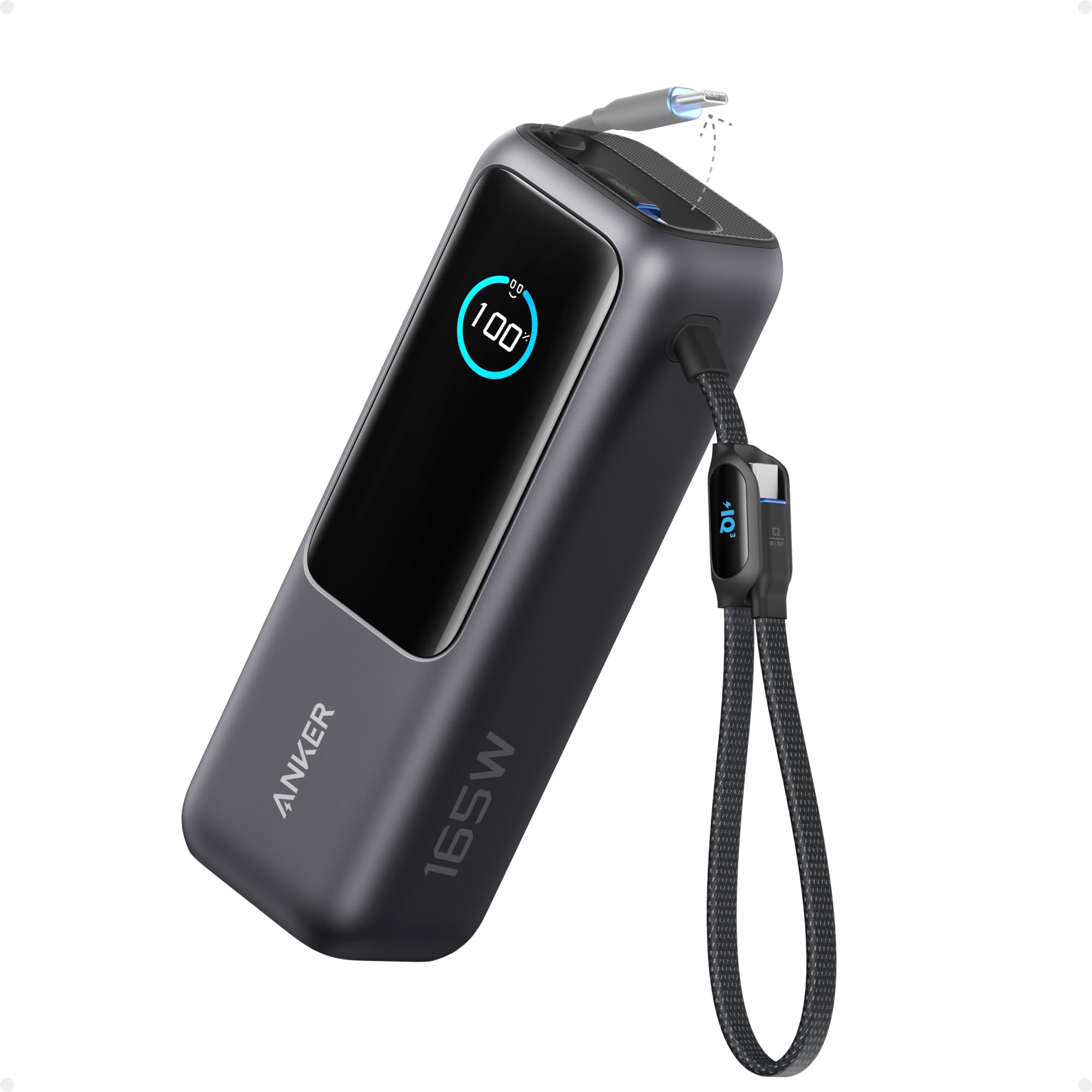
Anker 25000mAh 165W

Anker 25000mAh 165W

Laptop power

Customer rating 4.4/5
Check Price

Worth Noting

  • Premium-priced for a budget-conscious student
  • 300g of weight adds heft to backpack carry, where slimmer options slip into a pocket more easily.
Capacity
25000mAh
Reliability
Some DOA reports
Size Weight
300g
Output Power
165W
Read the full review

Charging a MacBook Pro at full speed from a unit that still fits a travel bag — the 165W output handles laptops, tablets, and phones at once, with a retractable USB-C cable that keeps the kit tidy. The 25,000mAh capacity carries serious multi-day workloads, and the build feels solid in the hand. The tradeoff is cost and heft: at a premium price and 300g, it over-delivers for anyone who only charges a phone, where a lighter, cheaper option makes more sense. Students who just top up a handset won't need this wattage; those with gaming laptops or long editing sessions will appreciate the headroom.

Bottom line: The right fit for students charging a demanding laptop daily and willing to carry the weight — anyone whose routine tops up a phone and earbuds will find a lighter, budget-friendly pack serves better.

#7

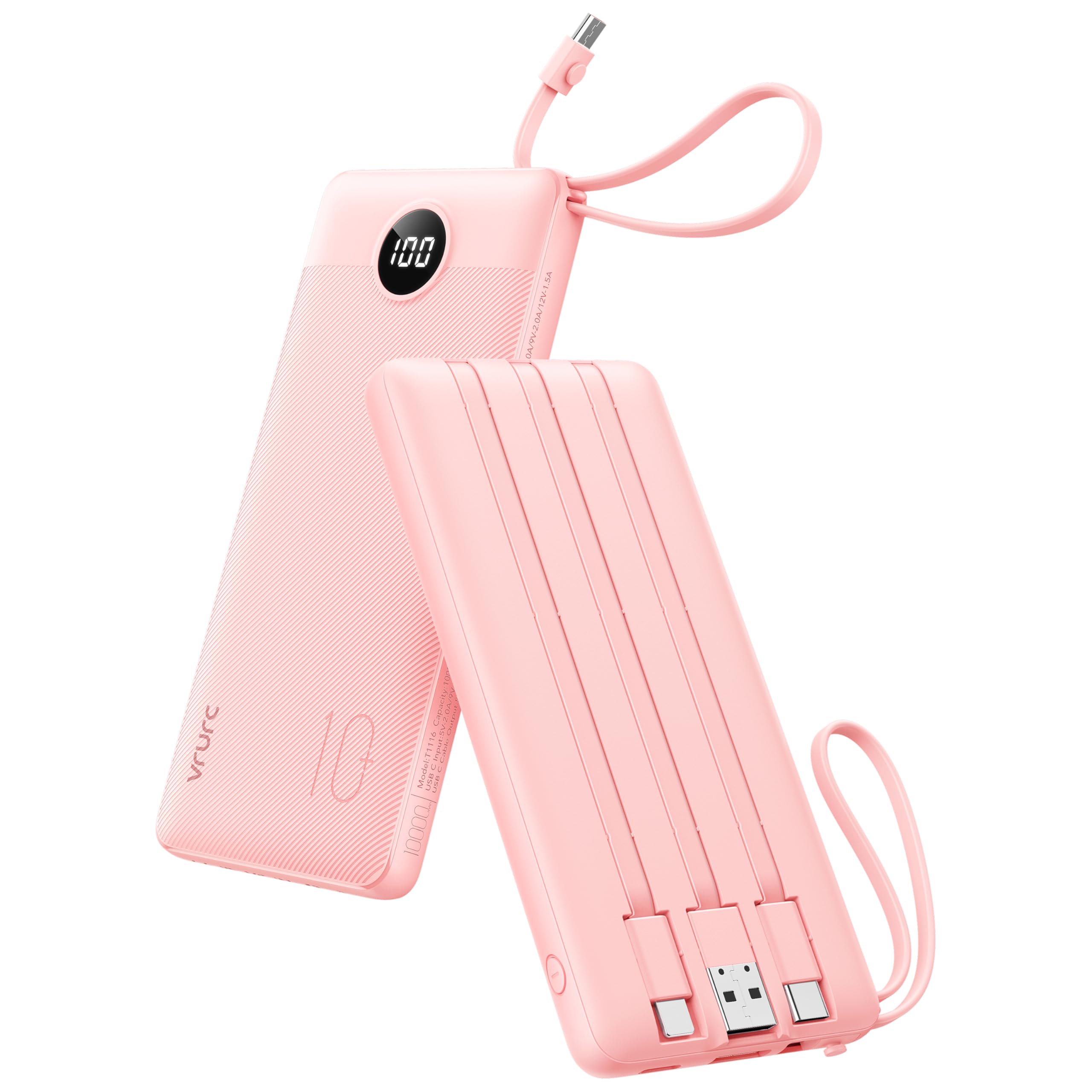
VRURC 10000mAh 4 Cables

VRURC 10000mAh 4 Cables

Cable variety

Customer rating 4.4/5
Check Price

Worth Noting

  • Battery capacity can diminish with regular use, showing up as fewer charges per session over time.
  • For a student expecting years of daily charging, some units lose output within months
Capacity
10000mAh
Reliability
Some failure reports
Size Weight
260g
Output Power
12W (2.4A)
Read the full review

The VRURC packs Micro, USB-C, iPhone, and USB-A cables into a slim 260g frame, so it covers nearly any device a student carries without extra cords to lose. That convenience is the draw, and the mid-range price undercuts most multi-cable alternatives. The tradeoff shows up over time: charging performance and battery capacity can fade in some units within months, which makes it a poor fit for anyone expecting several years of daily reliability. For a student who wants a cheap backup for travel or a shared charger to toss in a bag, it works well, but treat it as a convenience option rather than a long-term investment.

Keep it in a fixed spot and alternate the built-in cables to spread wear across the connectors.

Bottom line: Best for a student who wants a low-cost, all-in-one backup for travel or a semester with mixed devices, as long as they don't expect long-term daily reliability.

#8

Byobyc 10000mAh 22.5W

Byobyc 10000mAh 22.5W

Budget backup

Customer rating 4.4/5
Check Price

Worth Noting

  • 220g aluminum body feels denser than typical for a 10000mAh pack
Capacity
10000mAh
Reliability
Insufficient data
Size Weight
220g
Output Power
22.5W
Read the full review

The Byobyc charges phones quickly — its 22.5W output and built-in USB-C cable streamline top-ups between classes, and the 10000mAh cell holds a charge between uses. A three-port layout covers a phone, earbuds, and a spare at once, though the 220g aluminum body carries a little extra heft for its capacity.

Best treated as a cheap backpack safety net for occasional top-ups — a daily charger you would lean on for years is not this unit's job. At this price, the smart move is to pair it with a more established pack rather than expect it to cover every power need.

Bottom line: Works best as a cash-strapped student's backup for urgent top-ups on campus — as long as you are not expecting years of daily charging from it.

How to Choose

Capacity: How Many Charges You Really Need

A 10000mAh power bank typically delivers about 1.5–2 full charges to a modern smartphone, because conversion losses eat roughly 30% of the rated capacity. That's enough to get through a long day of lectures, group work, and transit. If you also carry a tablet or a USB-C laptop, consider a 20000mAh model, but know that it adds 100–150 grams and often doubles self-charging time.

Hidden trade-off: bigger cells take longer to recharge themselves. A 10000mAh unit with 18W input fills in about two hours, while a 20000mAh brick can sit on the wall overnight if its input is limited to 10W. If you're away from outlets from morning to night, capacity matters, but if you have a charger at your desk, the extra weight may not justify itself.

Output Power: What Actually Affects Charging Speed

Output power determines how fast your phone or tablet pulls energy. A 12W port will charge a phone at a crawl, while 22.5W (PD) cuts that time almost in half. For laptops, you need at least 45W to charge while in use; 65W will cover most ultrabooks, though gaming laptops demand more. Higher wattage also allows simultaneous fast charging across multiple ports.

Hidden trade-off: a high-wattage output (45W+) usually requires a larger battery and better thermal management, adding size and cost. Cheap 22.5W units often throttle their output when the battery temperature rises, so a compact design can lead to slower real-world speeds. If your only devices are a phone and earbuds, a 12–18W unit is plenty and keeps weight down.

Ports and Cables: Convenience vs. Fragility

Built-in cables are a genuine convenience—no more rooting through your bag for a cord. But they're also the most likely component to fail, especially on budget models with thin, unreinforced housings. Look for braided cables with stress relief at the connector, and prefer units where the cables are detachable. A 2-pack with built-in cables can cover both USB-C and Lightning without extra dongles.

Hidden trade-off: more ports and cables mean more ways for a connection to degrade. A 2-port unit with clean USB-C and USB-A outputs is often more reliable over years than a 6-port all-in-one. Also, some built-in-cable power banks only support 5V/2A on those cables, which is fine for a phone but not for a tablet or laptop. Read the fine print on the output specs before buying.

Size and Weight: The Backpack Equation

Weight is the first thing you'll notice after a week of carrying a power bank. A 10000mAh unit with built-in cables like the Zmmyuluo weighs 186g—barely more than a large phone. A 20000mAh model with a metal shell can hit 400g, which adds up when you're already hauling textbooks. For daily campus carry, anything under 250g disappears into a side pocket.

Hidden trade-off: there's a physical floor on how small a battery can be. To achieve 20000mAh, you need a certain cell size; marketing photos can trick you with slimmer silhouettes that are actually heavier in hand. Always check the weight spec and compare to the capacity. Also, a lighter unit may use a lower-capacity cell, so don't assume the lightest at a given capacity is the best—look for energy density vs. bulk.

Reliability: The Case for Longevity

The cheapest power banks often use lower-grade lithium cells that lose capacity or fail outright after a few months. This is the most common complaint in the category—users report units that 'just stopped working' after heavy use. A slightly higher spend often buys better cell chemistry and quality control, which is why some 10,000mAh models last years while others die after a semester.

Hidden trade-off: reliability and self-charging speed are linked. A unit that accepts only 5V/1A input will take over five hours to refill, which is a daily annoyance. Also, two-unit packs give you redundancy, but each unit might be built to a lower cost. That's why the FancyBean 2-pack earns its place: it offers two dependable chargers for the price of one premium single unit, and if one fails early, the other still gets you through the day.

Frequently Asked Questions