Art Supplies Product Guide

11 Best Origami Paper for Kids of 2026: Kits Kids Can Follow

Origami paper for kids that holds its crease and comes with instructions young children can follow on their own.

11 Best Origami Paper for Kids of 2026: Kits Kids Can Follow editorial illustration

Nearly every kids' origami listing calls its paper 'premium' and 'tear-resistant.' In practice, the most common complaint is the opposite: thin sheets that tear at the edges and refuse to hold a crisp fold. For a child's first few projects, that turns a fun activity into a frustrating one.

What actually separates kits kids stick with from ones they set aside is rarely the paper's color count. It's the instruction book. A clear, step-by-step guide lets even 5-year-olds fold on their own, while vague diagrams leave a box of nice-looking paper untouched on the shelf.

The practical takeaway: don't chase the biggest sheet count. A 200-sheet set with paper that holds a fold and a book a child can follow beats a 1,000-sheet pack that tears on the second fold — and matters far more to whether the hobby sticks.

#1

KOOL KRAFTS 350-Sheet Kit
KOOL KRAFTS 350-Sheet Kit

First guided kit

Customer rating 4.7/5
Check Price

Worth Noting

Sheet Count
350 (50 patterned)
Double-Sided
Solid both sides
Instruction Book
25 projects, ages 5+
Read the full review

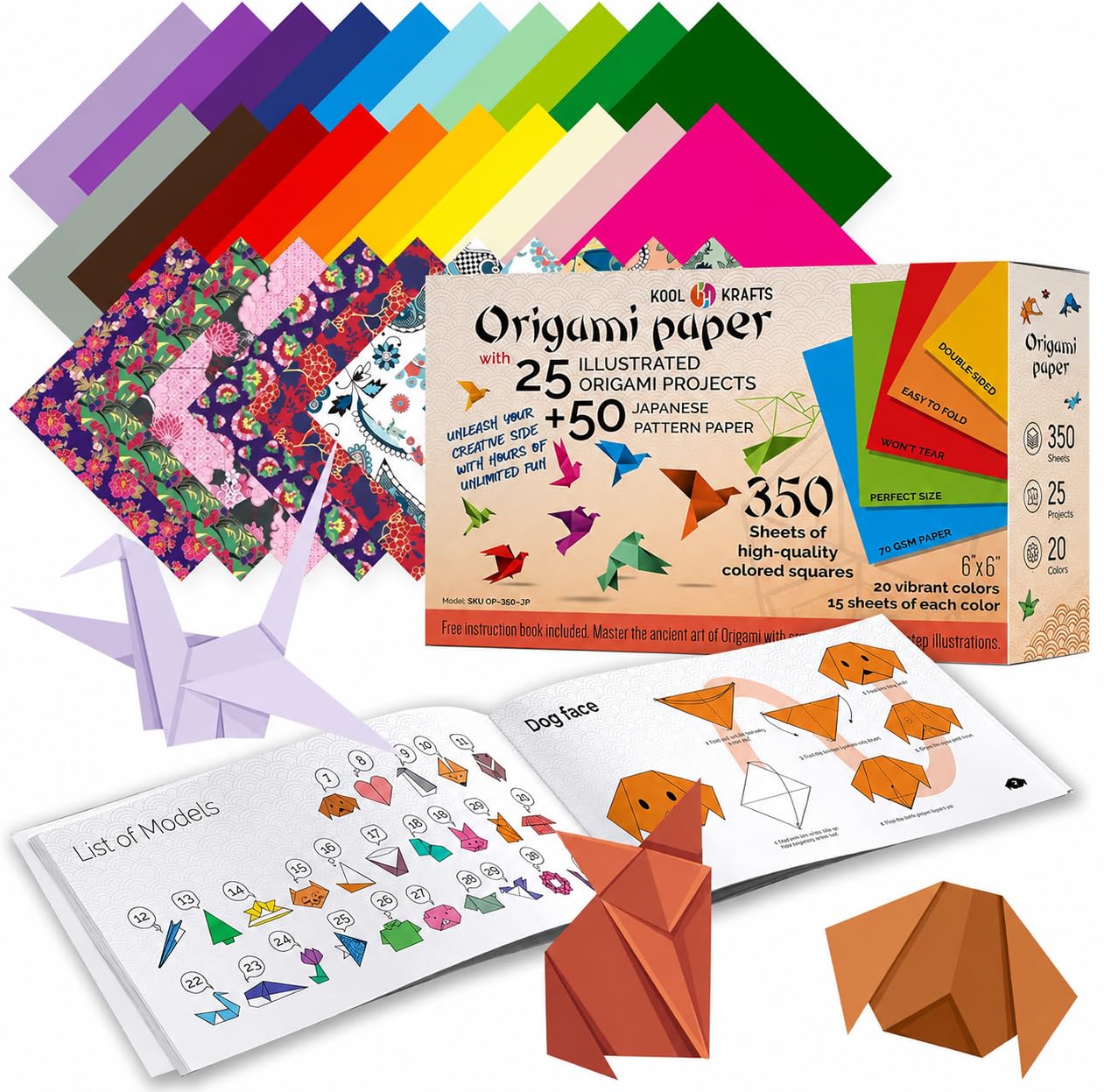
The 25-project book lets kids as young as 5 fold without an adult at their elbow, spelling out each step clearly enough that a first-timer builds real momentum rather than a pile of crumpled squares. Paired with 350 sheets — 300 solids and 50 Japanese patterns — the double-sided stock holds a sharp crease through a few refolds, and finished models land flat enough to keep or gift. That pairing is exactly what separates this kit from paper-only bulk packs: the guidance and the paper both pull weight.

This is the kit for a parent of a 5-to-12-year-old who wants a screen-free afternoon that ends with something to keep — children genuinely enjoy finishing a model, and the book keeps grown-ups off instruction duty. One honest caveat belongs with it: the booklet has been known to ship missing a page from the factory, so a quick flip through all 25 projects before the first fold is worth the minute. It is not the kit for raw classroom bulk or a no-book trial pack — the value sits in guided teaching plus paper in one box, at a mid-range price.

Bottom line: The rare kit in this set where the teaching book and the paper both deliver — a box worth handing to a young folder or wrapping as a gift.
#2

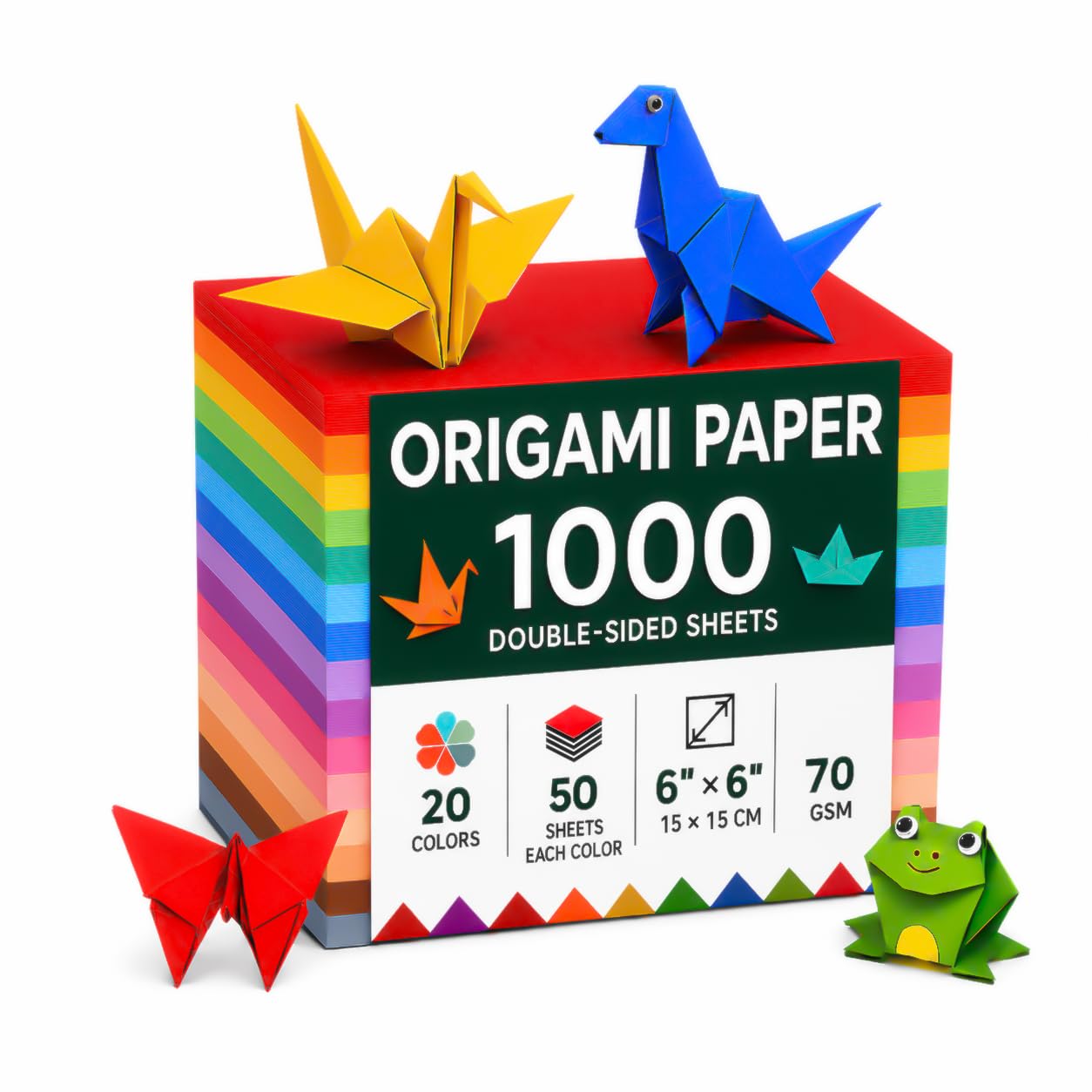
BUBU 1000-Sheet 6x6

BUBU 1000-Sheet 6x6

Classroom bulk practice

Customer rating 4.7/5
Check Price

Worth Noting

  • Thin stock can tear at the edges when young hands re-fold the same crease repeatedly, limiting reuse.
Sheet Count
1000
Double-Sided
Two colors per sheet
Instruction Book
None
Read the full review

One thousand double-sided 6x6 sheets at the best per-sheet cost in this set, creasing cleaner than construction paper and folding easily in classroom-size batches. The volume lets a whole class fold without rationing, and double-sided coloring keeps the palette wide enough for every child.

Best for teachers stocking a class and kids who fold constantly — the thin 70 gsm stock is the tradeoff that keeps cost down, and it can tear at the edges when young hands re-fold the same crease repeatedly, so display-worthy finished models aren't its lane.

Set aside a few sheets as free practice for repeated folding, keeping cleaner pieces for finished models.

Bottom line: Stock up and let kids fold without rationing — thin edges are the price of this much volume.

#3

Tuttle Chiyogami 500-Sheet

Tuttle Chiyogami 500-Sheet

Display-worthy models

Customer rating 4.8/5
Check Price

Worth Noting

  • The oil-based scent can be noticeable in a closed room, a concern for smell-sensitive kids.
Sheet Count
500 (12 designs)
Double-Sided
Pattern + solid back
Instruction Book
6 projects
Read the full review

These chiyogami sheets fold cleanly and hold sharp creases, and each pattern pairs with a coordinating solid reverse so finished pieces look intentional from both sides. At a mid-range price for 500 sheets of premium-feel paper, the set suits older kids and teens making gifts or decorations — pieces worth framing rather than quick practice folds.

Only six simple projects ship in the box, so pure beginners wanting step-by-step teaching will find the guidance thin. The sheets also carry a linseed-oil scent that can be noticeable in a closed room — a boundary for smell-sensitive children more than a drawback for the gifting-focused buyer.

Airing the sheets overnight before folding keeps the oil scent from lingering on finished pieces.

Bottom line: Finishing-focused kids and teens who already grasp basic folds get display-quality results the budget bulk kits can't match.

#4

BUBU 200-Sheet Kit + Book

BUBU 200-Sheet Kit + Book

Budget first kit

Customer rating 4.6/5
Check Price

Worth Noting

  • Thin paper can relax on intricate folds, so detailed models lack crisp edges
Sheet Count
200
Double-Sided
Solid both sides
Instruction Book
20 tutorials
Read the full review

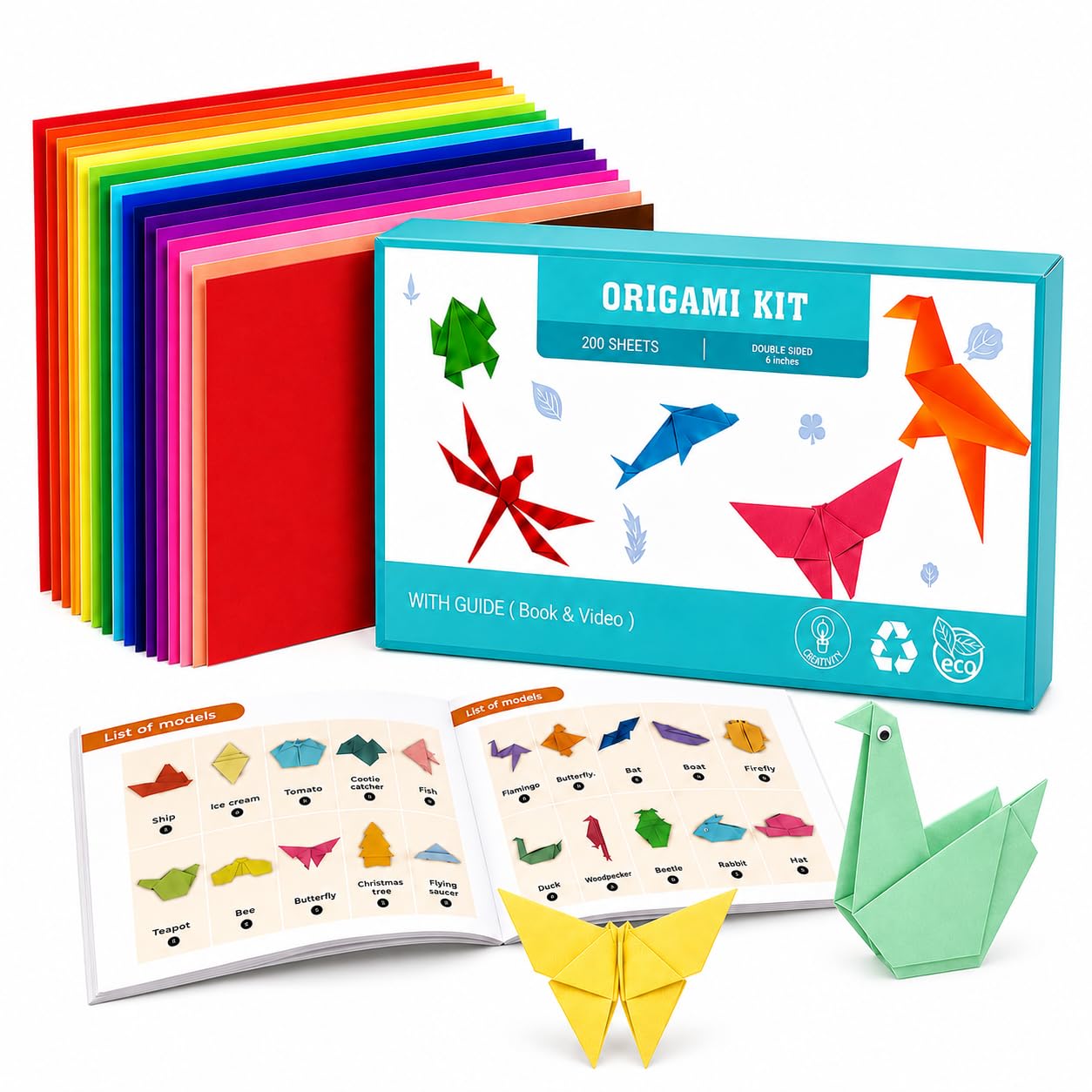
The full 200-sheet kit lands at the lowest price of any guided bundle here — double-sided rainbow paper, a 20-project tutorial book, and a hard storage box in one box. The dyed-through colors stay vivid on both faces, so every sheet serves two-sided folds and basic craft cutouts alike.

Budget-minded parents get a complete first kit that travels well, since the storage box keeps all 200 sheets flat and organized between sessions. The honest catch is the paper: thin stock can relax on intricate folds, and a young folder who pulls hard can tear a sheet — a guided starter for simple models rather than keep-worthy display pieces.

Press each crease firmly in one pass on a hard surface to keep edges sharp on the lighter stock.

Bottom line: The set's best value entry point — paper, book, and storage in one box for the lowest guided price.

#5

GAMENOTE 54-Project Kit

GAMENOTE 54-Project Kit

Project variety

Customer rating 4.4/5
Check Price

Worth Noting

  • Instruction diagrams can be unclear on some projects.
  • A fold can lose its shape as difficulty jumps between models.
Sheet Count
120
Double-Sided
—
Instruction Book
55-page manual
Read the full review

54 distinct projects in one box span animals, plants, and vehicles — the widest single-kit variety in the set. The 120 double-sided 5.5-inch sheets deliver paper that holds up in classroom folding, and the projects keep the 8-12 age range engaged. This is a general-purpose kit centered on variety rather than step-by-step teaching.

Best for kids who already caught the folding bug and want a pile of new models, or for teachers running supervised group sessions. Some instruction diagrams can be unclear and harder folds may lose their shape, so first-time folders benefit from an adult nearby.

Warm up on the kit's opening simpler folds before working up to the later step-heavy projects.

Bottom line: Best for a kid who has already discovered origami and wants a flood of new projects — a supervised group pick, not a self-directed first kit.

#6

hapray 152-Sheet Kit

hapray 152-Sheet Kit

Gift-ready kits

Customer rating 4.5/5
Check Price

Worth Noting

  • Some instruction steps aren't self-explanatory, leaving younger folders stuck partway through a model.
  • Difficulty spans the book unevenly
Sheet Count
152 (72 designs)
Double-Sided
—
Instruction Book
96-page book
Read the full review

The hapray kit prints 72 cute designs, two of each, so a parent and child can fold matching pairs side by side. The 5.5-inch sheets are cheerful and well-printed, and the duplicate-pattern format makes this the natural choice among these kits for people folding together.

It suits gift-givers and kids around 8 and up who already have some folding basics, not first-timers needing hand-holding. The 96-page book's clarity is inconsistent; some projects are far too advanced for younger kids to follow alone, so adult help comes into play on the harder models.

Bottom line: A delightful gift for kids 8 and up who already grasp the basics — the paper and matching-pair format charm, with adult help handy for the harder folds.

#7

KOOL KRAFTS 100-Sheet Kit

KOOL KRAFTS 100-Sheet Kit

Trial-size starter

Customer rating 4.7/5
Check Price

Worth Noting

  • 100-sheet count runs out fast once siblings or a classroom share the pack
Sheet Count
100
Double-Sided
Solid both sides
Instruction Book
25 projects, ages 5+
Read the full review

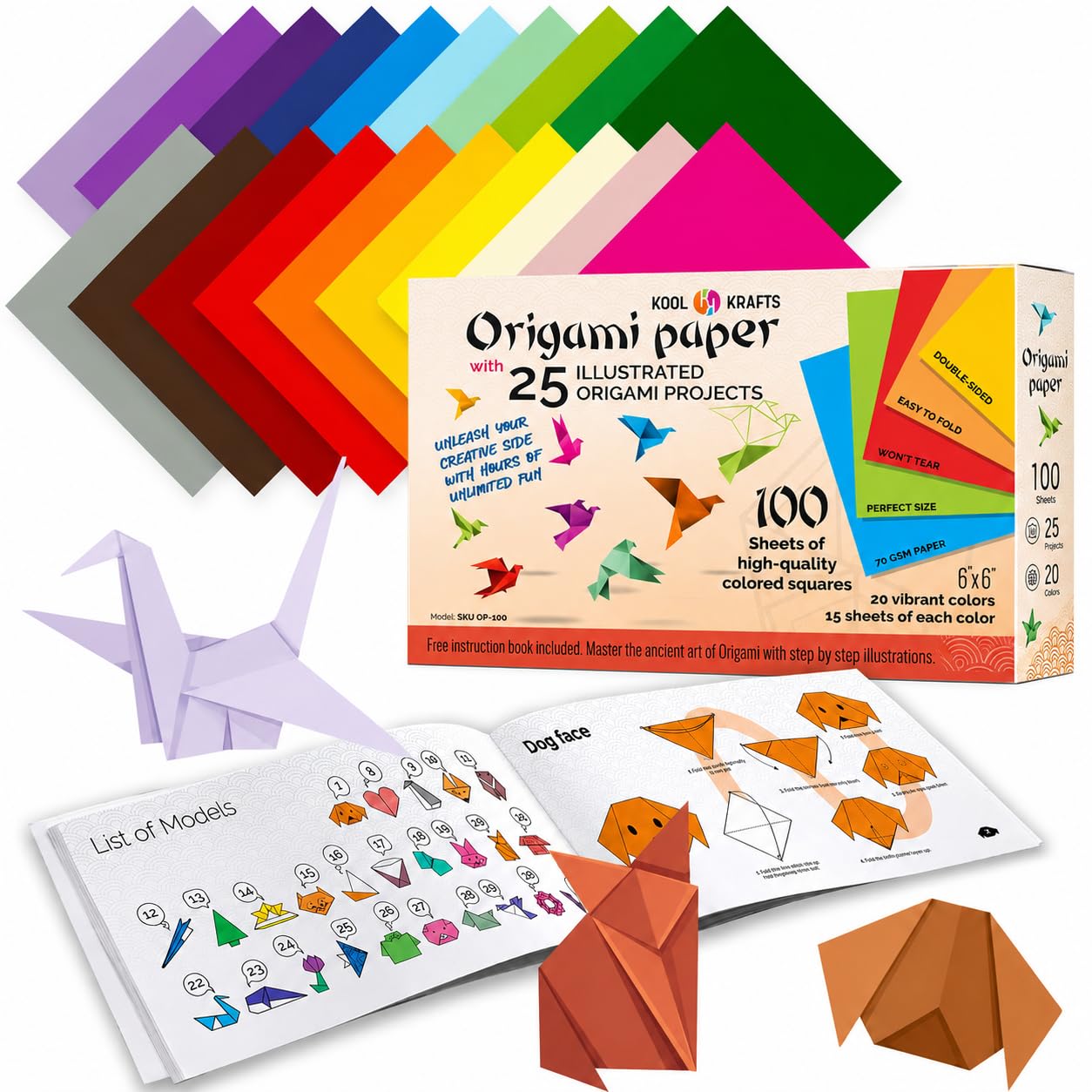
The same 25-project book and easy-to-fold paper behind the top pick arrive in a compact 100-sheet slice, built to test whether a child actually takes to folding. That count suits one child fine, but a sibling sharing the pack or a classroom session will drain the sheets quickly.

Bottom line: For one child curious about origami, this trial-size pack delivers the full guided experience at a lower price than the 350-sheet set — a sensible test before scaling up.

#8

Home Pro Shop 1100-Sheet

Home Pro Shop 1100-Sheet

Bulk volume

Customer rating 4.6/5
Check Price

Worth Noting

  • Some sheets land off-square, which can skew finished pieces on precise folds.
Sheet Count
1100
Double-Sided
Double-sided
Instruction Book
Video course
Read the full review

1100 double-sided sheets in 20 vivid colors deliver classroom-scale volume at a mid-range price, folding cleanly for simple projects. Off-square cuts can skew finished pieces and thin stock may tear on complex folds — non-issues for casual clubs practicing basics, where volume outweighs geometric precision.

Bottom line: Fits after-school clubs and classrooms folding simple models in high volume, where per-sheet cost outweighs the occasional off-square sheet.

#9

BB Bachmore 500-Sheet

BB Bachmore 500-Sheet

Simple practice

Customer rating 4.7/5
Check Price

Worth Noting

  • Instruction guidance is a digital e-book download, not a printed booklet for kids to follow at the table.
Sheet Count
500 (20 colors)
Double-Sided
Double-sided
Instruction Book
PDF e-book
Read the full review

500 double-sided sheets in 20 vivid colors suit simple folds and school basics at a budget price. The paper holds up well for easy projects, but on intricate multi-step models it can tear — a boundary that fits practice and classroom use, not complex designs.

Bottom line: Best for budget school basics and simple folding practice where volume per dollar counts more than finer stock.

#10

GAMENOTE Fantasy Kit

GAMENOTE Fantasy Kit

Fantasy themes

Customer rating 4.4/5
Check Price

Worth Noting

  • For a child folding without supervision, instructions can leave them guessing and some folds may not hold their shape.
Sheet Count
180
Double-Sided
—
Instruction Book
Manual included
Read the full review

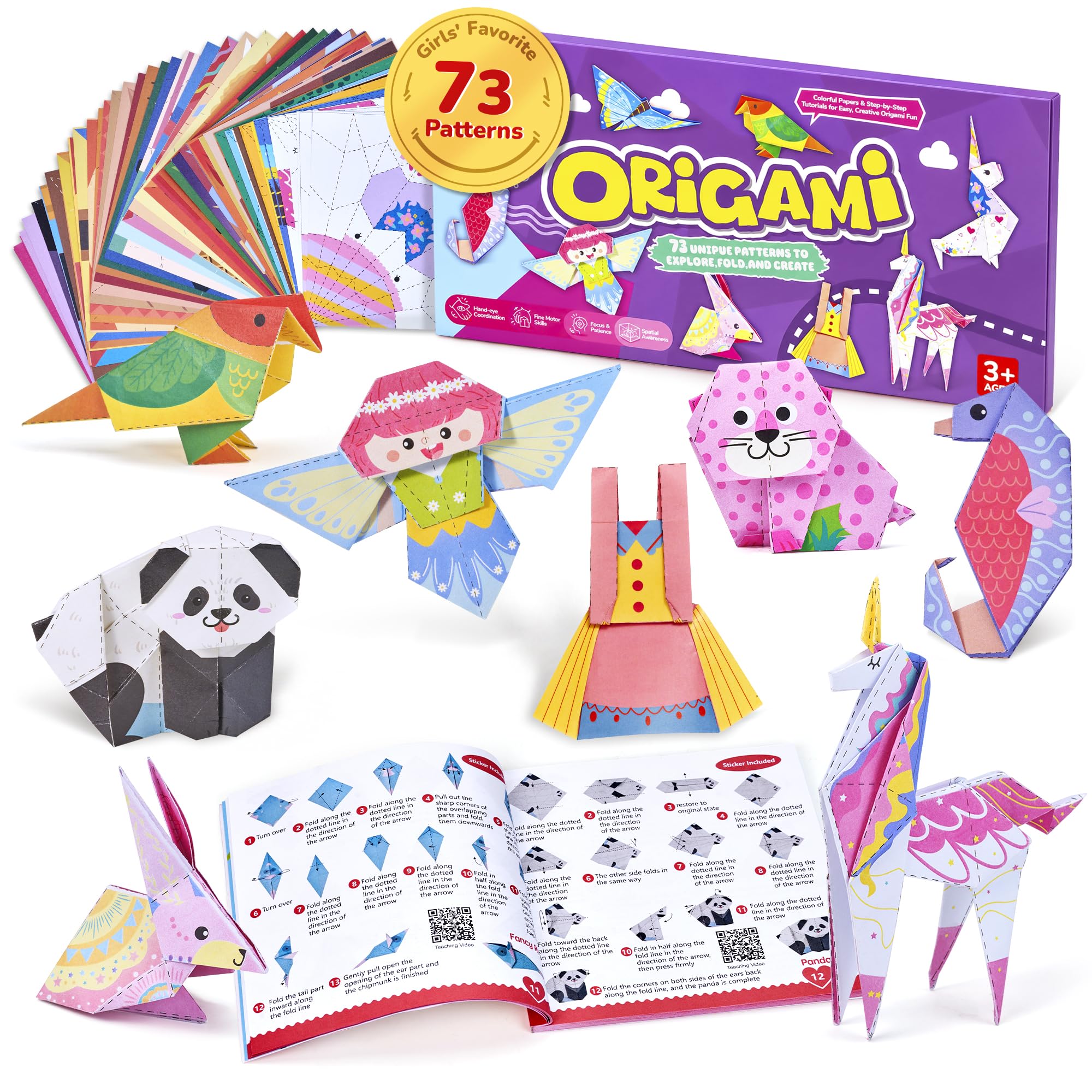
Girls who love unicorns and fairies get 180 double-sided sheets in fantasy designs no other kit here offers, with paper that holds up well in small hands. The fantasy theme is the reason to choose this kit — pick it for the designs rather than for teaching clarity.

Bottom line: Best when the fantasy theme is the point — for a girl with basic folding experience, with an adult on hand for the harder steps.

#11

Origami Craze 500-Sheet

Origami Craze 500-Sheet

Arts & crafts

Customer rating 4.4/5
Check Price

Worth Noting

  • For intricate models the heavy stock resists sharp creases, so fine folds come out softened.
Sheet Count
500 (20 colors)
Double-Sided
Both sides
Instruction Book
100-design e-book
Read the full review

The thick, double-sided stock delivers vivid color and survives eager small hands, suiting art projects, collage, and a child's first folds. An occasional off-square sheet crops up, so it works best as sturdy craft paper for creative sessions rather than a precise-folding supply.

Bottom line: Reach for this when sturdy, colorful sheets for young kids and general crafts outweigh precision; for crisp multi-step creases, the thinner kits in this set fold cleaner.

How to Choose

Paper Weight and Fold Quality

Origami needs thin, crisp stock that holds a sharp crease — roughly 70 to 80 gsm. Heavier craft paper resists creasing and makes every fold harder, the opposite of what beginners need.

The opposite extreme tears. Paper thin enough to crease easily can rip at the edges under a child's repeated re-folding, so the best kids' paper sits in a middle band: heavy enough not to tear, thin enough to fold.

Square Cut Accuracy

A sheet that is off-square by a few millimeters shifts every subsequent fold, and by the tenth step a model leans visibly to one side. For a child, that reads as failure even when the folds are correct.

If a pack ships with noticeably uneven edges, use it for practice cuts rather than projects the child wants to keep. Squareness matters more than color count.

Instruction Book Quality

For young kids, the book matters more than the paper. Kits with clear step-by-step guides let children as young as five fold on their own, while vague diagram-only books get shelved.

Book depth matters less than pacing. A 25-project book a kid can follow beats a 72-pattern book whose difficulty jumps around — especially for a first kit.

Sheet Count and Color Variety

Sheet count is the most misleading number in the category. A cheap 1,000-sheet pack that tears easily is worse for a beginner than a 200-sheet set that folds cleanly, because the first experience is what builds the hobby.

Buy enough for a few weeks of folding, then restock once interest is clear. Big packs earn their keep in classrooms, where volume genuinely matters.

Double-Sided Color

Double-sided means both faces are colored, usually a solid tone per side. Dyed-through paper keeps its color at the crease, while printed sheets can show a white fold line.

For most kids' models the difference is cosmetic. Patterned sheets fold into more striking finished pieces, while solids read cleaner for simple practice models.

Frequently Asked Questions