Math Learning Product Guide

12 Best Multiplication Flash Cards of 2026: Sets That Stay Complete

Find multiplication flash cards that cover every 0-12 fact, survive daily use, and include visual aids that help kids actually memorize.

12 Best Multiplication Flash Cards of 2026: Sets That Stay Complete editorial illustration

Most multiplication flash card sets advertise full 0-12 coverage, but opening the box can reveal a different story — a missing 7×8 or a flimsy card that bends after a week of use. This guide focuses on sets that deliver complete facts and hold up to daily drilling, so you don't discover a gap mid-practice.

The bigger decision is how your child learns. Some kids memorize fine with plain text cards, while others need array diagrams or written answers to make the connection stick. Weighing organization like rings or tabs against visual aids comes down to your child's study style, not just card count.

The choices that hold up under daily use share a few traits: thicker cardstock, a way to keep facts organized, and a track record of arriving complete. That combination matters more than card count alone when your goal is actual memorization.

#1

Think Tank 173 Cards

Think Tank 173 Cards

Visual learners

Customer rating 4.8/5
Check Price

Worth Noting

  • Coverage is multiplication-only
Card Count
173
Organization
Mastery tabs
Card Material
Cardstock
Both Operations
Multiplication only
Read the full review

Mastery divider tabs split the 173 cards into learned and still-practicing groups, so progress tracking is built into the deck rather than managed as an afterthought. Array diagrams on every answer side show each fact as a visual grid, helping kids connect 6×7 to a six-by-seven arrangement of dots before they memorize the product. Jumbo 3.1×5.2-inch cards fit small hands comfortably, and the easy-to-read numerals cut down on guesswork during fast drills. This pairing of visual support and built-in organization is what separates it from text-only decks in the same price range.

The set suits parents and teachers who want one well-organized deck for structured drill across the full 0-12 range. The mid-range price runs higher than bare-bones budget decks, though complete coverage, durable stock, and the tab system justify it for a full school year of practice. Kids who prefer a gamified pop-it approach may not engage with a card-based format, so this fits households committed to structured memorization. Daily drill sessions hold up well, and the divider tabs keep progress visible without separate tracking sheets.

Bottom line: For a school year of structured multiplication practice, this deck pairs complete 0-12 coverage with a progress-tracking system that keeps drill sessions organized.

#2

Star Right Multiplication

Star Right Multiplication

Classroom use

Customer rating 4.7/5
Check Price

Worth Noting

  • Text-only cards carry no diagrams, so visual learners will prefer the top pick's array aids.
Card Count
169
Organization
Binder rings
Card Material
Cardstock
Both Operations
Multiplication only
Read the full review

Two sturdy binder rings keep all 169 hole-punched cards organized and portable, making this the highest-volume drill set in the lineup. Each card covers a single 0-12 fact in large, readable print. For parents who want a practical, no-fuss deck or teachers running daily classroom drills, the rings eliminate the lost-card problem that plagues loose decks. Card quality holds up to repeated use. The tradeoff: cards are text-only with no diagrams or visual aids, so children who need imagery to grasp number relationships should look to the top pick's array diagrams and mastery tabs.

Bottom line: For parents and teachers who want a practical, high-volume drill deck without extras, the sturdy rings and complete 0-12 coverage make this the most portable option in the lineup.

#3

Think2Master 215

Think2Master 215

Repeated practice

Customer rating 4.7/5
Check Price

Worth Noting

  • Mid-range pricing runs above bare-bones budget decks for families wanting a simple drill set.
  • The write-and-erase process suits interactive kids, yet adds a step for those who prefer reading answers aloud.
Card Count
215
Organization
Binder rings
Card Material
Laminated
Both Operations
Multiplication only
Read the full review

Write, check, erase, repeat — the 215 laminated Think2Master cards let kids work the same fact until it sticks, where a basic print-only deck offers nothing to revisit once read. Two rings keep the hole-punched cards organized and portable, and the included dry erase markers make the answer side reusable across every practice session.

Buyers wanting reusable cards for weekly drills and kids who like writing their answers get the most here. The markers can dry out and need replacing, so keeping spares on hand keeps the deck usable between sessions.

Bottom line: For families who value repeatable practice, one laminated deck serves the full 0-12 range across a school year of use without buying replacements.

#4

Think Tank 335 Combo

Think Tank 335 Combo

Mult & division

Customer rating 4.8/5
Check Price

Worth Noting

  • Premium price overshoots households whose child only needs multiplication this school year.
Card Count
335
Organization
Color-coded tabs
Card Material
Cardstock
Both Operations
Multiplication & division
Read the full review

335 color-coded cards cover both multiplication and division facts 0-12, so one purchase spans a full school year. Where the single-operation set stops at multiplication mastery, this combo adds division with array diagrams on each answer side, plus dice and bonus charts for game-based review. Color bands group facts by family, making it quick to sort focused practice.

Best for families covering both operations in the same school year, especially visual learners who read array diagrams. The premium price is overkill if the child only needs multiplication for the current term — the single-operation set fits that narrower need for less.

Bottom line: One box delivers both operations with visual support — the right buy for families moving through multiplication and division in the same year. Multiplication-only households should reach for the lighter single-operation deck instead.

#5

Trend Three-Corner

Trend Three-Corner

Fact families

Customer rating 4.7/5
Check Price

Worth Noting

  • When the goal is drilling each fact individually, the 48-card count covers core families, not the full range.
Card Count
48
Organization
—
Card Material
Cardstock
Both Operations
Multiplication & division
Read the full review

The three-corner design is the differentiator — one card shows the fact family (3, 4, and 12) so a single glance reveals both 3×4=12 and 12÷3=4. That inverse relationship sets it apart from flat two-sided decks and makes it a teaching tool rather than just a drill set. Both operations come from the same card.

Teachers who want to show how the operations connect get the most from this format, and kids who enjoy tactile variety engage with the triangular layout. At 48 cards it reinforces core families rather than drilling every 0-12 combination — a boundary that fits its role as a family-teaching deck.

Bottom line: For teachers showing how multiplication and division connect, the triangular format delivers where flat decks can't — just know it's a family-teaching tool, not a full-fact drill.

#6

JoyCat 156 Cards

JoyCat 156 Cards

Sensory learners

Customer rating 4.7/5
Check Price

Worth Noting

  • Coverage stops at 1-12, so zero-fact drills are missing for curriculums that expect the full 0-12 range.
Card Count
156
Organization
Storage bag
Card Material
Cardstock
Both Operations
Multiplication only
Read the full review

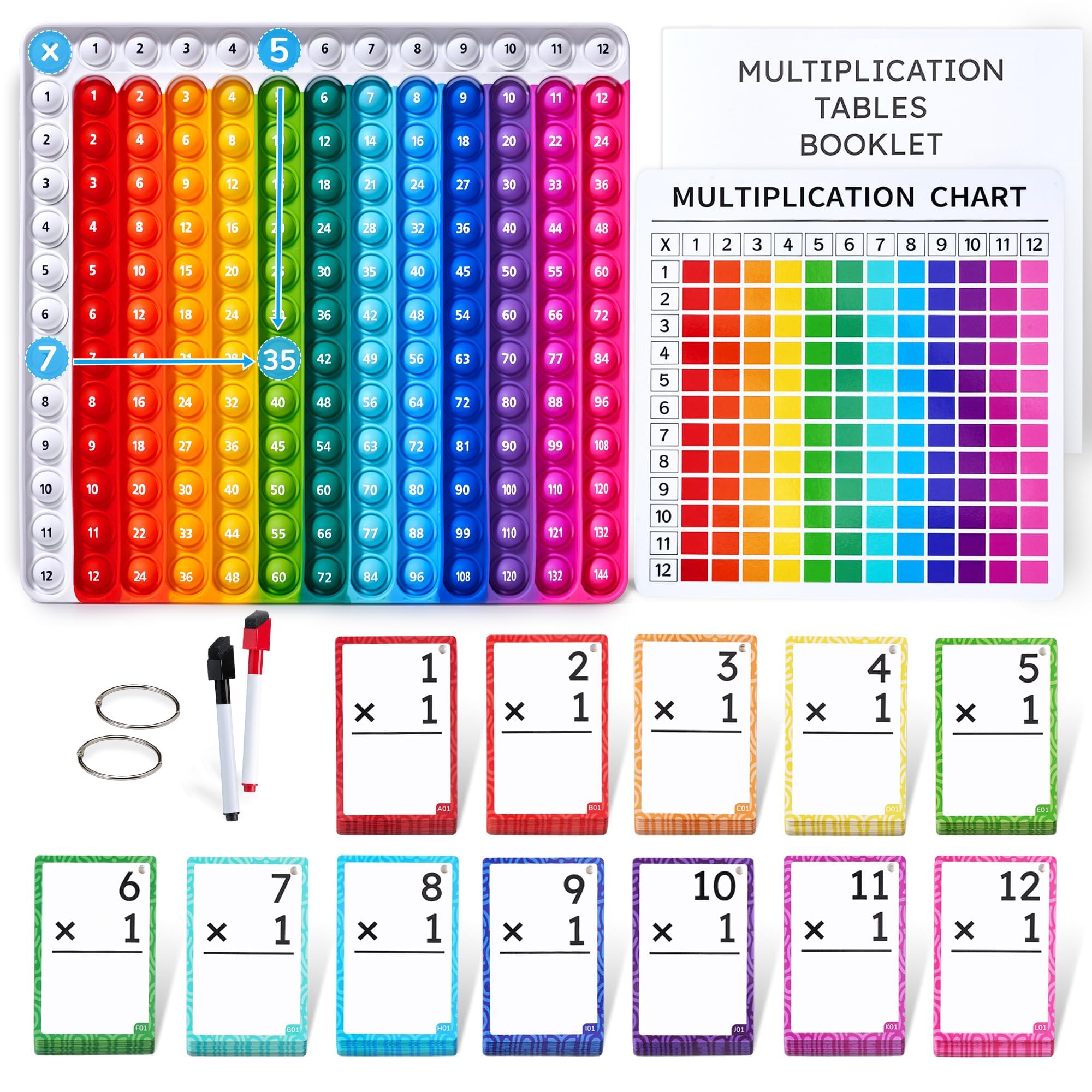
JoyCat bundles 156 color-coded cards with a pop-it mat, a multiplication chart, and a mesh storage bag — one kit that shifts between card drill, tactile practice, and visual reference. The pop-it component keeps restless hands busy while checking answers, something the top pick's deck alone doesn't offer.

This fits families who want multiple formats rather than a single deck. The tradeoff: coverage stops at 1-12, so zero-fact drills are absent for curriculums expecting full 0-12. Mid-range pricing also goes beyond what a bare-bones deck costs.

Bottom line: The best multi-format kit in this lineup — for families who want cards plus tactile practice and tidy storage, provided the 1-12 range matches their curriculum.

#7

School Zone 2-Pack

School Zone 2-Pack

Budget combo

Customer rating 4.6/5
Check Price

Worth Noting

  • Checking completeness on arrival matters
Card Count
112
Organization
—
Card Material
Paper
Both Operations
Multiplication & division
Read the full review

The most affordable route to both multiplication and division practice: two decks spanning 0-12 across 112 cards from a trusted workbook brand. The budget paper and possible missing-card variance on arrival mean counting both decks first is smart — but for the price, few ways to cover both operations come close.

Bottom line: For families who just need both operations covered cheaply and can spare a minute to count cards on arrival, this is the value pick.

#8

COOVA Pop Chart Cards

COOVA Pop Chart Cards

Pop-it practice

Customer rating 4.7/5
Check Price

Worth Noting

  • Some boxes arrive missing individual cards, so counting the deck on arrival is worthwhile before regular drill.
Card Count
169
Organization
Binder rings
Card Material
Laminated
Both Operations
Multiplication only
Read the full review

169 laminated cards pair with a pop-it fidget chart and dry erase markers, giving restless kids a hands-on break between facts. Coverage spans 0-12 and the colorful design earns steady praise from families. QC varies, though — some boxes arrive missing individual cards, so the set suits families who count cards on arrival rather than assuming completeness.

Bottom line: For families whose child needs a sensory anchor between facts, this pair-up works — provided you count the cards before first use.

#9

BESARME 13 Cards

BESARME 13 Cards

On-the-go use

Customer rating 4.7/5
Check Price

Worth Noting

  • One card per table can't repeat a single fact for mastery
Card Count
13
Organization
Rings, markers
Card Material
Laminated
Both Operations
Multiplication only
Read the full review

Every table from 0-12 appears on a single laminated card, with markers and rings so faces wipe clean and repeat as needed — compact enough for a backpack or car seat. Because one card covers an entire table, individual facts can't be drilled the way a full 169-card deck does; this set briefs and refreshes rather than driving facts to mastery.

Bottom line: Best as a travel or waiting-room refresher when a complete drill deck stays at home — it maintains known facts, it doesn't build them.

#10

DK-SIMINA Pop-It

DK-SIMINA Pop-It
Customer rating 4.8/5
Check Price

Worth Noting

  • At 24×24 cm it won't slip into a pocket, so on-the-go review isn't an option.
Read the full review

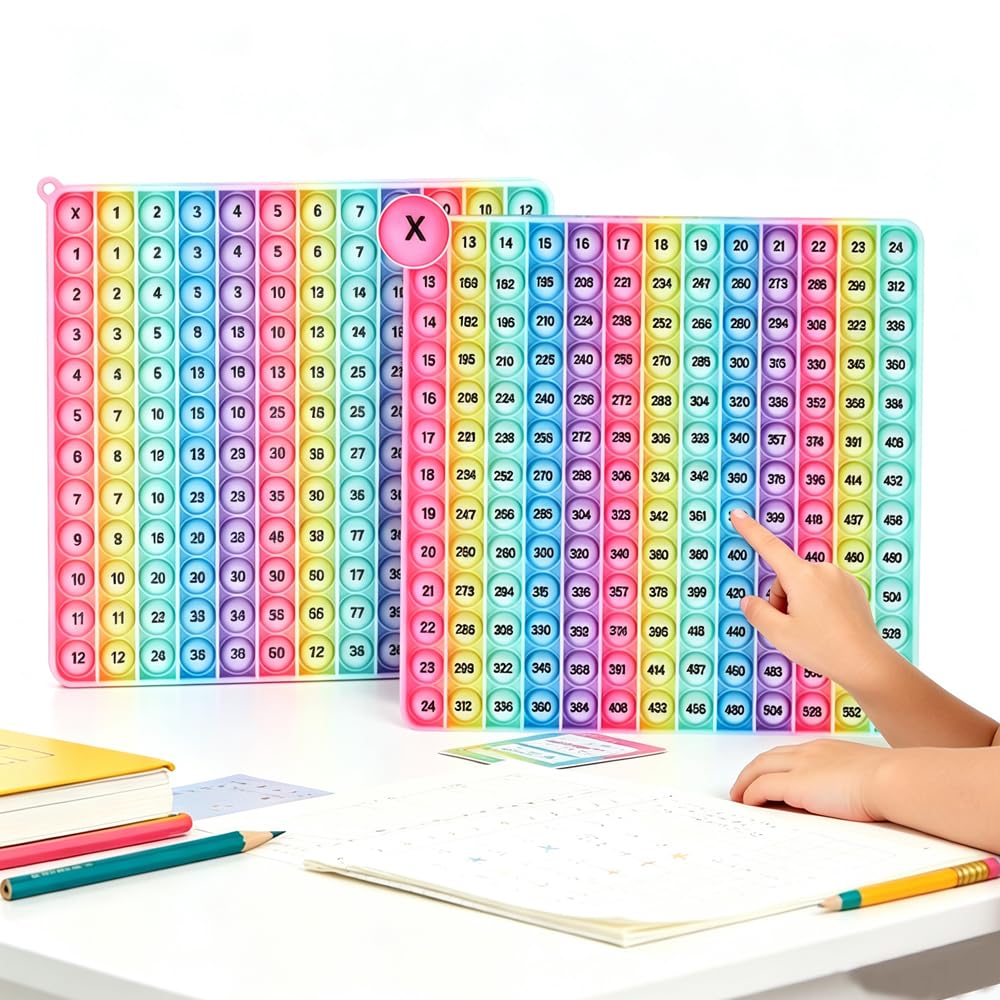
The pop-it grid keeps restless kids engaged while reinforcing multiplication patterns, and its silicone build stands up to repeated popping. It serves as a supplemental sensory tool rather than a primary drill method — kids poke answers instead of recalling them — which is why a text-only deck remains a better fit for fact memorization.

Bottom line: Best for a child who avoids traditional cards and needs hands-on sensory practice — pair it with a real drill deck when fact recall is the goal.

#11

School Zone 56 Cards

School Zone 56 Cards

Classic budget

Customer rating 4.6/5
Check Price

Worth Noting

  • No visual aids, arrays, or organization tabs
Card Count
56
Organization
—
Card Material
Paper
Both Operations
Multiplication only
Read the full review

This set covers the 0-12 facts with a no-frills approach — 56 plain-text cards and nothing extra. It works well for anyone who wants a simple, cheap drill deck from a known education workbook brand. The deck lacks visual aids like array diagrams and any progress-tracking tabs, so it's best for families who just need bare-bones fact repetition rather than concept teaching or organization.

Bottom line: Choose this when you want a trusted-brand drill deck with no bells; skip it if visual aids or progress tracking matter.

#12

Carson Dellosa 54

Carson Dellosa 54

Basic drills

Customer rating 4.6/5
Check Price

Worth Noting

  • A box can arrive with a card missing, so the full 0-12 set may need verification on arrival.
Card Count
54
Organization
—
Card Material
Paper
Both Operations
Multiplication only
Read the full review

From the recognized Brighter Child workbook brand, these 54 cards cover 0-12 multiplication facts at a budget price and work well for basic fact practice. There are no visual aids or organizational extras — this is a bare-bones drill deck. A box can arrive with a card missing, so count the set on arrival before relying on it for full-fact practice.

Bottom line: Best for budget shoppers who want basic multiplication drill and accept checking the full 0-12 set on arrival.

How to Choose

Card Count and 0-12 Coverage

A complete 0-12 set needs 169 unique fact cards, so any deck with fewer than that omits some combinations. Budget decks with 48-56 cards drop entire fact families, which leaves gaps in a weekly drill routine.

The catch is that even full-count sets don't always ship complete — packaging errors occasionally remove a card or two. A 13-card set, meanwhile, covers one card per table, not each individual fact, so it works as a review prompt rather than a drill tool.

Card Material and Durability

Laminated cards resist the creases, bent corners, and sticky fingers that come with daily use, while plain cardstock starts showing wear within weeks. For a set meant to last through several grades, lamination or thick cardstock is worth the extra cost.

Thin paper cards are cheaper but bend along the edge where fingers grip, and numbers can fade with repeated handling. If you expect the set to survive multiple school years, treat material as a durability decision, not a cosmetic one.

Organization and Storage

Binder rings let you pull out one fact family at a time and keep cards from scattering across the car floor or classroom. Divider tabs go further by separating mastered facts from ones still in rotation, which helps you track what actually needs review.

Color-coding across fact families speeds up sorting and makes it easy to rebuild a deck after it has been dumped in a bin. Without rings or tabs, a shuffled 169-card deck becomes a chore to reorganize and easy to lose.

Visual Aids and Diagrams

Cards that show array diagrams or group illustrations on the answer side do more than confirm a response — they give a student a mental model for why 3×4 equals 12, not just that it does. This matters most for visual learners who struggle to memorize abstract numbers.

Skipping visual aids keeps the card clean for pure recall drills, which works fine for kids who already grasp the concept and just need speed. Match the aid to the goal: diagrams for understanding, plain text for fluency.

Multiplication and Division Together

A set covering both operations reuses the same fact family, so a child who learns 6×7 also sees 42÷6 and 42÷7 in adjacent practice. That connection builds fluency faster than drilling each operation in isolation.

Combo sets cost more and add cards that sit unused if your child works only on multiplication this year. Buy the combo when both operations are on the near-term schedule, not as a default.

Frequently Asked Questions