STEM Toys Product Guide

8 Best Microscopes for Students in 2026: Clear, Honest Optics

The best microscopes for students that show clear, usable images — with honest magnification that matches classroom needs.

8 Best Microscopes for Students in 2026: Clear, Honest Optics editorial illustration

Most student microscopes advertise flashy magnification numbers — 1200x, 2000x, even 2500x. In practice, a scope rated at 2000x often delivers only a fraction of that in usable, sharp magnification. The category's real complaint isn't missing features; it's blurry images and focus that slips the moment you touch the knob.

The scopes that actually perform share a different profile: metal frames, glass achromatic lenses, and honest magnification ranges. A 1000x scope with solid optics beats a 2500x one with plastic lenses every time. That distinction matters more than any single spec on the box.

This guide pairs each scope with the age group and setting where it genuinely works — from a 6-year-old's first digital views to a teen's lab bench. Matching the instrument to the student is the difference between a tool they use and a box they abandon.

#1

AmScope M150C

AmScope M150C

Students aged 10+

Customer rating 4.5/5
Check Price

Worth Noting

  • Occasional units arrive with a scratched objective lens
Illumination
Cordless LED
Build Material
All-metal
Magnification Range
40x-1000x
Included Accessories
—
Read the full review

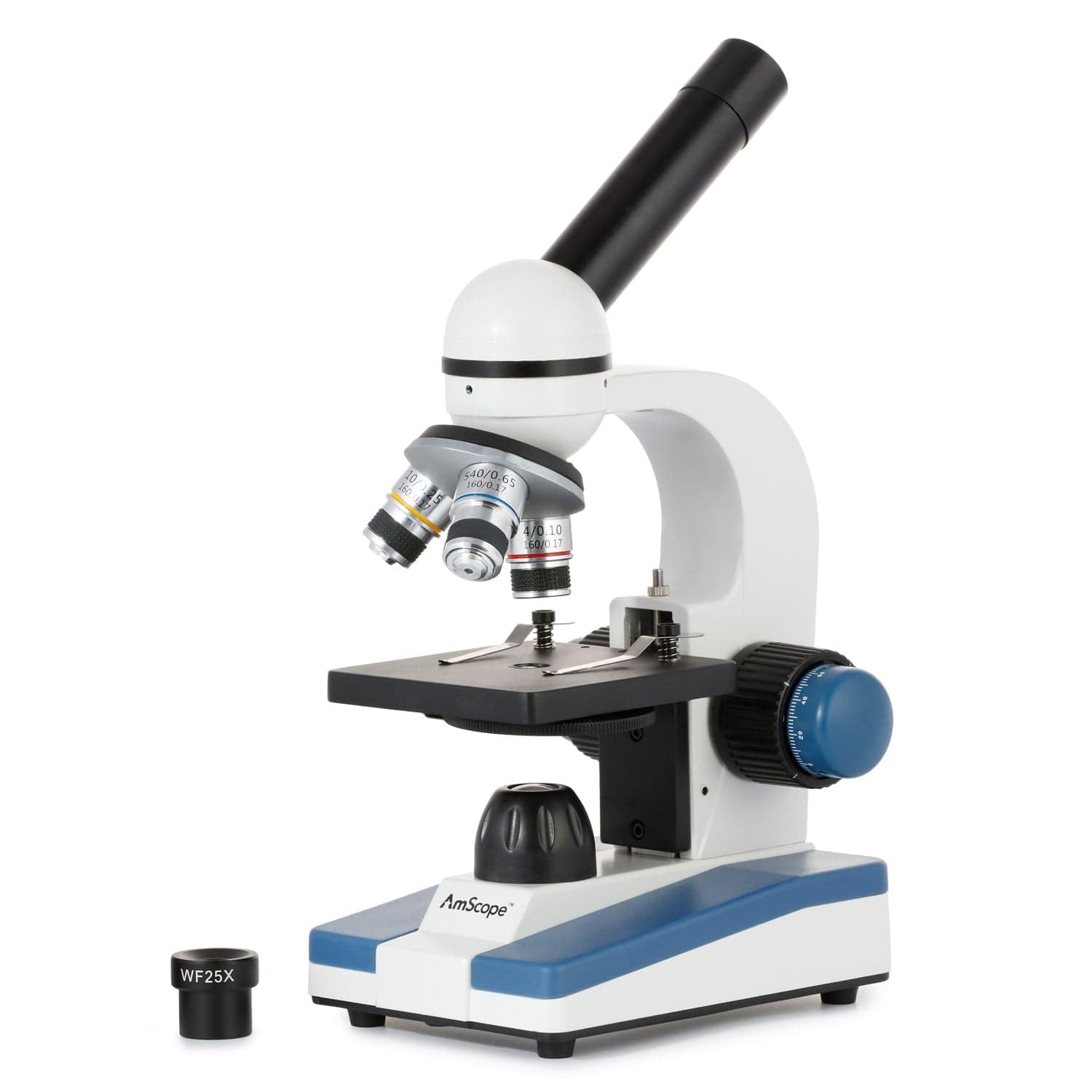
The M150C's all-metal body carries achromatic 4x/10x/40x objectives and a cordless LED — exactly the combination that keeps a scope in focus through the magnifications students actually use. Box zoom numbers are marketing; the microscopes that genuinely teach are the ones with metal frames and glass lenses that hold their image in the 100x-400x band. This AmScope lands squarely in that group, and the metal chassis absorbs the bumps of a shared classroom table as well as a backpack ride home. The 4x objective finds a specimen quickly, 10x frames it, and 40x brings detail into view — a progression that mirrors how a lesson moves.

The cordless LED runs on batteries or the included AC adapter, so there's no cord to trip over and no mirror to angle at a window on cloudy days. Focus holds once it's set, which is the difference between a scope a student uses and one they put up with. The appeal runs deeper than the spec sheet — kids drift toward it during free time, and the same session tends to pull a younger sibling in on the observation.

First-time users get a scope that works out of the box without calibration rituals; specimens come into sharp view within moments of landing on the stage, and the built-in clips hold slides steady for younger hands. The three-objective turret and basic stage cover the cells, pond water, and leaf sections of a standard life-science syllabus, and the learning curve is gentle enough that a curious middle-schooler can find and view specimens on their own.

This is the right fit for middle-school science curricula and homeschool families who want a durable starter that keeps delivering across a few school years. At the 1000x setting, fine detail washes out, and the stage lacks the smooth fine-adjustment of pricier lab scopes — boundaries a learner working in the 100x-400x range won't run into, where the achromatic objectives stay crisp.

This is a premium-priced pick, and part of that cost reflects a longer record of dependable classroom service than the cheaper metal-bodied option in this set. For a household or school that wants one scope to carry across several grades rather than one season, that endurance is what the money buys — flashier models in this lineup cost more for a screen, while this one focuses on the fundamentals.

Keep sessions in the 100x-400x range, where the achromatic objectives deliver their cleanest views.

Bottom line: Buyers who want one scope to last several school years get that here — the premium buys endurance and real optics rather than inflated specs.

#2

BEBANG Digital

BEBANG Digital

Young kids 4-12

Customer rating 4.5/5
Check Price

Worth Noting

  • Grain creeps into images as zoom climbs
  • The advertised 1000x outruns real reach, so fine cellular detail stays out of frame.
Illumination
LED
Build Material
Plastic
Magnification Range
200x-1000x
Included Accessories
EVA case, slides
Read the full review

The handheld capture is the point of difference: a child points it at a leaf, presses a button, and the observation lands on a phone or tablet without any eyepiece struggle. Where the screen-based model in this set is built for classroom presentations, this one ditches the built-in display for portability — it tucks into a backpack for a nature walk, and the 32GB card holds plenty of photos and clips.

This is a first scope for young children in the six-to-ten range, not a bench tool. True magnification sits far below the box's 1000x claim, and grain creeps in as the zoom climbs, so it fits backyard insects, fabric weaves, and coins far better than cellular detail. That tradeoff is easy to accept when the goal is getting a child to look closely and genuinely enjoy the find.

At this budget the plastic build is the expected tradeoff, yet it holds up to casual drops and the fun factor keeps young kids reaching for new samples. It stays a first-step scope rather than a precision instrument, which is the right match for the age group it serves.

Observations show up on a phone or tablet rather than a built-in screen, so keep a charged device nearby for longer sessions.

Bottom line: For a child who hops between samples and wants each find visible on a screen, this starter scope turns observation into an activity they drive on their own.

#3

PalliPartners Compound

PalliPartners Compound

Homeschool families

Customer rating 4.3/5
Check Price

Worth Noting

  • Included blank slides are thin plastic that can seat poorly in the stage clips.
  • Sharpness softens toward the top of the claimed magnification range.
Illumination
Dual LED top/bottom
Build Material
Plastic (PC/PE)
Magnification Range
Up to 2000x
Included Accessories
28 slides, phone holder
Read the full review

The PalliPartners arrives with 28 prepared slides and a phone holder, so the first observation happens minutes after unboxing — no extra slide purchases, no assembly guesswork. That parts list is the fullest in its price range, which sets it apart from the spartan all-metal workhorse that leads this roundup. The included phone clip lets a parent or sibling see the stage through their own eyes and join the discovery.

This suits homeschooling families and middle-school students rather than serious lab work. The PC/PE plastic body keeps weight low enough to move from shelf to kitchen table, though it won't take the same drops as the all-metal top pick. For a first microscope in careful hands, that's an acceptable exchange with room to grow through a couple of school years.

The dual LED lights from above or below, so specimens come up visible without repositioning, and battery or AC power lets the scope work anywhere from a kitchen table to a classroom. The phone holder turns a single eyepiece into a shared screen, so a parent can show a child exactly what to look for instead of trading turns squinting.

Bottom line: For a first scope, the value sits in the bundle — prepared slides and a phone holder ready the day it arrives — not in chasing the top magnification figure.

#4

PALOBIL Compound

PALOBIL Compound

High school biology

Customer rating 4.6/5
Check Price

Worth Noting

  • Pushing to the 40x objective for fine detail, focus can resist on some units, demanding patience at the top of the range.
Illumination
Dual LED
Build Material
Metal frame
Magnification Range
Up to 2000x
Included Accessories
Phone adapter, 11-piece kit
Read the full review

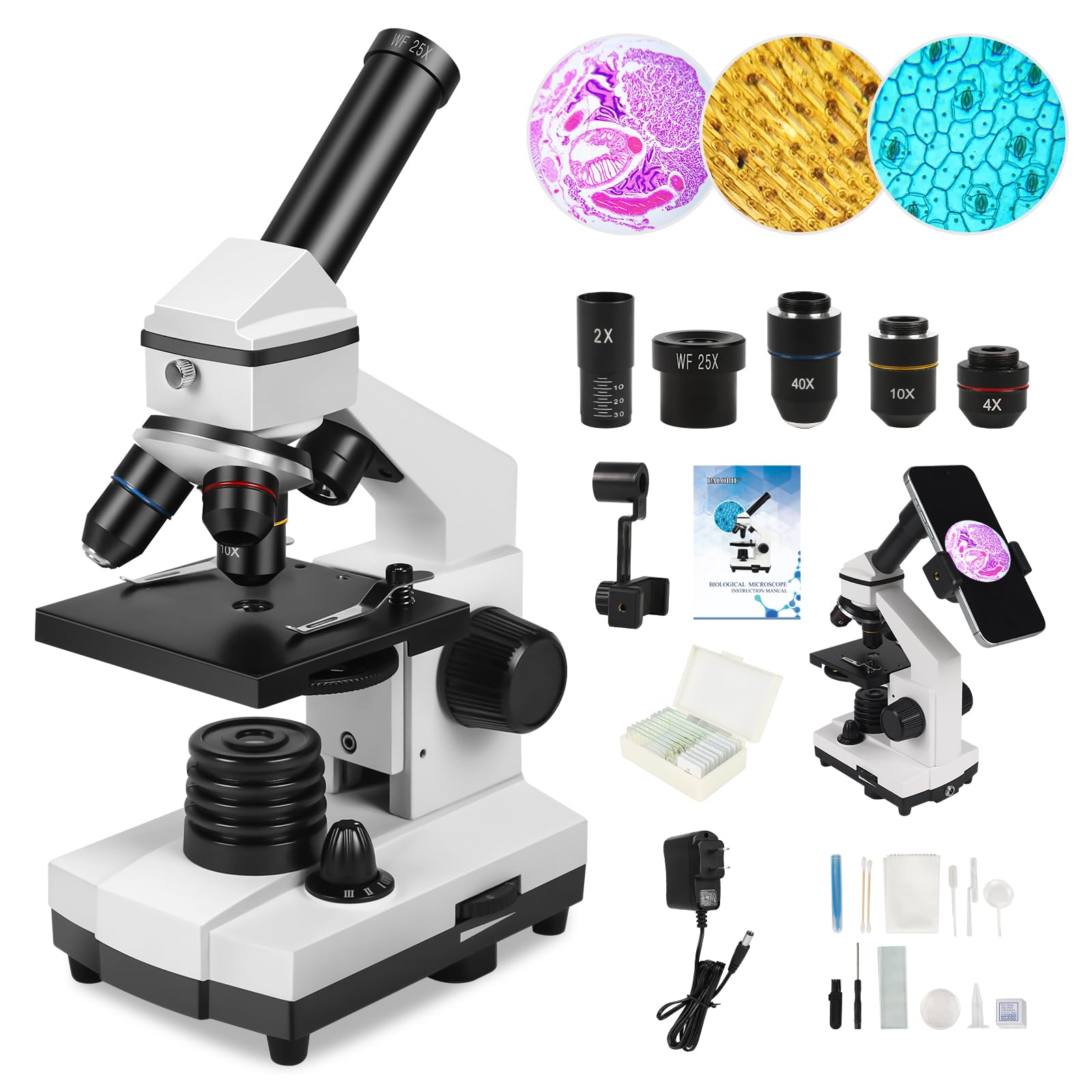
The PALOBIL takes the category leader's formula — a metal frame that holds the optics steady and objectives that render a clean image — and prices it for budget homeschool buyers. A dual LED with 1-8 brightness levels covers dim and bright specimens alike, while the phone adapter snaps onto the eyepiece so students can capture what they see for lab reports. The 11-piece experiment kit and prepared slides have a student observing within the same afternoon.

This suits families who want a real instrument rather than a toy: the metal body takes backpack transit without complaint, and setup is simple enough for an 8-year-old with light supervision. The genuine working range is 100x-400x, exactly where middle and high school biology practicals sit; the 2000x printed on the box is marketing, not usable resolution. On some units the 40x objective is where focusing gets finicky, so buyers planning steady high-magnification work should budget for the category leader.

For households that will stay in the textbook magnification range, the PALOBIL behaves like a pricier scope — slides come into view quickly, the LED adjusts in smooth steps, and the metal build removes the wobble seen on plastic kits. Weighing it against the top pick, the trade-off is simple: equal construction at a lower price.

Stay in the 100x-400x band for the sharpest views — the steady, clearest images come from the lower objectives.

Bottom line: Budget homeschool families who stay within the 100x-400x band get a genuinely durable metal scope; the 2000x figure is where the marketing claims overstate the optics' ceiling.

#5

Carson MicroBrite

Carson MicroBrite

Field trips

Customer rating 4.0/5
Check Price

Worth Noting

  • On multi-lens phones the clip can sit off-center from the rear camera, blocking the view
  • The manual focus collar can be fussy to lock in, especially for glasses wearers
Illumination
LED
Build Material
Plastic
Magnification Range
120x-640x
Included Accessories
Smartphone clip
Read the full review

The Carson MicroBrite fits a working 120x scope into a pocket-sized plastic body, and the included clip mounts your phone over the eyepiece to share what you find. That combination — portability plus instant sharing — is what separates it from the bench-top all-metal AmScope, which stays on a desk and needs the specimen brought to it. On a trail or in a backyard, the MicroBrite goes where the discovery is.

The focus wheel is a manual push-pull collar, and in quick field use it can be finicky to settle — a sharp image takes patience, and glasses wearers may find the sweet spot harder to hold. The phone clip also assumes a centered camera lens; on some multi-lens phones the rear camera sits off-center, shifting the view. Those quirks set the buyer: an elementary-age child or hobbyist exploring household items, coins, and insect wings at moderate magnification, not someone doing sustained observation.

Chase 640x digital zoom and the image turns soft — the honest working range is the 120x optical view, plenty for leaf veins and fabric threads. LED illumination helps in dim spots, and everything runs on a single AA-style battery. As a field companion for a science project or a rainy-day curiosity session, it is a budget-friendly way to get young eyes looking closely; as a lab instrument it is not, and that boundary matters when choosing.

Set the focus collar wide before attaching the clip, then dial in slowly; the sharp range is narrow.

Bottom line: Right for the young or casual explorer who wants to inspect leaves, coins, and insect wings in the field — pass it by if the goal is a desk-bound lab image at high magnification.

#6

JECONE 2500X

JECONE 2500X

Budget first scope

Customer rating 4.4/5
Check Price

Worth Noting

  • A 10x objective can arrive slightly off-focus on some units, so an unboxing check pays off.
  • Reaching a sharp image takes several focus adjustments at higher magnification.
Illumination
Rechargeable LED
Build Material
Plastic/ABS
Magnification Range
Up to 2500x
Included Accessories
Slides, phone holder
Read the full review

JECONE's kit makes the strongest value pitch of the budget tier: a rechargeable LED, a full slide set, a phone holder, and prep tools arrive in one box. Elementary students get observations underway without hunting for accessories. Build is plastic, which keeps weight and price down — fine for a desk drawer, less rigid than the metal frames in this set.

Focus control is the main compromise: crisp images need patience, and quality control varies between boxes. Some units arrive with the 10x objective slightly off-focus, so an unboxing check pays off. For a first scope on a strict budget it delivers — anyone needing steady focus across a full semester will want a metal-bodied option.

Bottom line: This fits the elementary classroom or first-gift occasion where a full box of accessories matters more than fine focus — anyone running repeated observations will hit the focus limits quickly.

#7

Herwicm Monocular

Herwicm Monocular

Homeschool families

Customer rating 4.4/5
Check Price

Worth Noting

  • ABS acrylic body with only the arm in metal
  • In some cases image sharpness runs soft until the fine focus is settled
Illumination
Dual LED
Build Material
ABS + metal arm
Magnification Range
Up to 2000x
Included Accessories
Phone adapter, slides
Read the full review

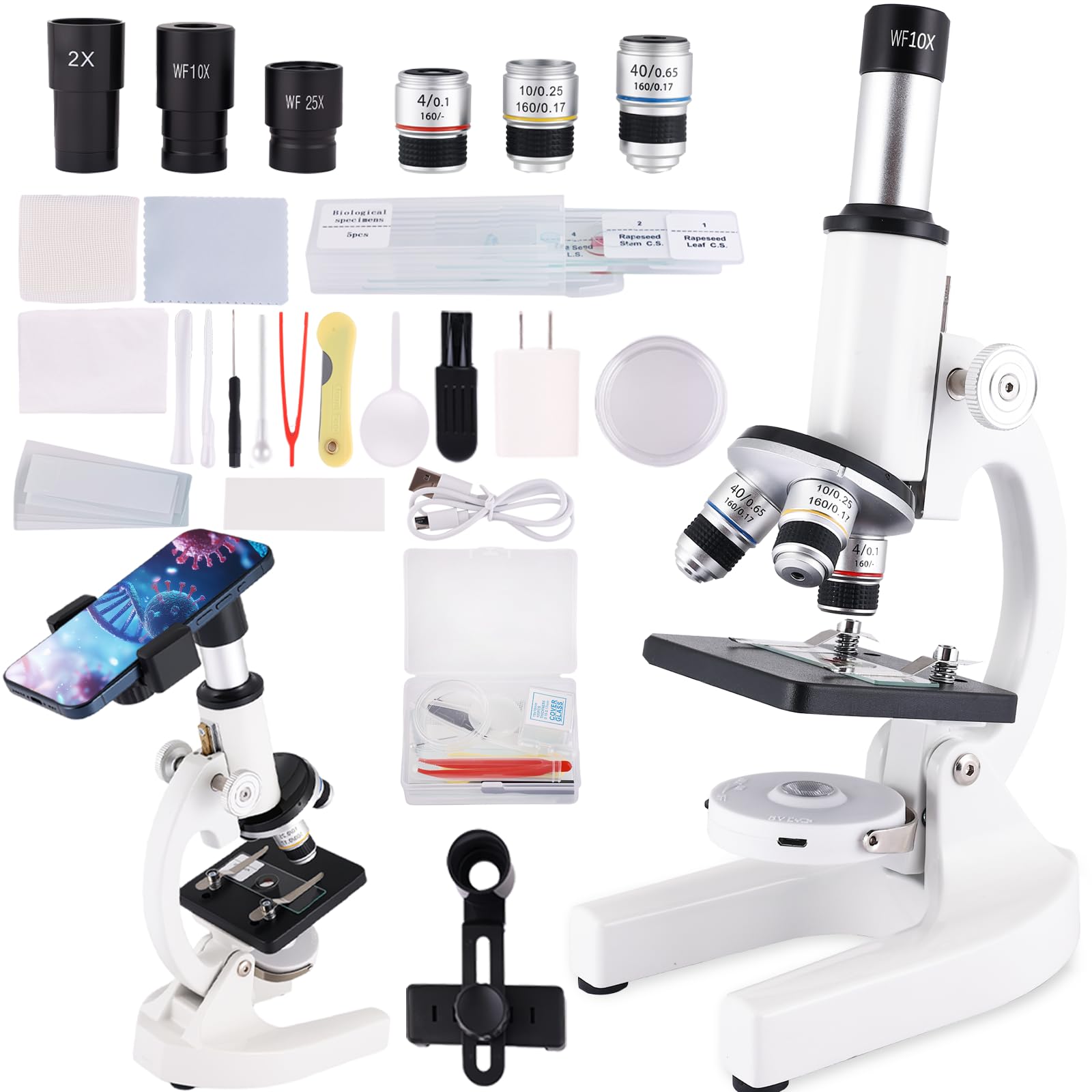
The Herwicm arrives as a complete observation station: prepared slides, phone holder, tool kit, dual LED, and a metal support arm at a mid-range price. It builds like equipment rather than a toy, and the setup is fast enough that kids can mount a phone and view a prepared slide the day it lands. For homeschool families and middle-school beginners, the bundle covers the first-year routine without extra purchases.

The limits show where precision matters. Image sharpness can run soft until the fine focus is settled — occasional blurriness in some units — and the ABS acrylic body carries more flex than an all-metal frame. For prepared slides and casual observation neither is a blocker; they only weigh when consistent high-magnification sharpness or a fully metal build is the priority, where the all-metal workhorse in this lineup fits better.

Bottom line: For homeschool families who want a full kit that works on day one, this covers the basics at a fair price; understand the plastic body and occasional soft-focus before committing.

#8

TOMLOV DM301 Pro

TOMLOV DM301 Pro

Classroom presentations

Customer rating 4.2/5
Check Price

Worth Noting

  • Premium pricing makes it the costliest pick here, a hard stop for budget-conscious buyers.
  • Screen-based viewing skips the hand-eye focusing work of eyepiece scopes, which matters for students prepping traditional lab technique.
Illumination
—
Build Material
—
Magnification Range
1200x
Included Accessories
Slides, case, MicroSD
Read the full review

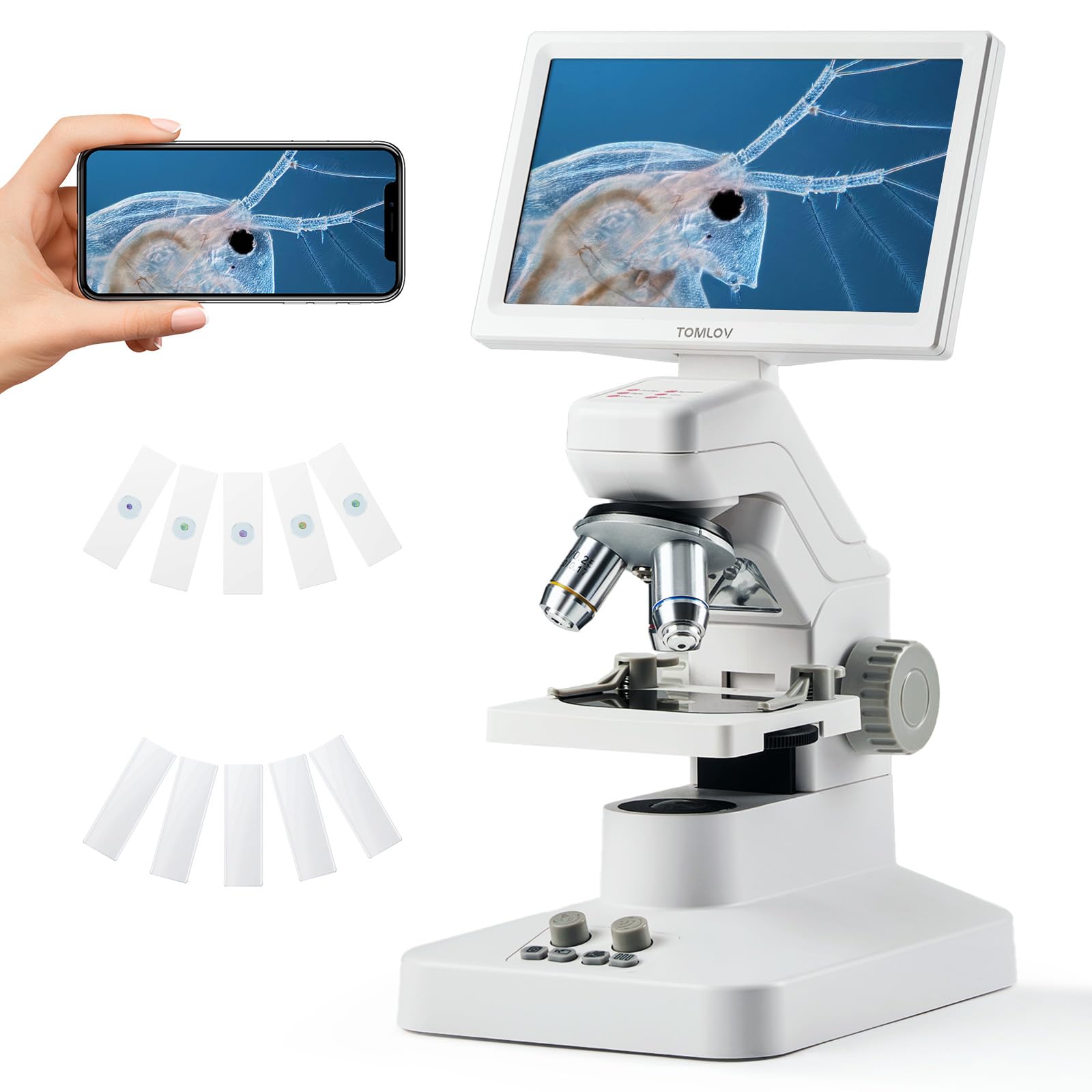
The TOMLOV DM301 Pro puts a bright 7-inch IPS screen with 1080p video and WiFi at the center of the experience, so an entire classroom sees the same specimen at once instead of queuing for a single eyepiece. The housing feels well-made, and the included slides, carry case, and MicroSD card cover the first sessions. The tradeoff is scope: at premium pricing it is the most expensive pick here, and for a few years of heavy classroom rotation the durability record is still being written. That makes this a screen-first tool for tech-forward classrooms and parents who want instant shared viewing, not a replacement for a bench scope where kids practice eyepiece focusing.

Bottom line: Best when the goal is live, shareable viewing — a classroom demo or a tech-savvy student with a screen-first learning style — and the premium price stays within reach.

How to Choose

Magnification Range

Advertised maximums of 2000x or 2500x rarely translate into usable magnification. Past roughly 400x to 600x on a budget scope, the image enlarges without adding detail — the objective lens' resolving power has run out. A student pushing a 2000x scope to its limit ends up staring at a dark, blurry smear instead of a cell.

Judge a scope by how sharp it stays at 100x to 400x, the working range for school biology. The scopes that hold clean focus at 400x are the ones worth buying, even when the box reads 1000x. That range covers onion cells, cheek swabs, and the prepared slides common in classrooms.

Illumination Type

A bottom-only light works for thin transparent specimens like prepared slides, but turns opaque objects — leaves, coins, fabric — into dark silhouettes. A dual LED setup with both top and bottom lights handles the full range of classroom specimens without an add-on lamp.

LED beats tungsten on two counts: it stays cool during long sessions and holds consistent color instead of shifting yellow. Variable brightness matters too, since full power washes out pale specimens at low magnification.

Objective Lens Quality

Achromatic glass objectives correct for chromatic aberration — the rainbow halo that appears around specimen edges on cheap plastic lenses. Single-element plastic lenses produce soft, distorted images that make it hard to tell a nucleus from an artifact.

On a compound scope, three objectives (4x, 10x, 40x) give you a real working range. Kits that advertise 1000x or 2000x by adding a cheap eyepiece add magnification without adding resolution.

Build Material

Metal frames hold the optical column in alignment as you move the stage; plastic bodies flex under pressure, letting the image drift out of focus mid-adjustment. A rack-and-pinion focus mechanism on a metal scope settles where you leave it, while plastic gears slip and step backward.

Weight is part of the deal. A heavier metal base keeps the scope steady on the lab bench when kids bump the table, and it survives being carried between home and school. That is why a metal-body scope with a modest accessory kit outlasts a plastic one stuffed with extras.

Included Accessories

Prepared slides and a phone adapter turn a scope into a full learning station, but kits differ in what they actually include. Some ship genuine biological mounts; others include plastic blanks with little to see. Quality prepared slides are the ones that matter.

A phone adapter is the accessory with the most long-term value — it lets students photograph what they see and share it with parents or classmates, which turns a quiet solo activity into a documentable project. A carrying case protects the optics between classes.

Frequently Asked Questions