Early Learning Product Guide

12 Best Magnetic Letters for Kids 2026: That Stay Put on the Fridge

Magnetic letters for kids that stay on the fridge and arrive complete, so learning letter sounds and spelling happens without missing pieces.

12 Best Magnetic Letters for Kids 2026: That Stay Put on the Fridge editorial illustration

Magnetic letters are a staple for early literacy, but too many sets spend more time sliding off the fridge than in a child's hand. Weak magnets and incomplete alphabets are the two most common frustrations parents hit within the first month.

The sets that earn a spot on the fridge for years share a few traits: strong full-back magnets, pieces that survive drops and chewing, and packaging that actually includes every letter promised. Color-coding and storage boards are nice extras, but they don't matter if the letters won't stick.

There's also a material trade-off. Wooden sets look classic and feel premium, but the veneer can peel and magnets are often weaker. Foam sets offer better grip and more pieces for the price, yet can tear under rough play. Knowing which trade-off fits your child's age and play style makes the difference between a learning tool and a frustration.

#1

Gamenote 238pc Letters+Board

Gamenote 238pc Letters+Board

Classroom use

Customer rating 4.8/5
Check Price

Worth Noting

  • Reads as a functional learning tool rather than a wooden keepsake
  • EVA foam can show edge wear under heavy daily handling in a busy classroom.
Pieces
238
Material
EVA foam
Read the full review

At 238 pieces, the kit holds three of every lowercase letter plus a complete uppercase set, with a full-face magnet behind each piece — enough for several children to spell side by side in a classroom. Full-back magnets keep letters in place on refrigerators and whiteboards during play, a grip that smaller foam sets don't reach at this piece count. Both upper and lower case are covered, so letter recognition spans the full alphabet.

The bundled magnetic board doubles as a dry-erase surface for letter-formation practice, and the compartmentalized tray keeps each letter type separated between lessons, so starting a new activity means grabbing the right compartment rather than sorting loose pieces at the start of each session. That organization also makes cleanup quicker once a group lesson ends.

Preschool classrooms and homeschooling families are the primary audience for a set this size, where several kids need letters at once. It isn't for toddlers under three, since the small pieces carry a choking risk. Counting and testing every piece on arrival is worthwhile, because hand-packed units can occasionally include a non-working marker or a letter whose magnet needs re-checking.

Bottom line: For a preschool or homeschool room where several kids need letters at once, this mid-range kit delivers spelling, phonics, and organized storage in a single box.
#2

LeapFrog Fridge Phonics

LeapFrog Fridge Phonics

Toddler phonics

Customer rating 4.8/5
Check Price

Worth Noting

  • Premium price per piece
Pieces
26
Material
—
Read the full review

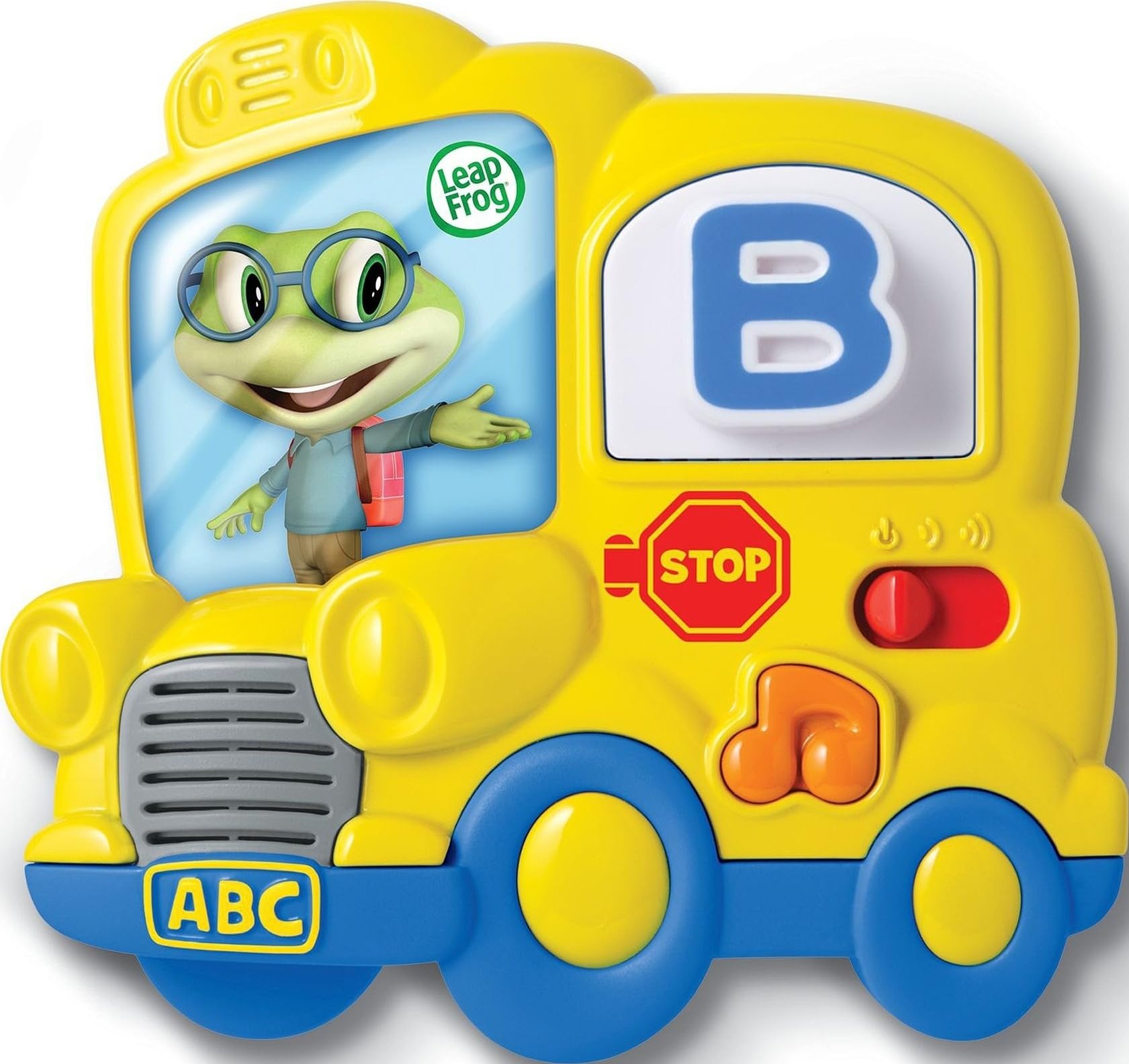
LeapFrog Fridge Phonics delivers what the piece-count leaders can't: drop a letter into its slot and it sings the letter's name and sound, offering audio feedback that keeps toddlers engaged while they build letter-sound correspondence. The call-and-response format holds a young child's attention, and durable plastic tiles survive regular toddler handling.

At 26 tiles it introduces the alphabet rather than supporting word building — that's where the top pick's 238 pieces take over — so it suits a family starting phonics with one child at a time rather than a classroom. The speaker is clearest in a quiet playroom; a noisy kitchen can muddy the output.

Bottom line: For a toddler taking their first steps in phonics, the audio feedback delivers what static magnets can't — an engaging way to learn letter sounds.

#3

Melissa & Doug Wooden Letters

Melissa & Doug Wooden Letters

Preschoolers

Customer rating 4.6/5
Check Price

Worth Noting

  • Wood veneer can peel or chip when handled by rough toddlers
  • Magnets may not hold letters securely on the fridge
Pieces
89
Material
Wood
Read the full review

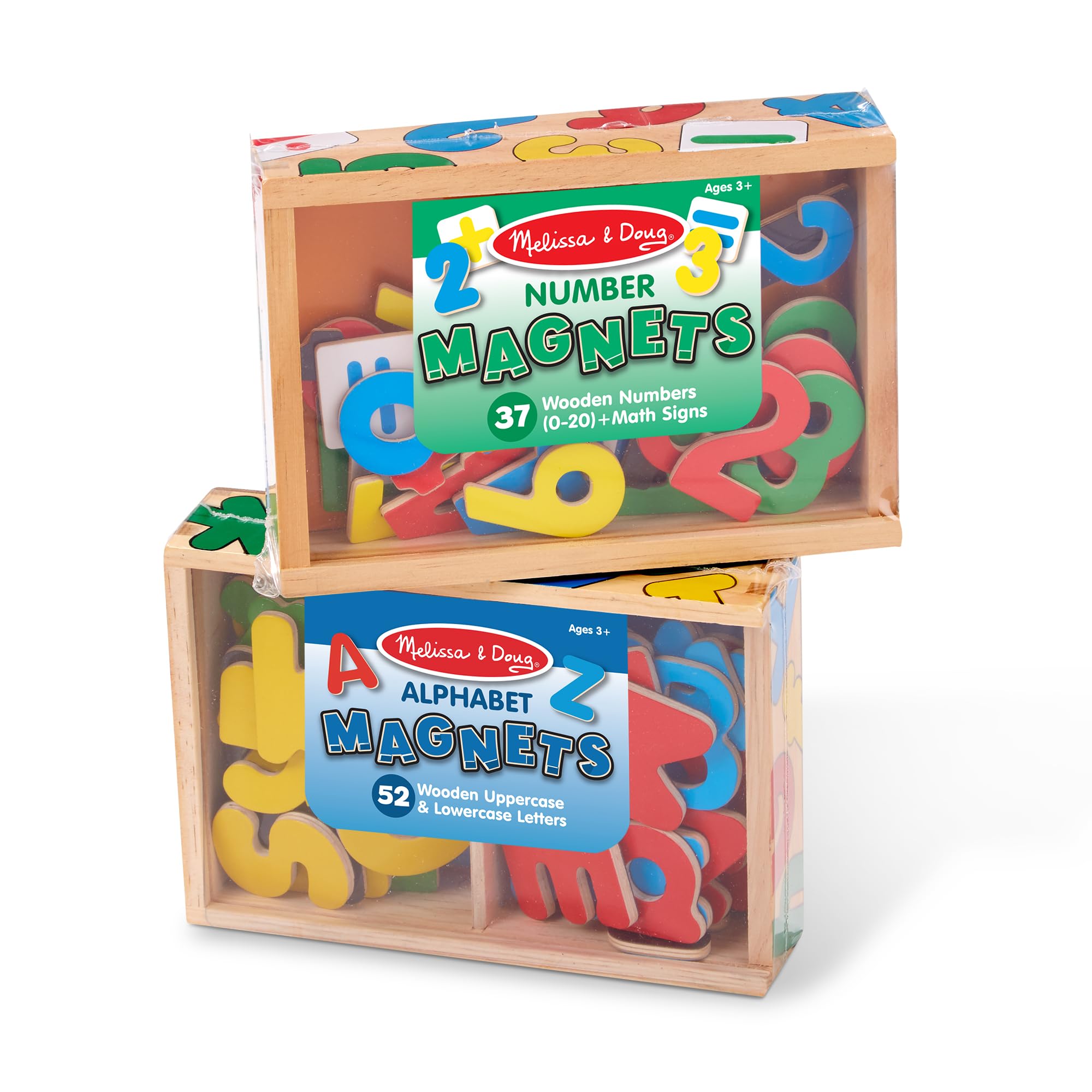
The 89 wooden letters, numbers, and math symbols arrive in a keepsake box that reads like home decor rather than a toy bin. Printed on thick wood, each piece carries a traditional look that sits naturally on a kitchen counter or playroom shelf, and the included math symbols extend the set beyond spelling.

This suits parents who want a display-worthy set for older preschoolers, who enjoy the satisfying weight of real wood. The veneer can peel under rough play, so it's not for toddlers who chew or throw. Magnets hold letters firmly enough for light fridge use, and a quick count on arrival catches the occasional missing piece.

Set letters on a flat magnetic surface for the firmest hold.

Bottom line: The right fit when kitchen aesthetics matter as much as letter learning, for families with older kids who won't roughhouse the wood.

#4

Curious Columbus Letters

Curious Columbus Letters

Early learning

Customer rating 4.6/5
Check Price

Worth Noting

  • Some letters may arrive missing from the box
Pieces
115
Material
Foam
Read the full review

Curious Columbus Letters give every piece a full magnet backing, so the 115 foam letters and numbers hold firmly instead of sliding down the fridge. Three of each lowercase letter lets a child actually build short words, a step beyond single-letter sets.

This suits parents and toddler classrooms that want one complete set with numbers at a mid-range price. A few letters ship with the inner shape, like the 'o', still attached, so punch it out before handing it over. Some boxes arrive with a letter missing, making a quick count on arrival worth the minute.

Some letters ship with internal shapes attached, so punch the cutouts out before handing them over.

Bottom line: A sturdy mid-range set for toddlers starting to spell — count the pieces on arrival and it holds up well for daily play.

#5

JoyCat Wooden Animals

JoyCat Wooden Animals

Toddlers

Customer rating 4.6/5
Check Price

Worth Noting

  • When a toddler moves on from single-letter matching to spelling, a second set will be needed.
  • Where toddlers chew the letter edges, the printed surface can peel
Pieces
36
Material
Basswood
Read the full review

Extra-thick 2.36-inch basswood letters with cheerful animal graphics give toddlers a chunky, mouthable surface that holds attention on letter shapes during early recognition. Where classroom foam sets pack 238 pieces for spelling, this keeps to a single uppercase alphabet plus ten numbers — a focused alphabet-recognition tool rather than a word-building kit.

This suits a parent introducing a two-year-old to ABCs who prizes material safety and charm over piece count; the 36 pieces cover letter recognition and counting at that stage. The printed basswood surface can peel where toddlers chew the edges, so it rewards supervised play rather than hard, unsupervised use.

Bottom line: For parents weighing safe materials against piece count, this set trades spelling volume for a charming, graspable first alphabet — best as a supervised introduction to letter shapes.

#6

KOKO AROMA 291pc Set

KOKO AROMA 291pc Set

Classrooms

Customer rating 4.7/5
Check Price

Worth Noting

  • Pressing pieces flat takes effort from small hands
  • Letters run smaller than larger sets, so toddlers have less to grip
Pieces
291
Material
Foam
Read the full review

The 291 pieces stretch past the top pick's spelling focus, covering letters, numbers, shapes, and a double-sided dry-erase board for math and geometry practice. Full magnet backing keeps pieces in place during group work, and the foam construction holds up to daily classroom use.

Homeschooling families and classrooms get the fullest value from this set, where the shapes and board support structured activities beyond phonics. Letters run slightly smaller than larger options — fine for school-age learners, less for toddlers who still mouth or fumble pieces. The dry-erase board takes table space, so it suits a dedicated learning area over a cramped kitchen corner.

Guide little hands to press letters flat against the board — a firm tap seats each piece securely.

Bottom line: For families and classrooms running structured STEM lessons, the extra shapes and board make this the more complete buy than the top pick's pure spelling focus.

#7

Coogam 251pc Letters+Box

Coogam 251pc Letters+Box

Classrooms

Customer rating 4.7/5
Check Price

Worth Noting

  • Some letters can arrive missing, so counting pieces on arrival prevents gaps for early spellers
  • Magnet grip can weaken with heavy use, and foam backing may separate from letters over time
Pieces
251
Material
Foam
Read the full review

251 color-coded letters sort into a compartmentalized storage box, so pulling the vowel group for a CVC lesson takes seconds rather than a pile-dig. Red and blue markers visually separate vowels from consonants, which helps emerging spellers map sounds to symbols while keeping the set tidy between uses.

Classroom teachers and families juggling several kids get the most from it — 251 pieces support group spelling, and the storage box keeps everything sorted between lessons. Foam construction makes it a poor fit for toddlers under three, who are better served by wooden letters.

Bottom line: For a classroom that needs a large letter set to stay sorted between lessons, this fits — count pieces and check magnet grip when it arrives.

#8

MAGTiMES 112pc Basics

MAGTiMES 112pc Basics

Budget starters

Customer rating 4.5/5
Check Price

Worth Noting

  • Compact letters can be tricky for small hands to grip
Pieces
112
Material
EVA foam
Read the full review

This 112-piece set covers the full alphabet and numbers at a budget price, with magnets that hold firmly to a fridge so pieces stay put during letter practice. The soft foam bends when handled roughly, which shortens its life under heavy play — for careful, supervised learning of letter names and digits it gets the job done without stretching a budget.

Bottom line: A sensible budget starter set for introducing letter names one-on-one, where its low cost outweighs the need for gentle handling.

#9

Laxdacee 192pc Foam

Laxdacee 192pc Foam

Homeschool budget

Customer rating 4.6/5
Check Price

Worth Noting

  • EVA foam can tear or bend under active play, shortening its lifespan with rough toddlers.
Pieces
192
Material
EVA foam
Read the full review

192 pieces for under $20, the most letters per dollar here — a strong value for budget-focused parents. The EVA foam can tear under enthusiastic play, and on stainless steel fridges the magnets may not hold and can scratch; it suits a painted refrigerator or craft projects over daily heavy spelling.

Bottom line: Best for budget-focused parents who will use it on a painted refrigerator or for craft projects, kept away from stainless steel and heavy play.

#10

Curious Columbus Objects+Letters

Curious Columbus Objects+Letters

Object learning

Customer rating 4.7/5
Check Price

Worth Noting

  • At 26 letters total, spelling words beyond a few letters runs short of pieces.
Pieces
78
Material
Foam
Read the full review

78 magnets pair 52 picture pieces with 26 letters so toddlers connect objects to their starting sounds while browsing vivid animal illustrations — an approach that holds young attention well. Some sets arrive missing letters, so count the contents when the box opens.

Bottom line: Best for a toddler learning object names alongside letter sounds — a focused first step before moving to word building.

#11

Edu Insights Lowercase

Edu Insights Lowercase

Phonics classrooms

Customer rating 4.6/5
Check Price

Worth Noting

  • On vertical magnetic boards, letters can slide or drop with repeated handling
Pieces
42
Material
Plastic
Read the full review

The vowel color-coding makes CVC word building intuitive for early readers, and 42 lowercase letters cover classroom spelling practice. Magnets hold well on flat work surfaces but may slide on vertical boards with repeated handling, and individual letters can be missing from the box — count the set before a full-lesson activity.

Bottom line: For phonics teachers working at a flat surface who want instant vowel-consonant distinction, this budget set supports daily CVC word building.

#12

Learning Resources Jumbo

Learning Resources Jumbo

Toddlers

Customer rating 4.4/5
Check Price

Worth Noting

  • Weak magnets mean letters can come off refrigerators and magnetic boards
Pieces
40
Material
Plastic
Read the full review

The jumbo 2-inch plastic letters fit toddler hands and are safe to mouth, and kids genuinely enjoy handling them. The catch: magnets are weak, so letters can slide off a fridge, and some sets arrive missing pieces. At 40 uppercase letters, this works for alphabet recognition, not word building.

Bottom line: Best for toddlers who put everything in their mouths and just need letter recognition; skip it if you want letters that stay put for spelling.

How to Choose

Piece Count

For alphabet recognition, a 26-piece set is enough, but as soon as your child starts building words, you need duplicates. The letter E appears in most simple words, so a set with only one E forces you to stop mid-word. Look for sets with at least 3 of each vowel and common consonants to keep momentum.

Sets of 100+ pieces also support math practice if they include numbers and symbols, turning the fridge into a full learning station.

Magnet Strength

The biggest culprit behind falling letters is a thin or partial magnet strip. Full-back magnets spread the hold across the entire letter, which is especially important on vertical surfaces like refrigerators. Also, be aware of the surface itself: stainless steel fridges often have less magnetic pull than white or painted models.

Material Durability

Wood and foam are the two common materials, each with trade-offs. Wood looks beautiful and resists bending, but the veneer can chip if a toddler throws it. Foam is lightweight and quiet, but it can tear or lose magnets if letters are yanked off the fridge. Cardboard is the least durable and shows wear within weeks.

Letter Size

For toddlers, letters of about 2 inches are easiest to grasp and hard to swallow. Smaller letters (under 1.5 inches) are frustrating for little hands and increase the risk of loss. Size also affects visibility – larger letters are better for distance learning at the fridge.

Accessories

A magnetic board or storage box serves double duty: it keeps all pieces together and gives your child a dedicated workspace that isn't the fridge. This also reduces missing pieces, since loose letters end up under the sofa. Consider sets that include a board if you have a stainless steel fridge or limited magnetic surface.

Frequently Asked Questions