Music Learning Product Guide

12 Best Keyboard for Beginners in 2026: Pick Keys That Build Skill

Which beginner keyboards have full-size touch-sensitive keys that build real technique, and which preset-heavy kits to skip.

12 Best Keyboard for Beginners in 2026: Pick Keys That Build Skill editorial illustration

Nearly every beginner keyboard advertises a big preset library — 200, 300, even 400 tones — that rarely matches what you actually hear. The key action and sound engine matter far more than the count of built-in rhythms and voices.

The most important choice is full-size, touch-sensitive keys. They build correct finger placement and let you play with dynamics; non-touch keys cap how much control you develop. After the keys come the details a product page won't show — whether the bundled stand stays stable, whether the headphone jack holds up, and whether the teaching app charges after a free trial.

There's also a real trade-off between a heavier 88-key instrument that teaches proper technique and a lightweight portable you can carry room to room. Both are valid; the right fit depends on the player's age and practice space. Each pick targets the learner it suits, so you buy an instrument that gets used rather than outgrown.

#1

Alesis Recital Play 88-Key
Alesis Recital Play 88-Key

Technique development

Customer rating 4.6/5
Check Price

Worth Noting

  • Occasional units arrive with a key sounding out of tune or unresponsive
  • A minority of units ship with a buzzing speaker or random shutdown surfacing in the first weeks of use.
Key Count
88 full-size
Bundle & Stand
Stand, pedal, headphones, case
Learning Features
Skoove, Melodics lessons
Sound & Polyphony
480 sounds, 160 rhythms
Read the full review

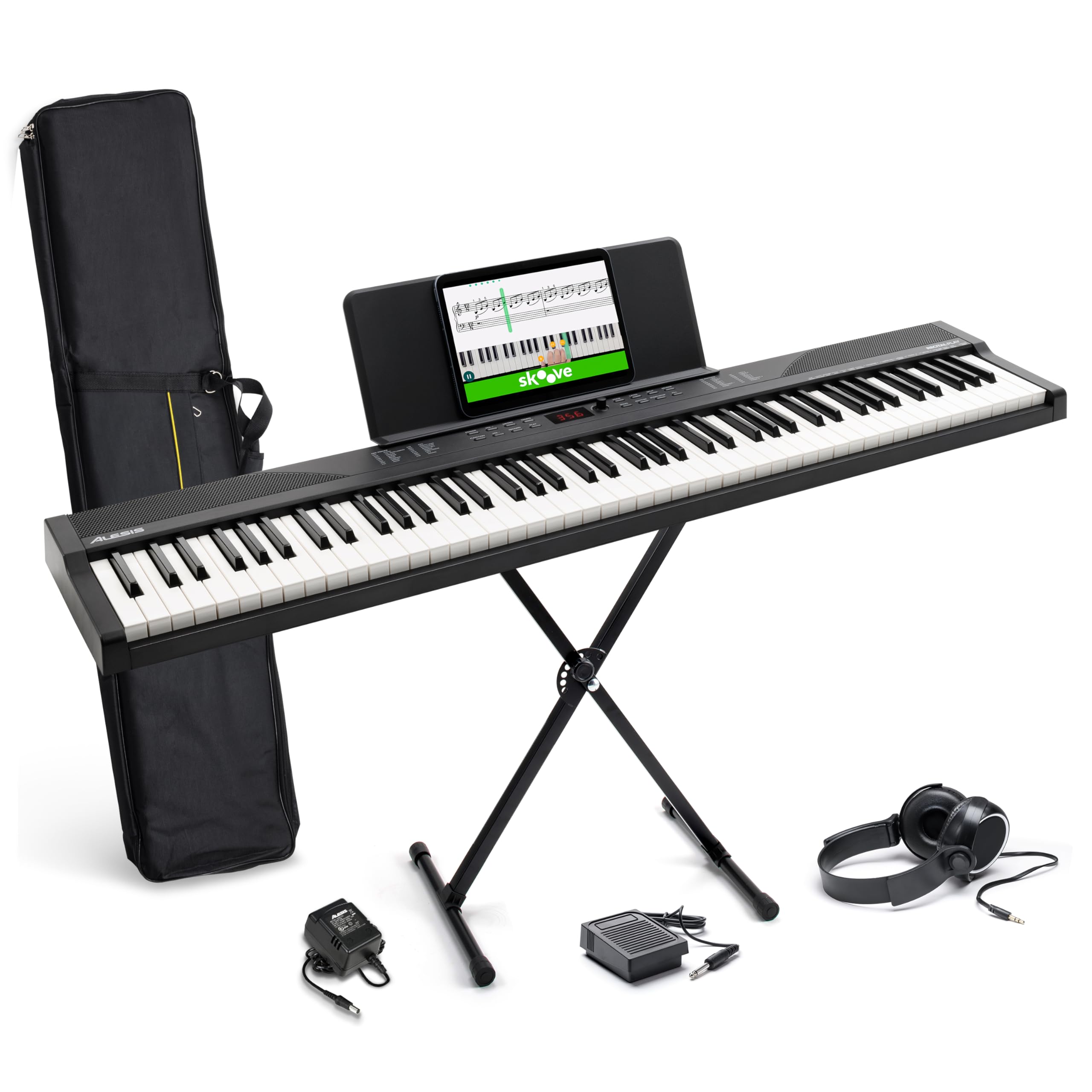
The Alesis Recital Play is the only starter in this set with 88 full-size, semi-weighted, touch-sensitive keys, giving beginners real piano action and dynamics control from the first session. New players describe the feel and sound as genuinely piano-like, with 480 voices and 160 rhythms keeping exploration fresh for months. The bundle lands ready to play the same day — keyboard, stand, sustain pedal, headphones, and carrying case — and the free Skoove and Melodics lesson programs over USB-MIDI offer a structured path, with Split, Lesson, and Record modes supporting self-guided sessions.

This is the grow-with-you pick for adult and teen beginners who want correct finger technique and an instrument they won't outgrow as skills advance. It is the only choice here that connects directly to Mac/PC lesson software, so computer-based learning stays a viable path. Taking five minutes to check each key and the speakers on arrival is a sensible first step, because speaker and power quality can vary between individual units. The full-size frame and premium price suit learners with dedicated floor space and budget, making this the wrong call for very young children who need an ultra-light, small-footprint keyboard or for strict budget shoppers wanting the cheapest playable starter.

Bottom line: For adult and teen beginners aiming to develop genuine technique, the Recital Play pairs true 88-key action with a full kit and structured USB-MIDI lessons — the strongest investment in this set for dedicated practice.

#2

Casio CT-S300 61-Key

Casio CT-S300 61-Key

Portable practice

Customer rating 4.7/5
Check Price

Worth Noting

  • At higher volumes the built-in speakers sound thin
Key Count
61 full-size
Bundle & Stand
Keyboard only
Learning Features
Casio Music Space app
Sound & Polyphony
400 tones, 77 rhythms
Read the full review

The CT-S300's touch-sensitive keys respond to how firmly you press, bringing genuine dynamics practice into a 7-pound frame with a carry handle and 19-hour battery. Four hundred tones and 77 rhythms round out a practical learning tool that moves easily between rooms or into a bag, suiting adults who'll carry it between spaces or pack it for trips. It's built for the beginner who wants compact keys with real feel before stepping up to an 88-key instrument — the top pick's full-size layout is the only reason to look past this one.

Bottom line: The CT-S300 gives the adult beginner true touch sensitivity and sturdy build in a keyboard that won't stay in one room — the portable choice when 88 keys are more than you need.

#3

RockJam RJ5061 61-Key Kit

RockJam RJ5061 61-Key Kit

Complete family kit

Customer rating 4.5/5
Check Price

Worth Noting

  • On the built-in speakers, tone comes across thin and toy-like to pickier ears.
Key Count
61 full-size
Bundle & Stand
Stand, bench, headphones
Learning Features
Simply Piano lessons
Sound & Polyphony
200 tones, 200 rhythms
Read the full review

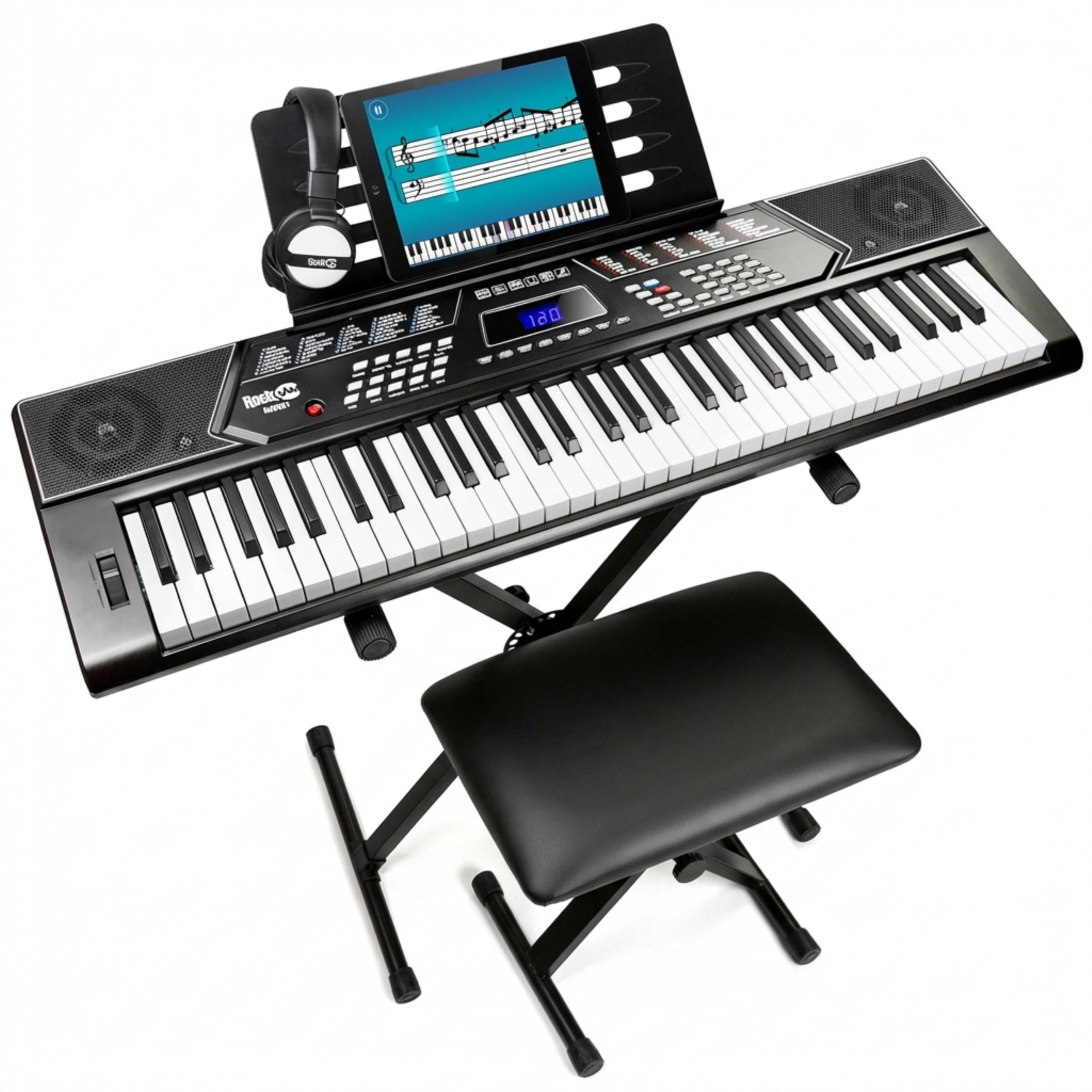
The RockJam RJ5061 ships as a genuinely complete day-one kit — stand, bench, headphones, note stickers, and Simply Piano lessons in one mid-range box that assembles in minutes. Where the slimmer budget option in this set strips down to a bare keyboard, the RJ5061 hands a family everything needed to start playing right away, and young players keep returning to it.

Best for families who want one affordable box to introduce kids and teens to a first real keyboard. It's not for adults chasing realistic piano touch — keys aren't touch-sensitive, so expressive dynamics practice ends quickly. Quality control varies between units too, with some developing dead keys after a few months and the bundled stand feeling wobbly.

Bottom line: For families putting a first real keyboard in front of kids or teens, the complete package and strong engagement make this the value anchor of the set.

#4

Yamaha YPT280 61-Key

Yamaha YPT280 61-Key

Brand reliability

Customer rating 4.7/5
Check Price

Worth Noting

  • Non-touch keys cap expressive dynamics practice as skills advance
Key Count
61 full-size
Bundle & Stand
Adapter, music rest
Learning Features
Quiz Mode, Smart Chord
Sound & Polyphony
Piano voice, built-in songs
Read the full review

The Yamaha piano voice on the YPT280 outshines most keyboards near its price, and a sturdy yet light chassis backs that sound quality with genuine build care. Quiz Mode ear-training and Smart Chord one-finger chords round out a clean teaching toolkit for a no-frills, dependable beginner instrument.

That fits conservative beginners who value a dependable first keyboard over flashy extras; young kids and casual players will enjoy its pleasant tone. As skills advance, the non-touch keys cap expressive dynamics practice, steering ambitious players toward a touch-sensitive model instead.

Automate left-hand chords with Smart Chord and keep the melody in your right hand — a clean path around the non-touch keys.

Bottom line: The cleanest Yamaha starter for beginners who want dependable sound over extra features. Players seeking expressive dynamics should choose a touch-sensitive model instead.

#5

BCP 61-Key Light-Up Kit

BCP 61-Key Light-Up Kit

Kids visual learning

Customer rating 4.6/5
Check Price

Worth Noting

  • Speakers can sound thin or scratchy during louder play
  • Occasional units arrive with keys that may not respond
Key Count
61 keys
Bundle & Stand
Stand, stool, headphones
Learning Features
Light-up key modes
Sound & Polyphony
255 timbres, 255 rhythms
Read the full review

The 61-key Best Choice kit holds young attention with light-up keys and three teaching modes (One-Key, Follow, Ensemble) that plain keys can't match. The stand, padded stool, music stand, and headphones assemble in minutes with no extras to buy — the no-subscription alternative to app-gamified light-up rivals.

It suits younger children who respond to visual guidance. Speaker output can sound thin or scratchy during louder play, and occasional units arrive with keys that don't respond — limits worth accepting in exchange for engagement and a genuinely complete setup.

Bottom line: Best reserved for young kids who need visual motivation to practice; check all 61 keys at first setup, and accept that sound quality trails the more expensive instruments in this set.

#6

ZENY 61-Key Full Kit

ZENY 61-Key Full Kit

Budget full kit

Customer rating 4.6/5
Check Price

Worth Noting

  • The headphone connection may stop working within weeks, cutting off silent practice on some units.
  • Tone can thin at higher volumes and shift character after a few months.
Key Count
61 keys
Bundle & Stand
Stand, stool, headphones
Learning Features
LED-guided demo songs
Sound & Polyphony
300 timbres, 300 rhythms
Read the full review

The ZENY is the lowest-priced complete kit in this lineup — stand, stool, headphones, and mic arrive together with 300 tones and rhythms, and the frame assembles without tools in minutes. That cost-per-piece value is the whole pitch; the family starter kit in this set sounds richer, so ZENY wins on budget rather than tone.

It suits budget-conscious families buying a child's first full setup — kids who practice daily wear it well, and the light touch works for young hands. Accept the boundaries: tone thins at higher volumes and the headphone jack can stop working within weeks on some units, so frequent headphone practice is the one gap.

Assemble the stand on a flat, level floor and it holds up well for light daily practice.

Bottom line: The lowest-cost way to hand a child a complete first kit — a sound choice when tone depth and headphone practice aren't the priority.

#7

JIKADA 61-Key Light-Up

JIKADA 61-Key Light-Up

Light-up learning

Customer rating 4.6/5
Check Price

Worth Noting

  • Some units may develop key or speaker issues in the first year, suiting starter use rather than multi-year lessons.
Key Count
61 keys
Bundle & Stand
Stand, stool, headphones
Learning Features
3 teaching modes, stickers
Sound & Polyphony
255 tones, 255 rhythms
Read the full review

This JIKADA kit pairs light-up keys and three teaching modes with a full stand, stool, headphones, mic, and adapter — quality surprises at the price. Durability is the trade-off: occasional units develop issues within the first year, so treat it as a starter, not a multi-year instrument.

Bottom line: Best for households that want an affordable way to spark a young child's interest, as long as they accept a few years' service rather than a decade-long instrument.

#8

Hamzer 61-Key Kids Kit

Hamzer 61-Key Kids Kit

Young children

Customer rating 4.5/5
Check Price

Worth Noting

  • On some units the tone reads thin and toy-like, with flimsy keys
Key Count
61 compact keys
Bundle & Stand
Stand, bench, headphones, mic
Learning Features
Record & playback
Sound & Polyphony
255 timbres, 255 rhythms
Read the full review

This kit suits the 6-10 set: the bundled mic, bench, and headphones create a play-and-sing setup, and assembly takes about ten minutes. Keys run smaller than full-size, so it fits small hands but feels cramped to adults — a child's instrument. On some units the tone reads toy-like, which suits casual fun rather than serious practice.

Bottom line: Best as a fun-first kit for six-to-ten-year-olds who want to sing along while they play; when hands outgrow its compact keys, step up to a full-size keyboard.

#9

Donner DEK-610S 61-Key

Donner DEK-610S 61-Key

Music-theory beginners

Customer rating 4.4/5
Check Price

Worth Noting

  • Bundled stand is flimsy and wobbly, so the keyboard can tip over during play
Key Count
61 keys
Bundle & Stand
Stand, bench, mic, adapter
Learning Features
3 teaching modes, Donner app
Sound & Polyphony
249 voices, 249 rhythms
Read the full review

Three teaching functions, a correctly sized bench, and the Donner Music app suit kids learning music theory, and the core keyboard delivers solid volume and tone for a starter. The bundled stand is flimsy and wobbly, tipping over during play — plan to replace or reinforce it rather than treat the kit as set-and-forget.

Bottom line: Best for families who'll replace or reinforce the bundled stand and want a music-theory-friendly starter for kids.

#10

The ONE Smart Keyboard 61

The ONE Smart Keyboard 61

Gamified app learning

Customer rating 4.6/5
Check Price

Worth Noting

  • The full song library requires a paid subscription once the trial ends, a paid add-on beyond the advertised bundle
Key Count
61 keys
Bundle & Stand
Keyboard only
Learning Features
The ONE app, games
Sound & Polyphony
256 tones, grand piano
Read the full review

The ONE's light-up keys and gamified Smart Piano app keep kids practicing with thousands of songs, and the grand-piano sample sounds rich for the price. But the full song library sits behind an in-app subscription, and adults wanting a plain keyboard won't find the app-centric value — suited to kids who thrive on guided gamification.

Bottom line: For kids who need gamified engagement to keep practicing, and families comfortable with a subscription, the guided light-up experience fits well.

#11

MUSTAR 61-Key Light-Up

MUSTAR 61-Key Light-Up

Light-up beginners

Customer rating 4.5/5
Check Price

Worth Noting

  • Some units arrive with keys that don't respond or tone that runs slightly off.
Key Count
61 light-up keys
Bundle & Stand
Stand, stool, mic, headphones
Learning Features
3-step modes, LCD
Sound & Polyphony
255 voices, stereo
Read the full review

This six-piece kit — mic, headphones, stool, stand, and 61 light-up keys — assembles in minutes and gives young beginners three-step teaching modes to follow. Tonal accuracy and build quality trail the stronger brand-name options, so some units arrive with slightly off-tune voices or non-responsive keys.

Bottom line: Best for families who want a complete light-up kit at a fair price and can check key response soon after opening — less suited when long-term reliability or accurate piano tone matter more.

#12

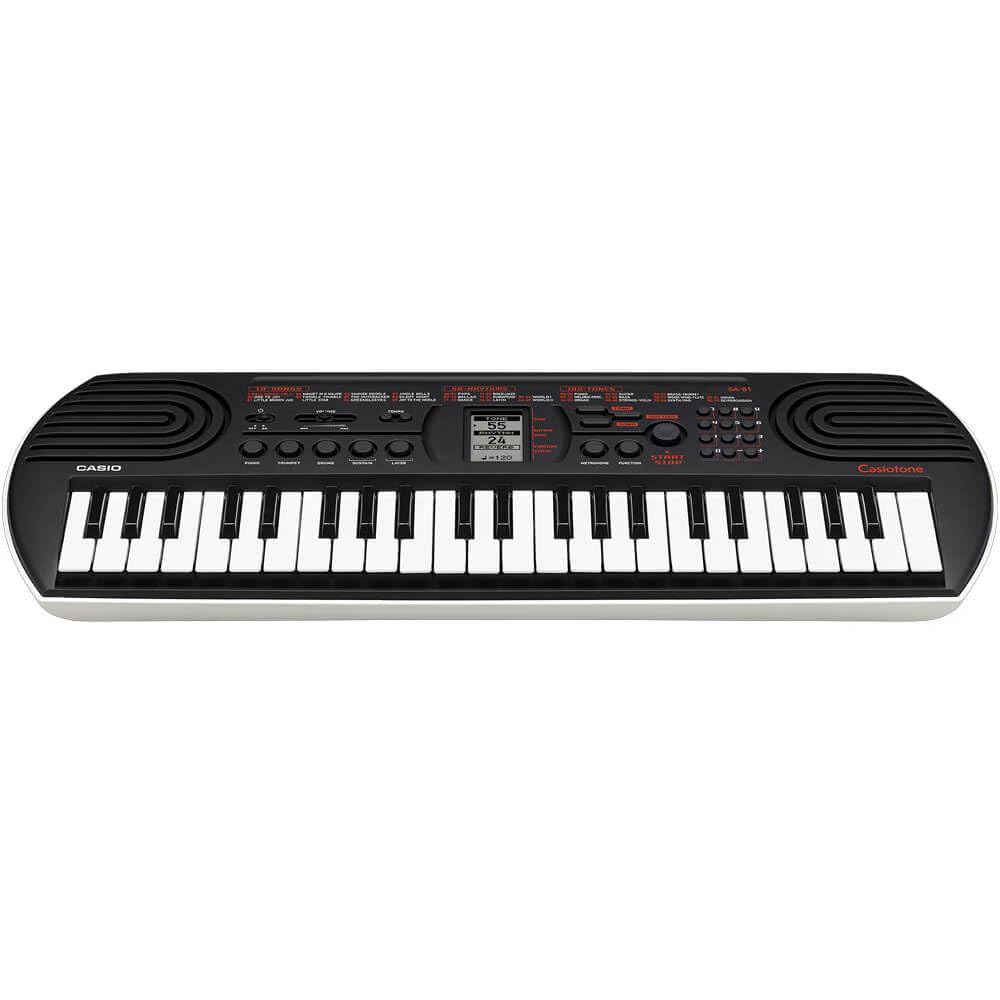
Casio SA-81 44-Key Mini

Casio SA-81 44-Key Mini

Toddler hands

Customer rating 4.5/5
Check Price

Worth Noting

  • Power adapter and batteries not included
Key Count
44 mini keys
Bundle & Stand
Keyboard only, no power
Learning Features
Layer mode, octave shift
Sound & Polyphony
100 tones, 50 rhythms
Read the full review

The 44 mini keys are sized for toddler hands, and Casio's sampled tones sound fuller than the 3-pound frame suggests. The quality stops at preschool play — mini keys can't support formal finger placement, and because power is sold separately, the keyboard arrives unable to make a sound.

Bottom line: Best for a 2-to-5-year-old's first keyboard on a budget — step up once formal lessons come into view.

How to Choose

Key Count and Size

Sixty-one full-size keys cover about five octaves and carry most beginners through their first year. Cheaper 44- and 49-key models shrink the keys themselves, so young players develop finger habits that don't transfer to a real piano.

Beyond the toddler stage, full-size keys matter more than count, and the extra octaves of an 88-key board are what serious learners eventually miss on a 61-key.

Touch Sensitivity

Touch-sensitive keys read how hard you press and shape each note's volume; non-touch keys sound identical at any force, so learners never develop dynamics control — and moving to an acoustic piano comes as a shock.

Semi-weighted keys add resistance that builds finger strength without the bulk and cost of a full hammer action. If only one feature gets your money, this is it.

Sound and Polyphony

Preset counts sell boxes, but tone comes from sampled-voice quality and speaker size — budget boards sound thin because small speakers can't reproduce a piano's low end.

Polyphony sets how many notes can sound at once — cheap keyboards often cap around 32, so sustained chords drop notes mid-phrase. Aim for 64-note polyphony or more for two-handed play with the pedal.

Learning Features

Light-up keys and teaching modes make the first weeks less intimidating and turn practice into a follow-the-light game — genuinely useful for young learners.

The hidden cost is software. Lesson apps like Simply Piano and Skoove run on subscriptions or paid song packs after a free trial, so the upfront price is rarely the full price.

Kit and Stand Quality

A complete kit costs less than buying pieces apart and saves setup hassle. The catch is that bundled stands and benches are often the weakest link, with several shipping wobbly enough to shake mid-song.

Check stand-specific feedback before committing — a stable keyboard on a shaky stand turns practice into a balancing act.

Portability and Power

Weight and battery decide where a keyboard actually gets used. A seven-pound board with a 19-hour battery follows a student around the house; an AC-reliant kit is furniture next to an outlet.

Long battery life usually means smaller amplifiers, so the most portable boards often sound thinner. If you practice with headphones, portability costs nothing, but test the tone if built-in speakers matter.

Frequently Asked Questions