Notebooks & Paper Product Guide

8 Best Isometric Graph Paper of 2026: With True 30° Grids

Which isometric graph paper keeps the standard 30-degree grid your drafting tools fit, so templates align and copies come out clean.

8 Best Isometric Graph Paper of 2026: With True 30° Grids editorial illustration

The word 'isometric' on a label implies one thing: a standard 30° triangle grid. But not every pad actually delivers it. Some print 32.5° angles instead, which silently throws off your isometric templates and drafting tools mid-drawing. It's a mismatch you only catch after committing a page of line work.

Grid geometry is half the equation. What you draw with matters just as much. Budget pads keep costs down with thin paper that bleeds under markers and tears from the binding, while drafting-grade stock absorbs nib pressure and survives repeated erasing without ghosting. Choosing the right tier for your medium saves both materials and time.

Match the grid to your tools and the paper to your medium, and the payoff is clean, reproducible drawings rather than pages you redraw twice.

#1

ALVIN Isometric Paper Pad
ALVIN Isometric Paper Pad

Precise technical drawing

Customer rating 4.7/5
Check Price

Worth Noting

  • The cover can begin separating from the binding glue after heavy handling in a bag or on a drafting desk.
  • Premium per-sheet cost sits above generic pads, which casual sketchers may not justify.
Format
8.5x11 tear-off pad
Page Count
100 sheets
Grid Geometry
Standard 30/90/120° angles
Read the full review

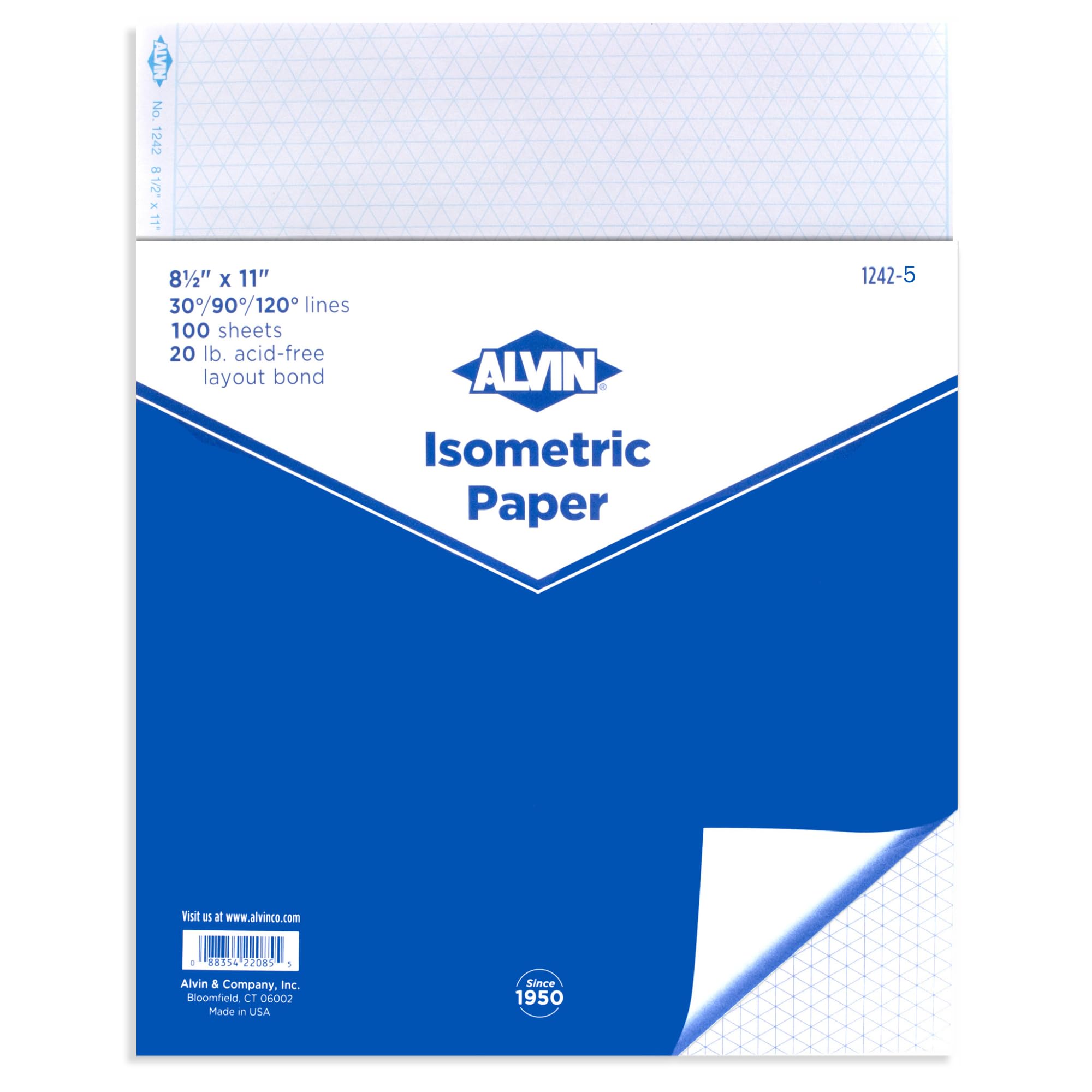
The only pad in this set that ships verified 30/90/120° isometric angles, drawn in non-reproducible blue on acid-free 20 lb paper that stays opaque and lint-free under drafting pressure. That geometry is the whole point of the format — the budget multipack in this comparison crams angles down to 32.5°, which throws alignment off with standard isometric templates and drafting tools.

At 8.5x11, each sheet carries several small drawings or a full town section, which suits college drafting courses and portfolio assembly equally well. The non-reproducible blue grid reads clearly under pencil yet drops out of photocopies, keeping finished drawings clean. Paper stays smooth and opaque through repeated passes of pencil and ink, so sketches keep clean lines without ghosting through to the next sheet.

ALVIN fits engineering, architecture, and drafting students plus working designers who build from standard isometric templates, and seven decades of drafting-supply manufacturing sit behind the grid geometry. The premium per-sheet price is what drafting-grade stock costs — budget buyers chasing the lowest per-sheet figure will get more surface from the bulk multipacks, and the tear-off pad format rules out a bound notebook for those who want one.

Bottom line: For drafters who work from standard isometric templates, this pad is the one where every angle lands true. Casual sketch-pad shoppers chasing the lowest price will find better value elsewhere.

#2

GeekNavy Isometric Pad 3-Pack

GeekNavy Isometric Pad 3-Pack

Field pipe layouts

Customer rating 4.7/5
Check Price

Worth Noting

  • Blue lines can still come through on some printer copies despite the non-photo claim
  • Little contrast between grid and page makes faint lines hard to pick out in dim shop light
Format
8.5x11 pad with header
Page Count
150 sheets
Grid Geometry
32.5° angled grid
Read the full review

GeekNavy's three-pad set pairs a clean engineering header with sturdy 20 lb sheets, and the per-sheet price makes heavy field sketching of pipe runs and weld layouts a casual expense. The grid defines 32.5° triangles rather than the standard 30°, so isometric templates and drafting tools will not align — a non-issue when you draw freehand with scale rulers.

This fits pipe fitters, welders, and technical drawing students who sketch freehand on site; buyers needing template-matched geometry should take the ALVIN pad in this set.

Sketch with a fine-tip pen when the blue grid prints faintly so lines stay visible under heavier shading.

Bottom line: Pipe fitters, welders, and students sketching freehand get real value here; template-based geometry belongs to the ALVIN pad in this set.

#3

Koala Mini Isometric Notebook

Koala Mini Isometric Notebook

On-the-go sketching

Customer rating 4.6/5
Check Price

Worth Noting

  • On a drafting table where a full machine layout is expected, the 5x7 page caps the area at small sketches.
Format
5x7 pocket notebook
Page Count
60 pages
Grid Geometry
1/8 inch teal grid
Read the full review

The 5x7 pocket format with a non-reproducible teal grid leaves the desk — it rides in a bag or jacket and lays flat for one-handed 3D concept capture. Where the top pick's full-size drafting pad belongs on a worktable, this suits industrial, interior, and graphic designers sketching on site, or students grabbing isometric ideas between classes. The 80 gsm kraft paper brings high tear resistance. Compact pages cap the drawing area, so full machine layouts won't fit — small-scale concept sketches only, and sheet behavior beyond the listed specs isn't confirmed.

Keep full-size layouts for the drafting table — use this for quick concept capture and transfer finished drawings later.

Bottom line: Best for designers and students who sketch isometric concepts off the desk — the compact page is the price of carrying it everywhere.

#4

pindda 11x17 Dot Grid Pad

pindda 11x17 Dot Grid Pad

Large-format budget work

Customer rating 4.5/5
Check Price

Worth Noting

  • During craft or design work, heavy marker fills can bleed through the thin stock.
Format
11x17 landscape pad
Page Count
50 sheets
Grid Geometry
0.25 inch green dot
Read the full review

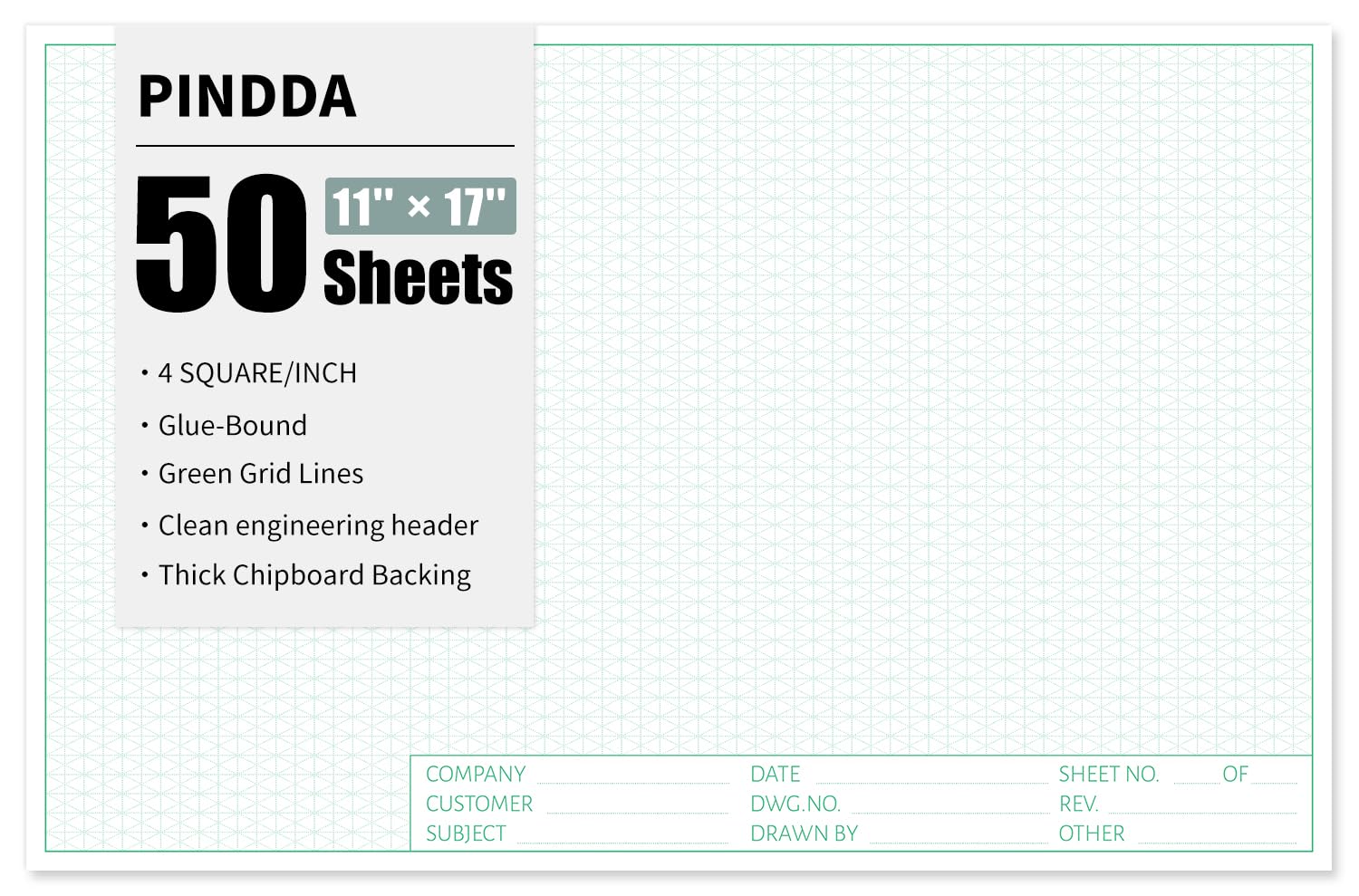
The 11x17 landscape pad is the lowest-cost large-format isometric surface in this set, pairing a rigid cardboard backboard with a green dot grid that stays legible under pencil. It delivers more square inches of grid surface per dollar than any other bound pad here.

This suits students, hobbyists, and makers who want 50 sheets of generous surface for math, planning, or crochet and logo pattern work at a budget price. Pencil and light-marker sketching keeps the thin sheets from bleeding, and pages released from the glue binding need a careful pull rather than a hard yank.

Bottom line: The budget pick when surface area matters more than drafting-grade rigidity — pencil and light-marker users get the most from its 50 large sheets.

#5

Pleiades Isometric Notebook

Pleiades Isometric Notebook

High-volume journaling

Customer rating 4.7/5
Check Price

Worth Noting

  • At 200 pages the notebook carries real heft, so it rides better on a desk than in a backpack.
Format
8.5x11 bound notebook
Page Count
200 pages
Grid Geometry
0.28 inch triangle grid
Read the full review

The Pleiades notebook packs 200 pages of 0.28-inch equilateral triangle grid into a bound 8.5x11 format — roughly double the drawing surface of the budget notebook in this set. For students who work through a pad each term, that page count stretches one purchase across a full semester of math, design, or journal work.

The permanent binding keeps every page in place, which suits a lasting record but means no single sheets for clipboards or tear-off use — pad-focused buyers should look at the ALVIN and pindda drafting pads instead. The listing leaves paper weight and ink behavior unstated, so confirming the stock suits heavy marker work means testing it yourself.

Bottom line: The right pick for students who want one notebook to cover a whole term; for removable sheets or confirmed drafting stock, the ALVIN pad is the stronger match.

#6

Ken Malone Isometric Notebook

Ken Malone Isometric Notebook

Casual note-taking

Customer rating 4.7/5
Check Price

Worth Noting

  • Bound spine holds pages in place, so single sheets can't be removed for tracing or sharing
Format
8.5x11 bound notebook
Page Count
110 pages
Grid Geometry
Equilateral triangle grid
Read the full review

At a budget price, this bound 8.5x11 notebook delivers 110 clean isometric pages, with comfortable room for relaxed note-taking. Nothing in the listing verifies the grid geometry or paper behavior, so it tracks the same bound-notebook need as the higher page-count option in this set without a distinct claim to set it apart.

Bottom line: Best as a simple dedicated sketchbook for students who want one notebook devoted to isometric doodles and math grids, with no need for tear-off sheets or specified drafting geometry.

#7

Isometric Journals Notebook

Isometric Journals Notebook

Standard geometry purists

Customer rating 4.6/5
Check Price

Worth Noting

  • Bound format does not release single sheets, so pinning up or handing out individual pages is not an option.
Format
8.5x11 bound notebook
Page Count
125 pages
Grid Geometry
1/4 inch triangle grid
Read the full review

This is a rare bound isometric notebook that names its grid outright: a 1/4-inch equilateral triangle on 125 pages, so standard templates and drafting tools align without decoding vague marketing. Paper behavior lacks independent confirmation, which makes it a fit for purists who value exact grid spacing over verified stock quality.

Bottom line: Choose this when confirmed standard geometry matters more than verified paper feel, and keep expectations set that pages stay in the book.

#8

Modern Simple Iso Notebook

Modern Simple Iso Notebook

Everyday sketching

Customer rating 4.7/5
Check Price

Worth Noting

  • For precise template alignment, the unverified grid geometry leaves compatibility uncertain.
Format
8.5x11 bound notebook
Page Count
110 pages
Grid Geometry
Equilateral triangle grid
Read the full review

An even isometric grid gives students and journalers a simple surface for math and design notes. The listing carries minimal spec detail, so no verified feature sets this apart from comparable self-published notebooks.

Bottom line: Suits students and casual journalers who want a budget 110-page isometric surface for daily math and design notes.

How to Choose

Grid Geometry

Not every pad marked 'isometric' prints a true 30° triangle. Some ship 32.5° angles, close enough to look right but far enough to misalign every template and 30/60/90 tool you lay on them.

The error surfaces mid-drawing: lines meant to converge at 30° steps drift, and tool-constructed shapes carry that offset into every dimension. Freehand sketching hides the difference; tool-based work does not. If you use templates, confirm standard 30/90/120° geometry before buying.

Page Count

Page count rides on format. Bound notebooks pack 110 to 200 pages but won't give up a single sheet, so you can't tear out and file one drawing without losing others in the book.

Tear-off pads hold fewer sheets but let you remove, scan, or pin finished work cleanly. Choose the bound book for a permanent record and the pad when your drawings leave the page.

Paper Weight

Heavier paper absorbs pressure and wet media; light paper fights back. Drafting-grade pads at 20 lb and up accept repeated erasing without ghosting, so mistakes are cheap to fix.

Budget large-format sheets often sit below that threshold, and the result is marker bleed and rough tearing from the glue binding. Pencil-heavy work justifies the heavier stock; one-pass sketching does not.

Format

Format decides where the pad works, not how it draws. A pocket notebook fits in a bag, an 8.5x11 pad suits desk work, and an 11x17 landscape sheet handles several small drawings or one wide layout.

The hidden trade-off is portability against drawing area. Compact formats encourage sketching anywhere but limit scale, while large sheets demand a flat, clear workspace — match the format to where you actually draw.

Grid Ink and Visibility

Non-photo blue is marketed as a scan-proof grid, but the guarantee is conditional. Reviewers report the lines still show up on home printers even though they vanish in true blueprint reproduction.

If finished work gets photocopied at home, test a corner sheet before committing a page. Grids printed too light are hard to follow, while heavy lines compete with the drawing itself.

Frequently Asked Questions