Notebooks & Paper Product Guide

10 Best Desk Calendar of 2026: Which Have Real Writing Room

Find a paper desk calendar with genuinely usable date blocks, spill protection, and the coverage window that fits your schedule.

10 Best Desk Calendar of 2026: Which Have Real Writing Room editorial illustration

Most desk calendars list a paper size like 17 by 12 inches, but that measurement rarely tells you how much room you actually get to write each day. Many top-rated pads cram small date squares onto that paper, leaving you with less usable space than the big number suggests. The result: a calendar that looks fine on paper but frustrates you every time you try to jot down more than one appointment.

Coverage windows are another trap. Plenty of bestsellers run from July to December of the following year, not January to December. If you assume a January start, you'll wait months to use it or end up with an awkward half-year gap. This guide focuses on what actually matters for daily use: real grid size, paper that resists ink-bleed, and a protective cover that survives coffee rings.

#1

Taja Desk Calendar

Taja Desk Calendar

Daily schedulers

Customer rating 4.7/5
Check Price

Worth Noting

  • Flat pad without an easel, so a clear stretch of desk surface is required.
  • Clear cover adds slight bulk when flipping between months.
Form
Flat pad
Cover
Full
Coverage
18 mo (Jul)
Writing Grid
2.3 in
Read the full review

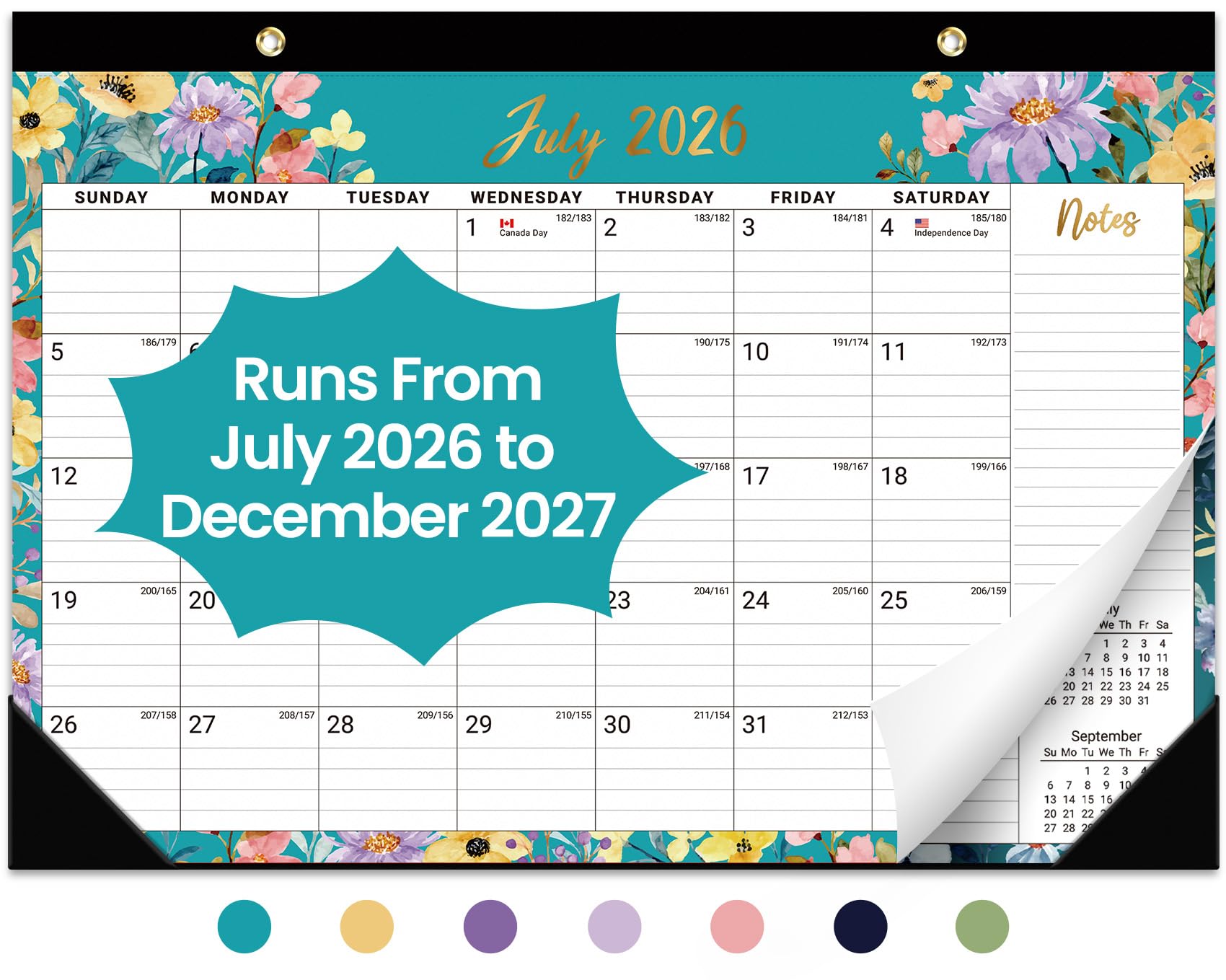
At $7.99 the Taja pairs 2.3-inch daily blocks with a waterproof clear cover, a combination none of the roundup's other pads matches. The 120 gsm paper resists ink bleed, keeping dense notes legible. Build quality at this price is a real stand-out.

The 17 by 12 inch flat pad suits a desk with open surface — families tracking school and activity schedules get plenty of room. The waterproof cover guards grids against spills and smudges; the slight bulk it adds when flipping months is the price of that protection.

Fold the cover fully back before turning months so the extra bulk doesn't bunch the pages.

Bottom line: The writing space, spill protection, and budget price make this the sensible default for daily desk scheduling.
#2

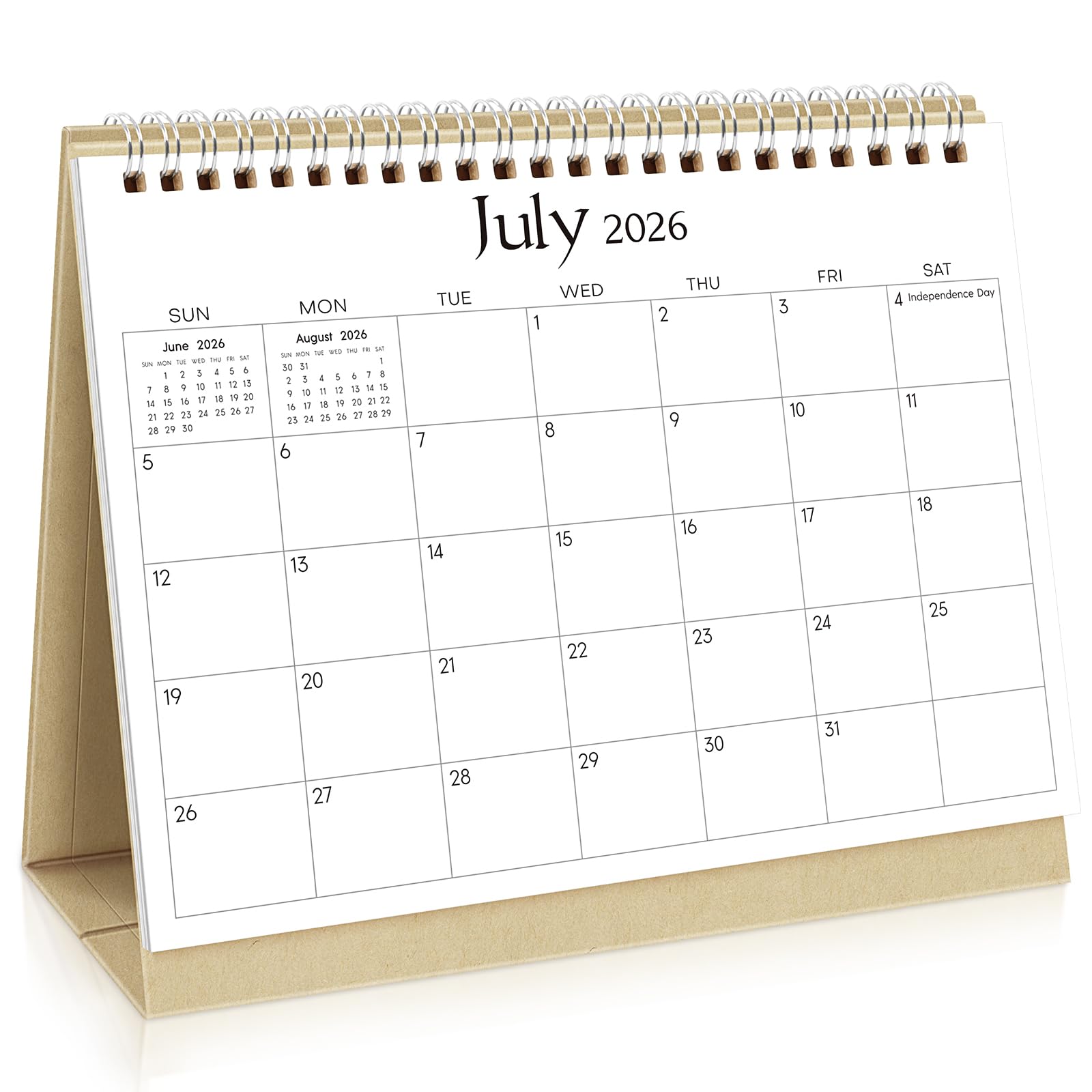
Mokani Compact Desk Calendar

Mokani Compact Desk Calendar

Small desks

Customer rating 4.8/5
Check Price

Worth Noting

  • Compact date boxes limit writing room for schedulers who note several events per day.
Form
Standing easel
Cover
None
Coverage
15 mo (Oct)
Writing Grid
—
Read the full review

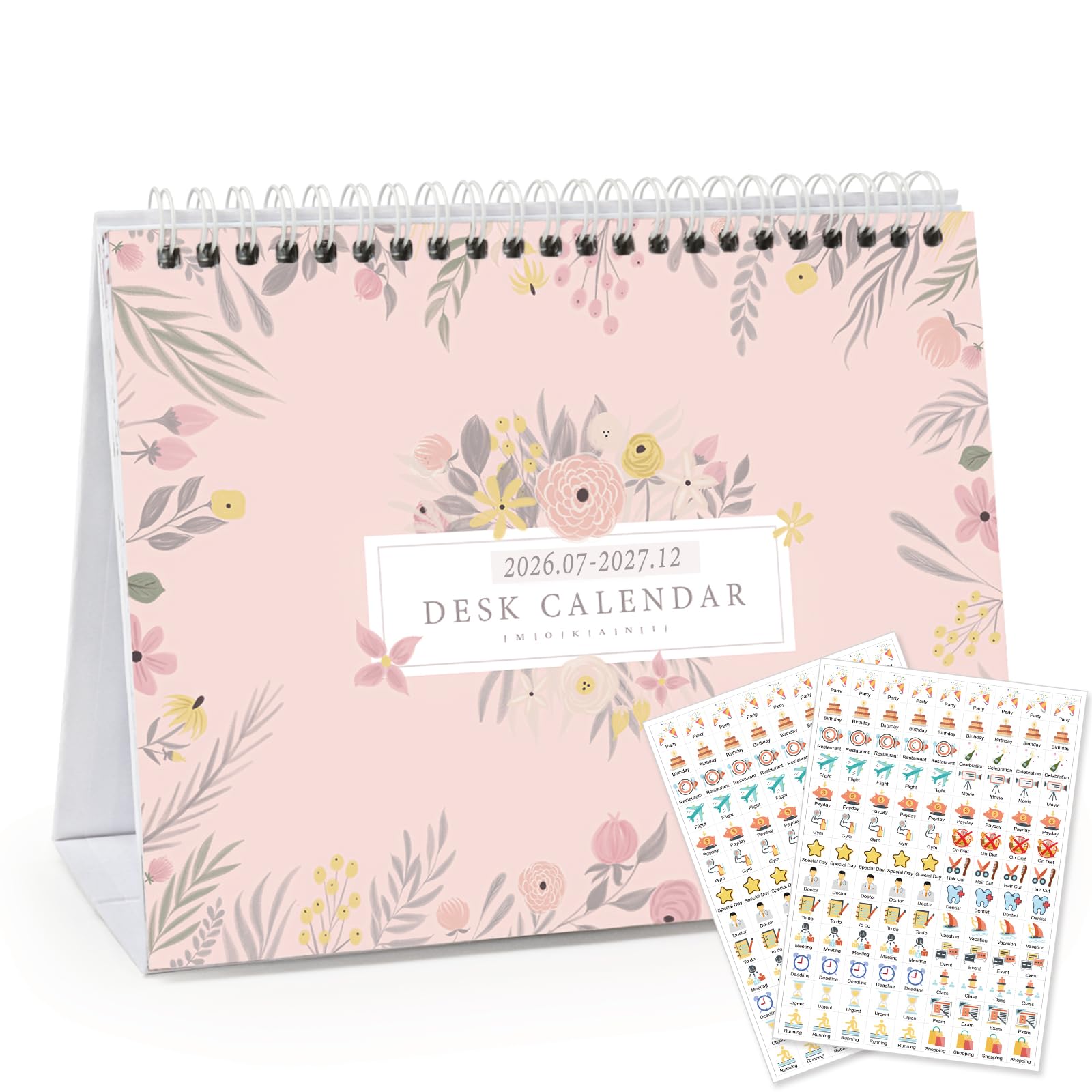
The Mokani's 200 GSM card stock and sturdy white-board easel give it a build that outlasts other budget calendars, and 234 stickers let each month feel decorated rather than default. At 8x6 inches standing, it keeps a tidy footprint on a small desk — where the top pick in this set uses the same footprint for larger 2.3-inch grids.

Students and teachers wanting a decorative at-a-glance reference will find the compact date boxes adequate, and the small footprint frees up work space. Multi-event daily schedulers will want a larger pad — this calendar suits tidy workspaces and gift-giving over heavy note-taking.

Keep a spare note pad at hand for days when the compact date boxes run out of room.

Bottom line: For tidy desks where the calendar is a quick visual reference rather than a planning worksheet, the Mokani brings sturdy, attractive build at a budget price — multi-event schedulers should consider the larger-grid top pick.

#3

CRANBURY Large Desk Pad

CRANBURY Large Desk Pad

Heavy scheduling

Customer rating 4.8/5
Check Price

Worth Noting

  • The 22x17 footprint consumes a substantial share of desk surface, reading as a flat blotter rather than a stand-up calendar.
Form
Flat pad
Cover
None
Coverage
18 mo (Jul)
Writing Grid
Ruled blocks
Read the full review

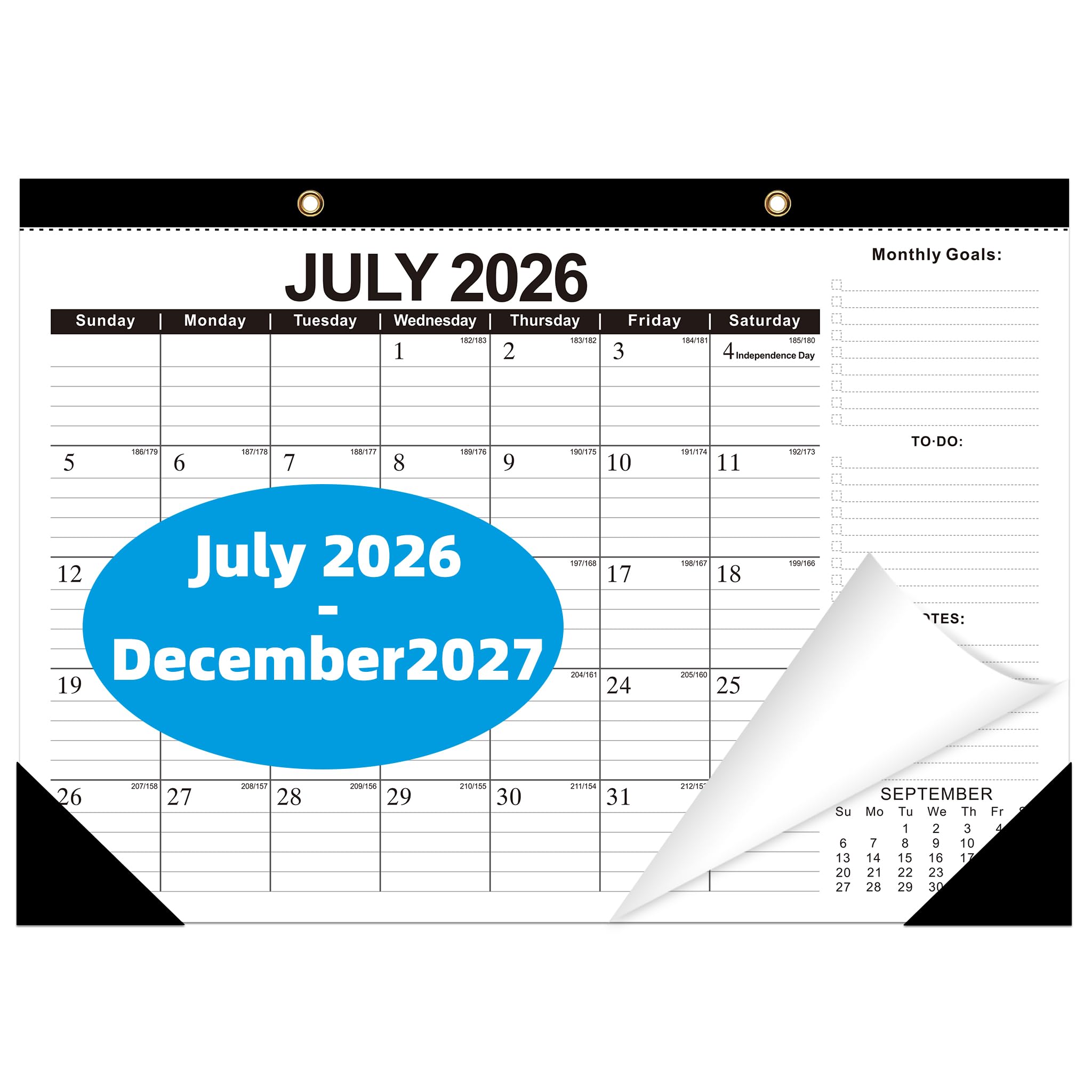
An oversized 22x17 ruled pad that clears more scheduling room than any other option in this set. The 18-month span (July 2026 through December 2027) carries holidays, daylight-saving notes, and day-of-year counters, with every daily block ruled for legible multi-line entries. Colorful monthly artwork keeps entries easy to scan at a glance while still leaving generous writing space.

This suits busy home or office command centers and seniors who value large print — a layout that works best laid flat as a working blotter. Buyers with compact desks should look to a stand-up pair in this set.

Keep it laid flat or mount it on a wall — the oversized ruled grid translates to either surface without losing readability.

Bottom line: Best matched to command centers where ruled room outranks a compact footprint — heavy weekly planning stays legible across the full stretch.

#4

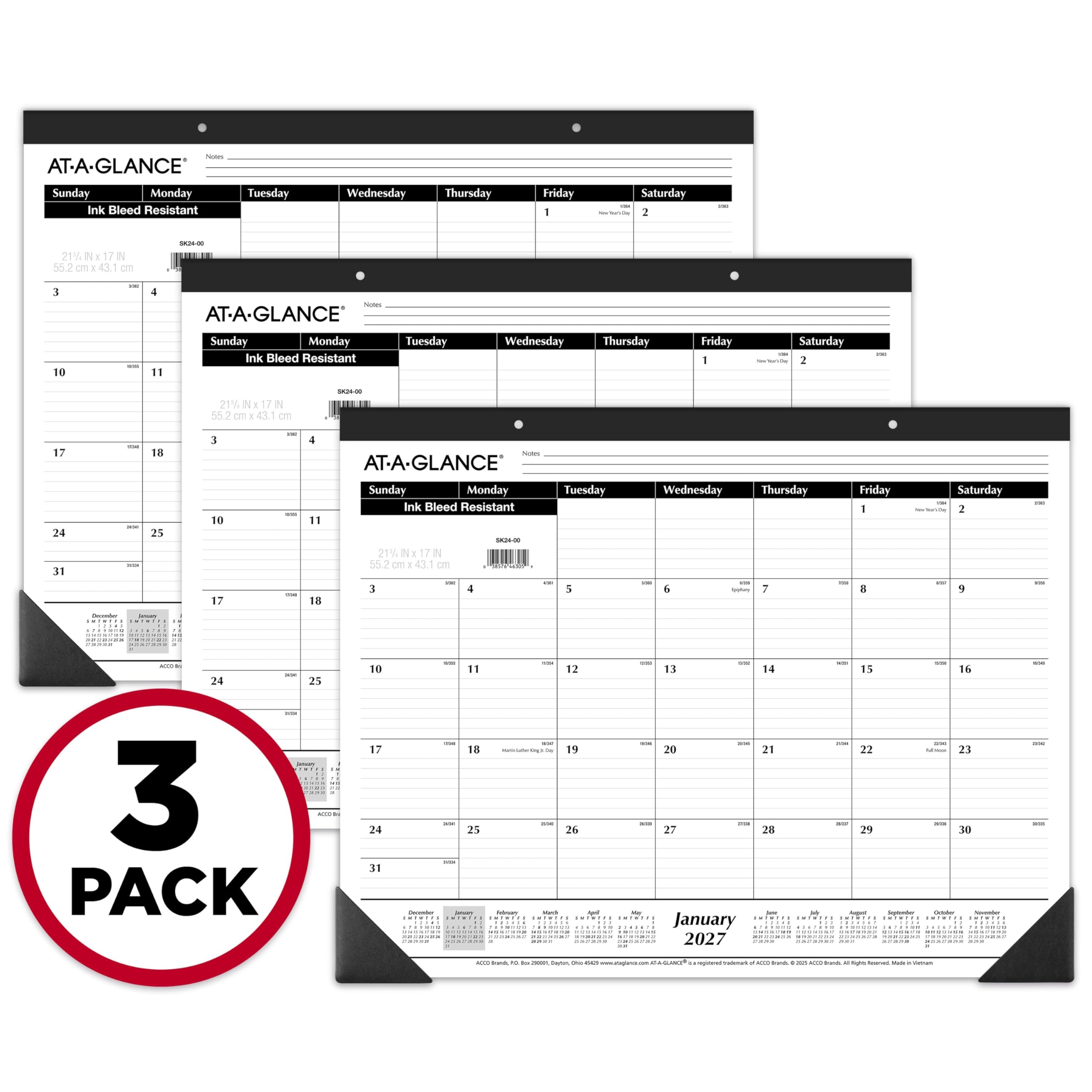
AT-A-GLANCE Desk Pad 3-Pack

AT-A-GLANCE Desk Pad 3-Pack

Office use

Customer rating 4.8/5
Check Price

Worth Noting

  • Flat pad format
Form
Flat pad
Cover
None
Coverage
12 mo (Jan)
Writing Grid
2.9x2.4 in
Read the full review

This three-pack delivers 21.75 x 17 inch desk pads with ruled blocks, Julian dates, and perforated pages that tear cleanly. The ink-resistant paper holds up to repeated notes across a full work year, and two eyelets per pad allow wall mounting when a tilted stand is not needed.

The tradeoff is the format itself: these are flat pads, not standing flip calendars — no easel, and pages are meant to be torn off each month. That suits offices and wall-hung planning rather than desks where a tilted stand matters. Coverage runs January through December 2027, so buyers working beyond the calendar year should consider longer-window pads.

Lay the pad flat on a desk or hang it from either eyelet — the perforated pages detach cleanly when each month ends.

Bottom line: For offices that want the same clean January-to-December view across several desks, the three-pad set covers wall or flat-desk planning without a stand.

#5

SKYDUE Minimalist Desk Calendar

SKYDUE Minimalist Desk Calendar

Minimalist desks

Customer rating 4.7/5
Check Price

Worth Noting

  • For layered daily planning, the 1.1x0.9-inch boxes fit only a line or two.
  • On individual units, month sequencing can appear out of order.
Form
Standing flip
Cover
None
Coverage
21 mo (Apr)
Writing Grid
1.1x0.9 in
Read the full review

Twin-wire binding keeps every page flat while the run stretches from April 2026 through December 2027, a 21-month span held in an 8.3x6.3-inch footprint. Where the compact favorite in this set leans on artwork and sticker packs, the SKYDUE keeps a neutral black face and stands on its own for countertop and desk-corner scheduling without swallowing the workspace.

Minimalist home offices, students, and bedside planners who keep each day to a brief note find the right fit. Month sequencing can vary between individual units, a manageable quirk for light schedules.

Keep daily entries to a word or two — the compact grid pairs best with shorthand note-taking.

Bottom line: Best on a bedside table or kitchen counter, where a glance-a-day entry is all you need — choose the larger pad in this set when writing room matters more.

#6

SUNEE Seasons Desk Calendar

SUNEE Seasons Desk Calendar

Budget academic

Customer rating 4.7/5
Check Price

Worth Noting

  • July-based academic span skips January-focused planning for non-teachers.
Form
Flat pad
Cover
Corner
Coverage
18 mo (Jul)
Writing Grid
2.25x1.75 in
Read the full review

Seasonal art with 2.25-inch daily grids fits a teacher's rotating classroom decor, and protective corner covers keep it neat on a desk. As the lowest-priced SUNEE variant, it delivers the same writing space for less. Occasional units may show months out of order, so a quick sequence check is worthwhile.

Bottom line: Best for a teacher's classroom desk through the school year when January-start planning isn't the priority.

#7

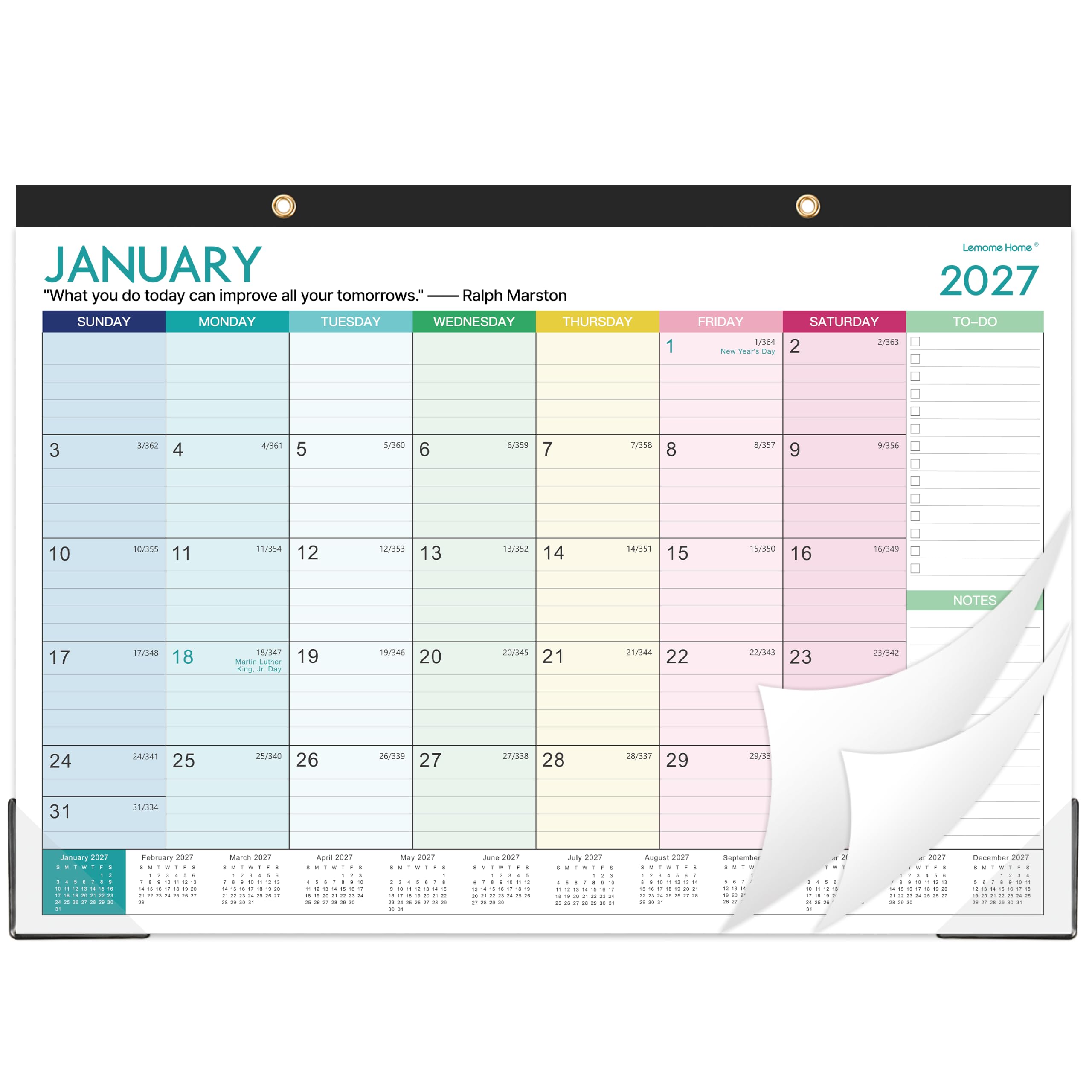
Lemome Desk Calendar

Lemome Desk Calendar

Readability

Customer rating 4.7/5
Check Price

Worth Noting

  • The 1.8-inch ruled day squares fit short reminders but leave little room for multi-note days.
Form
Flat pad
Cover
Corner
Coverage
18 mo (Jul)
Writing Grid
1.8x2.2 in
Read the full review

Color-coded day blocks give the Lemome a readability edge over plain month grids, and quality holds up at its budget price. The listing's coverage window conflicts — the title says Jan–Dec 2027, the bullets describe Jul 2026–Dec 2027 — so confirming the start month before ordering matters.

Bottom line: For budget buyers who value quick visual scanning over heavy note-taking, the color-coded layout suits a desk beside a monitor.

#8

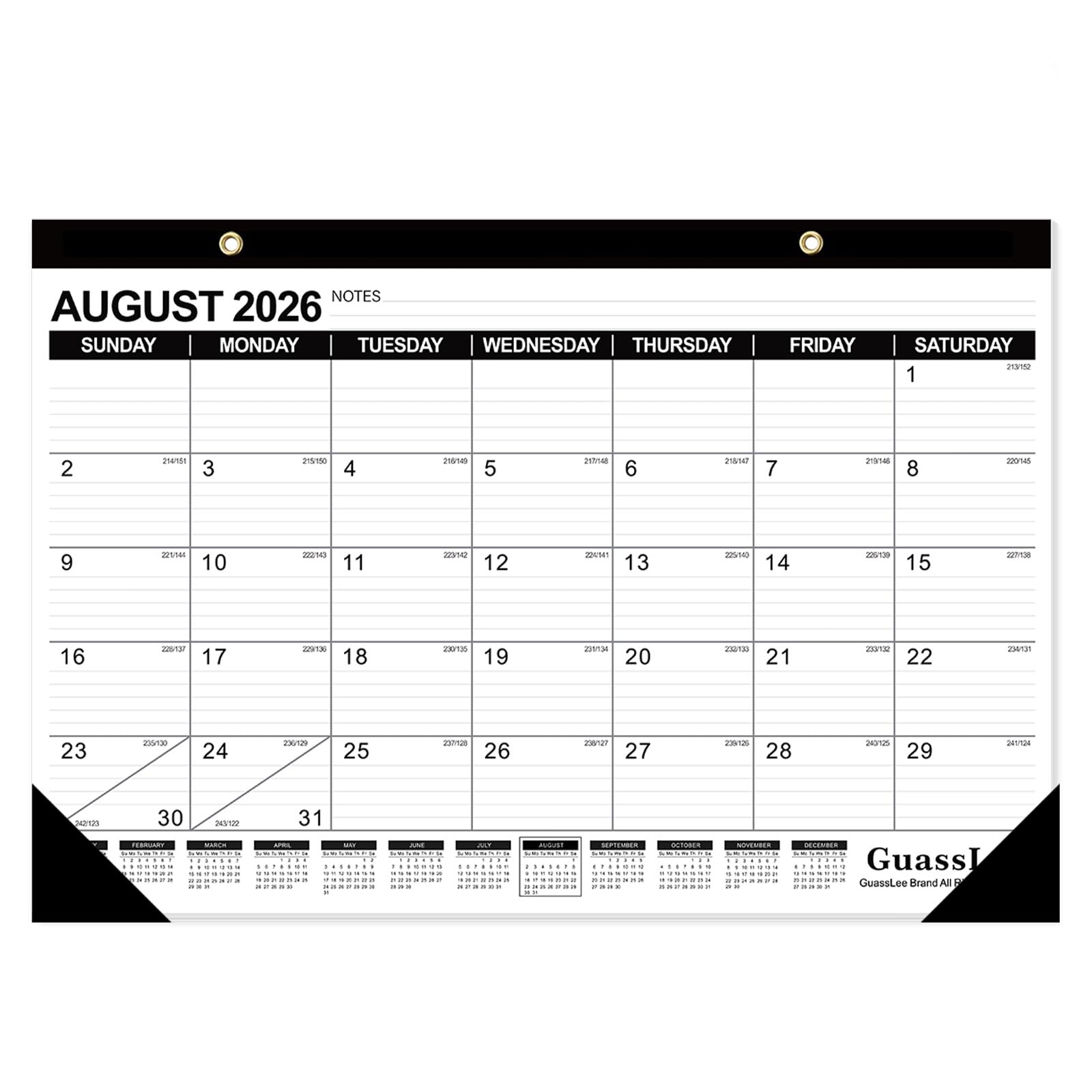
GuassLee 19-Month Calendar

GuassLee 19-Month Calendar

Long planning

Customer rating 4.6/5
Check Price

Worth Noting

  • Despite the 17-by-11.5 sheet, usable writing area per day runs smaller than expected, curbing dense notes.
Form
Flat pad
Cover
None
Coverage
19 mo (Jun)
Writing Grid
Ruled
Read the full review

The 19-month window covering June 2026 through December 2027 gives project and lesson planners one view across multiple terms, and the Julian dates fit trackers who log day counts. Ruled blocks read clearly and take ink smoothly. Daily cells run smaller than the sheet size suggests, so this suits at-a-glance scheduling over dense multi-line notes.

Bottom line: Best for project and lesson planners who span terms and keep daily cells light; persistent dense note-takers will want the larger ruled pad in this group.

#9

ZTX Desk Calendar

ZTX Desk Calendar

Desk or wall

Customer rating 4.7/5
Check Price

Worth Noting

  • A holiday-date error has been reported, so cross-check holidays before planning around them.
Form
Desk/wall
Cover
Full
Coverage
18 mo (Jul)
Writing Grid
1.8 in
Read the full review

Dual hanging holes and a full clear cover let this budget calendar work flat on a desk or hung on a wall. The 1.8-inch grids hold short notes, and perforated pages tear cleanly at month's end. One reported holiday-date error is worth checking against the year before you rely on it.

Bottom line: For budget shoppers who want a tidy, colorful desk calendar that can also mount on a wall, this fits once you've verified its holiday dates against the official calendar.

#10

Wabhas Desk Calendar

Wabhas Desk Calendar

Discounted buys

Customer rating 4.5/5
Check Price

Worth Noting

  • For days with several appointments, date squares feel cramped despite the 17x12 footprint.
Form
Flat pad
Cover
Plastic
Coverage
18 mo (Jul)
Writing Grid
—
Read the full review

The Wabhas desk calendar pairs a protective plastic cover with a side to-do column, keeping the layout clean and professional for light schedules. Its writing area runs smaller than the 17x12 title suggests — date squares feel cramped for multi-entry days — and the mid-range price sits above budget peers offering similar footprints.

Bottom line: Best if you find it at a discount and want a clean layout; planners who need roomy date blocks should choose the larger-grid option in this set.

How to Choose

Writing Grid Size

The listed paper size (like 17x12) rarely translates to a usable daily grid. Many pads devote inches to margins, headers, and artwork, leaving date blocks as small as 1.1 inches — enough for one short line. A 2.3-inch grid fits three or four entries, which matters for teachers tracking lesson plans and parents juggling activities.

Measure your typical note volume before buying. If you write more than a word per day, look for grids at least 2 inches square. Compact calendars like the Mokani or SKYDUE are fine for at-a-glance reminders but will feel cramped for heavy schedulers.

Coverage Window

Many bestsellers cover 18 months from July to December of the following year, not January to December. That means if you buy in fall, you get immediate use; if you expect a January start, you'll wait or waste months. Some listings even conflict between title and description on the start month, as with the Lemome.

Decide what start month you need. For academic planning, a July start aligns with summer prep; for fiscal or calendar-year tracking, a January start is non-negotiable. Always check the coverage window in the listing's first bullet before ordering.

Paper Weight

Heavy paper (120–200 GSM) resists ink bleed and holds up to eraser marks, but adds weight and can make pages curl or lie unevenly. Light paper is cheaper but lets markers and highlighters ghost through, making the back of the page unusable and the front look messy.

If you use gel pens or highlighters, heavier paper is worth the premium. For pencil-only users, standard 80–100 GSM suffices. The Taja's 120 GSM and Mokani's 200 GSM card stock handle daily writing without smudging.

Protective Cover

A clear plastic cover protects pages from coffee rings, ink smudges, and sticky hands — but it also adds bulk when flipping months. Many reviewers praise it as a must-have for spill-prone desks, while others find it makes the calendar feel heavy. The Taja and ZTX include full covers; SUNEE and Lemome offer only corner protectors.

Consider your environment. On a kitchen counter or a kid's homework desk, a full cover is a lifesaver. In a minimalist office where you flip monthly rarely, the extra heft might be a minor annoyance. If you skip the cover, keep a coaster nearby.

Form Factor

Standing easel calendars are compact and sit upright, but they inevitably have smaller date boxes. Flat pads offer larger writing areas but need desk space to lie flat, and some require tearing off pages monthly. Wall-hung options double as desk pads but lose convenience if you prefer a permanent desk presence.

Think about where the calendar lives. A compact standing flip suits a tidy desk or countertop; an oversized pad works as a blotter on a large work surface. If you want the flexibility to hang it, look for dual eyelets as on the ZTX.

Frequently Asked Questions