STEM Toys Product Guide

6 Best Chemistry Set for Kids in 2026: Kits That Actually Work

Which chemistry sets for kids actually include all materials and match your child's age and attention span, so experiments work as advertised.

6 Best Chemistry Set for Kids in 2026: Kits That Actually Work editorial illustration

Most kids chemistry sets advertise eye-catching experiment counts, but a closer look at the box often tells a different story. Many of those 'experiments' live in a printed booklet, and the supplies required to run them sit on a kitchen shelf, not in the package. The number on the front rarely matches what's actually inside.

The kits that earn their space in a home actually deliver working experiments from the materials included, with instructions a child can follow without constant adult decoding. That combination matters more than any headline count. It's also the difference between a kit used twice and one pulled out for months.

The right starting point depends on the child's age and attention span as much as the kit's features. A preschooler needs a gentle, tactile introduction, while an older kid can handle a proper lab setup with real chemical reactions. This guide matches each purchase to that fit.

#1

NatGeo 100+ Chemistry

NatGeo 100+ Chemistry

Serious young scientists

Customer rating 4.7/5
Check Price

Worth Noting

  • Only 15 experiments run fully from boxed materials; the remaining activities rely on common household staples.
  • An occasional kit ships with a missing component, so counting contents on arrival is wise.
Age Range
8+
Instructions Quality
Minimal
Number Of Experiments
100+
Completeness Of Materials
Mostly included
Read the full review

The National Geographic Amazing Chemistry Set delivers over 100 experiments, with 15 running entirely from boxed materials and the rest pulling household staples like baking soda and vinegar from your kitchen. The glassware and tools feel substantial, holding up through repeated weekend sessions where thinner kits would warp or let compound containers leak. Reactions are genuinely hands-on — fizzy color changes, growing crystals — so the bench sees steady use rather than collecting dust after the first project. The mix of quick reactions and longer project builds keeps interest alive across a full school year.

This is the kit for a serious young scientist ages 8 and up who wants a real lab bench at home across many months, whether for structured STEM lessons or free exploration. Its premium price suits families ready to invest in long-term science play, while simpler sets for younger kids suit budget-conscious starts. The packed box makes an occasional missing piece possible, so a quick contents check on arrival is a sensible habit.

Open the box and count every component against the included guide right away — a missing piece is easiest to resolve at that moment.

Bottom line: A lasting choice for a serious young chemist — the depth justifies the premium price for families planning months of science at home.

#2

NatGeo Junior Chem

NatGeo Junior Chem

Young kids

Customer rating 4.7/5
Check Price

Worth Noting

  • Household ingredients like vinegar and baking soda aren't in the box, so a full run needs a quick supply trip first.
Age Range
4+
Instructions Quality
Clear
Number Of Experiments
50
Completeness Of Materials
Some not included
Read the full review

The only kit in this set built for ages 4-7, National Geographic Junior pairs oversized tools with simple tactile reactions — mixing, fizzing, and color changes a young child can run with minimal parent setup. Clear instructions draw consistent praise, which matters more at this age than experiment count.

This suits parents easing preschool and early-elementary kids into science gently. Projects bundle boxed tools and a guided manual while pairing a chemical with a common household ingredient, so a full session benefits from vinegar, baking soda, or food coloring within reach — expect an occasional supply trip.

Keep vinegar, baking soda, and food coloring stocked — the projects that source a supply from your pantry go smoothly when it's on hand.

Bottom line: For parents easing kids aged 4-7 into hands-on science, this kit's age-right sizing and clear guidance make it the natural gateway pick.

#3

Thames & Kosmos Ooze

Thames & Kosmos Ooze

Lab station

Customer rating 4.6/5
Check Price

Worth Noting

  • Glassware and smaller components are delicate and can chip if handled carelessly
Age Range
6+
Instructions Quality
Clear
Number Of Experiments
20
Completeness Of Materials
Needs household items
Read the full review

Standing apart from the experiment-count race, this 57-piece station gives kids a real lab bench to work on — beakers, test tubes, and a dedicated workstation that make chemistry feel like a genuine experiment rather than a packaged trick. The 20 activities include safe slime, chromatography, and acid-base testing, with clear science explanations woven into each one.

Best for kids ages 6-10 who want the feel of running a real lab, and for families that already keep baking soda, vinegar, and food coloring on hand — several of the experiments draw on these household items.

Bottom line: The right pick for kids who want the feel of a real lab rather than ticking off experiment numbers — as long as the household already stocks basic kitchen chemicals.

#4

UNGLINGA 150 Exp

UNGLINGA 150 Exp

STEM enthusiasts

Customer rating 4.7/5
Check Price

Worth Noting

  • A few experiments end without the expected reaction, which can deflate a child mid-project.
Age Range
8+
Instructions Quality
Poorly translated
Number Of Experiments
150
Completeness Of Materials
Mostly included
Read the full review

The largest experiment count in this set — 150 hands-on projects spanning chemistry, physics, and earth science — makes this the quantity pick for kids who run through activities quickly. Each project offers a visible reaction or take-home observation, so a curious child stays engaged across several sessions.

Best for STEM-minded kids around age 8 and up who value volume over polish. Some instruction pages arrive in broken English and the occasional minor piece may be missing, so a patient parent should plan for light troubleshooting; the sheer variety justifies the effort for families who prize quantity.

Bottom line: The largest project count in this set, for families who prioritize variety and don't mind pitching in on setup.

#5

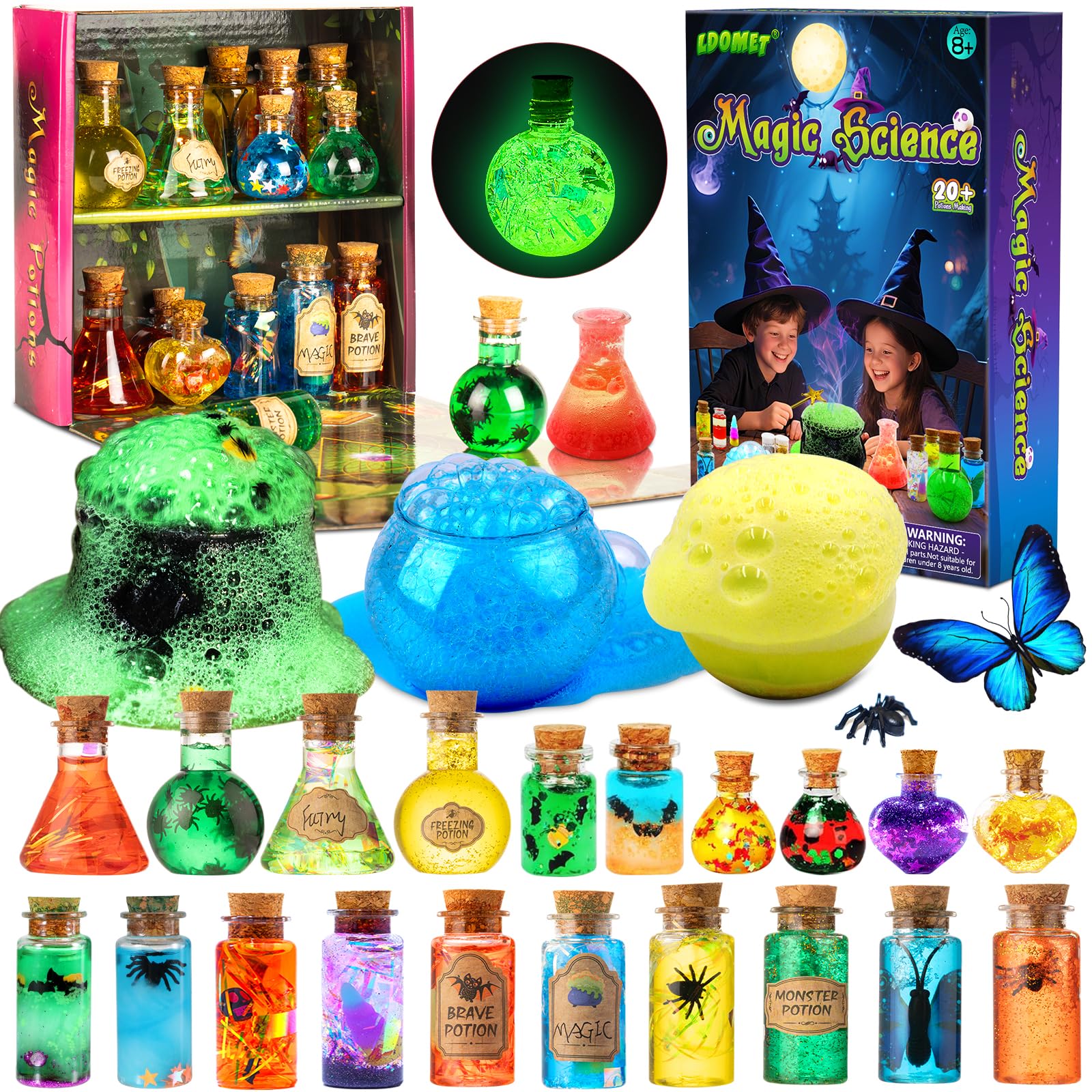
LDomet Magic Potion

LDomet Magic Potion

Harry Potter fans

Customer rating 4.6/5
Check Price

Worth Noting

  • On a shared table the compact kit fits one crafter comfortably, tighter for two or more.
  • A missing piece can stall the specific project that needs it, so glance through the contents before first use.
Age Range
8-12
Instructions Quality
Clear
Number Of Experiments
20+
Completeness Of Materials
All included
Read the full review

Twenty-plus potion creations ship with every material inside the box, so a Harry Potter fan can start mixing minutes after opening the package. The step-by-step booklet was the most consistently praised piece in the set, and the whole experience reads as imaginative craft play rather than formal chemistry.

This suits kids ages 8-12 who want a themed craft afternoon with instant payoff — potion bottles, not titration. Buyers after genuine chemical reactions or a multi-month curriculum should take the 100-experiment pick instead; the box is compact, and an occasional kit ships short a piece.

Inventory the pieces when the box arrives so a missing item doesn't stall the first potion session.

Bottom line: The right pick for a themed birthday afternoon or weekend craft session with a Harry Potter fan — the compact scale is part of the charm.

#6

UNGLINGA 70 Exp

UNGLINGA 70 Exp

Budget-conscious parents

Customer rating 4.6/5
Check Price

Worth Noting

  • Running solo, an 8-year-old may not get the pictured result, so a supervising adult helps keep the fun going.
Age Range
8+
Instructions Quality
Unclear
Number Of Experiments
70
Completeness Of Materials
Mostly included
Read the full review

70 experiments across chemistry, physics, and earth science make this the budget value pick for casual first-time buyers, delivering real variety for the money. It ranks below the deeper kits here because execution runs uneven: some reactions may not match the guide, and directions read thin, so an adult lending a hand helps.

Bottom line: Best for a first-time buyer who wants the widest experiment range per dollar and expects to run projects alongside a young scientist.

How to Choose

Experiment Count

Headline counts can mislead. A kit advertising 100+ experiments often includes materials for only a small slice of that total; the rest are booklet activities that describe reactions you must supply ingredients for. The gap between marketed count and hands-on reality is the single biggest source of buyer disappointment.

For a child who wants to run an experiment the afternoon the box arrives, self-contained reactions matter more than a large total. A kit with fewer but complete experiments delivers a satisfying first session, while a count-heavy kit stalls until a parent can shop for extra ingredients.

Age Range

Age ranges track tool size, reaction intensity, and instruction difficulty, not marketing. Kits for ages 4-7 use oversized, unbreakable items and gentle reactions a preschooler can manage, while kits for 8+ use smaller glassware and chemicals that react more visibly. Buy near the top of the child's ability — too advanced means the parent performs every step, too young means the child loses interest fast.

Materials Included

Completeness is about consumables, not hardware. Most kits include the reusable equipment — test tubes, scoops, goggles — but many experiments call for household staples like vinegar, baking soda, or oil that the box omits. When a kit claims a high experiment count, check how many reactions need ingredients you must gather yourself.

Kits that include most chemicals reduce setup friction and allow spontaneous experimentation, which matters when a child asks for a project at 4 p.m. on a weekday. Factor expected grocery runs into the total cost, since a cheaper kit can end up costing more per working experiment.

Instructions

Instructions decide whether an experiment works the first time. Clear, well-sequenced steps let a child follow alone, while minimal or poorly translated guidance turns a chemistry project into a parent-dependent exercise. Many experiments that never produce results trace back to unclear steps rather than to the chemicals themselves.

Durability

Durability shows in the pieces children handle repeatedly — test tubes, pipettes, and the lab tray. Reusable equipment takes real wear across dozens of projects, and thin or brittle components crack or chip, ending a session early. Heavier plastic and reinforced joints survive the rough handling that genuine interest brings.

Frequently Asked Questions