Books & Reading Product Guide

12 Best Books for Middle School Boys 2026: Picks That Get Read

Best books for middle school boys that truly engage them, from humor to survival to deep classics. Match your son's age and interests.

12 Best Books for Middle School Boys 2026: Picks That Get Read editorial illustration

Many parents face the same puzzle: a middle school boy who claims he hates reading, or one who rushes through a book that feels too easy. The right book does more than occupy time—it builds the reading habit that carries into high school.

But there's no single best pick. Humor and short chapters hook reluctant readers instantly, while mature classics deliver depth that needs a guiding hand. The key is matching the book to your son's current reading level and interests, not chasing a one-size-fits-all recommendation.

This guide spans both ends—from laugh-out-loud series to thought-provoking classics—so you can choose what will actually get him turning pages.

#1

The Outsiders

The Outsiders

Mature teens

Customer rating 4.7/5
Check Price

Worth Noting

  • The 1960s slang and period setting demand an adjustment
  • Everything filters through Ponyboy's single perspective, so secondary characters like Sodapop and Dally stay underdeveloped.
Genre
Realistic Fiction
Pages
224
Series
Standalone
Grade Level
7-9
Read the full review

The Outsiders delivers emotional depth that few middle-grade titles attempt — Ponyboy's first-person narration makes class conflict, loyalty, and identity feel like lived experience rather than moral instruction. At 224 pages the novel moves with a deliberate rhythm; the quieter, reflective stretches carry the weight that makes the closing chapters land with real force. The stripped-down prose keeps even the heaviest scenes accessible without talking down to a seventh grader. The emotional pull persists well beyond the final page, and the story lingers in a way that invites rereading and discussion rather than racing to a tidy resolution.

This novel suits mature middle school boys (12 and up) ready for serious themes — the violence and social conflict are heavy, though S. E. Hinton handles them with care and never sensationalizes. It builds its deepest connection with readers drawn to character-driven, emotional stories, and it works especially well in classroom and book-club settings, where guided discussion opens up the themes of loyalty, class, and identity and helps frame the more sensitive moments.

Bottom line: For mature middle schoolers ready for a story with genuine emotional weight, The Outsiders rewards the read and keeps generating conversation long after the last page.

#2

Wimpy Kid Book 1

Wimpy Kid Book 1

Reluctant readers

Customer rating 4.6/5
Check Price

Worth Noting

  • The middle-school mischief skews toward younger kids, so a boy near fourteen may find the antics too young.
Genre
Humor
Pages
224
Series
Series
Grade Level
3-7
Read the full review

Cartoon illustrations and diary-format humor lower the intimidation factor that sends reluctant readers away from chapter books, and the 224 pages fly by because the visual gags carry half the story. The voice skews younger than the monster-filled adventure in this lineup, so this is the truer starting line for kids who haven't caught the reading habit.

It's the entry point for a boy aged 8–12 who treats books as a chore, or a family launching a long series habit. The simple prose won't stretch an advanced reader — it's a stepping stone rather than a destination, so place it before meatier titles instead of alongside them.

Bottom line: For a son who groans at assigned reading, start here — the laughter does the recruiting for any book that comes next.

#3

Hatchet

Hatchet

Action lovers

Customer rating 4.7/5
Check Price

Worth Noting

  • Descriptive early chapters pace slowly, so impatient readers may drift before the action builds
Genre
Survival
Pages
192
Series
Standalone
Grade Level
5-9
Read the full review

Gary Paulsen strands Brian Robeson in the Canadian wilderness with nothing but a hatchet after a plane crash, and the story earns every ounce of its tension through realistic detail — how a bow gets strung, why fish are so hard to catch, what real hunger does to judgment. The pace tightens once Brian's survival instincts take over, turning this into a genuine page-turner for boys who normally abandon books.

This is the pick for 10-14 year olds who want action and outdoor grit over classroom humor — families with camping trips or a nature interest will find plenty to share. Boys who need instant excitement should expect some slower, descriptive chapters up front; the payoff lands for those who push through.

Bottom line: For outdoor-minded boys who crave action and grit, this survival classic delivers a satisfying arc.

#4

The Giver

The Giver

Book clubs

Customer rating 4.6/5
Check Price

Worth Noting

  • The open ending may leave some readers wanting concrete closure feeling unfulfilled
Genre
Dystopian
Pages
240
Series
Standalone
Grade Level
8-9
Read the full review

This dystopian classic pulls readers into big questions about conformity, memory, and free will instead of propelling them through action scenes. Its measured, highly readable pacing suits a teenager ready to examine what a perfectly controlled society costs its citizens, with an emotional undercurrent that keeps the ideas from feeling academic.

This fits mature middle schoolers who genuinely enjoy discussing ideas in class or in a book club. The deliberately open ending is polarizing and leaves some readers wanting concrete closure, so it belongs with a reader comfortable with ambiguity rather than a tidy resolution.

Bottom line: The right pick for a mature middle schooler who enjoys big ideas and lively classroom debate.

#5

The Unteachables

The Unteachables

Classroom

Customer rating 4.8/5
Check Price

Worth Noting

  • A few side characters lean on familiar stock types that sharper readers may notice.
Genre
Humor
Pages
304
Series
Standalone
Grade Level
3-7
Read the full review

Gordon Korman's classroom ensemble is the comedic centerpiece of this set — shifting perspectives keep the humor fresh, and the warmth lands with students and teachers alike. The misfit group gives every reader a viewpoint to latch onto, and the dialogue-driven charm works especially well as a read-aloud. Where the anti-bullying redemption drama elsewhere in this lineup demands emotional investment, this one wins on sheer entertainment.

Ideal for boys aged ten to twelve who enjoy school settings and group discussions, particularly classrooms hunting for a shared laugh. A few characters do lean toward stock types — lighter characterization is part of the package — and readers chasing high-stakes adventure or non-school worlds will want different material.

Bottom line: This is the read-aloud that lands for a classroom of ten-to-twelve-year-olds chasing a shared laugh. Older or adventure-seeking readers should look to the heavier titles in this set.

#6

Trapped in a Video Game

Trapped in a Video Game

Gamers

Customer rating 4.8/5
Check Price

Worth Noting

  • For a cautious first purchase, the complete-series price runs higher than picking up a single book.
Genre
Adventure
Pages
—
Series
Series
Grade Level
3-6
Read the full review

Trapped in a Video Game trades the diary-format humor of the Wimpy Kid series for a fast-paced adventure where Jesse and his friends get zapped inside their favorite game. Short, punchy chapters mirror level-by-level progression, so boys who already love gaming recognize the rhythm and keep turning pages. Screen time becomes reading time.

Best for gamers aged 8-12 who need reading motivation more than a challenge, the box set collects the full storyline at once — convenient for parents and classroom shelves. That convenience runs a higher upfront cost than buying a single book, though it buys hours of sustained reading.

Bottom line: This belongs on the shelf of boys aged 8-12 who won't pick up a book but will pick up a controller — it converts that gaming habit into a reading one.

#7

Holes

Holes

Curriculum

Customer rating 4.7/5
Check Price

Worth Noting

  • Interwoven flashbacks can dilute momentum for boys who want non-stop action
Genre
Mystery
Pages
288
Series
Standalone
Grade Level
5-6
Read the full review

Holes interweaves a detention camp's cursed past with Stanley's present-day struggle, rewarding patient readers as every thread ties together. The mystery is genuinely compelling and the characters grow with real dimension. Its appeal peaks around ages 9-12, so a 13- or 14-year-old may want more challenge than this grade-5-to-6 level offers.

Bottom line: Pick this for a 10- to 12-year-old mystery fan or as a classroom read-aloud — it delivers layered storytelling where older teens may find the grade level too easy.

#8

A Long Walk to Water

A Long Walk to Water

Empathy building

Customer rating 4.7/5
Check Price

Worth Noting

  • Short length won't satisfy boys seeking a long, immersive novel
Genre
Historical Fiction
Pages
128
Series
Standalone
Grade Level
5-7
Read the full review

This true story of Sudanese survival and hope packs empathy and global awareness into 128 short pages, and its simple prose keeps hesitant readers engaged. The somber themes of war and suffering call for adult guidance and discussion, so it suits readers comfortable with serious content. It remains a strong educational pick.

Bottom line: Best for classroom discussions and boys aged 10-13 drawn to real-life survival stories who are comfortable with serious subject matter.

#9

The Wild Robot

The Wild Robot

Younger readers

Customer rating 4.8/5
Check Price

Worth Noting

  • Readers favoring realistic fiction may not connect with an anthropomorphic robot protagonist.
Genre
Sci-Fi
Pages
320
Series
Standalone
Grade Level
3-7
Read the full review

Roz's journey from stranded robot to protector of a gosling on a remote island delivers heart and gentle life lessons, with chapters sized for quick reading sessions. The childlike perspective suits 8–11 year olds; for the 12–14 core the plot reads as too simple.

Bottom line: Best for an 8–11 year old who loves nature and robots — as a parent-child read-aloud, the gentle pace becomes a strength rather than a drawback.

#10

The Last Kids on Earth

The Last Kids on Earth

Reluctant readers

Customer rating 4.8/5
Check Price

Worth Noting

  • Boys 12 and up may find the humor too juvenile; the sweet spot is ages 8-11.
Genre
Humor
Pages
256
Series
Series
Grade Level
3-7
Read the full review

This funny monster-apocalypse adventure hooks reluctant readers with short chapters and frequent illustrations that cut through text intimidation. Slapstick humor and zero chill keep pages turning fast. The tone skews young, so 12-plus readers may find it too juvenile — the best fit is the 8-11 crowd.

Bottom line: Ideal for 8-11 boys who want a fast, funny monster adventure and need visual support — less suited to teens seeking substance.

#11

Restart

Restart

Bullying themes

Customer rating 4.7/5
Check Price

Worth Noting

  • For a boy wanting laughs right away, the quieter start can feel less gripping than a purely comedic read
Genre
Realistic Fiction
Pages
256
Series
Standalone
Grade Level
3-7
Read the full review

Restart opens with a boy who loses his memory after a fall and must confront the bully he used to be, turning his redemption into a slow-burn moral lesson that rewards patient readers. It leans on character growth rather than the quick-fire classroom humor of its companion book, so boys seeking instant laughs may need to warm up to the quieter pacing.

Bottom line: Choose Restart when the goal is a meaningful discussion about bullying and second chances; skip it if your reader needs immediate comic payoff.

#12

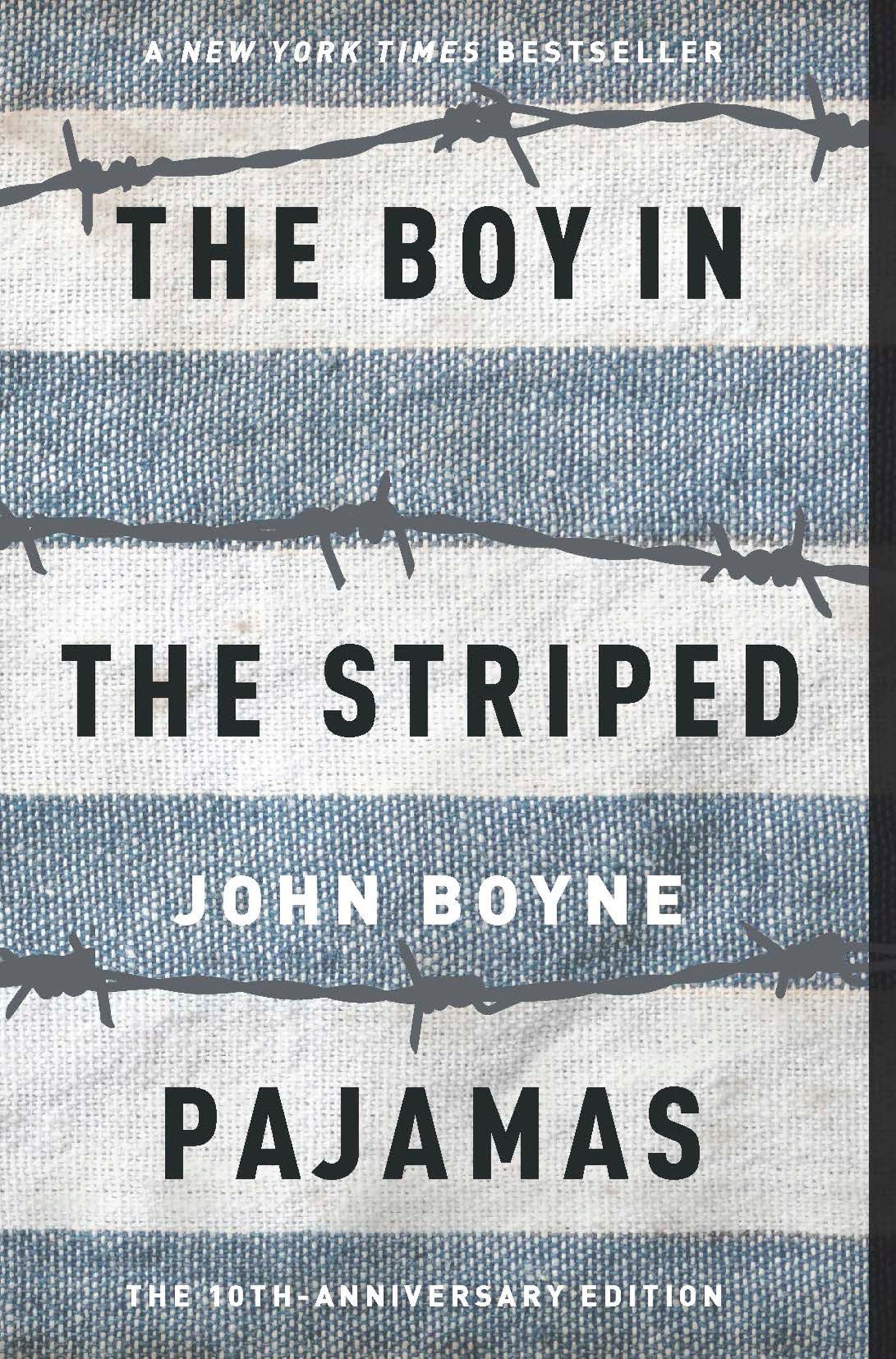
Boy in Striped Pajamas

Boy in Striped Pajamas

Historical context

Customer rating 4.6/5
Check Price

Worth Noting

  • Boys under 11 or those after lighthearted reads may find the somber tone unsettling
Genre
Historical Fiction
Pages
215
Series
Standalone
Grade Level
7-9
Read the full review

The Boy in the Striped Pajamas delivers a gripping, easily readable narrative with an emotionally charged friendship that pushes middle-school readers to think hard about empathy and morality. Its Holocaust subject matter is heavy, so a parent or teacher should be nearby to help process it — the story works best as a guided, shared read rather than a solo pick.

Bottom line: Best as a shared read for a 12+ boy interested in history, with a parent or teacher on hand to help unpack the heavy themes afterward.

How to Choose

Reading Age and Grade Level

Reading age reflects sentence complexity and vocabulary, while grade level suggests where the content fits in school. A book rated for 8-year-olds can still entertain a 12-year-old if the story is engaging, but advanced readers might notice the simpler prose and lose interest.

The hidden trade-off: a high reading age doesn't guarantee emotional maturity. A 12-year-old may be ready for The Giver, but notes about violence in The Outsiders require the reader to process heavier themes. Check both numbers, then weigh your son's comfort with difficult subjects.

Genre

Genre is the hook. Survival stories like Hatchet tap into a sense of adventure, while humor books like Diary of a Wimpy Kid rely on relatability. Dystopian and historical fiction offer depth but often require a mature lens.

The mechanism: if a boy isn't interested in the world of the story, no amount of good writing will hold him. A boy who loves video games will dive into Trapped in a Video Game, while one who prefers real-life dilemmas may connect better with Restart. Match the genre to his existing hobbies.

Readability and Page Count

Page count affects stamina, but readability is about sentence flow. Short chapters in The Wild Robot make it easy to pause, while Hatchet's dense paragraphs require sustained focus. A reluctant reader needs a book they can finish in a day to build confidence.

The trade-off: shorter books may feel unchallenging to fast readers, but they offer a sense of accomplishment. If your son is an advanced reader, a 300-page novel with accessible prose can still satisfy without overwhelming him.

Series vs. Standalone

Series provide a comfort zone: once a boy connects with a character, he'll eagerly pick up the next book. This builds a reading habit. Standalone novels offer variety and closure, which some boys prefer.

The hidden trade-off: series can feel formulaic after a few installments, and box sets cost more upfront. If your son burns through one title quickly, a series keeps him going, but a standalone might force him to explore new authors.

Illustrations and Visual Support

Illustrations break up text and support comprehension, making books like The Last Kids on Earth and Diary of a Wimpy Kid ideal for reluctant readers. Visuals reduce the intimidation of a page full of words.

But illustrations can signal a 'baby book' to older boys. A 13-year-old may reject a graphic novel as too childish even if the story is strong. Gauge his comfort level—if he's past the illustrated stage, a plain-text novel might be the better fit.

Frequently Asked Questions