Organization & Storage Product Guide

9 Best Binder Pockets of 2026: The Ones That Actually Fit Inside

Binder pockets that genuinely fit standard 3-ring binders — honest pocket count, hole reliability, and real sheet capacity for students and teachers.

9 Best Binder Pockets of 2026: The Ones That Actually Fit Inside editorial illustration

Nearly every pocket divider and folder claims it fits 3-ring binders. In practice, tabs routinely poke past the binder edge, 'holds 50 sheets' usually means half that, and some 3-hole folders arrive without the punch at all. The buyer's job is separating marketing claims from what actually happens in a school bag.

The choice that matters most is between a tabbed divider system and a standalone pocket folder. Dividers organize a whole binder by subject but force a trade-off: get eight big, readable tabs, or get 24 dividers that cover several binders at once. Folder-based pockets protect loose papers from backpacks but often run too wide for the rings.

Plastic costs a little more than paper, but it survives the school year while cardstock tears at the holes within weeks of daily use. The pockets worth buying keep their shape, stay inside the binder, and hold what the label promises — the rest just look right on the listing page.

#1

Avery 2-Pocket Dividers

Avery 2-Pocket Dividers

Subject organization

Customer rating 4.8/5
Check Price

Worth Noting

  • Big Tabs extend past the binder edge and press against pages housed in sheet protectors
Tab Fit
Tabs protrude past binder
Material
Durable plastic
Real Capacity
Full letter-size load
Hole Reliability
Working 3-hole punch
Read the full review

Each divider pairs a front and back pocket, so letter-size sheets stay separated by subject without doubling page weight. Graded work sits in the front pocket with returned assignments behind it, keeping a whole subject's papers in one place. The plastic resists creasing and edge wear across a full term, and the 3-hole punches line up cleanly with standard rings. Large insertable Big Tabs read clearly from arm's length and accept hand-written or printed labels. Priced at a budget tier for eight dividers, the build endures repeated flipping and page loading through the school year.

Best for students, professionals, and teachers building durable multi-subject binders without running sheet protectors at the front of each section. Big Tabs extend past the binder edge by design for fast thumbing and clear visibility — a tradeoff you'll only feel with protected pages in the way. Teachers switch sections between periods without fumbling, and reference binders stay readable from across a desk.

Keep sheet-protected pages out of the front of each section so the oversized tabs sit flush with the binder cover.

Bottom line: For multi-subject binders used without sheet protectors blocking the front of each section, this set pairs two working pockets with tabs you can read at a glance.

#2

Amazon Basics Dividers (24 ct)

Amazon Basics Dividers (24 ct)

Bulk binder equipping

Customer rating 4.8/5
Check Price

Worth Noting

  • Tabs and divider width extend past standard binder edges, pressing against sheet-protected pages.
Tab Fit
Tabs extend past edge
Material
Polypropylene
Real Capacity
Full letter-size load
Hole Reliability
Working 3-hole punch
Read the full review

The 24 two-pocket dividers carry the lowest cost per divider in this set, with pockets on both sides and color coding that makes sections easy to spot. A full classroom or several binders can be equipped for less than the cost of several small sets.

It fits teachers and parents outfitting three or more binders at once. Tabs extend beyond standard binder edges, so this favors loose-page organization over sheet-protected setups where the overhang presses against protectors.

Bottom line: The value pick for outfitting whole classrooms, provided pages stay loose in pockets rather than sheet protectors.

#3

Avery Write & Erase (8-tab)

Avery Write & Erase (8-tab)

Teacher relabeling

Customer rating 4.8/5
Check Price

Worth Noting

  • On a snug shelf, all eight tabs protrude past the binder edge and catch
Tab Fit
Tabs protrude past binder
Material
Tear-resistant plastic
Real Capacity
Full letter-size load
Hole Reliability
Working 3-hole punch
Read the full review

The write-and-erase tabs clear with a pencil and relabel cleanly, so sections can be reorganized term after term without buying new dividers. Each divider carries a front pocket that holds loose sheets, and the tear-resistant plastic endures a full school year without splitting at the holes.

Teachers rotating course units and students who write section names freehand get the most from these. Eight front pockets organize subjects cleanly, though the longer tabs favor open carry over snug shelf storage.

Open the binder on a flat surface rather than a tight shelf stack — the protruding tabs favor open carry.

Bottom line: For classrooms where section names change every term, one set stretches across years of relabeling.

#4

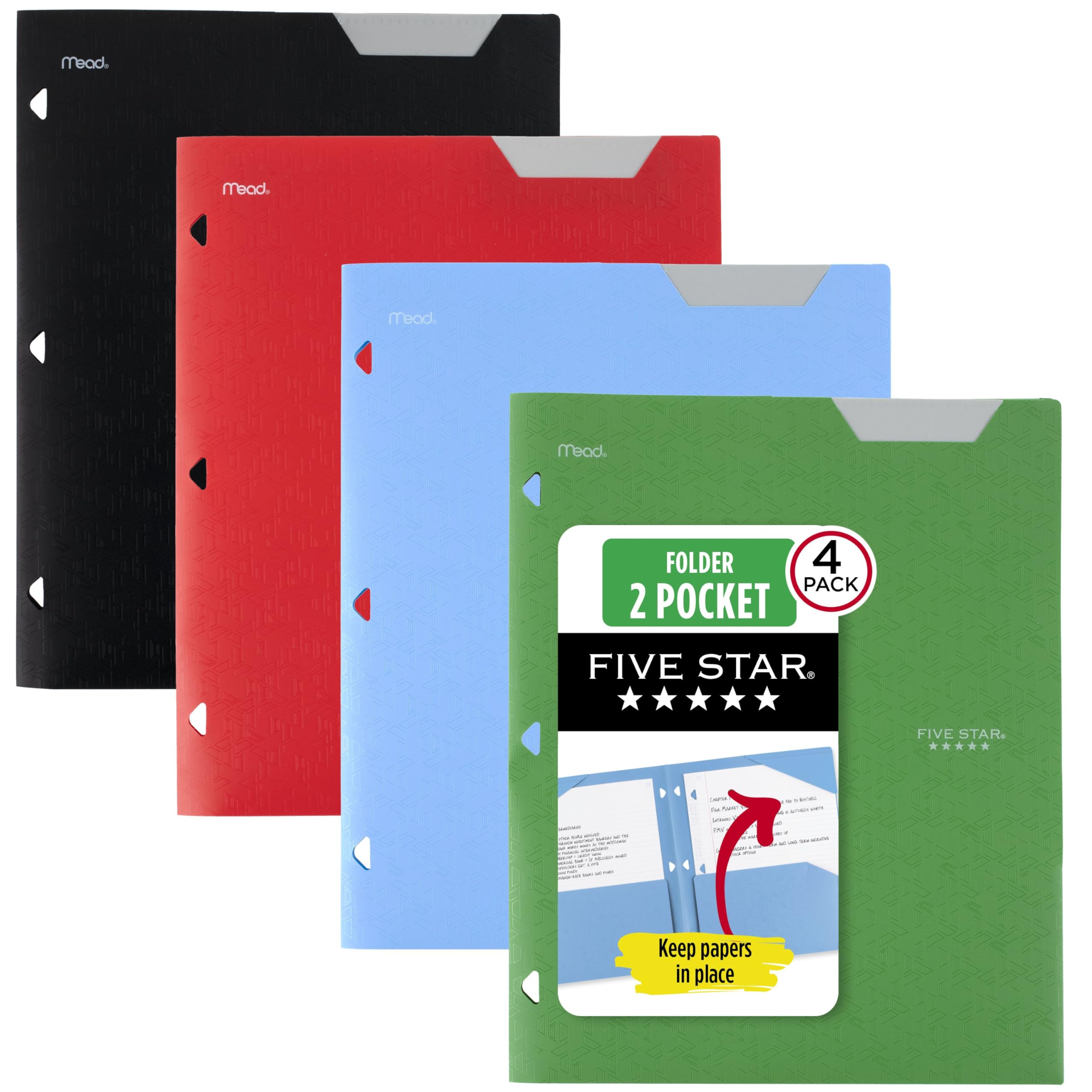
Five Star 2-Pocket Plastic

Five Star 2-Pocket Plastic

Spill protection

Customer rating 4.8/5
Check Price

Worth Noting

  • Folder colors may vary from the listing photos
Tab Fit
Stays within binder
Material
Water-resistant plastic
Real Capacity
50 sheets per pocket
Hole Reliability
Working 3-hole punch
Read the full review

The Five Star folders swap the paper sibling's four-pocket layout for rugged water-resistant plastic that shrugs off backpack spills without tearing, paired with stay-put tabs that keep the folder anchored at the binder rings. Writable labels ride on each tab, and each pocket holds a full 50-sheet stack. For students who keep binders beside water bottles and gym clothes, this is the iteration most likely to end the year intact. Folder colors can differ from the listing photos, so this is a protection-first choice rather than a style statement.

Bottom line: Right for students or heavy daily users who wear out paper folders; the paper four-pocket sibling stays the budget pick for anyone chasing maximum pocket count instead.

#5

Forvencer Pouches (48 pk)

Forvencer Pouches (48 pk)

Secure portfolio storage

Customer rating 4.7/5
Check Price

Worth Noting

  • Each pouch fits roughly 10 to 15 sheets, so the advertised 50-sheet capacity overshoots a comfortable load.
Tab Fit
No tabs
Material
Acid-free polypropylene
Real Capacity
10-15 sheets actual
Hole Reliability
Fits standard binders
Read the full review

The Forvencer 48-pack brings Velcro-sealed poly pouches that keep complete document sets contained inside a binder — bulk storage rather than tabbed subject dividers. The heavyweight material resists everyday tears, and bright colors identify students or projects at a glance, even inside a full binder.

Teachers compiling per-student portfolios and offices filing project documents get the most from this approach. Each pouch fits 10 to 15 sheets snugly, so treat the set as secure housing for finished document sets — the advertised 50-sheet claim runs well beyond a comfortable load.

Bottom line: Best for schools and offices that need contained, color-coded storage for dozens of complete sets at once.

#6

Mr. Pen 2-Pocket (8 pk)

Mr. Pen 2-Pocket (8 pk)

Budget student use

Customer rating 4.7/5
Check Price

Worth Noting

  • On heavier rings, the punch holes can bind and stick when turning pages
Tab Fit
Stays within binder
Material
Tear-resistant plastic
Real Capacity
Full letter-size load
Hole Reliability
Tight on some rings
Read the full review

This eight-divider set reaches the lowest price in the group while keeping pockets on both sides and durable seams — the budget route to equipping several binders at once. Where the top pick carries a premium per-divider cost, this Mr. Pen set delivers the same double-pocket layout for a fraction of the outlay, and the seams hold through a full semester of page-flipping.

This fits college students stretching a small supply budget and anyone loading multiple binders without per-divider cost regret. The one check: punch holes can run tight and stick on heavier or thicker binder rings, so buyers should confirm clearance before committing.

Flip pages from the bottom corner to clear tighter rings without catching.

Bottom line: The smart budget route for multi-binder setups where the top pick's per-divider cost adds up — confirm hole clearance on heavy rings and it covers the same ground for less.

#7

Forvencer 2-Pocket (8-ct)

Forvencer 2-Pocket (8-ct)

Budget two-pocket

Customer rating 4.7/5
Check Price

Worth Noting

  • With repeated tab rewriting, the label adhesive can loosen
Tab Fit
Stays within binder
Material
Heavyweight PVC
Real Capacity
Full letter-size load
Hole Reliability
Working 3-hole punch
Read the full review

Dual-sided pockets hold letter-size pages securely, and heavyweight PVC withstands daily school commutes. The pocket design mirrors the top pick at a budget price. The trade-off: tab label adhesive can lift when users rewrite section names, so permanent labels hold best. Buyers who relabel sections repeatedly will want firmer tabs.

Bottom line: Best for budget buyers outfitting one school binder with genuine two-sided pockets who keep permanent section labels.

#8

Amazon Basics Jackets (25 pk)

Amazon Basics Jackets (25 pk)

Minimal file storage

Customer rating 4.7/5
Check Price

Worth Noting

  • Single-sided design holds papers on one side only
Tab Fit
No tabs
Material
Polypropylene
Real Capacity
One sheet stack
Hole Reliability
Working 3-hole punch
Read the full review

Each jacket fits a standard 3-ring binder and holds loose papers with a transparent front for instant visibility. The polypropylene runs thinner than premium folders, so it suits occasional filing over heavy daily use. As a storage tool it excels; as a subject divider it doesn't — no tab, only one pocket, which is why the tabbed sets rank higher.

Bottom line: A practical store for loose sheets and receipts in any binder — grab the tabbed divider sets instead if organizing by subject matters.

#9

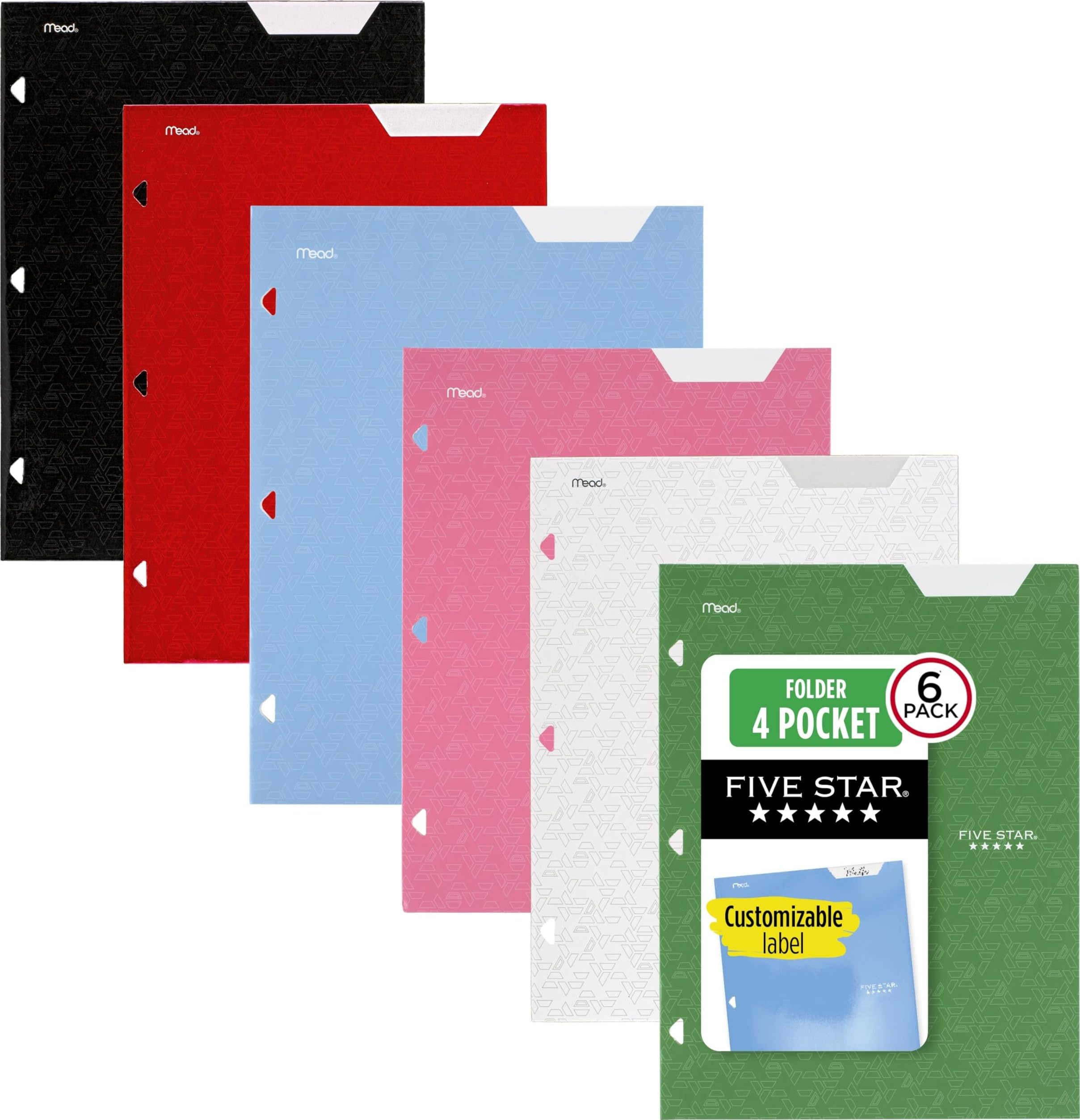
Five Star 4-Pocket (6 pk)

Five Star 4-Pocket (6 pk)

Multi-pocket carry

Customer rating 4.7/5
Check Price

Worth Noting

  • Paper at the ring holes can tear over a term of daily page turning.
Tab Fit
Too large for binder
Material
Paper cardstock
Real Capacity
Four pocket loads
Hole Reliability
Holes tear over time
Read the full review

Four pockets per folder at a budget price make this a natural homework carrier. Thick cardstock holds up through a school year as a standalone carry folder. Inside a standard 3-ring binder, the oversized width presses past ring edges — better matched as a carry folder than a binder pocket.

Bottom line: Best as a standalone folder for elementary students carrying assignments or for teachers sorting handouts — not as a long-term binder pocket.

How to Choose

Pockets per Divider

A one-sided divider carries a single pocket behind each tab; a two-sided one carries pockets on both faces, effectively doubling storage without adding thickness. The trade-off shows up when you file worksheets and graded work under one subject: two-sided dividers keep the two piles separate, while single-pocket versions force everything into one slot.

Binder Fit and Tabs

Dividers advertise 8.5 x 11 sizing, but the tab strip and the divider sheet itself can run slightly wider than the binder. When they do, the edge presses against the inside of the rings and pushes sheet-protected pages out of line. A protruding tab also drags against the ring housing on every page turn, which is why tabs that sit flush with the cover are worth hunting for.

Material Durability

Plastic dividers and poly folders flex at the holes with every ring turn; paper cardstock does not. Over weeks of daily use, cardstock cracks and tears where the rings bite, usually at the top or bottom punch. That is why a plastic set costs a little more but survives a full school year, while a paper folder often needs replacing mid-term.

3-Hole Punch Check

The punch is the first thing to fail on a budget pocket folder. Some packs arrive with the holes visibly missing or off-center, and misaligned holes make the folder sit crooked in the rings, so pages drift and the cover bulges. Open the pack and test-fit one folder in an empty binder before you commit a whole class set.

Real Pocket Capacity

Advertised capacity assumes thin, flat sheets. The moment you slide in a folded handout, a thick worksheet, or a stapled set, the pocket bulges and the extra bulk strains the rings. Realistically a pocket holds 15 to 25 sheets or one folder's worth of loose work before it starts to deform, regardless of the number printed on the box.

Frequently Asked Questions