Music Learning Product Guide

6 Best Beginner Saxophone 2026: The Ones Set Up to Play

How to choose a beginner saxophone that's factory set up and play-tested, so your student hits band class without mid-semester repair trips.

6 Best Beginner Saxophone 2026: The Ones Set Up to Play editorial illustration

Shopping for a first saxophone online looks easy — budget kits earn 4.4-star averages and glowing reviews. But those ratings mostly reflect the first month of use. After a few months of daily practice, the real story surfaces: keys that detach, pads that stop sealing, and specific notes that simply won't sound.

The price tier predicts reliability better than the star rating does. Horns that ship play-tested by a technician hold their setup through a school year; cheaper horns that skip that step often need a $50–100 shop adjustment before the first band class — or a repair trip mid-semester.

This guide is built around what actually keeps a beginner playing: out-of-box setup, keywork durability, reed strength, and accuracy across registers, so you buy a horn that survives band season, not just the packaging.

#1

Jean Paul AS-400

Jean Paul AS-400

First-year students

Customer rating 4.6/5
Check Price

Worth Noting

  • The ABS-frame case is solid but basic
  • Loose parts can develop on some units over time, so a periodic keywork check catches them early.
Kit Completeness
ABS-frame case
Included Reed Strength
—
Read the full review

Jean Paul's NAPBIRT-certified play-testing and adjustment set the AS-400 apart from typical budget horns — the alto arrives balanced, with clear tone across every register and keywork that responds predictably from the first note. The lacquered brass body and high F# key add professional touches, and the mid-range price feels like a genuine step up for a beginner who wants the polish of far pricier horns.

Reviewers describe the AS-400 as sounding like a much costlier instrument, with notes responding cleanly through beginner scales and a warm tone that carries across school band rehearsals. The lightweight action suits young hands, letting first-year students focus on embouchure rather than fighting sticky keys, while balanced registers keep early repertoire sounding polished from the start.

This fits first-year band students, self-teaching adults, and families swapping a rented school horn for one they'll keep through the band years. Expect some unit-to-unit variance in quality control, so it suits buyers who accept a little upkeep over the school year; it's also less practical for families on the tightest budgets, who may prefer a cheaper starter kit.

Bottom line: For a family that wants a correctly set-up horn without premium pricing, the AS-400 delivers playability that typically costs twice as much.

#2

Yamaha YAS-280

Yamaha YAS-280

Whole school career

Customer rating 4.7/5
Check Price

Worth Noting

  • A key can occasionally arrive slightly out of alignment
  • Premium price with no strap, reed, or cleaning kit
Kit Completeness
Case only
Included Reed Strength
None included
Read the full review

The Yamaha YAS-280 is the buy-once investment in this lineup — industry-standard build and precise intonation that carry a first-year student through high school band, with resale value that holds across the years. Where the top pick wins on professionally adjusted playability at about half the price, the YAS-280 answers families committed to years of school band, especially those whose director recommends Yamaha. The higher outlay suits families confident the commitment will last — budget-first shoppers or anyone unsure the student will stick with it are better served by the cheaper option.

Bottom line: The YAS-280 fits families already committed to years of band, where build consistency and resale value offset the premium price. If the student's commitment is uncertain, the lower-priced top pick ties up less money.

#3

Eastar AS-II Alto

Eastar AS-II Alto

Grade-school beginners

Customer rating 4.3/5
Check Price

Worth Noting

  • Bent keys or leaky pads can surface within months of daily practice
Kit Completeness
Full kit, plus stand
Included Reed Strength
4 reeds
Read the full review

The Eastar AS-II bundles every piece a first-year student needs — case, four reeds, neck strap, gloves, cleaning gear and a stand — so no accessory purchases are needed before band starts. The other budget pick in this set ships a slimmer kit, so Eastar wins on completeness, and out-of-box playability draws consistent praise for a beginner horn.

Budget-conscious families testing whether a grade-schooler will stick with band for a full year get the lowest-friction entry point here. Durability varies between units — bent keys or leaky pads can appear within months of daily practice — so this suits a first-year trial rather than a multi-year commitment.

Bottom line: One box with every accessory and smooth first-week play — the most direct way to get a first-year student going in band.

#4

EASTROCK Alto Sax

EASTROCK Alto Sax

Build-conscious buyers

Customer rating 4.5/5
Check Price

Worth Noting

  • Factory-certified setup isn't included
Kit Completeness
Full kit
Included Reed Strength
Reeds included
Read the full review

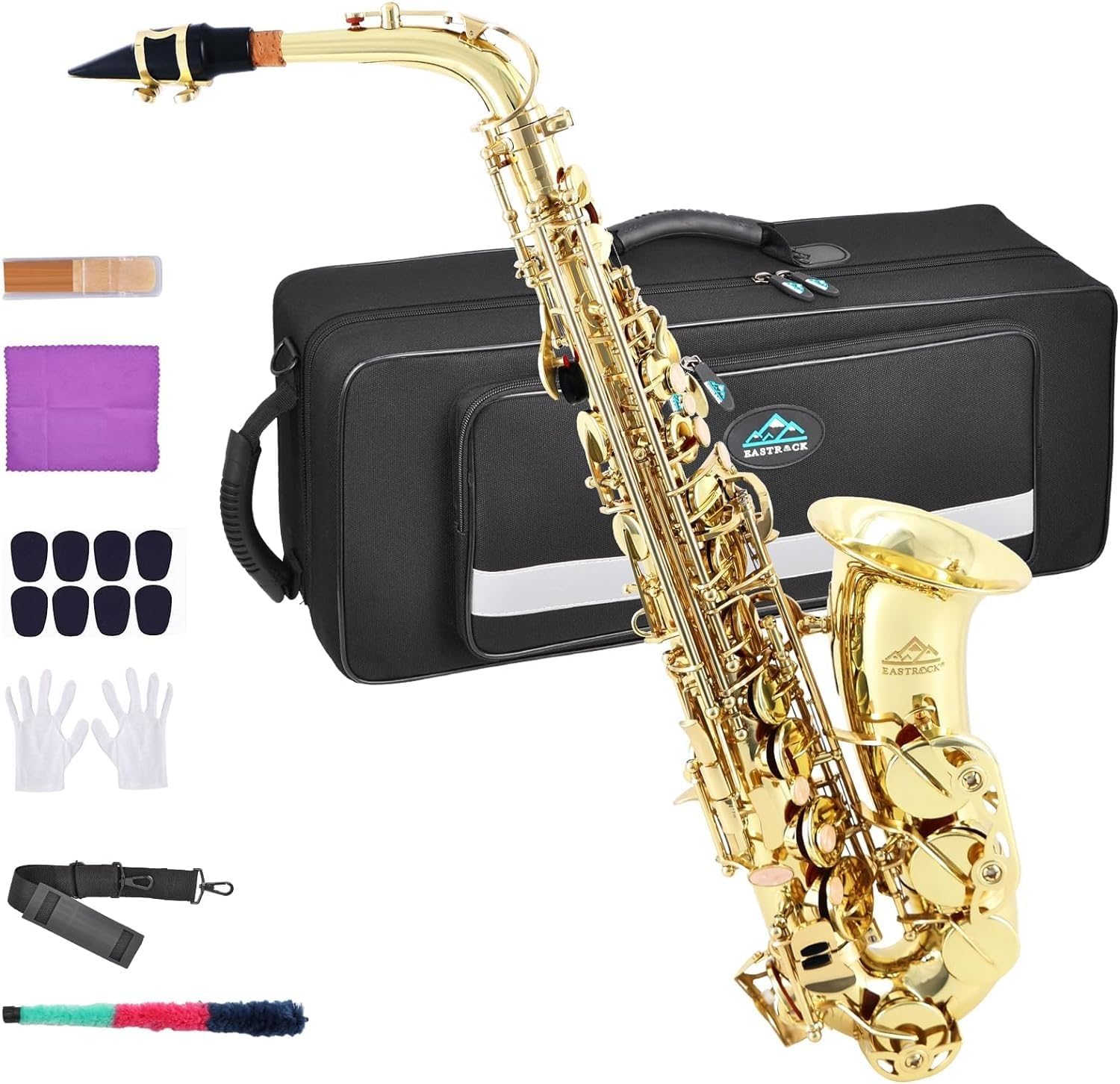
The H68 copper body and upgraded leather pads deliver a tone reviewers describe as a much pricier horn — a clear step up in build feel and sound from the rock-bottom kits, at a modest price bump. The lacquered finish draws consistent praise, so appearance matters as much as tone here.

Best for school-band beginners whose families want better build feel without committing to the premium tier's factory-certified setup. Quality varies between units, and in a minority the lower-valve assembly can fail within the first year — a fit for buyers comfortable with a little upkeep over time.

Bottom line: The modest jump from rock-bottom kits buys noticeably better build and richer tone — the right pick when budget matters but so does the feel.

#5

Mendini Eb Alto Kit

Mendini Eb Alto Kit

Tight-budget families

Customer rating 4.4/5
Check Price

Worth Noting

  • Some units develop loose keys or parts over months of daily student use.
  • A key on some arriving units does not seal, leaving certain notes silent until adjusted.
Kit Completeness
Full kit
Included Reed Strength
10 reeds, 2.5
Read the full review

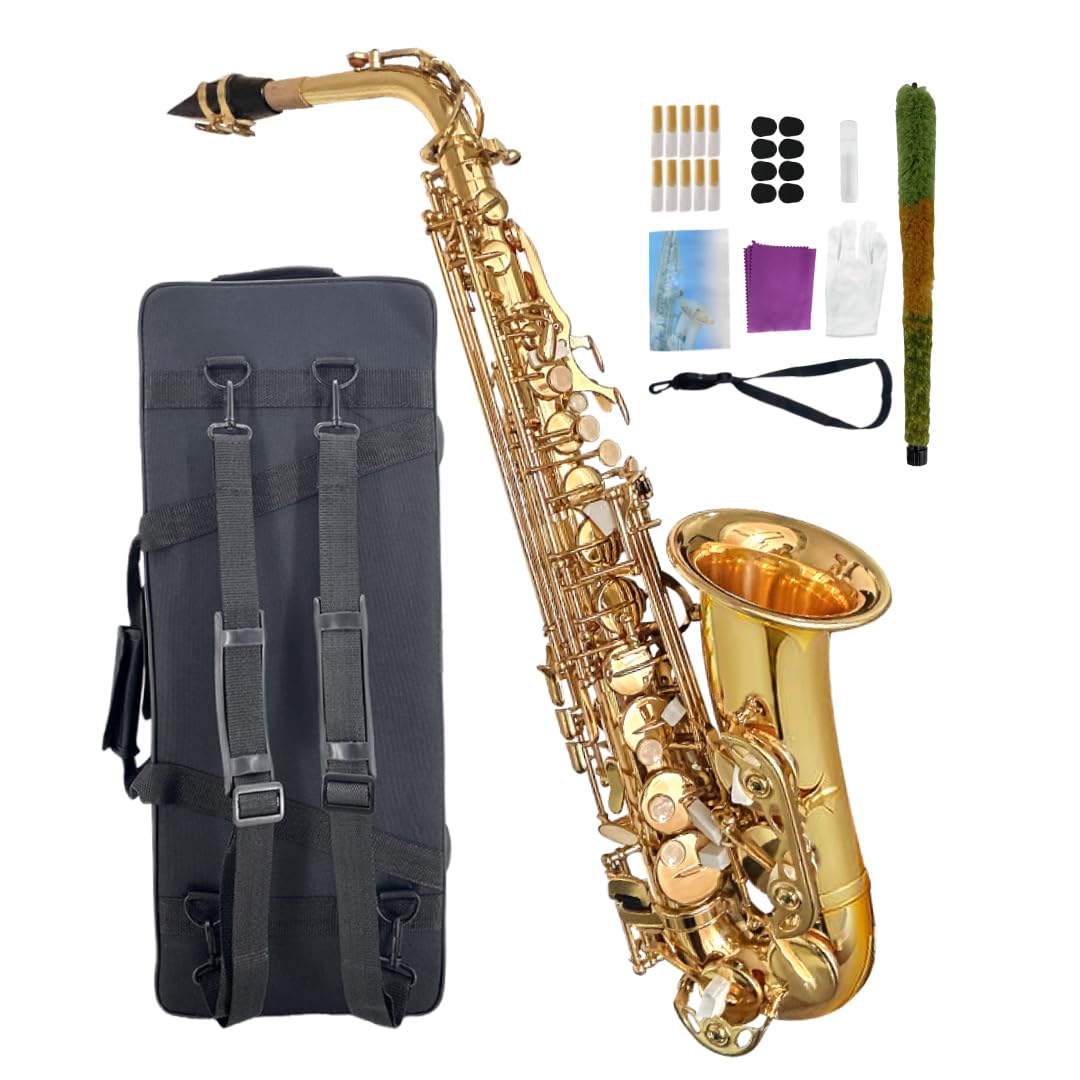
The Mendini is the budget pick with the deepest base of buyer validation, pairing clear, balanced tone with the full starter kit at the tightest price tier in this group. The lacquered brass body looks more premium than the cost, and its playing character fits first-year band students well.

This is the right pick for very tight budgets, families replacing a rental, and adults casually re-entering the instrument. Quality control varies more here than at higher price points, so a quick local-shop once-over at delivery is worth it. It is not the pick for families needing a horn that carries a student through a full school year untouched.

Bottom line: Right for families at the tightest budget who will spring for one local shop setup pass; not the choice when a full school year of uninterrupted playing is required.

#6

WUQIMUSC Alto Kit

WUQIMUSC Alto Kit

Lightweight first horn

Customer rating 4.6/5
Check Price

Worth Noting

  • For a family planning years of band, long-term durability under daily use is still unverified
Kit Completeness
Full starter kit
Included Reed Strength
10 reeds, 1.5–2.5
Read the full review

At 5 pounds the brass body suits a younger student, and the warm beginner tone earns consistent praise — a full kit at a budget price. Long-term durability under daily school-year play is unverified, so this suits a first-year trial more than a long band commitment.

Bottom line: Best as a low-cost first-year trial horn for a young student or casual adult; a family counting on the same instrument through middle school should wait for more long-term track record.

How to Choose

Out-of-Box Setup and Play-Testing

The single biggest predictor of a smooth first month is whether a technician set the horn up before it shipped. NAPBIRT-certified horns are play-tested and adjusted so pads seal and keys align on arrival. Without that certification, a new horn often needs a $50–100 shop adjustment before the first band class.

Budget for that adjustment if you buy a horn that isn't factory play-tested. Skipping it means a student wrestles with pads that leak and keys that sit slightly off, and mistakes the horn's fault for their own.

Key and Pad Durability

A leaking pad or a bent key makes a specific note refuse to sound, and on a student instrument that reads as player error, not hardware. Budget-key mechanisms use softer rods and less regulated pads that shift under daily use, and the damage usually shows months in — well after the return window. This is why durability, not finish, should decide the purchase.

Reed Strength

Most budget kits include strength-2.5 reeds, which are too stiff for a brand-new embouchure. Stiff reeds force beginners to over-blow, producing squeaks that they usually blame on themselves.

Pick up a pack of 1.5 or 2 strength reeds before the first lesson. It is a few dollars that removes the most common early-frustration point.

High F# and Intonation

A high F# key extends the usable range and is standard on most student altos. More important is intonation accuracy across registers — a poorly regulated horn drifts flat or sharp as the player climbs, training in bad habits from day one. A horn that stays in tune at the top end is worth paying for.

Kit Completeness

A complete kit (case, neck strap, reeds, cleaning supplies) means nothing else to buy before band class. But completeness should never outweigh setup quality — a bag of extra reeds and a stand don't help when a key falls off mid-semester. Use kit count as a tiebreaker between otherwise equal horns.

Frequently Asked Questions