Kaplan Anatomy Flashcards

What We Like
- System-based organization with color-coded tabs matches how anatomy courses are taught.
- One card delivers the structure, its landmarks, and its function for real recall depth.
- Portable box with a carry ring flips easily on commutes or between study blocks.
- Strong value for a premium-priced deck covering all body systems.
Worth Noting
- After a full term of daily flipping, uncoated card edges can wear against the carry ring.
- Labeling
- All structures labeled
- Deck Size
- 300+ cards
- Durability
- Uncoated card stock
- Organization
- By system, color tabs
Read the full review
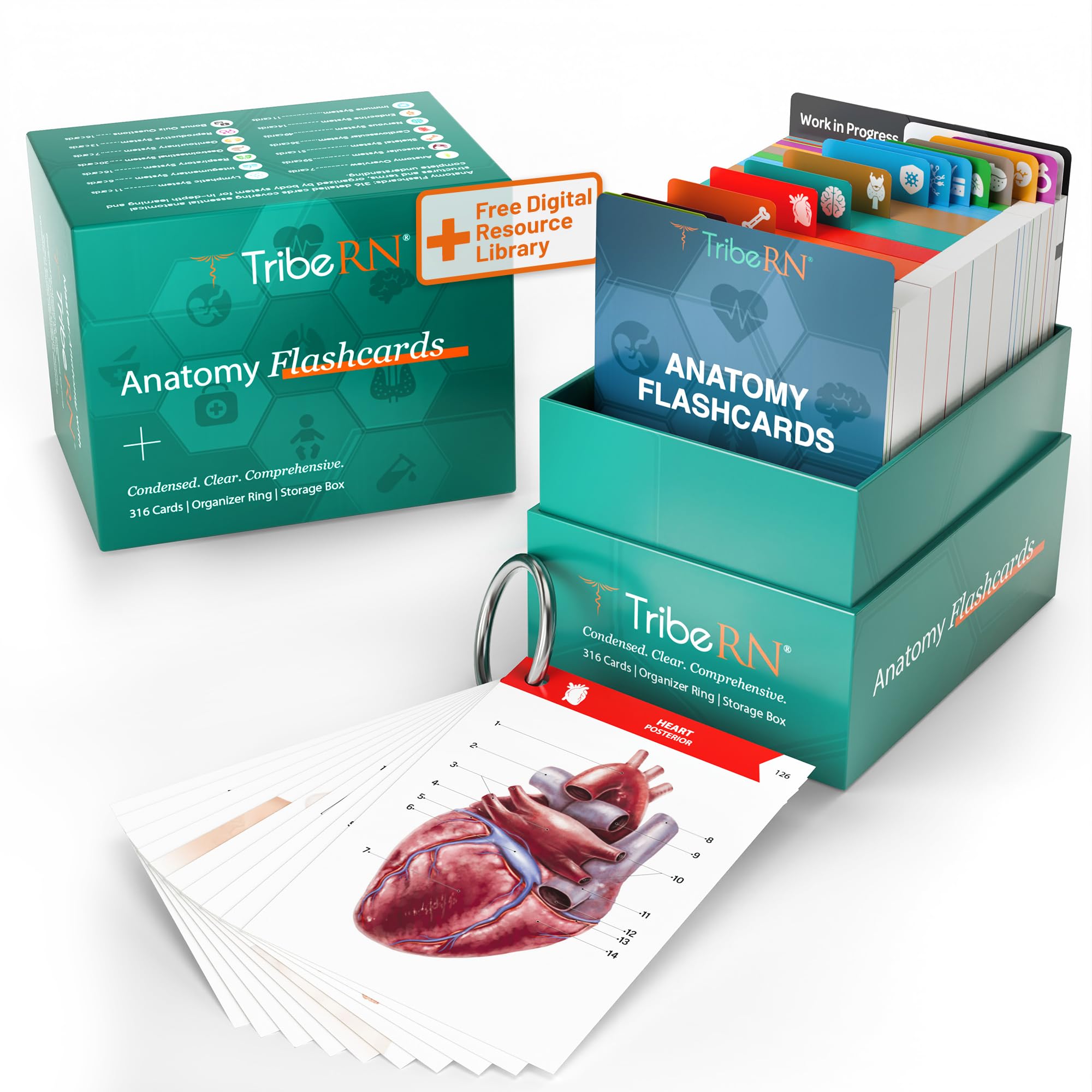
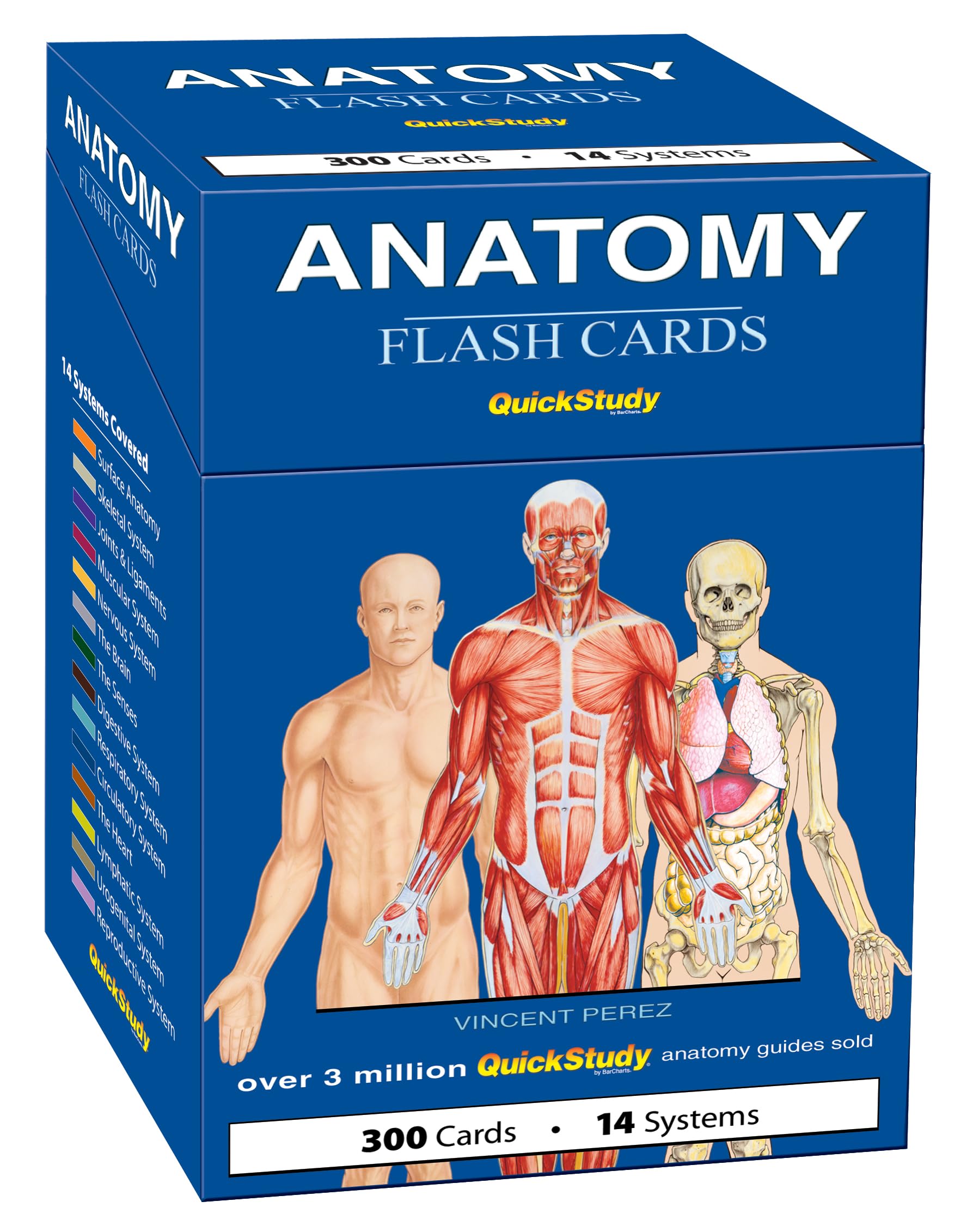
Kaplan's 5th edition delivers the deepest anatomy coverage in this lineup, arranging 300+ cards by body system with color-coded tabs that track how medical and nursing courses sequence their material. Each card pairs an anatomically precise drawing with a full description, so a structure's location, landmarks, and function resolve in a single glance. That design lets the set stand alone as a primary study source rather than a quick refresher, and it's the reason the deck holds up as the main text companion.
The descriptions carry genuine teaching weight. A single card can walk from the structure itself to its relationships and clinical relevance, which is why the set reads like a condensed atlas rather than simple label drills. This 2024 edition also closes gaps that show in the older Kaplan release still on shelves — the earlier layout skips structures this one covers, and the modern tabs make navigation smoother. For recall drilling, the format asks you to name the structure from the illustration, then checks it against the description on the reverse.
Portability is where the design pays off. The included carry ring turns the box into a deck you can flip on a commute, between clinical blocks, or at a study table, and the compact 4 x 2.8 x 6-inch box slips into any bag without weighing it down. Color-coded tabs let you pull out just the cardiovascular or musculoskeletal cards when a given week of lectures covers only one system, so review stays targeted to what's actually on the schedule.
This deck suits medical and nursing students who want a single reference to study from across a full curriculum and plan to review daily. The honest trade is the card stock: cards are uncoated rather than laminated, so the set performs best as a semester-long study tool used consistently. Students who specifically want laminated cards for years of rough handling will find the Scientific Publishing set the better match.
The 2024 edition matters when a syllabus tracks current terminology, and the deck's depth makes it a strong anchor for the months of review licensing exams demand. For a premium-priced set, the coverage per card is high — each structure gets individual treatment instead of being grouped onto a shared card, which is where cheaper decks thin out and lose precision.
Bottom line: For medical and nursing students who want one reference set covering the whole anatomy curriculum, this is the deck to drill from — complete labels and 2024 currency outclass the budget entries.